Make Your Life A Masterpiece

This week, we’re staying with family, surrounded by beautiful art. On every wall hangs a piece of our hostess’s work or contributions from others. I find myself getting lost in the stories these pieces tell—their artistry and expression of life. It made me think: we are all the artists of our own lives. We hold the brush, and we can fill our days with expressions of who we are.

You don’t have to be an artist to create a masterpiece. Masterpieces can be found in the way we care for our family, in the hobbies that bring us joy, in a dance, a kind word, or a simple act of love. Anything that expresses our spirit and who we truly are becomes our art.

But life can bog us down. We get caught up in obligations, societal expectations, or the need to present a curated version of ourselves to the world. We forget to live out loud and express our authentic selves in whatever form that takes.


Finding Light in the Darkness

When I was lost in my disease, my life was devoid of color. I couldn’t imagine that I had anything beautiful to contribute to the world. My mind convinced me that any light I once had was gone. As an artist, that belief was soul-crushing.

But when I committed to getting better, I fought every day to rediscover the color in my heart. I clung to gratitude—anything that would keep me moving toward light instead of darkness. Slowly, the color crept back in. I learned that I was capable of many masterpieces, more than I had ever imagined. Some days, my masterpiece was simply a smile.

Our masterpieces start from within. How we choose to express them is deeply personal and uniquely ours.


Art Is Everywhere

As I sit here, surrounded by this art, I am struck by the passion and beauty poured into each piece. These works inspire me—and perhaps they can inspire you—to create your own art. Your expression may look different, but the essence is the same: honoring your spirit and sharing it with the world.

On a day-to-day level, masterpieces can take any form. A heartfelt conversation. A helping hand. A gesture of love. These acts, however small, are works of art that reflect the beauty inside you.


SLAY Reflection: What Is Your Masterpiece?

  1. How do you express your true spirit to the world?

  2. What beauty in your life can you share more freely?

  3. In what new ways can you let your light shine?

  4. Have you held back your creativity or gifts? Why?

  5. What’s one small way you can share your masterpiece today?

You have a gift to share, SLAYER. Your light may just inspire someone else to begin their masterpiece. So pick up your brush and create.

SLAY on.


Call to Action: Join the Conversation
I’d love to hear from you.
How do you share your own light, and what’s one masterpiece you’re ready to create?
Share your story in the comments. Let’s cheer each other on.

And if you know someone who’s feeling stuck or uninspired, send this to them.
Sometimes, all we need is a little spark.
Fighting Your Own Battle

Most of us have heard the phrase: Be kind, for everyone is fighting a battle you know nothing about. It’s a gentle reminder to extend grace to others. But here’s the truth that hits a little deeper: Sometimes we do know what battle someone is facing—and we’re still trying to fight our own.

It’s hard enough to stay present in our own struggle. Add in someone else’s chaos, triggers, or unresolved pain, and suddenly your progress feels shaky, your peace interrupted, your healing…unraveled.


I Had to Learn to Fight for Myself First

For years, I didn’t know how to fight my own battle. I carried old wounds, outdated beliefs, and habits that didn’t serve me—but they were familiar. They felt like truth.

Over time, I found my stride. I learned to live with my battle in a way that felt healthy, loving, and sustainable. But the journey wasn’t smooth. I assumed that because I was working so hard to grow, change, and heal…everyone else was too.

Spoiler alert: They weren’t.

That assumption pulled me down more than once. I had to stop seeing people for their potential and start meeting them exactly where they were. It wasn’t my job to rescue anyone or walk their path for them.

I had to protect my own peace—not because I was better, but because I was responsible for keeping myself well. And that meant accepting that not everyone is ready to do their work. Not everyone wants to. Not everyone knows how. And that’s not my battle to fight.


Other People’s Battles Are Not Yours to Lose

There will be people in your life who trigger things you thought you’d healed. It might not even make sense in the moment. But their words, tone, or behavior can hit a nerve connected to a wound from long ago.

Or maybe they remind you of yourself—an older version of you, or a part of you you’re still trying to change. And instead of compassion, you find yourself feeling judgmental or impatient.

When that happens, pause. Ask yourself:

Is this really about them—or is it about something unhealed in me?

We can’t control how others show up. But we can decide how much power we give them. If you’re agitated, it’s your responsibility to ask why.

That doesn’t mean blaming yourself. It means getting curious about your own reactions.

If someone’s behavior is affecting your peace and you can’t fix the issue—walk away. Let it go. Preserve your space. Protect your peace.


Focus on Your Fight

Your path is yours. So is your pace.

You’re allowed to heal slowly. You’re allowed to outgrow what you’ve outlived. You’re allowed to say, “I love you, but I’m focusing on me right now.”

And you’re also allowed to ask:

Why does this bother me? What is this trying to teach me?

You can’t fight someone else’s battle. They can’t fight yours. And trying to do so only distracts you from your own healing.

You’ve worked too hard to let someone else’s war pull you back into old patterns.

So stay the course. Fight clean. Protect your energy. Stay on your path.

You’re not just fighting—you’re winning. One healthy boundary at a time.


SLAY Reflection

Ask yourself:

  • Are you letting someone else’s energy throw you off track?
  • Do you take on other people’s battles to avoid your own?
  • What triggers you—and what does that trigger reveal about your healing?
  • Can you separate what’s yours from what’s not yours to carry?
  • What boundary can you set today to protect your peace?

S – L – A – Y

S: See what’s truly yours to carry.
L: Listen to what your agitation is telling you.
A: Act by protecting your peace, even if it means walking away.
Y: Yield to your own path—it’s where your healing lives.


Call to Action: Join the Conversation
I’d love to hear from you.
Have you ever found yourself fighting someone else’s battle instead of your own?
Share your story in the comments. Let’s cheer each other on.

And if you know someone who’s struggling to stay in their own lane, send this to them.
Sometimes, all we need is a nudge.

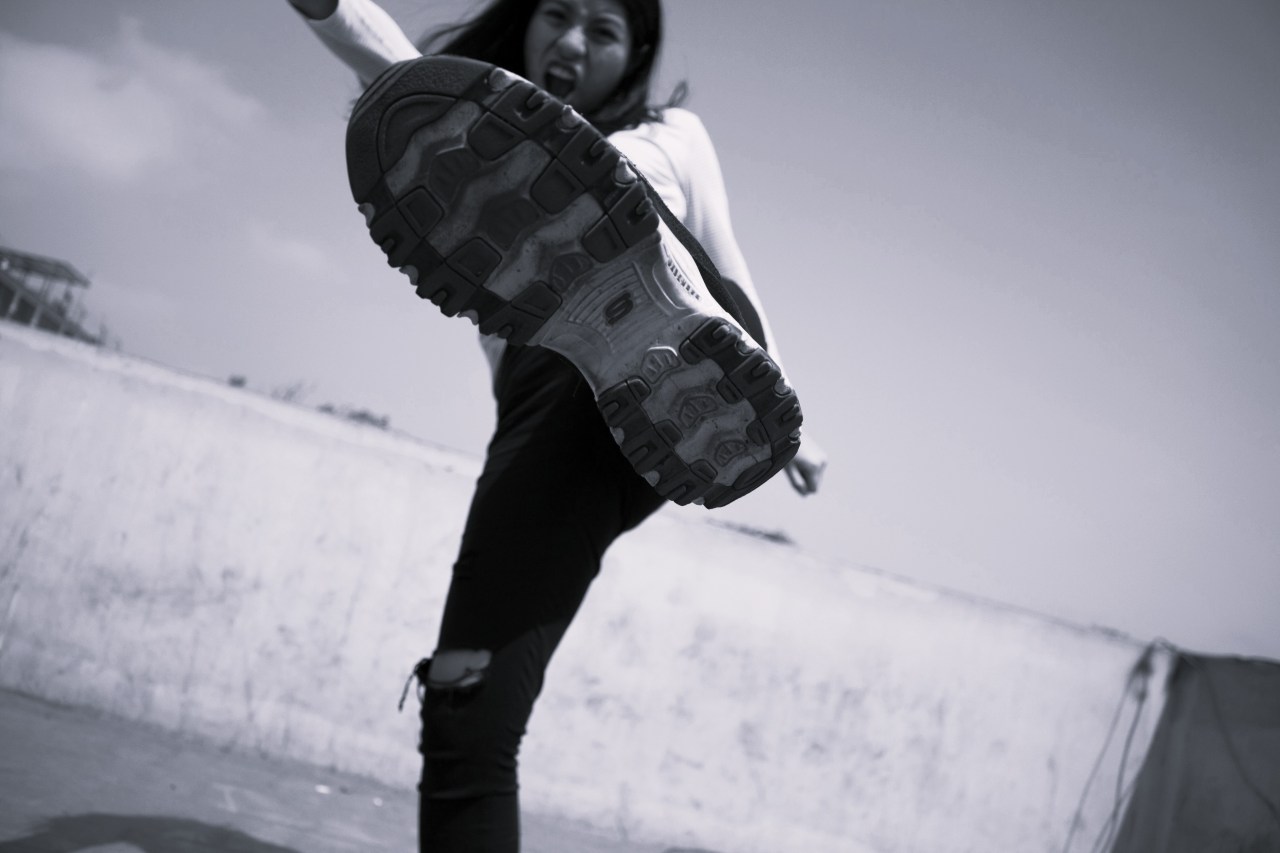
I Will Not Kick Myself When I’m Down

There was a time when I didn’t just fall down—I helped push myself further. The moment I was down, I would pile on the blame, the guilt, the shame. I thought that was what I deserved. That somehow the worse I felt, the more I could atone for my failures. But the truth is: kicking ourselves when we’re down doesn’t build us back up. It keeps us buried.

The Trap of Unrealistic Expectations

I held impossible expectations for myself. If I didn’t meet them perfectly (and let’s be honest, they were designed to be unmeetable), I used that as proof that I was a failure. That cycle of aiming too high, falling short, and self-destructing was its own form of punishment. And it kept me stuck in the belief that I wasn’t good enough.

Even when good things did happen, I didn’t trust them. I feared they’d be taken away. I feared I would mess them up. I feared someone would find out I didn’t deserve them. That mindset didn’t protect me—it prevented me from ever feeling joy, ease, or peace.

Ground Zero and the Climb Back Up

When I found recovery, I was at rock bottom. Spiritually bankrupt. Emotionally drained. I couldn’t get any lower. And still, the instinct to blame and shame myself was there. But slowly, step by step, I started doing something different. Instead of kicking myself, I started caring for myself.

I had to rewire my brain to stop looking at every misstep as proof of failure. I had to learn that failure is part of learning. And more importantly, I had to love myself through it. I started asking: What can this moment teach me? That changed everything.

Reframing Failure as Growth

Because failure isn’t failure if it teaches you something.

That shift in perspective allowed me to see mistakes not as dead ends, but as detours with lessons. Sometimes they pointed me toward a better path. Sometimes they showed me where I still had growing to do. And sometimes they helped me realize I was never really off-track—I was just learning in real time.

Yes, there were disappointments. Yes, I still felt frustration. But instead of spiraling into shame, I started practicing self-reflection with compassion. That’s how we grow. That’s how we keep going.

A Better Way Forward

So if you’re in a tough season, be honest with yourself: Are you making it harder by turning on yourself?

You may have goals and dreams that didn’t unfold how you imagined. That doesn’t mean you’ve failed. It means you’re human. It means you’re on the journey. And maybe—just maybe—that so-called failure is actually pointing you toward what you were meant to do all along.

Let go of the punishment. Pick up the lesson. Love yourself when it’s hardest to do so. That’s where the real power lives.


SLAY Reflection

  1. Do you tend to beat yourself up when things don’t go your way?
  2. What expectations are you holding yourself to that may be unrealistic?
  3. Can you think of a recent mistake that actually taught you something important?
  4. How does self-compassion feel different from self-criticism?
  5. What’s one way you can support yourself today, even if it feels uncomfortable?

S-L-A-Y:

  • Show yourself grace when you fall
  • Learn from the lesson
  • Acknowledge your humanity
  • You get to choose how you respond

Call to Action: Join the Conversation
I’d love to hear from you.
What helps you break the cycle of beating yourself up? How do you practice self-love on your hardest days?
Share your story in the comments. Let’s cheer each other on.

And if you know someone who’s stuck in the shame spiral, send this to them.
Sometimes, all we need is a nudge.

Become Aware Of What’s Really Worth Your Energy

Not everything deserves your energy.
Not everyone deserves your light.
And before I began walking this path, I gave too much of myself to things—and people—that didn’t give anything back.

I stayed in relationships long after they served me. I committed to obligations that drained me. I was loyal… but loyal to a fault. And I confused that loyalty with self-worth, not realizing that I was spending my energy in all the wrong places.

The result? I was exhausted. Depleted. And stuck.


What You Feed Grows—So Be Careful What You Water

For years, I never asked myself what I truly enjoyed. What sparked something in me. What made me feel alive. Instead, I filled my schedule with what I thought I should do—and surrounded myself with people who didn’t challenge me to grow.

I gave my energy to places that led me deeper into the dark.
And then I wondered why I always felt empty.

When I began my journey of recovery, I had to reevaluate everything—starting with where I spent my time, attention, and heart. I was building a new life, one that was rooted in healing. That meant I had to get honest about where my energy had been going, and whether it fit the future I was trying to create.

Spoiler alert: it didn’t.


Say Yes to What Fills You

But here’s what that shift gave me:
Permission to explore.
Permission to say yes to new things.
Permission to relearn what I actually wanted from my life.

I began investing energy in what inspired me. I sought out supportive friendships, joyful experiences, and moments of growth. I said goodbye to relationships that only existed to keep me small. I stopped chasing validation and started chasing purpose.

That’s what recovery gave me: the ability to choose where I shine my light—and the awareness to know when I’m shining it in the wrong direction.


Energy Is Currency. Spend It Wisely.

I still get it wrong sometimes. I still overextend myself. I still jump in too fast, too hard, too deep. But today, I know how to check in with myself. I know what it feels like to be energized versus drained. And I know when it’s time to pull back, realign, and reinvest my energy where it belongs.

Energy is precious.
It’s your power.
Protect it.
Spend it wisely.
Let it guide you toward the light, not drag you back into the dark.

SLAY on.


SLAY OF THE DAY: Reflect & Rise

Where are you spending your energy—and is it worth the cost?

  • Do you find yourself giving too much to people, places, or things that don’t give back?

  • What makes you feel depleted? What fills you up?

  • Are there relationships or obligations you’ve outgrown?

  • Why do you think you stay? What would it look like to step back?

  • How can you redirect your energy toward what brings you joy, purpose, and peace?

You are allowed to protect your energy. You are allowed to choose yourself.


Call to Action: Join the Conversation

I’d love to hear from you.
What’s one way you’re reclaiming your energy and investing it where it matters?
Share your story in the comments. Let’s cheer each other on.

And if you know someone who’s giving too much of themselves to the wrong things, send this to them.
Sometimes, all we need is a reminder: your energy is sacred. Treat it that way.

Not Everything That Weighs You Down Is Yours To Carry

This week has been heavy.
Not just in the day-to-day busyness, but emotionally, mentally, spiritually.

And as I took a step back, I asked myself a question I’ve learned to come back to again and again:
Is all of this mine to carry?

The answer?
No.
But that hasn’t stopped me from dragging it around—tight-chested, overwhelmed, and bone-tired.

Like many of us, I juggle a lot every day.
And most of the time, I believe I can handle it all.
Until I can’t.
Until I hit a wall.
And when I do, I don’t always meet myself with grace.
Sometimes, I meet myself with frustration and shame.

Even when I know better, I still find myself slipping into old habits—trying to carry it all.
No one is asking me to.
Help is there if I reach for it.
But there I go, dragging the weight of the world across some invisible finish line I made up in my head.

It’s time to pause.
To take a breath—or a few—and ask myself what I’ve picked up along the way that never belonged to me in the first place.


Prefer to listen? The Audio Blog version is available here.


We Learn to Carry What We Don’t Need

Before recovery, I carried everything.
It never occurred to me that I could set anything down.

The emotional weight.
The resentment.
The guilt.
The responsibility for people and problems that were never mine to begin with.

I just kept going—until I couldn’t.

Eventually, I hit a wall.
Hard.
And that wall was the wake-up call I needed.
I couldn’t live that way anymore.
It was slowly destroying me.

So I asked for help.
Not just with what I was carrying—but with how I lived.


Learning to Let Go of What’s Not Yours

Through recovery, I discovered something profound:
A lot of what I was carrying wasn’t mine.

Some of it was inherited—passed down through family, expectations, trauma.
Some of it I volunteered to carry—because I wanted to feel helpful, needed, or in control.

And some of it… I carried on purpose to sabotage myself.
To stay small.
To stay exhausted.
To prove that I couldn’t do more, be more, live more.

That’s the hard truth.
Sometimes, we don’t just carry what’s not ours—we choose it.

But once I got honest with myself, I realized I had a choice.
To let go.
To say no.
To only carry what actually belonged to me.

And that changed everything.


What’s Yours—and What’s Not

There will always be people who would gladly let you carry their weight.
There will be moments when you try to carry someone else’s pain, fear, or responsibility—uninvited.

But that doesn’t mean you have to.

Being helpful doesn’t mean taking on someone else’s journey.
Being strong doesn’t mean carrying more than you should.
Being loving doesn’t mean sacrificing yourself.

We are responsible for ourselves.
For our peace.
For honoring what we need.

That starts with putting down what was never yours to carry in the first place.


SLAY Reflection: What Are You Carrying?

  1. Do you tend to carry more weight than you need to—physically, emotionally, or mentally?
    What does that weight feel like?
  2. What are you carrying that doesn’t actually belong to you?
    Who gave it to you—and why did you accept it?
  3. Are there responsibilities, emotions, or expectations you’ve taken on to feel valuable or in control?
    How are they serving you? How are they hurting you?
  4. What would it feel like to put that weight down—even just a little?
    What would change?
  5. What can you do today to lighten your load and honor your limits?
    Where can you say no, ask for help, or simply rest?

Call to Action: Join the Conversation

I’d love to hear from you.
What’s one burden you’ve been carrying that isn’t actually yours—and how are you learning to let it go?
Share your story in the comments. Let’s cheer each other on.

And if you know someone who’s overwhelmed by weight they were never meant to carry, send this to them.
Sometimes, all we need is a nudge.

You Don’t Need A New Day To Start

We love to wait for Mondays, fresh starts, or even January 1st. But here’s the thing:

You don’t need a new day to start. You just need a new moment.

Back when I was sick, I would talk myself out of the very things that would help me feel better. I set rules and parameters for when change could begin: it had to be Monday, or the first of the month, or it had to happen first thing in the morning. If I didn’t start exactly the way I imagined, I would convince myself the whole day or week was ruined.

So I waited.

I waited for the right conditions, the right mindset, the right time. I raised the bar high enough to make sure I couldn’t reach it—so I didn’t have to try.

But what I didn’t realize then was this:

Waiting to be perfect was just another form of self-sabotage.

And I was the one building the prison around me—and holding the key.


The Shift: Start Where You Are

When I hit bottom—emotionally, spiritually, and physically—I couldn’t wait for another Monday. I didn’t have that kind of time.

So I started right then. That moment.

I got honest with myself. I told the truth out loud. I reached out for help and made myself accountable. That decision became a line in the sand.

It wasn’t smooth. It wasn’t pretty. But it was real. And that was enough.

I had to shift my mindset from “all or nothing” to “learn and move forward.” If I slipped, I didn’t have to wait for a clean slate tomorrow—I was the clean slate. I could start again in that same breath, with that same heart, right where I was.


The Gift of Failing Forward

Failure wasn’t the enemy. It was part of the process.

Your setbacks don’t have to send you all the way back.

They can become the stepping stones forward.

We are meant to fall. We are meant to get back up. It’s in those stumbles that we build strength, perspective, and resilience. If we can acknowledge what happened, learn from it, and keep going—that’s growth.

And that’s what recovery taught me:

Every moment is a moment you can begin again.


Don’t Wait. Begin.

There is no magical date on the calendar that will make everything easier. There’s just right now. And then the next now.

If you want the change, the dream, the life that feels just out of reach—go after it now. Not tomorrow. Not when things settle down. Now.

Because even if you fall, you’ll fall forward. You’ll fall into wisdom. You’ll fall into growth. And you’ll rise stronger each time.

You don’t need a new day to start, Slayer. You just need to decide.


SLAY Reflection

Ask yourself:

  • Do I wait for the “perfect time” to make a change?
  • How do I react when I slip or fall short?
  • What would it feel like to simply continue on instead of starting over?
  • Do I use setbacks as punishment?
  • What would it look like to honor my growth instead?

S – L – A – Y

S: Stop waiting for a better time.
L: Learn from every step, even the stumbles.
A: Allow yourself to keep going without starting over.
Y: Yield to the truth that your next moment can be your best one yet.


Call to Action: Join the Conversation
I’d love to hear from you.
Do you wait for the “right time” to begin? What would it look like to just begin now—no matter what today looks like?
Share your story in the comments. Let’s cheer each other on.

And if you know someone who’s putting their life on pause waiting for the right time, send this to them.
Sometimes, all we need is a nudge.

If It Costs You Your Peace It’s Too Expensive

I used to let my stubbornness steal my peace.
If there was something I wanted, I was hellbent on making it happen—no matter the cost. I believed that pushing, forcing, and controlling the outcome was how you “won.” But all I really won was anxiety, burnout, and a whole lot of frustration.

Peace?
I didn’t even know what that looked like. And in my mind, if I had to sacrifice it to get what I wanted, so be it.

I also let relationships rob me of my peace. I gave them too much power, placed too much value on maintaining certain connections—whether or not they were good for me.
My life was one big internal tug-of-war between what I wanted and what was actually happening.

I was never at peace. And I didn’t realize just how much that was costing me.


Peace Is the New Priority

When I started this path, I was told something that stuck with me:
Your peace is more important than anything you’re chasing.

At first, I wasn’t sure how to take that. I thought it meant giving up. But it didn’t. It meant shifting my priorities—choosing myself.

It didn’t mean stop going after what I want. It meant not letting the pursuit of it wreck me in the process.

If what I’m chasing is costing me my peace?
It’s too expensive.

That became my new measuring stick.


When the Price Is Too High

When I feel anxiety start to build, when I feel myself getting defiant, angry, or obsessive—I know.
Whatever I’m chasing has tipped the scale.
It’s no longer about the goal—it’s about control.
And that’s when I have to step back.

This way of thinking was completely foreign to me at first.
I used to believe that pushing through the pain, sacrificing myself for the win, was what strength looked like.
I thought that was self-care—doing whatever it took to succeed.

But it wasn’t self-care. It was self-abandonment.
And I didn’t know the difference until I got honest about what peace actually meant.


Real Peace Is Rooted in Self-Love

Today, I know better.

True self-care doesn’t bulldoze you to the finish line.
It doesn’t demand you give up your mental, emotional, or spiritual well-being in the name of achievement or connection.

Real peace is quiet.
Gentle.
Steady.
And the more I protect it, the more clarity I have.

I no longer force things into being.
I no longer chase what isn’t meant for me.
I no longer need to prove I’m right or make something “work” when every sign tells me it’s not aligned.

That doesn’t mean I don’t work hard. I do.
It just means I work in a way that doesn’t betray myself in the process.


Peace Over Proving

Now when something feels “off,” I pause. I check in with myself.
Is this discomfort a sign I’m stepping out of my comfort zone—or is it warning me that my peace is at risk?

There’s a difference.

One is growth. The other is self-sacrifice.

Today, I choose peace. I protect it. I guard it like the sacred thing it is—because I’ve learned that nothing I want is worth losing it.

So when something feels forced or frantic, I ask myself:
Is it costing me my peace?
If the answer is yes, then it’s not worth it.


SLAY Reflection: Is It Worth Your Peace?

  1. What things or people are you allowing to steal your peace right now?
    What’s the result of that?
  2. Why do you continue to chase things at the cost of your well-being?
    Is it a habit, fear, or need for control?
  3. What does peace actually feel like for you?
    And when was the last time you truly felt it?
  4. What boundaries could you set to protect your peace more consistently?
    What might change if you did?
  5. What can you do today—right now—to honor your peace above all else?
    Because it is not replaceable.


    Call to Action: Join the Conversation

    I’d love to hear from you.
    What’s one thing you’ve had to walk away from in order to protect your peace?
    Share your story in the comments. Let’s cheer each other on.

    And if you know someone who’s struggling to choose peace over pressure, send this to them.
    Sometimes, all we need is a nudge.

Expressing Emotion Is A Strength Not A Character Flaw

Let’s get one thing straight: your emotions aren’t flaws—they’re signals. And when you express them, especially the hard ones, you’re not being dramatic—you’re being brave.

I used to think otherwise. I believed showing emotion made me weak, messy, or a burden. So I swallowed my sadness. I masked my fear. I let anger lead because it felt powerful—until it didn’t.

What I didn’t realize then is what I know now:

Pretending you’re fine when you’re not doesn’t make you strong—it keeps you stuck.


Prefer to listen? The Audio Blog version is available here.


I Wasn’t Okay, and That’s Okay

Before I found this path, I believed the lie that being emotional meant I was broken. I wore “I’m fine” like armor. But underneath? I was drowning.

I thought if I kept it all inside, I’d stay in control. But all I did was isolate myself.

When I finally whispered, “I’m not okay,” I expected the world to crumble.

It didn’t.

Instead, it got quieter. Lighter. Kinder.


Speaking Truth Set Me Free

I started sharing more—first in small, scared ways. A tear I didn’t hide. A truth I told out loud. And I discovered something wild:

My emotions didn’t make me weak. They made me real.

And in being real, I connected.

People didn’t run. They leaned in.

They said, “Me too.”


Expression Became My Strength

Every time I gave my emotions a voice, I took my power back.

  • I wasn’t hiding.
  • I wasn’t shrinking.
  • I was healing.

I stopped believing the lie that vulnerability is a liability. I started believing this instead:

Telling the truth—even when your voice shakes—is the most powerful thing you can do.


Boundaries Matter. So Does Honesty.

Let me be clear: You don’t have to spill your soul to everyone. Not all feelings need a stage—but they do deserve space.

Even saying a simple, “I’m not okay right now” can be the start of something powerful.

Because emotional honesty doesn’t just free you—it invites others to show up too.

And that’s how we build the connection we crave.


SLAY Reflection

Ask yourself:

  • Are you hiding your feelings to appear “strong”?
  • What one emotion are you holding in right now?
  • What do you fear will happen if you express it?
  • What do you hope might happen if you do?
  • Who is one safe person you could open up to this week?

Your voice deserves to be heard—especially by you.


S – L – A – Y

S: Stop pretending you’re fine when you’re not.
L: Listen to your emotions without judgment.
A: Allow yourself to feel and share.
Y: Yield to the healing power of emotional honesty.


Call to Action: Join the Conversation
I’d love to hear from you.
What emotion have you been holding in—and what might change if you gave it a voice?
Share your story in the comments. Let’s cheer each other on.

And if you know someone who’s been holding it all in, send this to them.
Sometimes, all we need is a nudge.

Silence Isn’t Empty—It’s Full of Answers

There was a time when silence terrified me.

Back when I was living in the dark, silence didn’t feel still or serene—it felt suffocating. The moment things got quiet, my head got loud. I filled every corner of my life with noise: music in my ears, background TV, endless scrolling, constant distractions. Yoga? I had long quit that. Sitting alone for an hour with my thoughts? No thank you. I was afraid of what I’d hear.

But here’s what I’ve learned on the other side of that fear:
Silence isn’t empty. It’s full of answers.


What We Avoid Is Often What We Need

When I made the choice to get better, I had to learn how to sit with myself.
With my thoughts.
With the truth.
With the shame.
And ultimately—with the peace that waited beneath it all.

It didn’t happen overnight. At first, I had to work hard to ignore the lies my mind still wanted to tell me. But little by little, the static in my head started to quiet. And what I found in that silence wasn’t danger—it was guidance. Clarity.
Peace.

I realized that the silence I’d run from wasn’t trying to hurt me—it was trying to help me. I just had to be well enough to hear what it was saying.


Cleaning House to Find the Calm

In order to make peace with silence, I had to do some serious housecleaning. I worked to replace negative self-talk with words that were loving, kind, and true. I took ownership of my actions, stopped blaming everyone else, and started healing the parts of me that kept replaying old stories.

It wasn’t easy. My old patterns wanted me to believe I was always the victim, that life just happened to me. But I learned that I had choices. And even when I couldn’t control what was happening, I could still choose how I responded.

Taking responsibility gave me back my power—and that is when silence started to feel safe.

Today, silence is where I reset. It’s where I check in with myself. It’s where I listen to what I really need.
It’s no longer something I fear—it’s something I crave.


Let Silence Speak

Silence isn’t the enemy.
It’s the sacred space where our soul gets a chance to speak.

So the next time you find yourself wanting to reach for the noise—pause. Ask yourself what you’re afraid to hear. Because what scares us in the quiet is often the very thing trying to guide us forward.

Let silence be a space of peace, of presence, and of power.
SLAY on.


SLAY OF THE DAY: Reflect & Rise

Are you afraid of silence? Or have you found comfort in it?

  • What comes up for you when things get quiet?

  • Are you filling your time with noise or distractions to avoid something?

  • What’s one thing you’ve learned when you’ve allowed yourself to sit in stillness?

  • How can you use silence today to guide a decision, check in with yourself, or realign with what matters?

  • What would it take for you to see silence as a friend, not a threat?

The answers are already inside you. You just have to get quiet enough to hear them.


Call to Action: Join the Conversation

I’d love to hear from you.
What’s something silence has revealed to you that you wouldn’t have discovered otherwise?
Share your story in the comments. Let’s cheer each other on.

And if you know someone who avoids stillness because they’re afraid of what they’ll hear, send this to them.
Sometimes, what we fear is where the healing begins.

The Shame And Guilt Quilt

When I was deep in my illness, I walked around constantly wrapped in the shame and guilt quilt. I had draped it over myself so long it became familiar—almost “safe.” But it wasn’t protecting me. It was hiding me.

I carried guilt, shame, regret—and I let them keep me distant from the people I loved, from solutions that could have helped, and ultimately, from myself. I believed I didn’t deserve better. I believed the quilt was my identity.


When Shame Becomes an Identity

We’ve all done things we regret. We’ve made choices we’re not proud of, acted out of fear or desperation, or compromised who we were for what we thought we needed. That part is human.

What turns normal regret into something destructive is when we let shame and guilt become our identity.
We wear them like badges. We drag them into new relationships, new jobs, new eras. We whisper:

“I’m a shame-person.”
“I’m a guilty person.”

When you think that way, nothing positive can penetrate your armor. The quilt blocks the light. It keeps out healing, connection, authenticity.

—

Why We Keep the Quilt On

There are many reasons we cling to the shame and guilt quilt:

  • Comfort in the familiar. Even if the quilt stifles you, at least you know it.

  • Belief in punishment. “I deserve this.”

  • Fear of change. Letting go means vulnerability.

  • Protection from hope. If you believe you’re unworthy, hope can feel dangerous.

For me, the quilt felt safer than the unknown. Better the pain I knew than having to trust someone else—or myself—to be different.


The Price of Carrying the Quilt

Pulling the quilt around your shoulders is exhausting. It weighs you down in unseen ways.

  • You avoid connection because you think you’re “too much” or “not enough.”

  • You hide portions of your life and truth, self-isolating in the name of “keeping up appearances.”

  • You stop believing you deserve healing, comfort, or unconditional love.

And still—you keep it on. Because the cost of letting it go seems higher than the cost of carrying it.

But here’s what I discovered: the cost of carrying it was far greater than the cost of releasing it.


Choosing to Shed the Quilt

The turning point for me was nearly my last. When I realized I had to step out from under that quilt—or I would lose everything that mattered.

It took:

  • Courage to acknowledge: “I’ve been hiding.”

  • Humility to ask for help.

  • Willingness to unwrap the quilt piece by piece, admitting mistakes, offering amends, offering self‐forgiveness.

One of the biggest revelations was this:

Forgiveness isn’t about excusing what happened—it’s about releasing what happened.

Once I forgave myself, the quilt began to fall. And with each piece I left behind, more light found me. More connection. More freedom.


What Happens When the Quilt Comes Off

When you let go of that old wrapping, a few things start to shift:

  • Your identity changes. You stop seeing yourself as the sum of your mistakes.

  • Your relationships open up. Others don’t have to tiptoe around your walls. You don’t have to hide.

  • Your decisions become driven by growth, not by fear of being found out.

  • Your mental & emotional energy frees up. You’re no longer spending 80 % of your day hiding what you’re trying to heal.

The quilt may have kept you “safe” from being seen—but spending life unseen is a cost you never wanted to pay.


How to Begin Removing Your Quilt

  1. Acknowledge what you’ve carried. Sit with one piece of the quilt—guilt, shame, regret—and name it.

  2. Write it out. Get the shame on paper. Speak out loud what you’ve been hiding.

  3. Ask for help. You don’t have to do this alone. Connection replaces isolation.

  4. Offer yourself forgiveness. “I saw, I felt, I made choices—and now I choose something different.”

  5. Choose differently today. One small boundary, one honest conversation, one act of self-respect. The quilt loosens.

  6. Celebrate unwrapping moments. Each time you live without the weight of a secret, light finds you.


SLAY Reflection

  1. Do you feel like you’re still wrapped in a shame and guilt quilt?

  2. How does carrying it help you—and how does it hurt you?

  3. What would letting it go allow you to feel or do?

  4. How would your day change if you didn’t have to hide parts of yourself?

  5. What is one small step you can take today to un-wrap something you’ve been carrying?


S – See the quilt you’ve been wearing
L – Let the light of truth and forgiveness in
A – Align with your worth beyond your mistakes
Y – Yield to freedom—un-wrap, un-hide, unleash the real you


Call to Action: Join the Conversation

I’d love to hear from you.
What part of your shame and guilt quilt are you ready to set down—and what might you gain when you do?
Share your story in the comments. Let’s walk out of the shadows—together.

And if you know someone who’s still carrying that quilt, send this to them. Sometimes, someone else saying: “You don’t have to keep carrying it,” is enough to help the process begin.

#SlayOn