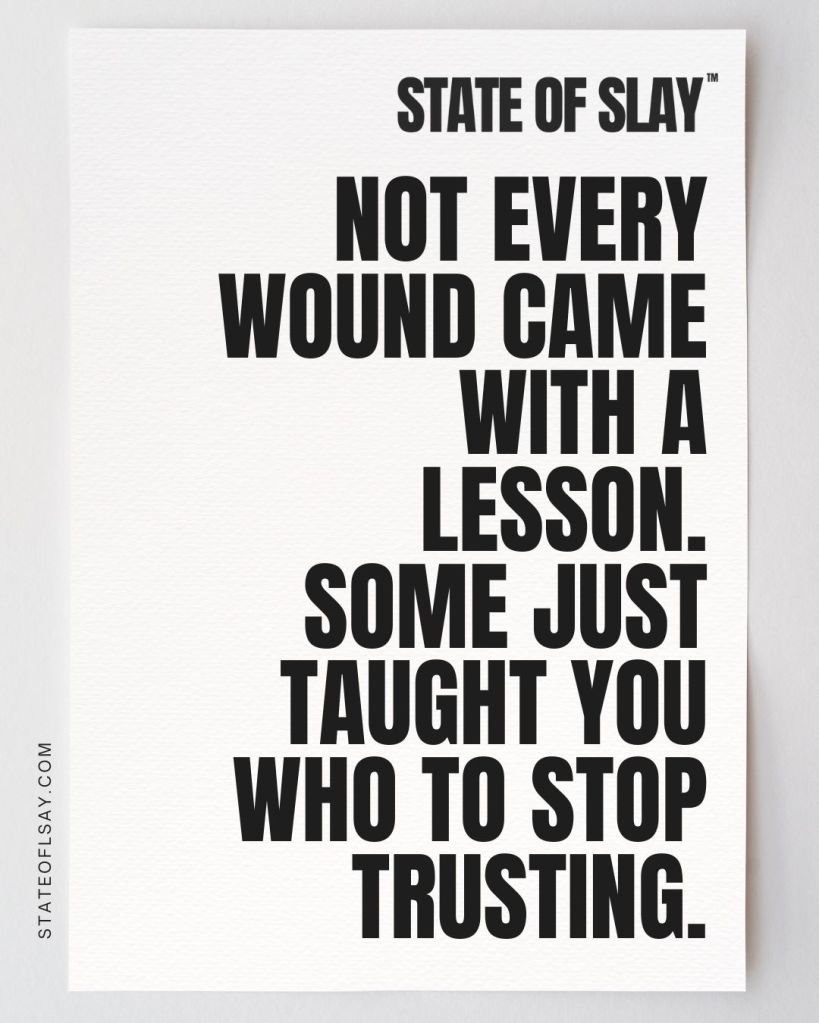
Betrayal Does Not Just Break Trust in Others, It Breaks Trust in Ourselves

Betrayal Does Not Just Break Trust in Others, It Breaks Trust in Ourselves is something I did not understand at first.

When betrayal happened in my life, my focus was always outward.

What they did.
How they hurt me.
Why I did not see it coming.

I replayed their actions over and over, trying to make sense of it. Trying to understand how someone I trusted could break that trust so completely.

But over time, I began to notice something deeper.

It was not just my trust in them that was broken.

It was my trust in myself.


Prefer to listen? The Audio Blog version is available here.


Betrayal Shakes Your Internal Foundation

When someone betrays you, it creates more than pain.

It creates doubt.

Not just about them, but about your own judgment.

How did I not see this?
Why did I ignore the signs?
Can I trust myself to choose better next time?

Those questions can linger long after the situation has ended.

And if they are not addressed, they begin to erode your confidence from the inside out.


I Had to Look at My Own Part Without Blame

This was one of the hardest parts of healing.

Not blaming myself for what happened, but being willing to look at where I may have ignored my own intuition.

There were moments when something felt off.

Moments when I questioned things but chose to dismiss them. Moments when I prioritized keeping the peace over asking the hard questions.

Recognizing that was not about taking responsibility for someone else’s actions.

It was about rebuilding trust with myself.


Trusting Yourself Is a Skill

We often think of trust as something we give to others.

But self-trust is just as important.

It is built through listening to yourself. Through honoring your instincts. Through acting in alignment with what you know to be true.

When we override those signals repeatedly, we weaken that trust.

And betrayal has a way of bringing that to the surface.

Not to punish us.

But to show us where we disconnected from ourselves.


Healing Means Reconnecting With Your Voice

After betrayal, it can feel safer to shut down.

To avoid trusting. To avoid vulnerability. To keep your guard up.

But that approach keeps you disconnected.

Healing requires something different.

It requires rebuilding the relationship you have with yourself.

Listening again. Trusting your instincts again. Allowing yourself to believe that you can make good decisions moving forward.

That process takes time.

But it is worth it.


You Are Not Defined by What Happened

It is easy to let betrayal shape how you see yourself.

To feel like you were naive. Or weak. Or not enough.

But what happened to you is not who you are.

You trusted. You cared. You showed up.

Those are not flaws.

Those are strengths.

The goal is not to stop being those things.

It is to pair them with awareness.


Boundaries Are Built From Experience

One of the most valuable things that can come from betrayal is clarity.

Clarity around what you will accept and what you will not.

Clarity around what alignment feels like and what it does not.

Clarity around the importance of listening to yourself.

That clarity becomes the foundation for stronger boundaries.

And stronger boundaries create safer relationships.


You Can Trust Yourself Again

This is the part that matters most.

You can rebuild trust with yourself.

By paying attention. By honoring your instincts. By making choices that align with your values.

It does not happen overnight.

But with each decision, with each moment of choosing yourself, that trust begins to return.

Stronger than before.

Because now it is rooted in awareness.


Betrayal Can Become a Turning Point

As painful as betrayal is, it can also become a moment of growth.

A moment where you stop looking outward for answers and begin looking inward.

A moment where you reconnect with your own voice.

A moment where you realize that your strength was never in avoiding pain.

It was in your ability to learn from it.

To grow from it.

And to trust yourself again.


SLAY Reflection

S — See the Impact
How has betrayal affected the way you trust yourself?

L — Look Within
Were there moments where your intuition spoke to you, but you did not listen?

A — Acknowledge Growth
What have you learned from that experience that can guide you moving forward?

Y — Your Next Step
What is one way you can begin rebuilding trust with yourself today?


Call to Action: Join the Conversation

I’d love to hear from you.
Have you ever realized that rebuilding trust with yourself was the most important part of healing from betrayal?

Share your story in the comments. Let’s cheer each other on.

And if you know someone who might need this reminder, send this to them.
Sometimes, all we need is a nudge.

If You Don’t Let the Past Die, It Won’t Let You Live

There was a time when my past followed me everywhere.

Not physically, of course. But emotionally, mentally, and spiritually, it was always there. Old memories, regrets, mistakes, and moments I wished had gone differently replayed in my mind like a story that never reached its ending.

For a long time, I believed holding on to those memories was important. I told myself I needed to remember them so I would never repeat them. I believed revisiting those moments meant I was learning from them.

But eventually I realized something.

I was not learning from my past.

I was living inside it.

And when we stay emotionally rooted in yesterday, we miss the life unfolding right in front of us.


Prefer to listen? The Audio Blog version is available here.


The Past Is Meant to Teach, Not Trap

Our past experiences matter. They shape who we are, what we value, and how we see the world.

The lessons we learn from difficult moments can make us stronger, wiser, and more compassionate.

But there is a difference between learning from the past and carrying it everywhere we go.

When we replay old mistakes constantly, relive painful conversations, or keep punishing ourselves for choices we can no longer change, the past stops being a teacher.

It becomes a prison.

And prisons are not where growth happens.


I Had to Learn to Release My Story

For years, I defined myself by parts of my past that I was not proud of.

I held onto moments where I felt I had failed, hurt someone, or lost control of my life. Those memories felt like permanent labels attached to who I was.

Letting go of them felt dangerous. It almost seemed like forgetting meant I was ignoring responsibility.

But I slowly began to understand that releasing the past does not mean pretending it never happened.

It means allowing it to be what it was. A moment in time. Not the identity I would carry forever.

When I stopped reliving those moments and instead focused on who I was becoming, something shifted.

I finally felt free to grow.


Holding On Keeps Old Pain Alive

When we refuse to let the past rest, we keep the emotions connected to it alive.

Regret. Anger. Shame. Resentment.

Those emotions continue to influence how we see ourselves and others. They shape our reactions, our confidence, and our willingness to trust.

In many ways, holding onto the past can recreate the pain again and again.

We suffer from events that are no longer happening.

And that suffering prevents us from fully experiencing the present.


Forgiveness Creates Space for Living

One of the most powerful ways to release the past is through forgiveness.

Sometimes that forgiveness is directed toward another person. Sometimes it is directed toward ourselves.

Self-forgiveness can be especially difficult because we often believe we should have known better, done better, or handled things differently.

But growth means recognizing that we were operating with the awareness we had at the time.

Forgiveness does not erase responsibility. It allows healing to begin.

And healing makes space for a different future.


The Present Deserves Your Attention

Life only happens in one place.

Right now.

The conversations we have today, the choices we make today, and the people we become today shape the direction of our lives far more than any memory from years ago.

When we release our grip on the past, our energy returns to the present moment.

We begin to see opportunities we once overlooked. We become more open to connection, creativity, and possibility.

And we stop measuring our worth against moments that no longer exist.


Growth Requires Forward Movement

Letting the past rest is not about denial. It is about direction.

We acknowledge what happened. We take responsibility where it is needed. We learn from it.

Then we move forward.

Growth cannot occur when we are emotionally anchored to yesterday.

It happens when we allow ourselves to evolve.

Every new decision we make has the power to shape who we become next.

And that future deserves our attention far more than the past deserves our attachment.


Release What No Longer Serves You

Your past may explain parts of your story, but it does not have to control the rest of it.

The mistakes, heartbreaks, and regrets you carry do not define the person you are becoming.

They are chapters. Not the entire book.

Let them teach you.

Let them inform you.

But do not let them imprison you.

Because if you refuse to let the past die, it will keep you from living the life waiting for you now.

SLAY on.


SLAY Reflection

S — See the Weight
What parts of your past do you still carry emotionally today?

L — Look for the Lesson
What did those experiences teach you that can guide you moving forward?

A — Allow Forgiveness
Is there someone you need to forgive, including yourself, to release that weight?

Y — Your Next Step
What would your life feel like if you allowed the past to stay where it belongs?


Call to Action: Join the Conversation

I’d love to hear from you.
Have you ever experienced a moment where letting go of the past helped you finally move forward?

Share your story in the comments. Let’s cheer each other on.

And if you know someone who might need this reminder, send this to them.
Sometimes, all we need is a nudge.

Are Your Words Making You Sick?

We often think of health in terms of what we eat, how we move, and how well we sleep.

But there is another influence on our well-being that many of us overlook.

The words we speak.

Not just the words we say to others, but the words we say to ourselves.

For years, I did not realize how much my internal language was affecting my emotional and physical health. The way I talked about myself, my circumstances, and my struggles was often harsh, negative, and unforgiving. I thought I was simply being honest with myself.

But over time, I began to understand something powerful.

The words we repeat become the environment our minds live in.

And if that environment is filled with criticism, fear, and negativity, it begins to shape how we feel, how we act, and even how our bodies respond.


Prefer to listen? The Audio Blog version is available here.


The Language We Use Becomes Our Reality

Our brains are constantly listening to us.

Every time we say things like “I am terrible at this,” “Nothing ever works out for me,” or “I always mess things up,” the brain absorbs those messages. It begins to accept them as facts rather than temporary feelings.

Eventually, those words form patterns.

And those patterns influence behavior, motivation, and confidence.

I used to underestimate how powerful this internal dialogue was. I believed negative self-talk was harmless. I thought it was simply part of being self-critical or striving to improve.

But negative language does not inspire growth. It creates a limitation.

The more we repeat discouraging messages, the more believable they become.


I Had To Change How I Spoke To Myself

There was a point in my life where my internal dialogue became impossible to ignore.

I noticed how often I spoke to myself in ways I would never speak to someone I loved. I used language that was judgmental, impatient, and unforgiving.

And it showed.

My stress levels increased. My confidence shrank. My outlook became more pessimistic.

Eventually, I asked myself a simple question.

Would I talk to a friend the way I talk to myself?

The answer was an immediate no.

That realization made it clear that something needed to change.


Words Can Heal Or Harm

Language carries energy.

Encouraging words can build resilience. Kind words can restore hope. Honest words can create clarity.

But harsh words can also erode confidence, increase anxiety, and deepen self-doubt.

This is especially true when those words come from within.

When we repeatedly tell ourselves that we are incapable, unworthy, or doomed to fail, our minds begin to operate under those assumptions.

But when we shift our language, something remarkable happens.

Our perspective shifts with it.


The Difference Between Honesty And Harm

Changing your internal language does not mean ignoring challenges or pretending everything is perfect.

It means choosing honesty without cruelty.

Instead of saying “I always fail,” you might say “I did not succeed this time, but I can learn from it.”

Instead of “I am terrible at this,” you might say “I am still developing this skill.”

Those small shifts matter.

They create space for improvement instead of shutting the door on possibility.

And possibility is where growth lives.


Your Body Listens Too

Stress does not only live in the mind. It shows up in the body.

Negative internal language can increase tension, anxiety, and emotional fatigue. When we constantly criticize ourselves, our nervous system often responds as if it is under threat.

Over time, that stress can affect sleep, energy levels, and emotional balance.

Positive language does not magically erase problems, but it can reduce unnecessary stress and create a healthier mental environment.

Your words become signals to your brain about how safe or unsafe the world feels.

Choosing supportive language can help restore balance.


Awareness Is The First Step

Most of us are not fully aware of how often we speak negatively about ourselves.

The first step is simply noticing.

Pay attention to the words that appear when you make a mistake, face a challenge, or feel frustrated.

Ask yourself whether those words support your growth or undermine it.

If they undermine it, consider how you might reframe them.

Small adjustments in language can lead to powerful shifts in mindset.


Compassion Creates Strength

One of the greatest lessons I have learned is that self-compassion does not weaken us.

It strengthens us.

When we treat ourselves with patience and encouragement, we create the emotional stability needed to keep moving forward.

Harsh self-judgment may feel motivating in the moment, but it rarely leads to sustainable growth.

Compassion allows us to learn without destroying our confidence.

And confidence is essential for lasting change.


Speak To Yourself Like Someone Worth Healing

You deserve words that support your well-being.

Words that acknowledge effort. Words that encourage growth. Words that allow mistakes to become lessons rather than identity.

Changing your internal language will not transform your life overnight.

But over time, it can change the atmosphere of your mind.

And when the atmosphere changes, your perspective begins to change with it.

Your thoughts become kinder.

Your actions become stronger.

Your health becomes steadier.

So the next time you notice yourself speaking harshly about your abilities, your worth, or your future, pause.

And ask yourself a simple question.

Are my words helping me heal, or are they making me sick?

Choose wisely.


SLAY Reflection

S — See the Pattern
What words do you most often use when talking about yourself during a difficult moment?

L — Listen Closely
Would you speak to someone you care about using those same words?

A — Adjust Your Language
How could you reframe those statements to be honest but supportive?

Y — Your Next Step
What encouraging phrase could you begin practicing when you face a setback or challenge?


Call to Action: Join the Conversation

I’d love to hear from you.
Have you ever noticed how your words affect your mood, confidence, or well-being?

Share your story in the comments. Let’s cheer each other on.

And if you know someone who might need a reminder to speak to themselves with more kindness, send this to them.
Sometimes, all we need is a nudge.

If Their Absence Brings You Peace You Did Not Lose Them

There was a time when I believed every ending was a loss.

If a relationship faded, if someone stepped away, if a friendship dissolved, I assumed I had failed somehow. I replayed conversations. I questioned my worth. I wondered what I could have done differently.

And sometimes there were lessons to learn. Accountability matters. Growth matters. Self-reflection matters.

But there came a moment when I noticed something I could not ignore.

Peace.

Not immediately. Not dramatically. But gradually, quietly, consistently. The absence of certain people or situations brought calm instead of chaos.

And that realization shifted everything.

Because sometimes what we call loss is actually relief.


Prefer to listen? The Audio Blog version is available here.


Peace Is Powerful Information

Peace is data.

If someone’s absence lowers your anxiety, reduces tension, or allows you to feel more like yourself, that is worth paying attention to. It does not necessarily mean the other person is bad. It simply means the dynamic was not healthy for you.

Not every connection is meant to last forever.

Some people enter our lives to teach us boundaries. Some show us what we need. Some reveal what we deserve. And some simply outgrow alignment with who we are becoming.

That is not failure.

That is evolution.


Growth Changes Relationships

As we grow, our needs change. Our values sharpen. Our tolerance for certain behaviors shifts. What once felt normal may start to feel draining.

I experienced this firsthand.

As I committed more deeply to healing, honesty, and self-respect, some relationships no longer fit. Conversations felt forced. Energy felt mismatched. Peace felt compromised.

Letting go was uncomfortable at first.

But staying would have been more uncomfortable in the long run.

Growth often requires recalibration.

And that includes relationships.


Letting Go Is Not Always Rejection

It is easy to interpret distance as rejection. I certainly did.

But many times, distance is simply alignment adjusting.

Sometimes two people are both growing, just in different directions. Sometimes, timing changes compatibility. Sometimes healing requires space.

And sometimes peace requires distance.

Recognizing that helped me release resentment and guilt.

Because letting go can be an act of self-respect, not hostility.


You Are Allowed To Choose Peace

This was one of the hardest lessons for me.

I used to believe choosing peace was selfish. That maintaining relationships at any cost was the kinder choice. That discomfort was just part of connection.

But chronic tension is not connection.

Consistent anxiety is not intimacy.

Emotional exhaustion is not loyalty.

Peace is not something you earn by enduring discomfort. It is something you protect by making aligned choices.

And you are allowed to protect it.


Absence Can Clarify Value

When someone leaves your daily orbit, clarity often follows.

You see patterns more clearly. You notice emotional shifts. You understand what you were tolerating versus what you truly needed.

Sometimes that clarity leads to reconnection later in a healthier way. Sometimes it confirms the separation was necessary.

Both outcomes can be valid.

The goal is not permanence.

The goal is well-being.


Loss And Relief Can Coexist

It is important to acknowledge this nuance.

You can miss someone and still feel more peaceful without them. You can appreciate what was while accepting what is. You can hold gratitude and boundaries simultaneously.

Human emotions are layered.

Allowing that complexity creates emotional maturity.

And emotional maturity supports healthier future connections.


Choosing Peace Supports Growth

Peace creates space.

Space for clarity. Space for healing. Space for creativity. Space for joy.

When your nervous system is not constantly bracing for stress, your energy becomes available for growth instead of survival.

That shift changes everything.

And often, it begins by acknowledging that peace is not accidental.

It is intentional.


SLAY Reflection

Let’s reflect, SLAYER:

S: Have you ever felt more peaceful after a relationship or situation ended?

L: What did that peace reveal about your needs or boundaries?

A: Are there dynamics currently in your life that feel more draining than supportive?

Y: What step could you take to protect your peace while remaining compassionate?


Call to Action: Join the Conversation

I’d love to hear from you.
Have you experienced a situation where someone’s absence created unexpected peace, and what did you learn from it?
Share your story in the comments. Let’s cheer each other on.

And if you know someone navigating change in relationships, send this to them.
Sometimes, all we need is a nudge.

The Only Out Is Through

There was a time when I believed avoidance was survival.

If something hurt, I distracted myself. If something scared me, I delayed it. If something overwhelmed me, I convinced myself it would pass on its own.

Sometimes it did.

But most of the time, it waited.

And eventually, whatever I was avoiding showed up again. Usually louder. Usually heavier. Usually, at a time when I felt even less prepared to handle it.

That was when I finally understood something that has become a guiding truth in my life.

The only out is through.

Not around it. Not over it. Not pretending it is not there. Through it.

And while that realization was intimidating at first, it ultimately became freeing.


Prefer to listen? The Audio Blog version is available here.


Avoidance Feels Safer Until It Isn’t

Avoidance gives temporary relief. It lowers anxiety in the moment. It allows us to breathe for a second.

But unresolved emotions, difficult conversations, grief, fear, and truth do not disappear simply because we delay them.

They accumulate.

They surface in stress, burnout, irritability, anxiety, and even physical symptoms. And often, the longer we avoid something, the bigger it feels.

Facing something directly is rarely comfortable. But avoiding it usually costs more in the long run.

That was a hard lesson for me.

But a necessary one.


Growth Lives On The Other Side Of Discomfort

Every meaningful shift in my life required walking through discomfort.

Healing. Honest conversations. Setting boundaries. Admitting mistakes. Asking for help. Letting go of relationships that no longer served me. Even allowing joy again after loss.

None of that happened by bypassing difficult emotions.

It happened by moving through them.

And while the process was not always graceful, it was transformative.

Because growth rarely happens in comfort zones.

It happens when we face what we would rather avoid.


Emotional Courage Builds Emotional Strength

Courage is often misunderstood.

People assume it means fearlessness. But most of the courageous choices I have made happened while I was afraid.

Speaking honestly when silence felt easier. Showing vulnerability when hiding felt safer. Choosing healing when numbness felt familiar.

Courage is not the absence of fear.

It is movement despite fear.

And each time you move through something difficult, your emotional resilience grows.

That confidence compounds.


My Own Turning Point

There was a moment when I realized I could not keep outrunning myself.

Old patterns. Old pain. Old coping strategies. They were not working anymore. They were exhausting me.

So I made a choice.

Not to rush healing. Not to force perfection. Just to start walking through what I had been avoiding.

Therapy. Honest conversations. Self-reflection. Accountability. Forgiveness.

It was uncomfortable. Sometimes painful. Occasionally messy.

But it was also liberating.

Because each step forward reduced the weight I had been carrying.


Through Does Not Mean Alone

One important clarification.

Moving through something does not mean you have to do it alone.

Support matters. Friends. Family. Therapists. Mentors. Community. Shared experiences.

Connection often makes difficult processes more manageable. It provides perspective, encouragement, and accountability.

Strength is not isolation.

Strength is allowing support while doing the work.

And that combination is powerful.


Progress Is Not Linear

There were days I felt strong. Days I felt exhausted. Days I felt hopeful. Days I felt overwhelmed.

That fluctuation is normal.

Healing is rarely a straight line. It is often a spiral. You revisit themes at deeper levels. You grow gradually. You build resilience incrementally.

The key is movement.

Even slow movement counts.

Even uncertain movement counts.

Forward is forward.


Peace Comes From Processing, Not Avoiding

When you move through something instead of around it, something shifts internally.

Clarity replaces confusion. Acceptance replaces resistance. Peace replaces tension.

Not instantly.

But steadily.

And that peace becomes a foundation you carry forward into future challenges.

Which makes future obstacles feel less intimidating.

Because you already know you can move through them.


SLAY Reflection

Let’s reflect, SLAYER:

S: What situation or emotion have you been avoiding lately?

L: What feels most uncomfortable about facing it directly?

A: Who could support you as you move through this experience?

Y: What small step today would represent forward movement rather than avoidance?


Call to Action: Join the Conversation

I’d love to hear from you.
What challenge taught you that the only way forward was through, and what did you learn on the other side?
Share your story in the comments. Let’s cheer each other on.

And if you know someone navigating a difficult season, send this to them.
Sometimes, all we need is a nudge.

Slay Say

Growth Is Not Found in the Replay

Healing does not come from looping the moment that hurt you. It comes from the courage to pause, reflect, and ask what the experience revealed about your boundaries, your needs, or your strength.

Growth begins when you stop reopening the wound and start honoring the wisdom it left behind.

This is your reminder to let the lesson move you forward, not the pain keep you stuck.

Slay on.

Slay Say

There will always be forces
that benefit from your forgetting.
From your shrinking.
From your silence.

Choosing to remember who you are
is not selfish.
It’s not loud.
It’s not for show.

It’s coming home.

This is your reminder:
Reclaiming yourself is a quiet power.
Staying rooted in who you are
is how you stand without permission.

Slay on.

Survival Mode Is Meant to Save Your Life Not Become Your Life

There are seasons in life where survival mode is necessary. Where getting through the day is an act of bravery. Where your nervous system is on high alert, your heart is guarded, and your only goal is to make it to tomorrow.

Survival mode isn’t weakness.
It’s instinct.
It’s protection.
It’s your body and mind stepping in when things feel unsafe, overwhelming, or unbearable.

But survival mode was never meant to be permanent.

It’s meant to save your life, not define it.

And yet, so many of us stay there far longer than we should — not because we want to, but because it becomes familiar. Predictable. Safer than the unknown.

The danger isn’t entering survival mode.
The danger is building a life inside it.


When Survival Mode Becomes Your Default

Survival mode doesn’t always look dramatic. Sometimes it’s quiet. Functional. Even impressive from the outside.

You’re productive but disconnected.
Independent but exhausted.
Strong but numb.
Capable but constantly bracing for impact.

You tell yourself you’re fine because you’re still standing. Still working. Still showing up. But inside, everything feels tight. Restricted. On edge.

You’re not living — you’re managing.

When survival mode becomes your baseline, your nervous system forgets what safety feels like. Rest feels foreign. Joy feels suspicious. Peace feels temporary.

You stay alert because letting your guard down once cost you something.
And your body remembers.

But living in survival mode long-term comes at a price — emotionally, mentally, physically, and spiritually.


Survival Mode Kept You Alive Honor That

Before we talk about leaving survival mode, let’s be clear about something important:

Survival mode served a purpose.

It helped you endure what you couldn’t escape.
It helped you function when you couldn’t fall apart.
It helped you stay alive when the alternative felt unbearable.

There is no shame in that.

But honoring survival mode doesn’t mean staying there forever. Gratitude doesn’t require permanence. You can thank the coping mechanisms that carried you — without allowing them to cage you.

What once protected you may now be limiting you.
What once kept you safe may now be keeping you small.

And that doesn’t mean you failed — it means you’ve grown.


You Can’t Heal While You’re Still Bracing for Impact

Healing requires safety.
Growth requires space.
Peace requires permission.

Survival mode doesn’t allow for any of those things.

When you’re constantly preparing for the next threat, your body stays tense. Your mind stays guarded. Your heart stays armored. There’s no room to soften — and without softness, healing can’t land.

You might notice this showing up as:

  • Difficulty relaxing even when things are good
  • Feeling guilty for resting
  • Expecting something bad to happen when things feel calm
  • Struggling to trust happiness or stability
  • Staying busy to avoid feeling

This isn’t because you’re broken.
It’s because your system learned that staying alert was safer than being open.

But what kept you alive is not what will help you thrive.


Leaving Survival Mode Can Feel Scarier Than Staying

Here’s the part no one talks about enough:
Leaving survival mode can feel terrifying.

When survival has been your identity, peace can feel unfamiliar. Stillness can feel unsafe. And healing can bring up emotions you didn’t have time to feel when you were just trying to survive.

Survival mode is exhausting — but it’s predictable.
Healing is freeing — but it’s unknown.

So you stay guarded.
You stay busy.
You stay “fine.”

Not because you don’t want more — but because more requires vulnerability.

And vulnerability feels risky when you’ve been hurt before.


You Are Allowed to Want More Than Survival

There comes a moment — sometimes quiet, sometimes loud — when something inside you says:
I don’t want to live like this anymore.

Not because life is falling apart.
But because you’re tired of holding it together.

That moment isn’t weakness.
It’s wisdom.

You are allowed to want ease.
You are allowed to want joy.
You are allowed to want a life that feels expansive instead of constricted.

Choosing to leave survival mode doesn’t mean you forget what you’ve been through. It means you refuse to let your past trauma dictate your future.

It means choosing regulation over reaction.
Presence over protection.
Living over enduring.


Healing Is Learning That You’re Safe Now

Leaving survival mode is a process — not a switch.

It looks like learning how to rest without guilt.
Learning how to feel without panicking.
Learning how to trust yourself again.

It means teaching your nervous system that the danger has passed — even when it doesn’t fully believe you yet.

You don’t rush it.
You don’t force it.
You gently remind yourself again and again:

I am safe now.
I don’t have to brace anymore.
I can exhale.

Healing is not about erasing what happened — it’s about expanding beyond it.


You Deserve a Life That Feels Like Living

Survival mode kept you breathing.
Healing lets you breathe deeply.

You weren’t meant to live clenched, guarded, and constantly on edge. You weren’t meant to mistake exhaustion for strength or numbness for stability.

You were meant to feel joy without fear.
To rest without apology.
To live without constantly scanning for danger.

Survival mode is a chapter — not the whole story.

And if you’re reading this, it might be time to turn the page.


SLAY Reflection

Let’s reflect, SLAYER:

S: Where in your life are you still operating from survival instead of safety?
L: What coping mechanisms once helped you survive but may now be limiting your growth?
A: What would it look like to give yourself permission to rest, soften, or receive support?
Y: How would your life feel if survival was no longer your default?


Call to Action: Join the Conversation

I’d love to hear from you.
Where do you notice survival mode showing up in your life and what would healing look like for you right now?
Share your story in the comments. Let’s cheer each other on.

And if you know someone who’s been surviving longer than they should have to, send this to them.
Sometimes, all we need is a nudge.

The First Step Toward Answers Is Being Brave Enough to Ask the Question

There’s a moment — quiet, subtle, easy to miss — when your life begins to shift.
It’s the moment you finally stop pretending you already know. The moment you stop running from the truth. The moment you decide that not knowing is no longer scarier than staying stuck.

That moment is a question.

We don’t talk enough about how much courage it takes to ask one. Because asking a real, honest, soul-level question isn’t just seeking information — it’s opening a door you can’t close again. It’s admitting you want something different. It’s acknowledging that what you’ve been doing is no longer enough.

And for many of us, that is the hardest step of all.


Why We Fear the Questions We Need to Ask

We fear the answers, yes — but often, we fear the asking even more.

Because asking a question means:

  • I might hear something I don’t want to hear.
  • I might have to change.
  • I might be seen.
  • I might learn the truth.

So we avoid it. We distract ourselves. We pretend we’re fine. We convince ourselves we already know how it will go.

But avoidance is its own kind of prison.
And silence is its own kind of answer.

When we refuse to ask the questions that could heal us, save us, free us, or grow us, we stay stuck in a life that feels too small for who we are becoming.


The Questions That Change Everything

Real transformation doesn’t come from having all the answers.
It comes from being willing to ask the uncomfortable questions — the ones that scrape at the truth.

Questions like:

  • What am I afraid to admit?
  • What is this really about?
  • What am I pretending not to know?
  • What do I need?
  • What would I choose if I believed I deserved better?

These are the questions that crack things open.
These are the questions that stop the cycle.
These are the questions that begin your becoming.

And yes — they require courage.
But courage isn’t the absence of fear. Courage is asking the question while your voice trembles.


Answers Don’t Arrive Without an Invitation

There’s a spiritual truth that I learned early in my healing journey:

You cannot receive answers to questions you’re too afraid to ask.

Life will not force clarity on you.
Healing will not push its way in.
Growth will not drag you forward.

You have to invite it.

You have to ask:

  • Why does this pattern keep repeating?
  • What part of me still needs to be healed?
  • What is this trying to teach me?

When you ask the question, the universe, your intuition, your higher self — whatever language you use — finally has somewhere to deliver the answer.

Asking the question is the knock on the door.
The answer is what steps through.


Bravery Looks Like Curiosity, Not Certainty

We think bravery requires confidence.
But most of the bravery in my life came in moments where I didn’t feel certain at all.

Bravery looked like:

  • sitting with someone and saying, “I don’t know how to fix this — can we talk?”
  • looking in the mirror and whispering, “Why do I keep hurting myself this way?”
  • asking for help long before I believed I deserved it
  • admitting I didn’t have control — and never really did

Questions are not weakness.
Questions are self-respect.
Questions are the beginning of wisdom.

The bravest people I know aren’t the ones with the answers — they’re the ones willing to keep asking.


You Deserve the Life That Lives Beyond the Question

There is a version of you waiting on the other side of one brave question.

A more grounded you.
A more peaceful you.
A more aligned, self-aware, self-honoring you.

But you cannot reach her — cannot step into her — if you’re unwilling to ask what needs to be asked.

Whether it’s a question about love, healing, boundaries, forgiveness, purpose, or truth, your life expands the moment you become brave enough to be curious.

Asking the question doesn’t guarantee the answer will be easy.
But not asking guarantees nothing will change.

SLAYER, don’t let fear keep you from the clarity that could change your entire life.

Ask.
Be curious.
Be brave.

Your answers are waiting.


SLAY Reflection

  1. What important question have you been avoiding — and why?
  2. What fear shows up when you imagine asking it?
  3. How might your life shift if you allowed yourself to seek clarity?
  4. What question could help you break a repeating pattern in your life?
  5. What small act of courage can you take this week to open the door to the answers you need?

  • S – Seek clarity instead of avoiding discomfort
  • L – Let curiosity lead you toward truth
  • A – Ask bravely, even when you’re afraid
  • Y – Yield to the wisdom that arrives when you open the door

Call to Action: Join the Conversation

I’d love to hear from you.
What question are you finally brave enough to ask yourself?
Share your story in the comments. Let’s cheer each other on.

And if you know someone who’s been afraid to seek the truth, send this to them.
Sometimes, the right question is the beginning of a new life.

The Convenient Lie vs. The Inconvenient Truth

There’s a moment we all face at some point in our lives — that split second where we know the truth, feel the truth, and can almost hear it knocking inside us… yet we swallow it, push it aside, or cover it with something easier. Something softer. Something far more convenient.

A convenient lie.

Convenient lies are seductive. They shield us from discomfort, delay accountability, and let us stay exactly where we are. They keep the peace — temporarily. They protect our reputation — superficially. They protect our ego — momentarily. But they never move us forward.

The inconvenient truth, on the other hand, doesn’t care about comfort. It doesn’t soften its edges to make the landing easier. It shows up as it is — raw, revealing, and sometimes painful. But it is always the doorway to freedom.

And this is the paradox:
Lies keep us safe in the moment. Truth keeps us free in our lives.

Learning to choose the inconvenient truth over the convenient lie is one of the most defining acts of emotional maturity we will ever face.


Prefer to listen? The Audio Blog version is available here.


Why We Choose the Convenient Lie

Let’s be honest — most lies don’t come from cruelty. They come from fear.

Fear of hurting someone.
Fear of looking bad.
Fear of disappointing others.
Fear of disappointing ourselves.
Fear of consequences.
Fear of change.

For years, I leaned on convenient lies because the truth felt overwhelming. It meant confronting who I had become. It meant taking responsibility. It meant letting go of people, habits, or patterns that once kept me afloat.

Convenient lies feel like cushions.
Inconvenient truths feel like cliffs.

But here’s the thing:
Cushions can suffocate you just as quickly as cliffs can scare you.

Convenient lies delay pain, but they guarantee suffering.


The High Cost of Avoiding the Truth

When you bend, blur, or bury the truth, you pay for it in ways you don’t always see right away.

The cost shows up later as:

  • anxiety you can’t explain
  • guilt that follows you into bed
  • shame that sticks to your skin
  • relationships built on uneven ground
  • resentment that grows each time you betray your own integrity
  • a life that doesn’t feel like yours

Convenient lies feel like relief… until they don’t.

Because every time you avoid the truth, you abandon a piece of yourself. And eventually, those pieces add up.


The Inconvenient Truth: A Pathway to Freedom

Telling the truth has consequences. That’s why it scares us.

But so does hiding it.

The difference is that truth gives you your life back.

The inconvenient truth does not destroy you — it reveals you. It strips away illusion, denial, fantasy, and projection. It brings you back into alignment with yourself. It allows you to grow.

It is inconvenient because it demands clarity, responsibility, ownership, and sometimes painful self-awareness. But it also gives you something no lie ever could:

Peace.

The kind of peace you don’t need to earn.
The kind of peace you don’t need to protect.
The kind of peace that only comes from living in integrity.


Truth Doesn’t Hurt as Much as Staying in What Isn’t True

We’ve all been taught that “the truth hurts.” But the truth doesn’t hurt nearly as much as living a lie — especially a lie you tell yourself.

The lie says: “If I tell the truth, I’ll lose them.”
The truth says: “If you have to lie to keep someone, you’ve already lost them.”

The lie says: “If I ignore it, it will go away.”
The truth says: “What you avoid controls you.”

The lie says: “It’s not the right time to face this.”
The truth says: “There is no right time — only now.”

Truth invites you into reality — and reality, even when painful, is where healing lives.


Being Honest With Yourself Is the Hardest Part

You cannot offer truth to others if you refuse to sit with it yourself.

Some of the hardest truths I’ve ever faced were not the conversations I had with other people — but the ones I had alone at night, staring at my reflection and realizing:

I had lied to myself about what I could handle.
I had lied to myself about who someone really was.
I had lied to myself about what I deserved.
I had lied to myself about my patterns and intentions.
I had lied to myself to stay comfortable.

Those truths were inconvenient.
They were painful.
But they were transformational.

Self-honesty is the birthplace of self-respect.


How to Choose Truth When the Lie Feels Easier

Here are practices that help you step into honesty with courage:

1. Sit with discomfort instead of escaping it.

Discomfort isn’t danger — it’s data.

2. Notice when you rationalize.

Any sentence that starts with “It’s no big deal” or “It doesn’t matter” is a clue.

3. Ask yourself: “What am I afraid will happen if I tell the truth?”

Your answer is where the work begins.

4. Practice micro-honesty.

Small truths make room for bigger ones.

5. Let go of outcomes.

Your job is to tell the truth — not control what happens after.

Truth is not the burden.
Carrying the lie is.


Choosing Truth Is Choosing Yourself

At the end of the day, choosing the inconvenient truth means choosing yourself — your integrity, your peace, your inner alignment.

When you tell the truth, you stop betraying yourself for temporary comfort.

You start building a life that can actually hold you.

A life that doesn’t require performance, pretending, or self-betrayal.

A life rooted in the most powerful thing of all:

Authenticity.

And that, SLAYER, is where your freedom lives.


SLAY Reflection

  1. Where in your life are you choosing convenience over truth?
  2. What are you afraid will happen if you tell the truth — and is that fear rooted in reality?
  3. What truth have you been avoiding that feels heavy in your body?
  4. How has hiding the truth kept you stuck or small?
  5. What would choosing truth make possible for you?

  • S – See where you’ve been hiding behind convenience
  • L – Let truth guide your healing, even when it’s hard
  • A – Accept discomfort as part of growth
  • Y – Yield to honesty and reclaim your peace

Call to Action: Join the Conversation

I’d love to hear from you.
What inconvenient truth did you finally face — and how did it change your life?
Share your story in the comments. Let’s cheer each other on.

And if you know someone who’s stuck in a convenient lie, send this to them.
Sometimes, the truth someone’s avoiding is the truth they most need to hear.