Anything You Lose by Not Being Real Was Fake

One of the most freeing realizations you can have is this:

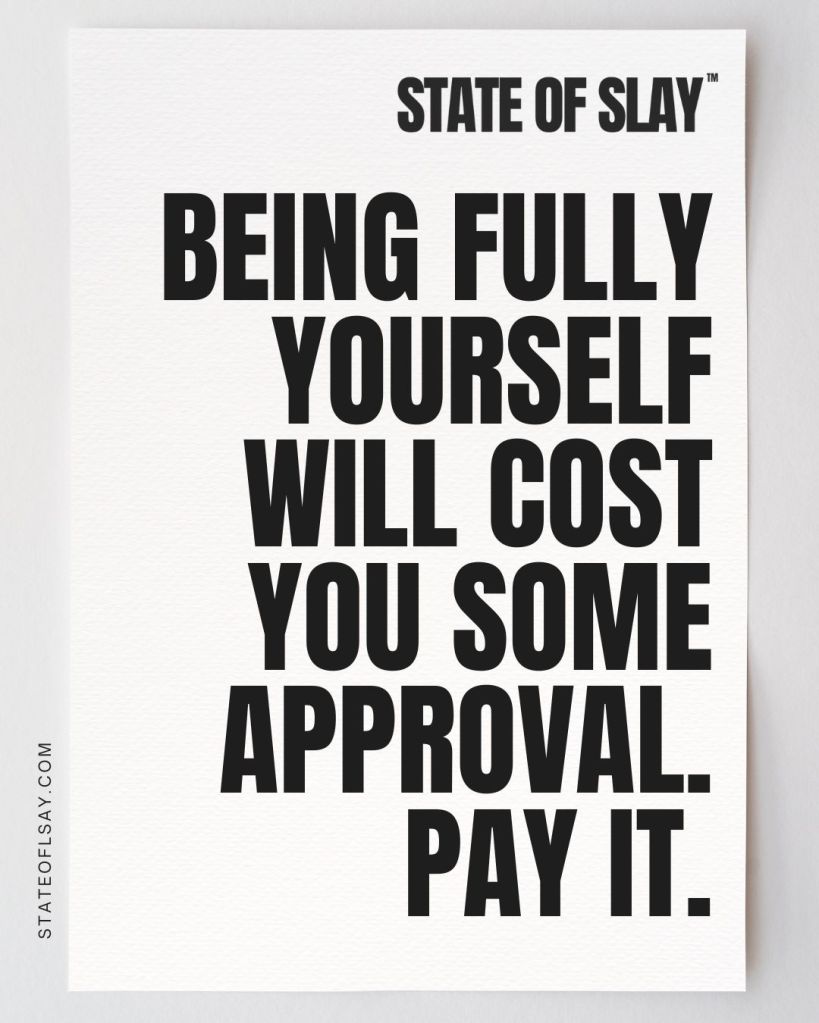
Anything you lose by not being honest about who you are was never truly meant for you to keep.

Not the relationship.
Not the friendship.
Not the approval.
Not the version of belonging that only existed as long as you stayed small, quiet, agreeable, or performative.

Because real connection survives truth.

What falls apart when you become authentic was often built on performance in the first place.


Prefer to listen? The Audio Blog version is available here.


A LOT OF PEOPLE ARE LOVED FOR WHO THEY PRETEND TO BE

That’s the painful part.

Many people spend years carefully shaping themselves into whoever they think will be most accepted.

More agreeable.
Less emotional.
Less outspoken.
Less honest.
Less themselves.

They learn to say what keeps the peace.
Hide what feels inconvenient.
Shrink the parts of themselves that might make other people uncomfortable.

And over time, they become exhausted trying to maintain an identity that was never fully real to begin with.

Because pretending may gain acceptance.

But it often costs self-respect.


PEOPLE-PLEASING CAN CREATE VERY LONELY RELATIONSHIPS

On the surface, it may look like connection.

You are liked.
Included.
Wanted.
Needed.

But deep down, there is often anxiety underneath it.

Because when people only know the edited version of you, part of you quietly wonders:

“If I stop performing, will they still stay?”

That fear keeps many people trapped in relationships where authenticity feels dangerous.

So they overextend.
Over-give.
Over-explain.
Overcompensate.

Not because they are weak, but because somewhere along the way, they learned that love had conditions attached to it.


AUTHENTICITY WILL ALWAYS DISAPPOINT PEOPLE WHO BENEFITED FROM YOUR PERFORMANCE

That truth can be uncomfortable.

Sometimes the people who react most negatively to your growth were benefiting from the version of you that abandoned yourself to keep them comfortable.

The version that never said no.
Never had boundaries.
Never challenged unhealthy dynamics.
Never expressed needs honestly.

And when you begin showing up more authentically, some people will call it selfishness simply because they no longer have the same access to your self-sacrifice.

But becoming real is not betrayal.

It is self-respect.


THE RIGHT PEOPLE DO NOT REQUIRE YOU TO HIDE YOURSELF

Healthy relationships do not demand constant performance.

You should not have to earn connection by suppressing your personality, opinions, emotions, needs, or growth.

Real connection allows honesty.

It allows evolution.
Boundaries.
Imperfection.
Humanity.

The right people may not agree with you all the time.
But they will not require you to become emotionally smaller in order to remain lovable.

That is the difference.


LOSING FAKE CONNECTIONS CAN FEEL LIKE REAL GRIEF

Even when the relationship was unhealthy.

Even when the friendship was conditional.

Even when the approval came at the expense of your well-being.

Because letting go of false connections still hurts.

Humans are wired for belonging.

So when people pull away after you become more authentic, it can trigger deep fears of rejection, abandonment, or loneliness.

But losing relationships built on performance is not the same as losing relationships built on truth.

One was sustainable.

The other was survival.


YOU CANNOT BUILD REAL SELF-WORTH WHILE CONSTANTLY ABANDONING YOURSELF

This is where many people become emotionally exhausted.

Trying to keep everyone happy.
Trying to stay accepted.
Trying to avoid rejection at all costs.

But every time you silence yourself to maintain approval, you send yourself a quiet message:

“My real feelings are less important than keeping other people comfortable.”

That slowly erodes self-trust.

Because deep down, your nervous system knows when you are betraying yourself.

And eventually, the emotional cost becomes too heavy to carry.


BEING REAL FILTERS OUT WHAT WAS NEVER ALIGNED

That is not punishment.

That is clarity.

Authenticity has a way of revealing which relationships are rooted in genuine connection and which ones were built around convenience, control, image, or emotional dependency.

And while that process can feel lonely at first, it is also freeing.

Because you stop wasting energy trying to maintain relationships that only survive when you are pretending.

You stop auditioning for acceptance.

You stop shape-shifting to fit rooms that were never built for your real self.


SOME PEOPLE WILL MISUNDERSTAND YOU NO MATTER WHAT

That is part of life.

You can communicate carefully, love deeply, show up consistently, and still be misunderstood by people who only see you through the lens of their own expectations, projections, or limitations.

You cannot control that.

What you can control is whether you abandon yourself trying to manage everyone else’s perception of you.

And that is where freedom begins.

Not when everyone approves of you.
But when you no longer need them to.


REAL PEACE COMES FROM BEING FULLY YOURSELF

Not the polished version.
Not the socially acceptable version.
Not the least disruptive version.

The real version.

The one that has opinions.
Needs.
Boundaries.
Depth.
Growth.
Honesty.

Because at the end of the day, fake acceptance is still fake.

And there is nothing lonelier than being loved for someone you are pretending to be.

The right people will not disappear when you become more authentic.

If anything, authenticity is what allows the right relationships to finally find you.

Because anything you lose by not being real was never truly rooted in the real you to begin with.


SLAY REFLECTION

S — See the Pattern

Where in your life have you been performing instead of showing up authentically?

L — Let Go of the Fear

What are you afraid people might think if you fully expressed who you are?

A — Accept Your Truth

What parts of yourself deserve to be seen instead of hidden?

Y — Yield to Authenticity

How might your life change if you stopped chasing approval and started choosing honesty?


CALL TO ACTION: JOIN THE CONVERSATION

I’d love to hear from you.

Have you ever lost a relationship, friendship, or sense of belonging after finally being honest about who you are?

Share your thoughts in the comments. Let’s grow through it together.

And if you know someone who’s learning to stop performing for acceptance and start embracing their authentic self, send this to them.

Sometimes losing what was never real is the first step toward finding what is.

Slay Say

WHEN LOYALTY STARTS COSTING YOU YOUR PEACE

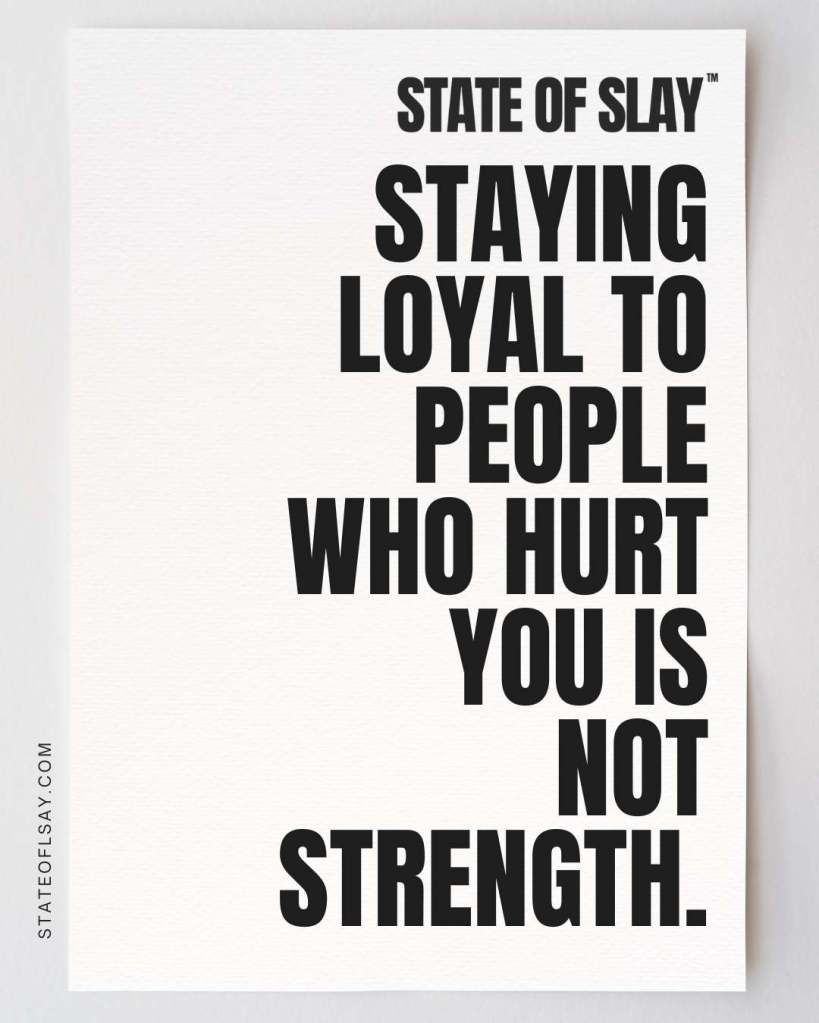
There is a difference between working through something and slowly losing yourself inside it.

Some people will continue hurting you while expecting your understanding.

Crossing lines while asking for patience.
Taking from you while offering very little in return.

And because you care, you stay longer than you should.

You explain.
Forgive.
Give second chances that turn into fifth and sixth chances.

Because walking away can feel harsh.

Like maybe you did not try hard enough.
Like maybe leaving means you stopped caring.

But there comes a point where staying becomes the greater betrayal.

Not of them.

Of yourself.

Because love should not require you to constantly overlook your own hurt just to keep the connection alive.

The moment you start sacrificing your peace to maintain someone else’s access to you, something needs to change.

This is your reminder that protecting yourself is not cruelty. It is self-respect.

Slay on.

Slay Say

Not Everyone Can Hold Your Whole Self

Some people will gravitate toward you
because they see your joy, your spark, your shine.

They love what your presence gives them—
but they are not prepared for your truth,
your strength,
or the boundaries that protect your energy.

Your light is beautiful.
Your fire is powerful.
And both deserve people who can withstand the heat
without asking you to dim.

This is your reminder to stop shrinking
just to make someone else comfortable in your glow.

Slay on!

Slay Say

What Silence Reveals

When someone stops showing up,
you don’t need to chase explanations.

Their absence already speaks the truth—
about effort, about care, about connection.

Closure isn’t always a conversation.
Sometimes it’s the quiet realization
that you no longer need to wait for what isn’t arriving.

This is your reminder to take people at their actions,
not their intentions.

Slay On!

Boundaries Don’t Burn Bridges, They Protect Castles

We often think of boundaries as walls—cold, hard, unmovable. Something that keeps people out. Something that severs ties. But boundaries aren’t built to burn bridges; they’re created to protect the castles we live in: our peace, our worth, our mental and emotional well-being.

Setting boundaries doesn’t make you selfish or difficult. It makes you safe. It makes you sovereign over your own life.


Castles Require Protection

Think about what a castle is: it’s a sanctuary. A stronghold. A place where something valuable lives. And yet, without a gate, without guards, without a moat, it’s just a target.

You are the castle.

Your energy, your time, your kindness, your heart—these are the treasures inside. Boundaries are how you decide who gets access, and under what conditions. They are not about shutting everyone out. They are about making sure that those who enter are willing to honor the space, not pillage it.

If someone sees your boundary as a betrayal, they were never meant to be in your castle to begin with.


Burning Bridges vs. Building Balance

There’s a big difference between cutting someone off out of spite and setting a boundary to preserve your well-being. But not everyone will see it that way—especially those who benefited from you not having boundaries before.

Let that be a red flag.

When someone is upset that you’re taking care of yourself, it says more about them than it does about you. Your healing will threaten the dynamics that were built on your silence, your sacrifice, and your people-pleasing. And when those dynamics shift, don’t be surprised if some bridges fall down on their own.

Let them.

Not every bridge is meant to last forever. Some were only built to teach you how not to be walked on.


Boundaries Are Not Barriers to Love

It can feel scary to draw the line—especially with people we care about. We worry they’ll see us differently. That we’ll lose them. That they’ll think we don’t love them anymore. But the truth is, love that can’t coexist with boundaries isn’t really love.

It’s control. It’s codependency. It’s convenience.

Love honors the sacred. And what could be more sacred than your well-being?

Setting a boundary is not an act of war. It’s an act of self-respect. It’s saying, “I care enough about myself to choose what I allow into my life.”

Those who love you well will walk through your gates, not try to climb your walls.


You Don’t Owe Anyone Access to Your Peace

Let that sink in.

You don’t owe explanations. You don’t owe justifications. You don’t owe your energy to people who constantly drain it. You don’t owe a single brick from your castle to anyone who hasn’t proven they know how to build.

It’s not easy to maintain boundaries, especially when guilt or fear creeps in. But remember this:

Every time you choose your peace over your people-pleasing, you reinforce the walls that keep your life safe and sacred.

Protect your castle. The right people will come with open hands, not demands.


SLAY Reflection

  1. Where in your life have you struggled to set boundaries?
  2. What have you been afraid might happen if you did?
  3. How does it feel when someone respects your boundaries without question?
  4. What does your “castle” need more protection from right now?
  5. How can you reinforce your emotional boundaries with love and clarity?

S – Stand strong in your worth
L – Let go of guilt around protecting your peace
A – Ask for what you need without apology
Y – Yield only to love that respects your lines


Call to Action: Join the Conversation

I’d love to hear from you.
What boundaries have helped protect your peace?
Share your story in the comments. Let’s cheer each other on.

And if you know someone who’s afraid to set boundaries, send this to them.
Sometimes, all we need is a nudge.

You Did Nothing Wrong By Asking To Be Treated Right

There was a time in my life when I second-guessed myself. I would speak up when something didn’t feel good, and then spiral afterward—replaying the moment in my head, wondering if I was overreacting, if I made things awkward, if I should have just stayed quiet.

But here’s the truth I wish I had known sooner:

You did nothing wrong by asking to be treated right.

There is nothing wrong with saying “that hurt my feelings” or “I don’t like how that made me feel.” There is nothing wrong with saying “I deserve better than this.” Because you do. You always have.

What is wrong is how often we’re taught to feel guilty for setting a boundary. We’re told we’re too sensitive, too difficult, too much. So we shrink. We tolerate. We accept less. And with each time we swallow our truth, we chip away at the trust we have with ourselves.

Over time, we begin to question whether we even deserve what we’re asking for. We start to silence ourselves before anyone else even has the chance to.

But the voice inside you that whispers, “this doesn’t feel right”—that voice is sacred. And it deserves to be heard.

We’re often praised for how much we can endure, how quiet we can stay, how agreeable we can be. But healing isn’t about being palatable. It’s about being real.

It’s about letting go of the version of you that never got to speak up, and becoming the version who knows how to say, “I’m not okay with this.”

Because you matter. What you feel matters. What you need matters.


It’s Not Asking for Too Much

It’s not just about the person on the other end of the conversation. It’s about you. Your self-worth. Your healing. Your nervous system. The way you allow yourself to take up space and take care of yourself.

Honoring how you feel isn’t selfish—it’s self-respect.

Asking to be treated with kindness, consistency, and care is not asking for too much. It’s asking for the bare minimum. And if someone can’t meet you there, that’s not your failure. That’s their limitation.

You don’t have to convince people to do the right thing. You just have to be willing to do the right thing for yourself.

Letting people know where your lines are isn’t pushing them away. It’s giving them a clear map of how to love you.

And if they walk away? Let them. Anyone who leaves because you asked for respect was never offering it to begin with.

Protecting your peace is not dramatic. It’s necessary. Saying “no more” is not cruelty. It’s clarity. And standing up for yourself is not a betrayal of others—it’s a commitment to yourself.

When you start honoring what you know to be true, you stop seeking validation from people who never had the capacity to see you clearly.


Trust What You Know

So if you’ve ever walked away from a conversation, a relationship, or a space because your boundaries weren’t honored—let me remind you:

You did not fail.
You did not overreact.
You did not do anything wrong.

You simply chose yourself.
And that is something to be proud of.

You’re not hard to love—just hard to manipulate. And anyone who’s confused by that difference was never meant to hold your heart.

Let your purpose lead. It knows the way.


SLAY Reflection

  1. Have you ever felt guilty for speaking up about how you were treated?
  2. Where in your life are you still tolerating what doesn’t feel good?
  3. What would change if you fully trusted your feelings and instincts?
  4. Who in your life consistently respects your boundaries?
  5. How might your life shift if you believed you weren’t “too much” for simply asking for respect?

S – Speak your truth without apology
L – Let your boundaries be your guide
A – Ask for what honors your worth
Y – Yield to self-respect over people-pleasing


Call to Action: Join the Conversation

I’d love to hear from you.
What’s something you’ve asked for that made you feel proud for standing up for yourself?
Share your story in the comments. Let’s cheer each other on.

And if you know someone who’s second-guessing themselves for speaking up, send this to them.
Sometimes, all we need is a nudge.

Examine What You Tolerate

I used to tolerate a lot.
From other people.
From myself.

I let things slide to avoid conflict.
I ignored red flags because I didn’t want to make waves—or because I was too emotionally and mentally exhausted to face the truth.
And so I allowed bad behavior to take up space in my life, even when it was actively hurting me.

But life isn’t meant to be tolerated.
It’s meant to be lived.
To be enjoyed.
To challenge us, to teach us, and to help us grow.

When we start making excuses for the people, places, and patterns in our lives just so we can “get through” them, we’re not being brave—we’re betraying ourselves.


Tolerating the Things That Keep Us Down

When I was living in the dark, I let most things go—unless I was looking for a fight.
And on the days I was angry at myself, I was often searching for someone else to blame.

I played the victim like it was my role in life.
I pointed fingers outward instead of inward.
And I tolerated behaviors in myself I knew deep down were harmful.

That was the first place I had to start when I began my recovery:
What was I tolerating in myself that was keeping me sick?


Justifying What Needs to Go

I had made excuse after excuse for the choices I was making.
One bad decision would snowball into another, and I would justify every one of them.

I ignored warning signs.
I surrounded myself with people and situations that reinforced my belief that I wasn’t worthy of more.
And I used those experiences as proof that I was a victim of life, rather than someone who had the power to change.

Even when good people showed up in my life, I didn’t know how to let them in.
I had grown more comfortable with pain than with peace.
And that realization was sobering.


From Tolerating to Choosing

As I got honest with myself, I began to see just how much of my pain I had been allowing.
And once I saw it, I couldn’t unsee it.

So I took a stand.

First with myself—by refusing to continue the behaviors that hurt me.
Then outward—by looking at every person, place, and pattern through the lens of self-love.

If it wasn’t helping me grow…
If it wasn’t rooted in respect, support, or truth…
It had to go.

Letting go wasn’t always easy.
But every goodbye made more space for peace.


The Practice of Daily Self-Respect

Even now, as life moves fast and new challenges arise, I have to keep checking in.
When I start tolerating things that don’t serve me, I feel it.
The darkness creeps back in.
The negative voices get louder.
And I know—it’s time to realign.

Self-love isn’t a one-time decision.
It’s a daily practice.
And part of that practice is examining what you’re tolerating—and having the courage to release what no longer honors you.


SLAY Reflection: What Are You Still Tolerating?

  1. What have you been tolerating in your life that feels heavy, harmful, or out of alignment?
    Why are you still holding onto it?
  2. How have your own actions contributed to the pain or frustration you feel?
    What patterns need to be disrupted?
  3. Are there people or relationships in your life that take more than they give?
    What would it feel like to set boundaries—or let them go?
  4. What excuses have you made for staying in situations that don’t serve you?
    Where did those excuses come from?
  5. What would change if you stopped tolerating what hurts you—and started choosing what heals you?
    What’s the first step?

Call to Action: Join the Conversation

I’d love to hear from you.
What’s one thing you’ve tolerated for too long—and how are you ready to honor yourself by letting it go?
Share your story in the comments. Let’s cheer each other on.

And if you know someone who’s carrying things they no longer have to, send this to them.
Sometimes, all we need is a nudge.

What You Do When No One Is Watching

We all have moments where we wear different masks. There’s the version of us the world sees—and then there’s the version that shows up when no one else is around. Ideally, these two should be one and the same. We should move through life with consistency, acting with honor and integrity whether eyes are on us or not. But let’s be honest: that’s not always what happens.

For many years, I was someone who acted differently when I thought I could get away with it. I wore my victimhood like armor, and when life didn’t go my way, I convinced myself it owed me something in return.

I remember being at the grocery store once when the cashier forgot to ring up an item in my cart. I noticed—but I said nothing. Instead, I walked out with it and told myself it was a win. A moment of justice. But deep down, I knew better. I was raised to know right from wrong. And I knew I’d crossed a line.

That item may have been free, but the guilt wasn’t. I carried it around, letting it reinforce the story that I was a bad person. And the more I let myself slide in little ways when no one was watching, the harder it became to hold onto any sense of self-worth.

We think we’re slick. We think we’re getting away with something. But we’re not. Because even if no one else sees it, we do.


A Shift in Integrity

When I committed to recovery and started learning to love myself, I had to reckon with the person I was when no one was watching. I had to confront the choices I’d made in secret and the ways I’d let myself down. And I had to stop.

I made a promise to myself: I would always act as if someone was watching.

Because someone was. Me.

And that meant doing the right thing—even when it was hard, even when it was inconvenient, and even when no one would ever know. Especially then.

Today, doing the right thing fills me with peace. It lifts me up. It affirms the person I’m becoming. I no longer carry the weight of guilt for the sake of a cheap win. Instead, I carry the quiet confidence that comes from living in alignment with my values.

I was once told: if you do something kind and the person finds out, it doesn’t count. Because the good deed isn’t about credit. It’s about character.


The Power of Quiet Character

In a world that rewards appearances, doing the right thing quietly, consistently, and without applause is an act of rebellion. It’s also an act of self-love.

Every time you choose honesty over deception, compassion over ego, and integrity over the easy way out—you build a life rooted in trust.

The next time you find yourself in a moment of choice, ask: What would I do if someone I deeply respect were watching me right now?

Then act from that place.

Because the truth is, the person who matters most is watching. And they live inside of you.

SLAY on.


SLAY Reflection: Who Are You When It’s Just You?

  • Do you behave the same way when no one is watching? If not, why?
  • What’s the cost of getting away with something? How does it sit with you later?
  • What values matter most to you? Are you living in alignment with them?
  • What’s one recent moment where you could’ve acted differently—and chose integrity instead?
  • How do you feel when you do the right thing, even if no one notices? What does that say about the person you’re becoming?

Call to Action: Join the Conversation

I’d love to hear from you.
What does integrity look like in your everyday life—especially when no one else is watching?
Share your story in the comments. Let’s cheer each other on.

And if you know someone who’s trying to realign with their values, send this to them.
Sometimes, all we need is a quiet reminder of who we really are.

Your Apology Should Be As Loud As Your Offence

Apologizing isn’t always easy. Admitting we were wrong, or that we said or did something to hurt someone, is a humbling experience. But there comes a time when each of us must face this truth, and when we do, we should make our apology just as loud as our offense.

Too often, apologies are mumbled or whispered, offered in hushed tones or hidden behind a wall of shame. But a true apology calls for courage and clarity. It should be voiced with the same strength and presence as the offense itself.


Before the Apology

Before I started walking this path, I almost never apologized. I always found a way to justify my behavior—no matter how wrong it was. My thinking back then convinced me that not only did I not owe anyone an apology, but maybe they owed me one. But deep down, I knew better. That unspoken guilt festered and fed into the narrative that I wasn’t a good person.

Living that way kept me sick and stuck in the darkness. When I committed to getting well and living with rigorous honesty, the weight of my past came into focus. I saw the damage I had caused and realized how many apologies I owed. And not just whispered apologies—real ones, offered with the strength of my voice and the fullness of my heart.


Learning to Apologize

I learned that an apology couldn’t be self-serving. It wasn’t about making myself feel better or easing my guilt. It wasn’t about forcing the other person to forgive me. It was about owning my part—completely and honestly.

I also learned that timing and sincerity matter. Apologies should be made when we are truly ready to take full responsibility, with no excuses or attempts to share the blame. I had to keep my side of the street clean, and that included owning my part, no matter how small it seemed.

Standing up and apologizing with the same intensity as the offense wasn’t easy. But it was healing. Over time, those sincere apologies helped mend relationships and build self-respect. They also taught me to think twice before slipping back into old behaviors.


A Path to Growth

Admitting where we were wrong might feel uncomfortable, but living with the guilt and damage of unacknowledged actions is far worse. An apology should come from a sincere heart and be delivered with clarity and conviction.

When we take responsibility and apologize with strength, we show respect for the person we wronged and for ourselves. And when we can’t directly make amends, we commit to changing the behaviors that led us there.

As SLAYERS, we don’t shy away from our mistakes. We stand tall, admit when we’re wrong, and use each apology as an opportunity to grow stronger and more self-aware.


SLAY OF THE DAY:

  • Do you find it hard to apologize when you’re wrong?

  • Do you acknowledge your part, or do you place the blame on others?

  • How many times have you had to apologize for the same behavior?

  • Who do you owe an apology to today? What’s stopping you?

  • When was the last time you apologized, and how did that feel?

  • How did the other person respond? How did that change your relationship?

  • When was the last time someone apologized to you? How did that make you feel?

Use each apology as a stepping stone to becoming stronger, more self-aware, and more connected with others. SLAY on.


Call to Action: Join the Conversation

I’d love to hear from you.
What’s one apology you’ve been holding back?
Share your story in the comments. Let’s lift each other up.

And if you know someone who needs to hear this, send it to them.
Sometimes, all we need is a nudge.