Man standing outdoors with his hand on his head, reflecting uncertainty and the confidence it can take to reconsider a decision.

Sometimes Confidence Looks Like Changing Your Mind

We tend to admire people who seem certain.

They know what they believe.

They know what they want.

They make a decision and stand behind it.

There is something reassuring about certainty. It looks strong. Decisive. Confident.

Changing your mind can look like the opposite.

We worry it makes us inconsistent.

Indecisive.

Unreliable.

Wrong.

So sometimes we keep defending a decision long after we have stopped believing in it, simply because we don’t want to become the person who changed their mind.

But confidence isn’t always standing by your decision.

Sometimes it’s trusting yourself enough to make a different one.


Prefer to listen? The Audio Blog version is available here.


WE CONFUSE CONFIDENCE WITH CERTAINTY

Certainty says, I know.

Confidence can say, I don’t know anymore.

Those are very different things.

Certainty is about the answer.

Confidence is about your ability to handle what happens when the answer changes.

It takes confidence to admit that something you once believed no longer makes sense to you.

It takes confidence to reconsider a decision you once defended.

It takes confidence to acknowledge that the thing you wanted five years ago may not be what you want today.

And it takes confidence to let new information matter.

There is comfort in certainty because it allows us to stop questioning.

Confidence doesn’t always give us that comfort.

Sometimes confidence asks us to question again.


YOU MADE THAT DECISION WITH WHO YOU WERE THEN

Every decision we make happens at a particular moment in our lives.

You chose with the information you had.

The experience you had.

The priorities you had.

The needs you had.

The person you were.

Then life continued.

You learned things.

You experienced things.

Your priorities shifted.

Maybe you became more aware of what you need.

Maybe something you thought would make you happy didn’t.

Maybe something you once feared no longer scares you.

Maybe you simply changed.

That doesn’t automatically mean the original decision was wrong.

It may have been exactly right for who you were at the time.

We sometimes judge our past choices using information our past selves couldn’t possibly have had.

That’s not fair.

You don’t need to put your former self on trial just because your present self has reached a different conclusion.


SOMETIMES WE’RE DEFENDING OUR IDENTITY, NOT OUR DECISION

This is where changing our mind gets complicated.

Because sometimes a decision becomes part of how we see ourselves.

I’m the person who would never do that.

I’ve always believed this.

I’ve wanted this my whole life.

I’m not someone who quits.

Once I make a decision, I stick to it.

Now changing your mind isn’t just about changing a decision.

It can feel like changing who you are.

So we defend the choice because we’re protecting the identity attached to it.

But you are not required to remain loyal to every version of yourself you’ve ever been.

Growth would be impossible if you were.

Who you are isn’t proven by never changing.

Sometimes who you are becomes clearer because you were willing to.


WE DON’T LIKE LOOKING INCONSISTENT

Changing your mind privately can be difficult.

Changing it after you’ve told everyone what you were going to do can be much harder.

You announced the plan.

You defended the relationship.

You took the job.

You moved across the country.

You told everyone this was your dream.

You argued your position.

And now?

You’re not so sure.

Suddenly the decision isn’t happening only inside you.

You imagine the questions.

What happened?

I thought you wanted this.

Didn’t you say you’d never…?

So you were wrong?

That last one can sting.

But being afraid of looking wrong can keep us committed to something that no longer feels right.

You don’t have to keep making a decision just because other people remember you making it.


NEW INFORMATION IS SUPPOSED TO MATTER

Imagine making every decision in your life using only what you knew ten years ago.

It would be absurd.

And yet emotionally, we sometimes expect ourselves to do exactly that.

We treat changing our mind as evidence that we couldn’t be trusted the first time.

But good decisions depend on information.

When the information changes, the decision may need to change too.

You may learn something about a person you didn’t know before.

You may discover that a career isn’t what you imagined.

You may understand yourself differently.

You may recognize a cost you couldn’t see when you began.

You may encounter an opportunity you didn’t know existed.

If none of that is allowed to influence you, then you aren’t being consistent.

You’re being stuck.

New information doesn’t make your old decision foolish.

It gives you an opportunity to make a better-informed decision now.


THERE IS A DIFFERENCE BETWEEN CHANGING YOUR MIND AND BREAKING YOUR WORD

This distinction matters.

Changing your mind doesn’t mean commitments are meaningless.

It doesn’t mean we should abandon people whenever something becomes uncomfortable.

It doesn’t mean promises disappear the moment our feelings change.

Our decisions affect other people.

Our commitments matter.

Sometimes changing course requires a difficult conversation, taking responsibility, making amends, or honoring an obligation before moving forward.

Confidence isn’t carelessness.

But responsibility and permanent self-denial aren’t the same thing.

You can take responsibility for the consequences of changing your mind without believing you must remain trapped by every decision you’ve ever made.

Integrity isn’t never changing.

Integrity is being honest about what has changed and responsible about what you do next.


THE TIME YOU’VE ALREADY SPENT CAN KEEP YOU STUCK

Sometimes we don’t want to change our mind because of everything we’ve already invested.

Years.

Money.

Work.

Energy.

Sacrifice.

Reputation.

We think, I can’t change direction now. Look at everything I’ve put into this.

So we keep investing.

Not necessarily because we still want what we’re pursuing, but because walking away would force us to accept that everything we’ve already invested won’t produce the future we imagined.

But the time you’ve already spent is gone whether you continue or not.

The more useful question is:

Knowing what I know today, would I choose this again?

If the answer is no, that deserves your attention.

Past investment can explain why leaving is difficult.

It doesn’t automatically make staying the right choice.


CHANGING YOUR MIND DOESN’T ALWAYS MEAN YOU WERE WRONG

Sometimes two decisions can be right at two different times.

You can love a career and later want another one.

You can believe a relationship is right for you and later realize you’ve grown apart.

You can build a dream and eventually want a different dream.

You can hold a belief sincerely until experience gives you a different perspective.

Life isn’t a contract requiring us to remain unchanged.

The person who made the first decision isn’t necessarily at war with the person making the second.

Maybe one led to the other.

Maybe you needed the first experience to understand what you know now.

Maybe changing your mind isn’t evidence that you took the wrong road.

Maybe it’s evidence that you kept paying attention while you were on it.


NOT EVERY CHANGE OF MIND IS GROWTH

Of course, changing your mind isn’t automatically courageous.

Sometimes we change direction because we’re afraid.

Because something became difficult.

Because we want immediate relief.

Because someone else’s opinion became louder than our own.

Because we’re avoiding discomfort that might actually be worth moving through.

That’s why the question isn’t simply:

Do I want to change my mind?

It’s also:

Why?

Am I responding to new information?

Have my values changed?

Do I understand myself differently?

Or am I running from something because staying with it requires courage?

Self-trust doesn’t mean assuming every impulse is wisdom.

It means being willing to examine yourself without needing the answer to come out a certain way.


CONFIDENCE CAN SURVIVE BEING WRONG

Perhaps this is what makes changing our minds so uncomfortable.

It asks us to make room for the possibility that we were wrong.

And many of us learned to experience being wrong as something much bigger than simply being mistaken.

Being wrong can feel embarrassing.

Weak.

Exposing.

It can make us question our judgment.

So we defend old decisions because defending them feels safer than admitting we might choose differently now.

But confidence doesn’t come from always being right.

It comes from knowing that being wrong won’t destroy your relationship with yourself.

You can make a mistake and learn.

You can misjudge something and adjust.

You can choose something sincerely and later choose again.

You can survive the sentence:

I changed my mind.


SOMETIMES CONFIDENCE LOOKS LIKE CHANGING YOUR MIND

There will always be people who prefer the version of you they already understand.

Your consistency may make them comfortable.

Your predictability may make things easier.

But your life cannot be built entirely around remaining recognizable to everyone else.

You are going to learn.

You are going to change.

You are going to discover things you couldn’t have known before.

And sometimes that means making a different choice.

You don’t have to insult who you were to honor who you are now.

You don’t have to call an old dream foolish because you have a new one.

You don’t have to pretend you never believed something simply because you no longer believe it.

And you don’t have to keep walking in a direction just to prove that you were confident when you chose it.

Sometimes confidence is standing your ground.

Sometimes confidence is realizing that it isn’t your ground anymore.


SLAY REFLECTION

S — See what you’re still defending
Is there a decision, belief, goal, or commitment you’re defending because you still believe in it, or because changing your mind feels uncomfortable?

L — Look at what has changed
What do you know now that you didn’t know when you made the original decision? Has your experience, your situation, or your understanding of yourself changed?

A — Ask what you would choose today
If you weren’t trying to justify the past or protect yourself from other people’s opinions, would you make the same choice now?

Y — You are allowed to choose again
Give yourself permission to reconsider one thing without forcing yourself to immediately change it. Sometimes simply allowing the question creates the clarity you’ve been avoiding.


CALL TO ACTION: JOIN THE CONVERSATION

I’d love to hear from you.

Have you ever changed your mind about something you once felt completely certain about?

Was the harder part making the new decision, or allowing yourself to admit that you wanted something different?

Share your thoughts in the comments. Your experience may help someone else realize that changing their mind doesn’t necessarily mean they failed to trust themselves. Sometimes it means they’ve learned enough to trust themselves differently.

And if you know someone who is holding onto an old decision simply because they’re afraid of looking inconsistent, send this to them.

You don’t always prove your confidence by refusing to move.

Sometimes you prove it by knowing when you’re allowed to choose again.

Sometimes, all we need is a nudge.

Silhouetted person raising a hand in a crowd, representing personal growth without the need for recognition or applause.

Your Worth Doesn’t Need a Witness

There are victories we imagine twice.

Once when they actually happen.

And once in the version where a particular person is there to see them.

The person who doubted you.

The person who underestimated you.

The person who walked away.

The person who made you question yourself.

Maybe you’ve imagined them seeing what you’ve accomplished.

Seeing how much you’ve changed.

Seeing that you survived without them.

Seeing that you became everything they didn’t believe you could become.

There is nothing unusual about wanting to be seen.

Recognition feels good.

But sometimes the desire to be seen becomes something else.

We start needing another person’s recognition to confirm something we already know.

And without realizing it, we make them the witness to our worth.

But a witness doesn’t make something true.

They only see what is already there.


Prefer to listen? The Audio Blog version is available here.


SOMETIMES WE DON’T WANT VALIDATION FROM EVERYONE

There may be a hundred people who believe in you.

And somehow, the opinion of the one person who doesn’t can become the loudest.

That’s because validation isn’t always about quantity.

Sometimes it’s about who we want it from.

We want the parent who rarely offered praise to finally say they’re proud of us.

We want the person who rejected us to realize they misjudged us.

We want the boss who overlooked us to see what we’ve accomplished somewhere else.

We want the friend who underestimated us to discover that we were capable all along.

We tell ourselves we don’t care.

And maybe most of the time we don’t.

But somewhere inside us can be a tiny courtroom where the case is still being argued.

See? I told you I could do it.

See? I wasn’t the problem.

See? I was worth believing in.

The problem is that the verdict we’re waiting for may never come.

And even if it does, it may not give us what we thought it would.


PROVING YOURSELF CAN KEEP YOU ATTACHED

We usually think of attachment as missing someone.

Wanting them back.

Thinking about the good times.

But there are other ways to remain attached to people.

Trying to prove them wrong is one of them.

You can leave someone physically and still organize part of your life around their opinion.

You can stop speaking to someone and still imagine their reaction to what you’re doing.

You can move forward while occasionally looking over your shoulder to see if they noticed.

That’s an invisible connection.

And sometimes it lasts much longer than the relationship itself.

There can even be motivation in it.

I’ll show them.

I’ll become successful.

I’ll get stronger.

I’ll build something better.

I’ll be happier without them.

That energy can move us for a while.

But eventually, it becomes exhausting to keep building a life with someone else’s disbelief sitting in the audience.

At some point, the life has to become yours.


BE CAREFUL WHO YOU ASK TO CONFIRM YOUR VALUE

Sometimes the person whose validation we want most is the person least qualified to give it.

Think about that.

We can spend years wanting recognition from someone who consistently failed to recognize us.

We want emotional understanding from someone who repeatedly dismissed our feelings.

We want accountability from someone who avoids looking at themselves.

We want encouragement from someone who felt threatened by our growth.

We want someone who couldn’t see our value then to finally confirm our value now.

Why?

Their inability to recognize something does not determine whether it exists.

You wouldn’t ask someone who can’t read music to tell you whether a symphony is good.

Yet emotionally, we sometimes hand the score to people who have never understood the language and wait anxiously for their review.

Not everyone is qualified to evaluate you.

And not every opinion deserves the authority you have given it.


GROWTH DOESN’T NEED AN AUDIENCE

Some of the most important changes you make will happen quietly.

There may be no dramatic reveal.

No applause.

No one saying, “Look how far you’ve come.”

Maybe you respond differently to something that once would have sent you spiraling.

Nobody notices.

Maybe you don’t send the message you would have sent a year ago.

Nobody knows.

Maybe you walk away from something you once would have chased.

Nobody sees.

Maybe you keep a promise to yourself.

Maybe you stop abandoning yourself to keep someone else comfortable.

Maybe you finally believe something about yourself that you’ve spent years needing other people to tell you.

These moments rarely look impressive from the outside.

But they can represent enormous change.

Growth isn’t less real because nobody witnessed the moment it happened.

Sometimes the quiet victories are the ones that change us most.


YOU DON’T NEED THEM TO REGRET LOSING YOU

There is a particular fantasy that can linger after rejection.

One day they’ll realize.

One day they’ll see what they lost.

One day they’ll regret how they treated me.

Maybe they will.

Maybe they won’t.

But if your healing depends on someone eventually regretting losing you, part of your worth is still waiting inside their realization.

You don’t need to become unforgettable to someone who didn’t know how to value you.

You don’t need them comparing everyone else to you.

You don’t need the apology years later.

You don’t need the message saying they made a mistake.

And you don’t need their regret to turn what happened into justice.

Sometimes people lose wonderful things and never understand what they lost.

That doesn’t make those things less wonderful.

Their regret is not the receipt for your value.


NOT EVERYTHING MEANINGFUL GETS APPLAUSE

We live in a world where so much of life is visible.

Accomplishments are announced.

Milestones are photographed.

Good deeds are shared.

Transformations have before-and-after pictures.

It can quietly teach us to associate significance with recognition.

But some of the most meaningful things you will ever do may receive almost none.

You may help someone who never tells you how much it mattered.

You may choose integrity when nobody would have known if you hadn’t.

You may start over without anyone understanding how much courage it required.

You may take care of yourself in ways that don’t produce anything impressive enough to announce.

You may do the right thing and receive absolutely nothing for it.

No praise.

No credit.

No acknowledgment.

That doesn’t reduce its value.

There is something powerful about becoming a person you respect even when nobody is watching.

Because then your choices aren’t performances.

They’re character.


YOU ARE ALLOWED TO OUTGROW THE NEED TO BE UNDERSTOOD

Sometimes we aren’t trying to prove our success.

We’re trying to prove our story.

We want someone to understand why we made the decision we made.

Why we left.

Why we changed.

Why something hurt us.

Why we couldn’t continue the way things were.

We think that if we could explain it perfectly enough, they would finally understand.

And then perhaps our decision would feel justified.

But there are people who will never understand a choice they would not have made themselves.

There are people who will interpret your boundary through the inconvenience it causes them.

There are people who benefited from the version of you that had fewer boundaries.

Their confusion doesn’t make your decision wrong.

You can understand your reasons without convincing everyone else of them.

Your life is not a case you have to win.


LET SOME PEOPLE HAVE THE WRONG VERSION OF YOU

This may be one of the harder things to accept.

Some people are going to misunderstand you.

Some will remember a version of you that no longer exists.

Some will tell a story about you that leaves out important pieces.

Some will believe they know why you did something when they don’t.

Some may never see how much you’ve changed.

And you may never get the opportunity to correct the record.

There is tremendous freedom in realizing that you don’t have to.

You cannot spend your life running from room to room correcting every conversation you’re not in.

You cannot manage every version of yourself that exists in someone else’s mind.

And you don’t need unanimous agreement to know who you are.

Let some people be wrong.

You have a life to live.


YOUR WORTH DOESN’T NEED A WITNESS

A witness can acknowledge something.

A witness can celebrate it.

A witness can appreciate it.

But a witness cannot create it.

Your growth happened whether the person who doubted you ever saw it.

Your healing matters whether the person who hurt you understands it.

Your success counts whether anyone who underestimated you is impressed.

Your boundary is valid whether someone agrees with it.

Your kindness matters even when nobody thanks you.

Your integrity matters even when nobody knows what it cost you.

And the person you are becoming does not require approval from the people who only knew who you used to be.

Maybe there will always be moments when we want someone to notice.

We’re human.

Being seen can be beautiful.

But being seen and being worthy are not the same thing.

You don’t have to turn your life into evidence.

You don’t have to make your happiness convincing.

You don’t have to become successful enough, healed enough, attractive enough, accomplished enough, or different enough to finally win someone’s approval.

You can stop presenting the evidence.

You can close the case.

Your life was never on trial.


SLAY REFLECTION

S — See Who You’re Still Trying to Convince
Is there someone whose recognition, regret, approval, or understanding still feels unusually important to you?

L — Look at What You’re Trying to Prove
What do you wish this person would finally understand about you? What would their acknowledgment seem to confirm?

A — Ask Who Gave Them That Authority
Why does this person’s opinion carry so much weight? Are they actually qualified to determine the thing you’re asking them to validate?

Y — Your Life Is the Evidence
Choose one thing you know to be true about yourself without requiring anyone else to confirm it. Let that knowledge be enough.


CALL TO ACTION: JOIN THE CONVERSATION

I’d love to hear from you.

Have you ever realized you were still trying to prove something to someone who was no longer part of your life?

What changed when you stopped needing them to see, understand, or acknowledge who you had become?

Share your thoughts in the comments. Your experience may help someone else realize that being overlooked, misunderstood, or underestimated doesn’t diminish what they know to be true about themselves.

And if you know someone who is still waiting for the wrong person to finally see their worth, send this to them.

Sometimes freedom begins when you stop waiting for someone else to confirm what you already know.

Slay Say

Ready Is a Moving Target

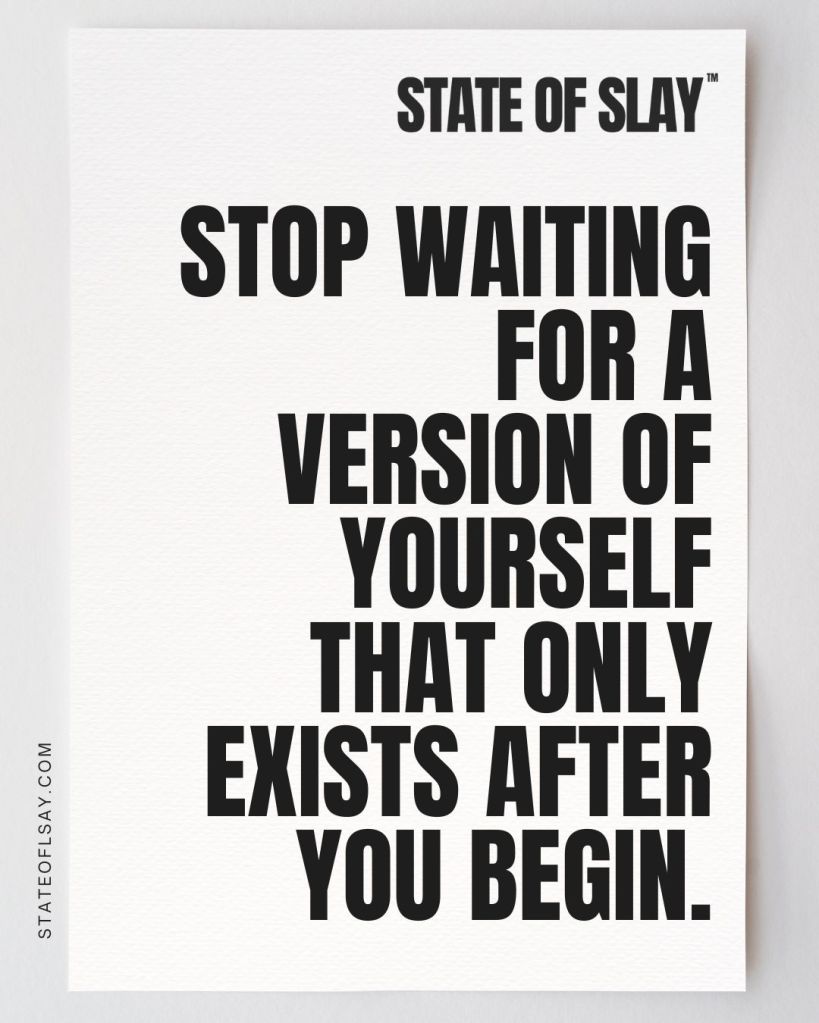
So many people spend their lives preparing for a version of themselves they think has it all figured out.

The confident one.

The fearless one.

The one who never doubts.

The one who finally feels ready.

But that version of you isn’t waiting somewhere in the future.

It doesn’t arrive before you take the leap.

It isn’t created by thinking about your dreams long enough or planning every possible outcome.

It’s created every time you do the thing you thought you couldn’t.

Every conversation you were afraid to have.

Every opportunity you chose to pursue.

Every first step that felt uncertain.

Confidence isn’t the starting line.

It’s the reward for showing up before you feel ready.

The person you’re hoping to become is shaped by the choices you make today, not the ones you postpone until tomorrow.

This is your reminder that growth doesn’t happen before you begin. It happens because you begin.

Slay on.

Slay Say

The Conversation Between Fear and Faith

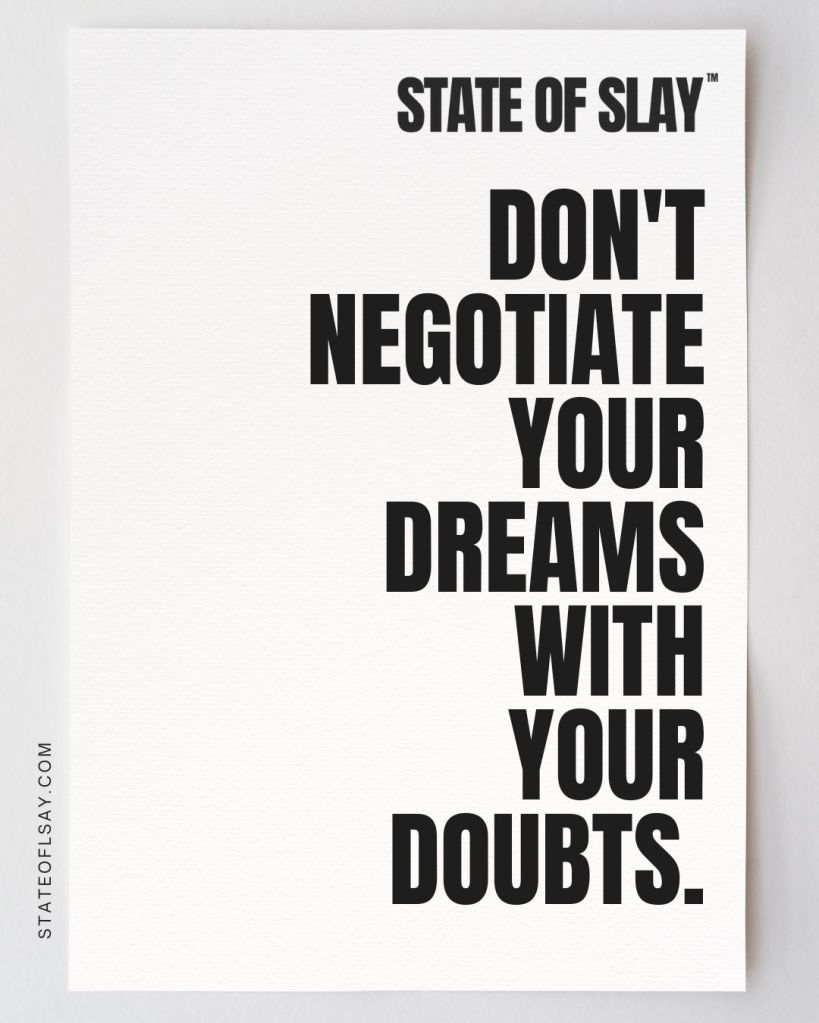
Every dream begins with a negotiation.

Not with the world.

With yourself.

One voice says it’s too late.

Another says you’re not experienced enough.

It reminds you of every time something didn’t work out.

Every criticism.

Every disappointment.

Every reason to play it safe.

Little by little, doubt starts asking you to lower the price of your dreams.

Maybe aim a little smaller.

Maybe wait another year.

Maybe settle for what’s realistic.

But dreams were never meant to be negotiated with fear.

They’re meant to be built with courage.

Every meaningful life requires moments where you choose belief over certainty.

Where you move before every answer arrives.

Where you trust that the person you’re becoming is capable of carrying the future you’re creating.

Your doubts will always have something to say.

They just don’t deserve a seat at the negotiating table.

This is your reminder that the future belongs to the version of you that chooses courage over comfort.

Slay on.

Slay Say

The Cost of Waiting for Approval

Most of us don’t realize how often we’re waiting.

Waiting until someone believes in us.

Waiting until our decision makes sense to everyone else.

Waiting until we’re certain no one will question the path we’re about to take.

It sounds responsible.

Sometimes it even feels wise.

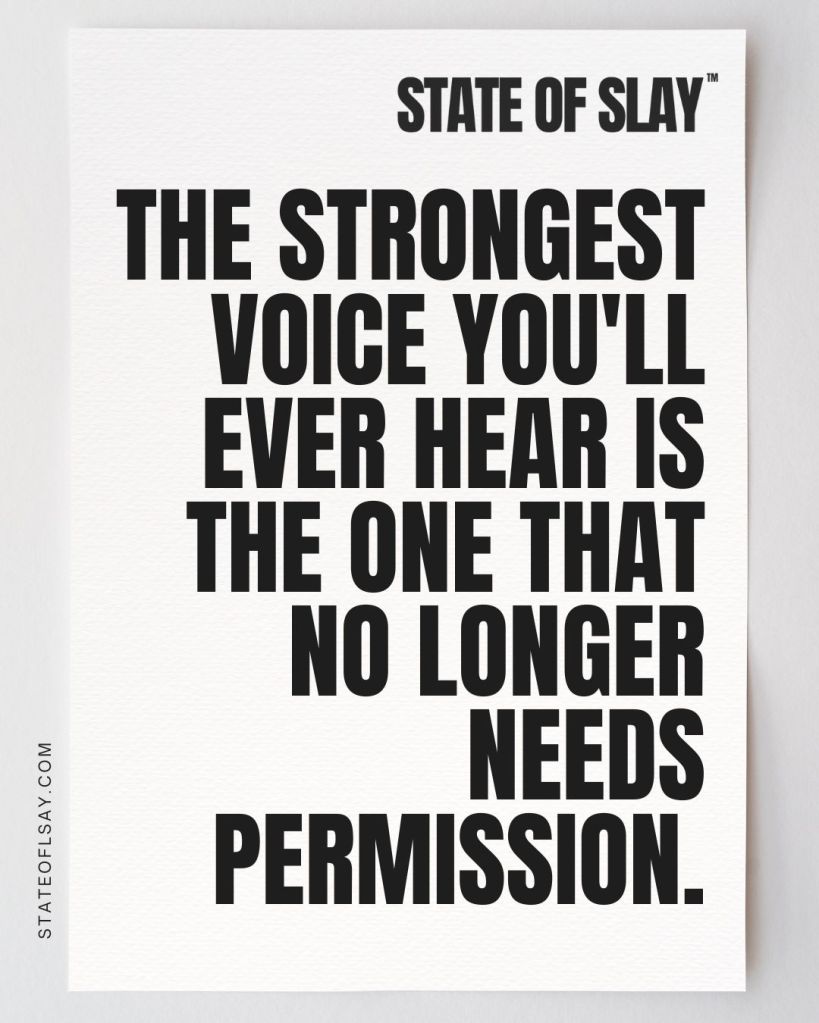
But if you spend your life waiting for permission, you’ll eventually find yourself living according to someone else’s comfort instead of your own convictions.

There will always be opinions.

People who don’t understand why you’re changing.

Why you’re leaving.

Why you’re beginning again.

Why you’re choosing a different life than the one they expected for you.

You don’t owe every decision an explanation.

You don’t need unanimous approval to know what’s right for your life.

The people who make the greatest impact aren’t the ones who are never questioned.

They’re the ones who stop letting other people’s expectations become the deciding vote.

This is your reminder that peace begins the moment your decisions no longer require someone else’s approval.

Slay on.

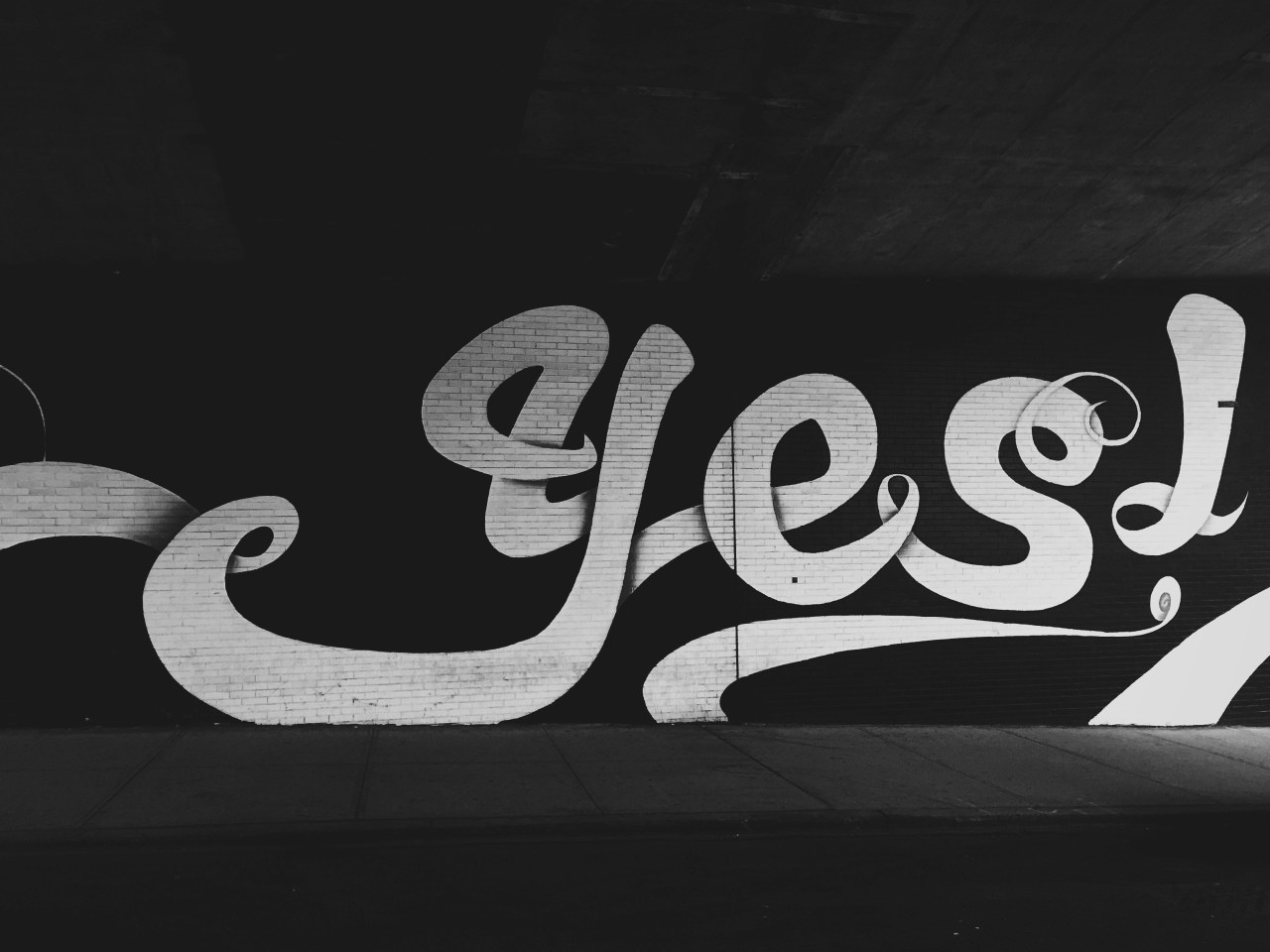
Your Best Yes Might Be the One That Scares You

It’s easy to say yes when you feel prepared, qualified, and ready.
But what about the yes that feels uncertain? The one that makes you pause and think, “Can I even do this?”

I’ve learned over the years that these are often the most important yeses—the ones that lead you somewhere you never expected, but exactly where you’re supposed to be.

For me, some of the best things in my life have happened because I said yes even when I wasn’t sure. Even when I doubted myself. Even when it was something I’d never done before.

Those yeses have taught me that courage often comes before confidence.


Saying Yes Before You Feel Ready (I Never Felt Ready Either)

If I had waited until I felt fully ready, I would have missed out on so many opportunities that shaped me.

There have been roles I’ve taken, projects I’ve joined, and events I’ve spoken at where my first instinct was, “Why me? I’ve never done this before.”
But then I’d hear this little voice reminding me:
“Just say yes. You’ll figure it out.”

And you know what? I always did. Maybe not perfectly. But growth never is.

Every time I said yes, I walked away with more than I expected—new skills, new friends, new perspectives.
You become ready by doing. Not by waiting.


The Unexpected Gifts of Taking a Chance

Some of my favorite experiences started with a hesitant yes.

  • Saying yes to a random opportunity led me to discover a new creative passion.
  • Saying yes to a conversation with someone I barely knew turned into a meaningful friendship.
  • Saying yes to a project that felt way out of my league ended up teaching me things I didn’t even know I was capable of.

If I had stayed in my comfort zone, I would have missed out on all of it.

What I’ve learned is that sometimes, that scary yes is simply the universe nudging you toward something bigger.


When Yes Isn’t About the Destination

One thing I’ve come to believe is this:
Not every yes is meant to be the grand finale.
Sometimes, it’s just meant to get you moving.

There have been plenty of times when saying yes didn’t lead me exactly where I thought it would.
But it got me out the door. It opened a new door. It connected me to people and places I wouldn’t have found otherwise.

Your yes doesn’t have to be perfect. It just has to be intentional.
You’re not committing to a lifetime. You’re committing to the next step.


Brave Yes vs. Reckless Yes: Here’s How I Tell the Difference

Let me be real—I’ve said yes to things for the wrong reasons too.
Guilt. People-pleasing. Fear of missing out.

Those yeses? They don’t feel good. They drain you.

But the brave yes?
That’s the one that feels a little scary but also exciting. The one that stretches you in the right way. The one your gut says “this could be good for me” even if your brain is panicking a little.

Now, I pause and ask myself:

  • Am I saying yes because I’m afraid of disappointing someone?
  • Or am I saying yes because it aligns with who I’m becoming?

That pause makes all the difference.


Growth Lives on the Other Side of Yes

Every time I’ve stepped into something new, even when it terrified me, I’ve grown.
Not just in skills or experiences, but in how I see myself.

By saying yes, I’ve learned to trust myself more.
To know that I can figure things out.
That even if I stumble, I’ll get back up stronger.

That’s what your best yes does—it helps you grow into the next version of you.


What’s Your Best Yes? Final Thoughts

Here’s what I want you to know:
You don’t have to feel fully ready to say yes.
You don’t have to know exactly how it will turn out.

Sometimes, your best yes is the one that simply gets you moving.
The one that introduces you to a new part of yourself.
The one that reminds you—you’re more capable than you think.

So, what’s the yes you’ve been hesitating on?
It might just be the beginning of something amazing.


Your Turn: Reflect & Take Action

Now it’s your turn. Take a moment and think about these questions:

  1. What opportunity have you been hesitating to say yes to because it feels outside your comfort zone?
    What’s really holding you back?
  2. Think of a time when you said yes even though you were unsure.
    What did you gain from that experience?
  3. What’s one small, brave yes you can give yourself this week?
    A chance to grow, connect, or simply show up differently.
  4. How do you personally tell the difference between a reckless yes and a brave yes?
    What does your body or intuition tell you?
  5. Who or what could benefit from you saying yes to yourself right now?
    Remember, your courage is contagious.

Call to Action: Join the Conversation

I’d love to hear from you.
What’s the yes you’re ready to say, even if it scares you?
Share your story in the comments. Let’s cheer each other on.

And if you know someone who’s standing on the edge of a yes, send this to them.
Sometimes, all we need is a nudge.