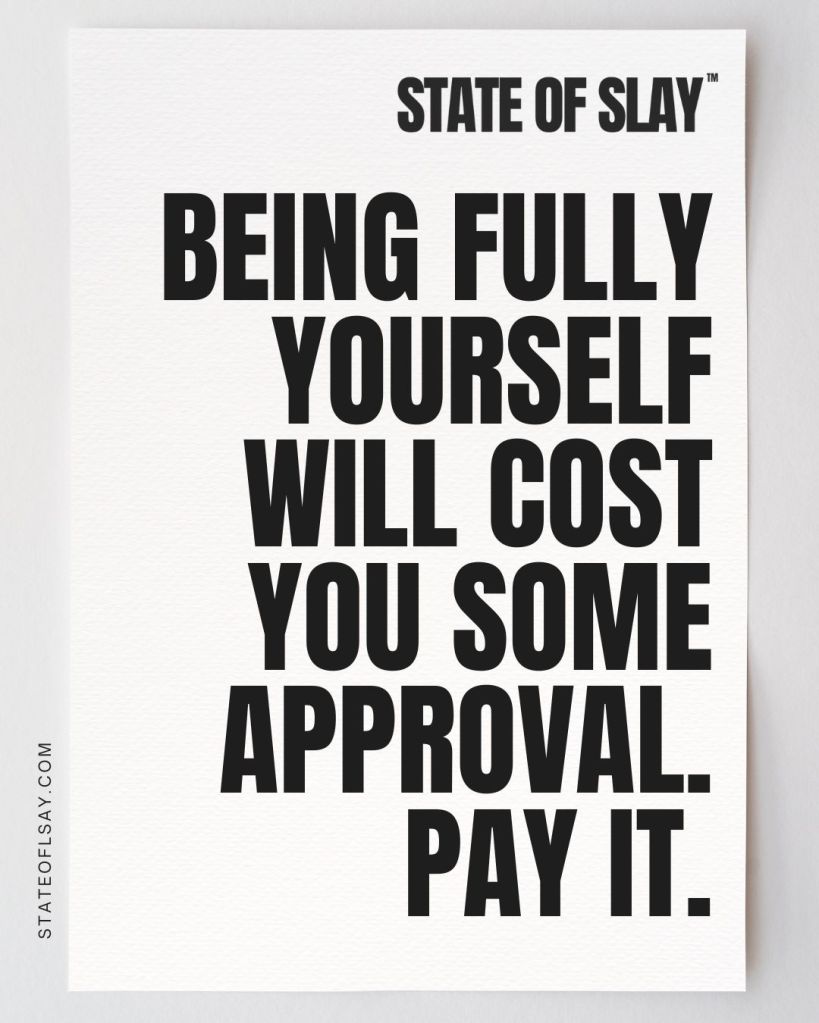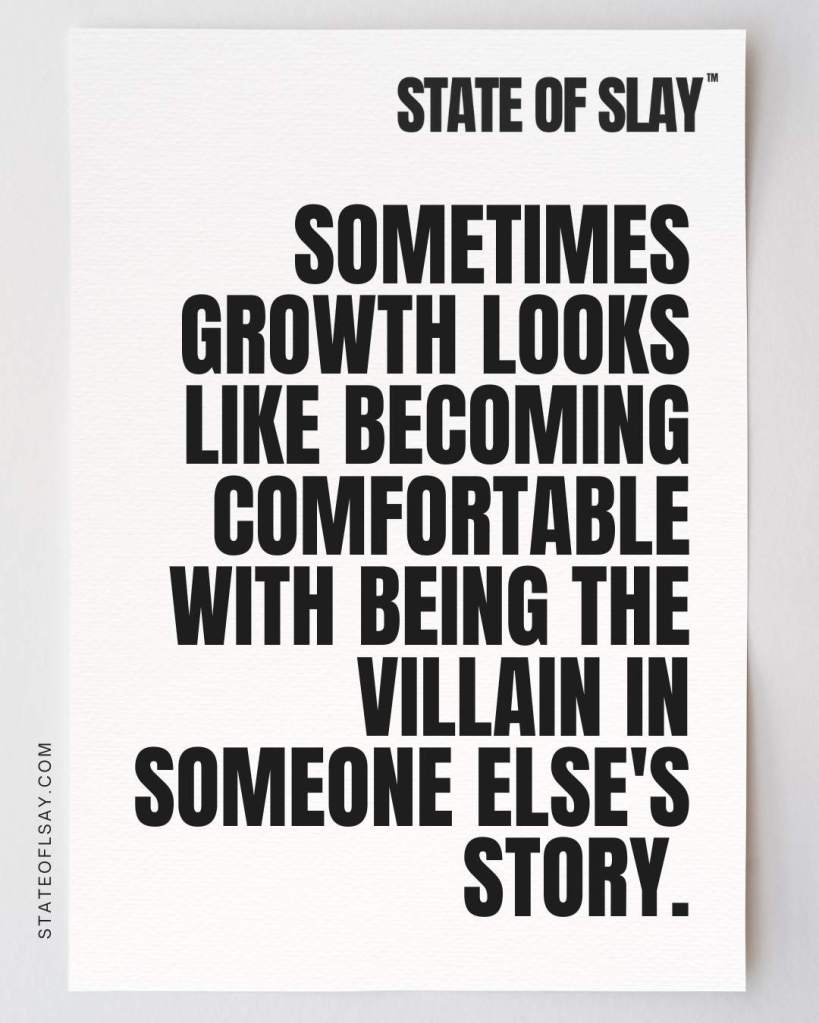

It Is Not What You Do That Matters It Is Why You Do It

For a long time, I focused on appearances.

Doing the right thing. Saying the right thing. Looking like I had everything together.

And from the outside, much of it probably looked fine.

But internally, my motivations were not always healthy.

Sometimes I was helping because I wanted approval. Sometimes I was succeeding because I wanted validation. Sometimes I was overextending myself because I was afraid people would stop loving me if I said no.

The actions themselves may have looked positive.

But the reason behind them told a very different story.

And eventually, I realized something important.

It is not just what we do that shapes our lives.

It is why we do it.


Prefer to listen? The Audio Blog version is available here.


Motivation Changes Everything

Two people can make the exact same choice for completely different reasons.

One person helps because they genuinely care.

Another helps because they need to feel needed.

One person works hard because they feel inspired.

Another works hard because they believe their worth depends on achievement.

From the outside, the actions may look identical.

But internally, they create very different experiences.


I Had to Get Honest About My Why

This was uncomfortable for me at first.

Because it required me to stop focusing only on my behavior and start focusing on my intention.

Why was I saying yes when I wanted to say no?
Why was I constantly proving myself?
Why did I feel guilty resting?
Why did I need validation so badly?

Those questions forced me to look deeper.

And the answers were not always easy.


Good Actions Can Still Come From Fear

This was one of my biggest realizations.

Not every positive action comes from a healthy place.

Sometimes, people pleasing looks like kindness. Sometimes perfectionism looks like ambition. Sometimes overgiving looks like love.

But underneath those actions can be fear.

Fear of rejection. Fear of failure. Fear of not being enough.

And when fear becomes the motivation behind everything, even success can feel exhausting.


Your Why Shapes Your Experience

The reason behind your actions affects how those actions feel.

When your choices are rooted in alignment, they tend to create peace.

When they are rooted in fear, obligation, or insecurity, they tend to create pressure.

That is why two people can live seemingly similar lives but feel completely different internally.

Because motivation matters.


Awareness Creates Change

Once you become aware of your patterns, you begin to see things differently.

You start noticing where your choices come from.

Where you are acting from love and where you are acting from fear.

Where you are being authentic and where you are performing.

And that awareness creates the opportunity for change.


I Stopped Needing Everything to Look Perfect

There was a time when I cared deeply about how things appeared.

How people perceived me. Whether I looked successful. Whether I seemed strong.

But eventually, I realized that appearances mean very little if they are disconnected from truth.

Because no amount of external validation can quiet an internal disconnect.

And no version of success feels fulfilling if it is built on abandoning yourself.


Alignment Feels Different

When your actions align with your values, something shifts.

You stop forcing so much.

You stop performing.

You stop needing every decision to prove something about your worth.

And instead, your choices begin to feel more honest.

More grounded.

More peaceful.


You Do Not Need to Judge Yourself

Looking at your motivations is not about shame.

It is about understanding.

We all develop patterns based on our experiences, fears, and needs.

The goal is not perfection.

The goal is awareness.

Because once you understand why you do something, you gain the power to choose differently if needed.


Ask Yourself the Hard Questions

Sometimes growth is less about changing your behavior and more about understanding it.

Why are you chasing this goal?
Why are you staying in this situation?
Why are you saying yes?
Why are you afraid to stop?

Those answers can reveal a lot.

Not to criticize you.

But to help you become more aligned with yourself.


Intention Matters More Than Performance

At the end of the day, people may remember what you did.

But your inner life is shaped by why you did it.

Your peace. Your confidence. Your fulfillment.

Those things are deeply connected to intention.

And when your actions come from a place of honesty rather than fear, your life begins to feel different.

Not because everything becomes perfect.

But because it becomes real.


Choose From Alignment, Not Fear

You do not have to overhaul your entire life overnight.

You just have to start paying attention.

To what motivates you. To what drains you. To what feels aligned and what feels performative.

Because your why matters.

It shapes your relationships. Your goals. Your decisions. Your sense of self.

And the more honest you become about your motivations, the more authentic your life becomes.


SLAY Reflection

S — See the Pattern
What is one area of your life where you may need to look deeper at your motivation?

L — Look Beneath the Action
Are your choices coming from alignment or fear?

A — Acknowledge the Truth
What might change if you became more honest about your why?

Y — Your Next Step
What is one decision you can make today from a more authentic place?


Call to Action: Join the Conversation

I’d love to hear from you.
Have you ever realized that your motivation behind something mattered more than the action itself?

Share your story in the comments. Let’s cheer each other on.

And if you know someone who might need this reminder, send this to them.
Sometimes, all we need is a nudge.

Anything You Lose by Not Being Real Was Fake

One of the most freeing realizations you can have is this:

Anything you lose by not being honest about who you are was never truly meant for you to keep.

Not the relationship.
Not the friendship.
Not the approval.
Not the version of belonging that only existed as long as you stayed small, quiet, agreeable, or performative.

Because real connection survives truth.

What falls apart when you become authentic was often built on performance in the first place.


Prefer to listen? The Audio Blog version is available here.


A LOT OF PEOPLE ARE LOVED FOR WHO THEY PRETEND TO BE

That’s the painful part.

Many people spend years carefully shaping themselves into whoever they think will be most accepted.

More agreeable.
Less emotional.
Less outspoken.
Less honest.
Less themselves.

They learn to say what keeps the peace.
Hide what feels inconvenient.
Shrink the parts of themselves that might make other people uncomfortable.

And over time, they become exhausted trying to maintain an identity that was never fully real to begin with.

Because pretending may gain acceptance.

But it often costs self-respect.


PEOPLE-PLEASING CAN CREATE VERY LONELY RELATIONSHIPS

On the surface, it may look like connection.

You are liked.
Included.
Wanted.
Needed.

But deep down, there is often anxiety underneath it.

Because when people only know the edited version of you, part of you quietly wonders:

“If I stop performing, will they still stay?”

That fear keeps many people trapped in relationships where authenticity feels dangerous.

So they overextend.
Over-give.
Over-explain.
Overcompensate.

Not because they are weak, but because somewhere along the way, they learned that love had conditions attached to it.


AUTHENTICITY WILL ALWAYS DISAPPOINT PEOPLE WHO BENEFITED FROM YOUR PERFORMANCE

That truth can be uncomfortable.

Sometimes the people who react most negatively to your growth were benefiting from the version of you that abandoned yourself to keep them comfortable.

The version that never said no.
Never had boundaries.
Never challenged unhealthy dynamics.
Never expressed needs honestly.

And when you begin showing up more authentically, some people will call it selfishness simply because they no longer have the same access to your self-sacrifice.

But becoming real is not betrayal.

It is self-respect.


THE RIGHT PEOPLE DO NOT REQUIRE YOU TO HIDE YOURSELF

Healthy relationships do not demand constant performance.

You should not have to earn connection by suppressing your personality, opinions, emotions, needs, or growth.

Real connection allows honesty.

It allows evolution.
Boundaries.
Imperfection.
Humanity.

The right people may not agree with you all the time.
But they will not require you to become emotionally smaller in order to remain lovable.

That is the difference.


LOSING FAKE CONNECTIONS CAN FEEL LIKE REAL GRIEF

Even when the relationship was unhealthy.

Even when the friendship was conditional.

Even when the approval came at the expense of your well-being.

Because letting go of false connections still hurts.

Humans are wired for belonging.

So when people pull away after you become more authentic, it can trigger deep fears of rejection, abandonment, or loneliness.

But losing relationships built on performance is not the same as losing relationships built on truth.

One was sustainable.

The other was survival.


YOU CANNOT BUILD REAL SELF-WORTH WHILE CONSTANTLY ABANDONING YOURSELF

This is where many people become emotionally exhausted.

Trying to keep everyone happy.
Trying to stay accepted.
Trying to avoid rejection at all costs.

But every time you silence yourself to maintain approval, you send yourself a quiet message:

“My real feelings are less important than keeping other people comfortable.”

That slowly erodes self-trust.

Because deep down, your nervous system knows when you are betraying yourself.

And eventually, the emotional cost becomes too heavy to carry.


BEING REAL FILTERS OUT WHAT WAS NEVER ALIGNED

That is not punishment.

That is clarity.

Authenticity has a way of revealing which relationships are rooted in genuine connection and which ones were built around convenience, control, image, or emotional dependency.

And while that process can feel lonely at first, it is also freeing.

Because you stop wasting energy trying to maintain relationships that only survive when you are pretending.

You stop auditioning for acceptance.

You stop shape-shifting to fit rooms that were never built for your real self.


SOME PEOPLE WILL MISUNDERSTAND YOU NO MATTER WHAT

That is part of life.

You can communicate carefully, love deeply, show up consistently, and still be misunderstood by people who only see you through the lens of their own expectations, projections, or limitations.

You cannot control that.

What you can control is whether you abandon yourself trying to manage everyone else’s perception of you.

And that is where freedom begins.

Not when everyone approves of you.
But when you no longer need them to.


REAL PEACE COMES FROM BEING FULLY YOURSELF

Not the polished version.
Not the socially acceptable version.
Not the least disruptive version.

The real version.

The one that has opinions.
Needs.
Boundaries.
Depth.
Growth.
Honesty.

Because at the end of the day, fake acceptance is still fake.

And there is nothing lonelier than being loved for someone you are pretending to be.

The right people will not disappear when you become more authentic.

If anything, authenticity is what allows the right relationships to finally find you.

Because anything you lose by not being real was never truly rooted in the real you to begin with.


SLAY REFLECTION

S — See the Pattern

Where in your life have you been performing instead of showing up authentically?

L — Let Go of the Fear

What are you afraid people might think if you fully expressed who you are?

A — Accept Your Truth

What parts of yourself deserve to be seen instead of hidden?

Y — Yield to Authenticity

How might your life change if you stopped chasing approval and started choosing honesty?


CALL TO ACTION: JOIN THE CONVERSATION

I’d love to hear from you.

Have you ever lost a relationship, friendship, or sense of belonging after finally being honest about who you are?

Share your thoughts in the comments. Let’s grow through it together.

And if you know someone who’s learning to stop performing for acceptance and start embracing their authentic self, send this to them.

Sometimes losing what was never real is the first step toward finding what is.

Popularity Is When Other People Like You; Happiness Is When You Like Yourself

There is a difference between being accepted by others and being at peace with yourself.

And a lot of people spend years chasing the first one while quietly starving the second.

Because popularity feels validating.

The compliments.
The attention.
The approval.
The feeling of being wanted, noticed, included, admired.

For a moment, it can feel like proof that you matter.

But external validation is fragile.

Because if your worth only exists through other people’s opinions, your confidence will constantly rise and fall depending on who is clapping for you that day.

And that is exhausting.


Prefer to listen? The Audio Blog version is available here.


SOME PEOPLE ARE LOVED BY EVERYONE EXCEPT THEMSELVES

That’s the heartbreaking part.

There are people who light up every room they walk into and still go home feeling empty.

People with followers, friends, relationships, and success who still do not feel good enough when they are alone with their own thoughts.

Because popularity and self-worth are not the same thing.

One comes from outside of you.
The other has to come from within.

And no amount of attention can permanently fill a void created by self-rejection.


WE LEARN EARLY TO SEEK APPROVAL

Most of us were taught, directly or indirectly, that being liked meant being valuable.

Be agreeable.
Be easy to love.
Be impressive.
Be successful.
Be who other people want you to be.

So we adapt.

We shape-shift.
People-please.
Perform versions of ourselves that feel acceptable.

And after a while, many people become so focused on maintaining approval that they lose connection with who they actually are.

Because when your identity becomes dependent on being liked, authenticity starts to feel risky.


THE PROBLEM WITH BUILDING YOUR WORTH ON OTHER PEOPLE’S OPINIONS

People are inconsistent.

One day, they praise you.
The next day they misunderstand you.
Celebrate you.
Criticize you.
Include you.
Ignore you.

If your self-esteem depends entirely on external reactions, your emotional world becomes unstable.

You begin chasing validation like oxygen.

Needing reassurance.
Needing applause.
Needing constant confirmation that you are enough.

But happiness does not grow from constantly monitoring how others feel about you.

It grows from learning how you feel about yourself when nobody else is watching.


SELF-LIKE IS DIFFERENT FROM SELF-LOVE

People talk about self-love a lot.

But sometimes the first step is simpler than that.

Sometimes it starts with self-like.

Liking the person you are becoming.
Trusting yourself more.
Feeling proud of your choices.
Enjoying your own company without needing distraction or approval.

Because real happiness is not built on perfection.

It is built on self-acceptance.

And that changes everything.


YOU CANNOT PERFORM YOUR WAY INTO PEACE

This is something many people discover the hard way.

You can be admired and still deeply unhappy.

You can be desired and still feel emotionally unseen.

You can look successful on the outside while feeling disconnected from yourself on the inside.

Because peace does not come from maintaining an image.

It comes from authenticity.

From no longer needing to audition for belonging everywhere you go.

From knowing who you are without constantly needing strangers, friends, family, or social media to confirm it for you.


PEOPLE-PLEASING IS OFTEN SELF-ABANDONMENT IN DISGUISE

A lot of people confuse being liked with being loved.

But if people only love the version of you that stays quiet, agreeable, over-giving, or emotionally convenient, that is not real connection.

That is performance-based acceptance.

And eventually, it becomes exhausting trying to maintain versions of yourself that keep everyone else comfortable while slowly disconnecting from your own needs.

Sometimes happiness begins the moment you stop asking:

“Will they still like me if I say no?”

And start asking:

“Do I even like who I become when I abandon myself to keep everyone else happy?”


THE MOST CONFIDENT PEOPLE ARE NOT ALWAYS THE MOST POPULAR

But they are often the most grounded.

Because confidence rooted in self-worth does not collapse every time someone disapproves.

People who genuinely like themselves understand something important:

Not everyone will understand you.
Not everyone will choose you.
Not everyone will agree with you.

And that is okay.

Because their value is not entirely dependent on outside acceptance.

That kind of confidence feels quieter.

Less performative.
Less desperate.
More stable.

It allows people to stop chasing rooms where they are merely tolerated and start building lives where they feel emotionally safe being themselves.


HAPPINESS IS AN INSIDE RELATIONSHIP

That relationship matters more than most people realize.

How you speak to yourself.
How you care for yourself.
How you treat yourself when you fail.
How you comfort yourself when life hurts.

Because eventually the noise fades.

The applause quiets.
The trends change.
The attention shifts.

And at the end of the day, you still have to live with yourself.

That is why learning to genuinely like who you are matters so much more than temporary approval from others.


YOU ARE ALLOWED TO STOP CHASING VALIDATION

You do not have to earn your worth every day.

You do not have to constantly prove you are lovable.

You do not need universal approval to deserve peace.

Some people will misunderstand you no matter how kind you are.
Some people will project onto you no matter how carefully you communicate.
Some people simply will not be your people.

And that is not failure.

Real happiness begins when your relationship with yourself becomes stronger than your need for outside validation.

Because popularity may bring attention.

But self-acceptance brings peace.

And peace will always outlast applause.


SLAY REFLECTION

S — See the Difference

How much of your confidence is connected to other people’s approval?

L — Look Inward

Do you genuinely enjoy who you are when nobody else is validating you?

A — Accept Yourself

What parts of yourself have you been hiding to stay accepted by others?

Y — Yield to Authenticity

What might change if you focused less on being liked and more on being real?


CALL TO ACTION: JOIN THE CONVERSATION

I’d love to hear from you.

Have you ever realized that being liked by others did not automatically make you happy within yourself?

Share your thoughts in the comments. Let’s grow through it together.

And if you know someone who’s learning to stop chasing validation and start building self-worth from within, send this to them.

Sometimes the most important relationship we will ever heal is the one we have with ourselves.

Slay Say

WHEN LOYALTY STARTS COSTING YOU YOUR PEACE

There is a difference between working through something and slowly losing yourself inside it.

Some people will continue hurting you while expecting your understanding.

Crossing lines while asking for patience.
Taking from you while offering very little in return.

And because you care, you stay longer than you should.

You explain.
Forgive.
Give second chances that turn into fifth and sixth chances.

Because walking away can feel harsh.

Like maybe you did not try hard enough.
Like maybe leaving means you stopped caring.

But there comes a point where staying becomes the greater betrayal.

Not of them.

Of yourself.

Because love should not require you to constantly overlook your own hurt just to keep the connection alive.

The moment you start sacrificing your peace to maintain someone else’s access to you, something needs to change.

This is your reminder that protecting yourself is not cruelty. It is self-respect.

Slay on.

Kindness With Conditions Is Not Kindness

There was a time in my life when I believed being nice meant being good.

I went out of my way to help people. I showed up when someone needed support. I tried to be generous with my time, my attention, and my energy.

And if I am being completely honest, there were moments when I expected something in return.

Gratitude. Loyalty. Support. Recognition.

When those things did not come back the way I hoped, I felt hurt. Confused. Sometimes, even resentful.

It took time and a lot of self-reflection to understand something that shifted my perspective.

Kindness that comes with expectations is not really kindness. It is a transaction.


Prefer to listen? The Audio Blog version is available here.


The Difference Between Kindness And Approval Seeking

Doing something kind should come from a genuine place. A place where you choose to give because it feels right, not because you are trying to secure a future outcome.

But many of us grow up learning that kindness earns approval. We are praised for being helpful, agreeable, and accommodating. Over time, it can become easy to connect our value to how much we do for others.

Without realizing it, kindness can slowly turn into people pleasing.

And people pleasing often carries a hidden contract.

I will do this for you so that you will appreciate me, support me, or treat me the way I want to be treated.

When that contract is not fulfilled, disappointment follows.


I Had To Look At My Own Motives

This was not a comfortable realization.

There were moments when I had to ask myself a difficult question.

Was I being kind because it was the right thing to do, or because I wanted something in return?

Sometimes the answer surprised me.

I began noticing the subtle expectations attached to my actions. If someone did not respond the way I hoped, I would feel irritated. If my effort went unnoticed, I would feel overlooked.

That reaction revealed the truth.

My kindness was not always unconditional.

Recognizing that allowed me to shift how I approached giving.


True Kindness Does Not Keep Score

Authentic kindness is not about tallying favors.

It is about choosing generosity because it aligns with who you are, not because it guarantees a reward.

When kindness becomes transactional, it creates emotional pressure for both people involved. The person giving feels entitled to a response. The person receiving may feel obligated rather than grateful.

That dynamic can quietly damage relationships.

When kindness is genuine, there is freedom on both sides.

You give because it feels right. Not because you are expecting something back.


Boundaries Protect Real Generosity

Learning this lesson does not mean you should give endlessly without considering your own needs.

Healthy boundaries are essential.

There is a difference between genuine kindness and overextending yourself. True generosity respects both the other person and your own well-being.

When you give from a place of fullness instead of obligation, your kindness becomes sustainable.

And when you say no where necessary, your yes becomes more meaningful.


Let Go Of The Invisible Contracts

One of the most liberating things you can do is release the silent agreements you place on your kindness.

If you choose to help someone, do it because it aligns with your values. If appreciation comes back, receive it with gratitude.

If it does not, let your peace remain intact.

Your character should not depend on someone else’s response.

Kindness is a reflection of who you are, not a strategy for controlling outcomes.


Authentic Kindness Strengthens Relationships

When generosity is genuine, relationships feel lighter.

There is no hidden pressure. No silent expectation. No emotional accounting.

People feel the difference.

Authentic kindness creates trust because it is rooted in sincerity rather than strategy.

And when kindness flows naturally, it encourages others to respond with the same spirit.

Not because they owe you something, but because genuine care inspires connection.


Be Kind Because It Reflects Your Values

At the end of the day, kindness is about alignment with who you want to be.

Not about what you receive in return.

When you act from your values, you no longer measure your goodness through someone else’s reaction. Your actions become an extension of your character rather than a tool for validation.

That shift removes resentment.

And resentment is often the signal that our kindness had conditions attached to it.

When kindness is authentic, peace follows.


SLAY Reflection

S — See Your Motivation
When you do something kind, what are you hoping will happen afterward?

L — Look For Hidden Expectations
Do you ever feel disappointed if appreciation or kindness is not returned?

A — Adjust Your Perspective
How could you practice giving without attaching an outcome to the act?

Y — Your Next Step
What would change if your kindness came purely from your values rather than your expectations?


Call to Action: Join the Conversation

I’d love to hear from you.
Have you ever realized that some of your kindness carried hidden expectations? What changed when you let go of them?

Share your story in the comments. Let’s cheer each other on.

And if you know someone who might benefit from this reminder, send this to them.
Sometimes, all we need is a nudge.
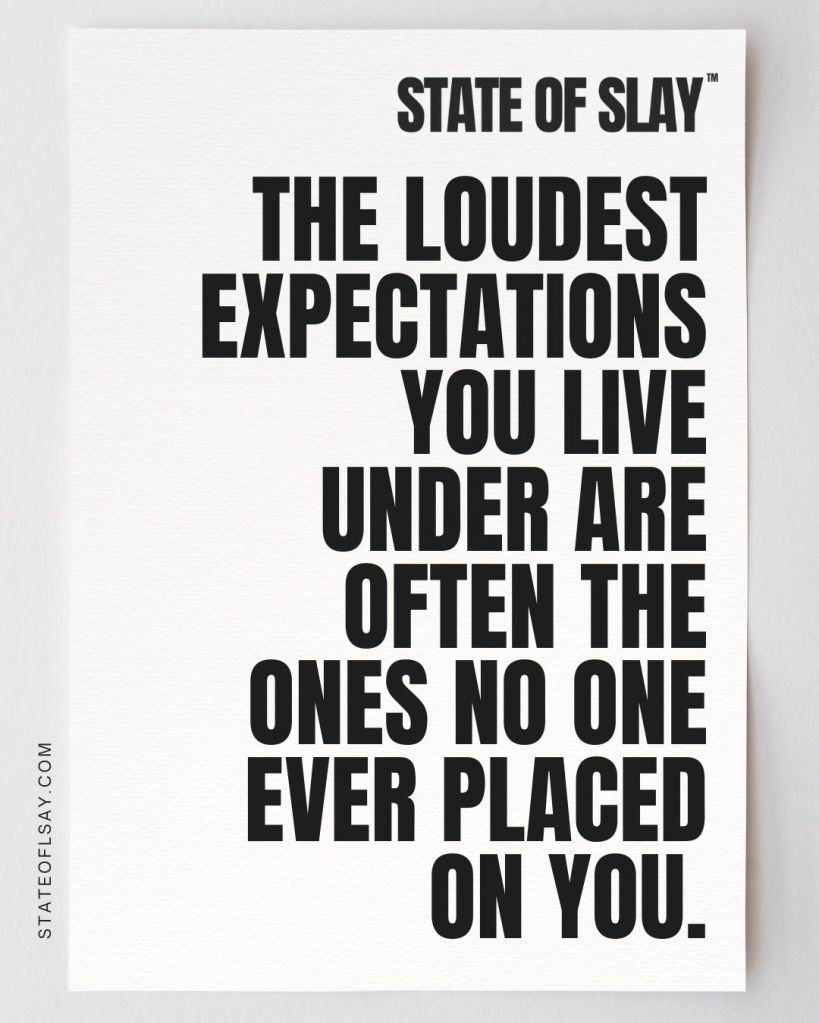
Self-Betrayal

Self betrayal rarely looks dramatic.

It doesn’t always arrive as a big, obvious choice.
It often shows up quietly — in the moments we go against ourselves just to keep the peace, to avoid conflict, or to feel chosen.

It’s the yes we give when our body is screaming no.
The truth we swallow because it feels inconvenient.
The boundary we erase because we’re afraid to be left.

And every time we do it, a small part of us learns that our needs are optional.


What Self Betrayal Really Is

Self betrayal is not about making mistakes.

It’s about abandoning your inner truth to make someone else comfortable.

It happens when you prioritize being liked over being honest.
When you ignore your intuition.
When you stay in situations that don’t respect who you are.

Over time, self betrayal doesn’t just create discomfort — it creates disconnection. You stop trusting yourself. You stop hearing your own voice. You start needing permission to feel what you feel.

And that’s where resentment and exhaustion are born.


Why We Learn to Betray Ourselves

Most of us didn’t wake up one day and decide to abandon ourselves.

We learned it.

We learned that love was conditional.
That approval came with a price.
That being easy was safer than being real.

So we adapted.

We became agreeable.
We minimized our needs.
We learned how to read the room instead of reading our own heart.

Those patterns might have protected us once — but they don’t serve the people we’re becoming.


The Cost of Self Betrayal

The cost isn’t just emotional.

It shows up as anxiety.
Burnout.
Chronic people pleasing.
A feeling that something is always off.

When you keep betraying yourself, your body knows — even when your mind tries to justify it.

That inner tension is the part of you that refuses to disappear.


Rebuilding Trust With Yourself

Healing from self betrayal begins with listening.

Not to everyone else — to you.

To your discomfort.
To your boundaries.
To the small quiet voice that says, “This doesn’t feel right.”

Every time you honor that voice, you rebuild trust.

You don’t have to get it perfect. You just have to stop ignoring yourself.


Boundaries Are Not Rejection They Are Self Respect

Saying no doesn’t mean you’re selfish.
Speaking up doesn’t mean you’re difficult.
Choosing yourself doesn’t mean you don’t care.

It means you do.

Boundaries are how you protect the relationship you have with yourself — and that relationship shapes every other one you have.


You Are Allowed to Change Your Mind

One of the most powerful ways to stop self betrayal is giving yourself permission to shift.

To grow.
To outgrow.
To choose differently.

You don’t owe anyone the old version of you.

You owe yourself the truth.


Integrity Begins on the Inside

Integrity isn’t just about what you do in public.

It’s about how you treat yourself when no one else is watching.

Are you listening to your needs?
Are you honoring your limits?
Are you telling yourself the truth?

That’s where self respect lives.


SLAY Reflection

Let’s reflect, SLAYER:

S: Where in your life have you been saying yes when you meant no?
L: What fears have kept you from being honest with yourself?
A: What boundary would bring you back into alignment?
Y: How would your life change if you stopped abandoning yourself?


Call to Action: Join the Conversation

I’d love to hear from you.
Where have you noticed self betrayal in your own life and what helped you start choosing yourself again?
Share your story in the comments. Let’s cheer each other on.

And if you know someone who keeps putting themselves last, send this to them.
Sometimes, all we need is a nudge.

You Can’t Speak Butterfly Language to Caterpillar People

There comes a moment in growth—real, soul-deep growth—where you start to see things differently. You think differently. Feel differently. You’ve been through the fire, and now you move lighter, clearer, freer. But what happens when the people around you haven’t caught up?

What happens when they’re still speaking caterpillar, and you’ve turned into a butterfly?

It’s one of the hardest parts of healing. You want to be understood, to be supported, to be met with the same energy you now bring to the table. But not everyone will get it. Not everyone is meant to. Some people are still living in the version of you that fit them. And that version? The one who shrunk, people-pleased, kept the peace, and didn’t make waves? That’s who they miss.

But you don’t owe anyone a version of yourself that you’ve outgrown.


Don’t Waste Your Wings Explaining Yourself to Those Who Refuse to Fly

The more you evolve, the less you’ll feel the need to explain yourself. That’s not arrogance—it’s alignment.

You’re not obligated to shrink your truth to make someone else comfortable. You’re not here to convince them of your growth, your healing, or your worth. If someone is committed to misunderstanding you, no amount of butterfly talk will make them listen.

They don’t speak your language. They haven’t earned the right to interpret your transformation.

So instead of wasting your energy justifying your boundaries, your peace, your purpose—protect that energy. You’ve worked too hard to unlearn survival mode only to get pulled back into it trying to prove you’ve changed.

Let your life speak for itself. Let your peace do the talking.


You’re Not Better—You’re Just Becoming

Growth doesn’t make you superior. It makes you aware. And with awareness comes choice.

You don’t have to cut people off with cruelty. But you also don’t have to carry the weight of relationships that ask you to deny your truth. Just because you love someone doesn’t mean you can grow beside them.

Some people will stay rooted in fear, gossip, chaos, control. They’ll look at your wings and call them dramatic. Call them selfish. Call them fake. That’s okay.

Let them.

You don’t need their permission to evolve. Your transformation isn’t up for debate.


Fly Anyway

If you’ve been dimming your shine to stay digestible—stop.

If you’ve been translating your truth into someone else’s comfort—stop.

If you’ve been waiting for them to catch up—you don’t have to anymore.

Butterflies don’t explain how they became butterflies. They just fly.

You’re allowed to protect your peace without guilt. You’re allowed to walk away from dynamics that drain you. You’re allowed to outgrow places, people, and patterns that no longer serve you—even if they once did.

That’s not disloyal. That’s evolution.

So the next time someone tries to pull you back into the old version of yourself, remember: you’re not who you used to be. And that’s a good thing.

You’re speaking butterfly now. Not everyone is meant to understand.


SLAY Reflection

  1. Who in your life still expects you to be the person you’ve outgrown?
  2. What version of yourself are you most proud of leaving behind?
  3. Do you feel the need to explain your healing journey to others?
  4. How does it feel when someone doesn’t “get” your growth?
  5. What’s one way you can protect your peace this week—without apology?

S – Speak your truth without over-explaining
L – Let go of needing approval for your evolution
A – Align with people who see and support the real you
Y – Yield to your transformation, even if it’s misunderstood


Call to Action: Join the Conversation

I’d love to hear from you.
Who have you had to stop explaining yourself to—and how did it free you?
Share your story in the comments. Let’s cheer each other on.

And if you know someone who’s trying to fly while others are pulling them down, send this to them.
Sometimes, all we need is a nudge.
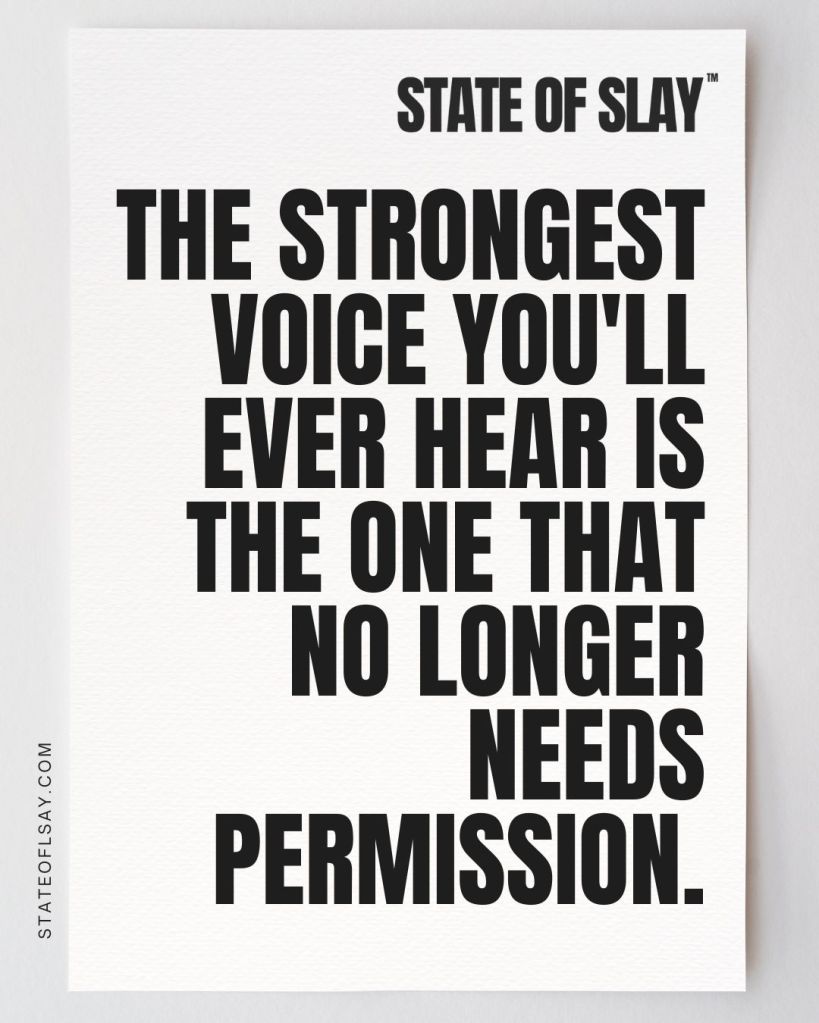
Slay Say

Your time, energy, and attention are not on-demand services.

We live in a world that glorifies being constantly accessible—always replying, always saying yes, always available.
But that kind of constant output doesn’t make you kind, it makes you exhausted.
Protecting your peace means knowing when to pause, say no, or simply not respond.
Your availability doesn’t define your worth.
Your boundaries define your self-respect.

This is your reminder that you don’t need to be everywhere for everyone.
You just need to be present for yourself.

SLAY on!

No One Can Drive You Crazy Unless You Give Them The Keys

We’ve all had those moments—when someone gets under our skin, disrupts our peace, and throws our entire day off course. Sometimes, it’s a conversation. Other times, it’s a repeated behavior. And before we know it, we’re consumed—playing it over and over in our minds, stewing in frustration, resentment, or defeat.

But here’s the truth:
They only have that power if we hand them the keys.

For a long time, I didn’t see that.
I thought I was just a victim of circumstance, or worse—other people.
But what I was really doing was giving away control.
Letting someone else take the wheel.
And then wondering why I kept crashing.


The Cost of Handing Over the Wheel

In my past, I gave away the keys to my peace all the time.

Sometimes it was people-pleasing—I didn’t want anyone to be upset with me, so I’d go along with something even when it didn’t feel right.
Other times, I hoped that if I just tolerated enough, something good would eventually come of it.
And then there were times I gave away control so I could keep telling the same story: that I was the victim.
That life happened to me.
That I had no power.

It kept me sick.
It kept me stuck.
And it kept me in relationships, situations, and patterns that were not good for me.


Recovery Handed Me Back the Keys

When I began my recovery journey, one of the first things I had to do was take radical responsibility for my own life.

That meant owning my choices.
Being honest with myself about my part.
And realizing that I could no longer blame other people for how I felt, what I did, or what direction my life was going in.

It was sobering at first.
But also liberating.
Because if I had the power to give the keys away…
I also had the power to take them back.


Who’s Driving?

Here’s what I’ve learned:
You can’t complain about where your life is going if you’ve let someone else steer.

Yes—people may have opinions.
Yes—they might try to sway you.
But at the end of the day, you are the one in the driver’s seat.

You decide what’s best for you.
You set the course.
And if someone keeps reaching for the wheel?
It might be time to rethink whether they belong in your vehicle at all.


Emotional Hijacking

Letting someone else “drive” doesn’t always look like direct control.
Sometimes, it’s letting a comment ruin your whole day.
Or replaying an argument in your mind on loop.
Or getting pulled into drama that has nothing to do with you.

These are all ways we give our power away.
All ways we hand over the keys—without even realizing it.

Today, I choose to drive.
Even when the road gets bumpy.
Even when I make a wrong turn.
Because it’s my journey, and I’d rather learn from my own mistakes than crash because someone else took the wheel.


SLAY Reflection: Who’s Driving Your Life?

  1. Do you let others emotionally hijack your peace?
    What triggers this—and how often does it happen?

  2. Have you given someone the power to influence your thoughts, decisions, or direction?
    How does that make you feel?

  3. Are you holding onto resentment or trying to control situations that no longer involve you?
    What would happen if you let that go?

  4. Is there someone in your life who repeatedly tries to take the wheel?
    Is that a healthy relationship—or something that needs to shift?

  5. What can you do today to take your power back and stay in the driver’s seat?
    What boundary needs to be drawn—or reinforced?


Call to Action: Join the Conversation

I’d love to hear from you.
Have you ever handed someone else the keys to your peace—and what did it take to take them back?
Share your story in the comments. Let’s cheer each other on.

And if you know someone who’s giving away their power, send this to them.
Sometimes, all we need is a nudge.

Not Everything That Weighs You Down Is Yours To Carry

This week has been heavy.
Not just in the day-to-day busyness, but emotionally, mentally, spiritually.

And as I took a step back, I asked myself a question I’ve learned to come back to again and again:
Is all of this mine to carry?

The answer?
No.
But that hasn’t stopped me from dragging it around—tight-chested, overwhelmed, and bone-tired.

Like many of us, I juggle a lot every day.
And most of the time, I believe I can handle it all.
Until I can’t.
Until I hit a wall.
And when I do, I don’t always meet myself with grace.
Sometimes, I meet myself with frustration and shame.

Even when I know better, I still find myself slipping into old habits—trying to carry it all.
No one is asking me to.
Help is there if I reach for it.
But there I go, dragging the weight of the world across some invisible finish line I made up in my head.

It’s time to pause.
To take a breath—or a few—and ask myself what I’ve picked up along the way that never belonged to me in the first place.


Prefer to listen? The Audio Blog version is available here.


We Learn to Carry What We Don’t Need

Before recovery, I carried everything.
It never occurred to me that I could set anything down.

The emotional weight.
The resentment.
The guilt.
The responsibility for people and problems that were never mine to begin with.

I just kept going—until I couldn’t.

Eventually, I hit a wall.
Hard.
And that wall was the wake-up call I needed.
I couldn’t live that way anymore.
It was slowly destroying me.

So I asked for help.
Not just with what I was carrying—but with how I lived.


Learning to Let Go of What’s Not Yours

Through recovery, I discovered something profound:
A lot of what I was carrying wasn’t mine.

Some of it was inherited—passed down through family, expectations, trauma.
Some of it I volunteered to carry—because I wanted to feel helpful, needed, or in control.

And some of it… I carried on purpose to sabotage myself.
To stay small.
To stay exhausted.
To prove that I couldn’t do more, be more, live more.

That’s the hard truth.
Sometimes, we don’t just carry what’s not ours—we choose it.

But once I got honest with myself, I realized I had a choice.
To let go.
To say no.
To only carry what actually belonged to me.

And that changed everything.


What’s Yours—and What’s Not

There will always be people who would gladly let you carry their weight.
There will be moments when you try to carry someone else’s pain, fear, or responsibility—uninvited.

But that doesn’t mean you have to.

Being helpful doesn’t mean taking on someone else’s journey.
Being strong doesn’t mean carrying more than you should.
Being loving doesn’t mean sacrificing yourself.

We are responsible for ourselves.
For our peace.
For honoring what we need.

That starts with putting down what was never yours to carry in the first place.


SLAY Reflection: What Are You Carrying?

  1. Do you tend to carry more weight than you need to—physically, emotionally, or mentally?
    What does that weight feel like?
  2. What are you carrying that doesn’t actually belong to you?
    Who gave it to you—and why did you accept it?
  3. Are there responsibilities, emotions, or expectations you’ve taken on to feel valuable or in control?
    How are they serving you? How are they hurting you?
  4. What would it feel like to put that weight down—even just a little?
    What would change?
  5. What can you do today to lighten your load and honor your limits?
    Where can you say no, ask for help, or simply rest?

Call to Action: Join the Conversation

I’d love to hear from you.
What’s one burden you’ve been carrying that isn’t actually yours—and how are you learning to let it go?
Share your story in the comments. Let’s cheer each other on.

And if you know someone who’s overwhelmed by weight they were never meant to carry, send this to them.
Sometimes, all we need is a nudge.