There is a difference between pursuing success and pursuing approval.
From the outside, they can look almost identical.
Both involve hard work. Both involve growth. Both involve reaching goals and striving for more.
But internally, they feel very different.
When success is rooted in purpose, achievement creates a sense of fulfillment. You can celebrate progress, appreciate how far you have come, and enjoy the life you are building.
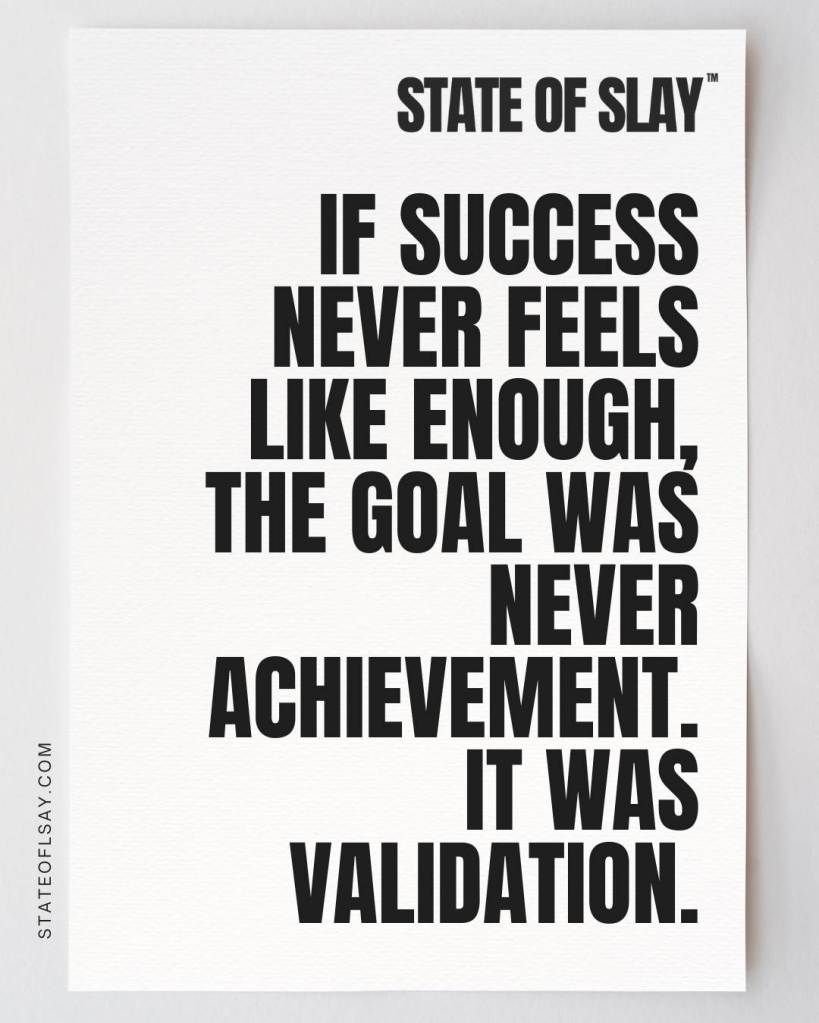
When success is rooted in validation, the feeling never lasts.
The goal is reached, and almost immediately, the finish line moves.
The accomplishment is achieved, and the focus shifts to the next thing that must be proven.
No matter how much is accomplished, there is always another benchmark waiting.
Not because you are ambitious.
Because part of you is still trying to earn something that achievement was never designed to provide.
Worth.
The problem is that external success cannot permanently solve an internal belief.
No amount of recognition can convince you that you are enough if you have not already begun to believe it yourself.
And that is why some of the most accomplished people still feel empty.
Not because they failed.
Because they were asking for achievement to do a job that was never meant to be done.
Success can enhance your life.
It cannot define your value.
That work belongs to you.
This is your reminder that your worth is not something you earn through accomplishment.
One of the most freeing realizations you can have is this:
Anything you lose by not being honest about who you are was never truly meant for you to keep.
Not the relationship. Not the friendship. Not the approval. Not the version of belonging that only existed as long as you stayed small, quiet, agreeable, or performative.
Because real connection survives truth.
What falls apart when you become authentic was often built on performance in the first place.
Prefer to listen? The Audio Blog version is available here.
A LOT OF PEOPLE ARE LOVED FOR WHO THEY PRETEND TO BE
That’s the painful part.
Many people spend years carefully shaping themselves into whoever they think will be most accepted.
More agreeable. Less emotional. Less outspoken. Less honest. Less themselves.
They learn to say what keeps the peace. Hide what feels inconvenient. Shrink the parts of themselves that might make other people uncomfortable.
And over time, they become exhausted trying to maintain an identity that was never fully real to begin with.
Because pretending may gain acceptance.
But it often costs self-respect.
PEOPLE-PLEASING CAN CREATE VERY LONELY RELATIONSHIPS
On the surface, it may look like connection.
You are liked. Included. Wanted. Needed.
But deep down, there is often anxiety underneath it.
Because when people only know the edited version of you, part of you quietly wonders:
“If I stop performing, will they still stay?”
That fear keeps many people trapped in relationships where authenticity feels dangerous.
So they overextend. Over-give. Over-explain. Overcompensate.
Not because they are weak, but because somewhere along the way, they learned that love had conditions attached to it.
AUTHENTICITY WILL ALWAYS DISAPPOINT PEOPLE WHO BENEFITED FROM YOUR PERFORMANCE
That truth can be uncomfortable.
Sometimes the people who react most negatively to your growth were benefiting from the version of you that abandoned yourself to keep them comfortable.
The version that never said no. Never had boundaries. Never challenged unhealthy dynamics. Never expressed needs honestly.
And when you begin showing up more authentically, some people will call it selfishness simply because they no longer have the same access to your self-sacrifice.
But becoming real is not betrayal.
It is self-respect.
THE RIGHT PEOPLE DO NOT REQUIRE YOU TO HIDE YOURSELF
Healthy relationships do not demand constant performance.
You should not have to earn connection by suppressing your personality, opinions, emotions, needs, or growth.
Real connection allows honesty.
It allows evolution. Boundaries. Imperfection. Humanity.
The right people may not agree with you all the time. But they will not require you to become emotionally smaller in order to remain lovable.
That is the difference.
LOSING FAKE CONNECTIONS CAN FEEL LIKE REAL GRIEF
Even when the relationship was unhealthy.
Even when the friendship was conditional.
Even when the approval came at the expense of your well-being.
Because letting go of false connections still hurts.
Humans are wired for belonging.
So when people pull away after you become more authentic, it can trigger deep fears of rejection, abandonment, or loneliness.
But losing relationships built on performance is not the same as losing relationships built on truth.
One was sustainable.
The other was survival.
YOU CANNOT BUILD REAL SELF-WORTH WHILE CONSTANTLY ABANDONING YOURSELF
This is where many people become emotionally exhausted.
Trying to keep everyone happy. Trying to stay accepted. Trying to avoid rejection at all costs.
But every time you silence yourself to maintain approval, you send yourself a quiet message:
“My real feelings are less important than keeping other people comfortable.”
That slowly erodes self-trust.
Because deep down, your nervous system knows when you are betraying yourself.
And eventually, the emotional cost becomes too heavy to carry.
BEING REAL FILTERS OUT WHAT WAS NEVER ALIGNED
That is not punishment.
That is clarity.
Authenticity has a way of revealing which relationships are rooted in genuine connection and which ones were built around convenience, control, image, or emotional dependency.
And while that process can feel lonely at first, it is also freeing.
Because you stop wasting energy trying to maintain relationships that only survive when you are pretending.
You stop auditioning for acceptance.
You stop shape-shifting to fit rooms that were never built for your real self.
SOME PEOPLE WILL MISUNDERSTAND YOU NO MATTER WHAT
That is part of life.
You can communicate carefully, love deeply, show up consistently, and still be misunderstood by people who only see you through the lens of their own expectations, projections, or limitations.
You cannot control that.
What you can control is whether you abandon yourself trying to manage everyone else’s perception of you.
And that is where freedom begins.
Not when everyone approves of you. But when you no longer need them to.
REAL PEACE COMES FROM BEING FULLY YOURSELF
Not the polished version. Not the socially acceptable version. Not the least disruptive version.
The real version.
The one that has opinions. Needs. Boundaries. Depth. Growth. Honesty.
Because at the end of the day, fake acceptance is still fake.
And there is nothing lonelier than being loved for someone you are pretending to be.
The right people will not disappear when you become more authentic.
If anything, authenticity is what allows the right relationships to finally find you.
Because anything you lose by not being real was never truly rooted in the real you to begin with.
SLAY REFLECTION
S — See the Pattern
Where in your life have you been performing instead of showing up authentically?
L — Let Go of the Fear
What are you afraid people might think if you fully expressed who you are?
A — Accept Your Truth
What parts of yourself deserve to be seen instead of hidden?
Y — Yield to Authenticity
How might your life change if you stopped chasing approval and started choosing honesty?
CALL TO ACTION: JOIN THE CONVERSATION
I’d love to hear from you.
Have you ever lost a relationship, friendship, or sense of belonging after finally being honest about who you are?
Share your thoughts in the comments. Let’s grow through it together.
And if you know someone who’s learning to stop performing for acceptance and start embracing their authentic self, send this to them.
Sometimes losing what was never real is the first step toward finding what is.
There is a difference between being accepted by others and being at peace with yourself.
And a lot of people spend years chasing the first one while quietly starving the second.
Because popularity feels validating.
The compliments. The attention. The approval. The feeling of being wanted, noticed, included, admired.
For a moment, it can feel like proof that you matter.
But external validation is fragile.
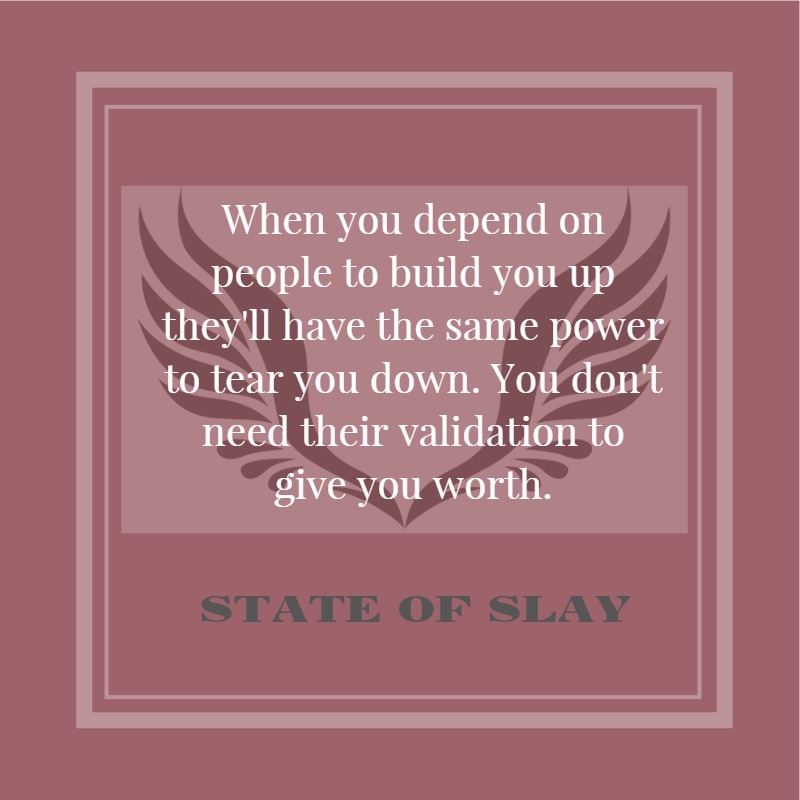
Because if your worth only exists through other people’s opinions, your confidence will constantly rise and fall depending on who is clapping for you that day.
And that is exhausting.
Prefer to listen? The Audio Blog version is available here.
SOME PEOPLE ARE LOVED BY EVERYONE EXCEPT THEMSELVES
That’s the heartbreaking part.
There are people who light up every room they walk into and still go home feeling empty.
People with followers, friends, relationships, and success who still do not feel good enough when they are alone with their own thoughts.
Because popularity and self-worth are not the same thing.
One comes from outside of you. The other has to come from within.
And no amount of attention can permanently fill a void created by self-rejection.
WE LEARN EARLY TO SEEK APPROVAL
Most of us were taught, directly or indirectly, that being liked meant being valuable.
Be agreeable. Be easy to love. Be impressive. Be successful. Be who other people want you to be.
So we adapt.
We shape-shift. People-please. Perform versions of ourselves that feel acceptable.
And after a while, many people become so focused on maintaining approval that they lose connection with who they actually are.
Because when your identity becomes dependent on being liked, authenticity starts to feel risky.
THE PROBLEM WITH BUILDING YOUR WORTH ON OTHER PEOPLE’S OPINIONS
People are inconsistent.
One day, they praise you. The next day they misunderstand you. Celebrate you. Criticize you. Include you. Ignore you.
If your self-esteem depends entirely on external reactions, your emotional world becomes unstable.
You begin chasing validation like oxygen.
Needing reassurance. Needing applause. Needing constant confirmation that you are enough.
But happiness does not grow from constantly monitoring how others feel about you.
It grows from learning how you feel about yourself when nobody else is watching.
SELF-LIKE IS DIFFERENT FROM SELF-LOVE
People talk about self-love a lot.
But sometimes the first step is simpler than that.
Sometimes it starts with self-like.
Liking the person you are becoming. Trusting yourself more. Feeling proud of your choices. Enjoying your own company without needing distraction or approval.
Because real happiness is not built on perfection.
It is built on self-acceptance.
And that changes everything.
YOU CANNOT PERFORM YOUR WAY INTO PEACE
This is something many people discover the hard way.
You can be admired and still deeply unhappy.
You can be desired and still feel emotionally unseen.
You can look successful on the outside while feeling disconnected from yourself on the inside.
Because peace does not come from maintaining an image.
It comes from authenticity.
From no longer needing to audition for belonging everywhere you go.
From knowing who you are without constantly needing strangers, friends, family, or social media to confirm it for you.
PEOPLE-PLEASING IS OFTEN SELF-ABANDONMENT IN DISGUISE
A lot of people confuse being liked with being loved.
But if people only love the version of you that stays quiet, agreeable, over-giving, or emotionally convenient, that is not real connection.
That is performance-based acceptance.
And eventually, it becomes exhausting trying to maintain versions of yourself that keep everyone else comfortable while slowly disconnecting from your own needs.
Sometimes happiness begins the moment you stop asking:
“Will they still like me if I say no?”
And start asking:
“Do I even like who I become when I abandon myself to keep everyone else happy?”
THE MOST CONFIDENT PEOPLE ARE NOT ALWAYS THE MOST POPULAR
But they are often the most grounded.
Because confidence rooted in self-worth does not collapse every time someone disapproves.
People who genuinely like themselves understand something important:
Not everyone will understand you. Not everyone will choose you. Not everyone will agree with you.
And that is okay.
Because their value is not entirely dependent on outside acceptance.
That kind of confidence feels quieter.
Less performative. Less desperate. More stable.
It allows people to stop chasing rooms where they are merely tolerated and start building lives where they feel emotionally safe being themselves.
HAPPINESS IS AN INSIDE RELATIONSHIP
That relationship matters more than most people realize.
How you speak to yourself. How you care for yourself. How you treat yourself when you fail. How you comfort yourself when life hurts.
Because eventually the noise fades.
The applause quiets. The trends change. The attention shifts.
And at the end of the day, you still have to live with yourself.
That is why learning to genuinely like who you are matters so much more than temporary approval from others.
YOU ARE ALLOWED TO STOP CHASING VALIDATION
You do not have to earn your worth every day.
You do not have to constantly prove you are lovable.
You do not need universal approval to deserve peace.
Some people will misunderstand you no matter how kind you are. Some people will project onto you no matter how carefully you communicate. Some people simply will not be your people.
And that is not failure.
Real happiness begins when your relationship with yourself becomes stronger than your need for outside validation.
Because popularity may bring attention.
But self-acceptance brings peace.
And peace will always outlast applause.
SLAY REFLECTION
S — See the Difference
How much of your confidence is connected to other people’s approval?
L — Look Inward
Do you genuinely enjoy who you are when nobody else is validating you?
A — Accept Yourself
What parts of yourself have you been hiding to stay accepted by others?
Y — Yield to Authenticity
What might change if you focused less on being liked and more on being real?
CALL TO ACTION: JOIN THE CONVERSATION
I’d love to hear from you.
Have you ever realized that being liked by others did not automatically make you happy within yourself?
Share your thoughts in the comments. Let’s grow through it together.
And if you know someone who’s learning to stop chasing validation and start building self-worth from within, send this to them.
Sometimes the most important relationship we will ever heal is the one we have with ourselves.
We live in a world obsessed with recognition—likes, shares, shout-outs. But what if your greatest impact comes from what no one sees? What if your legacy isn’t built on applause, but on quiet action? What if you stopped needing credit and just… did the thing?
That was a tough pill for me to swallow. I used to chase validation like it was the prize. If I didn’t get credit, did it even count? I justified everything I did—calling it generous, kind, helpful—but really, I wanted to be seen. I wanted acknowledgment. I wanted control. But all of that masked a deeper truth: I needed to feel enough.
When I began my recovery journey, I was given a powerful suggestion: do something kind for someone—and don’t tell anyone about it. At first, that felt… impossible. If no one knew, how could I feel worthy? But I tried it anyway. And you know what? It worked. Doing good for the sake of doing good shifted something in me.
You Don’t Need Credit to Be Powerful
Let’s be real—most of us were raised in a world where “good behavior” came with gold stars. We learned that praise = worth. But here’s the truth:
When you stop seeking applause, you start discovering real power.
Doing the right thing just because it’s right builds integrity, resilience, and self-trust. It silences the inner critic. It quiets the noise. And it rewires our motivation—not for performance, but for purpose.
If your only fuel is someone else’s approval, you’ll run out of gas fast. But when you’re moved by values, by love, by truth—you become unstoppable.
Get Focused On the Mission—Not the Applause
Too often we place the success of something on whether or not it’s recognized. We post, we share, we wait for the reaction—and when it doesn’t come? We question ourselves. We downplay the win. We wonder if it was worth it.
But here’s the thing: You get to be proud even if no one claps.
The moment you detach from needing praise, you become free. Free to create. Free to give. Free to lead. When your validation comes from within, the outside world can’t shake you.
That’s how you build self-esteem—by doing esteemable acts, especially when no one is watching. Your self-worth isn’t in their hands. It never was.
Do It for You—And Let That Be Enough
Start by asking yourself: Why am I doing this? Is it to feel connected? To make a difference? To step into your purpose? Let that be your anchor.
And when you do something kind, bold, or brave? Sit with it. Let the moment speak for itself. No need to announce it. No need to chase praise. You already did the thing.
That’s the win. That’s the reward. That’s the work.
You are enough—without the tag, the trophy, or the credit. Just you, showing up in quiet, powerful ways. That’s the kind of SLAY that shifts the world.
SLAY Reflection
Do you struggle with needing validation after you’ve achieved something?
How does seeking credit impact your relationships—with others or yourself?
Have you ever done something anonymously or without recognition? How did it feel?
What motivates you more—acknowledgment or impact?
What would change if you started measuring success by how you feel rather than how you’re seen?
S-L-A-Y:
Serve from a place of purpose, not praise.
Let go of the need for credit.
Act with integrity—especially when no one’s watching.
You define your own worth.
Call to Action: Join the Conversation
I’d love to hear from you. Have you ever done something powerful without needing credit? How did that change you?
Share your story in the comments. Let’s cheer each other on.
And if you know someone who’s stuck waiting for approval, send this to them.
Sometimes, all we need is a nudge.
I was with a group of people recently, and someone was sharing about a very dark time in their life and how she turned things around to the life she has today. Shortly after her sharing her story someone else chimed in to share a time when things were dark in their life, and make a comment like her story was a walk in the park compared to his. My heart sank a little in that moment for the person who had first spoken up, because by doing what he did it seemed like he was saying that her story wasn’t nearly as bad as his and so not as valid. We all have things we experience, good and bad, and it’s important that we honor those experiences in each other and not try to diminish them or one-up each other to come up with the worst, or best, story, it’s about listening and giving that person their moment.
Before stepping on this path I was guilty of doing just that, many times, trying to take someone’s moment by coming up with some bigger, better, or badder, story to share. I realize now that I was doing that to make myself feel better, because I felt less than, and by taking away someone else’s experience as being valid it would inflate my ego and steal the spotlight from them. That behavior sounds disgusting as I see it in print so many years removed from it, but I did it regularly for most of my life.
We all have our own journey and path ahead of us, all of our experiences are valid and ours to own and share with others, they are what have made us who we are, have taught us what we’ve needed to learn, or have given us hope when we’ve needed it. No one has the right to take any of those away from us, and really, no one can unless we let them. The woman who had first shared her story took that moment in stride, she smiled, understanding what was going on, and knew that her story was an integral part of her journey, and perhaps by the man sharing his even darker story right after, may have also shown her that things could get worse if she chose to return to the life that had gotten her to that dark place years ago. Really, it’s all about perception, and how we choose to receive the information we’re being given. As much as I was annoyed by the man who tried to steal her moment, I realized that everything happens for a reason, and perhaps that woman needed to hear how bad things had gotten for him to put things in perspective for herself, or to find some gratitude that she didn’t have to do down that far to realize she needed to find a way out.
Most times, all anyone really wants is to be heard. No matter what the situation, we all want our story, thoughts, and ideas to be heard, and it’s important to give those moments to those we come into contact with. As I learned to walk on this path I had to learn to listen, without interrupting, and honor each person’s story, concern, or idea before chiming in with my two cents, and, learning that I should only be offering my 2 cents if asked for it, that person may not want it and may just need someone to listen without interruption or a rebuttal.
Each time we find ourselves in a situation where someone is sharing themselves it’s important to give them their moment, and if there is an appropriate time and it seems right to share our experience in relation to that then by all means chime in, as long as you’re adding something positive or constructive to the conversation without taking away from someone else’s experience. We all have a right to have our own experiences, and no one’s is more important than the ones we’re having ourselves, those moments help us grow, guide us, and give us strength, and no one can take that away from us. SLAY on!
SLAY OF THE DAY: Do you feel like you have to one-up someone when they are sharing a story or telling about an experience they’ve had? Why do you think you feel you need to do that? What does that say about you? How do you feel when someone does that to you? Have you told someone in the moment how that makes you feel? If not, why not? Do you see how each of us have the right to the experiences and stories we’ve had and have the right to share those experiences with others? All of our experiences are important, they make up the fabric of our lives, don’t let anyone try to take those away from you, and, don’t try to take someone else’s away to try to make yours seem more important. We all get to share our stories.
Good morning SLAYER! Seeking validation will keep you trapped. You don’t need anyone or anything to prove your worth. When you believe this, you will be free.
Hey, we all love a little validation for a job well done, or a good deed, or just for being the best we can be right? It’s nice to feel appreciated, but when that validation becomes the only reason for doing something it becomes a problem. I’ve talked about how we shouldn’t do anything unless we want to, plain and simple. Without expecting anything else in return. Yeah, I said it, without expecting anything in return. Then and only then are we doing something for the right reasons. That got you thinking didn’t it? How many things do we do because we’re expecting something in return? Or because we think it might make us look good? Or because someone might owe us and we can call on the favor later? All we’re doing when we are acting with those intentions is setting ourselves up for resentments, because if we don’t get what we want, or expect, we’re going to get angry. But, we shouldn’t have been doing it in the first place. We need to be accountable to what is motivating us in the first place.
Some of us also use doing things for others to feel validated as a person. That we have no value if they’re not doing things for others. Also not the most healthy. Again, it’s great to do nice things for others but not if you’re using that as your sole source of self-worth, and putting that need of validation before your own actual needs. It’s important to find a balance, of taking care of yourself and what you need and if you have the time or ability to, then do something nice for someone else. It’s kind of like the flight attendant announcement at the beginning of a flight when they advise you in the event of an emergency to put your mask on first before helping someone else. That’s good advice. Because if you’re passed out, you’re not going to be able to help anyone else. Make sure your needs are taken care of and you’re not putting someone else’s needs before your own and not giving yourself what you need to be your best self.
For me I use to look for validation because I was typically doing things for the wrong reasons. I was looking for the validation to feel better about myself, because I hated who I was, I was looking for validation to feel smarter, especially smarter than you, and I was looking for validation to get something I wanted. Very few things just came from a pure heart of wanting to do something, but my heart was always in fear or resentment, so nothing good would come out of that heart when those where the chief factors of my motivation. It was hard to face the facts of why I was doing what I was doing, and to realize that I was only doing those “nice” things to fill a the void I felt inside, but that void could never be filled with those outside things, so it became a vicious cycle of trying to do them, and wanting recognition for them, but even if I got it it never filled me up.
At the end of the day it’s our job to fill up our own hearts. To do things that make us feel good, because we want to do them, and to make sure if we’re feeling empty, that we don’t start looking outward to fill an inside job. We all have value, we all have worth, and when we learn to accept that in ourselves, and learn to fill those needs, we stop looking for outside validation to do it for us. We find it in ourselves. SLAY on!
SLAY OF THE DAY: What do you think motivates you to do something? Are you looking for validation? If so, why? What does it mean to you to get validation for something you’ve done? What if you don’t get that validation? What do you do then? What do you tell yourself? Do you retaliate? How has seeking validation affected your relationships? How has it affected the relationship you have with yourself? What can you do to repair or change that relationship with yourself? What are 5 things you can do this week to show yourself some love, to validate yourself with acts of love and doing what fills you up inside? Do them SLAYER, and continue to do them, no need to validate yourself anymore than that.