
Black and white photo of a woman standing confidently by a window, representing authenticity, self-acceptance, and choosing to be yourself.

Slay Say

The Price of Being Yourself

There is a cost to becoming more honest about who you are.

Not everyone will like it.

Some people preferred you when you were easier to influence.

When you said yes more often.

When you kept your opinions to yourself.

When you adjusted your needs to make everyone else comfortable.

When belonging mattered more than being yourself.

And when you begin changing those things, you may notice something uncomfortable.

The more authentic you become, the less universally appealing you are.

That isn’t a failure.

It’s what happens when you stop shaping yourself around other people’s expectations.

We spend so much of our lives learning how to be accepted.

We read the room.

We soften our opinions.

We hide the parts of ourselves that might be misunderstood.

We become skilled at anticipating what other people want from us before we’ve even asked ourselves what we want.

And sometimes we get the approval we were looking for.

But it comes at a price.

Because approval doesn’t feel nearly as good when you know it was given to a version of yourself you had to create to receive it.

Authenticity changes the equation.

It asks you to risk being misunderstood.

To let someone disagree with you without immediately questioning yourself.

To accept that some people may walk away when you stop being who they expected you to be.

And to understand that losing approval is not the same as losing your worth.

You won’t be for everyone.

You were never supposed to be.

The goal isn’t to become someone nobody can criticize, reject, or misunderstand.

It’s to become someone you no longer have to abandon in order to belong.

This is your reminder:

The approval you lose by being yourself was never worth the parts of you it required you to hide.

Slay on.

Woman surrounded by others, representing the search for approval and validation from other people

Stop Looking for Yourself in Other People’s Opinions

We all want to be seen.

To be understood.

To be accepted.

To know that the people around us see something good, valuable, lovable, or worthy when they look at us.

There is nothing wrong with that.

The problem begins when we start using other people’s opinions as evidence of who we are.

Someone approves of us, and we feel confident.

Someone criticizes us, and suddenly we question ourselves.

Someone misunderstands us, and we scramble to explain.

Someone rejects us, and we wonder what must be wrong with us.

Without realizing it, we can spend our lives looking into other people hoping to find our own reflection.

But other people’s opinions are not mirrors.

They are perspectives.

And if you want to know who you are, you have to stop looking for yourself in them.


Prefer to listen? The Audio Blog version is available here.


OTHER PEOPLE DON’T SEE YOU OBJECTIVELY

None of us sees another person exactly as they are.

We see people through the lens of who we are.

Our experiences.

Our beliefs.

Our expectations.

Our fears.

Our wounds.

Our preferences.

Our history.

Someone may think you’re selfish because you finally established a boundary.

Someone else may admire you for having the courage to establish it.

One person may find you intimidating.

Another may find you inspiring.

Someone may think you’re too much.

Someone else may wonder why you keep making yourself smaller.

Which one is the truth?

None of them entirely.

They’re seeing you through their own lens.

Their perception belongs to them.

Your identity belongs to you.


APPROVAL CAN BECOME AN ADDICTION

Approval feels good.

Being praised feels good.

Being liked feels good.

And there is nothing unhealthy about enjoying those things.

But when approval becomes necessary for us to feel secure, we begin organizing our lives around getting it.

We say yes when we want to say no.

We soften our opinions.

We hide parts of ourselves.

We change how we dress, speak, create, love, work, or dream based on how we think others will respond.

We become experts at reading the room while slowly losing the ability to read ourselves.

What do I actually want?

What do I believe?

What feels right to me?

Who am I when nobody is applauding?

Those questions become difficult to answer when we’ve spent too long allowing approval to answer them for us.


REJECTION DOESN’T DEFINE YOUR VALUE

When someone doesn’t choose us, it can feel deeply personal.

A relationship ends.

A friendship changes.

We don’t get the job.

Someone doesn’t like our work.

We’re excluded from something.

And suddenly rejection begins writing a story.

Maybe I’m not good enough.

Maybe I’m not talented enough.

Maybe I’m not attractive enough.

Maybe I’m too difficult.

Maybe I’m not worth choosing.

But rejection doesn’t have the authority to determine your value.

It tells you something about a particular relationship, opportunity, circumstance, or person’s preference.

That’s all.

You can be extraordinary and still not be right for everyone.

You can be deeply lovable and still not be loved well by a particular person.

You can be talented and still not get the opportunity.

You can be worthy and still not be chosen.

Someone else’s no is not a definition of you.


BEING MISUNDERSTOOD DOESN’T MEAN YOU’RE WRONG

One of the hardest things to tolerate is being misunderstood.

Especially when we know our intentions.

We want to explain.

Clarify.

Correct the record.

Make the other person finally see us accurately.

Sometimes that’s worthwhile.

But sometimes people have already decided who you are.

And no amount of explaining will change the version of you they’ve created.

At that point, continuing to defend yourself isn’t communication.

It’s an audition.

You’re trying to earn the role of “good person” in someone else’s story.

You don’t have to.

You can know your intentions without convincing everyone else of them.

You can know your heart without submitting it for public approval.

You can let someone misunderstand you and continue being who you know yourself to be.


NOT EVERY OPINION DESERVES EQUAL WEIGHT

There is a difference between being open to feedback and being governed by it.

Feedback can help us grow.

Sometimes other people see things we can’t.

They can challenge us.

Teach us.

Point out blind spots.

Help us become better versions of ourselves.

But wisdom means considering the source.

Does this person know me?

Do I respect how they live?

Do they want the best for me?

Is there truth in what they’re saying?

Are they offering insight, or projecting something that belongs to them?

You don’t have to accept every opinion simply because someone was willing to give it.

Not every voice deserves a seat at the table.


YOU WILL BE DIFFERENT PEOPLE TO DIFFERENT PEOPLE

There are people who remember a version of you that no longer exists.

People who met you during your worst season.

People who benefited from you having no boundaries.

People who loved the version of you who needed their approval.

People who will celebrate your growth.

And people who will resent it.

You may be the villain in someone’s story and the person who changed someone else’s life for the better.

You may be difficult to one person and exactly what another person needed.

You may be remembered unfairly.

You may be judged without context.

You may never get the opportunity to correct someone’s perception of you.

That’s part of being human.

You cannot manage every version of yourself that exists in someone else’s mind.

And trying will exhaust you.


YOU DON’T HAVE TO BECOME INDIFFERENT

The answer isn’t pretending you don’t care what anyone thinks.

Most of us care.

We care what the people we love think.

We care about being respected.

We care when we’re criticized.

We care when someone doesn’t like us.

We’re human.

The goal isn’t indifference.

It’s discernment.

You can hear someone’s opinion without handing them your identity.

You can consider criticism without automatically believing it.

You can appreciate praise without depending on it.

You can be hurt by rejection without allowing it to determine your worth.

Someone else’s opinion can be information.

It doesn’t have to become identity.


KNOW YOURSELF BEFORE THE WORLD TELLS YOU WHO TO BE

The stronger your relationship with yourself becomes, the less easily other people’s opinions can move you away from who you are.

Know what you value.

Know what you stand for.

Know what you need.

Know where you still have work to do.

Know what you’re proud of.

Know what you’re willing to change.

And know what you aren’t willing to sacrifice simply to make yourself easier for someone else to accept.

Self-awareness doesn’t mean believing you’re always right.

It means knowing yourself well enough to recognize the difference between useful feedback and someone else’s projection.

That kind of self-knowledge becomes an anchor.

The world can have opinions.

You don’t have to drift with every one of them.


STOP HANDING OTHER PEOPLE THE MIRROR

If you keep asking the world who you are, you’re going to receive thousands of different answers.

Too loud.

Too quiet.

Too ambitious.

Not ambitious enough.

Too emotional.

Too guarded.

Too independent.

Too needy.

Too much.

Not enough.

You could spend your entire life adjusting yourself to satisfy opinions that contradict one another.

Or you could put the mirror back in your own hands.

Look at yourself honestly.

Not through praise.

Not through criticism.

Not through rejection.

Not through applause.

Through your own eyes.

Know where you’ve grown.

Own where you’ve fallen short.

Recognize what you bring into the world.

And decide for yourself who you want to become.


YOU ARE THE ONE WHO HAS TO LIVE YOUR LIFE

At the end of the day, the people whose approval you’re chasing don’t have to live with your choices.

You do.

They don’t wake up inside your life.

You do.

They don’t carry your dreams.

Your regrets.

Your compromises.

Your unlived possibilities.

You do.

So listen to people you trust.

Stay teachable.

Be willing to examine yourself.

Apologize when you’re wrong.

Grow when you need to grow.

But don’t confuse humility with surrendering your sense of self.

Your life cannot become a group project where everyone else gets a vote on who you’re allowed to be.

Stop looking for yourself in other people’s opinions.

You were never hiding there.


SLAY REFLECTION

S — See Whose Opinion Has Too Much Power
Whose approval or criticism has the ability to change the way you feel about yourself?

L — Look at What You Believe
What do you know to be true about yourself regardless of whether someone else recognizes it?

A — Accept That You Won’t Be for Everyone
Where could you give yourself permission to be misunderstood, disliked, or simply not someone’s preference without making it mean something about your worth?

Y — Your Next Step
The next time someone’s opinion makes you question yourself, pause before accepting it as truth. Ask yourself: Is this something I need to learn from, or something I need to let belong to them?


CALL TO ACTION: JOIN THE CONVERSATION

I’d love to hear from you.

When have you allowed someone else’s opinion of you to become your opinion of yourself?

And what changed when you stopped?

Share your story in the comments. Your experience may help someone else realize they’ve been searching for themselves in the wrong place.

And if you know someone who needs this reminder, send this to them.

Sometimes, all we need is a nudge.
Black and white photo of a person sitting by a window, representing growth, reflection, and moving on from the past.

Slay Say

When the Past Comes Knocking

Growth doesn’t always announce itself with a breakthrough.

Sometimes it looks like being offered something you once desperately wanted…

and realizing you don’t want it anymore.

The relationship you once would have gone back to.

The friendship you kept trying to repair.

The opportunity you thought would finally validate you.

The habit that used to make everything feel easier.

The version of yourself that felt comfortable because you already knew how to be them.

There was a time when saying no to those things felt impossible.

Not necessarily because they were good for you, but because they were familiar.

And familiarity can be powerful.

It can make us forget how hard we worked to leave something behind.

It can soften the edges of memories.

It can convince us that going back would be easier than continuing forward.

But growth changes what feels like home.

The things you once chased can stop exciting you.

The behavior you once tolerated can become unacceptable.

The situations you once begged to return can come back around, only for you to realize you’ve become someone who no longer fits inside them.

That realization can be bittersweet.

Because outgrowing something doesn’t mean it never mattered.

It doesn’t mean you regret the person you were.

It simply means you’ve changed.

And one of the clearest signs of that change is when something that once had the power to pull you backward no longer has anything to offer the person you are today.

You don’t have to prove you’ve grown by fighting your past.

Sometimes you prove it simply by no longer being tempted to return to it.

This is your reminder:

Growth isn’t only measured by how far you’ve moved forward. Sometimes it’s recognizing that what once felt impossible to leave behind no longer feels difficult to walk away from.

Slay on.

Slay Say

The Weight of Imagined Expectations

So much of our energy is spent trying to live up to expectations that were never spoken.

We assume people expect perfection.

That they expect us to never fail.

Never change our minds.

Never disappoint them.

So we overthink.

We apologize for taking up space.

We delay decisions because we’re afraid of how they’ll be received.

We edit ourselves before we’ve even been misunderstood.

But so often, the pressure we’re carrying isn’t coming from other people.

It’s coming from the stories we’ve created about what we believe they expect.

And those stories quietly become rules.

Rules that keep us small.

Rules that keep us performing instead of living authentically.

The truth is, most people are far more focused on their own lives than they are on judging yours.

The prison isn’t always built by other people’s opinions.

Sometimes it’s built by the ones we’ve imagined.

This is your reminder that the freedom you’ve been searching for often begins when you stop living according to assumptions that were never true.

Slay on.

Stop Watering Dead Plants

Some things are meant to bloom.

Others are meant to teach us when it’s time to let go.

Yet so many of us spend years pouring our time, energy, love, and hope into things that stopped growing long ago.

A relationship that has become one-sided.

A dream that no longer fits who you’ve become.

A friendship built entirely on history.

A job that drains more life from you than it gives.

A version of yourself that no longer exists.

We keep watering them because we remember what they once were.

We hold onto the hope that if we just try a little harder, they’ll come back to life.

But not everything that dies is meant to be revived.

Sometimes, growth begins the moment we stop watering dead plants.


Prefer to listen? The Audio Blog version is available here.


NOT EVERYTHING IS MEANT TO LAST FOREVER

One of life’s hardest truths is that not everything is supposed to stay with us.

Some people are seasons.

Some dreams are stepping stones.

Some chapters exist only to prepare us for the next one.

That doesn’t make them failures.

It makes them part of the journey.

The problem is that we often mistake endings for mistakes.

We think that if something didn’t last forever, it wasn’t worth having.

In reality, some of the most meaningful experiences in life are temporary.

Their purpose was never permanence.

It was growth.


HOPE CAN KEEP US STUCK

Hope is a beautiful thing.

It helps us persevere through difficult times.

It gives us the courage to believe tomorrow can be better.

But hope has a shadow side.

Sometimes we place our hope in things that have already ended.

We hope someone will become the person they’ve repeatedly shown us they aren’t.

We hope a relationship will return to what it once was.

We hope a door that has closed will somehow reopen.

Hope becomes harmful when it keeps us investing in something that no longer has the capacity to grow.

There comes a point when hope must give way to acceptance.


YOU CAN’T GROW A GARDEN IF ALL YOUR WATER IS GOING TO THE WEEDS

Every day, you wake up with a limited amount of time, attention, and emotional energy.

Where you spend it matters.

If all of your energy goes toward fixing what no longer serves you, there is very little left for what could.

New relationships.

New opportunities.

New dreams.

New habits.

Growth requires resources.

And every drop you pour into something lifeless is a drop that can’t nourish something alive.


LETTING GO IS NOT THE SAME AS GIVING UP

Many people stay because they fear that leaving means they didn’t try hard enough.

But there is a difference between perseverance and denial.

Perseverance means continuing when there is still life.

Denial means refusing to acknowledge when there isn’t.

Walking away doesn’t always mean you’ve given up.

Sometimes it means you’ve finally accepted reality.

Acceptance isn’t weakness.

It’s wisdom.


SOME THINGS LOOK ALIVE BECAUSE WE KEEP PROPPING THEM UP

There are relationships that survive only because one person keeps reaching out.

Jobs that continue only because we silence our values.

Dreams we keep talking about even though our hearts quietly left them years ago.

From the outside, they appear healthy.

But beneath the surface, there is no growth.

No joy.

No movement.

Just maintenance.

Eventually, you have to ask yourself a difficult question.

Am I nurturing something that is alive?

Or am I simply preventing it from falling over?


MAKE ROOM FOR WHAT WANTS TO GROW

Nature has a remarkable rhythm.

When old branches die, they are pruned.

Not because the tree has failed.

Because removing what is dead allows new growth to flourish.

Our lives work much the same way.

Every time we release something that no longer belongs, we create space.

Space for healthier relationships.

Space for creativity.

Space for peace.

Space for opportunities we couldn’t see while we were clinging to what was already over.

Sometimes the greatest act of self-care is making room for something new.


YOUR PAST DESERVES GRATITUDE, NOT RESIDENCY

It’s okay to appreciate what something once meant to you.

You don’t have to resent the relationship.

Or regret the dream.

Or erase the memories.

You can be grateful for what they gave you while recognizing they are no longer where you belong.

Gratitude allows us to honor the past.

Attachment asks us to live there.

Those are not the same thing.


GROWTH REQUIRES COURAGE

Letting go is rarely comfortable.

There is uncertainty.

Fear.

Grief.

Questions about what comes next.

But staying somewhere that no longer nourishes your soul has its own cost.

It quietly steals your future one day at a time.

Growth has always required courage.

The courage to trust that what comes next may be healthier than what you’re holding onto.

Even if you can’t see it yet.


WATER WHAT IS ALIVE

Imagine if you redirected all the energy you’ve been spending trying to revive what has already ended.

Imagine pouring that same love into your health.

Your family.

Your purpose.

Your creativity.

Your peace.

Your faith.

The parts of your life that respond with growth.

Those are the places worthy of your attention.

Those are the seeds that become forests.


CHOOSE YOUR GARDEN WISELY

You cannot make every plant bloom.

You cannot save every relationship.

You cannot resurrect every dream.

And you were never meant to.

Your job isn’t to keep everything alive forever.

Your job is to recognize what still has life.

So stop watering dead plants.

Not because they never mattered.

But because something beautiful is waiting for the chance to grow.

And it deserves the water you’ve been pouring somewhere else.


SLAY REFLECTION

S — See What Has Stopped Growing
What relationship, habit, dream, or belief have you continued investing in even though it no longer brings life to you?

L — Look at Where Your Energy Goes
What could flourish if you redirected that time and emotional energy toward something healthy and life-giving?

A — Accept the Season
What ending have you been resisting simply because it once meant so much?

Y — Your Next Step
Choose one thing this week to stop watering and one thing to intentionally nurture instead.


CALL TO ACTION: JOIN THE CONVERSATION

I’d love to hear from you.

What is one “dead plant” you’ve had the courage to stop watering, and what began to grow once you did?

Share your story in the comments. Your experience may encourage someone else to let go of what no longer serves them.

And if you know someone who needs this reminder, send this to them.

Sometimes, all we need is a nudge.

Don’t Overvalue What You Are Not and Undervalue What You Are

Comparison has a remarkable way of distorting reality.

It convinces us that everyone else has something we don’t.

More talent.

More confidence.

More success.

More beauty.

More opportunities.

We become so focused on what we lack that we stop noticing everything we already possess.

Without realizing it, we begin overvaluing what we are not while undervaluing everything we are.

It is one of the quickest ways to become disconnected from your own worth.

Because the moment you define your value by someone else’s strengths, you become blind to your own.


Prefer to listen? The Audio Blog version is available here.


COMPARISON IS A DISTORTED MIRROR

Comparison rarely tells the whole story.

You compare your beginning to someone else’s middle.

Your behind-the-scenes to someone else’s highlight reel.

Your insecurities to someone else’s confidence.

But you never see the full picture.

You don’t see their fears.

Their sacrifices.

Their failures.

Their doubts.

You only see what is visible.

And from that limited view, you begin creating an unfair measurement of your own life.

Comparison isn’t just inaccurate.

It’s incomplete.


WE TEND TO CHASE WHAT WE DON’T HAVE

Human nature has a curious habit.

We often assign greater value to what feels just out of reach.

The promotion.

The relationship.

The recognition.

The lifestyle.

The talent someone else possesses.

We convince ourselves that if we could only become more like them, we’d finally feel enough.

But enoughness has never been found through imitation.

It is discovered through acceptance.


YOUR STRENGTHS FEEL ORDINARY TO YOU

One reason we undervalue ourselves is because we live with our gifts every day.

The things that come naturally rarely feel extraordinary.

The ability to encourage people.

To solve problems.

To make others laugh.

To remain calm under pressure.

To create.

To lead.

To listen.

Because they feel effortless, we assume they aren’t valuable.

Meanwhile, someone else is wishing they had those exact qualities.

Sometimes the gifts we overlook in ourselves are the ones the world appreciates most.


STOP MEASURING YOUR LIFE WITH SOMEONE ELSE’S RULER

Imagine trying to measure distance with a thermometer.

It would never work.

Not because the thermometer is broken.

Because it was never designed for that purpose.

We do something similar when we evaluate ourselves using someone else’s gifts.

If your value depends on becoming another person, you’ve chosen the wrong measuring tool.

The goal was never to become someone else.

The goal has always been to become more fully yourself.


WHAT MAKES YOU DIFFERENT IS OFTEN YOUR GREATEST STRENGTH

Many people spend years trying to hide the very qualities that make them unique.

They soften their personality.

Silence their opinions.

Downplay their passions.

Blend in.

They assume acceptance comes from becoming more like everyone else.

In reality, the people who leave the greatest impact are rarely the ones who fit perfectly into the crowd.

They’re the ones who finally stopped apologizing for who they were.


CONFIDENCE GROWS THROUGH APPRECIATION

Confidence isn’t built by pretending you have no weaknesses.

It’s built by recognizing that your strengths deserve just as much attention.

We often spend years trying to improve our flaws.

What if we invested equal energy into developing our gifts?

Imagine how different life would feel if you became as familiar with your strengths as you are with your shortcomings.

Confidence grows where appreciation lives.


YOU CAN ADMIRE WITHOUT DIMINISHING YOURSELF

There is nothing wrong with admiring someone else’s success.

Celebrate it.

Learn from it.

Be inspired by it.

Just don’t let admiration become self-rejection.

Someone else’s light does not make yours any dimmer.

In fact, one candle has never lost its flame by lighting another.

The world has room for more than one success story.

Including yours.


YOUR VALUE IS NOT A COMPETITION

Worth isn’t earned by outperforming everyone else.

It isn’t awarded to the smartest person.

The richest.

The funniest.

The most successful.

Human value has never been a competition.

Every person brings something different to the world.

Your contribution doesn’t have to look like anyone else’s to matter.

Different is not less.

It’s simply different.


BECOME MORE OF WHO YOU ALREADY ARE

Growth doesn’t require becoming someone new.

It asks you to become more fully who you’ve always been.

More courageous.

More authentic.

More compassionate.

More confident.

Not because you’re changing your identity.

Because you’re removing everything that has been hiding it.

Your greatest potential has never lived inside another person’s life.

It has always lived inside your own.


SEE YOURSELF CLEARLY

Imagine what would change if you spent less time wishing you were someone else and more time becoming the best version of yourself.

You would stop chasing borrowed dreams.

You would stop apologizing for your strengths.

You would stop overlooking the qualities that make you valuable.

Don’t overvalue what you are not.

Don’t undervalue what you are.

Because the person you’re trying so hard to become may never be as remarkable as the person you already are becoming.


SLAY REFLECTION

S — See Your Strengths
What qualities do you naturally possess that you tend to overlook because they come easily to you?

L — Let Go of Comparison
Where have you been measuring yourself against someone else’s journey instead of your own?

A — Appreciate What You Are
What is one strength you can intentionally acknowledge and develop this week?

Y — Your Next Step
Choose one thing you admire about someone else, then identify a unique quality in yourself that deserves the same appreciation.


CALL TO ACTION: JOIN THE CONVERSATION

I’d love to hear from you.

What is one quality you’ve spent too much time overlooking in yourself, and how would your life change if you finally gave it the value it deserves?

Share your story in the comments. Your perspective may remind someone else to see their own worth more clearly.

And if you know someone who needs this reminder, send this to them.

Sometimes, all we need is a nudge.
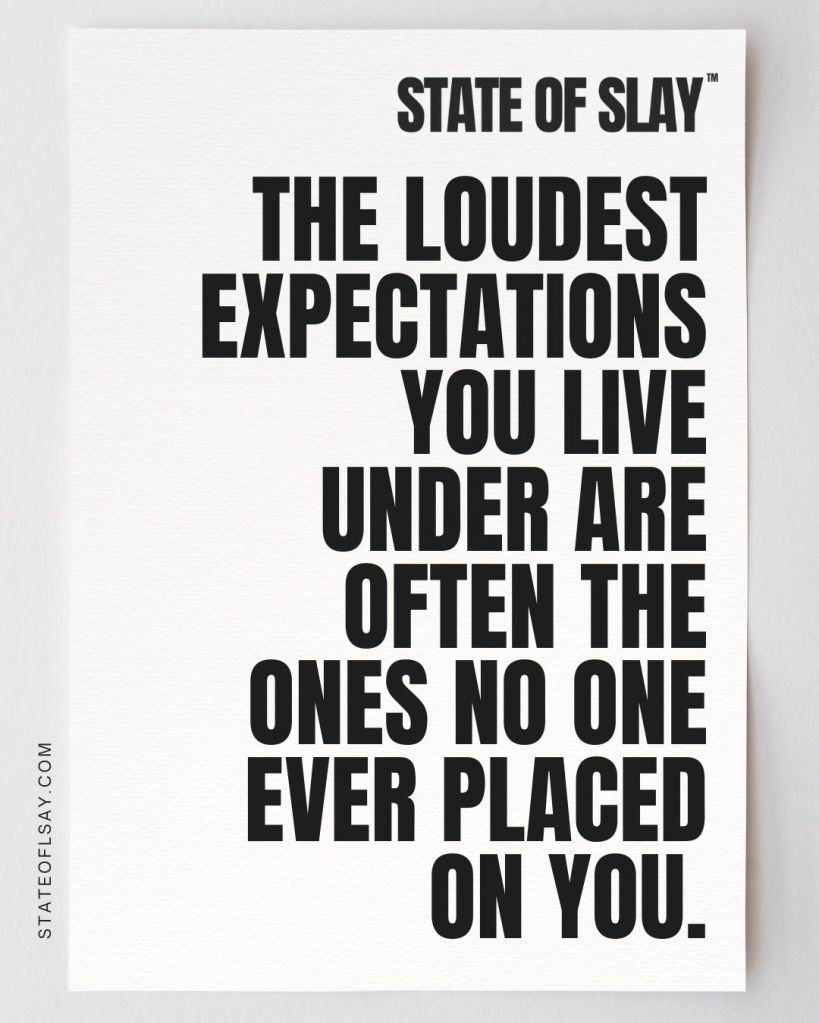
Slay Say

The Cost of Waiting for Approval

Most of us don’t realize how often we’re waiting.

Waiting until someone believes in us.

Waiting until our decision makes sense to everyone else.

Waiting until we’re certain no one will question the path we’re about to take.

It sounds responsible.

Sometimes it even feels wise.

But if you spend your life waiting for permission, you’ll eventually find yourself living according to someone else’s comfort instead of your own convictions.

There will always be opinions.

People who don’t understand why you’re changing.

Why you’re leaving.

Why you’re beginning again.

Why you’re choosing a different life than the one they expected for you.

You don’t owe every decision an explanation.

You don’t need unanimous approval to know what’s right for your life.

The people who make the greatest impact aren’t the ones who are never questioned.

They’re the ones who stop letting other people’s expectations become the deciding vote.

This is your reminder that peace begins the moment your decisions no longer require someone else’s approval.

Slay on.

Slay Say

Stop Performing for the Wrong Crowd

One of the most exhausting ways to live is constantly trying to earn approval from people who were never going to understand you.

So you explain yourself.

You soften your opinions.

You hide pieces of who you are.

You become quieter.

Smaller.

More agreeable.

Not because it’s who you are…

But because you’re hoping that if you say the right thing, achieve enough, or prove yourself one more time, they’ll finally applaud.

The truth is, some audiences were never yours to win.

And that’s okay.

Not every person is meant to connect with your story.

Not every opportunity is meant to open.

Not every relationship is meant to last.

Your energy is too valuable to spend convincing people who have already decided not to see you.

The people who are meant to appreciate your authenticity won’t require you to perform for it.

They won’t expect you to become someone else to earn a place in their lives.

They’ll value the person you already are.

Stop measuring your worth by the applause of the wrong audience.

Spend that energy becoming more fully yourself instead.

Because the life you’re meant to live isn’t built by collecting approval.

It’s built by living authentically enough to attract the people who genuinely belong in your story.

This is your reminder that peace often begins the moment you stop performing for people who were never meant to be your audience.

Slay on.

Slay Say

The Difference Between Protection and Identity

There are versions of ourselves that emerge during difficult seasons.

The people we become when we are trying to survive.

Trying to cope.

Trying to make it through something we never expected to face.

Sometimes those versions are incredibly strong.

They become hyper-independent.

Hyper-vigilant.

Guarded.

Careful.

They learn how to anticipate disappointment before it arrives.

They learn how to protect themselves from being hurt again.

And for a while, those strategies serve an important purpose.

They help us survive.

The problem is that what protects us during one chapter can quietly limit us in the next.

Because survival strategies have a way of becoming identities.

We stop seeing them as things we learned to do.

We start seeing them as who we are.

The walls become our personality.

The caution becomes our nature.

The armor becomes our identity.

And before long, we forget that these things were meant to protect us, not define us.

Healing often begins when we recognize the difference.

When we realize that we can appreciate what helped us survive without carrying it forever.

That we can honor the lessons without living inside them.

That we can lower the shield without becoming unsafe.

Growth is not about criticizing the version of you that got through difficult times.

It is about recognizing when that version has completed its job.

Because survival was never supposed to become a permanent address.

It was supposed to be a bridge.

This is your reminder that the things that protected you are not always the things that will help you grow.

Slay on.

Slay Say

The Uncomfortable Truth About Growth

One of the hardest things to accept about personal growth is that not everyone who cheers for your journey is cheering for your destination.

People often support change in theory.

They support healing.

Confidence.

Growth.

Success.

Until that growth begins to change the relationship.

Until your confidence becomes independence.

Until your healing removes the need for old patterns.

Until your success carries you beyond the role they expected you to play.

That is when support sometimes becomes discomfort.

Not because you have done something wrong.

Because growth changes dynamics.

The version of you that people became accustomed to is evolving.

And not everyone is prepared for what happens next.

This does not make them bad people.

It makes them human.

Growth has a way of exposing which relationships are built on mutual respect and which are built on familiarity.

The people who truly want the best for you will celebrate your progress, even when it takes you somewhere they have never been.

Even when it changes the relationship.

Even when it challenges their expectations.

Because genuine support is not dependent on remaining comfortable.

It is rooted in a desire for someone to become fully themselves.

You cannot measure the value of your growth by the comfort level of the people around you.

Some journeys are meant to take you beyond the limits others imagined for you.

And that is okay.

This is your reminder that real support does not disappear when your growth becomes visible.

Slay on.