We spend a lot of time trying to figure ourselves out.
Who am I?
What do I want?
What am I good at?
What are my weaknesses?
What makes me happy?
What doesn’t work for me?
Self-awareness matters. The better we understand ourselves, the easier it can be to make choices that actually fit who we are instead of living according to who everyone else expects us to be.
But there’s a strange thing that can happen along the way.
We can become so certain about who we are that we stop leaving room for who we might become.
The things we’ve learned about ourselves slowly become definitions.
Then the definitions become rules.
And eventually, without realizing it, knowing ourselves can become another way of limiting ourselves.
Prefer to listen? The Audio Blog version is available here.
SELF-AWARENESS ISN’T SUPPOSED TO BE A CAGE
There is power in being able to say, “I know myself.”
I know what matters to me.
I know what drains me.
I know what I value.
I know what I need.
But knowing yourself and deciding you have yourself completely figured out are two very different things.
One creates awareness.
The other can create boundaries around your identity that you never think to question.
“I’m shy.”
“I’m not creative.”
“I’m terrible with money.”
“I’m not athletic.”
“I don’t like change.”
“I’m not a relationship person.”
“I could never run a business.”
“I’ve always been the responsible one.”
Sometimes those statements are useful observations.
But sometimes they are old conclusions masquerading as permanent truths.
YOU MAY BE DESCRIBING SOMEONE YOU USED TO BE
Think about how many things you know about yourself because of experiences you had years ago.
Maybe you decided you weren’t good at public speaking because you froze during a presentation in school.
Maybe you decided you weren’t athletic because you hated gym class.
Maybe you decided you weren’t creative because someone else was better at drawing.
Maybe you decided you weren’t good at relationships because several of yours ended badly.
At the time, those conclusions may have made sense.
But you kept living.
You learned things.
You had experiences.
You developed skills.
You healed.
You changed.
And yet the description remained.
Sometimes the person we think we know so well is actually someone we haven’t been for years.
IDENTITY LIKES EVIDENCE
Once we believe something about ourselves, we tend to notice the things that support it.
If you believe you’re socially awkward, the conversation that goes badly may stay with you much longer than the five that went well.
If you believe you’re someone who always quits, you may remember every unfinished project while overlooking all the things you’ve stayed committed to.
If you believe you’re bad with money, one impulsive purchase can feel like proof, while months of responsible decisions barely register.
If you believe you’re terrible at setting boundaries, the one time you said yes when you wanted to say no can become evidence that nothing has changed.
We don’t always examine our identity objectively.
Sometimes we defend it.
Even when the identity isn’t particularly flattering.
Because there is something strangely comforting about being able to explain ourselves to ourselves.
At least we know who we are.
The problem is that when we become invested in a particular version of ourselves, we may unconsciously keep collecting evidence that allows that version to survive.
“THAT’S JUST WHO I AM” CAN END THE CONVERSATION TOO SOON
There are few sentences more effective at stopping growth than:
“That’s just who I am.”
Sometimes it’s true.
You don’t need to turn every preference into a personal development project.
You’re allowed to dislike things.
You’re allowed to have limits.
You’re allowed to know what works for you.
But “that’s just who I am” can also become an easy way to avoid asking whether something is actually part of our identity or simply something we’ve practiced for a very long time.
Maybe you aren’t “bad at confrontation.”
Maybe you’ve spent years avoiding it.
Maybe you aren’t “someone who can’t be alone.”
Maybe you haven’t learned how to be comfortable in your own company yet.
Maybe you aren’t “terrible with change.”
Maybe uncertainty makes you anxious, and you’ve built your life around avoiding that feeling.
There is a difference between describing yourself and sentencing yourself.
LABELS CAN HELP UNTIL THEY START MAKING DECISIONS FOR YOU
We have more language than ever for understanding ourselves.
Introvert.
Extrovert.
People pleaser.
Perfectionist.
Highly sensitive.
Overthinker.
Type A.
Avoidant.
Anxious.
Independent.
Empath.
Labels can be incredibly helpful when they give us language for something we’ve struggled to understand.
There can be relief in discovering, “There’s a reason I experience things this way.”
But a label should help you understand yourself.
It shouldn’t become your instruction manual.
There is a subtle difference between:
“I tend to be introverted.”
and
“I’m an introvert, so I would hate that.”
One describes a tendency.
The other may make the decision before you ever have the experience.
SOMETIMES WE BECOME LOYAL TO OUR OWN STORY
Changing your mind about yourself can feel surprisingly uncomfortable.
Because identity creates continuity.
It connects the person you were yesterday to the person you expect to be tomorrow.
So when you begin behaving differently, part of you may resist.
Someone who has always been independent may feel uncomfortable asking for help.
Someone who has always been the caretaker may feel selfish when they begin putting themselves first.
Someone who has always avoided attention may feel exposed when they begin allowing themselves to be seen.
Someone who has always been practical may feel irresponsible pursuing something uncertain.
Nothing may actually be wrong.
You may simply be behaving outside the boundaries of the person you have decided you are.
Sometimes growth feels unfamiliar because you are meeting a version of yourself you haven’t had enough time to recognize yet.
YOUR PREFERENCES ARE ALLOWED TO CHANGE TOO
Not every change in identity needs to be profound.
Sometimes you simply change your mind.
You discover you like something you once hated.
You become interested in something you once dismissed.
You want a life you once swore you would never want.
You stop wanting something you spent years pursuing.
You enjoy staying home when you used to want to be out every night.
You become adventurous after years of playing it safe.
You discover that solitude feels peaceful instead of lonely.
We sometimes treat consistency as proof of authenticity.
But being authentic doesn’t mean remaining identical.
It means being honest about who you are now.
You don’t owe lifelong loyalty to every preference you’ve ever had.
SELF-KNOWLEDGE SHOULD INCLUDE CURIOSITY
Maybe the healthiest version of knowing yourself still includes a question mark.
Instead of:
“I’m not good at that.”
Try:
“I haven’t been good at that.”
Instead of:
“I could never do that.”
Try:
“I’ve never done that.”
Instead of:
“That’s not me.”
Try:
“That hasn’t been me.”
Those small changes leave something important intact.
Possibility.
They acknowledge your history without requiring your future to repeat it.
You can know yourself deeply and still remain curious about yourself.
In fact, maybe real self-awareness requires both.
YOU ARE NOT A FINISHED PERSON
We often talk about “finding ourselves” as though somewhere inside us is a completed person waiting to be discovered.
But much of who we are is still being created.
Through experience.
Through failure.
Through love.
Through loss.
Through curiosity.
Through choices we haven’t made yet.
Through places we haven’t gone.
Through people we haven’t met.
Through things we haven’t tried.
There are parts of you that may only exist because of something that hasn’t happened yet.
That doesn’t mean you don’t know yourself.
It means there is still more of you to know.
KNOW YOURSELF, BUT KEEP THE DOOR OPEN
Self-awareness should help you move through life with greater clarity.
It shouldn’t shrink the number of lives you believe you’re capable of living.
Know your patterns.
Know your values.
Know your boundaries.
Know what brings you peace.
Know what you need.
But leave a little space around the edges.
For surprise.
For contradiction.
For growth.
For the possibility that something you once believed about yourself is no longer true.
For the possibility that you might enjoy something you thought you’d hate.
For the possibility that you might be capable of something you assumed you couldn’t do.
For the possibility that tomorrow’s version of you might make absolutely no sense to yesterday’s version.
You are allowed to know yourself without deciding you have yourself figured out.
Sometimes the most important thing you can discover about yourself is that you were wrong about who you thought you had to be.
SLAY REFLECTION
S — Spot the Definition What is something you regularly say about yourself as though it is an unquestionable fact?
L — Look at the Evidence Is that belief still supported by who you are today, or are you using old experiences to describe your current self?
A — Allow for Change Where could you replace “I am” with “I have been” and leave room for another possibility?
Y — Your Next Discovery Do one small thing this week that doesn’t fit the version of yourself you think you know. You don’t have to become someone new. Just give yourself the opportunity to discover something new about who you already are.
CALL TO ACTION: JOIN THE CONVERSATION
I’d love to hear from you.
What is something you believed about yourself for years that eventually turned out not to be true?
Maybe you discovered you were braver than you thought. More creative. More independent. More social. More capable of change. Or maybe you simply realized that something you had always described as “just who I am” wasn’t who you were anymore.
Share your thoughts in the comments. Your experience may help someone else question a definition of themselves they’ve been carrying for far too long.
And if you know someone who has been living inside an old description of themselves, send this to them.
Sometimes we don’t need to find ourselves.
Sometimes we need to give ourselves permission to keep discovering who we are.
When Who You Were Can’t Take You Where You’re Going
Every version of you has had a job to do.
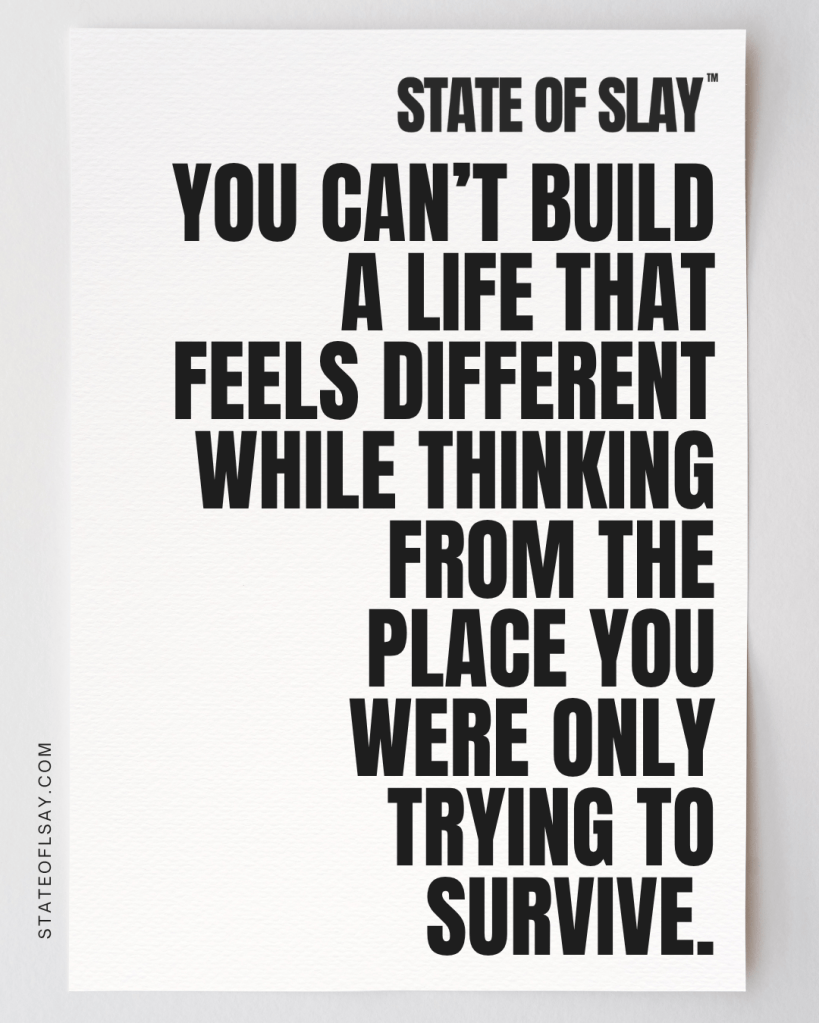
There was a version who learned how to survive.
One who became independent because relying on other people felt risky.
One who learned to keep the peace.
One who worked harder than everyone else because achievement became proof of worth.
One who stayed guarded because being vulnerable had once been expensive.
One who said yes because disappointing people felt worse than disappointing yourself.
Those versions of you weren’t mistakes.
They developed for reasons.
They helped you navigate the life you were living with the tools, understanding, and circumstances you had at the time.
Some of them got you through things you weren’t sure you could survive.
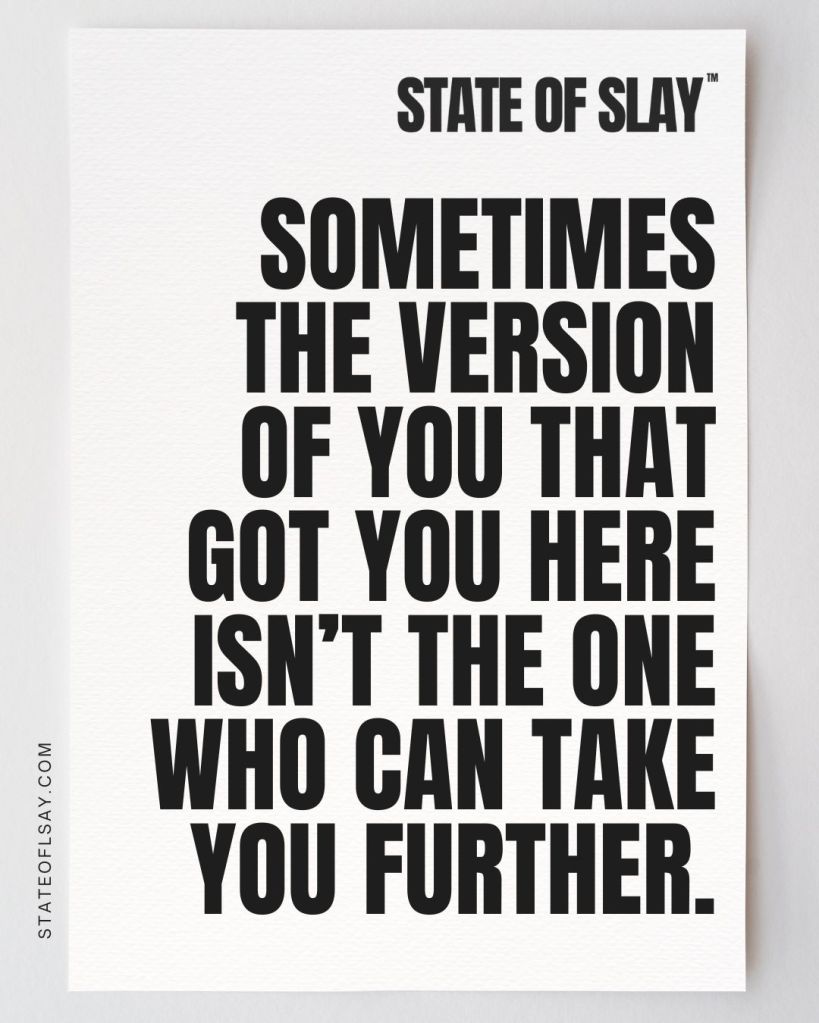
But something can save you in one chapter and limit you in the next.
The independence that once protected you can make it difficult to ask for help.
The walls that kept you safe can prevent anyone from getting close.
The drive that helped you succeed can make rest feel like failure.
The ability to keep everyone happy can leave you disconnected from what you actually want.
The habit of expecting the worst can protect you from disappointment while making it difficult to recognize when something good has arrived.
And that’s where growth gets complicated.
Because we become attached to the qualities that helped us get here.
We call them personality.
We say, That’s just who I am.
But sometimes what feels like identity is actually adaptation.
And eventually, life may ask something different from you.
Not because who you were was wrong.
Because where you’re going requires something new.
Maybe strength now means letting someone help you.
Maybe confidence means admitting you don’t know.
Maybe loyalty means choosing yourself.
Maybe courage means becoming visible after years of making yourself small.
Maybe success means building a life you actually enjoy instead of one that simply looks impressive.
Growth doesn’t always require becoming more.
Sometimes it requires releasing what you no longer need.
That can feel surprisingly uncomfortable.
There is familiarity in our old ways of being, even when they’re exhausting.
We know how to survive with them.
We know who we are inside them.
Changing means entering a space where the old rules no longer apply and the new ones haven’t become natural yet.
You may feel less capable for a while.
Less certain.
Less like yourself.
But perhaps that discomfort isn’t evidence that you’re losing yourself.
Perhaps you’re discovering which parts of you were built for a life you’re no longer living.
You don’t have to reject who you were to become who you’re becoming.
Thank that version of you.
Honor what they carried.
Recognize what they made possible.
Then allow them to put the bags down.
You can appreciate the person who got you this far without asking them to lead you forever.
Because the next chapter may require a version of you who trusts more, receives more, risks differently, speaks more clearly, rests without guilt, or finally chooses according to what you want now.
This is your reminder:
Growth sometimes means retiring the survival skills that have finished their job.
It can remind us to notice what is good instead of constantly focusing on what is missing.
It can bring perspective.
It can help us recognize how much we have, how far we’ve come, and how many people and experiences have contributed to our lives.
But somewhere along the way, many of us learned to turn gratitude into a contract.
If we’re grateful for something, we think we’re supposed to keep wanting it.
If something has been good to us, we’re supposed to remain loyal to it.
If someone gave us an opportunity, we’re supposed to stay.
If a relationship once made us happy, questioning it can feel like a betrayal of everything it gave us.
And if our life looks good from the outside, wanting something different can feel almost embarrassingly ungrateful.
So we start arguing with our own desires.
What more could I possibly want?
Maybe that’s the wrong question.
Because gratitude tells you how you feel about what you’ve received.
It doesn’t necessarily tell you what you want next.
Prefer to listen? The Audio Blog version is available here.
GRATITUDE IS NOT A CONTRACT
Being grateful for something does not obligate you to keep choosing it forever.
You can be grateful for a job that gave you stability when you desperately needed it and eventually realize you want to do something else.
You can appreciate a friendship that carried you through a difficult period and recognize that the relationship has changed.
You can love the home where you built years of memories and still decide it’s time to move.
You can appreciate what someone has done for you without owing them permanent access to your life.
Gratitude acknowledges what something has meant to you.
It doesn’t sign away your right to change.
Sometimes we confuse appreciation with obligation because leaving feels as though we’re declaring that what came before wasn’t good enough.
But that’s not what change means.
Something can have been wonderful.
And you can still be finished with it.
DIFFERENT DOESN’T ALWAYS MEAN BETTER
We often talk about change as though we’re trying to upgrade our lives.
A better job.
A better relationship.
A better home.
A better version of ourselves.
But what if you don’t want better?
What if you simply want different?
That’s an important distinction.
You don’t have to prove that your current life is terrible before you’re allowed to imagine another one.
You don’t have to turn your job into the villain of the story before you’re allowed to leave it.
You don’t have to compile a list of someone’s faults to justify changing the relationship.
You don’t have to discover something wrong with where you are before you can become curious about somewhere else.
Sometimes change isn’t an indictment.
It’s movement.
And sometimes the pressure to prove that the next thing will be better is exactly what keeps us from exploring what might simply be more appropriate for who we are now.
A GOOD THING CAN STILL HAVE AN ENDING
This can be one of the hardest truths to accept.
We’re comfortable leaving things that are obviously bad for us.
At least then we have a reason.
But what about something that was good?
Something that worked?
Something we loved?
We tend to believe good things should continue indefinitely.
So when we begin wanting something different, we search for a problem to explain it.
Maybe nothing went wrong.
Maybe nothing needs to.
Not every ending is evidence of failure.
Some experiences belong to a particular period of our lives.
They give us something.
We give something to them.
And eventually the relationship between who we are and what they provide changes.
We don’t have to rewrite the past to make leaving the present acceptable.
WANTING MORE DOESN’T MEAN YOU HAVE LESS
There is a strange guilt that can come with wanting.
Especially when you know you’re fortunate.
You look around and see things you once hoped for.
Things other people would love to have.
Things you’ve worked hard to create.
And then another desire appears.
Immediately, we can begin policing ourselves.
Shouldn’t this be enough?
Enough is a complicated word.
Because something can be enough and still not be everything you want.
You can have enough love and still want more connection.
You can have enough success and still want a different challenge.
You can have enough security and still crave adventure.
You can have enough stability and still feel curious about change.
Wanting something else doesn’t erase what is already there.
Desire isn’t always evidence of dissatisfaction.
Sometimes it’s information.
BE CAREFUL WHEN GRATITUDE BECOMES GUILT
Gratitude says:
I appreciate this.
Guilt says:
Because I appreciate this, I’m not allowed to leave.
Those are very different things.
Guilt can make us stay long after our desire has gone quiet.
We think about the person who gave us our first chance.
The partner who stood beside us during a difficult time.
The friend who was there when nobody else was.
The family member who sacrificed for us.
And those things matter.
But gratitude becomes unhealthy when it requires you to build the rest of your life around repayment.
You can appreciate what someone gave you without handing them ownership of what comes next.
You can honor someone’s place in your story without giving them control over the remaining chapters.
SOMETIMES THE LIFE YOU WANTED STOPS FITTING
There are things we work incredibly hard to get.
And then we get them.
That can make changing our minds particularly difficult.
Because now we’re not only leaving something behind.
We’re confronting the person we once were who wanted it so badly.
You may have spent years building a career you no longer want.
You may have fought hard for a relationship that no longer feels right.
You may have sacrificed to create a lifestyle that now feels restrictive.
And part of you may think:
After everything I did to get here, how can I possibly walk away?
But your past desire doesn’t get permanent authority over your future.
You made choices based on who you were, what you knew, and what you needed at the time.
You are allowed to receive what you once wanted and eventually discover something about yourself you couldn’t have known before you had it.
That’s not ingratitude.
That’s new information.
YOU DON’T HAVE TO MAKE THE PAST WRONG
Sometimes we make change unnecessarily painful because we think we need to justify it.
So we start editing the story.
We focus on everything that wasn’t perfect.
We magnify frustrations.
We search for reasons something wasn’t actually as good as we thought.
We make people wrong so leaving them feels easier.
But what if you didn’t have to do that?
What if you could say:
That mattered to me.
That was good for me.
I’m glad I experienced it.
And I don’t want it anymore.
There is something freeing about allowing the past to remain good.
You don’t have to destroy your memories to earn permission to create new ones.
GRATITUDE LOOKS BACK. CHOICE LOOKS FORWARD.
Maybe this is the distinction we forget.
Gratitude asks:
What has this given me?
Choice asks:
What do I want from here?
One question doesn’t answer the other.
You can look backward with enormous appreciation while looking forward with completely different desires.
In fact, sometimes gratitude makes change easier because you no longer need to leave angry.
You don’t have to slam the door.
You don’t have to convince yourself that everything was terrible.
You don’t have to carry resentment into whatever comes next.
You can acknowledge what was good.
Take what you learned.
Keep what mattered.
And still go.
YOU ARE ALLOWED TO WANT SOMETHING DIFFERENT
Maybe your life is good.
Maybe there isn’t a dramatic problem to solve.
Maybe nobody did anything wrong.
Maybe you’re not unhappy.
Maybe you simply feel something changing inside you.
We often wait for unhappiness to give us permission to change.
But curiosity can be a reason too.
Growth can be a reason.
A shifting priority can be a reason.
A desire you can’t quite explain can be worth listening to.
You don’t have to immediately act on every feeling or blow up a perfectly good life because you woke up restless on a Tuesday.
But you can listen.
You can get curious.
You can ask yourself what the desire is trying to tell you without immediately shaming yourself for having it.
Because gratitude and desire can occupy the same space.
You can love what was and wonder what’s next.
You can appreciate where you are and imagine somewhere else.
You can be thankful for everything that brought you here without deciding that here is where you must remain.
Sometimes the most respectful thing you can do with a good chapter is let it be good without forcing it to become the entire story.
SLAY REFLECTION
S — SEE WHAT YOU APPRECIATE What in your life are you genuinely grateful for right now?
L — LISTEN TO WHAT YOU WANT Is there something different you’ve been wanting but dismissing because you think you should be satisfied?
A — ASK WHAT’S KEEPING YOU THERE Are you choosing something because you still want it, or because leaving would make you feel guilty or ungrateful?
Y — YOUR NEXT STEP Give yourself permission to explore what you want without requiring yourself to make an immediate decision. Sometimes acknowledging the desire is the first step.
CALL TO ACTION: JOIN THE CONVERSATION
I’d love to hear from you.
Have you ever felt guilty for wanting something different because what you already had was good?
Did you stay because you thought being grateful meant you weren’t allowed to change your mind?
Share your thoughts in the comments. Your experience may help someone else realize they don’t have to make something bad before they’re allowed to choose something different.
And if you know someone who is struggling with wanting change in a life they are genuinely grateful for, send this to them.
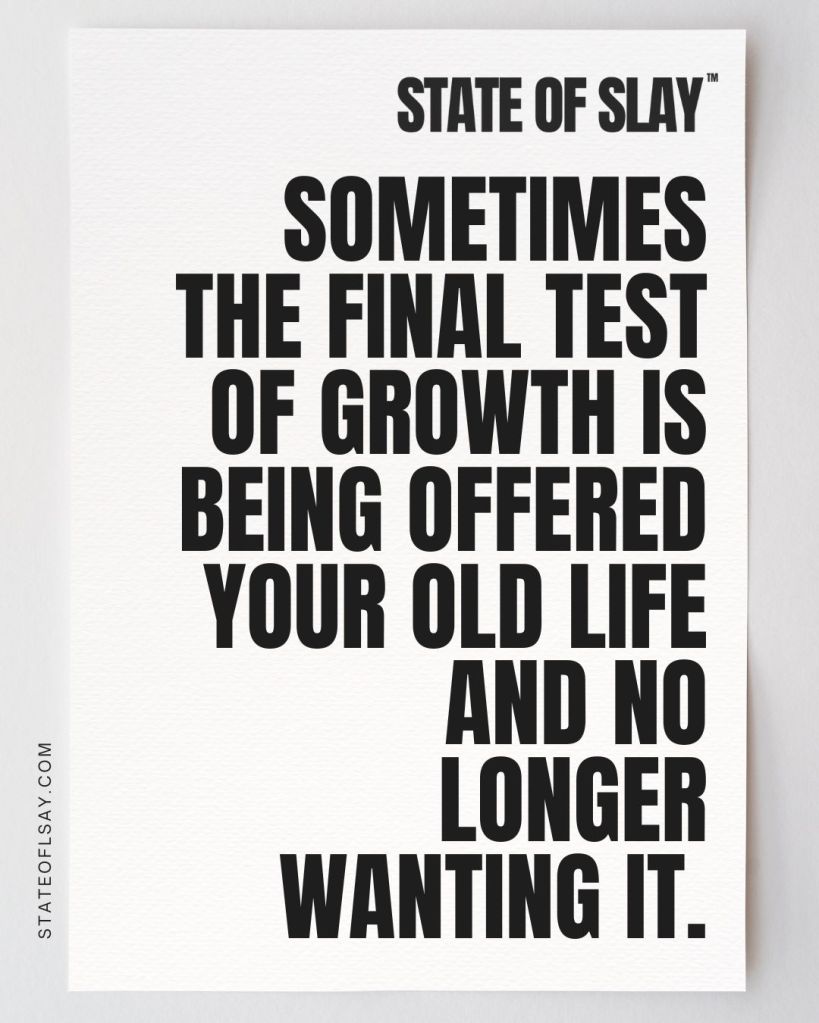
Growth doesn’t always announce itself with a breakthrough.
Sometimes it looks like being offered something you once desperately wanted…
and realizing you don’t want it anymore.
The relationship you once would have gone back to.
The friendship you kept trying to repair.
The opportunity you thought would finally validate you.
The habit that used to make everything feel easier.
The version of yourself that felt comfortable because you already knew how to be them.
There was a time when saying no to those things felt impossible.
Not necessarily because they were good for you, but because they were familiar.
And familiarity can be powerful.
It can make us forget how hard we worked to leave something behind.
It can soften the edges of memories.
It can convince us that going back would be easier than continuing forward.
But growth changes what feels like home.
The things you once chased can stop exciting you.
The behavior you once tolerated can become unacceptable.
The situations you once begged to return can come back around, only for you to realize you’ve become someone who no longer fits inside them.
That realization can be bittersweet.
Because outgrowing something doesn’t mean it never mattered.
It doesn’t mean you regret the person you were.
It simply means you’ve changed.
And one of the clearest signs of that change is when something that once had the power to pull you backward no longer has anything to offer the person you are today.
You don’t have to prove you’ve grown by fighting your past.
Sometimes you prove it simply by no longer being tempted to return to it.
This is your reminder:
Growth isn’t only measured by how far you’ve moved forward. Sometimes it’s recognizing that what once felt impossible to leave behind no longer feels difficult to walk away from.
One of the most freeing realizations you can have is this:
Anything you lose by not being honest about who you are was never truly meant for you to keep.
Not the relationship. Not the friendship. Not the approval. Not the version of belonging that only existed as long as you stayed small, quiet, agreeable, or performative.
Because real connection survives truth.
What falls apart when you become authentic was often built on performance in the first place.
Prefer to listen? The Audio Blog version is available here.
A LOT OF PEOPLE ARE LOVED FOR WHO THEY PRETEND TO BE
That’s the painful part.
Many people spend years carefully shaping themselves into whoever they think will be most accepted.
More agreeable. Less emotional. Less outspoken. Less honest. Less themselves.
They learn to say what keeps the peace. Hide what feels inconvenient. Shrink the parts of themselves that might make other people uncomfortable.
And over time, they become exhausted trying to maintain an identity that was never fully real to begin with.
Because pretending may gain acceptance.
But it often costs self-respect.
PEOPLE-PLEASING CAN CREATE VERY LONELY RELATIONSHIPS
On the surface, it may look like connection.
You are liked. Included. Wanted. Needed.
But deep down, there is often anxiety underneath it.
Because when people only know the edited version of you, part of you quietly wonders:
“If I stop performing, will they still stay?”
That fear keeps many people trapped in relationships where authenticity feels dangerous.
So they overextend. Over-give. Over-explain. Overcompensate.
Not because they are weak, but because somewhere along the way, they learned that love had conditions attached to it.
AUTHENTICITY WILL ALWAYS DISAPPOINT PEOPLE WHO BENEFITED FROM YOUR PERFORMANCE
That truth can be uncomfortable.
Sometimes the people who react most negatively to your growth were benefiting from the version of you that abandoned yourself to keep them comfortable.
The version that never said no. Never had boundaries. Never challenged unhealthy dynamics. Never expressed needs honestly.
And when you begin showing up more authentically, some people will call it selfishness simply because they no longer have the same access to your self-sacrifice.
But becoming real is not betrayal.
It is self-respect.
THE RIGHT PEOPLE DO NOT REQUIRE YOU TO HIDE YOURSELF
Healthy relationships do not demand constant performance.
You should not have to earn connection by suppressing your personality, opinions, emotions, needs, or growth.
Real connection allows honesty.
It allows evolution. Boundaries. Imperfection. Humanity.
The right people may not agree with you all the time. But they will not require you to become emotionally smaller in order to remain lovable.
That is the difference.
LOSING FAKE CONNECTIONS CAN FEEL LIKE REAL GRIEF
Even when the relationship was unhealthy.
Even when the friendship was conditional.
Even when the approval came at the expense of your well-being.
Because letting go of false connections still hurts.
Humans are wired for belonging.
So when people pull away after you become more authentic, it can trigger deep fears of rejection, abandonment, or loneliness.
But losing relationships built on performance is not the same as losing relationships built on truth.
One was sustainable.
The other was survival.
YOU CANNOT BUILD REAL SELF-WORTH WHILE CONSTANTLY ABANDONING YOURSELF
This is where many people become emotionally exhausted.
Trying to keep everyone happy. Trying to stay accepted. Trying to avoid rejection at all costs.
But every time you silence yourself to maintain approval, you send yourself a quiet message:
“My real feelings are less important than keeping other people comfortable.”
That slowly erodes self-trust.
Because deep down, your nervous system knows when you are betraying yourself.
And eventually, the emotional cost becomes too heavy to carry.
BEING REAL FILTERS OUT WHAT WAS NEVER ALIGNED
That is not punishment.
That is clarity.
Authenticity has a way of revealing which relationships are rooted in genuine connection and which ones were built around convenience, control, image, or emotional dependency.
And while that process can feel lonely at first, it is also freeing.
Because you stop wasting energy trying to maintain relationships that only survive when you are pretending.
You stop auditioning for acceptance.
You stop shape-shifting to fit rooms that were never built for your real self.
SOME PEOPLE WILL MISUNDERSTAND YOU NO MATTER WHAT
That is part of life.
You can communicate carefully, love deeply, show up consistently, and still be misunderstood by people who only see you through the lens of their own expectations, projections, or limitations.
You cannot control that.
What you can control is whether you abandon yourself trying to manage everyone else’s perception of you.
And that is where freedom begins.
Not when everyone approves of you. But when you no longer need them to.
REAL PEACE COMES FROM BEING FULLY YOURSELF
Not the polished version. Not the socially acceptable version. Not the least disruptive version.
The real version.
The one that has opinions. Needs. Boundaries. Depth. Growth. Honesty.
Because at the end of the day, fake acceptance is still fake.
And there is nothing lonelier than being loved for someone you are pretending to be.
The right people will not disappear when you become more authentic.
If anything, authenticity is what allows the right relationships to finally find you.
Because anything you lose by not being real was never truly rooted in the real you to begin with.
SLAY REFLECTION
S — See the Pattern
Where in your life have you been performing instead of showing up authentically?
L — Let Go of the Fear
What are you afraid people might think if you fully expressed who you are?
A — Accept Your Truth
What parts of yourself deserve to be seen instead of hidden?
Y — Yield to Authenticity
How might your life change if you stopped chasing approval and started choosing honesty?
CALL TO ACTION: JOIN THE CONVERSATION
I’d love to hear from you.
Have you ever lost a relationship, friendship, or sense of belonging after finally being honest about who you are?
Share your thoughts in the comments. Let’s grow through it together.
And if you know someone who’s learning to stop performing for acceptance and start embracing their authentic self, send this to them.
Sometimes losing what was never real is the first step toward finding what is.
There is a difference between being accepted by others and being at peace with yourself.
And a lot of people spend years chasing the first one while quietly starving the second.
Because popularity feels validating.
The compliments. The attention. The approval. The feeling of being wanted, noticed, included, admired.
For a moment, it can feel like proof that you matter.
But external validation is fragile.
Because if your worth only exists through other people’s opinions, your confidence will constantly rise and fall depending on who is clapping for you that day.
And that is exhausting.
Prefer to listen? The Audio Blog version is available here.
SOME PEOPLE ARE LOVED BY EVERYONE EXCEPT THEMSELVES
That’s the heartbreaking part.
There are people who light up every room they walk into and still go home feeling empty.
People with followers, friends, relationships, and success who still do not feel good enough when they are alone with their own thoughts.
Because popularity and self-worth are not the same thing.
One comes from outside of you. The other has to come from within.
And no amount of attention can permanently fill a void created by self-rejection.
WE LEARN EARLY TO SEEK APPROVAL
Most of us were taught, directly or indirectly, that being liked meant being valuable.
Be agreeable. Be easy to love. Be impressive. Be successful. Be who other people want you to be.
So we adapt.
We shape-shift. People-please. Perform versions of ourselves that feel acceptable.
And after a while, many people become so focused on maintaining approval that they lose connection with who they actually are.
Because when your identity becomes dependent on being liked, authenticity starts to feel risky.
THE PROBLEM WITH BUILDING YOUR WORTH ON OTHER PEOPLE’S OPINIONS
People are inconsistent.
One day, they praise you. The next day they misunderstand you. Celebrate you. Criticize you. Include you. Ignore you.
If your self-esteem depends entirely on external reactions, your emotional world becomes unstable.
You begin chasing validation like oxygen.
Needing reassurance. Needing applause. Needing constant confirmation that you are enough.
But happiness does not grow from constantly monitoring how others feel about you.
It grows from learning how you feel about yourself when nobody else is watching.
SELF-LIKE IS DIFFERENT FROM SELF-LOVE
People talk about self-love a lot.
But sometimes the first step is simpler than that.
Sometimes it starts with self-like.
Liking the person you are becoming. Trusting yourself more. Feeling proud of your choices. Enjoying your own company without needing distraction or approval.
Because real happiness is not built on perfection.
It is built on self-acceptance.
And that changes everything.
YOU CANNOT PERFORM YOUR WAY INTO PEACE
This is something many people discover the hard way.
You can be admired and still deeply unhappy.
You can be desired and still feel emotionally unseen.
You can look successful on the outside while feeling disconnected from yourself on the inside.
Because peace does not come from maintaining an image.
It comes from authenticity.
From no longer needing to audition for belonging everywhere you go.
From knowing who you are without constantly needing strangers, friends, family, or social media to confirm it for you.
PEOPLE-PLEASING IS OFTEN SELF-ABANDONMENT IN DISGUISE
A lot of people confuse being liked with being loved.
But if people only love the version of you that stays quiet, agreeable, over-giving, or emotionally convenient, that is not real connection.
That is performance-based acceptance.
And eventually, it becomes exhausting trying to maintain versions of yourself that keep everyone else comfortable while slowly disconnecting from your own needs.
Sometimes happiness begins the moment you stop asking:
“Will they still like me if I say no?”
And start asking:
“Do I even like who I become when I abandon myself to keep everyone else happy?”
THE MOST CONFIDENT PEOPLE ARE NOT ALWAYS THE MOST POPULAR
But they are often the most grounded.
Because confidence rooted in self-worth does not collapse every time someone disapproves.
People who genuinely like themselves understand something important:
Not everyone will understand you. Not everyone will choose you. Not everyone will agree with you.
And that is okay.
Because their value is not entirely dependent on outside acceptance.
That kind of confidence feels quieter.
Less performative. Less desperate. More stable.
It allows people to stop chasing rooms where they are merely tolerated and start building lives where they feel emotionally safe being themselves.
HAPPINESS IS AN INSIDE RELATIONSHIP
That relationship matters more than most people realize.
How you speak to yourself. How you care for yourself. How you treat yourself when you fail. How you comfort yourself when life hurts.
Because eventually the noise fades.
The applause quiets. The trends change. The attention shifts.
And at the end of the day, you still have to live with yourself.
That is why learning to genuinely like who you are matters so much more than temporary approval from others.
YOU ARE ALLOWED TO STOP CHASING VALIDATION
You do not have to earn your worth every day.
You do not have to constantly prove you are lovable.
You do not need universal approval to deserve peace.
Some people will misunderstand you no matter how kind you are. Some people will project onto you no matter how carefully you communicate. Some people simply will not be your people.
And that is not failure.
Real happiness begins when your relationship with yourself becomes stronger than your need for outside validation.
Because popularity may bring attention.
But self-acceptance brings peace.
And peace will always outlast applause.
SLAY REFLECTION
S — See the Difference
How much of your confidence is connected to other people’s approval?
L — Look Inward
Do you genuinely enjoy who you are when nobody else is validating you?
A — Accept Yourself
What parts of yourself have you been hiding to stay accepted by others?
Y — Yield to Authenticity
What might change if you focused less on being liked and more on being real?
CALL TO ACTION: JOIN THE CONVERSATION
I’d love to hear from you.
Have you ever realized that being liked by others did not automatically make you happy within yourself?
Share your thoughts in the comments. Let’s grow through it together.
And if you know someone who’s learning to stop chasing validation and start building self-worth from within, send this to them.
Sometimes the most important relationship we will ever heal is the one we have with ourselves.
Sometimes the hardest thing to release is not a person.
It’s the life you thought you were going to have.
The timeline. The dream. The version of yourself you imagined becoming by now.
And when life moves in a different direction, it can feel deeply personal.
Like somehow you failed because things did not unfold the way you planned.
But maybe life is not falling apart.
Maybe it’s trying to lead you somewhere you never would have gone willingly.
Prefer to listen? The Audio Blog version is available here.
WE SPEND SO MUCH TIME TRYING TO FORCE WHAT NO LONGER FITS
Sometimes we hold onto things because we invested so much into them.
A relationship. A career path. A dream. An identity.
We convince ourselves that if we just try harder, wait longer, or sacrifice more, eventually things will fall into place.
But deep down, many of us already know when something no longer aligns.
We feel it in our exhaustion. In our anxiety. In the constant effort it takes to hold everything together.
Still, letting go feels terrifying because plans become attached to our identity.
If this doesn’t work out… Who am I then?
NOT EVERY ENDING IS A FAILURE
This is something I’ve had to learn over and over again.
Some of the things I cried hardest over were actually redirections.
Doors I begged to stay open eventually revealed why they needed to close. Situations I thought were destroying me were quietly reshaping me. Paths I fought to stay on were leading me away from myself.
But when you are in the middle of loss or uncertainty, it rarely feels that way.
It feels unfair. Disappointing. Confusing.
Especially when you built your future around something you genuinely believed in.
But life has a way of removing what no longer fits, even when we are not ready to let it go ourselves.
THE LIFE WAITING FOR YOU MAY LOOK DIFFERENT FROM WHAT YOU IMAGINED
And that does not make it lesser.
Sometimes we become so attached to one vision of happiness that we miss the beauty of what is unfolding in front of us.
Because it arrived differently than expected.
Maybe your life does not look the way you thought it would by now. Maybe your path has taken turns you never anticipated. Maybe you are rebuilding from something you thought would last forever.
That does not mean your story is over.
Sometimes the life waiting for you is more aligned than the one you planned.
More peaceful. More authentic. More honest.
Not because it is perfect, but because it fits who you are becoming now, not who you were years ago.
LETTING GO IS NOT GIVING UP
There is a difference between surrender and defeat.
Giving up says: “Nothing good will happen for me.”
Letting go says: “I cannot keep forcing what no longer feels right.”
That takes courage.
Because there is comfort in what’s familiar, even when it hurts us. There is safety in staying attached to what we know, even when we have outgrown it.
But growth often requires release.
And sometimes the next chapter of your life cannot begin until you stop trying to resurrect the last one.
YOU ARE ALLOWED TO BECOME SOMEONE NEW
One of the hardest parts of change is realizing that your identity may evolve, too.
You are allowed to want different things. You are allowed to change direction. You are allowed to outgrow old dreams.
That is not failure. That is growth.
The person you were five years ago may not be the person you are today.
And maybe that’s a good thing.
Because some versions of ourselves are meant to carry us only so far.
STOP ASKING WHY IT FELL APART
Start asking what it is making room for.
That shift changes everything.
Because sometimes what feels like destruction is actually space being created for something more aligned.
A healthier relationship. A new purpose. Peace. Freedom. A version of yourself that no longer has to perform or pretend.
You may not understand the redirection yet.
But not understanding it right now does not mean it is wrong.
MAYBE THE LIFE WAITING FOR YOU IS BETTER THAN THE ONE YOU PLANNED
Not easier. Not perfect. But truer.
Sometimes we mourn the fantasy of what could have been while overlooking the reality of what actually was.
And sometimes the future we resisted becomes the very thing that frees us.
So if life feels different from what you imagined right now, that does not mean you missed your chance.
Maybe this chapter is not the end of your story.
Maybe it is finally the beginning of a more honest one.
SLAY REFLECTION
S — See the Truth
What are you holding onto simply because it was part of your original plan?
L — Let Yourself Release
What would change if you stopped forcing what no longer fits?
A — Accept the Redirection
Has a past disappointment ever turned out to be protection or growth?
Y — Yield to What’s Next
What might become possible if you trusted the unknown a little more?
CALL TO ACTION: JOIN THE CONVERSATION
I’d love to hear from you.
Have you ever had to let go of the life you planned, only to discover something unexpected waiting for you on the other side?
Share your story in the comments. Let’s cheer each other on.
And if you know someone who’s struggling to release the version of life they thought they were supposed to have, send this to them.
Sometimes, all we need is a reminder that a different path does not mean a lesser one.
There comes a time in life when you realize—not every space is meant for you. Not every conversation needs your input. And not every audience is ready—or even willing—to hear what you have to say.
For years, I believed I had to be everywhere, say everything, and make sure I was heard. Even if it meant squeezing into spaces that didn’t feel right. I thought that was how you made an impact. Be louder. Be present. Be seen.
But experience has taught me something far more powerful:
True empowerment comes from going where your voice is needed, not where it’s merely tolerated.
It’s a shift from trying to fit in to standing tall where you belong.
The Myth of Being Everywhere
We’re bombarded with messages telling us to “show up everywhere.” Post more. Be visible. Stay relevant. Hustle harder.
But visibility does not equal value.
When you stretch yourself thin trying to be in all the rooms, you lose something essential—clarity. The more you chase attention, the more disconnected you become from your true message.
Impact isn’t about volume. It’s about resonance.
The power of your voice isn’t in how many people hear it, but in who hears it and how deeply it connects.
Quality over quantity. Alignment over attention.
Your voice deserves to be heard in spaces where it is valued—where it can make a real difference.
How to Know Where Your Voice is Needed
Not every invitation is an opportunity.
Some spaces want what you represent, not who you are. You might be included to check a box, but your actual voice? It’s sidelined.
That’s not your room.
Ask yourself:
Does this space genuinely value my voice?
Is my presence here aligned with my purpose?
Am I heard and respected, not just seen?
If the answers are no, it’s not your place to pour your energy into.
You deserve spaces where your contribution matters.
Stepping Out of Your Comfort Zone
It’s human nature to stick with the familiar. But sometimes, the places we’ve outgrown are holding us back.
Finding where your voice is needed often means stepping outside your comfort zone.
Try new communities. Enter unfamiliar conversations. Build fresh connections.
You might be surprised how much common ground you discover when you truly see and hear others. Different backgrounds, same dreams. Different paths, shared values.
That’s where genuine community begins—with curiosity, openness, and the courage to explore beyond what feels safe.
Building Meaningful Connections
As we grow, so do our relationships. Not everyone who started with you is meant to go the distance. And that’s okay.
Invest in connections that:
Encourage your growth
Challenge you in meaningful ways
Support and celebrate your voice
The right connections won’t just tolerate your voice. They’ll make space for it. They’ll value it. They’ll help you carry it further.
The Power of Walking Away
One of the hardest lessons I’ve learned is knowing when to walk away.
Leaving a space that doesn’t align with you isn’t failure. It’s wisdom.
When you walk away from what no longer serves you, you create space for what does. For the right people. For meaningful conversations. For opportunities that honor your voice.
Walking away is a declaration of self-worth. You’re not here to prove yourself in rooms that don’t value you. The right spaces will invite you in, not because they have to, but because they want to hear what you have to say.
The Ripple Effect of Showing Up Authentically
When you focus your energy where it’s truly needed, you create a ripple effect.
You may not always see the immediate impact, but:
A story you share helps someone feel less alone.
A truth you speak encourages someone else to find their voice.
A perspective you offer opens minds and hearts.
Impact isn’t always loud.
It’s the quiet strength of showing up authentically, in the right spaces, at the right time. That’s where real change begins.
State of Slay™: The Return
Even as I stepped away to focus on other parts of my life, the State of Slay™ blogs never truly went silent. More people have been reaching out, telling me they’ve been revisiting old posts, finding guidance, connection, and reminders that they’re not alone.
And as you may have noticed, I’ve quietly been writing and uploading new posts over the last few weeks—preparing for this very moment.
So today, on the 8th anniversary of the launch of State of Slay™, I want to say it loud and clear: I’m back.
This next chapter will bring new energy, fresh stories, and the same commitment to real, vulnerable dialogue that started it all. If you’ve been wondering when the blogs would return, this is your answer.
I’m here. My voice is here. State of Slay™ is here.
Final Thoughts: Go Where Your Voice is Needed
You don’t need to force yourself into spaces that don’t align with you.
Instead:
Seek out rooms that resonate with your values.
Build relationships that amplify your voice.
Step out of your comfort zone to discover new communities.
Know when to walk away from what no longer fits.
Speak your truth where it will be heard and valued.
When you go where your voice is needed, you don’t just create change—you create connection, fulfillment, and purpose.
That’s where the real magic happens.
SLAY OF THE DAY
Are you investing energy in spaces that no longer align with your purpose?
What communities or conversations feel aligned with your voice?
When was the last time you stepped out of your comfort zone to explore something new?
Who in your life helps amplify your voice?
What’s one intentional step you can take today to bring your voice where it’s needed?
Call to Action: Join the Conversation
I’d love to hear from you. Where is your voice needed right now? Share your thoughts in the comments. Let’s support each other in finding those spaces.
And if you know someone who needs this reminder—send it their way. We rise when we lift each other up.
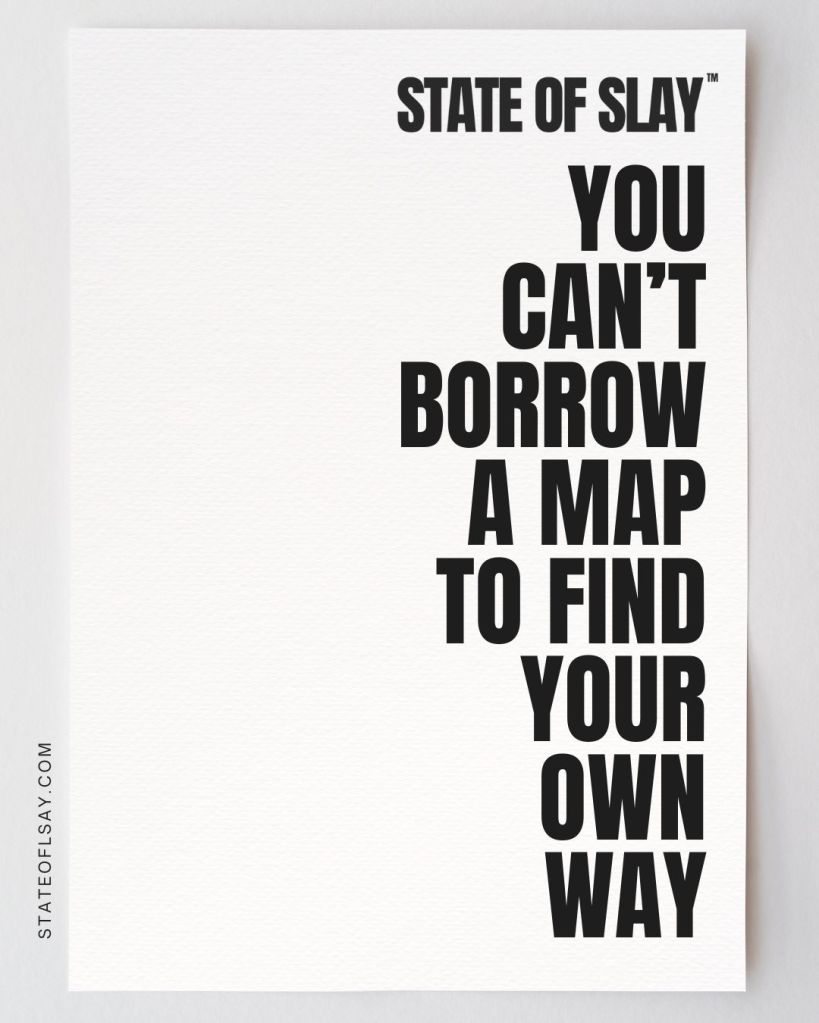
It’s tempting to look at someone else’s journey and think their path could be ours. But the truth is, following someone else’s map won’t lead you to your destination.
Your journey is unique, filled with your own experiences, lessons, and growth. Trust your steps, even when the road is unclear. Embrace the detours and the unexpected turns—they’re all part of your personal map.
The path to self-discovery isn’t about following others; it’s about forging your own trail. So, take a deep breath, trust yourself, and keep moving forward. Your path is unfolding exactly as it should.