
When Survival Starts Making the Decisions
Survival teaches us things.
Sometimes very useful things.
How to anticipate trouble.
How to protect ourselves.
How to need less.
How to stay alert.
How to keep moving when stopping doesn’t feel like an option.
How to prepare for disappointment before it has a chance to surprise us.
And when those ways of thinking help us through something difficult, they can become deeply ingrained.
We stop recognizing them as responses to what happened.
They simply become the way we live.
We expect people to leave, so we never fully depend on anyone.
We’ve experienced financial instability, so spending money on ourselves feels dangerous even when we can afford it.
We’ve been rejected, so we look for reasons not to try before someone else can tell us no.
We’ve had our trust broken, so uncertainty immediately feels like evidence that something is wrong.
We’ve learned that being useful keeps us valued, so rest makes us uncomfortable.
We’ve had to fight for everything, so ease makes us suspicious.
These responses make sense when you understand where they came from.
They may have protected you.
They may have helped you endure circumstances you couldn’t immediately change.
They may have been exactly what you needed then.
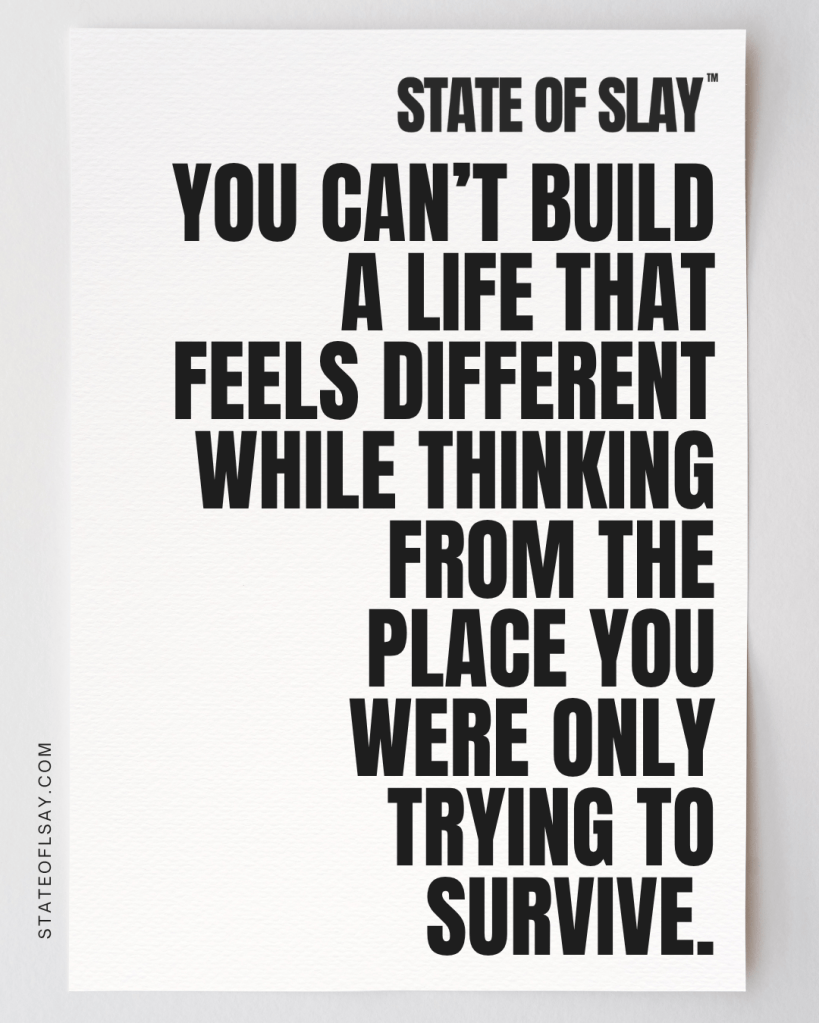
But survival is designed to get you through something.
It isn’t necessarily designed to show you how to live once you’re through it.
And that distinction matters.
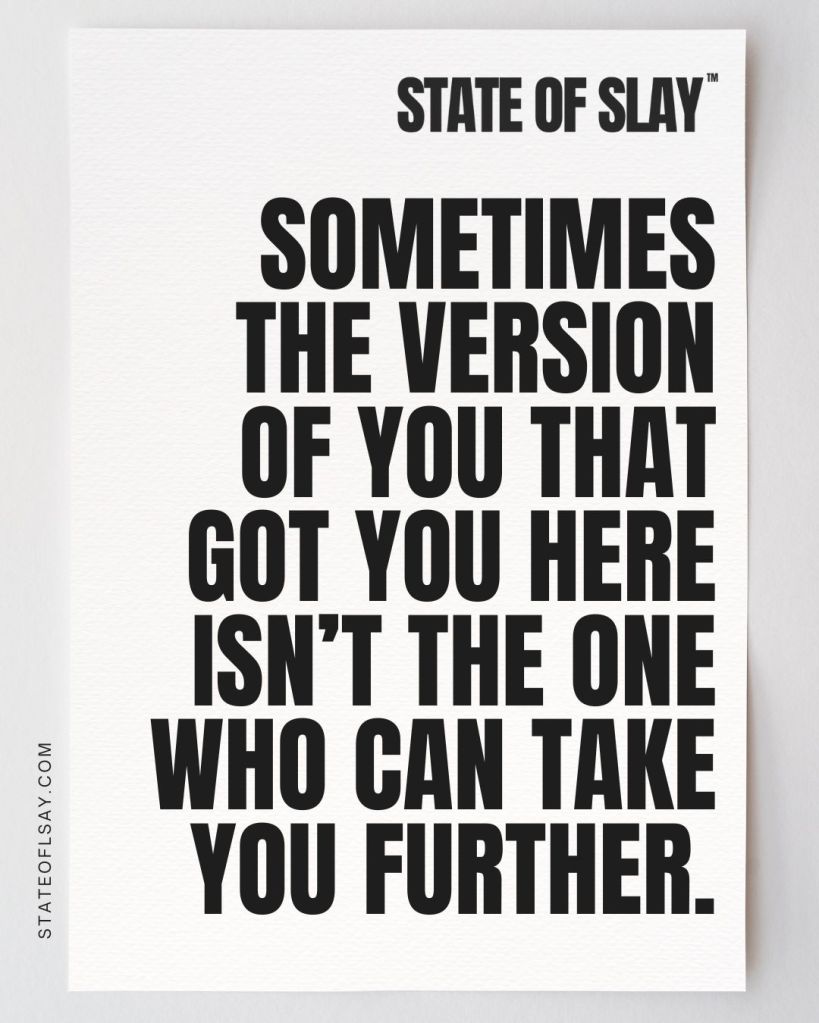
Because sometimes our circumstances change before our thinking does.
The danger is gone, but we’re still bracing.
The relationship is safe, but we’re still waiting for betrayal.
There is enough, but we’re still behaving as though everything could disappear tomorrow.
An opportunity appears, but instead of asking what might be possible, we immediately calculate everything that could go wrong.
The life around us has changed.
But internally, we’re still responding to the old one.
That can make growth confusing.
You may genuinely want something different while repeatedly making choices that recreate what you already know.
Not because you’re incapable of change.
Because familiarity can feel safer than possibility, even when familiarity wasn’t particularly good.
Possibility asks something different from us.
It asks us to imagine outcomes we don’t have evidence for yet.
To trust people who haven’t hurt us.
To take chances without guarantees.
To believe that ease doesn’t always have a hidden cost.
To allow ourselves to want something instead of only calculating what will protect us.
That doesn’t mean abandoning everything your past taught you.
Some lessons deserve to come with you.
Discernment.
Boundaries.
Resilience.
The ability to recognize patterns.
Knowing when something doesn’t feel right.
Growth isn’t about becoming careless simply because you’re tired of being cautious.
It’s about learning the difference between wisdom and armor.
One helps you navigate what’s happening.
The other can keep you reacting to what already happened.
And sometimes the question isn’t whether you’re capable of creating the life you want.
It’s whether the rules you developed for surviving your old life are still quietly deciding what you believe is possible in the next one.
You don’t have to shame yourself for those rules.
They existed for a reason.
But you are allowed to examine them.
To ask whether they still belong here.
To discover that safety doesn’t always require vigilance.
That love doesn’t always require earning.
That opportunity doesn’t always end in disappointment.
That peace doesn’t mean something bad must be coming.
That you can make decisions based on where you want to go, not only on what you never want to experience again.
Your past can inform your future without continuing to design it.
This is your reminder:
You can honor what protected you without letting it decide what is possible for you now.
Slay on.