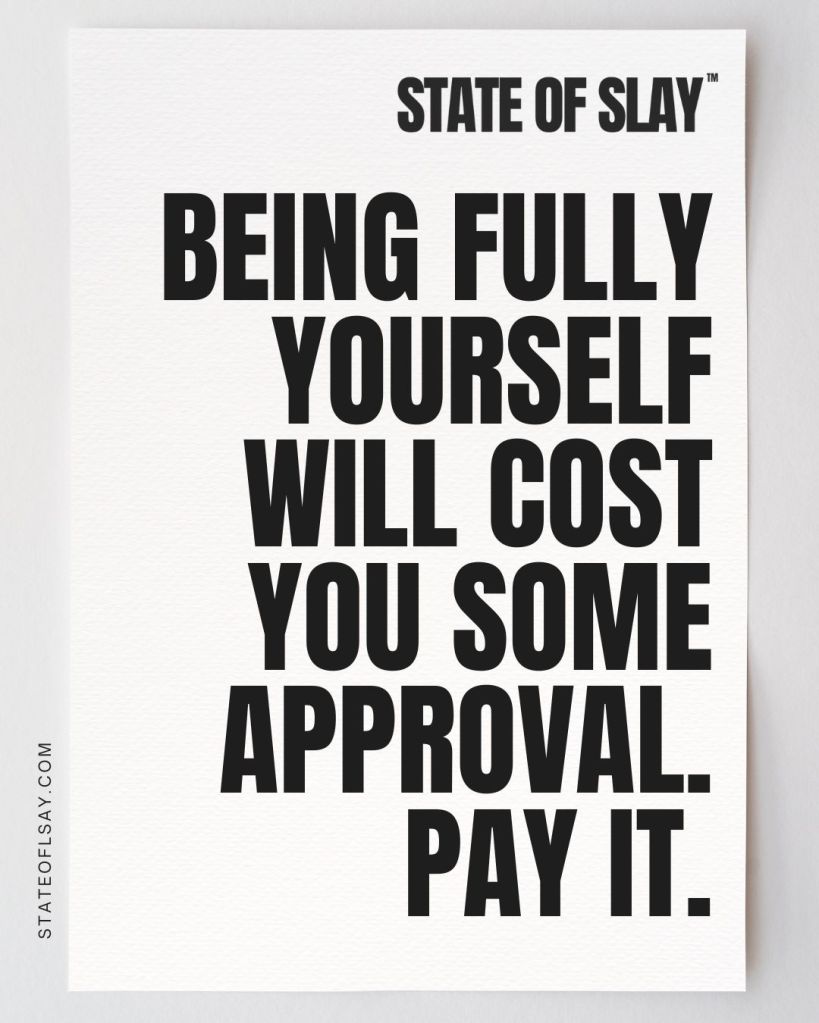
There is something reassuring about certainty. It looks strong. Decisive. Confident.
Changing your mind can look like the opposite.
We worry it makes us inconsistent.
Indecisive.
Unreliable.
Wrong.
So sometimes we keep defending a decision long after we have stopped believing in it, simply because we don’t want to become the person who changed their mind.
But confidence isn’t always standing by your decision.
Sometimes it’s trusting yourself enough to make a different one.
Prefer to listen? The Audio Blog version is available here.
WE CONFUSE CONFIDENCE WITH CERTAINTY
Certainty says, I know.
Confidence can say, I don’t know anymore.
Those are very different things.
Certainty is about the answer.
Confidence is about your ability to handle what happens when the answer changes.
It takes confidence to admit that something you once believed no longer makes sense to you.
It takes confidence to reconsider a decision you once defended.
It takes confidence to acknowledge that the thing you wanted five years ago may not be what you want today.
And it takes confidence to let new information matter.
There is comfort in certainty because it allows us to stop questioning.
Confidence doesn’t always give us that comfort.
Sometimes confidence asks us to question again.
YOU MADE THAT DECISION WITH WHO YOU WERE THEN
Every decision we make happens at a particular moment in our lives.
You chose with the information you had.
The experience you had.
The priorities you had.
The needs you had.
The person you were.
Then life continued.
You learned things.
You experienced things.
Your priorities shifted.
Maybe you became more aware of what you need.
Maybe something you thought would make you happy didn’t.
Maybe something you once feared no longer scares you.
Maybe you simply changed.
That doesn’t automatically mean the original decision was wrong.
It may have been exactly right for who you were at the time.
We sometimes judge our past choices using information our past selves couldn’t possibly have had.
That’s not fair.
You don’t need to put your former self on trial just because your present self has reached a different conclusion.
SOMETIMES WE’RE DEFENDING OUR IDENTITY, NOT OUR DECISION
This is where changing our mind gets complicated.
Because sometimes a decision becomes part of how we see ourselves.
I’m the person who would never do that.
I’ve always believed this.
I’ve wanted this my whole life.
I’m not someone who quits.
Once I make a decision, I stick to it.
Now changing your mind isn’t just about changing a decision.
It can feel like changing who you are.
So we defend the choice because we’re protecting the identity attached to it.
But you are not required to remain loyal to every version of yourself you’ve ever been.
Growth would be impossible if you were.
Who you are isn’t proven by never changing.
Sometimes who you are becomes clearer because you were willing to.
WE DON’T LIKE LOOKING INCONSISTENT
Changing your mind privately can be difficult.
Changing it after you’ve told everyone what you were going to do can be much harder.
You announced the plan.
You defended the relationship.
You took the job.
You moved across the country.
You told everyone this was your dream.
You argued your position.
And now?
You’re not so sure.
Suddenly the decision isn’t happening only inside you.
You imagine the questions.
What happened?
I thought you wanted this.
Didn’t you say you’d never…?
So you were wrong?
That last one can sting.
But being afraid of looking wrong can keep us committed to something that no longer feels right.
You don’t have to keep making a decision just because other people remember you making it.
NEW INFORMATION IS SUPPOSED TO MATTER
Imagine making every decision in your life using only what you knew ten years ago.
It would be absurd.
And yet emotionally, we sometimes expect ourselves to do exactly that.
We treat changing our mind as evidence that we couldn’t be trusted the first time.
But good decisions depend on information.
When the information changes, the decision may need to change too.
You may learn something about a person you didn’t know before.
You may discover that a career isn’t what you imagined.
You may understand yourself differently.
You may recognize a cost you couldn’t see when you began.
You may encounter an opportunity you didn’t know existed.
If none of that is allowed to influence you, then you aren’t being consistent.
You’re being stuck.
New information doesn’t make your old decision foolish.
It gives you an opportunity to make a better-informed decision now.
THERE IS A DIFFERENCE BETWEEN CHANGING YOUR MIND AND BREAKING YOUR WORD
This distinction matters.
Changing your mind doesn’t mean commitments are meaningless.
It doesn’t mean we should abandon people whenever something becomes uncomfortable.
It doesn’t mean promises disappear the moment our feelings change.
Our decisions affect other people.
Our commitments matter.
Sometimes changing course requires a difficult conversation, taking responsibility, making amends, or honoring an obligation before moving forward.
Confidence isn’t carelessness.
But responsibility and permanent self-denial aren’t the same thing.
You can take responsibility for the consequences of changing your mind without believing you must remain trapped by every decision you’ve ever made.
Integrity isn’t never changing.
Integrity is being honest about what has changed and responsible about what you do next.
THE TIME YOU’VE ALREADY SPENT CAN KEEP YOU STUCK
Sometimes we don’t want to change our mind because of everything we’ve already invested.
Years.
Money.
Work.
Energy.
Sacrifice.
Reputation.
We think, I can’t change direction now. Look at everything I’ve put into this.
So we keep investing.
Not necessarily because we still want what we’re pursuing, but because walking away would force us to accept that everything we’ve already invested won’t produce the future we imagined.
But the time you’ve already spent is gone whether you continue or not.
The more useful question is:
Knowing what I know today, would I choose this again?
If the answer is no, that deserves your attention.
Past investment can explain why leaving is difficult.
It doesn’t automatically make staying the right choice.
CHANGING YOUR MIND DOESN’T ALWAYS MEAN YOU WERE WRONG
Sometimes two decisions can be right at two different times.
You can love a career and later want another one.
You can believe a relationship is right for you and later realize you’ve grown apart.
You can build a dream and eventually want a different dream.
You can hold a belief sincerely until experience gives you a different perspective.
Life isn’t a contract requiring us to remain unchanged.
The person who made the first decision isn’t necessarily at war with the person making the second.
Maybe one led to the other.
Maybe you needed the first experience to understand what you know now.
Maybe changing your mind isn’t evidence that you took the wrong road.
Maybe it’s evidence that you kept paying attention while you were on it.
NOT EVERY CHANGE OF MIND IS GROWTH
Of course, changing your mind isn’t automatically courageous.
Sometimes we change direction because we’re afraid.
Because something became difficult.
Because we want immediate relief.
Because someone else’s opinion became louder than our own.
Because we’re avoiding discomfort that might actually be worth moving through.
That’s why the question isn’t simply:
Do I want to change my mind?
It’s also:
Why?
Am I responding to new information?
Have my values changed?
Do I understand myself differently?
Or am I running from something because staying with it requires courage?
Self-trust doesn’t mean assuming every impulse is wisdom.
It means being willing to examine yourself without needing the answer to come out a certain way.
CONFIDENCE CAN SURVIVE BEING WRONG
Perhaps this is what makes changing our minds so uncomfortable.
It asks us to make room for the possibility that we were wrong.
And many of us learned to experience being wrong as something much bigger than simply being mistaken.
Being wrong can feel embarrassing.
Weak.
Exposing.
It can make us question our judgment.
So we defend old decisions because defending them feels safer than admitting we might choose differently now.
But confidence doesn’t come from always being right.
It comes from knowing that being wrong won’t destroy your relationship with yourself.
You can make a mistake and learn.
You can misjudge something and adjust.
You can choose something sincerely and later choose again.
You can survive the sentence:
I changed my mind.
SOMETIMES CONFIDENCE LOOKS LIKE CHANGING YOUR MIND
There will always be people who prefer the version of you they already understand.
Your consistency may make them comfortable.
Your predictability may make things easier.
But your life cannot be built entirely around remaining recognizable to everyone else.
You are going to learn.
You are going to change.
You are going to discover things you couldn’t have known before.
And sometimes that means making a different choice.
You don’t have to insult who you were to honor who you are now.
You don’t have to call an old dream foolish because you have a new one.
You don’t have to pretend you never believed something simply because you no longer believe it.
And you don’t have to keep walking in a direction just to prove that you were confident when you chose it.
Sometimes confidence is standing your ground.
Sometimes confidence is realizing that it isn’t your ground anymore.
SLAY REFLECTION
S — See what you’re still defending Is there a decision, belief, goal, or commitment you’re defending because you still believe in it, or because changing your mind feels uncomfortable?
L — Look at what has changed What do you know now that you didn’t know when you made the original decision? Has your experience, your situation, or your understanding of yourself changed?
A — Ask what you would choose today If you weren’t trying to justify the past or protect yourself from other people’s opinions, would you make the same choice now?
Y — You are allowed to choose again Give yourself permission to reconsider one thing without forcing yourself to immediately change it. Sometimes simply allowing the question creates the clarity you’ve been avoiding.
CALL TO ACTION: JOIN THE CONVERSATION
I’d love to hear from you.
Have you ever changed your mind about something you once felt completely certain about?
Was the harder part making the new decision, or allowing yourself to admit that you wanted something different?
Share your thoughts in the comments. Your experience may help someone else realize that changing their mind doesn’t necessarily mean they failed to trust themselves. Sometimes it means they’ve learned enough to trust themselves differently.
And if you know someone who is holding onto an old decision simply because they’re afraid of looking inconsistent, send this to them.
You don’t always prove your confidence by refusing to move.
Sometimes you prove it by knowing when you’re allowed to choose again.
When Who You Were Can’t Take You Where You’re Going
Every version of you has had a job to do.
There was a version who learned how to survive.
One who became independent because relying on other people felt risky.
One who learned to keep the peace.
One who worked harder than everyone else because achievement became proof of worth.
One who stayed guarded because being vulnerable had once been expensive.
One who said yes because disappointing people felt worse than disappointing yourself.
Those versions of you weren’t mistakes.
They developed for reasons.
They helped you navigate the life you were living with the tools, understanding, and circumstances you had at the time.
Some of them got you through things you weren’t sure you could survive.
But something can save you in one chapter and limit you in the next.
The independence that once protected you can make it difficult to ask for help.
The walls that kept you safe can prevent anyone from getting close.
The drive that helped you succeed can make rest feel like failure.
The ability to keep everyone happy can leave you disconnected from what you actually want.
The habit of expecting the worst can protect you from disappointment while making it difficult to recognize when something good has arrived.
And that’s where growth gets complicated.
Because we become attached to the qualities that helped us get here.
We call them personality.
We say, That’s just who I am.
But sometimes what feels like identity is actually adaptation.
And eventually, life may ask something different from you.
Not because who you were was wrong.
Because where you’re going requires something new.
Maybe strength now means letting someone help you.
Maybe confidence means admitting you don’t know.
Maybe loyalty means choosing yourself.
Maybe courage means becoming visible after years of making yourself small.
Maybe success means building a life you actually enjoy instead of one that simply looks impressive.
Growth doesn’t always require becoming more.
Sometimes it requires releasing what you no longer need.
That can feel surprisingly uncomfortable.
There is familiarity in our old ways of being, even when they’re exhausting.
We know how to survive with them.
We know who we are inside them.
Changing means entering a space where the old rules no longer apply and the new ones haven’t become natural yet.
You may feel less capable for a while.
Less certain.
Less like yourself.
But perhaps that discomfort isn’t evidence that you’re losing yourself.
Perhaps you’re discovering which parts of you were built for a life you’re no longer living.
You don’t have to reject who you were to become who you’re becoming.
Thank that version of you.
Honor what they carried.
Recognize what they made possible.
Then allow them to put the bags down.
You can appreciate the person who got you this far without asking them to lead you forever.
Because the next chapter may require a version of you who trusts more, receives more, risks differently, speaks more clearly, rests without guilt, or finally chooses according to what you want now.
This is your reminder:
Growth sometimes means retiring the survival skills that have finished their job.
Most of us are willing to give people the benefit of the doubt.
Someone disappoints us, and we consider what they were going through.
Someone says something hurtful, and we accept that they were angry.
Someone breaks a promise, and we understand that life got complicated.
Someone disappears when we need them, and we tell ourselves they probably had their own problems.
There is nothing wrong with allowing people to be human.
People make mistakes.
They have bad days.
They get overwhelmed.
They fail to communicate.
They make choices they regret.
But there comes a point when what we’re looking at is no longer an isolated event.
It’s a pattern.
And patterns are information.
The difficult part is that we don’t always want the information they’re giving us.
Prefer to listen? The Audio Blog version is available here.
WE ARE VERY GOOD AT EXPLAINING THINGS AWAY
One disappointing moment is easy to explain.
So is a second.
Sometimes even a third.
They’re stressed.
They’re busy.
They didn’t mean it.
They’ve been through a lot.
This isn’t who they really are.
Any one of those things may be true.
The problem begins when we use explanations to keep ourselves from seeing repetition.
Because every incident comes with its own circumstances.
There is always a reason.
There is always context.
There is always another detail that makes this time seem different from the last time.
So instead of stepping back and looking at the whole picture, we keep examining each individual piece.
Eventually, we can become so focused on understanding why someone behaves a certain way that we stop noticing how consistently they behave that way.
AN EXPLANATION TELLS YOU WHY, A PATTERN TELLS YOU WHAT TO EXPECT
Understanding why someone behaves a certain way can help us have compassion.
Maybe they struggle with trust because they’ve been betrayed.
Maybe they shut down during conflict because that’s what they learned growing up.
Maybe they have difficulty showing affection.
Maybe they become defensive when they’re afraid.
Understanding those things can help us see another person more clearly.
But understanding the reason for a behavior doesn’t change the experience of living with it.
That’s an important distinction.
An explanation can tell you why something happened.
A pattern tells you what you can expect.
If someone repeatedly avoids difficult conversations, that is information.
If someone regularly makes promises and doesn’t keep them, that is information.
If someone repeatedly becomes cruel when they’re angry, that is information.
The reason may help you understand them.
The pattern helps you make decisions for yourself.
WORDS TELL YOU WHAT SOMEONE WANTS YOU TO KNOW
Actions tell you what they repeatedly choose.
We tend to give enormous weight to words.
I’ll do better.
It won’t happen again.
You know how much you mean to me.
I’m going to change.
And those words may be sincere when they’re spoken.
Someone can genuinely regret hurting you.
They can genuinely intend to change.
They can genuinely wish they had handled things differently.
But intention isn’t the same as change.
Change eventually becomes visible.
Not through a better explanation.
Not through a more emotional apology.
Not through another promise.
Through a different pattern.
When someone’s words and behavior keep telling you two different stories, pay attention to the story that keeps happening.
A PATTERN ISN’T ALWAYS SOMETHING BAD
We usually talk about patterns when something is wrong.
But patterns reveal the good, too.
Someone checks on you when they know you’re struggling.
Someone follows through when they say they’ll be there.
Someone respects your no without punishing you for it.
Someone celebrates your success without making it about themselves.
Someone tells you the truth even when it would be easier not to.
Someone makes a mistake, owns it, and behaves differently afterward.
That’s information.
Trust isn’t built from one grand gesture.
It’s built from patterns.
So is safety.
So is respect.
So is reliability.
The people who make us feel secure often aren’t doing anything dramatic.
They’re simply consistent.
Over time, their behavior tells us:
You don’t have to guess who I’m going to be with you.
There is something incredibly peaceful about that.
POTENTIAL CAN DISTRACT US FROM PATTERNS
Sometimes we don’t fall in love with what is happening.
We fall in love with what we believe could happen.
We see someone’s potential.
We see the person they could become.
The relationship they could create.
The life we could have together if a few things changed.
Potential is seductive because it keeps our attention on the future.
Patterns bring us back to the present.
Potential says:
Look at what this could become.
Patterns ask:
What has it actually been?
There is nothing wrong with believing people can grow.
They can.
People change every day.
But you don’t have to make decisions based on a version of someone who hasn’t arrived yet.
You are allowed to make decisions based on the person who keeps showing up now.
WE SOMETIMES KEEP RESETTING THE CLOCK
A painful pattern can continue for years when we keep treating every apology as a fresh beginning.
Something happens.
There is an argument.
There is an explanation.
There is an apology.
There is a promise.
We reset the clock.
Then it happens again.
And because the clock was reset, we experience it as another individual failure instead of another point on an existing line.
Forgiveness can be healthy.
Second chances can be beautiful.
People deserve room to grow.
But forgiveness doesn’t require amnesia.
You can forgive someone and still remember what experience has taught you.
Otherwise, every apology erases the very information you need to decide whether anything is actually changing.
COMPASSION DOESN’T REQUIRE CONFUSION
Sometimes we resist recognizing patterns because doing so feels unkind.
We know someone’s history.
We know what they’ve survived.
We understand their fears.
We see their wounds.
And because we understand them, we begin believing that acknowledging the effect of their behavior means we lack compassion.
It doesn’t.
You can understand why someone behaves the way they do and still recognize that their behavior hurts you.
You can have compassion for someone’s wounds without volunteering to be wounded by them.
You can hope someone heals without making your life dependent on whether they do.
Understanding someone should give you clarity.
It shouldn’t require you to ignore what you know.
PAY ATTENTION TO WHAT HAPPENS AFTER THE APOLOGY
Everyone gets things wrong.
So a mistake alone doesn’t tell us everything we need to know about someone.
What happens afterward often tells us much more.
Do they take responsibility?
Do they become defensive?
Do they blame you for their behavior?
Do they minimize what happened?
Do they listen?
Do they make an effort to repair the damage?
Most importantly, does anything actually change?
An apology can be meaningful.
But the strongest apology is often the pattern that doesn’t repeat.
That is how trust gets repaired.
Not because someone found the perfect words.
Because eventually their behavior made those words believable.
STOP ASKING THE SAME QUESTION
When someone repeatedly behaves in a way that hurts or disappoints us, we can spend enormous amounts of energy asking:
Why do they keep doing this?
Sometimes that’s worth understanding.
But eventually there may be a more useful question:
What am I going to do with what I now know?
That question changes where the power sits.
You cannot control whether someone becomes more dependable.
More honest.
More emotionally available.
More respectful.
More accountable.
But you can decide what their repeated behavior means for your participation.
Maybe you adjust your expectations.
Maybe you stop relying on them for something they’ve repeatedly shown you they cannot provide.
Maybe you create distance.
Maybe you have a conversation.
Maybe you leave.
Or maybe their pattern has shown you that this is someone you can trust more deeply.
The information doesn’t make the decision for you.
It simply gives you something real to make the decision from.
THEIR PATTERN BECOMES YOUR INFORMATION
Patterns don’t require us to judge someone as good or bad.
They help us understand what is consistently true.
Someone can be a good person and still be unreliable.
Someone can love you and still be unable to give you the kind of relationship you need.
Someone can mean well and repeatedly hurt you.
Someone can have a painful past and still be responsible for how they treat you in the present.
And someone can surprise you by consistently showing up in ways your past taught you not to expect.
Patterns aren’t verdicts.
They’re information.
And information gives us choices.
You don’t have to keep being shocked by behavior you’ve seen many times before.
You don’t have to keep turning repeated evidence into another mystery to solve.
You don’t have to stop caring about someone in order to start believing what their behavior has taught you.
Their pattern belongs to them.
What you do with that information belongs to you.
SLAY REFLECTION
S — Step back from the individual moment Is there something you’ve been treating as a series of unrelated incidents that looks different when you view it as a pattern?
L — Look at actions alongside words Where do someone’s actions consistently support what they tell you? Where do the two keep telling different stories?
A — Accept the information you already have Is there a pattern you’ve been explaining away because accepting what it means would require you to make a difficult decision?
Y — Your next choice belongs to you You cannot control someone else’s pattern, but you can decide what you do with the information it gives you. Choose one place where you can respond to what is actually happening instead of what you hope will eventually happen.
CALL TO ACTION: JOIN THE CONVERSATION
I’d love to hear from you.
Have you ever had a moment when you stopped looking at someone’s behavior as a series of isolated incidents and finally recognized the pattern?
What changed when you stopped asking why they kept doing it and started asking what you were going to do with what you knew?
Share your thoughts in the comments. Your experience may help someone else recognize that seeing a pattern isn’t about judging another person. Sometimes it’s simply about allowing yourself to use the information you’ve already been given.
And if you know someone who keeps giving the same behavior a new explanation, send this to them.
Sometimes clarity doesn’t come from discovering something new.
It comes from finally trusting what you’ve already seen.
Give it a shot because you might regret it if you don’t.
And sometimes that advice is exactly what we need.
Fear can keep us standing safely outside experiences that could change our lives. Growth often requires uncertainty, and there are opportunities we would never discover if we waited until we knew exactly how everything would turn out.
But not every hesitation is fear.
Sometimes it’s discernment.
There are moments when we already have enough information to know that something probably isn’t right for us.
The relationship that requires you to overlook things you know matter to you.
The opportunity that looks impressive but asks you to sacrifice something you’re no longer willing to give up.
The person whose potential keeps tempting you to ignore their pattern.
The invitation you keep trying to get excited about because everyone else thinks you should be.
The situation you’ve already experienced in enough different forms to recognize where it leads.
You don’t always have to go all the way to the ending to know you don’t want the story.
That can be difficult to trust.
Especially if you’ve spent years believing that saying no means you’re closed-minded, afraid, negative, or unwilling to take risks.
So you override yourself.
You give things chances you never really wanted to give.
You stay curious long after your instincts have given you an answer.
You tell yourself you should at least try.
And sometimes you end up exactly where you suspected you would, wondering why you needed the experience to confirm what you already knew.
Experience is a powerful teacher.
But it isn’t the only teacher.
So is observation.
So is history.
So is self-awareness.
So is everything you learned the last time you ignored yourself.
Growth isn’t only becoming brave enough to take more chances.
Sometimes it’s becoming wise enough to know which chances are worth taking.
That doesn’t mean you’ll always get it right.
There will be opportunities you decline that might have turned into something wonderful.
There will be doors you walk past without ever knowing exactly what was behind them.
That’s part of making choices.
Every yes closes something.
Every no does too.
A meaningful life isn’t built by experiencing every possible version of it.
It’s built by learning which possibilities deserve your time, energy, trust, and attention.
You don’t have to date someone just because there might be something there.
You don’t have to accept an opportunity simply because it’s available.
You don’t have to revisit something you already know doesn’t work for you just to make absolutely certain.
And you don’t have to collect another scar to prove you learned from the last one.
Sometimes wisdom looks less dramatic than taking the leap.
Sometimes it looks like recognizing the edge and deciding you don’t need to jump from it.
This is your reminder:
You don’t have to experience every wrong choice firsthand to trust yourself enough to make a different one.
They assure us that what happened isn’t really who they are.
And sometimes we want so badly to believe what we’re hearing that we allow the words to carry more weight than everything we’ve actually experienced.
Words matter.
Intentions matter.
Apologies matter.
But none of them exist in a vacuum.
Eventually, they have to meet behavior.
Because anyone can tell you what they value.
The question is whether they live according to those values when it’s inconvenient.
Anyone can promise to be there.
The question is whether they consistently show up.
Anyone can say they respect your boundaries.
The question is what happens when your boundary prevents them from getting what they want.
Anyone can apologize.
The question is whether the behavior that required the apology keeps happening.
This doesn’t mean judging someone by one bad day or one poor decision.
We are all capable of getting it wrong.
We disappoint people.
We react badly.
We say things we wish we could take back.
We make choices that don’t represent who we want to be.
A single mistake can be just that.
A mistake.
But repetition gives us different information.
When the same behavior keeps appearing, the same boundary keeps being crossed, the same promise keeps being broken, or the same apology keeps following the same action, you’re no longer looking at an isolated moment.
You’re looking at a pattern.
And patterns deserve your attention.
Sometimes we ignore them because the explanation sounds reasonable.
They were stressed.
They were scared.
They’ve been through a lot.
They didn’t mean it that way.
They’re working on themselves.
Maybe all of that is true.
Understanding why someone behaves a certain way can give us compassion for them.
It doesn’t require us to pretend their behavior isn’t affecting us.
There is an important difference between understanding someone and trusting them.
Understanding can come from knowing their story.
Trust has to come from experiencing their consistency.
And that takes time.
It’s also worth noticing the good patterns.
The person who quietly keeps their word.
The friend who checks in without being asked.
The partner whose actions make you feel secure without constantly having to reassure you that you should.
The person who respects your no even when they wanted a yes.
The one whose behavior consistently matches what they say matters to them.
Those patterns are information too.
We sometimes spend so much energy analyzing what people mean that we overlook what they repeatedly show us.
You don’t have to become suspicious of everyone.
You don’t have to assume every promise is empty or every mistake is evidence of someone’s character.
You simply have to let time provide information that words alone cannot.
Listen to what people tell you.
Then watch what they do.
When those two things consistently agree, trust has somewhere to grow.
And when they consistently don’t, you don’t have to keep choosing the version of someone described by their words over the version you keep experiencing.
This is your reminder:
Believe change when you can see it in the pattern, not just hear it in the promise.
To know that the people around us see something good, valuable, lovable, or worthy when they look at us.
There is nothing wrong with that.
The problem begins when we start using other people’s opinions as evidence of who we are.
Someone approves of us, and we feel confident.
Someone criticizes us, and suddenly we question ourselves.
Someone misunderstands us, and we scramble to explain.
Someone rejects us, and we wonder what must be wrong with us.
Without realizing it, we can spend our lives looking into other people hoping to find our own reflection.
But other people’s opinions are not mirrors.
They are perspectives.
And if you want to know who you are, you have to stop looking for yourself in them.
Prefer to listen? The Audio Blog version is available here.
OTHER PEOPLE DON’T SEE YOU OBJECTIVELY
None of us sees another person exactly as they are.
We see people through the lens of who we are.
Our experiences.
Our beliefs.
Our expectations.
Our fears.
Our wounds.
Our preferences.
Our history.
Someone may think you’re selfish because you finally established a boundary.
Someone else may admire you for having the courage to establish it.
One person may find you intimidating.
Another may find you inspiring.
Someone may think you’re too much.
Someone else may wonder why you keep making yourself smaller.
Which one is the truth?
None of them entirely.
They’re seeing you through their own lens.
Their perception belongs to them.
Your identity belongs to you.
APPROVAL CAN BECOME AN ADDICTION
Approval feels good.
Being praised feels good.
Being liked feels good.
And there is nothing unhealthy about enjoying those things.
But when approval becomes necessary for us to feel secure, we begin organizing our lives around getting it.
We say yes when we want to say no.
We soften our opinions.
We hide parts of ourselves.
We change how we dress, speak, create, love, work, or dream based on how we think others will respond.
We become experts at reading the room while slowly losing the ability to read ourselves.
What do I actually want?
What do I believe?
What feels right to me?
Who am I when nobody is applauding?
Those questions become difficult to answer when we’ve spent too long allowing approval to answer them for us.
REJECTION DOESN’T DEFINE YOUR VALUE
When someone doesn’t choose us, it can feel deeply personal.
A relationship ends.
A friendship changes.
We don’t get the job.
Someone doesn’t like our work.
We’re excluded from something.
And suddenly rejection begins writing a story.
Maybe I’m not good enough.
Maybe I’m not talented enough.
Maybe I’m not attractive enough.
Maybe I’m too difficult.
Maybe I’m not worth choosing.
But rejection doesn’t have the authority to determine your value.
It tells you something about a particular relationship, opportunity, circumstance, or person’s preference.
That’s all.
You can be extraordinary and still not be right for everyone.
You can be deeply lovable and still not be loved well by a particular person.
You can be talented and still not get the opportunity.
You can be worthy and still not be chosen.
Someone else’s no is not a definition of you.
BEING MISUNDERSTOOD DOESN’T MEAN YOU’RE WRONG
One of the hardest things to tolerate is being misunderstood.
Especially when we know our intentions.
We want to explain.
Clarify.
Correct the record.
Make the other person finally see us accurately.
Sometimes that’s worthwhile.
But sometimes people have already decided who you are.
And no amount of explaining will change the version of you they’ve created.
At that point, continuing to defend yourself isn’t communication.
It’s an audition.
You’re trying to earn the role of “good person” in someone else’s story.
You don’t have to.
You can know your intentions without convincing everyone else of them.
You can know your heart without submitting it for public approval.
You can let someone misunderstand you and continue being who you know yourself to be.
NOT EVERY OPINION DESERVES EQUAL WEIGHT
There is a difference between being open to feedback and being governed by it.
Feedback can help us grow.
Sometimes other people see things we can’t.
They can challenge us.
Teach us.
Point out blind spots.
Help us become better versions of ourselves.
But wisdom means considering the source.
Does this person know me?
Do I respect how they live?
Do they want the best for me?
Is there truth in what they’re saying?
Are they offering insight, or projecting something that belongs to them?
You don’t have to accept every opinion simply because someone was willing to give it.
Not every voice deserves a seat at the table.
YOU WILL BE DIFFERENT PEOPLE TO DIFFERENT PEOPLE
There are people who remember a version of you that no longer exists.
People who met you during your worst season.
People who benefited from you having no boundaries.
People who loved the version of you who needed their approval.
People who will celebrate your growth.
And people who will resent it.
You may be the villain in someone’s story and the person who changed someone else’s life for the better.
You may be difficult to one person and exactly what another person needed.
You may be remembered unfairly.
You may be judged without context.
You may never get the opportunity to correct someone’s perception of you.
That’s part of being human.
You cannot manage every version of yourself that exists in someone else’s mind.
And trying will exhaust you.
YOU DON’T HAVE TO BECOME INDIFFERENT
The answer isn’t pretending you don’t care what anyone thinks.
Most of us care.
We care what the people we love think.
We care about being respected.
We care when we’re criticized.
We care when someone doesn’t like us.
We’re human.
The goal isn’t indifference.
It’s discernment.
You can hear someone’s opinion without handing them your identity.
You can consider criticism without automatically believing it.
You can appreciate praise without depending on it.
You can be hurt by rejection without allowing it to determine your worth.
Someone else’s opinion can be information.
It doesn’t have to become identity.
KNOW YOURSELF BEFORE THE WORLD TELLS YOU WHO TO BE
The stronger your relationship with yourself becomes, the less easily other people’s opinions can move you away from who you are.
Know what you value.
Know what you stand for.
Know what you need.
Know where you still have work to do.
Know what you’re proud of.
Know what you’re willing to change.
And know what you aren’t willing to sacrifice simply to make yourself easier for someone else to accept.
Self-awareness doesn’t mean believing you’re always right.
It means knowing yourself well enough to recognize the difference between useful feedback and someone else’s projection.
That kind of self-knowledge becomes an anchor.
The world can have opinions.
You don’t have to drift with every one of them.
STOP HANDING OTHER PEOPLE THE MIRROR
If you keep asking the world who you are, you’re going to receive thousands of different answers.
Too loud.
Too quiet.
Too ambitious.
Not ambitious enough.
Too emotional.
Too guarded.
Too independent.
Too needy.
Too much.
Not enough.
You could spend your entire life adjusting yourself to satisfy opinions that contradict one another.
Or you could put the mirror back in your own hands.
Look at yourself honestly.
Not through praise.
Not through criticism.
Not through rejection.
Not through applause.
Through your own eyes.
Know where you’ve grown.
Own where you’ve fallen short.
Recognize what you bring into the world.
And decide for yourself who you want to become.
YOU ARE THE ONE WHO HAS TO LIVE YOUR LIFE
At the end of the day, the people whose approval you’re chasing don’t have to live with your choices.
You do.
They don’t wake up inside your life.
You do.
They don’t carry your dreams.
Your regrets.
Your compromises.
Your unlived possibilities.
You do.
So listen to people you trust.
Stay teachable.
Be willing to examine yourself.
Apologize when you’re wrong.
Grow when you need to grow.
But don’t confuse humility with surrendering your sense of self.
Your life cannot become a group project where everyone else gets a vote on who you’re allowed to be.
Stop looking for yourself in other people’s opinions.
You were never hiding there.
SLAY REFLECTION
S — See Whose Opinion Has Too Much Power Whose approval or criticism has the ability to change the way you feel about yourself?
L — Look at What You Believe What do you know to be true about yourself regardless of whether someone else recognizes it?
A — Accept That You Won’t Be for Everyone Where could you give yourself permission to be misunderstood, disliked, or simply not someone’s preference without making it mean something about your worth?
Y — Your Next Step The next time someone’s opinion makes you question yourself, pause before accepting it as truth. Ask yourself: Is this something I need to learn from, or something I need to let belong to them?
CALL TO ACTION: JOIN THE CONVERSATION
I’d love to hear from you.
When have you allowed someone else’s opinion of you to become your opinion of yourself?
And what changed when you stopped?
Share your story in the comments. Your experience may help someone else realize they’ve been searching for themselves in the wrong place.
And if you know someone who needs this reminder, send this to them.
When the Story You Wanted Isn’t the Story You’re Living
Sometimes we don’t hold on because something is good for us.
We hold on because of what we believed it could become.
The relationship we imagined.
The future we pictured.
The apology we thought would come.
The person we kept believing someone could be.
And hope can be powerful.
But hope can also keep us invested in a version of reality that exists only in our minds.
We explain away what doesn’t fit the story.
We focus on potential instead of patterns.
We give more weight to promises than actions.
We keep waiting for tomorrow to prove that what we’re experiencing today isn’t really the truth.
Because accepting reality can mean grieving more than what we’re losing.
We may also have to grieve everything we thought was coming.
And that can hurt.
But there comes a point when protecting the illusion costs more than facing the truth.
Seeing something clearly doesn’t mean you were foolish for believing in it.
It doesn’t mean the love wasn’t real.
It doesn’t mean the dream wasn’t beautiful.
It simply means you’ve stopped asking reality to become something it has repeatedly shown you it isn’t.
There is freedom in that.
Because once you stop investing your energy in maintaining the story you wanted, you can begin making decisions based on the life you actually have.
You can stop waiting.
Stop explaining.
Stop bargaining with what you already know.
And finally begin moving toward something that doesn’t require you to look away from the truth in order to believe in it.
This is your reminder:
Sometimes the truth hurts because it closes the door on what you hoped could be. But accepting what is gives you the freedom to stop living for what never was.