

When the Apology Becomes Its Own Kind of Attachment
There are apologies we can practically hear in our heads.
We know exactly what the person should say.
What they should acknowledge.
What they should finally understand about what they did.
Maybe we’ve imagined the conversation dozens of times.
They take responsibility.
They tell us we didn’t deserve what happened.
They admit we were right about something they spent years denying.
They finally understand the damage they caused.
And somewhere in that imagined conversation, we finally get to feel something we’ve been waiting for.
Seen.
Validated.
Vindicated.
Maybe even free.
There’s nothing wrong with wanting an apology.
When someone hurts us, acknowledgment matters. Accountability matters. Hearing someone say, “I understand what I did, and I’m sorry,” can be incredibly meaningful.
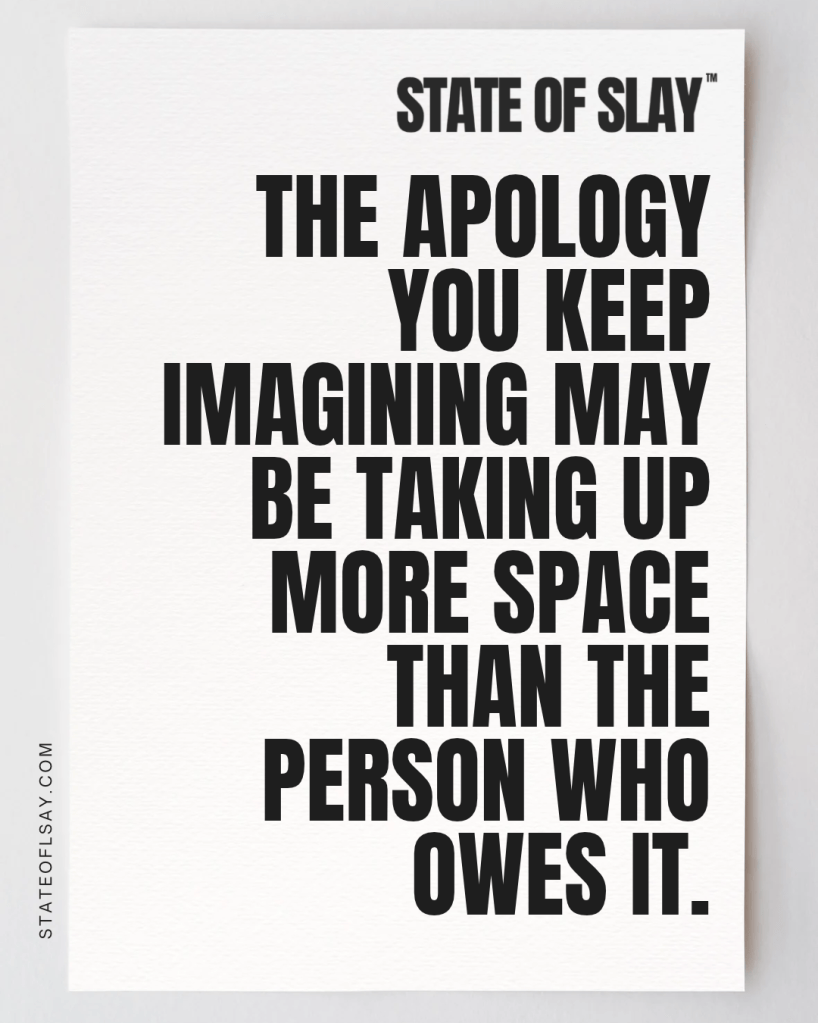
But sometimes the apology we’re waiting for starts taking up more space in our lives than the person who owes it.
They may have moved on.
They may rarely think about what happened.
They may have convinced themselves they did nothing wrong.
They may not have the emotional capacity to understand it.
Meanwhile, we’re still having conversations with them in our heads.
Rewriting what happened.
Imagining what we would say if they finally called.
Wondering whether they regret it.
Waiting for them to understand something we already understand perfectly well.
At some point, the apology can become another way we remain connected to the injury.
Not because we want to be.
Because we’ve quietly made our peace dependent on someone else finally seeing the situation the way we do.
And that gives them an extraordinary amount of power.
We may tell ourselves we need the apology to move on.
But what if we don’t?
What if we can know we deserved better without hearing them say it?
What if we can trust our own experience without their confirmation?
What if their inability to take responsibility says something about them, but doesn’t have to keep determining what happens inside us?
None of that means pretending what happened was okay.
It doesn’t mean forgiveness is required.
It doesn’t mean an apology wouldn’t still matter if one eventually came.
It simply means we stop making it the admission price for our peace.
Because there’s a strange thing that can happen when we finally stop waiting.
The imaginary conversations get quieter.
We stop rehearsing the case.
We stop needing the person who hurt us to become the person who explains the hurt to us.
And suddenly there’s more room.
For the life we’re actually living.
For the people who are actually present.
For thoughts that have nothing to do with what someone else should have said years ago.
Maybe the apology comes someday.
Maybe it doesn’t.
But either way, it doesn’t have to occupy a permanent seat in your life while you wait.
This is your reminder:
An apology can acknowledge what happened, but it doesn’t have to be the thing that sets you free. You can stop waiting for someone else to understand your pain before you give yourself permission to move beyond it.
Slay on.
Discover more from State Of Slay™
Subscribe to get the latest posts sent to your email.
