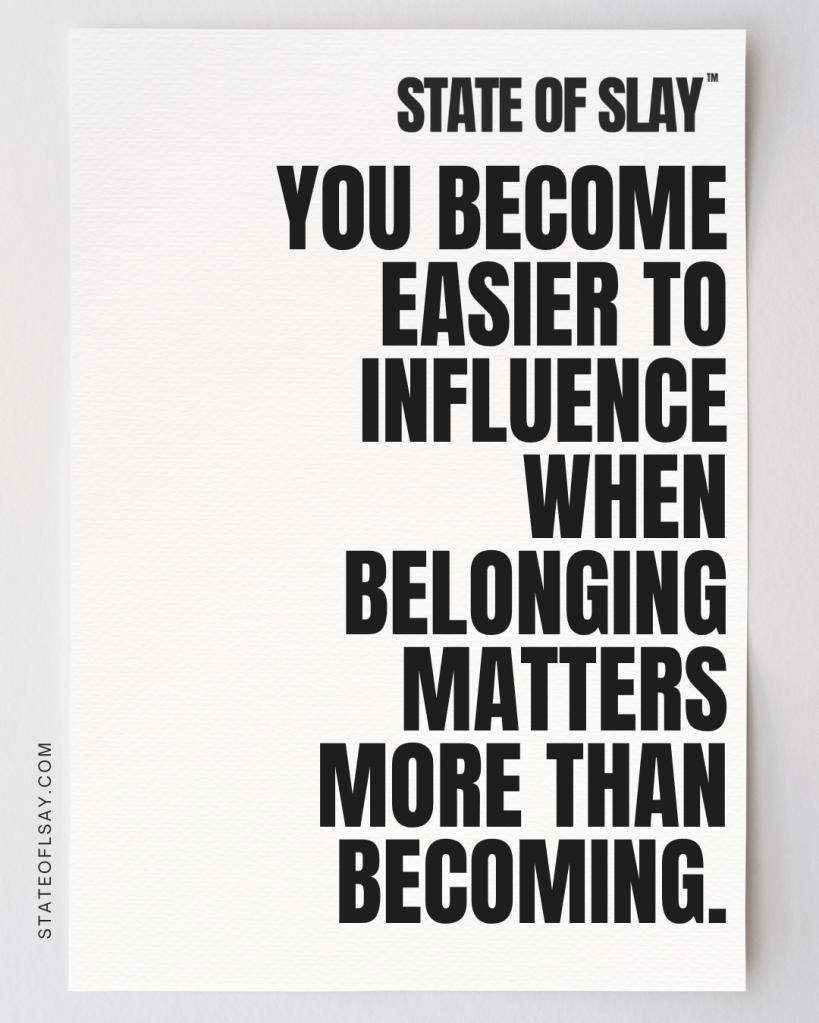
To have people who know us. A place where we fit. A circle where we don’t have to explain every part of ourselves before we’re understood.
Belonging is powerful.
Which is exactly why it can become dangerous when keeping it starts mattering more than growing.
Most influence doesn’t announce itself.
Nobody has to sit you down and tell you who to become.
Sometimes it happens through a laugh when you mention something you want to pursue.
A look when you make a different choice.
The teasing that starts when you take something seriously.
The invitation that stops coming when your priorities change.
The subtle suggestion that you’re becoming too ambitious, too disciplined, too different, too much.
So you adjust.
Not dramatically.
Just enough.
You downplay what matters to you.
You postpone the thing you were excited about.
You participate in something you’ve outgrown because everyone else still does.
You keep an opinion to yourself because you already know how the room will respond.
You make choices that preserve your place in the group, even when those choices move you further away from the person you’re trying to become.
That’s the complicated thing about belonging.
It can make conformity feel like loyalty.
And sometimes we don’t realize how much we’ve been influenced because nobody explicitly asked us to change.
We simply learned what version of ourselves receives the warmest response.
This isn’t about blaming your friends for your life.
We are responsible for our own choices.
And being surrounded by people who live differently from you doesn’t automatically mean you need new people. Healthy relationships can hold different ambitions, values, lifestyles, opinions, and definitions of success.
The question is whether those differences leave room for you to become more fully yourself.
Can you change without being punished for changing?
Can you become more disciplined without being mocked for taking yourself too seriously?
Can you drink less, spend differently, change careers, leave a relationship, start a business, set new boundaries, develop new beliefs, or want something bigger without having to make yourself smaller afterward so everyone feels comfortable again?
Because sometimes the people we love aren’t intentionally holding us back.
They’re simply attached to the version of us that fits neatly into the relationship they already understand.
And when we begin changing, the relationship has to change too.
That can be uncomfortable for everyone.
Growth disrupts familiar roles.
The person who always said yes starts saying no.
The one who never took risks starts taking them.
The friend who participated in every complaint stops wanting to spend hours talking about problems nobody intends to solve.
The person who once needed everyone’s approval starts making decisions without asking for it.
Suddenly, the old rhythm doesn’t work.
And this is where belonging gets tested.
Because there will be moments when becoming who you want to be costs you the comfort of being who everyone expects you to be.
That doesn’t mean you have to abandon everyone from your past.
It means you have to notice when your fear of losing connection begins negotiating away pieces of yourself.
Pay attention to the choices you make when you’re with certain people.
Do you become more courageous or more cautious?
More curious or more cynical?
More disciplined or more careless?
Do you leave feeling expanded, or do you find yourself quietly returning to habits and thinking you were trying to leave behind?
The people around us influence what begins to feel normal.
And what feels normal has enormous power over what we believe is possible.
Choose relationships where growth doesn’t threaten belonging.
Where changing your mind isn’t betrayal.
Where wanting more for yourself isn’t treated as rejection.
Where becoming someone new doesn’t require apologizing to everyone who knew you before.
This is your reminder:
The right people won’t require you to trade your future for your place beside them.
Sometimes we spend an extraordinary amount of time trying to make a decision.
We weigh the options.
We make lists.
We ask for advice.
We imagine every possible outcome.
We revisit conversations, reconsider information, and question conclusions we were perfectly comfortable with yesterday.
And when we still can’t decide, we start questioning ourselves.
Why am I so indecisive?
Why can’t I just make up my mind?
Why does everyone else seem to know what they want?
But sometimes the problem isn’t that we don’t know what we want.
Sometimes we know exactly what we want.
What we’re struggling with is accepting what choosing it will cost us.
Because making a decision doesn’t always mean choosing between something good and something bad.
Sometimes we’re choosing between two things we want.
Two futures we can imagine.
Two opportunities that matter.
Two versions of our lives that cannot exist at the same time.
And we keep searching for the perfect decision because we haven’t quite accepted that choosing one thing may mean losing another.
Prefer to listen? The Audio Blog version is available here.
SOMETIMES WE KNOW MORE THAN WE THINK WE DO
We tend to assume that difficulty making a decision means we lack clarity.
So we keep looking for more information.
We research.
We ask more questions.
We seek another opinion.
We wait to see how we feel tomorrow.
And sometimes that is exactly what we need to do. Important decisions deserve thought, and rushing into something simply to escape uncertainty can create problems of its own.
But there comes a point when gathering more information stops helping.
We’ve considered the possibilities.
We understand the consequences.
We know what matters to us.
And yet we still can’t choose.
Maybe that’s because the information isn’t actually missing.
Maybe what we’re looking for is an option that doesn’t require us to give anything up.
We want the opportunity without the risk.
The change without the disruption.
The new beginning without the goodbye.
The certainty of knowing how everything will turn out before we commit to anything.
But life rarely offers that kind of arrangement.
EVERY YES CONTAINS A NO
We often focus on what a decision will give us.
A new job might offer better opportunities.
Moving somewhere new might bring adventure.
Starting a business might provide independence.
Ending a relationship might create room for a different future.
But every choice also closes certain possibilities.
Taking the new job may mean leaving colleagues you love.
Moving might mean being farther away from family.
Starting the business might mean giving up financial predictability.
Leaving a relationship might mean saying goodbye to a future you once imagined sharing with someone.
Even when we know what we want, those losses can be difficult to accept.
And sometimes we mistake that discomfort for uncertainty about the decision itself.
But being sad about what you’re leaving doesn’t necessarily mean you’re making the wrong choice.
It may simply mean that what you’re leaving mattered.
You can want what comes next and still grieve what won’t come with you.
Those feelings don’t cancel each other out.
WE KEEP LOOKING FOR THE OPTION THAT HAS NO DOWNSIDE
There is something very appealing about the idea of a perfect decision.
The one where everything works out.
Nobody is disappointed.
Nothing important is lost.
There are no regrets.
And we never have to wonder what might have happened if we’d chosen differently.
So we keep comparing.
What if this opportunity is better?
What if I regret leaving?
What if I stay and miss something wonderful?
What if I make the wrong choice?
What if there’s another option I haven’t considered?
The problem is that every possibility we imagine tends to look better when we remove its complications.
We compare the reality of one choice with the fantasy of another.
We know exactly what is difficult about the life we have.
But the life we haven’t chosen is still full of possibilities.
Its disappointments haven’t happened yet.
Its compromises aren’t visible.
Its ordinary frustrations haven’t arrived.
So we keep searching for the choice that gives us everything.
And when neither option does, we assume we haven’t found the right answer.
Maybe there isn’t an answer without a downside.
Maybe there is simply a choice whose trade-offs we’re more willing to live with.
KEEPING YOUR OPTIONS OPEN CAN FEEL LIKE KEEPING CONTROL
Sometimes delaying a decision feels reassuring.
As long as we haven’t chosen, every possibility is technically still available.
We haven’t rejected the job.
We haven’t committed to the relationship.
We haven’t moved.
We haven’t stayed.
We haven’t said yes.
We haven’t said no.
There’s comfort in that space because nothing feels final.
We can still imagine every future.
But keeping our options open isn’t always the same as protecting our opportunities.
Sometimes it prevents us from fully participating in any of them.
We remain emotionally invested in several possibilities without committing to one.
We hesitate to build something because we’re still wondering whether we should be building something else.
We put plans on hold.
We avoid conversations.
We postpone action.
And all the while, time continues moving.
Not making a decision doesn’t necessarily mean nothing is changing.
Sometimes the delay is making decisions for us.
Opportunities expire.
Relationships evolve.
Circumstances change.
And the choices we were trying so hard to preserve may eventually disappear without our ever having chosen between them.
SOMETIMES WE’RE AFRAID OF REGRET MORE THAN THE DECISION
Regret has a way of making us question our judgment before we’ve even made a choice.
We imagine ourselves looking back.
What if I wish I’d done something different?
What if the other option turns out to have been better?
What if I realize I made a mistake?
And because we don’t want to experience regret, we keep searching for a decision that guarantees we won’t.
But regret isn’t always proof that a decision was wrong.
Sometimes we regret aspects of a choice that was still right for us.
You can love your career and occasionally wonder what another path would have looked like.
You can be happy in a new city and still miss the place you left.
You can be grateful for a decision and occasionally feel sadness about what it required you to give up.
We often imagine that the right decision will eliminate every uncomfortable feeling associated with it.
But sometimes those feelings are simply part of being human.
A good decision doesn’t guarantee that you’ll never wonder about the road you didn’t take.
It means you made a thoughtful choice with the information and priorities you had.
That’s all any of us can really do.
YOU MAY BE TRYING TO PROTECT A FUTURE THAT DOESN’T EXIST
One of the more difficult things about making a decision is letting go of what might have been.
Not what actually happened.
Not something we already experienced.
But a possibility.
The career we might have had.
The relationship that might have worked.
The place we might have lived.
The person we might have become.
And because those futures exist only in our imagination, they can remain remarkably appealing.
They haven’t disappointed us.
They haven’t demanded compromises.
They haven’t shown us their limitations.
We can picture their best moments without having to experience their difficult ones.
So when we choose a different path, we sometimes feel as though we’re losing something extraordinary.
But we don’t actually know what that unchosen life would have been.
We’re comparing the life we’re willing to live with a life we’re free to imagine.
And imagination has a considerable advantage.
It doesn’t have to deal with reality.
NOT EVERY LOSS MEANS YOU MADE A MISTAKE
We tend to interpret loss as something that should have been avoided.
If making a decision costs us something meaningful, we may wonder whether we should have chosen differently.
But loss isn’t always evidence of failure.
Sometimes it’s simply part of choosing.
You cannot pursue every opportunity.
You cannot live in every city.
You cannot follow every career.
You cannot maintain every relationship in exactly the same form forever.
You cannot become every version of yourself you once imagined.
And perhaps one of the more difficult parts of growing older is recognizing that our lives are shaped as much by the possibilities we release as by the ones we pursue.
That doesn’t have to be tragic.
It can also be clarifying.
Because once we stop expecting every choice to preserve every possibility, we can begin asking a more useful question.
Not:
How do I make this decision without losing anything?
But:
What am I willing to give up for something that matters more to me?
That question doesn’t make the decision easy.
But it may make it more honest.
THE RIGHT CHOICE CAN STILL BE DIFFICULT
Sometimes we expect clarity to feel peaceful.
We imagine that once we’ve found the right answer, all the tension will disappear.
We’ll feel certain.
Relieved.
Excited.
Ready.
And sometimes we do.
But other times, clarity arrives with sadness.
We know what we want, and we know it will disappoint someone.
We know what we need to do, and we wish the circumstances were different.
We recognize that one chapter has reached its natural conclusion, even though there are parts of it we still love.
We understand that an opportunity is worth pursuing, even though it requires leaving something familiar behind.
The difficulty doesn’t always come from not knowing.
Sometimes it comes from knowing and wishing the answer didn’t require so much.
You can be clear about your decision and still need time to make peace with its consequences.
That’s not necessarily indecision.
It may simply be the emotional weight of choosing.
SOMETIMES YOU HAVE TO LET THE OTHER LIFE GO
At some point, making a decision requires us to stop negotiating with every possible future.
We have to accept that choosing one direction means we won’t experience everything another direction might have offered.
And that can be surprisingly difficult.
Because as long as we keep both possibilities alive in our minds, we don’t have to fully confront what we’re giving up.
But there’s a cost to remaining divided.
We can become so preoccupied with the life we didn’t choose that we struggle to appreciate the life we did.
We keep comparing.
Second-guessing.
Imagining.
Revisiting.
And sometimes we spend more energy mourning an imagined possibility than participating in the reality we’ve chosen.
Making peace with a decision doesn’t mean convincing yourself that every other option would have been terrible.
It means accepting that other possibilities may have been good, too.
They simply weren’t the ones you chose.
And that’s okay.
SOMETIMES YOU’RE NOT INDECISIVE, YOU’RE TRYING TO MAKE A CHOICE WITHOUT LOSING ANYTHING
There are decisions that require more information.
There are decisions that deserve more time.
And there are decisions that remain difficult because we haven’t accepted that choosing something meaningful may require us to release something else.
We want certainty before commitment.
We want guarantees before taking risks.
We want to know that the life we’re choosing will be better than every life we’re leaving behind.
But we can’t know that.
We can only make choices based on what matters to us, what we understand, and what we’re willing to accept.
Sometimes the problem isn’t that you don’t know what you want.
It’s that you want what you choose without having to lose what you don’t.
And perhaps the answer isn’t another list of pros and cons.
Maybe it’s allowing yourself to acknowledge that something can be the right choice and still come with a loss.
You don’t have to pretend the other option didn’t matter.
You don’t have to convince yourself there was nothing worth keeping.
And you don’t have to wait until every possible regret has disappeared before allowing yourself to move forward.
Sometimes making a decision isn’t about finding the path where you lose nothing.
It’s about recognizing which path matters enough that you’re willing to accept what you cannot take with you.
SLAY REFLECTION
S — Separate Uncertainty From Loss
Think about a decision you’ve been struggling to make. Are you genuinely unsure what you want, or are you having difficulty accepting what choosing it might cost you?
L — Look at What You’re Trying to Keep
Is there a possibility, opportunity, relationship, or version of your future that you’re reluctant to release? What does holding onto it mean to you?
A — Accept That Every Choice Has a Cost
Instead of searching for an option without disadvantages, ask yourself which trade-offs you’re willing to accept in exchange for what matters most.
Y — Your Choice Deserves Your Participation
If you already know what you want, consider one small step toward making that choice. You don’t have to eliminate every doubt before you begin. Sometimes moving forward means accepting that another possibility will remain unexplored.
CALL TO ACTION: JOIN THE CONVERSATION
I’d love to hear from you.
Have you ever struggled with a decision, only to realize that you actually knew what you wanted all along?
Was the difficult part choosing, or accepting what you would have to leave behind?
Share your thoughts in the comments. Your experience may help someone else recognize that struggling to make a decision doesn’t always mean they lack clarity. Sometimes they’re simply trying to hold onto two futures that cannot exist together.
And if you know someone who’s been going back and forth over a decision because neither option gives them everything they want, send this to them.
Sometimes the answer isn’t finding a choice that costs you nothing.
It’s recognizing what matters enough to be worth choosing.
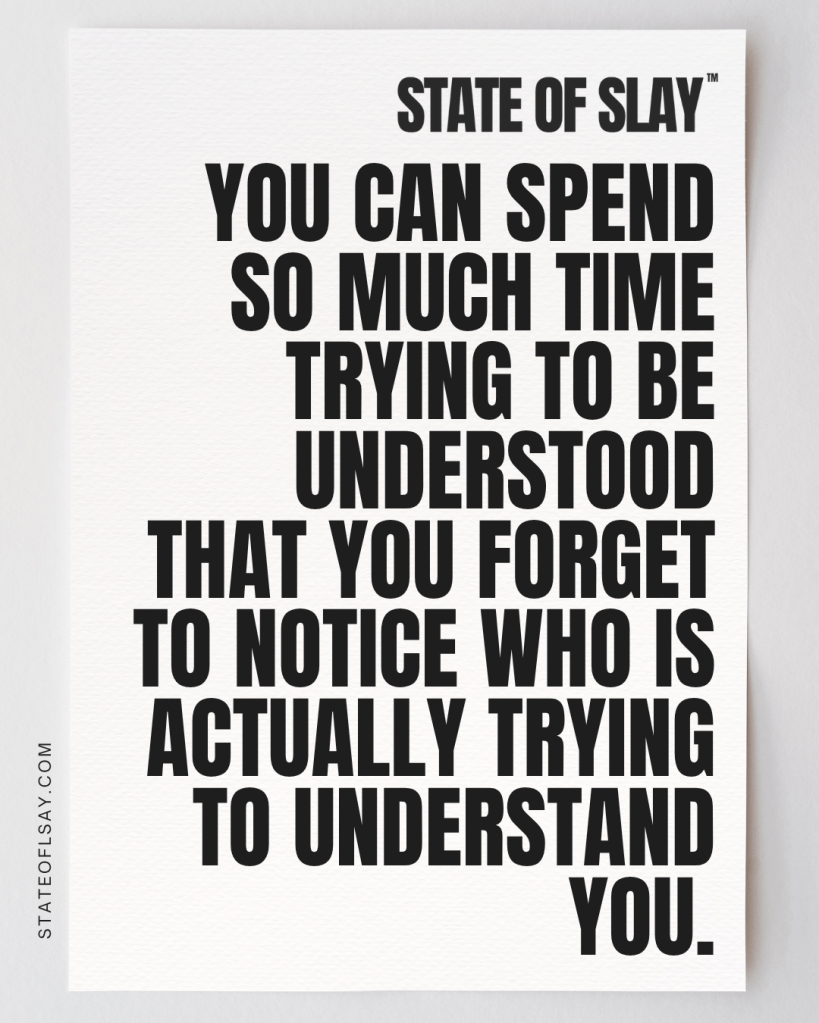
It can be incredibly frustrating to feel unseen by someone who has had a front-row seat to everything you bring.
You show up. You contribute. You care. You make things easier, stronger, warmer, more successful, more connected. You offer your ideas, your energy, your loyalty, your talent, your time.
And somehow, it barely registers.
Then you step into another relationship, another friendship, another workplace, another room, and suddenly the very things that were treated as ordinary are being noticed.
Appreciated.
Respected.
Valued.
It can make you wonder what changed.
Sometimes, nothing did.
You were bringing the same things all along.
The difference was the person receiving them.
There are people who become so accustomed to what you offer that they stop recognizing it as something valuable. Your consistency becomes expected. Your generosity becomes convenient. Your competence becomes something they simply assume will always be there.
What was once appreciated slowly becomes part of the furniture.
Until you take it somewhere else.
Then, suddenly, they can see it.
Not because your value increased when someone else recognized it, but because losing access to something can make people understand what they had stopped noticing.
And this doesn’t only happen in relationships.
It happens at work when someone’s ideas are repeatedly dismissed until another company hires them for exactly those ideas.
It happens in friendships when the person who was always organizing, checking in, remembering, and supporting finally invests that energy somewhere it is reciprocated.
It happens creatively when someone spends years being told their work isn’t quite right, only to find an audience that immediately understands what they were trying to do.
Sometimes we stay in places where we’re undervalued because we assume recognition is something we haven’t earned yet.
So we work harder.
Give more.
Become more useful.
Try to be easier to love, harder to replace, more impressive, less demanding.
We start treating someone else’s inability to appreciate us as evidence that we need improvement.
That’s where being undervalued can become dangerous.
Because eventually, you can start seeing yourself through the eyes of people who have stopped seeing you clearly.
Of course, not every lack of recognition means you’re secretly extraordinary and everyone around you is foolish. Sometimes feedback is useful. Sometimes we do need to grow. Sometimes what we believe we’re contributing isn’t landing the way we intend.
Self-awareness matters.
But so does context.
A person can be genuinely valuable and still be in an environment that doesn’t know what to do with what they offer.
And sometimes the clearest evidence of that comes when you stop trying to convince one room and walk into another.
The right people don’t create your value.
They recognize it.
And once you experience what it feels like to be somewhere your contribution isn’t constantly questioned, minimized, or taken for granted, you may realize how much energy you were spending trying to earn acknowledgment from people who had already decided not to give it.
This is your reminder:
Don’t spend so much time proving your value to people who overlook it that you forget there are places where it won’t require an argument.
Take the high road. Don’t stoop to their level. Rise above it.
And there’s value in that advice. Not every disagreement deserves a confrontation. Not every insult requires a response. Sometimes walking away is the healthiest and most mature thing we can do.
But there’s something we don’t talk about nearly enough.
What happens when being the bigger person becomes something that’s always expected of you?
When you’re the one who has to understand, forgive, compromise, and keep the peace, even when you’re the one who’s been hurt?
At some point, what looks like emotional maturity from the outside can begin to feel like emotional self-neglect on the inside.
And sometimes, in our efforts to be the bigger person, we slowly make ourselves smaller.
Prefer to listen? The Audio Blog version is available here.
THE PROBLEM WITH ALWAYS TAKING THE HIGH ROAD
Being the bigger person is supposed to be a choice.
It’s an opportunity to respond thoughtfully instead of reacting impulsively. To recognize that we don’t have to participate in every argument or return every unkindness.
But when that choice becomes an expectation, something changes.
You stop asking yourself how you genuinely want to respond and start asking what response will cause the least trouble.
You overlook comments because you don’t want to make things awkward.
You accept apologies that don’t come with changed behavior because you don’t want to hold a grudge.
You swallow disappointment because explaining it feels more exhausting than pretending you’re fine.
And eventually, you become so practiced at managing everyone else’s comfort that you lose touch with your own.
There’s a difference between choosing peace and feeling responsible for maintaining it at your own expense.
One comes from strength.
The other can come from fear of what might happen if you stop.
SOMETIMES PEOPLE BENEFIT FROM YOUR MATURITY
Here’s an uncomfortable thought.
Not everyone who praises you for being the bigger person is necessarily concerned about your well-being.
Sometimes they’re simply relieved that you aren’t making things difficult.
Think about it.
If someone behaves badly and you’re expected to rise above it, who is actually being asked to change?
If someone repeatedly crosses a line and you’re encouraged to be understanding, whose behavior is being accommodated?
If someone hurts you and the conversation immediately turns to how you should forgive them, what happened to the accountability they owe you?
Being the bigger person can become a convenient arrangement when only one person is expected to practice it.
And the more willing you are to absorb discomfort without complaint, the easier it becomes for others to assume you always will.
That doesn’t mean everyone is deliberately taking advantage of you.
Sometimes people simply get comfortable with the roles we’ve allowed ourselves to play.
But their comfort doesn’t make those roles fair.
EMOTIONAL MATURITY IS NOT EMOTIONAL SILENCE
Somewhere along the way, many of us learned to associate maturity with being unaffected.
Don’t get angry.
Don’t take things personally.
Don’t make a scene.
Don’t let them know they got to you.
But emotional maturity doesn’t mean you stop having emotional responses.
It means learning what to do with them.
You can feel angry without becoming cruel.
You can be disappointed without becoming unreasonable.
You can express hurt without attacking someone.
You can disagree without disrespecting anyone.
The ability to manage your emotions should never be confused with an obligation to hide them.
There’s nothing immature about saying, “That hurt me.”
There’s nothing petty about acknowledging that something was unfair.
And there’s nothing admirable about pretending an experience didn’t affect you simply because expressing yourself might make someone else uncomfortable.
Sometimes the most emotionally mature response is an honest conversation.
Even when that conversation is difficult.
WHEN KEEPING THE PEACE BECOMES KEEPING QUIET
There’s an important difference between peace and the absence of conflict.
A relationship can appear peaceful because one person has stopped expressing what bothers them.
A family can seem harmonious because certain subjects are never discussed.
A friendship can continue for years because one person has learned to overlook things the other refuses to address.
From the outside, everything looks fine.
But underneath that quiet, resentment may be building.
The problem isn’t necessarily that you don’t know how to communicate.
It may be that you’ve learned your honesty comes with consequences.
Perhaps speaking up leads to an argument.
Perhaps expressing disappointment makes someone withdraw.
Perhaps you’re accused of being dramatic, difficult, or too sensitive.
So you decide it’s easier to let things go.
Except you haven’t really let them go.
You’ve simply stopped talking about them.
Silence can prevent an argument without resolving the problem that caused it.
And over time, the things we refuse to address don’t always disappear.
Sometimes they change how we feel about the people involved.
BEING UNDERSTANDING SHOULDN’T REQUIRE SELF-ABANDONMENT
Understanding why someone behaves a certain way can be valuable.
Perhaps they’re under pressure.
Perhaps they’ve had a difficult upbringing.
Perhaps they’re struggling with something you know very little about.
Recognizing those circumstances can help us respond with compassion.
But understanding someone’s behavior doesn’t automatically make that behavior acceptable.
You can recognize why someone struggles to communicate and still need them to communicate with you.
You can understand that someone has difficulty managing their anger and still refuse to be the target of it.
You can appreciate that someone is going through a difficult time without agreeing to become responsible for everything they’re feeling.
Compassion allows us to recognize another person’s experience.
It doesn’t require us to disregard our own.
And this is where being the bigger person can become particularly complicated.
Because when you’re naturally empathetic, you may find yourself explaining away behavior that genuinely hurts you.
You become so focused on understanding why someone acted the way they did that you forget to consider what their actions have cost you.
An explanation can help you understand someone’s behavior without obligating you to accept it.
Both things can be true.
YOU DON’T HAVE TO PROVE YOUR GOODNESS BY HOW MUCH YOU TOLERATE
There’s a subtle kind of pride that can develop around being the person who always handles things well.
The reasonable one.
The patient one.
The one who never causes trouble.
And those qualities can become part of how we see ourselves.
We don’t want to be the person who loses their temper.
We don’t want to appear unforgiving.
We don’t want anyone questioning our character.
So even when something genuinely needs to be addressed, we hesitate.
Not necessarily because we don’t know what to say.
But because saying it might challenge the identity we’ve worked so hard to maintain.
What if they think we’re selfish?
What if they say we’ve changed?
What if standing up for ourselves makes us look like the difficult one?
Here’s something worth considering.
If your idea of being a good person depends on never disappointing anyone, you’re going to spend a great deal of your life disappointing yourself.
Your character isn’t measured by how much mistreatment you can endure without reacting.
And choosing not to tolerate something doesn’t erase all the kindness, patience, and understanding you’ve shown before.
Being a good person and being a person with limits are not opposing ideas.
THERE IS A DIFFERENCE BETWEEN RESTRAINT AND SURRENDER
Not every situation deserves your energy.
Sometimes the wisest response really is to walk away.
You may recognize that a conversation won’t be productive.
You may decide that someone’s opinion doesn’t deserve your attention.
You may simply choose not to participate in behavior that goes against your values.
That’s restraint.
But surrender looks different.
Surrender is agreeing when you don’t agree because you’re afraid of the consequences.
It’s apologizing for something you didn’t do just to end an argument.
It’s repeatedly accepting behavior you know is harmful because challenging it feels impossible.
The difference isn’t always visible to anyone else.
Two people can walk away from the same argument for entirely different reasons.
One leaves because they’ve decided the argument isn’t worth having.
The other leaves because they don’t believe they’re allowed to have it.
The question isn’t always whether you took the high road. It’s whether you felt free to choose another road.
That’s where the real distinction lies.
SOMETIMES THE BIGGER PERSON NEEDS TO SPEAK UP
We’ve become so accustomed to associating maturity with restraint that we sometimes forget it also takes maturity to address uncomfortable truths.
To tell someone their behavior has affected you.
To admit that you’re angry rather than pretending you’re above it.
To acknowledge that a relationship isn’t working the way it should.
To ask for an apology instead of automatically offering understanding.
None of these things requires hostility.
In fact, honest communication often takes more courage than quietly allowing resentment to grow.
And there’s another possibility we don’t always consider.
When we continually protect people from the consequences of their behavior, we may also prevent them from recognizing that something needs to change.
Our silence can be interpreted as acceptance.
Our willingness to move on can be mistaken for resolution.
Our patience can make a recurring problem seem less serious than it is.
Speaking up doesn’t guarantee that someone will listen.
But it gives them the opportunity to understand something they may otherwise never confront.
And it gives you the opportunity to stop participating in a pattern that isn’t working.
YOU CAN BE KIND WITHOUT MAKING YOURSELF SMALL
Being the bigger person isn’t the problem.
The problem begins when we confuse being bigger with needing less.
Less consideration.
Less honesty.
Less respect.
Less room to express what we feel.
True emotional maturity doesn’t require us to diminish ourselves so that other people can remain comfortable.
It asks us to be thoughtful about how we respond while remaining honest about what we’re responding to.
Sometimes that means offering forgiveness.
Sometimes it means having a difficult conversation.
Sometimes it means recognizing that an apology is meaningful, but the behavior still needs to change.
And sometimes it means walking away from a situation where your understanding has become an expectation rather than something anyone appreciates.
You don’t have to become unkind to stop being accommodating.
You don’t have to become confrontational to become assertive.
And you don’t have to sacrifice your values to insist that your feelings matter, too.
Being the bigger person should never require you to become less of a person.
Because real growth isn’t about learning how much of yourself you can set aside for the sake of others.
It’s about learning how to treat people with dignity without forgetting that you deserve the same.
SLAY REFLECTION
S — See the Pattern
Are there situations where you’re always expected to be the understanding one? What happens when you express your own needs?
L — Look at Your Reasons
When you choose to let something go, is it because you’ve genuinely made peace with it, or because you’re afraid of what might happen if you speak up?
A — Acknowledge Your Feelings
Is there something you’ve been minimizing because you believe being upset would make you immature or unreasonable? What would change if you allowed yourself to acknowledge it honestly?
Y — Your Voice Matters
Think of one situation where you’ve been keeping quiet to maintain the peace. Consider one respectful, honest way you could express what you’ve been feeling without attacking or blaming anyone.
CALL TO ACTION: JOIN THE CONVERSATION
I’d love to hear from you.
Have you ever found yourself being the bigger person so often that you began to feel like your own feelings didn’t matter?
Was there a moment when you realized that keeping the peace was coming at your expense?
Share your thoughts in the comments. Your experience may help someone else recognize the difference between emotional maturity and making themselves smaller to keep everyone else comfortable.
And if you know someone who’s always expected to be the understanding one, send this to them.
Sometimes the person who’s always taking the high road needs to be reminded that they’re allowed to take up space, too.
That when we’re truly prepared for something, we’ll step into it confidently.
No hesitation.
No second-guessing.
No sudden urge to run in the opposite direction.
We’ll simply know we’re ready.
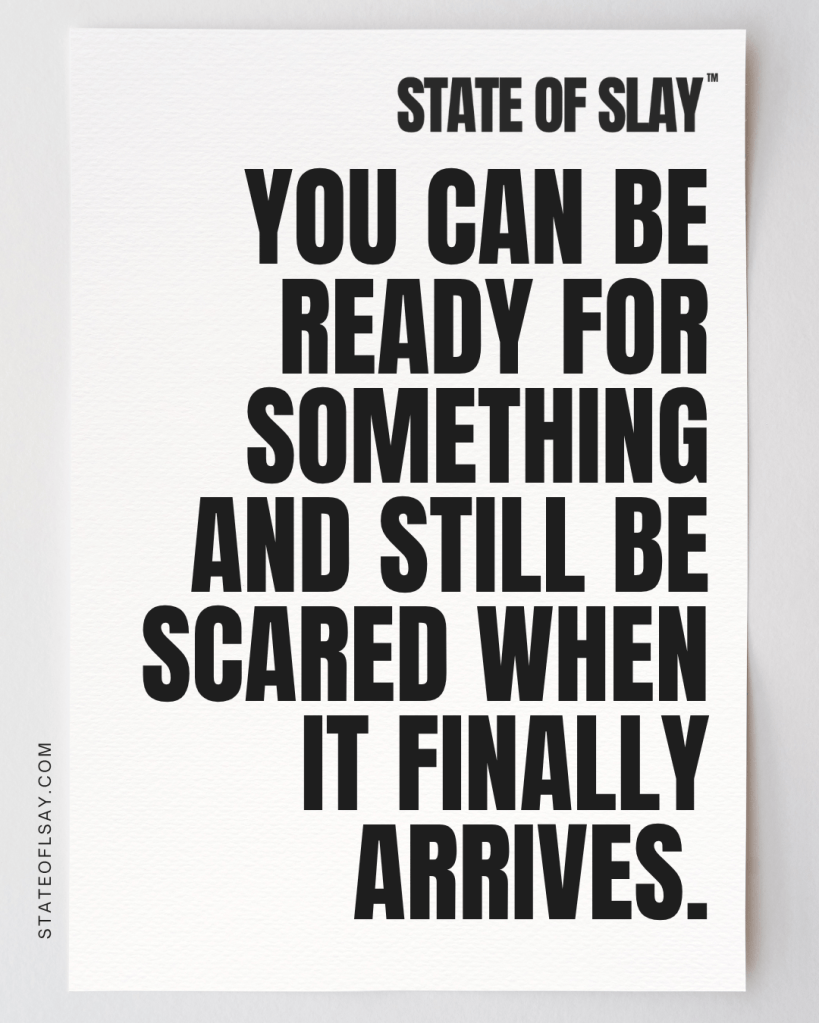
But sometimes the things we’re most ready for are also the things that scare us most when they finally become real.
You spend years wanting the opportunity.
Then someone offers it to you and suddenly you’re wondering whether you’re qualified.
You work toward making a change.
Then the moment comes to actually leave what you know, and everything familiar starts looking strangely appealing.
You want to be seen.
Then people start paying attention and visibility feels far more vulnerable than you imagined.
You want a healthy relationship.
Then someone arrives who is consistent, available, and genuinely interested, and part of you doesn’t quite know what to do without uncertainty to navigate.
You dream about succeeding.
Then success brings expectations, responsibility, and the possibility of losing something you finally have.
The dream was easy to hold when it was hypothetical.
Reality has stakes.
Once something becomes possible, there is suddenly something to lose.
And fear loves to enter that space.
It asks whether you’re sure.
Whether you’re capable.
Whether you should wait.
Whether the discomfort you’re feeling is actually your intuition telling you to stop.
Sometimes it is.
Fear can carry important information.
There are moments when hesitation is worth listening to, when something genuinely isn’t right, and when slowing down is the wisest thing you can do.
But fear isn’t always a warning.
Sometimes it’s simply the feeling of standing at the edge of a life you haven’t lived before.
There’s no familiarity there.
No history to reassure you.
No evidence yet that you’ll know how to handle what comes next.
You’re being asked to trust abilities you haven’t had to use in quite this way before.
And that can be terrifying even when the answer is yes.
We often think readiness means fear disappears.
Maybe readiness is knowing fear can come with you without letting it make the decision.
You can have the difficult conversation with your heart pounding.
You can accept the opportunity while wondering whether you’re capable of meeting it.
You can move somewhere new while grieving what you’re leaving.
You can let someone love you while still learning how to trust being loved well.
You can step into a bigger life before it feels completely natural to occupy it.
There may never be a magical moment when everything inside you becomes certain.
Sometimes confidence arrives after the step, not before it.
After you discover you can handle the responsibility.
After the unfamiliar becomes familiar.
After you survive being seen.
After you realize you didn’t need to know exactly how everything would unfold in order to begin.
So when something you’ve wanted finally arrives and fear shows up beside it, don’t immediately assume one cancels out the other.
Ask yourself what the fear is actually saying.
Is there something here I need to pay attention to?
Or is this simply important enough to scare me?
Because wanting something doesn’t make you immune to the vulnerability of receiving it.
And being afraid doesn’t necessarily mean you aren’t ready.
This is your reminder:
Sometimes fear isn’t telling you to turn back. It’s telling you that you’ve reached somewhere you’ve never been before.
When something hurts us, we search for what it was supposed to teach us.
What did I miss?
What should I have done differently?
Why did I trust them?
Why did I stay?
Why didn’t I see it sooner?
What was I supposed to learn from this?
There can be value in those questions. Pain can reveal patterns we need to recognize, boundaries we need to strengthen, and choices we may want to make differently in the future.
But somewhere along the way, looking for the lesson can quietly become looking for our fault.
We start believing that if something painful happened to us, there must have been something we did to invite it, allow it, or fail to prevent it.
Sometimes there is something for us to own.
And sometimes there isn’t.
Sometimes the lesson is simply:
You didn’t deserve it.
Prefer to listen? The Audio Blog version is available here.
WE WANT PAIN TO MAKE SENSE
Pain is easier to live with when we can explain it.
If we can identify the reason something happened, we can put it into a story that makes sense.
I ignored the signs.
I trusted too easily.
I stayed too long.
I should have spoken up sooner.
I should have known better.
Those explanations can give us something that feels a little like control.
Because if we caused the outcome somehow, then maybe we can prevent it from ever happening again.
If I can identify exactly what I did wrong, I can fix it.
If I can find the flaw in myself that allowed this to happen, I can correct it.
If I can trace the pain back to one mistake, I can promise myself I will never make that mistake again.
That can feel safer than accepting a much more uncomfortable truth:
Sometimes you can make reasonable choices and still get hurt.
Sometimes you can pay attention and still be deceived.
Sometimes you can communicate clearly and still be mistreated.
Sometimes you can love someone well and still be treated poorly.
Sometimes the thing that went wrong wasn’t you.
SELF-REFLECTION CAN TURN INTO SELF-BLAME
There is a difference between asking what we can learn from an experience and assuming we must have been responsible for it.
That line can be surprisingly easy to cross.
Maybe you stayed longer than you wish you had.
That is worth understanding.
But staying does not mean you deserved what happened while you were there.
Maybe you ignored something your instincts were telling you.
That may be useful information for the future.
But ignoring a warning sign does not make someone else’s behavior your fault.
Maybe you gave someone another chance after they had already disappointed you.
You might decide not to do that again.
But hope is not permission for someone to hurt you.
We can examine our choices without turning them into evidence against ourselves.
Accountability asks:
What belongs to me?
Self-blame says:
Everything does.
Those are not the same thing.
SOMETIMES WE BLAME OURSELVES BECAUSE IT FEELS SAFER
It sounds strange to say that self-blame can feel safe.
But in its own painful way, it can.
If the problem was that you weren’t observant enough, you can become more observant.
If the problem was that you trusted too quickly, you can become more guarded.
If the problem was that you gave too many chances, you can stop giving them.
If the problem was that you didn’t recognize what was happening, you can promise yourself you will recognize it next time.
Suddenly there is a plan.
But accepting that someone else made choices you could not control means accepting that there are limits to how much we can protect ourselves.
You cannot become perceptive enough to guarantee no one will ever deceive you.
You cannot create boundaries so perfect that no one will ever attempt to cross them.
You cannot become so healed that no one will ever hurt you.
You cannot love someone so well that they are forced to love you well in return.
Other people still have choices.
And sometimes those choices hurt us.
That can be frightening.
But taking responsibility for someone else’s choices doesn’t actually give us control.
It only gives us blame.
YOU CAN LEARN WITHOUT MAKING YOURSELF THE LESSON
There may be things you want to do differently because of what happened.
Maybe you will listen to yourself sooner.
Maybe you will recognize certain behaviors more quickly.
Maybe you will ask different questions.
Maybe you will leave earlier.
Maybe you will stop explaining away something that makes you uncomfortable.
Maybe you will trust your instincts even when you cannot yet explain them.
Those lessons can be valuable.
But none of them require the conclusion that you deserved what happened before you learned them.
We sometimes look backward with knowledge we only gained because of the experience itself.
Now the signs seem obvious.
Now you understand what certain behavior meant.
Now you recognize the pattern.
Now you know where it was going.
But the person you were then didn’t have everything you know now.
You cannot fairly judge your past self using information they had not yet learned.
Sometimes experience teaches us precisely because we did not already know.
That isn’t stupidity.
That’s how experience works.
NOT EVERYTHING THAT HURTS YOU WAS SENT TO TEACH YOU SOMETHING
We have become very good at turning pain into purpose.
Everything happens for a reason.
It made you stronger.
You needed that experience to become who you are.
There was a lesson in it.
Sometimes those ideas can bring comfort.
But they can also create pressure to turn every painful thing into something we are eventually supposed to appreciate.
You do not have to be grateful someone betrayed you because you learned about trust.
You do not have to be thankful someone mistreated you because you learned about boundaries.
You do not have to call cruelty a gift because surviving it made you stronger.
You can appreciate the strength you developed without being grateful for what required it.
You can value what you learned without believing you needed to be hurt in order to learn it.
And you can become wiser because of an experience without turning the experience itself into something good.
Sometimes something painful was simply painful.
Sometimes something wrong was simply wrong.
YOU DIDN’T DESERVE IT BECAUSE YOU DIDN’T KNOW BETTER
There is a phrase we often use against ourselves:
I should have known better.
But sometimes we only know better now because we lived through what taught us.
You may not have known what manipulation looked like until someone manipulated you.
You may not have understood how betrayal changes a relationship until someone betrayed you.
You may not have recognized a certain pattern until you had seen enough of it to know what you were looking at.
You may not have understood one of your boundaries until someone crossed it.
We are not born knowing everything experience eventually teaches us.
And not knowing yet is not a moral failure.
There is compassion in being able to look back at yourself and say:
I understand why I made that choice.
I understand what I believed at the time.
I understand what I hoped would happen.
I understand what I didn’t know yet.
That doesn’t mean you refuse to learn.
It means you stop punishing yourself for not having learned the lesson before you had the experience that taught it to you.
YOU ARE ALLOWED TO PUT RESPONSIBILITY WHERE IT BELONGS
Personal growth asks us to take responsibility for ourselves.
That matters.
When we hurt someone, we should own it.
When we make a mistake, we should acknowledge it.
When our behavior contributes to a problem, we should be willing to examine it.
But accountability does not mean assuming responsibility for everything that happens around us.
Other people are responsible for their choices too.
If someone lied to you, the lie belongs to them.
If someone betrayed you, the betrayal belongs to them.
If someone deliberately manipulated you, that choice belongs to them.
If someone treated your kindness as an opportunity to take advantage of you, their behavior does not become your fault because you were kind.
There may still be something for you to learn.
But the lesson does not have to be that you were responsible for what they did.
Sometimes healing involves handing responsibility back to the person it belonged to all along.
SOMETIMES THE LESSON IS THAT YOU DIDN’T DESERVE IT
Maybe there are things you would do differently today.
That’s growth.
Maybe there were signs you now recognize.
That’s experience.
Maybe there are boundaries you have now that you didn’t have then.
That’s learning.
Maybe you know yourself better.
That’s wisdom.
But none of those things require you to rewrite the past so that someone else’s behavior becomes your responsibility.
You are allowed to learn without blaming yourself.
You are allowed to grow without deciding the person you used to be was foolish.
You are allowed to recognize what you would change without believing that changing it would have made someone else behave differently.
And you are allowed to stop searching yourself for the reason another person chose to hurt you.
Sometimes there is a lesson in what you could have done differently.
Sometimes there is a lesson in what you will never accept again.
And sometimes the lesson is finally being able to look back at what happened and say:
That hurt me.
It wasn’t okay.
And I didn’t deserve it.
SLAY REFLECTION
S — Separate responsibility from regret Think about something painful you still blame yourself for. Are you taking responsibility for a choice you made, or responsibility for what someone else chose to do?
L — Look at what you actually knew then Are you judging your past self using information you only gained afterward? Consider what you genuinely knew, understood, and believed at the time.
A — Ask what the real lesson is What did the experience teach you that will serve you now? Can you keep that wisdom without making yourself responsible for the pain that taught it?
Y — You decide what you carry forward Take the lesson that belongs to you. Leave the blame that doesn’t. Growth does not require carrying someone else’s choices as evidence against yourself.
CALL TO ACTION: JOIN THE CONVERSATION
I’d love to hear from you.
Have you ever looked back at something painful and realized you had spent more time questioning yourself than questioning the way you were treated?
What changed when you stopped asking what was wrong with you and started recognizing what simply wasn’t okay?
Share your thoughts in the comments. Your experience may help someone else realize that learning from what happened does not mean accepting responsibility for having been hurt by it.
And if you know someone who is still carrying blame for something that was never theirs to carry, send this to them.
We can learn from what happened without deciding we deserved it.
Sometimes the lesson isn’t that you should have known better.
Sometimes the lesson is finally knowing that you deserved better.
There is nothing inherently wrong with that. Growth often requires us to work on things that don’t come naturally to us. Some weaknesses interfere with our relationships, our work, our happiness, or our ability to create the life we want. Those are probably worth our attention.
But somewhere along the way, self-improvement can quietly become self-correction.
We start looking at ourselves as a collection of things that need fixing.
I should be more organized.
I should be better with money.
I should be more outgoing.
I should be more disciplined.
I should be better at confrontation.
I should be more comfortable asking for help.
I should be more independent.
I should be more patient.
There is always another area where we could improve.
But just because something could be improved doesn’t mean it needs to be.
Not every weakness is asking to become a strength.
Sometimes it’s simply giving you information about where your energy might be better spent.
Prefer to listen? The Audio Blog version is available here.
WE CAN TURN OURSELVES INTO PROJECTS
Personal growth can be a wonderful thing.
We learn.
We challenge ourselves.
We recognize patterns that aren’t serving us and work to change them.
But there can be a point where the desire to grow becomes a constant search for what is wrong with us.
We finish improving one thing and immediately find another.
There is always another habit to change.
Another fear to conquer.
Another skill to master.
Another flaw to address.
Eventually, we can begin treating ourselves like houses that are permanently under renovation.
There’s always another wall to knock down.
Another room that needs work.
Another part that isn’t quite finished yet.
And if we aren’t careful, improvement can become an exhausting way of withholding acceptance from ourselves.
I’ll feel good about myself when I finally fix this.
Except there will always be another this.
You are never going to reach a point where there is absolutely nothing about you that could be improved.
That doesn’t mean you’ve failed at growth.
It means you’re human.
NOT ALL WEAKNESSES ARE CREATED EQUAL
Some weaknesses matter more than others.
If you have difficulty communicating and it is repeatedly damaging your relationships, that probably deserves some attention.
If your inability to manage money is keeping you in financial distress, developing those skills could meaningfully improve your life.
If fear keeps preventing you from pursuing something that deeply matters to you, working through that fear may open an important door.
Those weaknesses have consequences.
But then there are other things.
Maybe you’re terrible at remembering directions.
Maybe spreadsheets make your brain want to leave your body.
Maybe you aren’t particularly handy.
Maybe you hate public speaking.
Maybe cooking will never be one of your talents.
Maybe you’re not the person anyone should ask to organize the group vacation.
Could you get better at those things?
Probably.
But the more important question is:
Do you need to?
We have limited time and energy.
Not everything deserves an equal share of either.
BEING BAD AT SOMETHING DOESN’T MEAN YOU HAVE FAILED
It can be surprisingly difficult to simply admit:
I’m not very good at that.
We often immediately follow it with:
But I’m working on it.
As though recognizing a weakness creates an obligation to eliminate it.
But there are things other people are going to be better at than you.
There are things you will struggle with that seem effortless to someone else.
There are skills you could spend years developing and still only become reasonably competent at.
That doesn’t diminish the things you do exceptionally well.
We tend to celebrate being well-rounded, but very few people actually are.
The person who is brilliant creatively may struggle administratively.
The person who can organize anything may freeze when asked to improvise.
The person who is incredible with people may hate working with numbers.
The person who can command a room may struggle deeply in one-on-one conversations.
Strength in one area doesn’t require strength in all of them.
Sometimes accepting that you aren’t good at something isn’t giving up.
It’s simply accurate information.
YOUR STRENGTHS DESERVE YOUR ATTENTION TOO
We spend an enormous amount of energy talking about weaknesses.
What do you need to improve?
Where are your gaps?
What are your shortcomings?
What should you work on?
But imagine if we approached our strengths with the same intensity.
What are you already good at that you could become exceptional at?
What comes naturally to you that you’ve never fully developed?
What ability have you dismissed because it feels easy to you?
We sometimes undervalue our strengths precisely because they are strengths.
If something comes naturally, we assume it isn’t particularly special.
Meanwhile, we can spend tremendous amounts of energy trying to become moderately good at something that drains us.
There is value in becoming competent where competence is necessary.
But there is also value in recognizing where you already have something worth building.
The energy you spend trying to eliminate every weakness is energy you aren’t spending developing your strengths.
SOMETIMES THE ANSWER IS TO WORK AROUND IT
Not every limitation needs to be conquered.
Sometimes you create a system.
Sometimes you use a tool.
Sometimes you delegate.
Sometimes you ask someone for help.
Sometimes you partner with someone whose strengths complement yours.
We can get strangely attached to the idea that being capable means doing everything ourselves.
But knowing when you need support is also a form of capability.
Think about how often we already do this without judging ourselves for it.
We don’t learn plumbing because the sink leaks.
We call a plumber.
We don’t become mechanics because the car makes a strange noise.
We take it to someone who understands cars.
We recognize that someone else has expertise we don’t have, and we use it.
Yet in other areas of life, we can feel inadequate for doing exactly the same thing.
There is no prize for making everything harder simply because you technically could learn to do it yourself.
ACCEPTANCE ISN’T THE SAME AS GIVING UP
This is where it can get uncomfortable.
Because if you’ve spent years believing that growth means constantly improving yourself, accepting a weakness can feel suspiciously like surrender.
But acceptance and resignation are different things.
Resignation says:
There’s nothing I can do.
Acceptance says:
I could work on this, but I’ve decided my energy belongs somewhere else.
That’s a choice.
Maybe you could become a fantastic public speaker if you spent years practicing.
But perhaps nothing you want from your life requires that.
Maybe you could become incredibly organized if you devoted enough time to creating the perfect system.
But perhaps the imperfect system you already use works just fine.
Maybe you could force yourself to become better at something simply because other people seem to value that skill.
But perhaps it has very little to do with the life you actually want.
Growth isn’t about becoming good at everything.
It’s about becoming more intentional about what deserves your effort.
BE CAREFUL WHAT YOU CALL A WEAKNESS
There is another question worth asking.
Is it actually a weakness?
Or is it simply something about you that doesn’t match someone else’s preference?
Maybe you’ve been told you’re too quiet.
Too emotional.
Too cautious.
Too independent.
Too serious.
Too sensitive.
Too direct.
Sometimes there may be something useful for us to examine in those observations.
And sometimes the person describing our “weakness” is simply describing the inconvenience of encountering someone different from themselves.
Not every trait needs correcting because someone else finds it difficult.
Before you decide something about yourself needs work, ask who decided it was a weakness in the first place.
And whether you agree.
KNOW WHAT IS WORTH YOUR EFFORT
There are weaknesses worth working on.
There are weaknesses worth working around.
And there are weaknesses worth accepting.
The wisdom is knowing which is which.
Instead of automatically asking:
How do I get better at this?
Maybe ask:
What would getting better at this actually change?
Would it improve my relationships?
Would it make my life easier?
Would it allow me to do something that matters deeply to me?
Would it help me become the person I want to be?
Or am I trying to improve this simply because I think a better version of me would somehow be good at everything?
The answer matters.
Because self-improvement should serve your life.
Your life shouldn’t become an endless exercise in self-improvement.
YOU DON’T NEED TO TURN EVERY WEAKNESS INTO A STRENGTH
You are going to have weaknesses.
Some of them will change.
Some of them will become strengths because you decide they matter enough to work on.
Some you’ll learn to manage.
Some you’ll build systems around.
Some will make you appreciate people whose abilities are different from yours.
And some may simply remain weaknesses.
That’s okay.
You don’t need to transform every imperfect part of yourself into something impressive.
You don’t have to become excellent at everything you encounter.
And you don’t have to spend your life fixing yourself before you’re allowed to appreciate who you already are.
Sometimes growth means improving.
Sometimes growth means adapting.
And sometimes growth means finally recognizing that something doesn’t need to be fixed at all.
Not every weakness is a problem.
Sometimes it’s simply information about where your energy is better spent.
SLAY REFLECTION
S — Separate weakness from necessity Think about something you believe you should be better at. Does improving it actually matter to the life you want, or have you simply assumed it’s something you should fix?
L — Look at where your energy goes How much time do you spend working on the things you struggle with compared with developing the things you already do well?
A — Ask whether you can work around it Is there a weakness you could manage with a system, tool, support, or someone else’s expertise instead of continually trying to conquer it?
Y — You decide what deserves your effort Choose one thing you’ve been treating as a self-improvement project and give yourself permission to reconsider the assignment. Maybe it needs work. Maybe it needs a workaround. Or maybe it needs acceptance.
CALL TO ACTION: JOIN THE CONVERSATION
I’d love to hear from you.
Is there something you’ve spent years believing you should be better at?
What might change if you stopped treating every weakness as something that needed to be fixed and started deciding which ones actually matter?
Share your thoughts in the comments. Your experience may help someone else realize that accepting a limitation doesn’t mean they’ve stopped growing.
And if you know someone who is constantly working on themselves but rarely giving themselves credit for what they already do well, send this to them.
We don’t have to turn every weakness into a strength.
Sometimes knowing where not to spend our energy is a strength of its own.
We spend a lot of time trying to figure ourselves out.
Who am I?
What do I want?
What am I good at?
What are my weaknesses?
What makes me happy?
What doesn’t work for me?
Self-awareness matters. The better we understand ourselves, the easier it can be to make choices that actually fit who we are instead of living according to who everyone else expects us to be.
But there’s a strange thing that can happen along the way.
We can become so certain about who we are that we stop leaving room for who we might become.
The things we’ve learned about ourselves slowly become definitions.
Then the definitions become rules.
And eventually, without realizing it, knowing ourselves can become another way of limiting ourselves.
Prefer to listen? The Audio Blog version is available here.
SELF-AWARENESS ISN’T SUPPOSED TO BE A CAGE
There is power in being able to say, “I know myself.”
I know what matters to me.
I know what drains me.
I know what I value.
I know what I need.
But knowing yourself and deciding you have yourself completely figured out are two very different things.
One creates awareness.
The other can create boundaries around your identity that you never think to question.
“I’m shy.”
“I’m not creative.”
“I’m terrible with money.”
“I’m not athletic.”
“I don’t like change.”
“I’m not a relationship person.”
“I could never run a business.”
“I’ve always been the responsible one.”
Sometimes those statements are useful observations.
But sometimes they are old conclusions masquerading as permanent truths.
YOU MAY BE DESCRIBING SOMEONE YOU USED TO BE
Think about how many things you know about yourself because of experiences you had years ago.
Maybe you decided you weren’t good at public speaking because you froze during a presentation in school.
Maybe you decided you weren’t athletic because you hated gym class.
Maybe you decided you weren’t creative because someone else was better at drawing.
Maybe you decided you weren’t good at relationships because several of yours ended badly.
At the time, those conclusions may have made sense.
But you kept living.
You learned things.
You had experiences.
You developed skills.
You healed.
You changed.
And yet the description remained.
Sometimes the person we think we know so well is actually someone we haven’t been for years.
IDENTITY LIKES EVIDENCE
Once we believe something about ourselves, we tend to notice the things that support it.
If you believe you’re socially awkward, the conversation that goes badly may stay with you much longer than the five that went well.
If you believe you’re someone who always quits, you may remember every unfinished project while overlooking all the things you’ve stayed committed to.
If you believe you’re bad with money, one impulsive purchase can feel like proof, while months of responsible decisions barely register.
If you believe you’re terrible at setting boundaries, the one time you said yes when you wanted to say no can become evidence that nothing has changed.
We don’t always examine our identity objectively.
Sometimes we defend it.
Even when the identity isn’t particularly flattering.
Because there is something strangely comforting about being able to explain ourselves to ourselves.
At least we know who we are.
The problem is that when we become invested in a particular version of ourselves, we may unconsciously keep collecting evidence that allows that version to survive.
“THAT’S JUST WHO I AM” CAN END THE CONVERSATION TOO SOON
There are few sentences more effective at stopping growth than:
“That’s just who I am.”
Sometimes it’s true.
You don’t need to turn every preference into a personal development project.
You’re allowed to dislike things.
You’re allowed to have limits.
You’re allowed to know what works for you.
But “that’s just who I am” can also become an easy way to avoid asking whether something is actually part of our identity or simply something we’ve practiced for a very long time.
Maybe you aren’t “bad at confrontation.”
Maybe you’ve spent years avoiding it.
Maybe you aren’t “someone who can’t be alone.”
Maybe you haven’t learned how to be comfortable in your own company yet.
Maybe you aren’t “terrible with change.”
Maybe uncertainty makes you anxious, and you’ve built your life around avoiding that feeling.
There is a difference between describing yourself and sentencing yourself.
LABELS CAN HELP UNTIL THEY START MAKING DECISIONS FOR YOU
We have more language than ever for understanding ourselves.
Introvert.
Extrovert.
People pleaser.
Perfectionist.
Highly sensitive.
Overthinker.
Type A.
Avoidant.
Anxious.
Independent.
Empath.
Labels can be incredibly helpful when they give us language for something we’ve struggled to understand.
There can be relief in discovering, “There’s a reason I experience things this way.”
But a label should help you understand yourself.
It shouldn’t become your instruction manual.
There is a subtle difference between:
“I tend to be introverted.”
and
“I’m an introvert, so I would hate that.”
One describes a tendency.
The other may make the decision before you ever have the experience.
SOMETIMES WE BECOME LOYAL TO OUR OWN STORY
Changing your mind about yourself can feel surprisingly uncomfortable.
Because identity creates continuity.
It connects the person you were yesterday to the person you expect to be tomorrow.
So when you begin behaving differently, part of you may resist.
Someone who has always been independent may feel uncomfortable asking for help.
Someone who has always been the caretaker may feel selfish when they begin putting themselves first.
Someone who has always avoided attention may feel exposed when they begin allowing themselves to be seen.
Someone who has always been practical may feel irresponsible pursuing something uncertain.
Nothing may actually be wrong.
You may simply be behaving outside the boundaries of the person you have decided you are.
Sometimes growth feels unfamiliar because you are meeting a version of yourself you haven’t had enough time to recognize yet.
YOUR PREFERENCES ARE ALLOWED TO CHANGE TOO
Not every change in identity needs to be profound.
Sometimes you simply change your mind.
You discover you like something you once hated.
You become interested in something you once dismissed.
You want a life you once swore you would never want.
You stop wanting something you spent years pursuing.
You enjoy staying home when you used to want to be out every night.
You become adventurous after years of playing it safe.
You discover that solitude feels peaceful instead of lonely.
We sometimes treat consistency as proof of authenticity.
But being authentic doesn’t mean remaining identical.
It means being honest about who you are now.
You don’t owe lifelong loyalty to every preference you’ve ever had.
SELF-KNOWLEDGE SHOULD INCLUDE CURIOSITY
Maybe the healthiest version of knowing yourself still includes a question mark.
Instead of:
“I’m not good at that.”
Try:
“I haven’t been good at that.”
Instead of:
“I could never do that.”
Try:
“I’ve never done that.”
Instead of:
“That’s not me.”
Try:
“That hasn’t been me.”
Those small changes leave something important intact.
Possibility.
They acknowledge your history without requiring your future to repeat it.
You can know yourself deeply and still remain curious about yourself.
In fact, maybe real self-awareness requires both.
YOU ARE NOT A FINISHED PERSON
We often talk about “finding ourselves” as though somewhere inside us is a completed person waiting to be discovered.
But much of who we are is still being created.
Through experience.
Through failure.
Through love.
Through loss.
Through curiosity.
Through choices we haven’t made yet.
Through places we haven’t gone.
Through people we haven’t met.
Through things we haven’t tried.
There are parts of you that may only exist because of something that hasn’t happened yet.
That doesn’t mean you don’t know yourself.
It means there is still more of you to know.
KNOW YOURSELF, BUT KEEP THE DOOR OPEN
Self-awareness should help you move through life with greater clarity.
It shouldn’t shrink the number of lives you believe you’re capable of living.
Know your patterns.
Know your values.
Know your boundaries.
Know what brings you peace.
Know what you need.
But leave a little space around the edges.
For surprise.
For contradiction.
For growth.
For the possibility that something you once believed about yourself is no longer true.
For the possibility that you might enjoy something you thought you’d hate.
For the possibility that you might be capable of something you assumed you couldn’t do.
For the possibility that tomorrow’s version of you might make absolutely no sense to yesterday’s version.
You are allowed to know yourself without deciding you have yourself figured out.
Sometimes the most important thing you can discover about yourself is that you were wrong about who you thought you had to be.
SLAY REFLECTION
S — Spot the Definition What is something you regularly say about yourself as though it is an unquestionable fact?
L — Look at the Evidence Is that belief still supported by who you are today, or are you using old experiences to describe your current self?
A — Allow for Change Where could you replace “I am” with “I have been” and leave room for another possibility?
Y — Your Next Discovery Do one small thing this week that doesn’t fit the version of yourself you think you know. You don’t have to become someone new. Just give yourself the opportunity to discover something new about who you already are.
CALL TO ACTION: JOIN THE CONVERSATION
I’d love to hear from you.
What is something you believed about yourself for years that eventually turned out not to be true?
Maybe you discovered you were braver than you thought. More creative. More independent. More social. More capable of change. Or maybe you simply realized that something you had always described as “just who I am” wasn’t who you were anymore.
Share your thoughts in the comments. Your experience may help someone else question a definition of themselves they’ve been carrying for far too long.
And if you know someone who has been living inside an old description of themselves, send this to them.
Sometimes we don’t need to find ourselves.
Sometimes we need to give ourselves permission to keep discovering who we are.