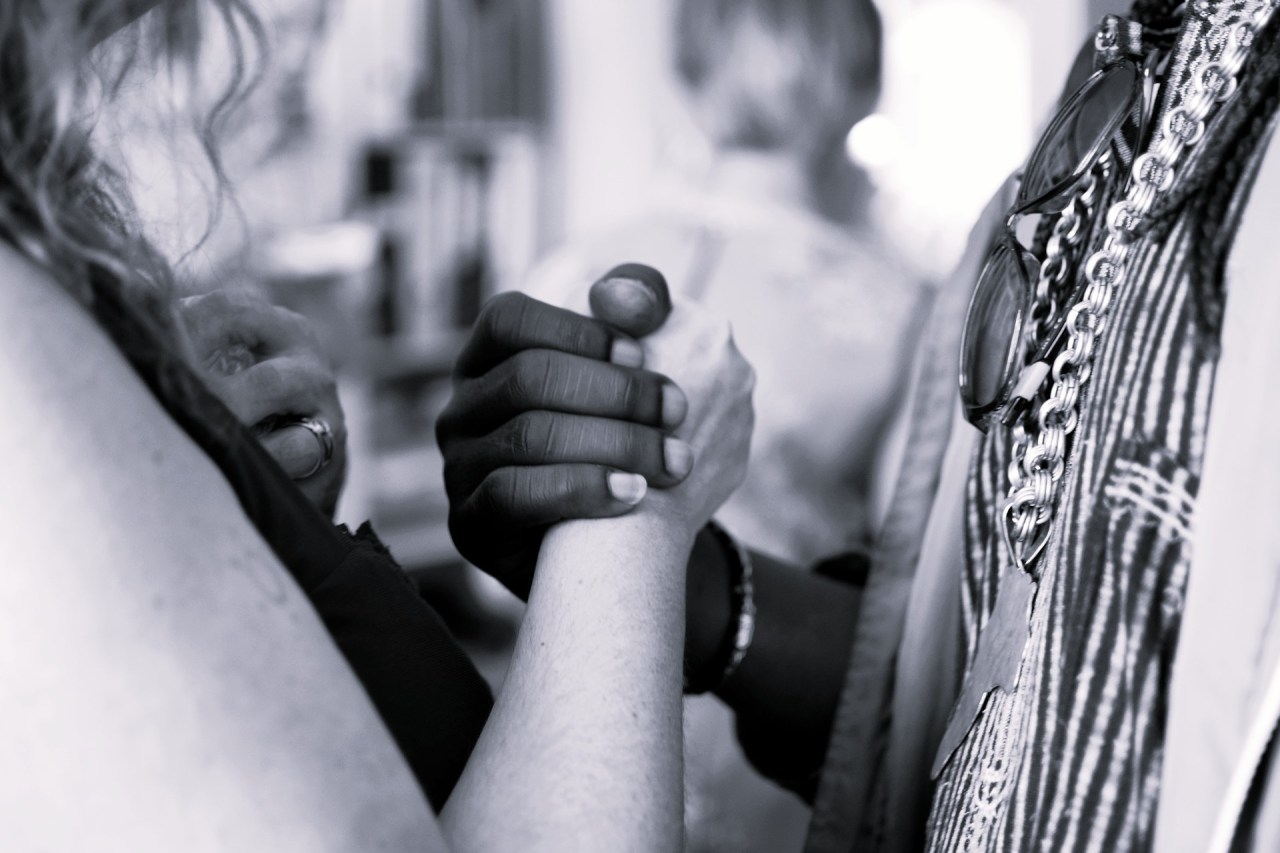
We Are Smarter When We Listen, We Are Stronger When We Share

There is a quiet misconception that strength means having all the answers.

That intelligence is measured by how much we know.

That confidence comes from speaking first.

For a long time, I believed that too.

I thought being prepared meant having something to say.

That contributing meant offering advice.

That leadership meant leading the conversation.

But life has a remarkable way of teaching us otherwise.

Some of the smartest people I have ever met were not the ones doing the most talking.

They were the ones asking the best questions.

And some of the strongest people I have ever known were not the ones carrying every burden alone.

They were the ones willing to let others help carry it.

We become smarter when we listen.

We become stronger when we share.


Prefer to listen? The Audio Blog version is available here.


LISTENING IS AN UNDERRATED SUPERPOWER

Most people listen with one goal in mind.

To respond.

They begin forming their answer before the other person has finished speaking.

They wait for a pause instead of seeking understanding.

But true listening asks something different.

It asks us to become curious.

To suspend judgment.

To set aside our assumptions long enough to genuinely hear another perspective.

When we do that, something remarkable happens.

Our world becomes larger.

Because every person knows something we don’t.


YOU CANNOT LEARN WHILE YOU ARE TALKING

One of the simplest truths I have learned is this.

When I am speaking, I am usually repeating something I already know.

When I am listening, I have the opportunity to learn something new.

That is not to say our voice is unimportant.

It is.

But wisdom often grows in the moments we choose to receive instead of perform.

Listening expands us in ways talking alone never can.


SHARING IS NOT A SIGN OF WEAKNESS

Many of us were taught that strength meant handling everything ourselves.

Don’t complain.

Don’t burden people.

Figure it out.

Keep going.

While resilience is valuable, isolation is not.

We were never designed to carry every challenge alone.

Sharing our struggles is not giving up.

It is inviting connection.

And connection has a remarkable way of making even the heaviest burdens feel lighter.


VULNERABILITY CREATES TRUST

Trust is rarely built through perfection.

It is built through honesty.

The moment someone says,

“I’m struggling.”

“I don’t know.”

“I could use some help.”

Something changes.

Walls begin to come down.

People stop relating to the image.

They begin relating to the person.

Vulnerability reminds us that we are not alone in our imperfections.

It creates the kind of trust that pretending never can.


THE BEST CONVERSATIONS ARE A TWO-WAY STREET

Think about the conversations that have stayed with you.

They probably were not lectures.

They were exchanges.

Moments where both people felt heard.

Where ideas moved in both directions.

Where curiosity mattered more than being right.

The healthiest relationships work the same way.

Listening creates understanding.

Sharing creates connection.

Together, they create trust.


WE GROW THROUGH DIFFERENT PERSPECTIVES

Every person experiences life through a different lens.

Different families.

Different cultures.

Different successes.

Different disappointments.

When we genuinely listen, we borrow another person’s perspective for a moment.

We begin seeing possibilities we would never have discovered on our own.

Growth often begins with the simple willingness to admit that someone else may have something valuable to teach us.


YOU DO NOT HAVE TO CARRY EVERYTHING ALONE

Many people quietly believe that asking for help somehow diminishes their strength.

In reality, the opposite is often true.

It takes courage to admit when you need support.

It takes confidence to acknowledge that you do not have every answer.

It takes wisdom to recognize that community has always been one of humanity’s greatest strengths.

Strong people are not people who never need help.

Strong people are willing to receive it.


EVERY PERSON HAS SOMETHING TO TEACH YOU

One of my favorite reminders is that every person you meet knows something you do not.

Sometimes it is knowledge.

Sometimes it is perspective.

Sometimes it is resilience.

Sometimes it is kindness.

Sometimes it is simply a different way of seeing the world.

When you approach conversations with that mindset, every interaction becomes an opportunity to grow.

Listening transforms ordinary conversations into extraordinary teachers.


SHARED BURDENS BECOME LIGHTER

There is something powerful about hearing someone say,

“Me too.”

Not because it solves the problem.

Because it removes isolation.

Pain often grows in silence.

Healing often begins in connection.

The moment we realize we are not the only person carrying a particular struggle, hope quietly enters the room.

That is the power of sharing.

It reminds us that we were never meant to face life alone.


THE STRONGEST PEOPLE DO BOTH

The strongest people I know have something in common.

They listen deeply.

They share honestly.

They are curious enough to learn from others.

And humble enough to let others learn from them.

They understand that wisdom is not measured by how much they speak.

And strength is not measured by how much they carry alone.

We are smarter when we listen.

We are stronger when we share.

So ask more questions.

Listen with genuine curiosity.

Share without shame.

Because the conversations that change your life are rarely the ones where you did all the talking.

They are the ones where everyone walked away feeling seen, heard, and a little less alone.


SLAY REFLECTION

S — See Your Habits
Do you spend more time listening to understand or listening to respond?

L — Learn From Others
Who in your life has a perspective that could help you grow if you truly listened?

A — Acknowledge Your Need
Is there something you’ve been carrying alone that would become lighter if you shared it?

Y — Your Next Step
What is one conversation you can have this week where you intentionally listen more deeply and share more honestly?


CALL TO ACTION: JOIN THE CONVERSATION

I’d love to hear from you.

Has there been a conversation that changed your life simply because someone truly listened or because you finally felt safe enough to share?

Share your story in the comments. Let’s cheer each other on.

And if you know someone who might need this reminder, send this to them.

Sometimes, all we need is a nudge.

Stop Trying to Fix People and Start Trying to Understand Them

Most of us have used the words sympathy and empathy interchangeably.

I know I have.

At first glance, they seem almost identical.

Both involve caring.

Both involve compassion.

Both are responses to someone else’s pain.

But understanding the difference between sympathy and empathy completely changed the way I show up for the people I love.

Because sometimes people are not looking for advice.

They are not looking for solutions.

They are not looking for someone to rescue them.

They are looking for someone willing to understand them.

And there is a world of difference between trying to fix someone’s pain and choosing to sit beside them while they find their way through it.

That is where empathy begins.


Prefer to listen? The Audio Blog version is available here.


SYMPATHY SEES THE PAIN

Sympathy recognizes that someone is hurting.

It says,

“I’m so sorry you’re going through this.”

“I hate that this happened.”

“That must be incredibly difficult.”

There is kindness in sympathy.

It acknowledges suffering.

It lets someone know their pain has been noticed.

There is absolutely a place for sympathy.

But sympathy often stands at the edge of someone else’s experience.

It recognizes the struggle without necessarily stepping into it.


EMPATHY STEPS INTO THE EXPERIENCE

Empathy is different.

Empathy is not about having the perfect words.

It is about being willing to understand another person’s experience without making it about yourself.

It says,

“I may not know exactly how this feels for you, but I’m here.”

“You don’t have to carry this alone.”

“I don’t need to fix it to stay with you.”

Empathy closes the distance.

It reminds people they are not isolated in their suffering.

Sometimes that presence is far more healing than any advice we could ever offer.


PEOPLE RARELY NEED TO BE FIXED

This was one of the hardest lessons I had to learn.

When someone I cared about was hurting, my instinct was to help.

Offer solutions.

Find answers.

Make the pain disappear.

It came from a place of love.

But often it missed what they actually needed.

Many people are not looking for someone to solve their problem.

They are looking for someone willing to stay with them while they solve it themselves.

There is a profound difference.

Trying to fix someone can unintentionally communicate that their emotions need to end before they are acceptable.

Empathy says something entirely different.

It says, “You don’t have to rush through this. I’m staying.”


EMPATHY REQUIRES HUMILITY

One of the biggest misconceptions about empathy is that it requires having lived through the exact same experience.

It doesn’t.

You do not have to lose the same person.

Face the same diagnosis.

Experience the same heartbreak.

Or carry the same burden.

Empathy begins with humility.

It says,

“I don’t know exactly what this feels like for you, but I want to understand.”

That willingness creates connection.

Pretending to understand when you do not often creates distance instead.


THE BEST RESPONSE IS NOT ALWAYS WORDS

We often feel pressure to say something meaningful.

To find the perfect sentence.

To make someone feel better.

But some moments cannot be fixed with language.

Sometimes the most compassionate response is simply being present.

Listening without interrupting.

Holding space without filling every silence.

Allowing someone to tell their story without rushing them toward healing.

Presence is often more powerful than advice.


WHY EMPATHY CREATES DEEPER CONNECTIONS

Pity creates distance.

Empathy creates connection.

Pity quietly says,

“I feel sorry for you.”

Empathy says,

“I’m here with you.”

One places someone beneath us.

The other sits beside them.

That difference may seem subtle.

But to the person who is hurting, it can feel life-changing.

People rarely remember every word you said.

They remember how safe you made them feel.


LISTENING IS AN ACT OF LOVE

We have all seen conversations where someone shares something deeply personal, only to have the focus quickly shifted elsewhere.

Someone immediately tells their own story.

Offers unsolicited advice.

Explains what they would do.

Or begins searching for solutions before the other person has even finished speaking.

Most of the time, those responses come from kindness.

But kindness without listening can still leave someone feeling unseen.

Sometimes listening is the greatest act of love we can offer.

Not because silence solves the problem.

Because being heard helps people feel less alone while they solve it themselves.


EMPATHY MAKES PEOPLE FEEL SAFE

Think about the people you trust most.

Chances are they are not the people who always had the perfect advice.

They are the people who made you feel safe enough to tell the truth.

Safe enough to cry.

Safe enough to admit you were struggling.

Safe enough to say, “I’m not okay.”

That is the gift of empathy.

It creates spaces where authenticity becomes possible.

And those spaces have the power to change lives.


WE CAN ALL BECOME MORE EMPATHETIC

Empathy is not a personality trait that some people are born with and others are not.

It is a practice.

It grows every time we become more curious than judgmental.

Every time we ask instead of assume.

Every time we listen instead of preparing our response.

Every time we choose presence over performance.

Like every meaningful skill, it becomes stronger the more intentionally we practice it.


UNDERSTANDING IS SOMETIMES THE GREATEST GIFT

Years from now, people may not remember exactly what you said during one of the hardest moments of their life.

But they will remember how you made them feel.

Whether they felt judged.

Whether they felt dismissed.

Whether they felt rushed.

Or whether they finally felt understood.

Stop trying to fix people.

Start trying to understand them.

Because sympathy reminds people they are not invisible.

Empathy reminds them they are not alone.

And sometimes, feeling understood is the first step toward healing.


SLAY REFLECTION

S — See the Difference
When someone you care about is struggling, is your first instinct to solve the problem or simply be present?

L — Listen More Deeply
How might listening without trying to fix the situation change the conversation?

A — Acknowledge Their Experience
Can you allow someone else’s pain to be theirs without comparing it to your own?

Y — Your Next Step
Who in your life could benefit from your presence more than your advice this week?


CALL TO ACTION: JOIN THE CONVERSATION

I’d love to hear from you.

Has someone ever helped you simply by making you feel understood instead of trying to fix your situation?

Share your story in the comments. Let’s cheer each other on.

And if you know someone who might need this reminder, send this to them.

Sometimes, all we need is a nudge.

Empathy Without Boundaries Is Self-Destruction

Empathy is a beautiful gift—it allows us to connect, understand, and hold space for others in ways that make them feel seen and valued. But here’s the hard truth: without boundaries, empathy becomes a weapon turned inward. Instead of healing, it harms. Instead of connecting, it consumes.

Many of us who identify as “empaths” or deeply compassionate people have learned the hard way that pouring ourselves out for everyone else often leaves us running on empty. When we absorb other people’s pain without limit, when we rescue at our own expense, or when we carry burdens that don’t belong to us, we aren’t practicing empathy—we’re practicing self-destruction.

True empathy isn’t about losing yourself in someone else’s storm. It’s about holding space with compassion while knowing where you end and they begin. Boundaries are not walls; they are bridges of clarity that keep you safe while still allowing you to show up with love.


When Empathy Crosses the Line

It starts subtly. You say “yes” when you want to say “no.” You listen to someone’s problems at 2 a.m., even though you have to be up early for work. You absorb the emotions in a room until they feel like your own. And before long, your identity is tangled in other people’s struggles.

This isn’t empathy—it’s overextension. And over time, it erodes your mental health, your relationships, and your sense of self. Without boundaries, empathy mutates into people-pleasing, codependency, and burnout. It may look like kindness, but underneath it’s exhaustion and resentment.


Why Boundaries Save Empathy

Boundaries don’t make you less compassionate—they make your compassion sustainable. They protect your inner world so you can continue to give without losing yourself in the process.

Think of it this way: your empathy is a flame. Without boundaries, that flame burns everything in sight—including you. With boundaries, it becomes a steady light that warms without destroying.

When you set limits—saying no when you need to, protecting your energy, and remembering that someone else’s healing is not your responsibility—you create space for empathy that is genuine, not sacrificial.


My Own Turning Point

For years, I believed that to love meant to absorb. If someone was hurting, I carried it like it was my own. If someone was angry, I tried to fix it. If someone needed rescuing, I was already running into the fire.

But I learned the hard way that empathy without boundaries isn’t noble—it’s self-neglect. I was burning out, resentful, and wondering why I always felt unseen when I gave so much. The truth was, I wasn’t giving from love. I was giving from fear: fear of disappointing others, fear of being unlikable, fear of being seen as selfish.

When I finally learned that empathy needed boundaries, everything changed. I could still care, still show up, still love deeply—but without sacrificing my own well-being. I realized that the most powerful act of empathy sometimes is saying: “I love you, but that’s yours to carry, not mine.”


Choosing Sustainable Love

Empathy should not be self-destruction dressed up as kindness. Empathy with boundaries is love that endures—not just for others, but for yourself.

Boundaries aren’t cold, cruel, or selfish. They’re an act of love. They say: I care enough about myself to stay whole, and I care enough about you to show up from that wholeness instead of from depletion.

Remember, you can’t pour from an empty cup. Protect your flame, and your empathy will continue to shine without burning you out.


SLAY Reflection

Take a moment to pause and reflect:

  • SStop: When was the last time your empathy drained you instead of uplifted you?
  • LLook: Do you confuse empathy with rescuing, fixing, or absorbing other people’s pain?
  • AAsk: What boundaries do you need to put in place so your empathy feels safe and sustainable?
  • YYield: How can you release the responsibility for someone else’s emotions and return to your own?

Call to Action: Join the Conversation

I’d love to hear from you.
Have you ever confused empathy with self-sacrifice? What boundary could you set today that would protect your compassion without draining your energy?
Share your story in the comments. Let’s cheer each other on.

And if you know someone who is burning themselves out by carrying everyone else’s pain, send this to them.
Sometimes, all we need is a nudge.

Smize, It Might Just Change Your Life

For most of my adult life, I believed that strength meant hiding my feelings. But during these times, when our faces are hidden behind masks, I’ve realized just how much we rely on simple gestures to connect. I used to share smiles freely, but now, I’ve had to get creative.

It reminded me of Tyra Banks and her famous “smize”—smiling with your eyes. I chuckled, thinking how those skills could come in handy today. While it might seem silly, that little spark of connection through our eyes can make a big difference, especially when we feel disconnected from one another.


Small Gestures, Big Impact
I’ve always believed in the power of simple acts—saying thank you, sharing a smile, letting someone know they’re seen. But with masks and distancing, it takes extra effort. And that effort makes it even more meaningful.

Now, I find myself waving, giving a thumbs-up, or sharing a kind word. These small acts might seem insignificant, but they create a ripple effect of compassion. When we step out of our own discomfort to connect with others, it not only lifts their spirits but ours too.


From Isolation to Connection
When I was living in the dark, I wanted to hide from the world. I didn’t want anyone to see my pain. I avoided interaction, kept my head down, and hurried through my days. But on my path to healing, I was encouraged to do the opposite—to look up, to smile, to reach out.

At first, it felt forced and uncomfortable. My anxiety spiked. I thought I had nothing to offer. But I was told to “act as if” I believed I did. And slowly, as I made the effort to smile, to thank someone, to ask how their day was, something shifted. People responded with warmth and gratitude. I began to feel connected, and my anxiety eased.


A Simple Connection Matters
The truth is, we don’t always know what others are going through. A smile, a kind word, or even a “smize” might be the only positive interaction someone has that day. It might be the thing that lifts their spirits or reminds them they’re not alone.

Especially now, when the world feels uncertain and heavy, these small acts of kindness carry weight. They remind us that we’re in this together. Even a simple acknowledgment—a wave, a nod, a smile through the eyes—can be a beacon of light in someone’s day.


SLAY OF THE DAY: Reflect & Rise

  • Do you go out of your way to let people know they matter while you’re out?

  • How do you do that?

  • What can you do to do more?

  • How have people done that with you? Have you appreciated it?

  • How did that make you feel?

  • What can you do today to let someone know they matter?

  • How is that different than how you would usually do it?

We all have the power to make someone’s day brighter. And by doing so, we make our own days a little brighter too. Smize on, SLAYER.


Call to Action: Join the Conversation
I’d love to hear from you.
What’s one small act of kindness you’ll try today to brighten someone’s day?
Share your story in the comments. Let’s inspire each other with simple ways to stay connected.

And if you know someone who needs a little light today, send this to them.
Sometimes, a simple gesture reminds us we’re not alone.

Sometimes All Someone Wants To Hear Is, I’m Sorry

There are moments when nothing can be done—when there’s no way to fix a situation or make it better. And in those moments, sometimes all someone wants to hear is, “I’m sorry.” Even if we’re not responsible for what happened, acknowledging someone’s experience can mean the world.


A Simple Yet Powerful Gesture

I think back to my life before walking this path, and how much it would have meant to hear those words. The power of a heartfelt “I’m sorry” is incredible. It connects us, makes us feel seen and valued, and reminds us that our feelings matter.

I remember sharing my story with someone I trusted, and when she gently put her hand on mine and said, “I’m sorry,” it felt like a wave of warmth washed over me. She had nothing to do with the events that led me to that moment, but her simple words were the first real validation of my pain and struggle. It helped me exhale. It helped me start to let go.


Owning Our Part

When we do have something to apologize for, those words carry even more weight. Saying “I’m sorry” for something we did—whether intentionally or not—shows strength. It honors the other person and ourselves. It’s not about weakness or surrender, but about standing in our truth and striving to be better.

As SLAYERS, we’re constantly working on ourselves. Yes, we’ll slip. Yes, we’ll make mistakes. But admitting our wrongs and saying, “I’m sorry,” can mend broken relationships and open the door to healing.


A Path to Healing

There’s magic in those words. “I’m sorry” can be the start of a new chapter, whether it’s in a relationship scarred by past pain or for someone still carrying the weight of old wounds. Sometimes, the apology won’t come from the person who caused the hurt. But when it comes from someone who cares—someone willing to listen and extend compassion—it still holds power. It’s a first step toward healing.

SLAY on.


SLAY OF THE DAY: Reflect & Rise

  • Do you struggle to say “I’m sorry”? Why?

  • What do you think it says about you if you apologize?

  • Have you ever seen “I’m sorry” as a sign of weakness? Can you shift that perspective?

  • Do you appreciate hearing someone say they’re sorry, even if they weren’t directly involved? How does it make you feel?

  • Do you offer that same compassion to others when they’re hurting? Why or why not?


Call to Action: Join the Conversation
I’d love to hear from you.
When was the last time you heard—or said—“I’m sorry”? How did it change the moment?
Share your thoughts in the comments. Let’s build each other up with honesty and compassion.

And if you know someone who’s been holding on to pain, send this to them.
Sometimes, just hearing those words is a step toward healing.