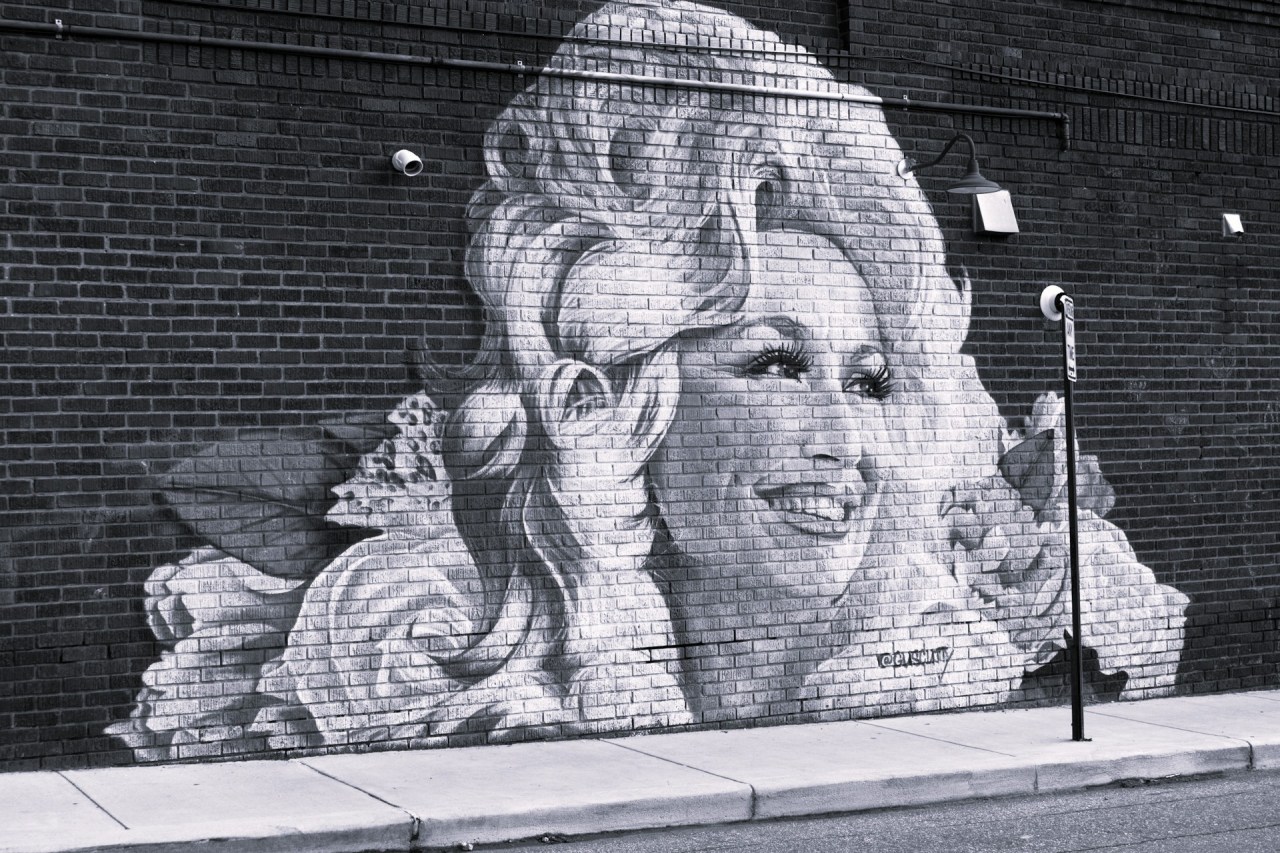
Mural of Dolly Parton painted on a brick wall.

Leave People Better Than You Found Them

There are some people whose absence seems to change the atmosphere.

Dolly Parton was one of those people.

When news of her passing came, the grief extended far beyond country music.

People who had never met her felt as though the world had lost something.

Something warm.

Something hopeful.

Something good.

Of course, Dolly left behind an extraordinary body of work. Songs that became part of our lives. Movies. Businesses. Awards. A career that spanned generations.

But as people began talking about her life, something else seemed to rise above all of it.

They talked about her kindness.

Her generosity.

Her humor.

Her ability to remain unmistakably herself.

They talked about the children who received books because she believed literacy could change a life. The families she helped after disasters. The medical research she supported. The community she never forgot after the rest of the world learned her name.

And perhaps most remarkably, people from vastly different backgrounds and beliefs felt connected to her.

She seemed to understand something we desperately need to remember.

You don’t have to become harder because the world is hard.

You don’t have to become cruel because cruelty exists.

You don’t have to dim someone else’s light for yours to shine.

You can simply decide that wherever you go, whatever you have, and whoever you encounter, you will try to leave things a little better than you found them.

That may be one of the most meaningful legacies any of us can leave.


Prefer to listen? The Audio Blog version is available here.


WHEN SOMEONE LEAVES, WE LEARN WHAT REALLY MATTERED

Death has a strange way of editing a life.

Suddenly, so many things we spend our days worrying about become very small.

The disagreements.

The mistakes.

The things we owned.

The status we chased.

The opinions we tried so hard to control.

What remains are the stories.

Someone remembers that you encouraged them when they were struggling.

Someone remembers that you made them laugh.

Someone remembers that you showed up.

Someone remembers that you believed in them before they believed in themselves.

Someone remembers how you treated them when there was absolutely nothing you could gain from being kind.

That is the part of us that continues traveling after we leave the room.

And eventually, after we leave this life.


KINDNESS IS NOT THE SAME AS WEAKNESS

Somewhere along the way, kindness began to be mistaken for softness.

As though strong people must be hardened.

As though success requires ruthlessness.

As though having boundaries and having compassion cannot exist in the same person.

Dolly Parton certainly challenged that idea.

She built an enormous career and became a formidable businesswoman while maintaining a public identity rooted in warmth, humor, and generosity.

She didn’t have to make herself smaller to be kind.

And neither do we.

You can be ambitious and compassionate.

You can have boundaries and still have empathy.

You can stand up for yourself without tearing someone else down.

You can disagree without becoming cruel.

Kindness doesn’t require surrendering your strength.

Sometimes kindness is how you choose to use it.


YOU DON’T NEED A FORTUNE TO BE GENEROUS

It is easy to look at someone with enormous resources and think generosity belongs to people who have something substantial to give.

But money is only one form of generosity.

You can be generous with your time.

Your attention.

Your patience.

Your encouragement.

Your knowledge.

Your forgiveness.

Your connections.

Your willingness to listen.

Your willingness to notice.

Sometimes generosity is recommending someone for an opportunity.

Sometimes it’s checking on the friend who has gone unusually quiet.

Sometimes it’s letting someone merge into traffic.

Sometimes it’s telling a stranger you love their shoes because you thought it and decided not to keep the kindness trapped inside your head.

You don’t need a foundation to change someone’s day.

You just have to recognize that you have something to give.


WHAT YOU PUT INTO PEOPLE TRAVELS

We rarely get to see the full reach of what we give another person.

That’s one of the beautiful mysteries of kindness.

Dolly started the Imagination Library in her home county in Tennessee because her father couldn’t read or write.

That deeply personal act grew far beyond the place where it began. By the time of her death, the program had distributed hundreds of millions of books to children around the world.

One idea traveled.

Our smaller acts travel too.

Maybe you encourage someone who was about to give up.

They keep going.

Years later, they encourage someone else.

Maybe you show compassion to someone during the worst period of their life.

They remember what that felt like and offer it to another person when they’re struggling.

We may never meet the people ultimately affected by the kindness we give today.

That doesn’t make the impact any less real.


YOU CAN DISAGREE WITHOUT BECOMING CRUEL

We could use this reminder right now.

We live in a culture that increasingly encourages us to see people as teams.

Agree with me, and you’re good.

Disagree with me, and you’re bad.

And once we’ve decided someone belongs to the wrong category, we begin giving ourselves permission to treat them in ways we would otherwise recognize as cruel.

But another person’s beliefs do not determine our character.

We do.

Compassion does not require agreement.

Kindness does not require endorsement.

Decency does not require sameness.

You can stand firmly in what you believe without celebrating another person’s pain.

You can challenge someone’s ideas without trying to destroy their humanity.

You can refuse to add more cruelty to a world already overflowing with it.

That choice belongs to you.


LOOK FOR THE LIGHT WITHOUT DENYING THE DARK

Choosing light doesn’t mean pretending darkness isn’t there.

It isn’t toxic positivity.

It isn’t ignoring suffering.

It isn’t smiling through something that needs to be confronted.

Sometimes the people who choose light most deliberately are the people who understand darkness very well.

They’ve experienced loss.

Disappointment.

Fear.

Heartbreak.

Failure.

They simply decided those experiences would not determine what they contributed to the world.

You can acknowledge everything that is wrong and still participate in what is right.

You can grieve and still love.

You can be disappointed and still hope.

You can know exactly how cruel people can be and decide you will not become one of them.

Looking toward the light doesn’t mean you don’t see the darkness.

It means you have decided which direction you want to walk.


YOUR COMMUNITY IS PART OF YOUR LEGACY

We often think about legacy as something grand.

Something reserved for famous people.

A building with your name on it.

A foundation.

A body of work.

Something history remembers.

But most legacies will never appear in a history book.

They live in families.

Friendships.

Neighborhoods.

Workplaces.

Communities.

They live in the people who encountered us.

You are creating your legacy every time you walk into a room.

Every time you decide whether to encourage or discourage.

Every time you have the opportunity to help.

Every time someone trusts you with their vulnerability.

Every time you decide what kind of energy you will add to a difficult situation.

You don’t have to change the entire world.

You can change your corner of it.

And if enough people did that, imagine what kind of world those corners would create.


HOW YOU MAKE PEOPLE FEEL MATTERS

We spend so much of our lives thinking about what we are accomplishing.

What are we building?

What are we earning?

Where are we going?

What comes next?

Those things matter.

But there is another question worth asking.

How do people feel after they’ve been around you?

Do they feel seen?

Encouraged?

Safe?

Inspired?

Lighter?

Or do they leave feeling smaller than when they arrived?

None of us will get this right every time.

We have bad days.

We lose patience.

We say things we regret.

We are human beings learning as we go.

But we can become conscious of what we leave behind in people.

Because long after someone forgets the details of a conversation, they may remember what happened inside them because of it.


LEAVE PEOPLE BETTER THAN YOU FOUND THEM

You will not be able to help everyone.

You won’t always know what someone needs.

And sometimes the healthiest thing you can do is walk away.

Leaving people better doesn’t mean rescuing them.

It doesn’t mean sacrificing yourself.

It doesn’t mean tolerating behavior that hurts you.

It means that whenever possible, you don’t deliberately leave unnecessary damage behind.

You don’t humiliate someone simply because you can.

You don’t use someone’s vulnerability as ammunition later.

You don’t make someone smaller so you can feel bigger.

And when you have the opportunity to offer encouragement, compassion, knowledge, laughter, opportunity or hope, you give what you can.

A meaningful life isn’t measured only by what you accomplish.

It’s also measured by what you leave behind in people.

Dolly Parton left an extraordinary amount behind.

Her music will continue.

Her work will continue.

And perhaps the best way to honor a person whose life reminded so many people of the power of kindness.

We can practice it.

We can become a little more generous.

A little less eager to judge.

A little quicker to encourage.

A little more willing to help.

A little more conscious of what we’re putting into the people around us.

Maybe the greatest tribute we can offer someone who spent a lifetime putting more kindness into the world isn’t simply to mourn that their light is gone.

It’s to pick some of it up and carry it forward.


SLAY REFLECTION

S — See What You Leave Behind

How do you think people feel after spending time with you? What do you want them to feel?

L — Look at What You Have to Give

What do you already have that could make someone’s life a little better? Your time, encouragement, knowledge, attention, resources, or simply your kindness?

A — Add What You Want More Of

What do you wish there were more of in the world? Compassion? Patience? Generosity? Understanding? How can you contribute some of it yourself?

Y — Your Next Step

Choose one deliberate act of kindness this week without expecting recognition or anything in return.

Leave one person, one place, or one small corner of your community better than you found it.


CALL TO ACTION: JOIN THE CONVERSATION

I’d love to hear from you.

What do you hope people remember about the way you made them feel?

And who is someone who left you better than they found you?

Share your thoughts in the comments. Tell us about the person whose kindness, generosity or encouragement stayed with you long after the moment passed.

And if Dolly’s life meant something to you, perhaps the best way to honor what she represented is to carry a little of it forward.

Do something kind.

Encourage someone.

Help where you can.

Put something good into the world.

Then let it travel.

Compassion Doesn’t Require Agreement

The internet has become very good at asking us to choose sides.

You’re either for someone.

Or against them.

If someone makes a mistake…

Says the wrong thing…

Lives in a way we don’t understand…

Or has hurt others…

We’re often expected to decide whether they deserve compassion.

But I’ve learned something through my own darkest seasons.

Compassion isn’t something we earn after we’ve lived a perfect life.

If it were, none of us would qualify.

When I see someone openly struggling with their mental health, I don’t first think about every decision they’ve ever made.

I think about the moments in my own life when pain distorted my thinking.

When I wasn’t the healthiest version of myself.

When I made choices that reflected my suffering more than my character.

Those experiences didn’t teach me to excuse harmful behavior.

They taught me never to forget someone’s humanity.

Because compassion doesn’t require agreement.

It requires remembering that every person is fighting a battle we may never fully understand.


Prefer to listen? The Audio Blog version is available here.


EVERY PERSON HAS A STORY YOU CANNOT SEE

We are remarkably quick to judge what we can observe.

A comment.

A decision.

A headline.

A thirty-second clip.

But none of those things tell the whole story.

Behind every public moment is a private life.

Experiences.

Trauma.

Loss.

Fear.

Shame.

Hope.

Growth.

We rarely know what someone has survived before they arrived at the moment we’re judging.

That doesn’t excuse harmful choices.

It simply reminds us that human beings are more complicated than the worst thing they’ve ever done.


COMPASSION AND ACCOUNTABILITY CAN EXIST TOGETHER

Some people believe compassion means ignoring consequences.

It doesn’t.

You can believe someone should be held accountable.

You can disagree with their choices.

You can establish healthy boundaries.

And still recognize their humanity.

Accountability asks people to face the consequences of their actions.

Compassion simply refuses to forget they are still human while they do.

The two are not enemies.

In a healthy society, they walk side by side.


PAIN DOESN’T ALWAYS LOOK LIKE SADNESS

We often imagine emotional suffering as tears.

Silence.

Withdrawal.

Sometimes it looks like that.

Sometimes it doesn’t.

Sometimes pain looks like anger.

Defensiveness.

Impulsiveness.

Isolation.

Self-destruction.

Or choices that don’t make sense to anyone watching from the outside.

Pain doesn’t always announce itself politely.

That’s one reason compassion matters so much.

We rarely know what battle someone is fighting beneath the surface.


YOUR WORDS REACH FARTHER THAN YOU THINK

Every comment we leave becomes part of someone else’s environment.

Sometimes the person reading it isn’t the one we intended.

It’s someone quietly struggling.

Someone questioning their worth.

Someone wondering whether anyone would care if they disappeared.

We don’t know who’s reading.

We don’t know what they’re carrying.

A single cruel sentence may be forgotten by the person who wrote it.

But remembered for years by the person who needed kindness instead.

Words have consequences.

Choose yours carefully.


REMEMBER YOUR OWN DARKEST DAYS

One of the reasons compassion comes naturally to me is because I’ve needed it myself.

There were seasons in my life when I wasn’t thinking clearly.

When pain convinced me things that simply weren’t true.

When I took self-destructive actions because I couldn’t yet see another way forward.

Looking back, I’m grateful for the people who saw more than my worst moments.

Who chose kindness instead of condemnation.

Who believed there was still a person worth fighting for beneath the pain.

That experience changed me.

It reminded me that today’s struggle doesn’t have to become someone’s permanent identity.


KINDNESS IS A REFLECTION OF YOUR CHARACTER

It’s easy to be kind when someone is easy to love.

The real test comes when they aren’t.

Kindness isn’t approval.

It isn’t agreement.

It isn’t permission.

It’s a decision.

A decision to refuse hatred when hatred feels easiest.

A decision to remember someone’s humanity, even when you cannot understand their choices.

Kindness tells the world who you are.

Not who they are.


THE WORLD DOESN’T NEED MORE CRUELTY

There is already enough outrage.

Enough division.

Enough people waiting to say the harshest thing they can think of.

Compassion isn’t weakness.

It’s courage.

It takes far more strength to respond with humanity than it does with hatred.

One builds people.

The other breaks them.

Ask yourself which kind of world you’re helping create.


LEAVE PEOPLE BETTER THAN YOU FOUND THEM

You will cross paths with thousands of people in your lifetime.

Some for only a moment.

Others for years.

You’ll never know the battles many of them are fighting.

But you will always have a choice.

Will your words make their burden heavier?

Or lighter?

Will your presence add to the noise?

Or become a place of peace?

You don’t have to agree with everyone you meet.

You don’t have to approve of every choice they make.

But you can choose compassion.

Because at the end of the day, every one of us is simply a human being trying to find our way.

And sometimes the greatest gift we can offer another person is the reminder that they don’t have to walk that journey alone.


SLAY REFLECTION

S — See the Human Being
The next time someone frustrates you, what might you not know about the battle they’re quietly fighting?

L — Lead With Compassion
Where could you replace judgment with curiosity before forming an opinion?

A — Accept Our Shared Humanity
Think back to one of your own hardest seasons. How did compassion from someone else help you keep moving forward?

Y — Your Next Step
This week, choose one act of kindness or one compassionate response where criticism would have been easier.


CALL TO ACTION: JOIN THE CONVERSATION

I’d love to hear from you.

When has someone’s compassion changed your life, or allowed you to see yourself differently during a difficult season?

Share your story in the comments. Your experience may remind someone else that kindness is never wasted.

And if you know someone who could use this reminder today, send this to them.

Sometimes, the most powerful thing we can offer another human being is compassion.

We Are Smarter When We Listen, We Are Stronger When We Share

There is a quiet misconception that strength means having all the answers.

That intelligence is measured by how much we know.

That confidence comes from speaking first.

For a long time, I believed that too.

I thought being prepared meant having something to say.

That contributing meant offering advice.

That leadership meant leading the conversation.

But life has a remarkable way of teaching us otherwise.

Some of the smartest people I have ever met were not the ones doing the most talking.

They were the ones asking the best questions.

And some of the strongest people I have ever known were not the ones carrying every burden alone.

They were the ones willing to let others help carry it.

We become smarter when we listen.

We become stronger when we share.


Prefer to listen? The Audio Blog version is available here.


LISTENING IS AN UNDERRATED SUPERPOWER

Most people listen with one goal in mind.

To respond.

They begin forming their answer before the other person has finished speaking.

They wait for a pause instead of seeking understanding.

But true listening asks something different.

It asks us to become curious.

To suspend judgment.

To set aside our assumptions long enough to genuinely hear another perspective.

When we do that, something remarkable happens.

Our world becomes larger.

Because every person knows something we don’t.


YOU CANNOT LEARN WHILE YOU ARE TALKING

One of the simplest truths I have learned is this.

When I am speaking, I am usually repeating something I already know.

When I am listening, I have the opportunity to learn something new.

That is not to say our voice is unimportant.

It is.

But wisdom often grows in the moments we choose to receive instead of perform.

Listening expands us in ways talking alone never can.


SHARING IS NOT A SIGN OF WEAKNESS

Many of us were taught that strength meant handling everything ourselves.

Don’t complain.

Don’t burden people.

Figure it out.

Keep going.

While resilience is valuable, isolation is not.

We were never designed to carry every challenge alone.

Sharing our struggles is not giving up.

It is inviting connection.

And connection has a remarkable way of making even the heaviest burdens feel lighter.


VULNERABILITY CREATES TRUST

Trust is rarely built through perfection.

It is built through honesty.

The moment someone says,

“I’m struggling.”

“I don’t know.”

“I could use some help.”

Something changes.

Walls begin to come down.

People stop relating to the image.

They begin relating to the person.

Vulnerability reminds us that we are not alone in our imperfections.

It creates the kind of trust that pretending never can.


THE BEST CONVERSATIONS ARE A TWO-WAY STREET

Think about the conversations that have stayed with you.

They probably were not lectures.

They were exchanges.

Moments where both people felt heard.

Where ideas moved in both directions.

Where curiosity mattered more than being right.

The healthiest relationships work the same way.

Listening creates understanding.

Sharing creates connection.

Together, they create trust.


WE GROW THROUGH DIFFERENT PERSPECTIVES

Every person experiences life through a different lens.

Different families.

Different cultures.

Different successes.

Different disappointments.

When we genuinely listen, we borrow another person’s perspective for a moment.

We begin seeing possibilities we would never have discovered on our own.

Growth often begins with the simple willingness to admit that someone else may have something valuable to teach us.


YOU DO NOT HAVE TO CARRY EVERYTHING ALONE

Many people quietly believe that asking for help somehow diminishes their strength.

In reality, the opposite is often true.

It takes courage to admit when you need support.

It takes confidence to acknowledge that you do not have every answer.

It takes wisdom to recognize that community has always been one of humanity’s greatest strengths.

Strong people are not people who never need help.

Strong people are willing to receive it.


EVERY PERSON HAS SOMETHING TO TEACH YOU

One of my favorite reminders is that every person you meet knows something you do not.

Sometimes it is knowledge.

Sometimes it is perspective.

Sometimes it is resilience.

Sometimes it is kindness.

Sometimes it is simply a different way of seeing the world.

When you approach conversations with that mindset, every interaction becomes an opportunity to grow.

Listening transforms ordinary conversations into extraordinary teachers.


SHARED BURDENS BECOME LIGHTER

There is something powerful about hearing someone say,

“Me too.”

Not because it solves the problem.

Because it removes isolation.

Pain often grows in silence.

Healing often begins in connection.

The moment we realize we are not the only person carrying a particular struggle, hope quietly enters the room.

That is the power of sharing.

It reminds us that we were never meant to face life alone.


THE STRONGEST PEOPLE DO BOTH

The strongest people I know have something in common.

They listen deeply.

They share honestly.

They are curious enough to learn from others.

And humble enough to let others learn from them.

They understand that wisdom is not measured by how much they speak.

And strength is not measured by how much they carry alone.

We are smarter when we listen.

We are stronger when we share.

So ask more questions.

Listen with genuine curiosity.

Share without shame.

Because the conversations that change your life are rarely the ones where you did all the talking.

They are the ones where everyone walked away feeling seen, heard, and a little less alone.


SLAY REFLECTION

S — See Your Habits
Do you spend more time listening to understand or listening to respond?

L — Learn From Others
Who in your life has a perspective that could help you grow if you truly listened?

A — Acknowledge Your Need
Is there something you’ve been carrying alone that would become lighter if you shared it?

Y — Your Next Step
What is one conversation you can have this week where you intentionally listen more deeply and share more honestly?


CALL TO ACTION: JOIN THE CONVERSATION

I’d love to hear from you.

Has there been a conversation that changed your life simply because someone truly listened or because you finally felt safe enough to share?

Share your story in the comments. Let’s cheer each other on.

And if you know someone who might need this reminder, send this to them.

Sometimes, all we need is a nudge.

Stop Trying to Fix People and Start Trying to Understand Them

Most of us have used the words sympathy and empathy interchangeably.

I know I have.

At first glance, they seem almost identical.

Both involve caring.

Both involve compassion.

Both are responses to someone else’s pain.

But understanding the difference between sympathy and empathy completely changed the way I show up for the people I love.

Because sometimes people are not looking for advice.

They are not looking for solutions.

They are not looking for someone to rescue them.

They are looking for someone willing to understand them.

And there is a world of difference between trying to fix someone’s pain and choosing to sit beside them while they find their way through it.

That is where empathy begins.


Prefer to listen? The Audio Blog version is available here.


SYMPATHY SEES THE PAIN

Sympathy recognizes that someone is hurting.

It says,

“I’m so sorry you’re going through this.”

“I hate that this happened.”

“That must be incredibly difficult.”

There is kindness in sympathy.

It acknowledges suffering.

It lets someone know their pain has been noticed.

There is absolutely a place for sympathy.

But sympathy often stands at the edge of someone else’s experience.

It recognizes the struggle without necessarily stepping into it.


EMPATHY STEPS INTO THE EXPERIENCE

Empathy is different.

Empathy is not about having the perfect words.

It is about being willing to understand another person’s experience without making it about yourself.

It says,

“I may not know exactly how this feels for you, but I’m here.”

“You don’t have to carry this alone.”

“I don’t need to fix it to stay with you.”

Empathy closes the distance.

It reminds people they are not isolated in their suffering.

Sometimes that presence is far more healing than any advice we could ever offer.


PEOPLE RARELY NEED TO BE FIXED

This was one of the hardest lessons I had to learn.

When someone I cared about was hurting, my instinct was to help.

Offer solutions.

Find answers.

Make the pain disappear.

It came from a place of love.

But often it missed what they actually needed.

Many people are not looking for someone to solve their problem.

They are looking for someone willing to stay with them while they solve it themselves.

There is a profound difference.

Trying to fix someone can unintentionally communicate that their emotions need to end before they are acceptable.

Empathy says something entirely different.

It says, “You don’t have to rush through this. I’m staying.”


EMPATHY REQUIRES HUMILITY

One of the biggest misconceptions about empathy is that it requires having lived through the exact same experience.

It doesn’t.

You do not have to lose the same person.

Face the same diagnosis.

Experience the same heartbreak.

Or carry the same burden.

Empathy begins with humility.

It says,

“I don’t know exactly what this feels like for you, but I want to understand.”

That willingness creates connection.

Pretending to understand when you do not often creates distance instead.


THE BEST RESPONSE IS NOT ALWAYS WORDS

We often feel pressure to say something meaningful.

To find the perfect sentence.

To make someone feel better.

But some moments cannot be fixed with language.

Sometimes the most compassionate response is simply being present.

Listening without interrupting.

Holding space without filling every silence.

Allowing someone to tell their story without rushing them toward healing.

Presence is often more powerful than advice.


WHY EMPATHY CREATES DEEPER CONNECTIONS

Pity creates distance.

Empathy creates connection.

Pity quietly says,

“I feel sorry for you.”

Empathy says,

“I’m here with you.”

One places someone beneath us.

The other sits beside them.

That difference may seem subtle.

But to the person who is hurting, it can feel life-changing.

People rarely remember every word you said.

They remember how safe you made them feel.


LISTENING IS AN ACT OF LOVE

We have all seen conversations where someone shares something deeply personal, only to have the focus quickly shifted elsewhere.

Someone immediately tells their own story.

Offers unsolicited advice.

Explains what they would do.

Or begins searching for solutions before the other person has even finished speaking.

Most of the time, those responses come from kindness.

But kindness without listening can still leave someone feeling unseen.

Sometimes listening is the greatest act of love we can offer.

Not because silence solves the problem.

Because being heard helps people feel less alone while they solve it themselves.


EMPATHY MAKES PEOPLE FEEL SAFE

Think about the people you trust most.

Chances are they are not the people who always had the perfect advice.

They are the people who made you feel safe enough to tell the truth.

Safe enough to cry.

Safe enough to admit you were struggling.

Safe enough to say, “I’m not okay.”

That is the gift of empathy.

It creates spaces where authenticity becomes possible.

And those spaces have the power to change lives.


WE CAN ALL BECOME MORE EMPATHETIC

Empathy is not a personality trait that some people are born with and others are not.

It is a practice.

It grows every time we become more curious than judgmental.

Every time we ask instead of assume.

Every time we listen instead of preparing our response.

Every time we choose presence over performance.

Like every meaningful skill, it becomes stronger the more intentionally we practice it.


UNDERSTANDING IS SOMETIMES THE GREATEST GIFT

Years from now, people may not remember exactly what you said during one of the hardest moments of their life.

But they will remember how you made them feel.

Whether they felt judged.

Whether they felt dismissed.

Whether they felt rushed.

Or whether they finally felt understood.

Stop trying to fix people.

Start trying to understand them.

Because sympathy reminds people they are not invisible.

Empathy reminds them they are not alone.

And sometimes, feeling understood is the first step toward healing.


SLAY REFLECTION

S — See the Difference
When someone you care about is struggling, is your first instinct to solve the problem or simply be present?

L — Listen More Deeply
How might listening without trying to fix the situation change the conversation?

A — Acknowledge Their Experience
Can you allow someone else’s pain to be theirs without comparing it to your own?

Y — Your Next Step
Who in your life could benefit from your presence more than your advice this week?


CALL TO ACTION: JOIN THE CONVERSATION

I’d love to hear from you.

Has someone ever helped you simply by making you feel understood instead of trying to fix your situation?

Share your story in the comments. Let’s cheer each other on.

And if you know someone who might need this reminder, send this to them.

Sometimes, all we need is a nudge.

At A Rare Loss For Words

It’s not often I’m at a loss for words. Ask anyone who knows me well, and they’ll tell you—I’ve always got something to say. But lately? Lately, I’ve felt more shaken. Disheartened. I’ve struggled to find the right words in the face of what feels like an unraveling of the world around me.

If you’ve been reading the blog or following State of Slay™ for a while, you know I try to focus on growth, light, and resilience. I look for the lesson. The shift. The silver lining. And I’ve been trying to do that even as it feels like the people and places around me are falling apart.

Yesterday, it hit hard. I sat in my car, parked outside a store, completely unable to get out. I was paralyzed by the weight of it all—the lies, the selfishness, the lack of empathy. I’ve been feeling it for a while now: the anxiety of living in a place that doesn’t feel safe, the exhaustion of building something meaningful in uncertain times, the strain of trying to uplift others when I’m struggling to hold myself up.

A friend recently said they missed my positive energy. I mentioned I’d been a little low, and they replied that they’d noticed—but didn’t ask why. Didn’t check in. I get it. We all have a lot going on. But if we lose that connection—if we stop checking in on each other—what do we have left?

I know how I’ve made it this far: community. Support. A deep belief that light exists, even when it’s dim. My flame may be flickering, but it’s not out. And I know where to look to ignite it again.


When Darkness Feeds Itself

Before recovery, I thrived in the dark. I fed off negativity. I surrounded myself with people who mirrored my pain—people who used me, hurt me, and validated my belief that I wasn’t worthy of love or light. I clung to the victim narrative because it was easier than owning my part.

That mindset? It’s poison. It makes you believe that happiness is something someone else gives you. But real happiness—the kind that lasts—comes from living with integrity. From taking responsibility for our actions, our energy, and our healing.

Recovery taught me that the road to peace is paved with truth. That my actions, not my intentions, define who I am. That I get to choose how I show up in the world. And that means something, especially in times like these.


Be the Person You’re Proud Of

We’re all going through something. Some days are heavier than others. But now more than ever, we need to lift each other up—not tear each other down. We need to ask the extra question, send the check-in text, give the benefit of the doubt.

We need to be someone we can be proud of.

A few months ago, I asked: When all of this is over, will you be proud of who you were?

If you hesitate to answer, it’s time to get honest.

Choose compassion. Choose kindness. Choose truth. Choose to be the light—even if your flame is just a spark right now.

SLAY on.


SLAY Reflection: Are You Someone You’d Be Proud Of?

  • Have you been living in integrity—with yourself and others?
  • Where have you fallen short? What can you do to make it right?
  • Are you showing up for others—or just for yourself?
  • What has your energy been like lately? How are you affecting the spaces you enter?
  • What’s one action you can take today to reconnect—with others and with yourself?

Call to Action: Join the Conversation

I’d love to hear from you.
What’s one thing you’ve done recently that made you proud—or one thing you want to do to course-correct?
Share your story in the comments. Let’s cheer each other on.

And if you know someone who’s feeling disconnected or dim, send this to them.
Sometimes, all we need is a little light to find our way back.