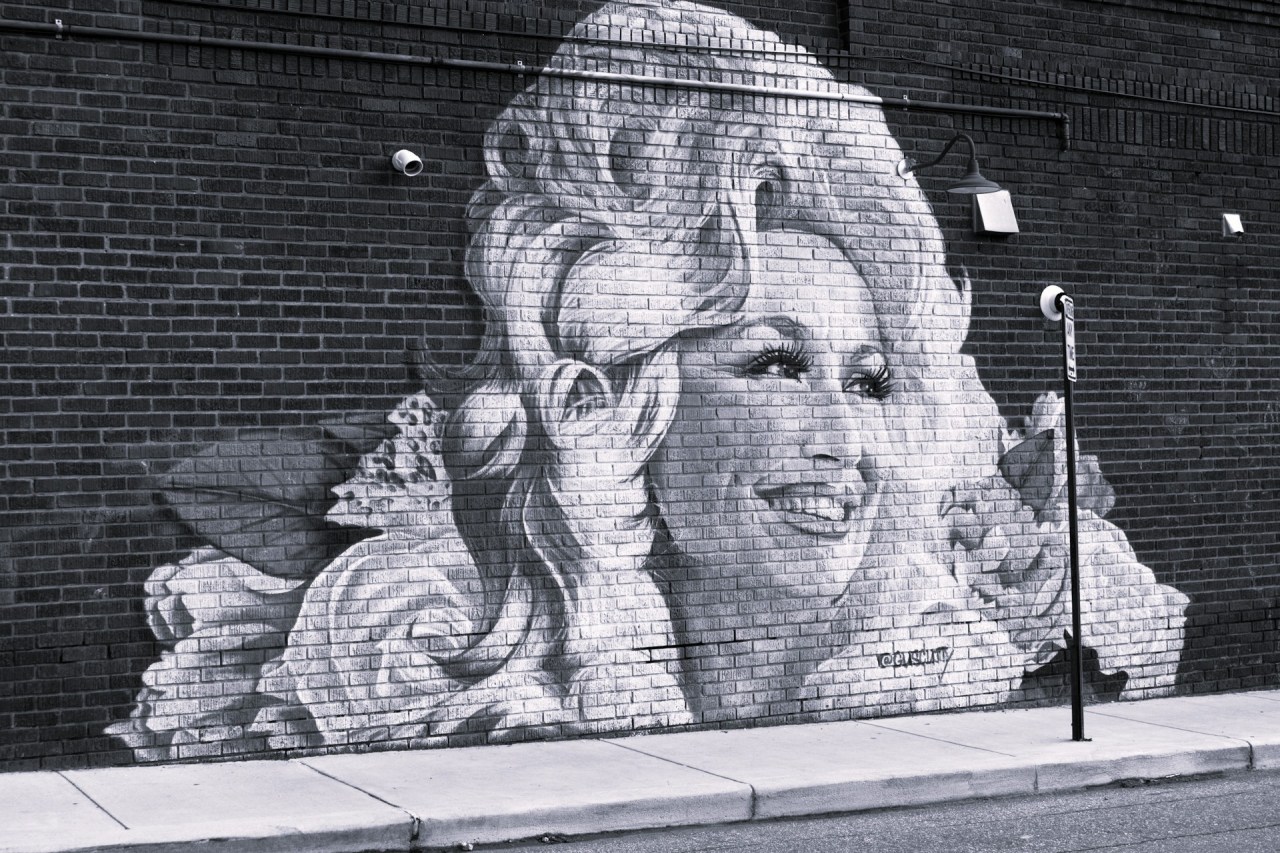
There are some people whose absence seems to change the atmosphere.
Dolly Parton was one of those people.
When news of her passing came, the grief extended far beyond country music.
People who had never met her felt as though the world had lost something.
Something warm.
Something hopeful.
Something good.
Of course, Dolly left behind an extraordinary body of work. Songs that became part of our lives. Movies. Businesses. Awards. A career that spanned generations.
But as people began talking about her life, something else seemed to rise above all of it.
They talked about her kindness.
Her generosity.
Her humor.
Her ability to remain unmistakably herself.
They talked about the children who received books because she believed literacy could change a life. The families she helped after disasters. The medical research she supported. The community she never forgot after the rest of the world learned her name.
And perhaps most remarkably, people from vastly different backgrounds and beliefs felt connected to her.
She seemed to understand something we desperately need to remember.
You don’t have to become harder because the world is hard.
You don’t have to become cruel because cruelty exists.
You don’t have to dim someone else’s light for yours to shine.
You can simply decide that wherever you go, whatever you have, and whoever you encounter, you will try to leave things a little better than you found them.
That may be one of the most meaningful legacies any of us can leave.
Prefer to listen? The Audio Blog version is available here.
WHEN SOMEONE LEAVES, WE LEARN WHAT REALLY MATTERED
Death has a strange way of editing a life.
Suddenly, so many things we spend our days worrying about become very small.
The disagreements.
The mistakes.
The things we owned.
The status we chased.
The opinions we tried so hard to control.
What remains are the stories.
Someone remembers that you encouraged them when they were struggling.
Someone remembers that you made them laugh.
Someone remembers that you showed up.
Someone remembers that you believed in them before they believed in themselves.
Someone remembers how you treated them when there was absolutely nothing you could gain from being kind.
That is the part of us that continues traveling after we leave the room.
And eventually, after we leave this life.
KINDNESS IS NOT THE SAME AS WEAKNESS
Somewhere along the way, kindness began to be mistaken for softness.
As though strong people must be hardened.
As though success requires ruthlessness.
As though having boundaries and having compassion cannot exist in the same person.
Dolly Parton certainly challenged that idea.
She built an enormous career and became a formidable businesswoman while maintaining a public identity rooted in warmth, humor, and generosity.
She didn’t have to make herself smaller to be kind.
And neither do we.
You can be ambitious and compassionate.
You can have boundaries and still have empathy.
You can stand up for yourself without tearing someone else down.
You can disagree without becoming cruel.
Kindness doesn’t require surrendering your strength.
Sometimes kindness is how you choose to use it.
YOU DON’T NEED A FORTUNE TO BE GENEROUS
It is easy to look at someone with enormous resources and think generosity belongs to people who have something substantial to give.
But money is only one form of generosity.
You can be generous with your time.
Your attention.
Your patience.
Your encouragement.
Your knowledge.
Your forgiveness.
Your connections.
Your willingness to listen.
Your willingness to notice.
Sometimes generosity is recommending someone for an opportunity.
Sometimes it’s checking on the friend who has gone unusually quiet.
Sometimes it’s letting someone merge into traffic.
Sometimes it’s telling a stranger you love their shoes because you thought it and decided not to keep the kindness trapped inside your head.
You don’t need a foundation to change someone’s day.
You just have to recognize that you have something to give.
WHAT YOU PUT INTO PEOPLE TRAVELS
We rarely get to see the full reach of what we give another person.
That’s one of the beautiful mysteries of kindness.
Dolly started the Imagination Library in her home county in Tennessee because her father couldn’t read or write.
That deeply personal act grew far beyond the place where it began. By the time of her death, the program had distributed hundreds of millions of books to children around the world.
One idea traveled.
Our smaller acts travel too.
Maybe you encourage someone who was about to give up.
They keep going.
Years later, they encourage someone else.
Maybe you show compassion to someone during the worst period of their life.
They remember what that felt like and offer it to another person when they’re struggling.
We may never meet the people ultimately affected by the kindness we give today.
That doesn’t make the impact any less real.
YOU CAN DISAGREE WITHOUT BECOMING CRUEL
We could use this reminder right now.
We live in a culture that increasingly encourages us to see people as teams.
Agree with me, and you’re good.
Disagree with me, and you’re bad.
And once we’ve decided someone belongs to the wrong category, we begin giving ourselves permission to treat them in ways we would otherwise recognize as cruel.
But another person’s beliefs do not determine our character.
We do.
Compassion does not require agreement.
Kindness does not require endorsement.
Decency does not require sameness.
You can stand firmly in what you believe without celebrating another person’s pain.
You can challenge someone’s ideas without trying to destroy their humanity.
You can refuse to add more cruelty to a world already overflowing with it.
That choice belongs to you.
LOOK FOR THE LIGHT WITHOUT DENYING THE DARK
Choosing light doesn’t mean pretending darkness isn’t there.
It isn’t toxic positivity.
It isn’t ignoring suffering.
It isn’t smiling through something that needs to be confronted.
Sometimes the people who choose light most deliberately are the people who understand darkness very well.
They’ve experienced loss.
Disappointment.
Fear.
Heartbreak.
Failure.
They simply decided those experiences would not determine what they contributed to the world.
You can acknowledge everything that is wrong and still participate in what is right.
You can grieve and still love.
You can be disappointed and still hope.
You can know exactly how cruel people can be and decide you will not become one of them.
Looking toward the light doesn’t mean you don’t see the darkness.
It means you have decided which direction you want to walk.
YOUR COMMUNITY IS PART OF YOUR LEGACY
We often think about legacy as something grand.
Something reserved for famous people.
A building with your name on it.
A foundation.
A body of work.
Something history remembers.
But most legacies will never appear in a history book.
They live in families.
Friendships.
Neighborhoods.
Workplaces.
Communities.
They live in the people who encountered us.
You are creating your legacy every time you walk into a room.
Every time you decide whether to encourage or discourage.
Every time you have the opportunity to help.
Every time someone trusts you with their vulnerability.
Every time you decide what kind of energy you will add to a difficult situation.
You don’t have to change the entire world.
You can change your corner of it.
And if enough people did that, imagine what kind of world those corners would create.
HOW YOU MAKE PEOPLE FEEL MATTERS
We spend so much of our lives thinking about what we are accomplishing.
What are we building?
What are we earning?
Where are we going?
What comes next?
Those things matter.
But there is another question worth asking.
How do people feel after they’ve been around you?
Do they feel seen?
Encouraged?
Safe?
Inspired?
Lighter?
Or do they leave feeling smaller than when they arrived?
None of us will get this right every time.
We have bad days.
We lose patience.
We say things we regret.
We are human beings learning as we go.
But we can become conscious of what we leave behind in people.
Because long after someone forgets the details of a conversation, they may remember what happened inside them because of it.
LEAVE PEOPLE BETTER THAN YOU FOUND THEM
You will not be able to help everyone.
You won’t always know what someone needs.
And sometimes the healthiest thing you can do is walk away.
Leaving people better doesn’t mean rescuing them.
It doesn’t mean sacrificing yourself.
It doesn’t mean tolerating behavior that hurts you.
It means that whenever possible, you don’t deliberately leave unnecessary damage behind.
You don’t humiliate someone simply because you can.
You don’t use someone’s vulnerability as ammunition later.
You don’t make someone smaller so you can feel bigger.
And when you have the opportunity to offer encouragement, compassion, knowledge, laughter, opportunity or hope, you give what you can.
A meaningful life isn’t measured only by what you accomplish.
It’s also measured by what you leave behind in people.
Dolly Parton left an extraordinary amount behind.
Her music will continue.
Her work will continue.
And perhaps the best way to honor a person whose life reminded so many people of the power of kindness.
We can practice it.
We can become a little more generous.
A little less eager to judge.
A little quicker to encourage.
A little more willing to help.
A little more conscious of what we’re putting into the people around us.
Maybe the greatest tribute we can offer someone who spent a lifetime putting more kindness into the world isn’t simply to mourn that their light is gone.
It’s to pick some of it up and carry it forward.
SLAY REFLECTION
S — See What You Leave Behind
How do you think people feel after spending time with you? What do you want them to feel?
L — Look at What You Have to Give
What do you already have that could make someone’s life a little better? Your time, encouragement, knowledge, attention, resources, or simply your kindness?
A — Add What You Want More Of
What do you wish there were more of in the world? Compassion? Patience? Generosity? Understanding? How can you contribute some of it yourself?
Y — Your Next Step
Choose one deliberate act of kindness this week without expecting recognition or anything in return.
Leave one person, one place, or one small corner of your community better than you found it.
CALL TO ACTION: JOIN THE CONVERSATION
I’d love to hear from you.
What do you hope people remember about the way you made them feel?
And who is someone who left you better than they found you?
Share your thoughts in the comments. Tell us about the person whose kindness, generosity or encouragement stayed with you long after the moment passed.
And if Dolly’s life meant something to you, perhaps the best way to honor what she represented is to carry a little of it forward.
Do something kind.
Encourage someone.
Help where you can.
Put something good into the world.
Then let it travel.