
Love the Parts of Yourself You Hide From Others

For a long time, I believed there were parts of me that were better left unseen.

The parts that felt messy. Complicated. Not as polished as I wanted them to be.

The thoughts I did not always understand. The emotions that felt too heavy. The experiences I was not proud of.

So I hid them.

I showed the version of myself that felt easier to accept.

Easier to understand. Easier to like.

And for a while, that worked.

But over time, something started to feel off.

Because the more I hid, the more disconnected I became from myself.


Prefer to listen? The Audio Blog version is available here.


Hiding Parts of Yourself Creates Distance

When you hide pieces of who you are, you create a gap.

A gap between who you are and who you allow others to see.

And that gap can feel isolating.

Because even when people connect with you, they are not connecting with the whole of you.

They are connecting with the version you have curated.

And that can make you feel unseen, even when you are surrounded by others.


I Had to Get Honest With Myself

There came a point where I realized that the parts of myself I was hiding were not going anywhere.

They were still there.

Still shaping how I felt. Still influencing how I showed up.

And avoiding them was not helping.

If anything, it was making them louder.

More present. More difficult to ignore.

So I made a choice.

To start looking at those parts with honesty.

Not judgment.


The Parts You Hide Often Hold the Most Insight

The things we try to push away are often the things that have the most to teach us.

Our fears. Our insecurities. Our past experiences.

They are not random.

They are part of our story.

And when we take the time to understand them, they begin to make sense.

Not as flaws.

But as information.


Self-Acceptance Is Not Selective

It is easy to love the parts of yourself that feel strong.

Confident. Capable. Put together.

But real self-acceptance is not selective.

It includes the parts that feel uncertain. Vulnerable. Imperfect.

It is not about approving of everything.

It is about acknowledging everything.


I Learned to Stop Fighting Myself

For a long time, I thought growth meant getting rid of the parts of me I did not like.

Fixing them. Changing them. Making them disappear.

But what I learned is that fighting those parts only created more resistance.

More frustration. More disconnect.

Growth did not come from rejection.

It came from understanding.


You Are Allowed to Be Complex

You are not meant to be one thing.

You are not meant to be perfect.

You are allowed to have layers.

To have contradictions. To have moments of strength and moments of uncertainty.

That does not make you inconsistent.

It makes you human.


Bringing It Into the Light Changes It

The parts of you that feel heavy or uncomfortable often lose their intensity when you bring them into the light.

When you acknowledge them. When you speak about them. When you allow yourself to see them clearly.

What once felt overwhelming becomes manageable.

What once felt defining becomes something you can understand.


You Do Not Have to Share Everything

Loving the parts of yourself you hide does not mean you have to share everything with everyone.

It means you stop hiding from yourself.

It means you stop pretending those parts do not exist.

It means you give yourself permission to be fully seen by you.


That Is Where Confidence Comes From

Confidence is not built by being perfect.

It is built by being honest.

By knowing who you are. By accepting what you find. By showing up as yourself, even when it feels uncomfortable.

Because when you stop hiding from yourself, you stop needing to hide from others.


You Are Worth Loving Fully

Not just the polished version.

Not just the easy parts.

All of it.

The parts you understand and the parts you are still figuring out.

The parts you show and the parts you keep hidden.

They all belong to you.

And they all deserve to be met with compassion.


Start With Acceptance

You do not have to change everything today.

You do not have to fix everything at once.

You just have to start by accepting what is there.

Looking at it with curiosity instead of judgment.

And allowing yourself to be whole.

Because the parts of you that you hide are not the problem.

They are part of the path.


SLAY Reflection

S — See the Hidden Parts
What parts of yourself do you tend to hide from others?

L — Look With Curiosity
What might those parts be trying to show you?

A — Acknowledge Without Judgment
Can you begin to accept those parts instead of rejecting them?

Y — Your Next Step
What is one small way you can show yourself more compassion today?


Call to Action: Join the Conversation

I’d love to hear from you.
Have you ever discovered something about yourself that you once hid, but now understand differently?

Share your story in the comments. Let’s cheer each other on.

And if you know someone who might need this reminder, send this to them.
Sometimes, all we need is a nudge.
You Can Forgive Someone Without Giving Them Access to You

Forgiveness is freedom, not a front-row pass

There’s a moment in healing that feels like a crossroads.
You’ve done the work.
You’ve cried the tears.
You’ve processed the pain.
And you finally arrive at forgiveness — not to excuse what was done, but to release what it did to you.

But then comes the question that catches so many of us off guard:

Does forgiving someone mean they get to come back?

For years, I thought the answer was yes.

I believed forgiveness meant reconciliation.
I believed healing meant returning to the way things were.
I believed I had to reopen the door simply because I had released the hurt.

But with time, experience, heartbreak, boundary-setting, and a few painfully earned lessons, I learned the truth:

You can forgive someone and still deny them access to you.
Forgiveness is a gift you give yourself.
Access is a privilege they have to earn.

Those two things are not the same.


Forgiveness Isn’t a Free Pass

Forgiveness is often misunderstood. Many people think it means:

  • “We’re good now.”
  • “It wasn’t that bad.”
  • “Let’s forget it happened.”
  • “The relationship should go back to normal.”

But forgiveness does not rewrite history. It does not minimize harm. It does not pretend you weren’t hurt.

Forgiveness simply means:
“I’m releasing the emotional hold this has on me.”

It’s internal.
It’s personal.
It’s sacred.

Forgiveness is about you finding peace — not about making someone else comfortable.

You can forgive someone and still say:

  • “I no longer trust you.”
  • “Your behavior hasn’t changed.”
  • “My boundaries matter.”
  • “This relationship is not safe for me.”
  • “I choose to love myself enough to step away.”

And every one of those statements can exist perfectly alongside forgiveness.


Access Requires Accountability

Here’s the part most people don’t understand:

Forgiveness is unconditional.
Access is not.

Access requires:

  • Changed behavior
  • Accountability
  • Consistency
  • Respect
  • Emotional safety
  • Mutual effort

If someone wants a place in your life, their actions should reflect it.
Their words should align with their behavior.
Their presence should feel safe, not draining.
Their energy should add, not take.

You don’t deny access out of spite.
You deny access because your peace is non-negotiable.

It is not punishment.
It is protection.

People who truly care about you will understand that.
People who don’t will call it “overreacting” or “holding a grudge,” simply because they no longer benefit from your openness.


Forgiveness Without Reconciliation Is Still Forgiveness

A lot of people grew up being taught that forgiveness meant you had to:

  • rebuild relationships
  • pretend nothing happened
  • stay connected
  • be endlessly available

But that version of forgiveness keeps you trapped.
It keeps you small.
It keeps you in cycles of harm.

Forgiveness without reconciliation is still forgiveness.
You can release resentment without reopening the door.
You can wish someone well from a distance.
You can send them love and keep them out of your life.

There is power in that duality:

“I forgive you.
And you still don’t get access to me.”

Both can be true.
Both can be healthy.
Both can be healing.


Protecting Your Peace Is an Act of Self-Respect

There comes a point where you stop asking:

“Do they deserve another chance?”

And start asking:

“Does this support my peace, my growth, and my well-being?”

Sometimes the answer is yes.
Sometimes it’s no.
Sometimes it’s “not right now.”

And sometimes it’s “never again.”

Choosing distance is not bitterness.
It’s clarity.
It’s self-respect.
It’s honoring the version of you who finally learned what they deserve.

There is nothing unkind about protecting your emotional, mental, or physical safety.
There is nothing cruel about refusing to reenter the same cycle.
There is nothing wrong with outgrowing people who continue to harm you — even if you love them.

Protecting your peace is not a betrayal of love —
it’s a commitment to yourself.


Rebuilding Is a Choice, Not an Obligation

Some people will change.
Some people will grow.
Some people will show up differently.

And if that happens — and if you want to rebuild — that choice is yours.

But rebuilding should never come from guilt.
Or pressure.
Or obligation.
Or fear of what other people will think.

A relationship can only be rebuilt on:

  • truth
  • accountability
  • honesty
  • change
  • mutual respect
  • time
  • consistency

Not empty promises or short-term effort.

You decide what access looks like.
You decide what level of connection you’re open to.
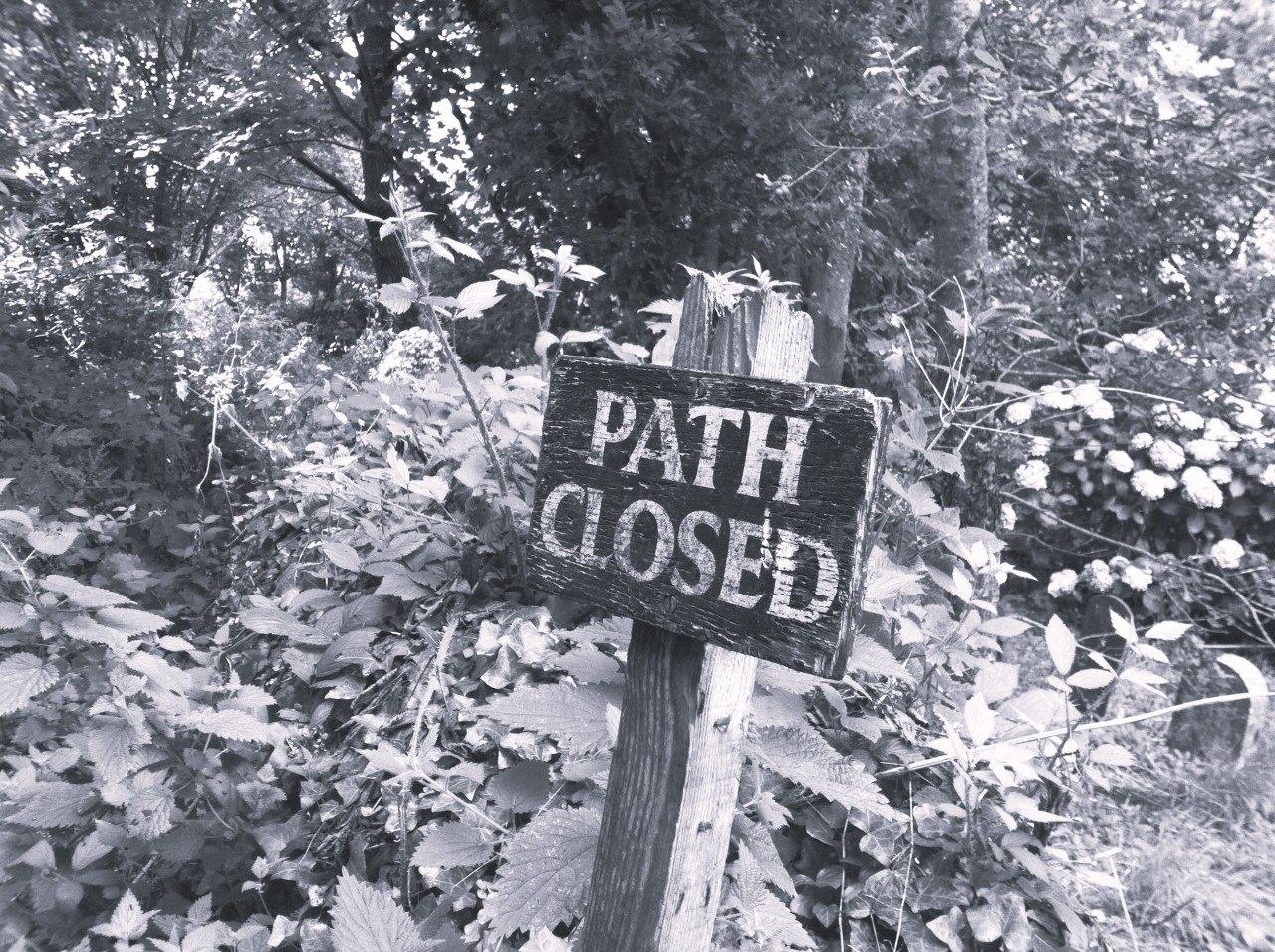
You decide whether the door is closed, cracked, or locked.

You don’t owe anyone an explanation.
Your healing is not a group decision.


Forgiveness Sets You Free — Not Them

One of the most liberating things you’ll ever learn is this:

Forgiveness is not for them.
It’s for you.

It frees your mind.
It clears your heart.
It releases the emotional weight tethering you to the past.

But it does not require:

  • returning
  • reconciling
  • reconnecting
  • reopening
  • reengaging

Your healing does not depend on the relationship surviving.
Some chapters end so you can reclaim your peace.
Some endings are the closure you’ve been searching for.
Some boundaries are the doorway to your freedom.

Allowing someone access again is an entirely separate choice — one they must earn, not one automatically granted because you chose your own healing.


SLAY Reflection

S — Sit With Your Truth

What relationship in your life have you maintained out of obligation rather than genuine safety or connection?

L — Look at the Pattern

Have you confused forgiveness with permission in the past? What did that lead to?

A — Align With Your Values

What boundaries need to be honored for you to feel emotionally safe again?

Y — Yield to Growth

How can you release the hurt while still protecting your peace moving forward?


Call to Action: Join the Conversation

I’d love to hear from you.
When have you forgiven someone but still chosen distance — and how did that decision support your healing?
Share your story in the comments. Let’s cheer each other on.

And if you know someone who’s working on releasing hurt without reopening old wounds, send this to them.
Sometimes, all we need is a nudge.

Slay Say

Stay Rooted in What Matters

Life will always offer noise—
opinions, distractions, expectations,
the pull of things that look urgent
but hold no real weight.

It’s easy to get swept up in it,
to mistake the loudest voice for the truest one,
or to drift toward what feels immediate
instead of what feels aligned.

But when you know what anchors you—
your values, your boundaries, your peace—
the noise loses its power.
You stop reacting to everything around you
and start responding from the steadiness within you.

This is your reminder:
Your grounding is your strength.
Return to what roots you
and let the rest fall away.

Slay On!

Slay Say

Honor What’s Meant to Stay

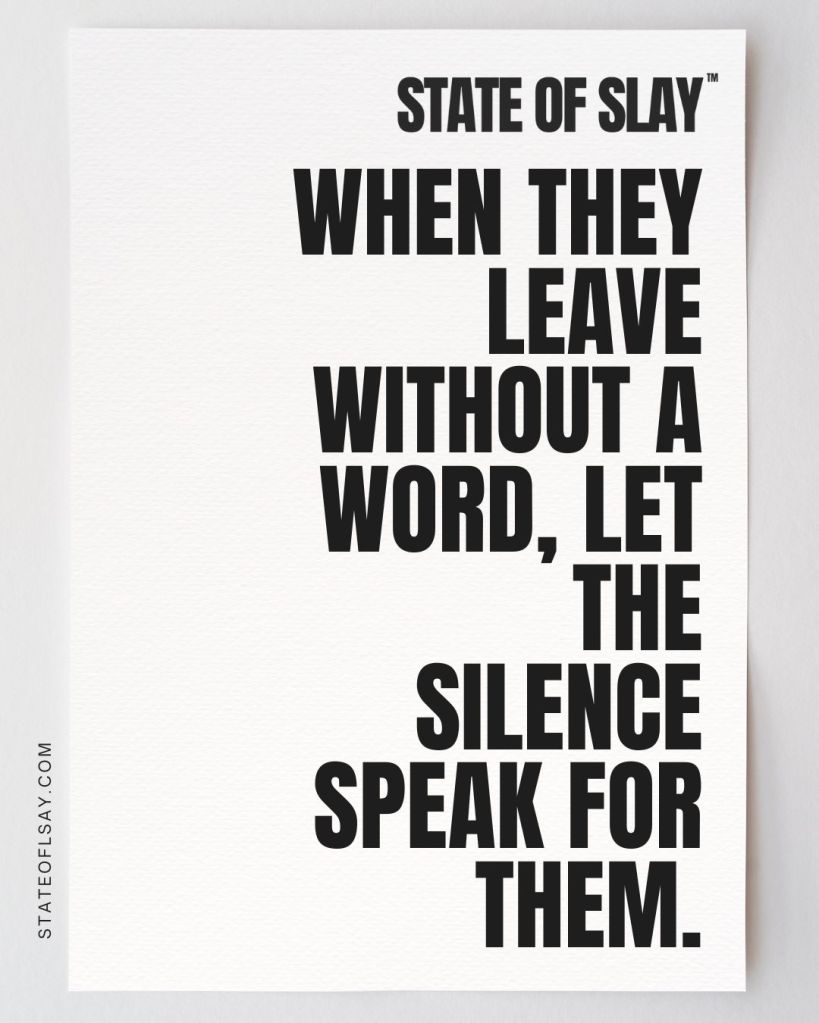
Some endings don’t come with closure.
Some people simply slip out of your life
without explanation, apology, or accountability.

And as painful as that silence can be,
it’s also information.

Not everything is meant to be revived.
Not every connection deserves resuscitation.
Sometimes the leaving tells you
everything the staying never could.

Your peace is too precious
to pour into what no longer chooses you.
Let what buried itself remain buried.
Life has a way of removing what can’t grow with you.

This is your reminder:
Your energy belongs where it’s respected,
not where you’re chasing ghosts.

Slay On!

Slay Say

Letting Go Is How You Rise

We hold on for many reasons—
habit, hope, fear, or the belief
that releasing something means we failed.

But letting go isn’t loss.
It’s liberation.
It’s choosing your peace over your patterns,
your growth over your grip,
your future over what’s familiar.

Every time you release what no longer supports you—
a belief, a memory, a relationship, a burden—
you create space for the strength
you didn’t know you were missing.

Letting go isn’t the end.
It’s who you become on the way up.

This is your reminder:
You rise every time you release.

Slay on!

Slay Say

Honor the Turn

Life doesn’t always move in straight lines.
Sometimes the path you planned
stops matching the person you’re becoming.

A pivot isn’t a setback —
it’s a moment of truth.
A quiet realization that what once fit
no longer aligns with where you’re headed.

Clarity shows you the shift.
Courage is what allows you to make it.

You’re not abandoning the journey.
You’re choosing a better direction.
One that honors your growth,
your intuition,
your becoming.

This is your reminder:
You’re allowed to change course
when your soul asks you to.

Slay on!

Slay Say

Bloom Where You Are

It’s easy to keep your focus on what’s next—
the next goal, the next milestone, the next version of yourself.
But when your mind is always somewhere ahead,
you miss the beauty that’s growing right here.

Healing doesn’t wait for perfect timing.
Peace doesn’t arrive once everything falls into place.
They happen in the present—
in the quiet decisions,
the small steps,
the moments you choose to stay.

The future will come soon enough,
but your roots need now.

This is your reminder:
You’re not behind.
You’re becoming.

Slay On!

Slay Say

The Quiet Kind of Strength

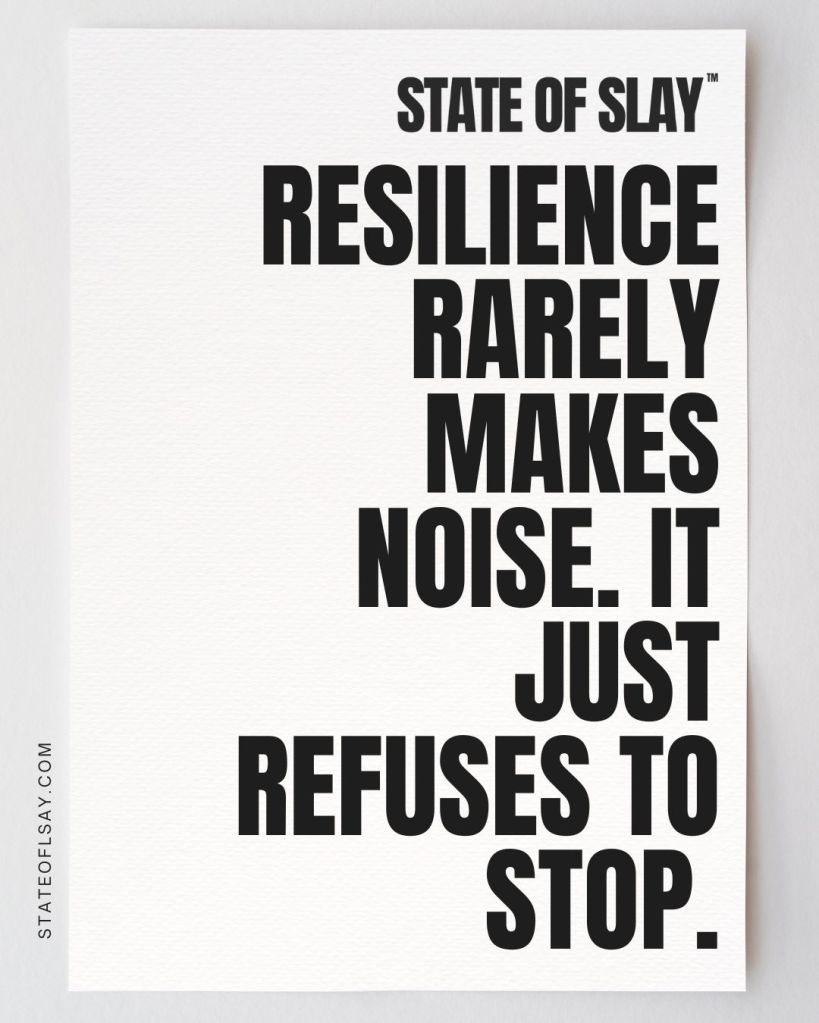
Real resilience doesn’t demand attention.
It doesn’t need to announce itself or prove a point.

It’s the steady breath in the middle of the storm.
The quiet decision to try again.
The choice to keep moving, even when no one is watching.

Power isn’t always loud.
Sometimes it’s the whisper that says, not today.

You’ve survived moments you thought would break you—
not because you shouted through them,
but because you stayed.

This is your reminder that quiet strength
is still strength.

Slay on!

Slay Say

The Days That Test Your Kindness

It’s easy to be patient when life feels light.
But when you’re exhausted, overwhelmed, or heavy-hearted—
that’s when self-compassion becomes essential.

Low days don’t mean you’ve lost your strength.
They mean you’re human.

Grace isn’t something you earn;
it’s something you extend to yourself
when the world feels too loud
and your energy runs thin.

Rest. Recenter. Remember who you are
beyond what today feels like.

This is your reminder to treat yourself gently
while you find your way back to center.

Slay on.

Pressure Is a Privilege

There’s a saying I’ve always loved: pressure is a privilege.

At first, it can sound like something only the ultra-successful would say—like a line meant for athletes, CEOs, or overachievers. But the truth is, pressure exists wherever there’s potential.

Pressure means someone believes in you.
Pressure means you’ve earned responsibility.
Pressure means you’ve shown you can handle something worth doing.

It’s not punishment—it’s purpose in disguise.


The Weight of Expectation

When life starts demanding more of us, our instinct is often to push back. We say things like:

  • “Why is this so hard?”
  • “Why does everyone expect me to have it all together?”
  • “Can’t I just have one easy day?”

But those expectations—those moments that make us sweat and doubt and question—are actually markers of growth.

If no one expected anything of you, it would mean no one believed in your ability to rise. Pressure is often the shadow side of opportunity.

We tend to see only the strain, but pressure exists because something inside you is ready to expand.

The next chapter of your life is pressing on the walls of your comfort zone, asking to be born.


From Fear to Fuel

Pressure can crush you if you let it. But it can also create diamonds.

It all depends on how you see it.

When you frame pressure as a burden, it feels heavy, suffocating, endless. But when you frame it as privilege—as proof that something meaningful is unfolding—you stop resisting and start responding.

Think of it this way:

  • Pressure is proof that you’re trusted.
  • Pressure is proof that you’re capable.
  • Pressure is proof that you’re in the game.

When the moment feels too big, remember: you wouldn’t be under this much pressure if you weren’t meant to handle it.

You’ve already proven something powerful just by being here.


Perfection vs. Purpose

Many of us crumble under pressure not because we’re incapable—but because we confuse pressure with perfection.

We think pressure means we can’t fail. That we must perform flawlessly. That we’re being watched and judged.

But pressure isn’t about being perfect—it’s about being present.

The people who thrive under pressure aren’t superhuman. They’ve just learned how to focus on progress over perfection.

When you stop chasing flawless and start chasing faithful, something shifts. You stop trying to prove and start showing up.

That’s where true resilience is built—not in trying to please everyone, but in doing your best with what’s in front of you, even when it’s hard.


Pressure Builds Strength

The first time you lift a weight, it feels impossible. Your muscles shake. Your body resists. But over time, that same pressure builds strength.

Emotional pressure works the same way.

Every time you stand in discomfort—face the meeting, have the hard conversation, take the next step when you’re terrified—you grow.

Each moment of pressure becomes a training ground for your next level.

So instead of asking “Why is this happening to me?”, start asking “What is this building in me?”

Because if you let it, pressure will make you powerful.


Reframing the Privilege

Think about this: if no one ever challenged you, you’d never know how capable you are.

Pressure doesn’t show up when you’re weak—it arrives when you’re strong enough to handle it.

That’s why it’s a privilege.

Pressure says, “You’ve proven you can do hard things.”
It says, “You’ve earned the right to grow.”
It says, “You matter enough for this to matter.”

And when you start to see pressure that way, something beautiful happens—you stop fearing it. You start welcoming it. You realize that pressure isn’t trying to destroy you; it’s trying to develop you.

That’s the difference between breaking down and breaking through.


How to Handle Pressure with Grace

Here are a few ways to turn pressure into power:

  1. Pause Before You React
    When pressure hits, don’t spiral. Breathe. Re-center. Respond from clarity, not panic.
  2. Shift Your Perspective
    Ask: “What is this moment trying to teach me?” Instead of resisting, get curious.
  3. Release Perfection
    You don’t need to ace every test. You just need to show up—consistently, courageously, honestly.
  4. Find Gratitude in Growth
    Pressure means you’re trusted with something meaningful. That’s worth being grateful for.
  5. Remember: You’ve Done Hard Things Before
    You’ve survived every pressure moment that came before this one. This, too, will become proof of your strength.

When Pressure Feels Like Too Much

There will be days when you’ll want to quit—when pressure doesn’t feel like privilege at all.

On those days, it’s okay to step back. Rest. Breathe. Ask for help. Privilege doesn’t mean perfection; it means participation. You’re allowed to pause without giving up.

Just don’t confuse taking a break with backing down. Even resting is part of rising.

You’re building endurance, not just achievement. You’re learning to carry the weight without losing yourself underneath it.


SLAY Reflection

  1. How do you usually react when you feel pressure?
  2. What opportunities in your life right now are disguised as pressure?
  3. What story do you tell yourself when expectations rise?
  4. How might seeing pressure as privilege change how you show up?
  5. What’s one way you can turn current pressure into personal power?

S – Stop seeing pressure as punishment
L – Let it teach you instead of crush you
A – Align your energy with purpose, not perfection
Y – Yield to growth—pressure is proof you’re evolving


Call to Action: Join the Conversation

I’d love to hear from you.
How has pressure shaped you into who you are today?
Share your story in the comments. Let’s cheer each other on.

And if you know someone feeling overwhelmed by the weight of expectations, send this to them.
Sometimes, all we need is a reminder that the pressure we feel is the privilege of becoming more.