An Arrow Can Only Be Shot by Pulling It Backwards

There’s a powerful lesson tucked inside one of life’s simplest metaphors: an arrow can only be launched by first being pulled backwards.

At first, that pull feels like resistance. Pressure. Setback. You’re yanked away from where you want to go, pulled into discomfort, frustration, and sometimes even pain. But the truth is this: without that tension, without that backward stretch, there is no forward release.

Life’s pullbacks are not punishments—they are preparation.

The key is to not get stuck staring at the ground when life pulls you back. Instead, steady yourself, take aim, and get ready. Because what feels like a setback now may be the very momentum that propels you toward something greater.


The Backward Pull Feels Personal

When life pulls us back, it rarely feels neutral. It feels personal.

The relationship ends. The job falls through. The opportunity disappears. Suddenly, it feels like life is conspiring against us, stripping away what we wanted most. And in the middle of that loss, it can feel impossible to see any kind of trajectory forward.

But here’s the truth: the arrow doesn’t know it’s being pulled back to soar further—it only feels the tension. And we’re the same way.

The backward pull of life is often the exact energy we need to realign, refocus, and prepare for a different kind of future.


Take Aim: Purpose in the Pause

An arrow doesn’t just fly aimlessly—it’s aimed. The backward pull isn’t random; it’s part of the process.

When life feels like it’s dragging you back, the invitation is to pause and take aim.

Ask yourself:

  • What am I being redirected toward?
  • What lessons am I meant to carry from this moment?
  • What strength am I building through this resistance?

Taking aim doesn’t mean you’ll have all the answers right away. It means you choose not to waste the pullback. You align yourself with purpose, even if the target feels blurry.


The Release: Trusting the Launch

When the arrow is finally released, it doesn’t hesitate. It doesn’t fight the momentum. It doesn’t question the trajectory. It simply flies.

That’s the moment you’ve been stretched for.

The release is the job that finally matches your calling, the relationship that respects your worth, the moment you realize your strength has carried you further than you thought possible. It’s not about erasing the pullback; it’s about realizing that every inch of that resistance fueled the flight.


The Power of Perspective

Pullbacks and setbacks will always come. But here’s the difference between staying stuck and soaring forward: perspective.

If you see the pullback as failure, you’ll stay grounded. If you see it as preparation, you’ll find the courage to aim higher.

Every backward tug is an opportunity to grow resilience, clarity, and faith. It’s proof that you’re still in motion—that life is stretching you for something greater.


Your Bow, Your Aim, Your Flight

Remember, you are both the archer and the arrow.

You get to choose:

  • Do you fight the pull and call it defeat?
  • Or do you trust the stretch, take aim, and let yourself fly?

The setbacks won’t define you. The release will.

So the next time life pulls you back, don’t panic. Don’t lose heart. Steady your grip. Breathe. Take aim. And get ready—because you are about to soar.


SLAY Reflection

  1. Where in your life right now do you feel like you’re being pulled backwards?
  2. How can you reframe that pullback as preparation instead of punishment?
  3. What’s one target you want to take aim at, even if it feels blurry today?
  4. How can you use resistance as fuel for your momentum?
  5. What would trusting the release look like for you?

S – See setbacks as setups, not endings
L – Let the pullback strengthen your aim
A – Align with purpose, not panic
Y – Yield to the release and trust your flight


Call to Action: Join the Conversation

I’d love to hear from you.
What pullback in your life ended up being the momentum you needed to soar?
Share your story in the comments. Let’s cheer each other on.

And if you know someone who feels stuck in a setback, send this to them.
Sometimes, all we need is a reminder that the stretch is preparing us for the flight.

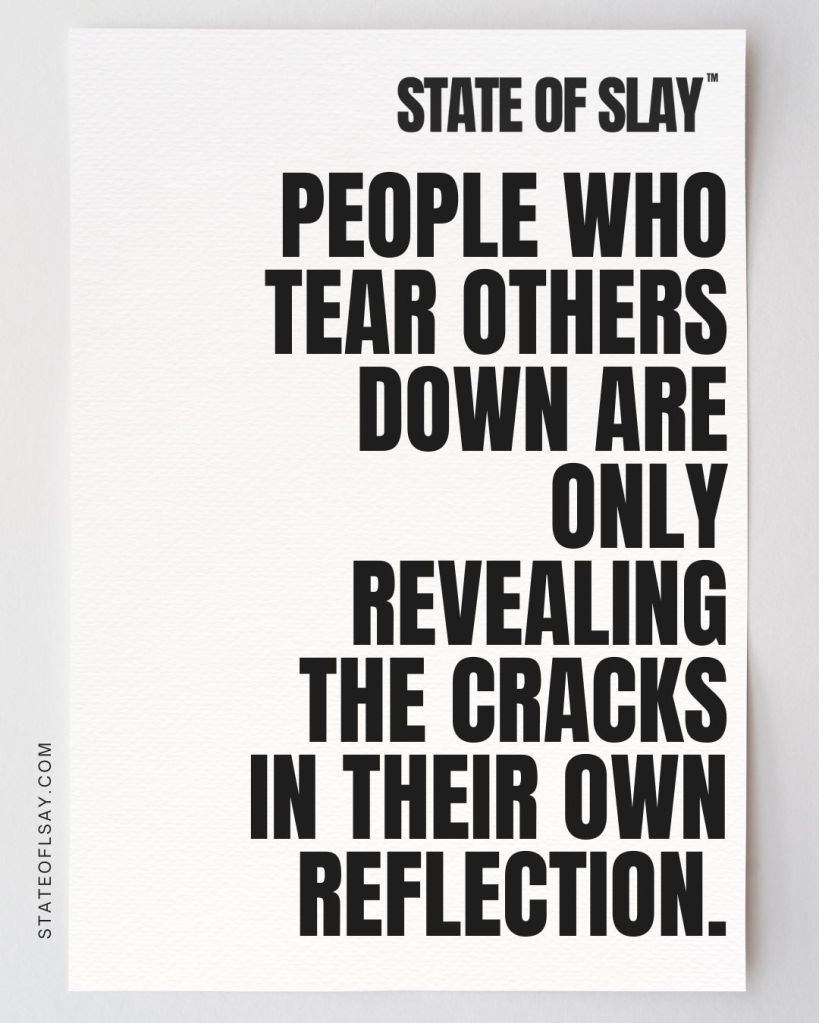
Slay Say

THE REFLECTION ISN’T YOURS

Unkindness is not a reflection of your worth, but of someone else’s struggle. People often project what they haven’t healed, and their cruelty is more about their unrest than your value.

When you remember this truth, you free yourself from carrying pain that was never yours to hold.

This is your reminder: you don’t need to absorb the darkness someone else hasn’t learned to face.

SLAY on!

Slay Say

THE POWER OF CONTRAST

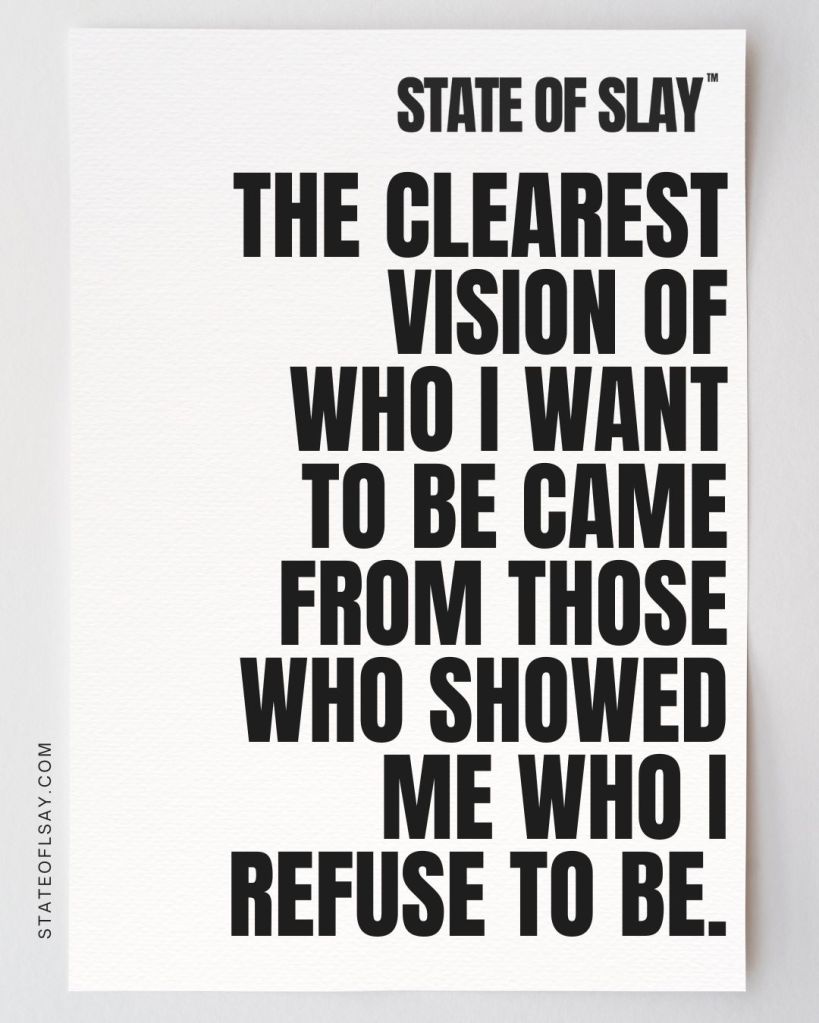
Not every influence shapes us through admiration. Some shape us through opposition. It’s in watching behavior we don’t want to repeat, words we won’t use, or choices we refuse to make that we find clarity in who we are.

This is the quiet gift of contrast—it sharpens our vision and strengthens our commitment to live differently.

This is your reminder: even painful examples can become powerful teachers.

SLAY on!

You Have to Learn to Grieve with Hope

Grief is something we don’t like to talk about. It feels heavy, uncomfortable, and sometimes unbearable. We’re taught to either rush past it, hide it, or drown in it—but rarely to sit with it. And yet, grief is not something we can outrun.

At some point in life, loss comes for all of us. It may be the death of someone we love, the end of a relationship, the fading of a dream, or even the loss of who we once thought we would be. Grief is not reserved for funerals—it shows up whenever life shifts in ways that take something from us.

But here’s the truth: while grief is inevitable, despair is optional. To heal, we must learn to grieve with hope.


Why Hope Matters in Grief

When you’re deep in grief, hope can feel like a foreign concept. It’s easy to believe that the sadness will never lift, that you’ll never feel joy again, that the hole in your heart is permanent.

But grief and hope are not opposites. They’re partners.

Grief acknowledges the depth of what you’ve lost. Hope whispers that loss doesn’t erase love, and pain doesn’t cancel the possibility of joy ahead.

Hope doesn’t mean ignoring the hurt. It means believing there is life beyond it.


Grieving Without Hope Keeps You Stuck

I know this firsthand. In the darkest times of my life, I thought I was honoring my pain by holding on tightly to it. I wore my grief like armor, convinced that letting go of it meant I was letting go of the person, the love, or the moment I had lost.

But the truth is, refusing to allow hope into grief only traps you in it. It keeps you circling the same pain, the same questions, the same regrets.

Grieving with hope doesn’t dishonor your loss—it honors your life. It allows you to carry your love forward without being consumed by the absence.


How to Grieve with Hope

So how do we actually do this? It’s not about rushing, forcing, or pretending. It’s about learning to make space for both grief and hope to coexist. Here are some ways to begin:

  1. Give Yourself Permission to Feel
    Stop labeling your emotions as “right” or “wrong.” If you need to cry, cry. If you need to sit in silence, sit. Grief has no timeline.
  2. Remember What Remains
    Focus on what the person, dream, or chapter gave you. Love, memories, lessons—those don’t disappear. They live in you.
  3. Look for Small Signs of Light
    It might be laughter that sneaks in unexpectedly. A sunrise. A song that reminds you of resilience. Hope often arrives quietly, but it always arrives.
  4. Talk About It
    Share your grief with someone safe. Silence feeds despair, but connection breeds healing.
  5. Let Grief Grow You
    Pain transforms us if we let it. Ask yourself: what is this teaching me about love, about myself, about what matters most?

Hope is Not Forgetting

One of the biggest fears in grief is that moving forward means forgetting. That by smiling again, you’re betraying the depth of what you lost. But healing doesn’t erase love. It carries it forward in a new way.

When you grieve with hope, you don’t deny the loss. You integrate it. You learn to live alongside it, and eventually, to allow joy to return without guilt.

Hope says: this hurts, and I can still live.


You’re Allowed to Carry Both

You can hold sadness in one hand and gratitude in the other. You can cry one day and laugh the next. You can miss what you lost and still build what’s ahead.

Grieving with hope doesn’t mean replacing the pain—it means refusing to let it be the only story.


SLAY Reflection

  1. What loss in your life still feels too heavy to carry?
  2. How might hope soften that grief without taking away its meaning?
  3. What do you fear you’ll “lose” if you allow yourself to heal?
  4. Can you remember a moment when light broke through your darkness?
  5. What’s one hopeful practice you can lean into this week—journaling, prayer, gratitude, connection?

S – Surrender to your feelings without shame
L – Let hope quietly sit beside your grief
A – Allow both pain and joy to exist together
Y – Yield to healing, trusting love will always remain


Call to Action: Join the Conversation

I’d love to hear from you.
How have you found hope in the midst of grief?
Share your story in the comments. Let’s cheer each other on.

And if you know someone walking through grief right now, send this to them.
Sometimes, hope begins with a reminder that they’re not alone.

Slay Say

THE WHISPER OF DESTINY

Some moments feel different. A place you can’t explain feels like home, a person feels familiar even though you’ve just met, or an opportunity seems to call your name. That pull isn’t random—it’s alignment.

These are the moments where your soul recognizes something your mind hasn’t caught up to yet. You don’t have to chase them or force them—they’re already written into your story, waiting for you to step into them.

Trust the pull. Trust the timing.

This is your reminder: not every connection needs logic—some need only recognition.

SLAY on!

Slay Say

THE POWER OF PATIENCE

You don’t always need to explain yourself to be understood. True clarity isn’t forced—it unfolds with time.

When we rush to defend our side of the story, we often drain our energy trying to convince others who have already decided what they want to believe. That battle isn’t yours to fight.

Instead, let your actions, your consistency, and your integrity speak for you. Time has a way of revealing what words cannot.

This is your reminder that truth doesn’t need protection—it needs patience.

SLAY on!

Slay Say

FORWARD IS THE ONLY DIRECTION

Standing still might feel safe, but it’s also where dreams go to die. Waiting for the perfect moment only delays the life that’s waiting for you to claim it.

Growth requires movement—sometimes messy, sometimes uncertain, but always forward. Each step, no matter how small, breaks the cycle of waiting and creates momentum.

If you’re longing for change, stop looking for it to arrive on its own. The shift begins with you—when you take action, however imperfect, toward what you want.

This is your reminder that movement is the bridge between who you are and who you’re becoming.

SLAY on!

Slay Say

FALLING IS PART OF RISING

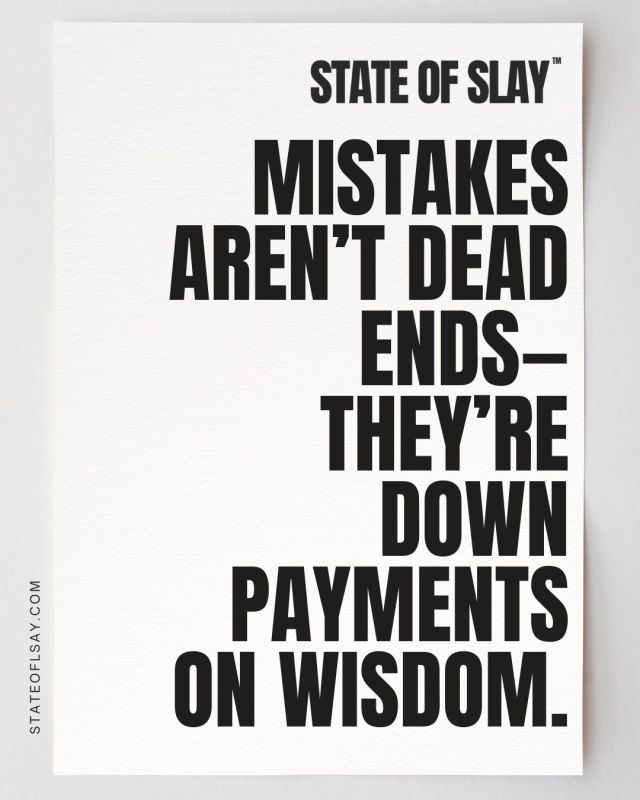
We often see failure as the enemy of success, when in reality, it’s the soil that growth springs from. Every mistake, stumble, or setback isn’t wasted—it plants something valuable inside you.

Those moments that feel like defeat are really shaping your resilience, sharpening your clarity, and preparing you for what comes next.

Instead of fearing failure, remember that it’s not the end of the journey. It’s simply one of the steps on the way up.

This is your reminder that setbacks are not roadblocks—they’re building blocks.

SLAY on!

Slay Say

The Weight Was Never Yours

We often clutch what was never meant for us—regrets, expectations, the heavy burdens of things we can’t control. Our minds replay them, our hearts ache with them, and we end up carrying weight that was never ours to hold. True strength is not in forcing yourself to bear it but in recognizing when to set it down. Release is not weakness—it’s freedom.

This is your reminder to…
Choose peace over pressure. Your heart deserves rest, not heaviness.

SLAY on!

Their Storm, Not Your Forecast

There’s a strange pressure to get swept up in someone else’s chaos. To absorb their anger, defend against their projections, or even try to fix what they refuse to face. Especially if you’re a deeply empathetic person, it can be hard to remember:

Not every storm requires your umbrella.

Just because someone is bringing drama, blame, or emotional thunder into the room doesn’t mean you have to get soaked.

It might sound harsh, but not every meltdown, every mood, or every mess is yours to carry.

Let’s be real—some people thrive in the whirlwind. They create it. They stir up tension, throw lightning bolts, and wait to see who gets scorched. And if you’re not careful, you’ll mistake their storm for your reality.


You’re Not the Weather Channel

Here’s the thing: just because they’re forecasting doom doesn’t mean you have to build an ark. We can love people, support people, and still refuse to be pulled under by their emotional riptide.

Your peace isn’t up for negotiation.

One of the biggest lessons I’ve learned is this: if someone is committed to chaos, no amount of calm you bring will change them. You don’t have to match their energy, explain yourself endlessly, or prove your worth in the face of their projection.

Your job is to stay grounded in your truth.

People will accuse you of being cold, distant, or selfish when you refuse to engage in their drama. Let them. You’re not required to participate in every emotional argument you’re invited to.


Calm Isn’t Weak—It’s Wise

Some storms are loud. Others are subtle. But all of them share one trait: they pull you away from your center. When you stay calm in the face of emotional turbulence, you’re not being passive—you’re being powerful.

Calm is a boundary.

It says: “I’m not going to argue with someone who’s not listening. I’m not going to internalize someone else’s pain. I’m not going to let your storm become my identity.”

This doesn’t mean you don’t care. It means you care enough about yourself to know the difference between being present and being consumed.


Detach Without Guilt

If you’ve ever grown up in dysfunction, chaos might feel familiar—even comfortable. You may have learned to overfunction, to fix, to please, to manage the emotions of others so things wouldn’t blow up. But that’s not your role anymore.

You can walk away. You can say, “This isn’t mine.” You can let someone rage, spiral, or stew without stepping into the storm.

Because here’s the truth: the storm isn’t personal. Even if it’s aimed at you, it’s not really about you. It’s about their unhealed pain. Their fear. Their need for control.

You didn’t cause it, and you don’t have to catch it.


Protect Your Inner Weather

Boundaries aren’t walls, they’re windows. They let in light and fresh air, but they keep out the hail. When you feel that pull to jump into someone else’s chaos, pause and ask:

  • Is this really mine?
  • What happens if I don’t respond?
  • What would it look like to stay rooted in my calm?

Because that’s the goal: to be so in tune with your own emotional forecast that someone else’s storm can roll through without ever touching your peace.

Let them weather it. You’ve got sunshine to protect.


SLAY Reflection

  1. Have you ever mistaken someone else’s storm as your responsibility to fix?
  2. What patterns from your past make chaos feel familiar or expected?
  3. When was the last time you stayed calm in a moment of drama—and how did that feel?
  4. What’s one situation right now where you can say, “This isn’t mine”?
  5. How can you strengthen your boundaries to protect your inner peace?

S – Step away from unnecessary emotional storms
L – Let go of the need to fix what isn’t yours
A – Acknowledge your limits with compassion
Y – Yield to peace, not pressure


Call to Action: Join the Conversation

I’d love to hear from you.
What’s one way you’ve protected your peace by not engaging in someone else’s storm?
Share your story in the comments. Let’s cheer each other on.

And if you know someone who’s always caught in the swirl of someone else’s drama, send this to them.
Sometimes, all we need is a reminder that peace is a choice.