When Who You Were Can’t Take You Where You’re Going
Every version of you has had a job to do.
There was a version who learned how to survive.
One who became independent because relying on other people felt risky.
One who learned to keep the peace.
One who worked harder than everyone else because achievement became proof of worth.
One who stayed guarded because being vulnerable had once been expensive.
One who said yes because disappointing people felt worse than disappointing yourself.
Those versions of you weren’t mistakes.
They developed for reasons.
They helped you navigate the life you were living with the tools, understanding, and circumstances you had at the time.
Some of them got you through things you weren’t sure you could survive.
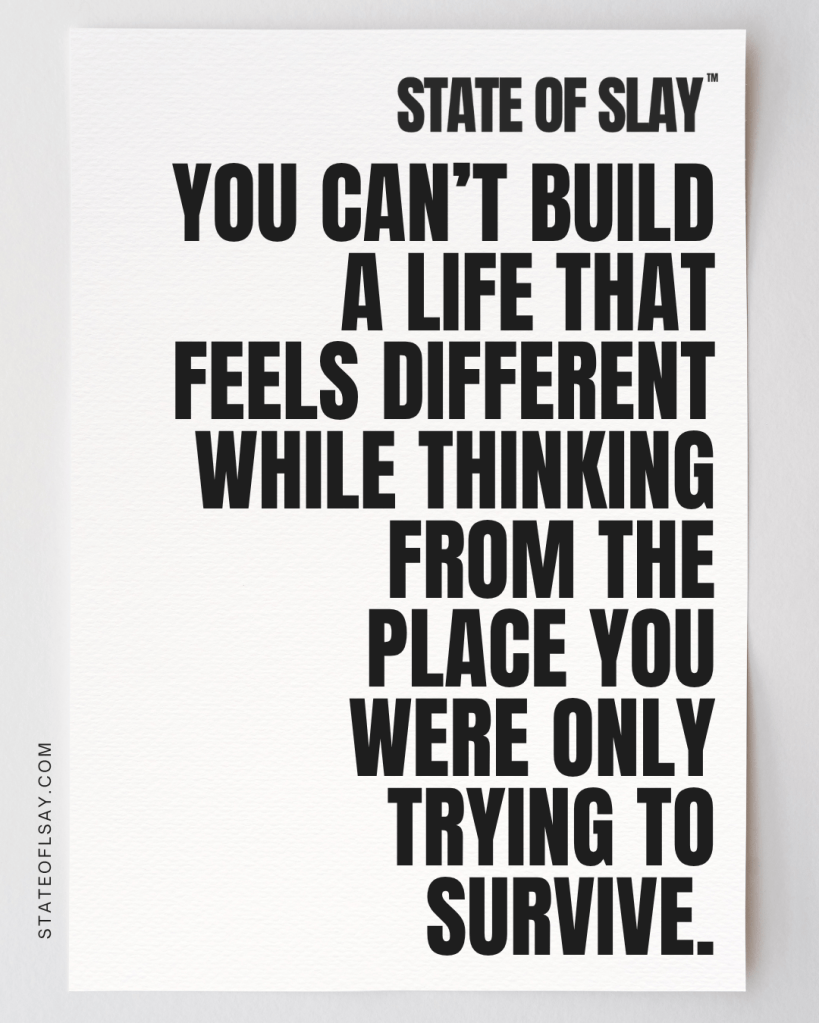
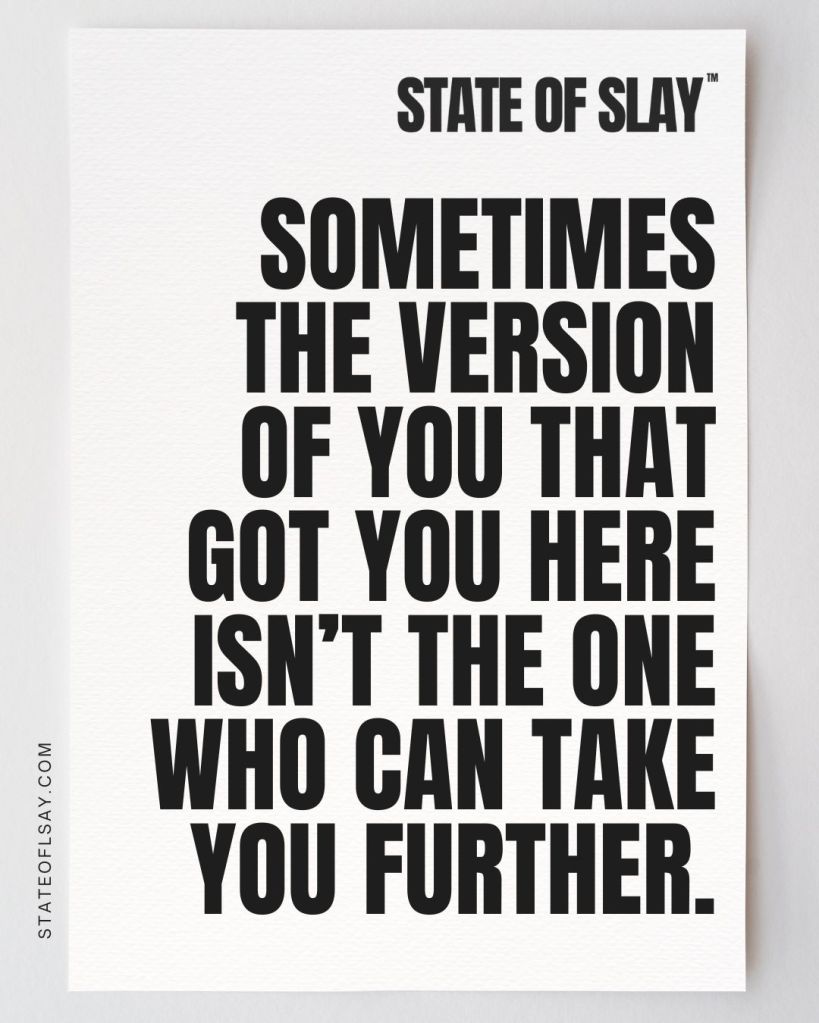
But something can save you in one chapter and limit you in the next.
The independence that once protected you can make it difficult to ask for help.
The walls that kept you safe can prevent anyone from getting close.
The drive that helped you succeed can make rest feel like failure.
The ability to keep everyone happy can leave you disconnected from what you actually want.
The habit of expecting the worst can protect you from disappointment while making it difficult to recognize when something good has arrived.
And that’s where growth gets complicated.
Because we become attached to the qualities that helped us get here.
We call them personality.
We say, That’s just who I am.
But sometimes what feels like identity is actually adaptation.
And eventually, life may ask something different from you.
Not because who you were was wrong.
Because where you’re going requires something new.
Maybe strength now means letting someone help you.
Maybe confidence means admitting you don’t know.
Maybe loyalty means choosing yourself.
Maybe courage means becoming visible after years of making yourself small.
Maybe success means building a life you actually enjoy instead of one that simply looks impressive.
Growth doesn’t always require becoming more.
Sometimes it requires releasing what you no longer need.
That can feel surprisingly uncomfortable.
There is familiarity in our old ways of being, even when they’re exhausting.
We know how to survive with them.
We know who we are inside them.
Changing means entering a space where the old rules no longer apply and the new ones haven’t become natural yet.
You may feel less capable for a while.
Less certain.
Less like yourself.
But perhaps that discomfort isn’t evidence that you’re losing yourself.
Perhaps you’re discovering which parts of you were built for a life you’re no longer living.
You don’t have to reject who you were to become who you’re becoming.
Thank that version of you.
Honor what they carried.
Recognize what they made possible.
Then allow them to put the bags down.
You can appreciate the person who got you this far without asking them to lead you forever.
Because the next chapter may require a version of you who trusts more, receives more, risks differently, speaks more clearly, rests without guilt, or finally chooses according to what you want now.
This is your reminder:
Growth sometimes means retiring the survival skills that have finished their job.
It can remind us to notice what is good instead of constantly focusing on what is missing.
It can bring perspective.
It can help us recognize how much we have, how far we’ve come, and how many people and experiences have contributed to our lives.
But somewhere along the way, many of us learned to turn gratitude into a contract.
If we’re grateful for something, we think we’re supposed to keep wanting it.
If something has been good to us, we’re supposed to remain loyal to it.
If someone gave us an opportunity, we’re supposed to stay.
If a relationship once made us happy, questioning it can feel like a betrayal of everything it gave us.
And if our life looks good from the outside, wanting something different can feel almost embarrassingly ungrateful.
So we start arguing with our own desires.
What more could I possibly want?
Maybe that’s the wrong question.
Because gratitude tells you how you feel about what you’ve received.
It doesn’t necessarily tell you what you want next.
Prefer to listen? The Audio Blog version is available here.
GRATITUDE IS NOT A CONTRACT
Being grateful for something does not obligate you to keep choosing it forever.
You can be grateful for a job that gave you stability when you desperately needed it and eventually realize you want to do something else.
You can appreciate a friendship that carried you through a difficult period and recognize that the relationship has changed.
You can love the home where you built years of memories and still decide it’s time to move.
You can appreciate what someone has done for you without owing them permanent access to your life.
Gratitude acknowledges what something has meant to you.
It doesn’t sign away your right to change.
Sometimes we confuse appreciation with obligation because leaving feels as though we’re declaring that what came before wasn’t good enough.
But that’s not what change means.
Something can have been wonderful.
And you can still be finished with it.
DIFFERENT DOESN’T ALWAYS MEAN BETTER
We often talk about change as though we’re trying to upgrade our lives.
A better job.
A better relationship.
A better home.
A better version of ourselves.
But what if you don’t want better?
What if you simply want different?
That’s an important distinction.
You don’t have to prove that your current life is terrible before you’re allowed to imagine another one.
You don’t have to turn your job into the villain of the story before you’re allowed to leave it.
You don’t have to compile a list of someone’s faults to justify changing the relationship.
You don’t have to discover something wrong with where you are before you can become curious about somewhere else.
Sometimes change isn’t an indictment.
It’s movement.
And sometimes the pressure to prove that the next thing will be better is exactly what keeps us from exploring what might simply be more appropriate for who we are now.
A GOOD THING CAN STILL HAVE AN ENDING
This can be one of the hardest truths to accept.
We’re comfortable leaving things that are obviously bad for us.
At least then we have a reason.
But what about something that was good?
Something that worked?
Something we loved?
We tend to believe good things should continue indefinitely.
So when we begin wanting something different, we search for a problem to explain it.
Maybe nothing went wrong.
Maybe nothing needs to.
Not every ending is evidence of failure.
Some experiences belong to a particular period of our lives.
They give us something.
We give something to them.
And eventually the relationship between who we are and what they provide changes.
We don’t have to rewrite the past to make leaving the present acceptable.
WANTING MORE DOESN’T MEAN YOU HAVE LESS
There is a strange guilt that can come with wanting.
Especially when you know you’re fortunate.
You look around and see things you once hoped for.
Things other people would love to have.
Things you’ve worked hard to create.
And then another desire appears.
Immediately, we can begin policing ourselves.
Shouldn’t this be enough?
Enough is a complicated word.
Because something can be enough and still not be everything you want.
You can have enough love and still want more connection.
You can have enough success and still want a different challenge.
You can have enough security and still crave adventure.
You can have enough stability and still feel curious about change.
Wanting something else doesn’t erase what is already there.
Desire isn’t always evidence of dissatisfaction.
Sometimes it’s information.
BE CAREFUL WHEN GRATITUDE BECOMES GUILT
Gratitude says:
I appreciate this.
Guilt says:
Because I appreciate this, I’m not allowed to leave.
Those are very different things.
Guilt can make us stay long after our desire has gone quiet.
We think about the person who gave us our first chance.
The partner who stood beside us during a difficult time.
The friend who was there when nobody else was.
The family member who sacrificed for us.
And those things matter.
But gratitude becomes unhealthy when it requires you to build the rest of your life around repayment.
You can appreciate what someone gave you without handing them ownership of what comes next.
You can honor someone’s place in your story without giving them control over the remaining chapters.
SOMETIMES THE LIFE YOU WANTED STOPS FITTING
There are things we work incredibly hard to get.
And then we get them.
That can make changing our minds particularly difficult.
Because now we’re not only leaving something behind.
We’re confronting the person we once were who wanted it so badly.
You may have spent years building a career you no longer want.
You may have fought hard for a relationship that no longer feels right.
You may have sacrificed to create a lifestyle that now feels restrictive.
And part of you may think:
After everything I did to get here, how can I possibly walk away?
But your past desire doesn’t get permanent authority over your future.
You made choices based on who you were, what you knew, and what you needed at the time.
You are allowed to receive what you once wanted and eventually discover something about yourself you couldn’t have known before you had it.
That’s not ingratitude.
That’s new information.
YOU DON’T HAVE TO MAKE THE PAST WRONG
Sometimes we make change unnecessarily painful because we think we need to justify it.
So we start editing the story.
We focus on everything that wasn’t perfect.
We magnify frustrations.
We search for reasons something wasn’t actually as good as we thought.
We make people wrong so leaving them feels easier.
But what if you didn’t have to do that?
What if you could say:
That mattered to me.
That was good for me.
I’m glad I experienced it.
And I don’t want it anymore.
There is something freeing about allowing the past to remain good.
You don’t have to destroy your memories to earn permission to create new ones.
GRATITUDE LOOKS BACK. CHOICE LOOKS FORWARD.
Maybe this is the distinction we forget.
Gratitude asks:
What has this given me?
Choice asks:
What do I want from here?
One question doesn’t answer the other.
You can look backward with enormous appreciation while looking forward with completely different desires.
In fact, sometimes gratitude makes change easier because you no longer need to leave angry.
You don’t have to slam the door.
You don’t have to convince yourself that everything was terrible.
You don’t have to carry resentment into whatever comes next.
You can acknowledge what was good.
Take what you learned.
Keep what mattered.
And still go.
YOU ARE ALLOWED TO WANT SOMETHING DIFFERENT
Maybe your life is good.
Maybe there isn’t a dramatic problem to solve.
Maybe nobody did anything wrong.
Maybe you’re not unhappy.
Maybe you simply feel something changing inside you.
We often wait for unhappiness to give us permission to change.
But curiosity can be a reason too.
Growth can be a reason.
A shifting priority can be a reason.
A desire you can’t quite explain can be worth listening to.
You don’t have to immediately act on every feeling or blow up a perfectly good life because you woke up restless on a Tuesday.
But you can listen.
You can get curious.
You can ask yourself what the desire is trying to tell you without immediately shaming yourself for having it.
Because gratitude and desire can occupy the same space.
You can love what was and wonder what’s next.
You can appreciate where you are and imagine somewhere else.
You can be thankful for everything that brought you here without deciding that here is where you must remain.
Sometimes the most respectful thing you can do with a good chapter is let it be good without forcing it to become the entire story.
SLAY REFLECTION
S — SEE WHAT YOU APPRECIATE What in your life are you genuinely grateful for right now?
L — LISTEN TO WHAT YOU WANT Is there something different you’ve been wanting but dismissing because you think you should be satisfied?
A — ASK WHAT’S KEEPING YOU THERE Are you choosing something because you still want it, or because leaving would make you feel guilty or ungrateful?
Y — YOUR NEXT STEP Give yourself permission to explore what you want without requiring yourself to make an immediate decision. Sometimes acknowledging the desire is the first step.
CALL TO ACTION: JOIN THE CONVERSATION
I’d love to hear from you.
Have you ever felt guilty for wanting something different because what you already had was good?
Did you stay because you thought being grateful meant you weren’t allowed to change your mind?
Share your thoughts in the comments. Your experience may help someone else realize they don’t have to make something bad before they’re allowed to choose something different.
And if you know someone who is struggling with wanting change in a life they are genuinely grateful for, send this to them.
Some people are very good at loving us when we’re struggling.
They show up when we’re hurting.
They listen when everything is falling apart.
They encourage us when we’ve lost confidence in ourselves.
They help us survive chapters we weren’t sure we would make it through.
And sometimes, those relationships become deeply important because of it.
But something interesting can happen when we begin to heal.
We stop needing the same reassurance.
We make different choices.
We establish boundaries where there used to be none.
We become more confident.
We start saying no.
We take chances.
We build lives that require us to become people we’ve never been before.
And suddenly, a relationship that felt perfectly comfortable during our struggle begins to feel different.
Not because anyone necessarily did something wrong.
Sometimes relationships are built around a particular dynamic.
One person needs.
The other feels needed.
One person struggles.
The other knows exactly how to support them.
One person doubts themselves.
The other becomes the voice reminding them who they are.
There can be genuine love inside that dynamic.
But healing changes roles.
When you begin trusting yourself, you may stop asking for permission.
When you become stronger, you may stop accepting behavior you once tolerated.
When your world expands, you may have less room for relationships that only worked when you stayed small.
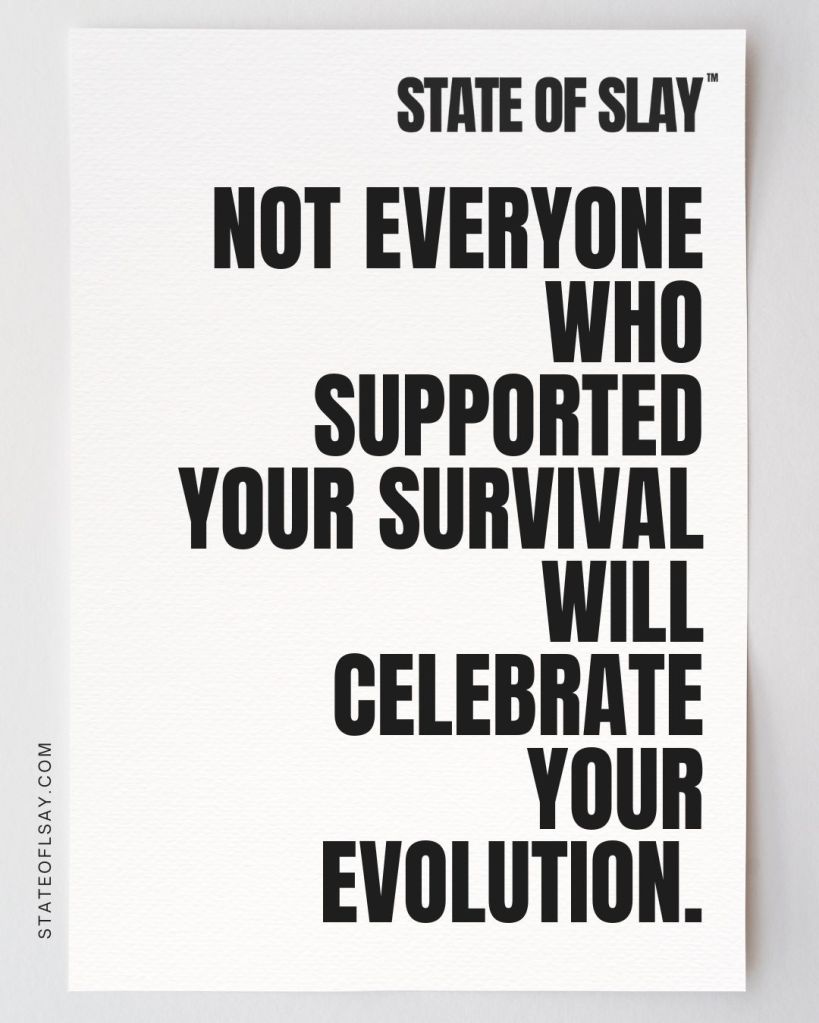
And not everyone will know how to meet you there.
Some people will.
They’ll celebrate the confidence they once helped you find.
They’ll make room for the person you’re becoming.
They’ll allow the relationship to evolve instead of demanding that you return to an older version of yourself.
Others may resist the change.
Your boundaries may suddenly feel like rejection to them.
Your independence may feel like distance.
Your confidence may be interpreted as arrogance.
Your new priorities may be taken personally.
That doesn’t mean your growth is wrong.
And it doesn’t automatically mean they’re bad people.
Sometimes two people can care deeply about each other and still discover that the relationship they built belongs to a version of themselves that no longer exists.
That realization can hurt.
Especially when someone stood beside you during some of your hardest moments.
Gratitude can make us believe we owe people permanent access to us.
We don’t.
You can appreciate who someone was in your life without promising to remain who you were when you needed them.
You can honor what a relationship gave you without forcing it to survive every version of you.
And you can grieve someone who helped you through the darkness but couldn’t follow you into what came next.
This is your reminder:
The people meant to grow with you won’t require you to become smaller so the relationship can stay the same.
We have a habit of reaching one destination and immediately looking for the next one.
The promotion happens, and we start thinking about the next level.
We finally build something we’re proud of, and almost immediately notice everything that still needs work.
We create the stability we once craved, then wonder why life doesn’t feel more exciting.
We reach a milestone and barely give ourselves time to stand there before asking, What’s next?
There’s nothing wrong with wanting more.
Dreams are supposed to evolve as we do. New possibilities appear because we’ve grown enough to see them. What once felt like the destination can eventually become the starting point for something bigger.
But sometimes, in our eagerness to keep moving, we forget to look around.
There may be things in your life today that an earlier version of you desperately wanted.
A relationship you once hoped you would find.
A career you weren’t sure you could build.
A home that once existed only in your imagination.
Peace you fought hard to create.
Boundaries you never thought you’d have the courage to set.
Confidence that arrived so gradually you barely noticed it becoming yours.
What once felt extraordinary can become ordinary simply because we’ve lived with it long enough.
That’s one of the strange things about progress.
We adapt.
The impossible becomes possible. The new becomes familiar. The achievement becomes part of everyday life.
And suddenly, instead of seeing how far we’ve come, we’re focused entirely on the distance still ahead.
Wanting more doesn’t make you ungrateful.
But constantly measuring your life against what you haven’t reached yet can make you overlook everything you already have.
You are allowed to have another dream.
You are allowed to want the next chapter.
You are allowed to keep building, stretching, changing, and imagining something beyond where you are today.
Just don’t let tomorrow steal your appreciation for today.
Every once in a while, turn around.
Look at the ground you’ve covered.
Remember the things you once hoped would happen that eventually did.
Remember the version of you who wondered whether you would ever make it this far.
There will always be another horizon if you keep looking for one.
But life isn’t only happening somewhere ahead of you.
Some of it is happening in the very place you once worked so hard to reach.
This is your reminder:
You don’t have to stop reaching for what’s next to appreciate how much of what you once wanted is already here.
Sometimes the hardest part of being hurt isn’t what happened.
It’s not knowing why.
Why did they do it?
Why did they treat you that way?
Why did they say they loved you and then behave in ways that felt anything but loving?
Why weren’t you enough for them to choose differently?
Why couldn’t they see what they were doing to you?
So we search for answers.
We replay conversations.
We revisit memories.
We analyze their behavior.
We imagine the conversations we wish we could have.
We look for the missing piece that will finally make everything make sense.
Because somewhere along the way, we started believing that understanding why someone hurt us was necessary before we could heal.
It isn’t.
Sometimes there is no explanation that will make what happened feel okay.
Sometimes the person who hurt you doesn’t understand themselves well enough to explain it.
Sometimes they will never take responsibility.
Sometimes the answer you receive creates more questions than it resolves.
And sometimes you will never get an answer at all.
Your healing cannot depend on someone else becoming self-aware.
You don’t have to understand why someone hurt you to heal from what they did.
Prefer to listen? The Audio Blog version is available here.
THE SEARCH FOR WHY CAN BECOME ITS OWN ATTACHMENT
Wanting answers is human.
When something painful happens, our minds naturally try to make sense of it.
We want cause and effect.
We want the pieces to fit together.
We think if we can understand what happened, maybe we can prevent it from ever happening again.
But there comes a point when searching for understanding stops helping us process the experience and starts keeping us connected to it.
You replay the same moments.
Ask the same questions.
Examine the same evidence.
And every road leads back to the same place.
Why?
Eventually, the question itself can become the thing keeping you stuck.
Not because you shouldn’t want answers.
But because your life cannot remain suspended while you wait for them.
SOME PEOPLE CAN’T GIVE YOU AN ANSWER THEY DON’T HAVE THEMSELVES
We often assume the person who hurt us possesses some great explanation for their behavior.
If only they would tell us the truth, everything would finally make sense.
But people don’t always understand why they do what they do.
They act from fear.
Insecurity.
Old wounds.
Patterns they’ve never examined.
Beliefs they inherited and never questioned.
Survival mechanisms they developed years ago.
Sometimes you are asking someone for emotional clarity they simply do not possess.
That doesn’t excuse what they did.
It doesn’t erase accountability.
It simply means you may be waiting for an answer from someone who doesn’t have one.
Their lack of self-awareness does not have to become a roadblock to yours.
AN EXPLANATION DOESN’T UNDO THE EXPERIENCE
Sometimes we imagine there is an explanation powerful enough to change how something felt.
There usually isn’t.
Even if someone tells you exactly why they betrayed you, abandoned you, lied to you, dismissed you, or treated you poorly, you still experienced what you experienced.
The explanation may provide context.
It may create understanding.
It may even inspire compassion.
But it doesn’t rewrite the past.
And understanding someone’s reasons does not require you to minimize their impact.
You can understand that someone was hurting and still acknowledge that they hurt you.
You can recognize their wounds without pretending yours don’t matter.
Explanation and accountability can exist in the same room.
YOU DON’T NEED THEIR SELF-AWARENESS TO FIND YOUR OWN
One of the most frustrating parts of healing can be realizing that you may grow from an experience the other person never examines.
You may spend months questioning your patterns.
Learning.
Reflecting.
Changing.
Meanwhile, they may continue living exactly as they always have.
That can feel deeply unfair.
But your growth does not require their participation.
They don’t have to understand what happened for you to understand what happened to you.
You can recognize what you tolerated.
What you ignored.
What you needed.
What you deserved.
What you will do differently next time.
That knowledge belongs to you.
And nobody has to hand it to you.
CLOSURE ISN’T SOMETHING ANOTHER PERSON OWES YOU
We often picture closure as a conversation.
They finally explain.
They apologize.
They acknowledge everything.
You say what you need to say.
The emotional books balance.
And everyone walks away understanding exactly what happened.
Sometimes that happens.
Often, it doesn’t.
People leave without explaining.
Relationships end with unanswered questions.
Apologies never arrive.
Accountability never comes.
And if closure requires another person to give you something, they continue holding the key to a door you desperately want to close.
Closure can also be something you create.
It can be accepting that you know enough.
You know how the experience made you feel.
You know what it cost you.
You know what you learned.
You know what you will no longer accept.
Sometimes that is enough.
YOU CAN STOP INVESTIGATING THE PAST
There is a difference between processing the past and continually reopening the case.
At some point, you may already have all the information you need.
Maybe you will never understand why they chose someone else.
Why they lied.
Why they changed.
Why they disappeared.
Why they couldn’t love you in the way you needed.
But continuing to search for the missing explanation can quietly keep your attention anchored to a chapter that has already ended.
You don’t have to solve every mystery in your past.
Some questions can remain unanswered.
Some stories can have missing pages.
You can still turn the page.
HEAL WHAT IT DID TO YOU, NOT WHY THEY DID IT
This is where your power returns.
Instead of asking:
Why did they hurt me?
You begin asking:
What did this teach me about myself?
What needs healing now?
What boundaries did I learn I need?
What did I accept that I would no longer accept today?
What part of myself needs compassion?
What do I want to carry forward?
The focus moves away from their psychology and back toward your well-being.
Because their reasons belong to them.
Your healing belongs to you.
And the second one is where your energy can actually create change.
UNDERSTANDING IS NOT THE SAME AS PEACE
Sometimes we believe peace is hiding behind one final answer.
But you can understand every detail of something and still hurt.
And you can have unanswered questions and still find peace.
Peace often comes from acceptance rather than explanation.
Acceptance that it happened.
Acceptance that you cannot change it.
Acceptance that you may never fully understand another person’s choices.
Acceptance that you are still allowed to move forward.
There is freedom in realizing you don’t have to solve the past before you are permitted to have a future.
YOU ARE ALLOWED TO LEAVE SOME QUESTIONS UNANSWERED
There may always be things you wonder about.
That doesn’t mean you haven’t healed.
Healing doesn’t erase curiosity.
It changes your relationship with it.
You can wonder why without needing to know.
You can remember without returning.
You can acknowledge the pain without continuing to live inside it.
And you can reach a point where the unanswered question simply doesn’t have the power it once did.
Maybe you never find out why.
Maybe they never apologize.
Maybe they never understand.
Maybe the story never ends as neatly as you hoped.
You can still heal.
You can still grow.
You can still choose yourself.
You can still build something beautiful from everything you learned.
You do not need someone else to explain your past before you give yourself permission to step into your future.
SLAY REFLECTION
S — See What You’re Still Trying to Solve
What experience from your past are you still trying to understand before allowing yourself to fully move forward?
L — Look at What You Already Know
Even without knowing why someone behaved the way they did, what do you know about how the experience affected you and what it taught you?
A — Accept What May Remain Unanswered
What question might you need to stop requiring an answer to in order to find peace?
Y — Your Next Step
Choose one question you’ve been repeatedly asking about the past and replace it with a question about your future.
Instead of asking, “Why did they do this to me?”
Ask, “What do I need now?”
CALL TO ACTION: JOIN THE CONVERSATION
I’d love to hear from you.
Have you ever had to heal from something without fully understanding why it happened?
What changed when you stopped searching for answers and started focusing on what you needed?
Share your thoughts in the comments. Your experience may help someone else realize they don’t need every answer before they can begin moving forward.
And if you know someone who has been waiting for closure that may never come, send this to them.
Sometimes healing begins when we stop asking the past to explain itself.
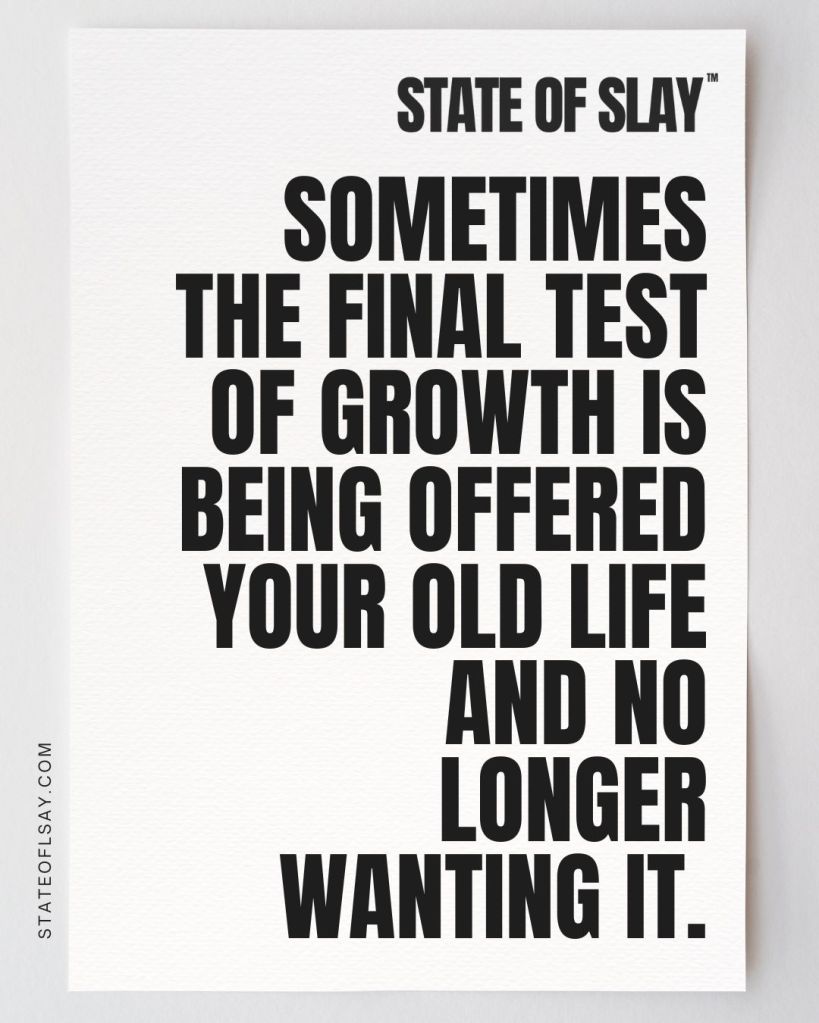
Growth doesn’t always announce itself with a breakthrough.
Sometimes it looks like being offered something you once desperately wanted…
and realizing you don’t want it anymore.
The relationship you once would have gone back to.
The friendship you kept trying to repair.
The opportunity you thought would finally validate you.
The habit that used to make everything feel easier.
The version of yourself that felt comfortable because you already knew how to be them.
There was a time when saying no to those things felt impossible.
Not necessarily because they were good for you, but because they were familiar.
And familiarity can be powerful.
It can make us forget how hard we worked to leave something behind.
It can soften the edges of memories.
It can convince us that going back would be easier than continuing forward.
But growth changes what feels like home.
The things you once chased can stop exciting you.
The behavior you once tolerated can become unacceptable.
The situations you once begged to return can come back around, only for you to realize you’ve become someone who no longer fits inside them.
That realization can be bittersweet.
Because outgrowing something doesn’t mean it never mattered.
It doesn’t mean you regret the person you were.
It simply means you’ve changed.
And one of the clearest signs of that change is when something that once had the power to pull you backward no longer has anything to offer the person you are today.
You don’t have to prove you’ve grown by fighting your past.
Sometimes you prove it simply by no longer being tempted to return to it.
This is your reminder:
Growth isn’t only measured by how far you’ve moved forward. Sometimes it’s recognizing that what once felt impossible to leave behind no longer feels difficult to walk away from.
When the Story You Wanted Isn’t the Story You’re Living
Sometimes we don’t hold on because something is good for us.
We hold on because of what we believed it could become.
The relationship we imagined.
The future we pictured.
The apology we thought would come.
The person we kept believing someone could be.
And hope can be powerful.
But hope can also keep us invested in a version of reality that exists only in our minds.
We explain away what doesn’t fit the story.
We focus on potential instead of patterns.
We give more weight to promises than actions.
We keep waiting for tomorrow to prove that what we’re experiencing today isn’t really the truth.
Because accepting reality can mean grieving more than what we’re losing.
We may also have to grieve everything we thought was coming.
And that can hurt.
But there comes a point when protecting the illusion costs more than facing the truth.
Seeing something clearly doesn’t mean you were foolish for believing in it.
It doesn’t mean the love wasn’t real.
It doesn’t mean the dream wasn’t beautiful.
It simply means you’ve stopped asking reality to become something it has repeatedly shown you it isn’t.
There is freedom in that.
Because once you stop investing your energy in maintaining the story you wanted, you can begin making decisions based on the life you actually have.
You can stop waiting.
Stop explaining.
Stop bargaining with what you already know.
And finally begin moving toward something that doesn’t require you to look away from the truth in order to believe in it.
This is your reminder:
Sometimes the truth hurts because it closes the door on what you hoped could be. But accepting what is gives you the freedom to stop living for what never was.
We have a habit of trying to find meaning in everything that hurts us.
What did this teach me?
How did this make me stronger?
What was I supposed to learn?
Sometimes there is an answer.
Sometimes an experience teaches us about boundaries.
About our own patterns.
About what we need.
About what we will never accept again.
But sometimes the lesson isn’t hidden somewhere inside the pain waiting to be discovered.
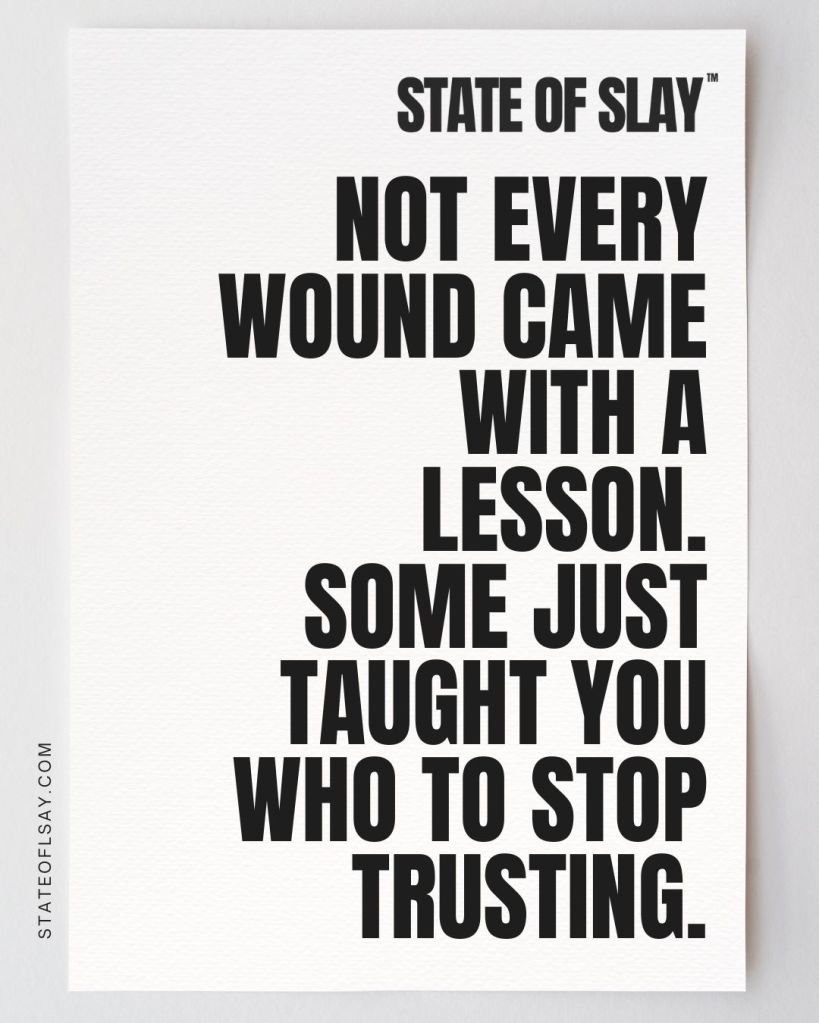
Sometimes someone simply showed you who they were.
They broke your trust.
They betrayed your confidence.
They treated your vulnerability carelessly.
And you don’t have to turn what they did into something beautiful in order to move forward from it.
You don’t have to be grateful for the wound because you eventually learned how to heal it.
You don’t have to convince yourself that everything happened for a reason.
And you don’t have to keep giving someone access to you simply because forgiveness feels more evolved than distance.
Forgiveness and trust are not the same thing.
Healing and reconciliation are not the same thing.
You can release anger without reopening the door.
You can wish someone well without inviting them back into your life.
And you can accept what happened without finding some profound purpose for why it had to happen.
Sometimes growth is simply recognizing that someone has shown you what they’re capable of and believing them.
Not with bitterness.
With clarity.
This is your reminder:You don’t have to find meaning in every wound. Sometimes healing is accepting what happened, trusting what it revealed, and choosing differently from here.