
Black and white image of a woman in profile with her head lowered, representing personal growth, changing relationships, and outgrowing old dynamics.

Slay Say

When Growth Changes the Relationship

Some people are very good at loving us when we’re struggling.

They show up when we’re hurting.

They listen when everything is falling apart.

They encourage us when we’ve lost confidence in ourselves.

They help us survive chapters we weren’t sure we would make it through.

And sometimes, those relationships become deeply important because of it.

But something interesting can happen when we begin to heal.

We stop needing the same reassurance.

We make different choices.

We establish boundaries where there used to be none.

We become more confident.

We start saying no.

We take chances.

We build lives that require us to become people we’ve never been before.

And suddenly, a relationship that felt perfectly comfortable during our struggle begins to feel different.

Not because anyone necessarily did something wrong.

Sometimes relationships are built around a particular dynamic.

One person needs.

The other feels needed.

One person struggles.

The other knows exactly how to support them.

One person doubts themselves.

The other becomes the voice reminding them who they are.

There can be genuine love inside that dynamic.

But healing changes roles.

When you begin trusting yourself, you may stop asking for permission.

When you become stronger, you may stop accepting behavior you once tolerated.

When your world expands, you may have less room for relationships that only worked when you stayed small.

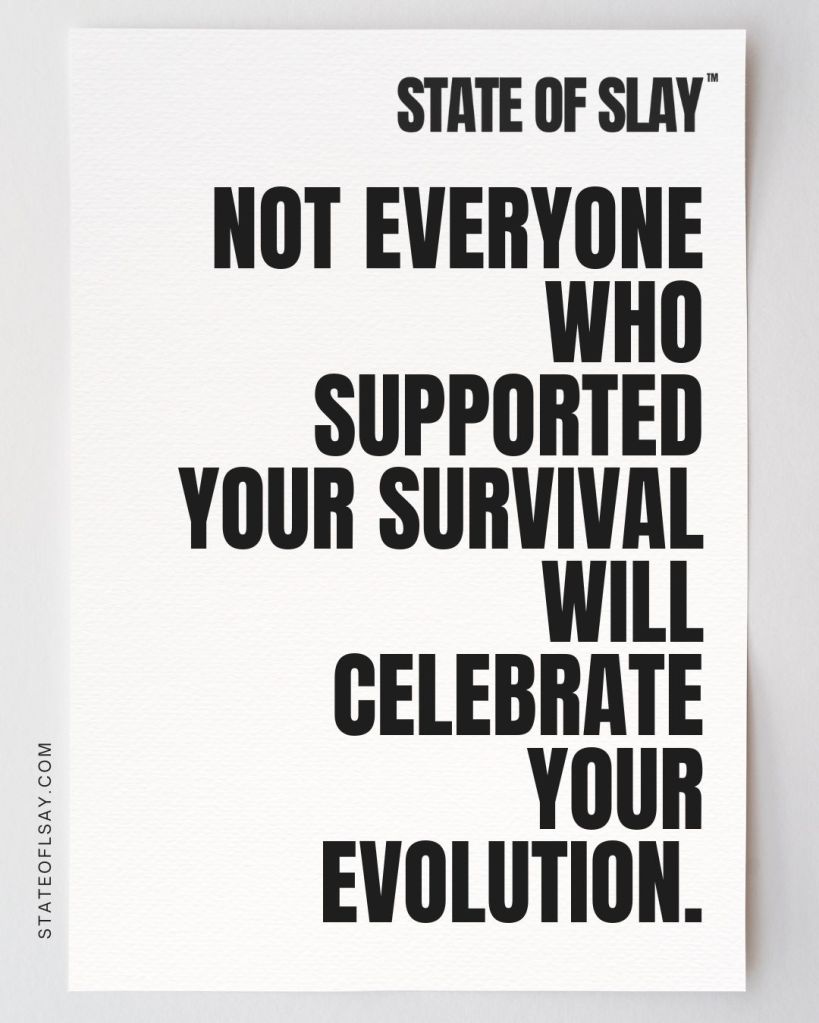
And not everyone will know how to meet you there.

Some people will.

They’ll celebrate the confidence they once helped you find.

They’ll make room for the person you’re becoming.

They’ll allow the relationship to evolve instead of demanding that you return to an older version of yourself.

Others may resist the change.

Your boundaries may suddenly feel like rejection to them.

Your independence may feel like distance.

Your confidence may be interpreted as arrogance.

Your new priorities may be taken personally.

That doesn’t mean your growth is wrong.

And it doesn’t automatically mean they’re bad people.

Sometimes two people can care deeply about each other and still discover that the relationship they built belongs to a version of themselves that no longer exists.

That realization can hurt.

Especially when someone stood beside you during some of your hardest moments.

Gratitude can make us believe we owe people permanent access to us.

We don’t.

You can appreciate who someone was in your life without promising to remain who you were when you needed them.

You can honor what a relationship gave you without forcing it to survive every version of you.

And you can grieve someone who helped you through the darkness but couldn’t follow you into what came next.

This is your reminder:

The people meant to grow with you won’t require you to become smaller so the relationship can stay the same.

Slay on.
People Can’t Always Be Who You Want Them To Be

We all want someone in our lives to just understand us—to show up when we need them, to read our silent pleas, to fill the gaps we feel inside. But here’s a hard truth: nobody is designed to be your everything.

When we expect someone to always be there, always know, always respond—without communication, without boundaries—we set both them and ourselves up for heartbreak.

We must learn the beauty and the burden of loving with grace and owning our own needs.


Prefer to listen? The Audio Blog version is available here.


Expectations vs. Reality

It’s natural to hope others will meet us where we are. We desire connection, validation, support. But expectations—especially unspoken ones—are traps.

When we expect another to always stay ready, even when they’re fighting their own war, we feel let down. When we expect consistent availability, we forget that everyone has their own life, struggles, and limitations.

And when reality falls short of those silent demands, we start to believe they don’t love us enough—when in truth, they might just be human like us.


Learning to Right-Size Our Expectations

The seeds of resentment often come from expecting others to be what we need without telling them. We assume they know. We assume they’ll show up.

But healthy relationships ask for clarity not mind-reading.

  • Let them know how you feel.
  • Ask for what you need.
  • Accept the answer, even if it doesn’t match what you hoped for.

This is how we protect ourselves from disappointment—not by becoming colder—but by learning truth, honest communication, and respect for boundaries.


When They Can’t Be Who You Want

Here’s what I discovered over time:

  • “Can’t” isn’t always about unwillingness—sometimes it’s about capacity.
  • Being unavailable doesn’t always mean they don’t care.
  • When someone can’t be who you want, sometimes they are doing the best they can within their own limits.

I used to take it personally when people couldn’t show up as I needed them to. I thought it meant something was wrong with me—or wrong with them. But I learned to see it differently: I learned to love them where they are, to protect my peace, and to find others with compatible strengths.


You, Not Others, Are Responsible for You

Expecting someone else to complete your emotional puzzle is heavy for both parties.

Your emotional survival is your job. You cannot force someone to be who they’re not. And when you try, you weaken your own foundation.

You deserve people who can be consistent. But until then, you can be your own constant. You can love others without relying on them. You can communicate your needs, accept imperfect love, and continue building your own inner strength.


Staying Open While Protecting Your Peace

How do you navigate this balance without becoming closed off or bitter?

  1. Stay open to love, even when disappointed.
  2. Keep your standards, but don’t demand perfection.
  3. Allow yourself to walk away when love becomes harmful.
  4. Find multiple sources of support, not just one person.
  5. Own your emotional state: don’t outsource it to others.

People Can’t Always Be Who You Want—but You Can Still Love Well

You don’t have to settle for being used, ignored, or repeatedly disappointed. You can adjust your expectations without shutting down your heart. You can ask for what you need, and learn to accept what people can give.

You don’t have to stop loving. You just have to love smarter.


SLAY Reflection

  1. What silent expectations are you placing on someone in your life?
  2. How often do you feel disappointed because someone couldn’t read your mind?
  3. What is a healthy boundary you can express to protect yourself and the relationship?
  4. Who in your life can you rely on without needing them to be everything to you?
  5. How can you practice self-reliance (emotionally) while still staying open?

S – Stop expecting people to read your heart
L – Let them care within their capacity
A – Ask for what you need—don’t demand it
Y – Yield your peace first before expecting someone else to


Call to Action: Join the Conversation

I’d love to hear from you.
Have you ever been hurt by expecting too much from someone—and what did that teach you?
Share your story in the comments. Let’s value honesty over perfection.

And if you know someone who struggles with unmet expectations or carrying disappointment, send this to them.
Sometimes, love begins with understanding limitation.