
A solitary person walking through bright mist, representing personal growth and moving beyond an older version of yourself

Slay Say

When Someone Knows Your Past Better Than Your Present

There are people who can tell stories about you that are completely true.

They remember what you used to believe.

What you tolerated.

What you wanted.

How you reacted.

The mistakes you made.

The choices you swore you’d never make again.

They may know entire chapters of your life by heart.

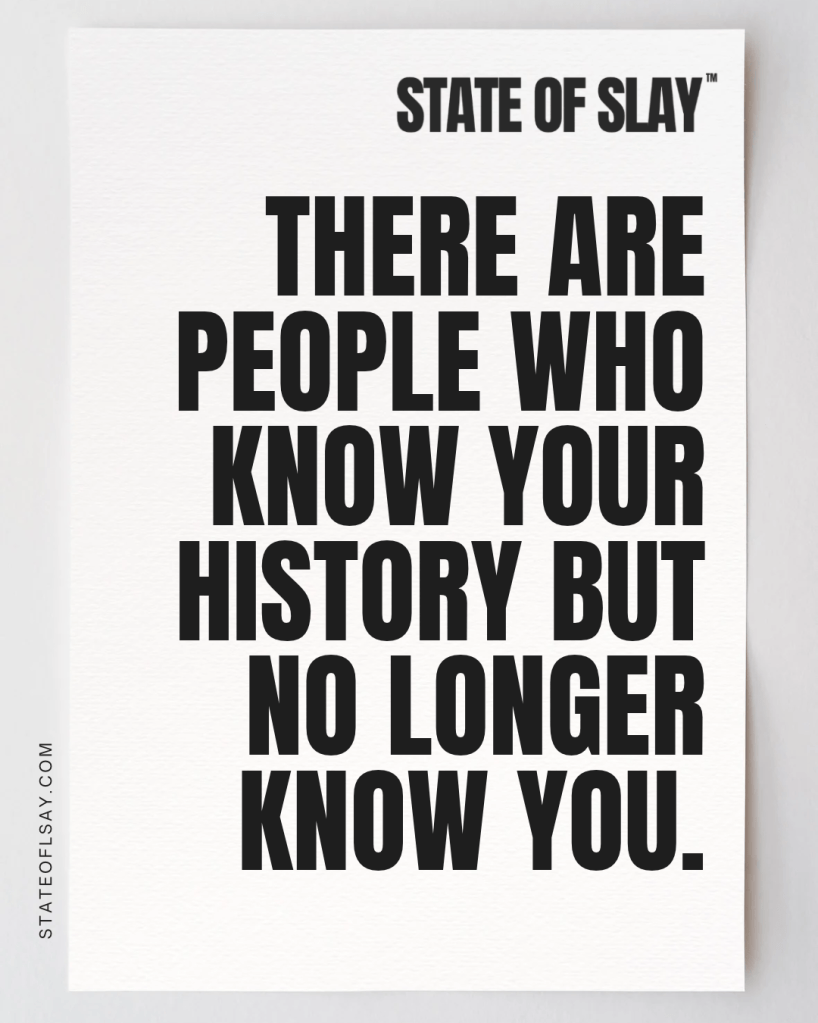
And still not know you anymore.

That can be a strange thing to accept.

Because history creates a certain kind of confidence. When someone has known us for years, especially through formative or difficult periods of our lives, it can feel as though they’ve earned permanent expertise on who we are.

But knowing someone for a long time isn’t the same as continuing to know them.

People change quietly.

We reconsider things.

We heal.

We develop boundaries.

We discover things about ourselves we didn’t understand before.

We stop wanting what we once desperately wanted.

We become less willing to tolerate things we once accepted.

Sometimes the changes are so gradual that the people around us adjust alongside them.

And sometimes they don’t.

Some people keep interacting with the version of us they remember.

They expect the same reactions.

Assign us the same motives.

Bring up old mistakes as evidence of current character.

They may even be surprised, or uncomfortable, when we behave differently than the person they have preserved in their memory.

And it can be tempting to defend ourselves.

To explain how much has changed.

To produce evidence.

To convince them that their information is out of date.

But you don’t owe everyone who knew an earlier version of you a guided tour of the person you’ve become.

Their memories can be accurate and still be outdated.

Both things can be true.

You may have been insecure then and confident now.

You may have been unreliable then and dependable now.

You may have needed approval then and trust yourself now.

You may have made choices you wouldn’t make today.

You may have been someone you’re not particularly proud of being.

Growth doesn’t require pretending those versions of us never existed.

In fact, owning them is part of growth.

But ownership isn’t the same as permanent residence.

Your past can belong to you without continuing to define you.

And someone else remembering who you were doesn’t obligate you to remain recognizable to them.

There will be people who understand your evolution because they’ve continued getting to know you.

There will be others who know your history but missed your becoming.

Let them remember.

You keep becoming.

This is your reminder:

Someone knowing who you were doesn’t give them permanent authority over who you are. Your history is part of your story, but it doesn’t get the final word.

Slay on.
Black and white image of a woman in profile with her head lowered, representing personal growth, changing relationships, and outgrowing old dynamics.

Slay Say

When Growth Changes the Relationship

Some people are very good at loving us when we’re struggling.

They show up when we’re hurting.

They listen when everything is falling apart.

They encourage us when we’ve lost confidence in ourselves.

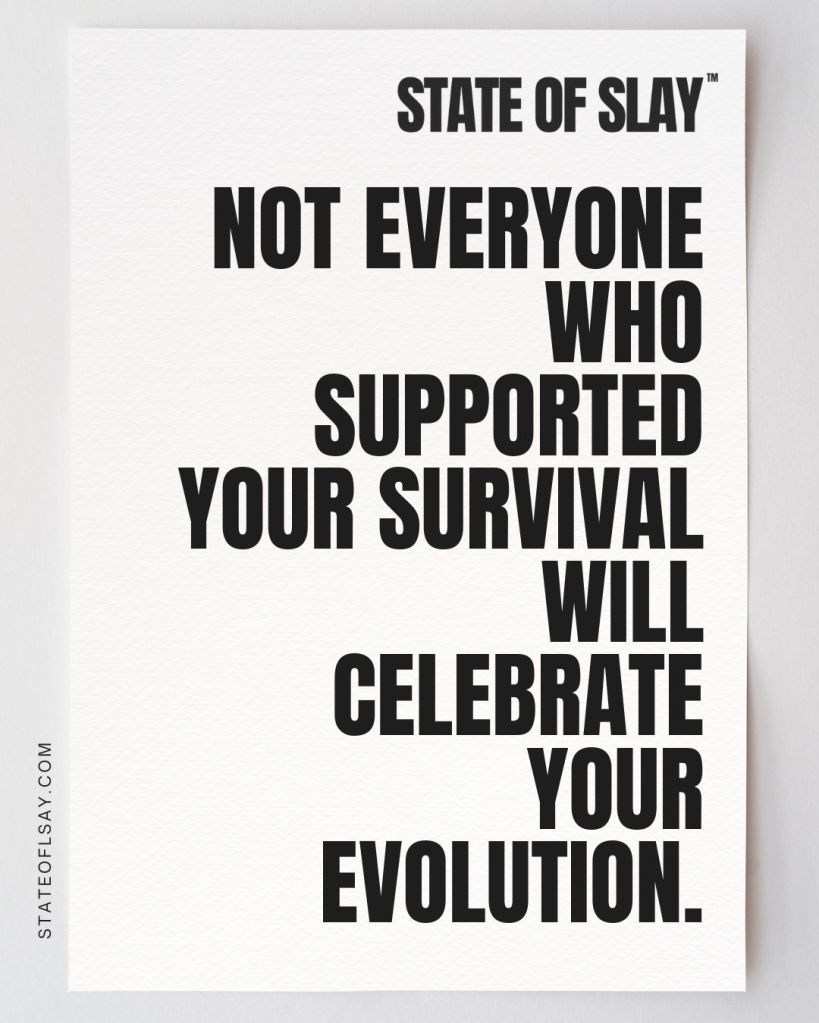
They help us survive chapters we weren’t sure we would make it through.

And sometimes, those relationships become deeply important because of it.

But something interesting can happen when we begin to heal.

We stop needing the same reassurance.

We make different choices.

We establish boundaries where there used to be none.

We become more confident.

We start saying no.

We take chances.

We build lives that require us to become people we’ve never been before.

And suddenly, a relationship that felt perfectly comfortable during our struggle begins to feel different.

Not because anyone necessarily did something wrong.

Sometimes relationships are built around a particular dynamic.

One person needs.

The other feels needed.

One person struggles.

The other knows exactly how to support them.

One person doubts themselves.

The other becomes the voice reminding them who they are.

There can be genuine love inside that dynamic.

But healing changes roles.

When you begin trusting yourself, you may stop asking for permission.

When you become stronger, you may stop accepting behavior you once tolerated.

When your world expands, you may have less room for relationships that only worked when you stayed small.

And not everyone will know how to meet you there.

Some people will.

They’ll celebrate the confidence they once helped you find.

They’ll make room for the person you’re becoming.

They’ll allow the relationship to evolve instead of demanding that you return to an older version of yourself.

Others may resist the change.

Your boundaries may suddenly feel like rejection to them.

Your independence may feel like distance.

Your confidence may be interpreted as arrogance.

Your new priorities may be taken personally.

That doesn’t mean your growth is wrong.

And it doesn’t automatically mean they’re bad people.

Sometimes two people can care deeply about each other and still discover that the relationship they built belongs to a version of themselves that no longer exists.

That realization can hurt.

Especially when someone stood beside you during some of your hardest moments.

Gratitude can make us believe we owe people permanent access to us.

We don’t.

You can appreciate who someone was in your life without promising to remain who you were when you needed them.

You can honor what a relationship gave you without forcing it to survive every version of you.

And you can grieve someone who helped you through the darkness but couldn’t follow you into what came next.

This is your reminder:

The people meant to grow with you won’t require you to become smaller so the relationship can stay the same.

Slay on.