Black and white image of a woman sitting alone with her head lowered, representing difficult moments, self-compassion, and staying on your own side.

Slay Say

Stay on Your Own Side

It’s easy to be kind to yourself when things are going well.

When you’re making progress.

When you feel confident.

When you’re proud of your choices.

When life seems to be confirming that you’re headed in the right direction.

It gets harder when things fall apart.

When you make the mistake you promised yourself you wouldn’t make again.

When you don’t get the opportunity.

When someone leaves.

When you lose your footing.

When you’re struggling with something you thought you had already moved past.

Those are often the moments when our relationship with ourselves changes.

We stop encouraging and start criticizing.

We question everything we’ve accomplished.

We use one difficult moment as evidence that we haven’t grown at all.

We say things to ourselves we would never say to someone we love.

And just when life has already knocked us down, we decide to join in.

But you need yourself then, too.

Especially then.

Self-love isn’t only believing wonderful things about yourself when you feel strong.

It’s staying on your own side when you’re disappointed in yourself.

It’s being able to say, I made a mistake, without turning it into I am a mistake.

It’s letting yourself have a difficult day without deciding you’ve created a difficult life.

It’s remembering that struggling with something again doesn’t erase all the work you’ve done.

None of this means avoiding accountability.

Sometimes loving yourself means having an uncomfortable conversation with yourself.

It means admitting where you were wrong.

Changing your behavior.

Making amends.

Trying again.

But accountability and abandonment are not the same thing.

You don’t have to punish yourself to prove you understand what happened.

You don’t have to withdraw your own compassion until you’ve earned it back.

And you don’t have to become your harshest critic simply because you’re not proud of where you are right now.

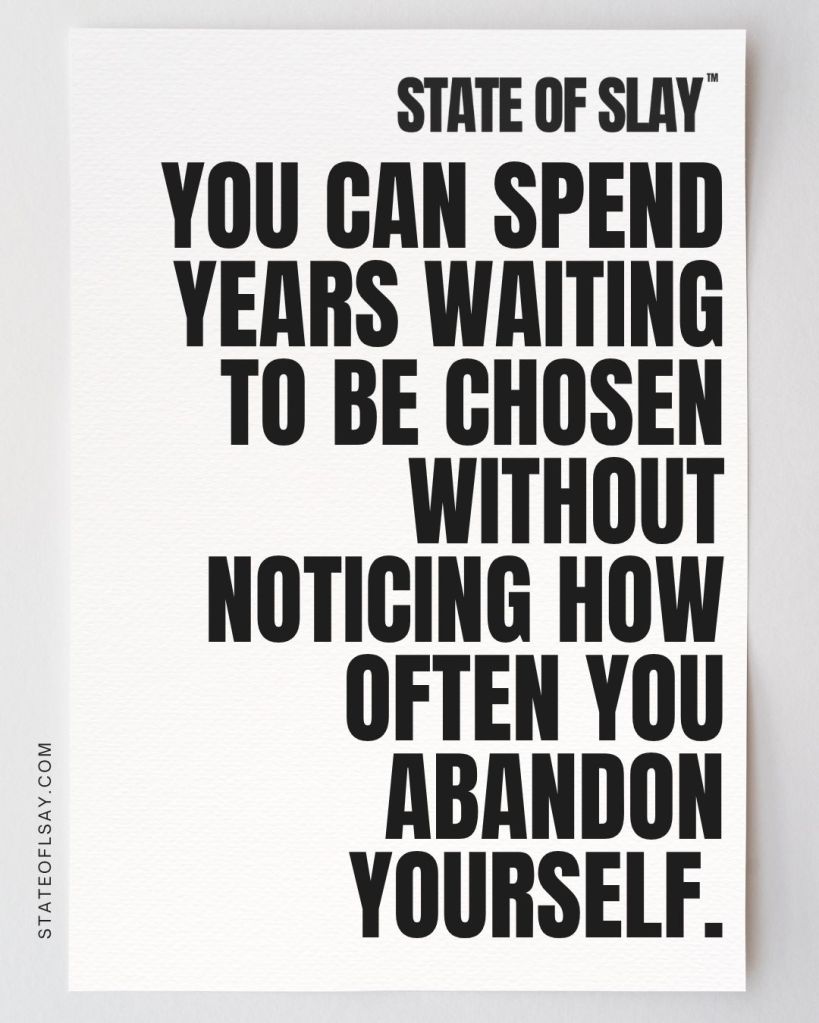
Anyone can stand beside the version of you who has it all together.

The deeper relationship is built with the version who doesn’t.

The one who is scared.

The one who is grieving.

The one who failed.

The one who doesn’t know what happens next.

The one who needs someone to say, We’ll figure this out.

Be that someone.

Because there will be moments in life when you cannot control who stays, what works out, or how quickly things get better.

But you can decide that whatever happens, you will not be another person who leaves you when things get hard.

This is your reminder:

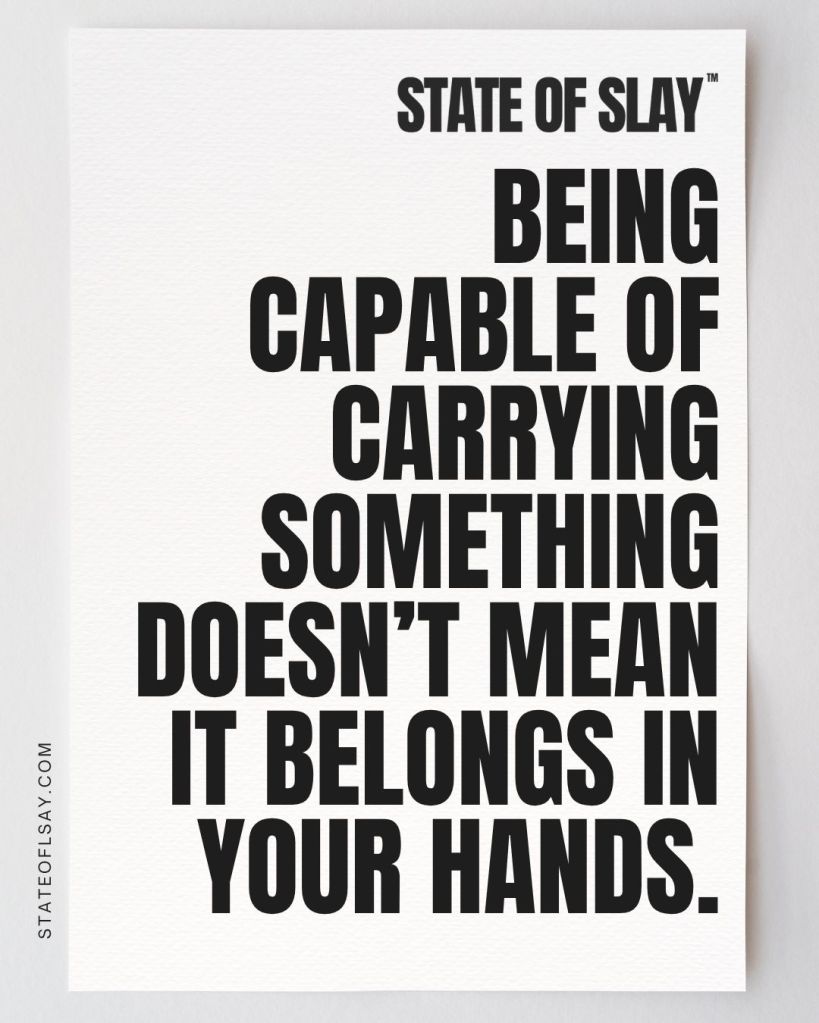
Being there for yourself matters most on the days when you feel least deserving of your own support.

Slay on.

Black and white image of a woman standing alone with her back to the camera, representing self-acceptance, self-compassion, and personal growth.

Slay Say

You Are Not the Enemy

We can be remarkably patient with other people while giving ourselves almost none of the same grace.

We understand when someone else is struggling.

We remind them that change takes time.

We tell them one mistake doesn’t define them.

We encourage them to keep going when they stumble.

But when it’s us?

Suddenly the rules change.

We criticize the body we’re trying to care for.

We shame ourselves for choices we made when we didn’t know better.

We replay mistakes as evidence of everything that’s wrong with us.

We compare ourselves to who we think we should already be.

And somewhere along the way, we convince ourselves that being harder on ourselves will somehow make us better.

If I hate this part of myself enough, maybe I’ll finally change it.

If I criticize myself enough, maybe I’ll become more disciplined.

If I keep reminding myself of everything I’ve done wrong, maybe I won’t do it again.

But shame is a terrible architect.

It may motivate you for a moment, but it’s difficult to build a healthy relationship with yourself on a foundation of constant rejection.

Growth requires accountability.

It requires honesty.

Sometimes it requires admitting that you’ve hurt people, made poor choices, ignored what you knew, or stayed somewhere long after you should have left.

Self-love doesn’t mean pretending those things didn’t happen.

It means refusing to use them as weapons against yourself forever.

There is a difference between saying, I need to change this, and saying, There is something wrong with me.

One creates possibility.

The other turns growth into punishment.

You are allowed to want more for yourself without despising who you are today.

You can work on your habits without hating the person who developed them.

You can regret a decision without turning that regret into an identity.

You can recognize where you’ve fallen short while still believing you are worthy of patience, care, and another chance.

Because the person you’re trying so hard to become is still going to be you.

And if every step toward that person is fueled by rejection, there will always be another flaw to find, another standard to miss, another reason to postpone loving yourself.

Maybe the goal isn’t to finally become good enough to deserve your own love.

Maybe part of becoming who you want to be is learning to stop withholding it.

This is your reminder:

You don’t have to love everything about yourself to stop treating yourself like someone you’re trying to defeat.

Slay on.

Black and white image of a woman in profile with her head lowered, representing personal growth, changing relationships, and outgrowing old dynamics.

Slay Say

When Growth Changes the Relationship

Some people are very good at loving us when we’re struggling.

They show up when we’re hurting.

They listen when everything is falling apart.

They encourage us when we’ve lost confidence in ourselves.

They help us survive chapters we weren’t sure we would make it through.

And sometimes, those relationships become deeply important because of it.

But something interesting can happen when we begin to heal.

We stop needing the same reassurance.

We make different choices.

We establish boundaries where there used to be none.

We become more confident.

We start saying no.

We take chances.

We build lives that require us to become people we’ve never been before.

And suddenly, a relationship that felt perfectly comfortable during our struggle begins to feel different.

Not because anyone necessarily did something wrong.

Sometimes relationships are built around a particular dynamic.

One person needs.

The other feels needed.

One person struggles.

The other knows exactly how to support them.

One person doubts themselves.

The other becomes the voice reminding them who they are.

There can be genuine love inside that dynamic.

But healing changes roles.

When you begin trusting yourself, you may stop asking for permission.

When you become stronger, you may stop accepting behavior you once tolerated.

When your world expands, you may have less room for relationships that only worked when you stayed small.

And not everyone will know how to meet you there.

Some people will.

They’ll celebrate the confidence they once helped you find.

They’ll make room for the person you’re becoming.

They’ll allow the relationship to evolve instead of demanding that you return to an older version of yourself.

Others may resist the change.

Your boundaries may suddenly feel like rejection to them.

Your independence may feel like distance.

Your confidence may be interpreted as arrogance.

Your new priorities may be taken personally.

That doesn’t mean your growth is wrong.

And it doesn’t automatically mean they’re bad people.

Sometimes two people can care deeply about each other and still discover that the relationship they built belongs to a version of themselves that no longer exists.

That realization can hurt.

Especially when someone stood beside you during some of your hardest moments.

Gratitude can make us believe we owe people permanent access to us.

We don’t.

You can appreciate who someone was in your life without promising to remain who you were when you needed them.

You can honor what a relationship gave you without forcing it to survive every version of you.

And you can grieve someone who helped you through the darkness but couldn’t follow you into what came next.

This is your reminder:

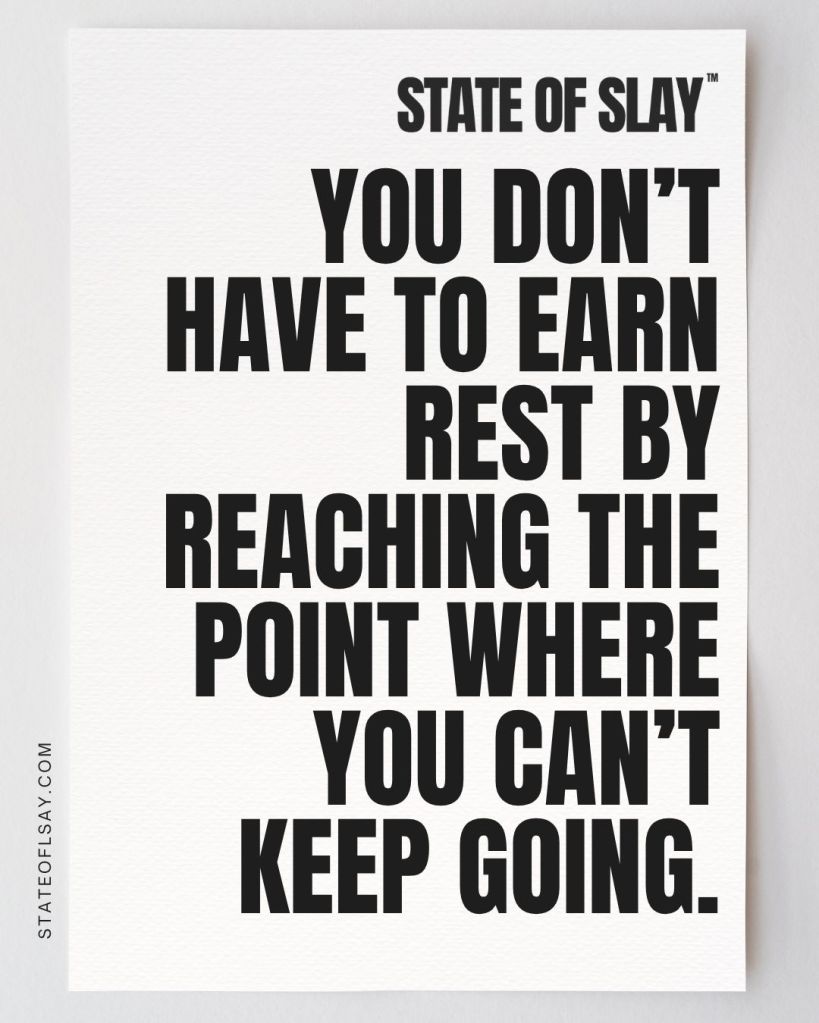
The people meant to grow with you won’t require you to become smaller so the relationship can stay the same.

Slay on.

Black graphic with the quote “If you don’t bet on your own vision, you may spend your life building someone else’s,” about taking risks, believing in yourself, and pursuing your goals.

Slay Say

When You Stop Waiting for Permission to Build Your Own Thing

There is comfort in helping build something that already exists.

Someone else had the idea.

Someone else made the first move.

Someone else decided it was worth the risk.

You can show up, work hard, contribute, and know where the next step is supposed to lead.

There is nothing wrong with that.

Not everyone wants to start a business, create something from nothing, or turn an idea into a life.

But sometimes you do.

And that changes the conversation.

Because when there is something you genuinely want to create, fear has a clever way of disguising itself as practicality.

Maybe later.

When you have more money.

More experience.

More connections.

More confidence.

When the timing is better.

When there is less to lose.

So you wait.

Meanwhile, you keep giving your talent, energy, ideas, and hours to someone else’s vision.

And here’s the uncomfortable part:

The person whose dream you’re helping build probably wasn’t certain either.

They didn’t necessarily have proof it would work.

At some point, they simply decided their idea was worth the possibility that it wouldn’t.

That doesn’t mean you should recklessly abandon stability every time inspiration strikes.

Believing in yourself doesn’t require ignoring reality.

You can plan.

You can prepare.

You can save.

You can start small.

You can build something alongside the life you already have.

The risk doesn’t have to be dramatic to be real.

But eventually, preparation can become another form of postponement.

There comes a moment when the question isn’t whether you’re ready.

It’s whether you’re willing.

Willing to be a beginner.

Willing to make mistakes.

Willing to create something before anyone else understands why you believe in it.

Willing to discover that your first version isn’t the right version.

Willing to risk failing at something that belongs to you instead of succeeding only at things that belong to someone else.

Because your vision doesn’t need certainty from you.

It needs participation.

This is your reminder:

You don’t have to risk everything to bet on yourself. But at some point, you do have to put something on the table.

Slay on.

Black and white photo of a woman standing confidently by a window, representing authenticity, self-acceptance, and choosing to be yourself.

Slay Say

The Price of Being Yourself

There is a cost to becoming more honest about who you are.

Not everyone will like it.

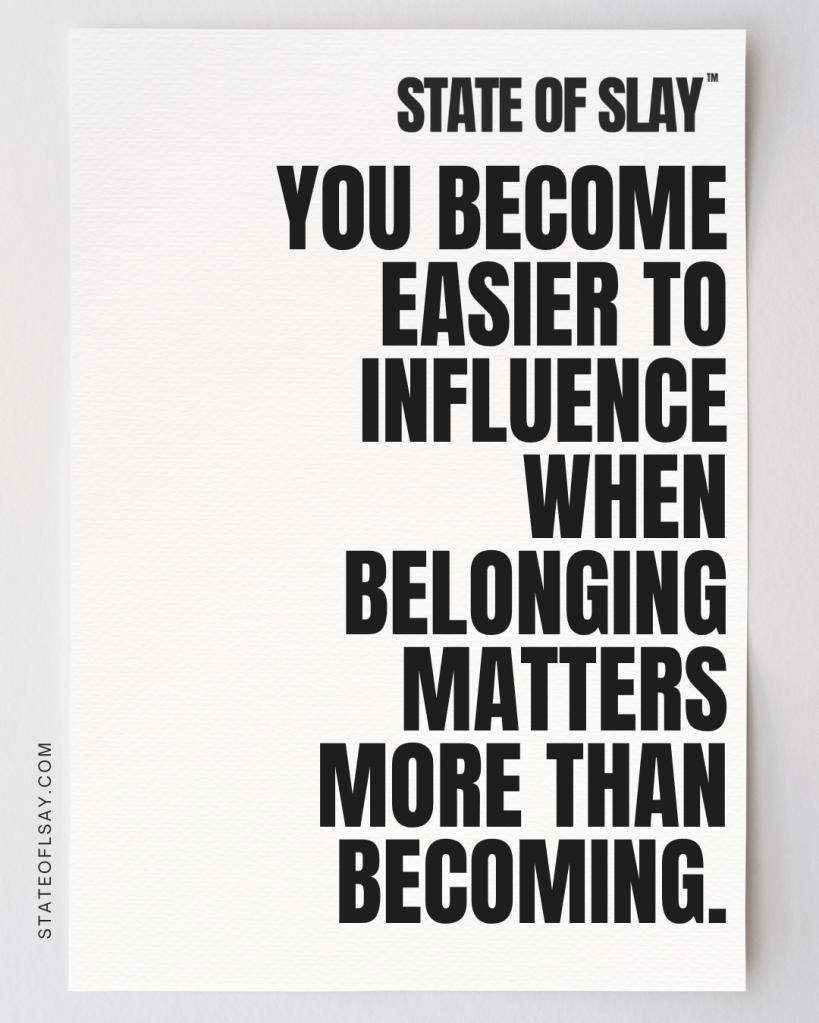
Some people preferred you when you were easier to influence.

When you said yes more often.

When you kept your opinions to yourself.

When you adjusted your needs to make everyone else comfortable.

When belonging mattered more than being yourself.

And when you begin changing those things, you may notice something uncomfortable.

The more authentic you become, the less universally appealing you are.

That isn’t a failure.

It’s what happens when you stop shaping yourself around other people’s expectations.

We spend so much of our lives learning how to be accepted.

We read the room.

We soften our opinions.

We hide the parts of ourselves that might be misunderstood.

We become skilled at anticipating what other people want from us before we’ve even asked ourselves what we want.

And sometimes we get the approval we were looking for.

But it comes at a price.

Because approval doesn’t feel nearly as good when you know it was given to a version of yourself you had to create to receive it.

Authenticity changes the equation.

It asks you to risk being misunderstood.

To let someone disagree with you without immediately questioning yourself.

To accept that some people may walk away when you stop being who they expected you to be.

And to understand that losing approval is not the same as losing your worth.

You won’t be for everyone.

You were never supposed to be.

The goal isn’t to become someone nobody can criticize, reject, or misunderstand.

It’s to become someone you no longer have to abandon in order to belong.

This is your reminder:

The approval you lose by being yourself was never worth the parts of you it required you to hide.

Slay on.

Black and white photo of a person holding up their hand, representing boundaries, disengagement, and protecting your energy.

Slay Say

Stop Feeding What You Want to Leave Behind

We spend a lot of energy fighting things we wish had less power over us.

Other people’s opinions.

Drama we never wanted to be part of.

Arguments that have already said everything there is to say.

Resentments we keep replaying.

People who know exactly how to get a reaction from us.

Even thoughts we’ve decided we don’t want to believe anymore.

We tell ourselves we’re trying to get rid of them.

But every time we revisit them, react to them, argue with them, or give them another hour of our attention, we’re keeping them alive.

Not everything needs a confrontation.

Not every comment needs a response.

Not every misunderstanding needs to be corrected.

Not every invitation into chaos needs to be accepted.

Sometimes we mistake engagement for control.

We think if we can explain ourselves one more time, prove our point, understand why something happened, or finally get the last word, we’ll be able to put it down.

But attention is energy.

And whatever continually receives yours gets space in your life.

That doesn’t mean ignoring problems that need to be addressed.

It means learning to recognize the difference between something that requires action and something that survives because you keep participating in it.

There is power in deciding you’re done.

Done checking.

Done explaining.

Done reacting.

Done giving something access to your peace simply because it knows how to get your attention.

You don’t always have to win the battle.

Sometimes you simply have to stop showing up for it.

This is your reminder:

Be intentional about what receives your energy. What you stop feeding eventually has to learn how to exist without you.

Slay on.

Black and white image of a person standing in a dark tunnel, representing perseverance, failure, and continuing forward after setbacks.

Slay Say

The Story Isn’t Over

Failure has a way of feeling permanent when you’re standing in the middle of it.

The opportunity didn’t happen.

The relationship ended.

The business didn’t work.

The dream you chased led somewhere you never expected.

And suddenly, one disappointing chapter starts to feel like the conclusion.

But failure isn’t an ending.

It’s an event.

A moment.

A result.

Sometimes it’s information.

Sometimes it’s redirection.

Sometimes it’s simply proof that you were willing to try something without knowing how it would turn out.

What makes failure so powerful isn’t always what happened.

It’s what we decide it means.

We tell ourselves we’re not talented enough.

Not smart enough.

Not ready.

Not meant for it.

We turn one outcome into a prediction about every outcome that could possibly follow.

And that’s when failure begins writing more of our story than it deserves.

The people who eventually get where they’re going aren’t necessarily the ones who fail less.

They’re often the ones who refuse to treat failure like a verdict.

They learn.

They adjust.

They begin again.

Sometimes differently.

Sometimes wiser.

Sometimes still scared.

But they keep writing.

You don’t need to pretend failure doesn’t hurt.

You don’t need to immediately find the lesson or turn disappointment into gratitude.

You can be frustrated.

You can grieve what didn’t happen.

You can take a minute to figure out what comes next.

Just don’t confuse a difficult chapter with the end of the book.

There are pages you haven’t lived yet.

Opportunities you can’t see yet.

Versions of yourself you haven’t met yet.

And none of them can exist if you let one moment decide how the entire story ends.

This is your reminder:

A setback can change the direction of your story without deciding how it ends. Keep writing.

Slay on.

Black and white photo of a person sitting by a window, representing growth, reflection, and moving on from the past.

Slay Say

When the Past Comes Knocking

Growth doesn’t always announce itself with a breakthrough.

Sometimes it looks like being offered something you once desperately wanted…

and realizing you don’t want it anymore.

The relationship you once would have gone back to.

The friendship you kept trying to repair.

The opportunity you thought would finally validate you.

The habit that used to make everything feel easier.

The version of yourself that felt comfortable because you already knew how to be them.

There was a time when saying no to those things felt impossible.

Not necessarily because they were good for you, but because they were familiar.

And familiarity can be powerful.

It can make us forget how hard we worked to leave something behind.

It can soften the edges of memories.

It can convince us that going back would be easier than continuing forward.

But growth changes what feels like home.

The things you once chased can stop exciting you.

The behavior you once tolerated can become unacceptable.

The situations you once begged to return can come back around, only for you to realize you’ve become someone who no longer fits inside them.

That realization can be bittersweet.

Because outgrowing something doesn’t mean it never mattered.

It doesn’t mean you regret the person you were.

It simply means you’ve changed.

And one of the clearest signs of that change is when something that once had the power to pull you backward no longer has anything to offer the person you are today.

You don’t have to prove you’ve grown by fighting your past.

Sometimes you prove it simply by no longer being tempted to return to it.

This is your reminder:

Growth isn’t only measured by how far you’ve moved forward. Sometimes it’s recognizing that what once felt impossible to leave behind no longer feels difficult to walk away from.

Slay on.

Slay Say

When the Story You Wanted Isn’t the Story You’re Living

Sometimes we don’t hold on because something is good for us.

We hold on because of what we believed it could become.

The relationship we imagined.

The future we pictured.

The apology we thought would come.

The person we kept believing someone could be.

And hope can be powerful.

But hope can also keep us invested in a version of reality that exists only in our minds.

We explain away what doesn’t fit the story.

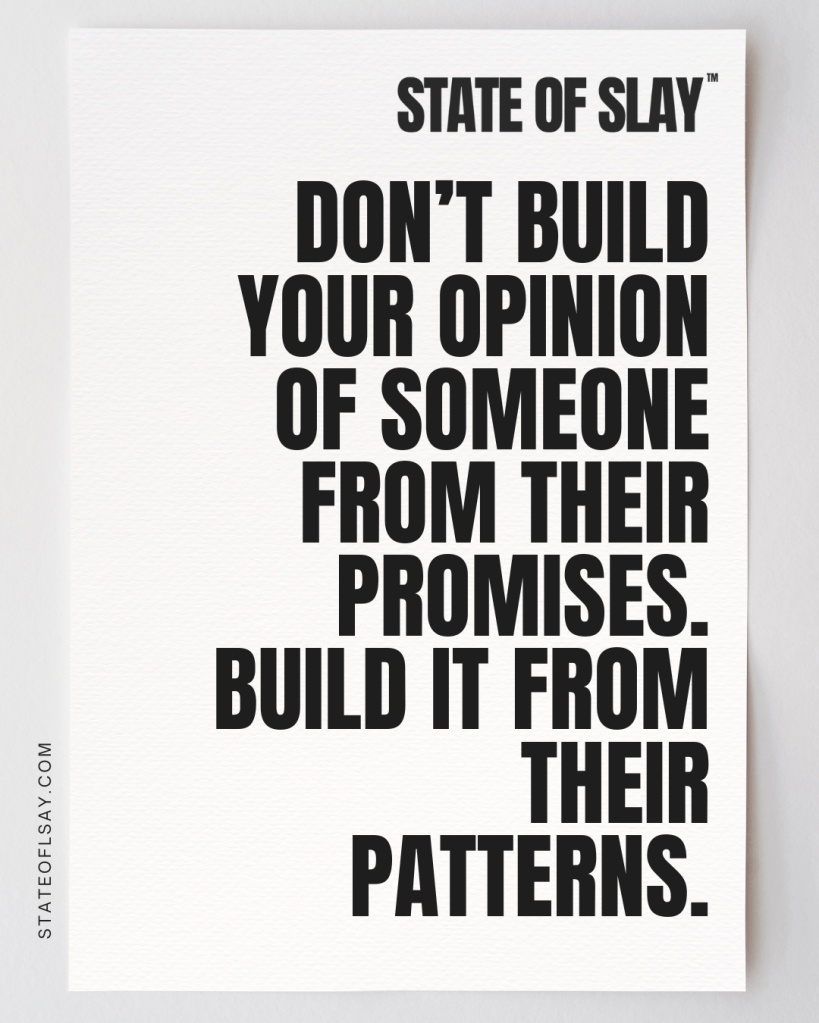
We focus on potential instead of patterns.

We give more weight to promises than actions.

We keep waiting for tomorrow to prove that what we’re experiencing today isn’t really the truth.

Because accepting reality can mean grieving more than what we’re losing.

We may also have to grieve everything we thought was coming.

And that can hurt.

But there comes a point when protecting the illusion costs more than facing the truth.

Seeing something clearly doesn’t mean you were foolish for believing in it.

It doesn’t mean the love wasn’t real.

It doesn’t mean the dream wasn’t beautiful.

It simply means you’ve stopped asking reality to become something it has repeatedly shown you it isn’t.

There is freedom in that.

Because once you stop investing your energy in maintaining the story you wanted, you can begin making decisions based on the life you actually have.

You can stop waiting.

Stop explaining.

Stop bargaining with what you already know.

And finally begin moving toward something that doesn’t require you to look away from the truth in order to believe in it.

This is your reminder:

Sometimes the truth hurts because it closes the door on what you hoped could be. But accepting what is gives you the freedom to stop living for what never was.

Slay on.

Slay Say

Not Every Hurt Deserves a Silver Lining

We have a habit of trying to find meaning in everything that hurts us.

What did this teach me?

How did this make me stronger?

What was I supposed to learn?

Sometimes there is an answer.

Sometimes an experience teaches us about boundaries.

About our own patterns.

About what we need.

About what we will never accept again.

But sometimes the lesson isn’t hidden somewhere inside the pain waiting to be discovered.

Sometimes someone simply showed you who they were.

They broke your trust.

They betrayed your confidence.

They treated your vulnerability carelessly.

And you don’t have to turn what they did into something beautiful in order to move forward from it.

You don’t have to be grateful for the wound because you eventually learned how to heal it.

You don’t have to convince yourself that everything happened for a reason.

And you don’t have to keep giving someone access to you simply because forgiveness feels more evolved than distance.

Forgiveness and trust are not the same thing.

Healing and reconciliation are not the same thing.

You can release anger without reopening the door.

You can wish someone well without inviting them back into your life.

And you can accept what happened without finding some profound purpose for why it had to happen.

Sometimes growth is simply recognizing that someone has shown you what they’re capable of and believing them.

Not with bitterness.

With clarity.

This is your reminder: You don’t have to find meaning in every wound. Sometimes healing is accepting what happened, trusting what it revealed, and choosing differently from here.

Slay on.