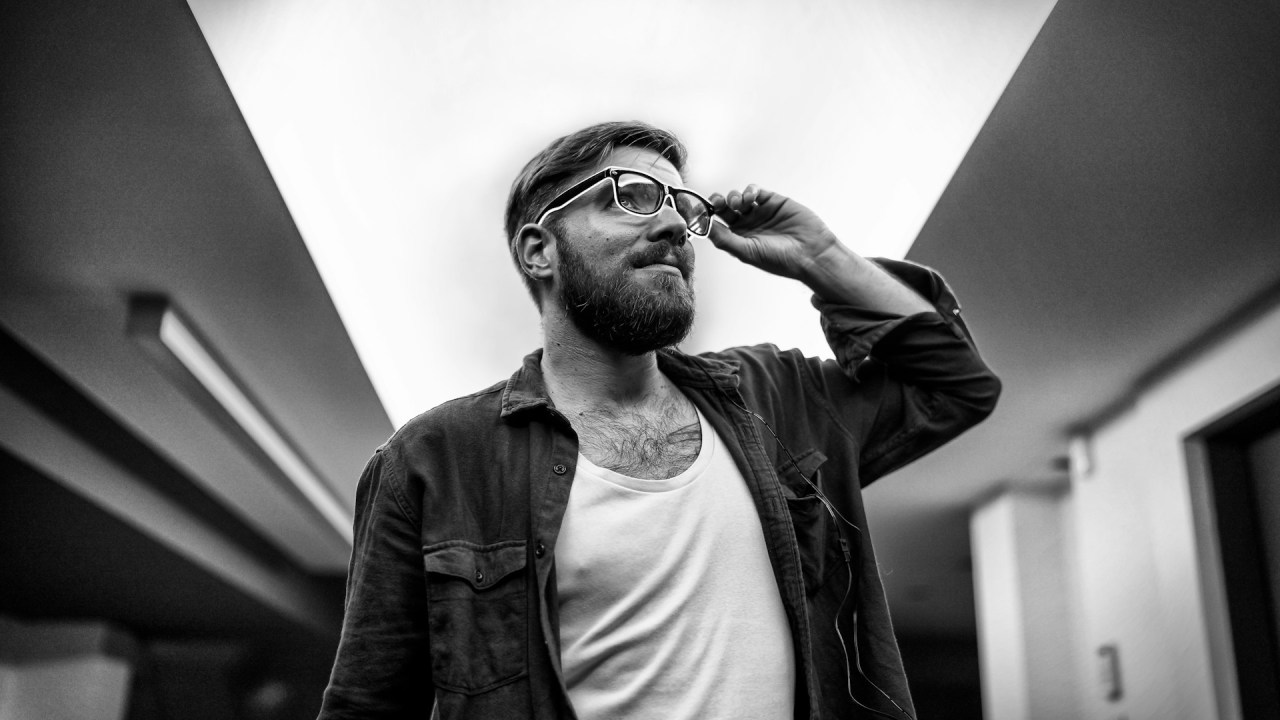
Man standing outdoors with his hand on his head, reflecting uncertainty and the confidence it can take to reconsider a decision.

Sometimes Confidence Looks Like Changing Your Mind

We tend to admire people who seem certain.

They know what they believe.

They know what they want.

They make a decision and stand behind it.

There is something reassuring about certainty. It looks strong. Decisive. Confident.

Changing your mind can look like the opposite.

We worry it makes us inconsistent.

Indecisive.

Unreliable.

Wrong.

So sometimes we keep defending a decision long after we have stopped believing in it, simply because we don’t want to become the person who changed their mind.

But confidence isn’t always standing by your decision.

Sometimes it’s trusting yourself enough to make a different one.


Prefer to listen? The Audio Blog version is available here.


WE CONFUSE CONFIDENCE WITH CERTAINTY

Certainty says, I know.

Confidence can say, I don’t know anymore.

Those are very different things.

Certainty is about the answer.

Confidence is about your ability to handle what happens when the answer changes.

It takes confidence to admit that something you once believed no longer makes sense to you.

It takes confidence to reconsider a decision you once defended.

It takes confidence to acknowledge that the thing you wanted five years ago may not be what you want today.

And it takes confidence to let new information matter.

There is comfort in certainty because it allows us to stop questioning.

Confidence doesn’t always give us that comfort.

Sometimes confidence asks us to question again.


YOU MADE THAT DECISION WITH WHO YOU WERE THEN

Every decision we make happens at a particular moment in our lives.

You chose with the information you had.

The experience you had.

The priorities you had.

The needs you had.

The person you were.

Then life continued.

You learned things.

You experienced things.

Your priorities shifted.

Maybe you became more aware of what you need.

Maybe something you thought would make you happy didn’t.

Maybe something you once feared no longer scares you.

Maybe you simply changed.

That doesn’t automatically mean the original decision was wrong.

It may have been exactly right for who you were at the time.

We sometimes judge our past choices using information our past selves couldn’t possibly have had.

That’s not fair.

You don’t need to put your former self on trial just because your present self has reached a different conclusion.


SOMETIMES WE’RE DEFENDING OUR IDENTITY, NOT OUR DECISION

This is where changing our mind gets complicated.

Because sometimes a decision becomes part of how we see ourselves.

I’m the person who would never do that.

I’ve always believed this.

I’ve wanted this my whole life.

I’m not someone who quits.

Once I make a decision, I stick to it.

Now changing your mind isn’t just about changing a decision.

It can feel like changing who you are.

So we defend the choice because we’re protecting the identity attached to it.

But you are not required to remain loyal to every version of yourself you’ve ever been.

Growth would be impossible if you were.

Who you are isn’t proven by never changing.

Sometimes who you are becomes clearer because you were willing to.


WE DON’T LIKE LOOKING INCONSISTENT

Changing your mind privately can be difficult.

Changing it after you’ve told everyone what you were going to do can be much harder.

You announced the plan.

You defended the relationship.

You took the job.

You moved across the country.

You told everyone this was your dream.

You argued your position.

And now?

You’re not so sure.

Suddenly the decision isn’t happening only inside you.

You imagine the questions.

What happened?

I thought you wanted this.

Didn’t you say you’d never…?

So you were wrong?

That last one can sting.

But being afraid of looking wrong can keep us committed to something that no longer feels right.

You don’t have to keep making a decision just because other people remember you making it.


NEW INFORMATION IS SUPPOSED TO MATTER

Imagine making every decision in your life using only what you knew ten years ago.

It would be absurd.

And yet emotionally, we sometimes expect ourselves to do exactly that.

We treat changing our mind as evidence that we couldn’t be trusted the first time.

But good decisions depend on information.

When the information changes, the decision may need to change too.

You may learn something about a person you didn’t know before.

You may discover that a career isn’t what you imagined.

You may understand yourself differently.

You may recognize a cost you couldn’t see when you began.

You may encounter an opportunity you didn’t know existed.

If none of that is allowed to influence you, then you aren’t being consistent.

You’re being stuck.

New information doesn’t make your old decision foolish.

It gives you an opportunity to make a better-informed decision now.


THERE IS A DIFFERENCE BETWEEN CHANGING YOUR MIND AND BREAKING YOUR WORD

This distinction matters.

Changing your mind doesn’t mean commitments are meaningless.

It doesn’t mean we should abandon people whenever something becomes uncomfortable.

It doesn’t mean promises disappear the moment our feelings change.

Our decisions affect other people.

Our commitments matter.

Sometimes changing course requires a difficult conversation, taking responsibility, making amends, or honoring an obligation before moving forward.

Confidence isn’t carelessness.

But responsibility and permanent self-denial aren’t the same thing.

You can take responsibility for the consequences of changing your mind without believing you must remain trapped by every decision you’ve ever made.

Integrity isn’t never changing.

Integrity is being honest about what has changed and responsible about what you do next.


THE TIME YOU’VE ALREADY SPENT CAN KEEP YOU STUCK

Sometimes we don’t want to change our mind because of everything we’ve already invested.

Years.

Money.

Work.

Energy.

Sacrifice.

Reputation.

We think, I can’t change direction now. Look at everything I’ve put into this.

So we keep investing.

Not necessarily because we still want what we’re pursuing, but because walking away would force us to accept that everything we’ve already invested won’t produce the future we imagined.

But the time you’ve already spent is gone whether you continue or not.

The more useful question is:

Knowing what I know today, would I choose this again?

If the answer is no, that deserves your attention.

Past investment can explain why leaving is difficult.

It doesn’t automatically make staying the right choice.


CHANGING YOUR MIND DOESN’T ALWAYS MEAN YOU WERE WRONG

Sometimes two decisions can be right at two different times.

You can love a career and later want another one.

You can believe a relationship is right for you and later realize you’ve grown apart.

You can build a dream and eventually want a different dream.

You can hold a belief sincerely until experience gives you a different perspective.

Life isn’t a contract requiring us to remain unchanged.

The person who made the first decision isn’t necessarily at war with the person making the second.

Maybe one led to the other.

Maybe you needed the first experience to understand what you know now.

Maybe changing your mind isn’t evidence that you took the wrong road.

Maybe it’s evidence that you kept paying attention while you were on it.


NOT EVERY CHANGE OF MIND IS GROWTH

Of course, changing your mind isn’t automatically courageous.

Sometimes we change direction because we’re afraid.

Because something became difficult.

Because we want immediate relief.

Because someone else’s opinion became louder than our own.

Because we’re avoiding discomfort that might actually be worth moving through.

That’s why the question isn’t simply:

Do I want to change my mind?

It’s also:

Why?

Am I responding to new information?

Have my values changed?

Do I understand myself differently?

Or am I running from something because staying with it requires courage?

Self-trust doesn’t mean assuming every impulse is wisdom.

It means being willing to examine yourself without needing the answer to come out a certain way.


CONFIDENCE CAN SURVIVE BEING WRONG

Perhaps this is what makes changing our minds so uncomfortable.

It asks us to make room for the possibility that we were wrong.

And many of us learned to experience being wrong as something much bigger than simply being mistaken.

Being wrong can feel embarrassing.

Weak.

Exposing.

It can make us question our judgment.

So we defend old decisions because defending them feels safer than admitting we might choose differently now.

But confidence doesn’t come from always being right.

It comes from knowing that being wrong won’t destroy your relationship with yourself.

You can make a mistake and learn.

You can misjudge something and adjust.

You can choose something sincerely and later choose again.

You can survive the sentence:

I changed my mind.


SOMETIMES CONFIDENCE LOOKS LIKE CHANGING YOUR MIND

There will always be people who prefer the version of you they already understand.

Your consistency may make them comfortable.

Your predictability may make things easier.

But your life cannot be built entirely around remaining recognizable to everyone else.

You are going to learn.

You are going to change.

You are going to discover things you couldn’t have known before.

And sometimes that means making a different choice.

You don’t have to insult who you were to honor who you are now.

You don’t have to call an old dream foolish because you have a new one.

You don’t have to pretend you never believed something simply because you no longer believe it.

And you don’t have to keep walking in a direction just to prove that you were confident when you chose it.

Sometimes confidence is standing your ground.

Sometimes confidence is realizing that it isn’t your ground anymore.


SLAY REFLECTION

S — See what you’re still defending
Is there a decision, belief, goal, or commitment you’re defending because you still believe in it, or because changing your mind feels uncomfortable?

L — Look at what has changed
What do you know now that you didn’t know when you made the original decision? Has your experience, your situation, or your understanding of yourself changed?

A — Ask what you would choose today
If you weren’t trying to justify the past or protect yourself from other people’s opinions, would you make the same choice now?

Y — You are allowed to choose again
Give yourself permission to reconsider one thing without forcing yourself to immediately change it. Sometimes simply allowing the question creates the clarity you’ve been avoiding.


CALL TO ACTION: JOIN THE CONVERSATION

I’d love to hear from you.

Have you ever changed your mind about something you once felt completely certain about?

Was the harder part making the new decision, or allowing yourself to admit that you wanted something different?

Share your thoughts in the comments. Your experience may help someone else realize that changing their mind doesn’t necessarily mean they failed to trust themselves. Sometimes it means they’ve learned enough to trust themselves differently.

And if you know someone who is holding onto an old decision simply because they’re afraid of looking inconsistent, send this to them.

You don’t always prove your confidence by refusing to move.

Sometimes you prove it by knowing when you’re allowed to choose again.

Sometimes, all we need is a nudge.

Black and white image of a person standing in an open doorway surrounded by darkness, representing choice, possibility, and discernment.

Slay Say

Not Every Door Needs to Be Opened

We’re often told to keep our options open.

Take the chance.

Say yes.

See what happens.

Give it a shot because you might regret it if you don’t.

And sometimes that advice is exactly what we need.

Fear can keep us standing safely outside experiences that could change our lives. Growth often requires uncertainty, and there are opportunities we would never discover if we waited until we knew exactly how everything would turn out.

But not every hesitation is fear.

Sometimes it’s discernment.

There are moments when we already have enough information to know that something probably isn’t right for us.

The relationship that requires you to overlook things you know matter to you.

The opportunity that looks impressive but asks you to sacrifice something you’re no longer willing to give up.

The person whose potential keeps tempting you to ignore their pattern.

The invitation you keep trying to get excited about because everyone else thinks you should be.

The situation you’ve already experienced in enough different forms to recognize where it leads.

You don’t always have to go all the way to the ending to know you don’t want the story.

That can be difficult to trust.

Especially if you’ve spent years believing that saying no means you’re closed-minded, afraid, negative, or unwilling to take risks.

So you override yourself.

You give things chances you never really wanted to give.

You stay curious long after your instincts have given you an answer.

You tell yourself you should at least try.

And sometimes you end up exactly where you suspected you would, wondering why you needed the experience to confirm what you already knew.

Experience is a powerful teacher.

But it isn’t the only teacher.

So is observation.

So is history.

So is self-awareness.

So is everything you learned the last time you ignored yourself.

Growth isn’t only becoming brave enough to take more chances.

Sometimes it’s becoming wise enough to know which chances are worth taking.

That doesn’t mean you’ll always get it right.

There will be opportunities you decline that might have turned into something wonderful.

There will be doors you walk past without ever knowing exactly what was behind them.

That’s part of making choices.

Every yes closes something.

Every no does too.

A meaningful life isn’t built by experiencing every possible version of it.

It’s built by learning which possibilities deserve your time, energy, trust, and attention.

You don’t have to date someone just because there might be something there.

You don’t have to accept an opportunity simply because it’s available.

You don’t have to revisit something you already know doesn’t work for you just to make absolutely certain.

And you don’t have to collect another scar to prove you learned from the last one.

Sometimes wisdom looks less dramatic than taking the leap.

Sometimes it looks like recognizing the edge and deciding you don’t need to jump from it.

This is your reminder:

You don’t have to experience every wrong choice firsthand to trust yourself enough to make a different one.

Slay on.

The Quality of Your Life Is Determined by the Quality of Your Questions

Every day, your mind asks thousands of questions.

Most of them happen so quickly you never notice them.

Why did they say that?

What if I fail?

Why does this always happen to me?

What if I’m not enough?

What if things never change?

The remarkable thing is that your brain doesn’t spend much time deciding whether those questions are helpful.

It simply starts looking for answers.

That’s how we’re wired.

Ask your mind a fearful question, and it will search for evidence to support your fear.

Ask it a hopeful question, and it will begin looking for possibilities instead.

The quality of your life isn’t determined solely by the answers you find.

It’s determined by the questions you choose to ask.


Prefer to listen? The Audio Blog version is available here.


YOUR MIND IS ALWAYS LOOKING FOR EVIDENCE

Think of your mind as a search engine.

Type in the question:

“Why am I such a failure?”

Without realizing it, your brain begins collecting evidence.

Past mistakes.

Embarrassing moments.

Missed opportunities.

It ignores much of the success you’ve had because that wasn’t the assignment.

Now ask a different question.

“What have I overcome that I once thought I couldn’t?”

Suddenly, your mind searches a completely different library.

It remembers challenges you survived.

Skills you developed.

Relationships you strengthened.

Growth you almost forgot.

The question changed.

So did the evidence.


SOME QUESTIONS KEEP YOU STUCK

There are questions that create movement.

And there are questions that create prisons.

Questions like…

Why me?

Why do I always attract the wrong people?

What’s wrong with me?

Why can’t I get anything right?

These questions feel productive because we’re thinking.

But many of them simply keep us circling the same emotional neighborhood.

Not every question deserves your attention.

Especially if it keeps leading you to the same dead end.


BETTER QUESTIONS CREATE BETTER POSSIBILITIES

This doesn’t mean pretending everything is fine.

It means becoming intentional about where your attention goes.

Instead of asking…

Why did this happen to me?

Try asking…

What can I learn from this?

Instead of…

Why don’t they appreciate me?

Ask…

Am I giving my energy to people who are capable of appreciating me?

Instead of…

What if I fail?

Ask…

What if I surprise myself?

One question searches for limitations.

The other searches for opportunities.


CURIOSITY IS MORE POWERFUL THAN JUDGMENT

Judgment closes the conversation.

Curiosity opens it.

When we judge ourselves, we stop exploring.

“I’m just bad at relationships.”

“I’m not creative.”

“I’ve always been anxious.”

Those become conclusions.

And conclusions rarely invite growth.

Curiosity asks something different.

What experiences shaped this belief?

Is this actually true?

What evidence might I be overlooking?

What would happen if I approached this differently?

Curiosity creates room for change.


THE QUESTIONS YOU ASK YOURSELF BECOME YOUR INNER VOICE

Many people believe their inner voice simply exists.

But much of it is built from repeated questions.

If every day you ask yourself whether you’re enough, your inner voice will eventually begin sounding like a constant performance review.

If every day you ask yourself how you can grow, your inner voice becomes something entirely different.

It becomes a coach instead of a critic.

The conversation you have with yourself quietly becomes the relationship you have with yourself.

Choose that conversation wisely.


SOMETIMES THE BEST QUESTION HAS NO IMMEDIATE ANSWER

Not every meaningful question can be answered today.

Some require patience.

Healing.

Experience.

Time.

Questions like…

Who am I becoming?

What truly matters to me?

What kind of life do I want to build?

Those answers unfold over years, not hours.

But asking them changes how you live long before you fully answer them.


YOUR QUESTIONS SHAPE YOUR DECISIONS

Every decision begins with a question.

Should I stay?

Should I leave?

Should I speak up?

Should I take the chance?

Should I forgive?

Should I let go?

The better the question, the wiser the decision.

Sometimes we become so focused on making the right choice that we forget to examine the question that led us there.

The quality of your decisions rarely exceeds the quality of the questions behind them.


LIFE CHANGES ONE QUESTION AT A TIME

Personal growth isn’t usually the result of one life-changing answer.

It’s the result of asking better questions over and over again.

Questions that challenge assumptions.

Questions that invite courage.

Questions that replace fear with curiosity.

Questions that move your attention away from blame and toward responsibility.

Every meaningful change in your life likely began with a simple question.

What if?

Why not?

Could there be another way?


ASK THE QUESTIONS THAT MOVE YOU FORWARD

You don’t need to have every answer today.

None of us do.

But you can become more intentional about the questions you’re asking yourself.

Ask questions that build wisdom instead of shame.

Questions that encourage growth instead of fear.

Questions that create possibility instead of limitation.

Because your mind will always search for answers.

The only question is whether it’s searching in the right direction.

The quality of your life is determined by the quality of your questions.

So ask yourself the kind of questions that help you become the person you’re capable of becoming.


SLAY REFLECTION

S — See Your Questions
What question do you ask yourself most often, and is it helping you move forward or keeping you stuck?

L — Look for a Better Question
How could you reframe one recurring question into something more empowering?

A — Ask With Intention
What question would encourage growth instead of reinforcing fear or self-doubt?

Y — Your Next Step
This week, notice one limiting question you ask yourself and intentionally replace it with one that opens the door to possibility.


CALL TO ACTION: JOIN THE CONVERSATION

I’d love to hear from you.

What is one question that changed the way you see yourself or your life?

Share your story in the comments. Your perspective may be exactly what someone else needs to hear today.

And if you know someone who could use this reminder, send this to them.

Sometimes, all we need is a better question.

When You Don’t Live With Intent, You Live by Default

Life has a way of filling empty space.

If you do not decide how you want to spend your time, someone else will.

If you do not choose your priorities, distractions will choose them for you.

If you do not define your values, circumstances will begin defining them instead.

Most people do not wake up one morning and decide to live a life that feels unfulfilled.

It happens much more quietly than that.

One day becomes another.

Habits become routines.

Routines become years.

And before they know it, they realize they have been reacting to life instead of creating it.

The truth is, if you do not live with intent, you will eventually live by default.

And there is a profound difference between the two.


Prefer to listen? The Audio Blog version is available here.


LIFE DOES NOT DRIFT TOWARD YOUR DREAMS

Many of us assume that if we work hard and stay busy, things will naturally fall into place.

Sometimes they do.

But busyness is not the same as purpose.

Activity is not the same as progress.

You can spend years climbing a ladder only to discover it was leaning against the wrong wall.

Intent asks a different question.

Not, “Am I busy?”

But, “Am I building the life I actually want?”


DEFAULT IS COMFORTABLE

There is a reason so many people live by default.

It requires very little effort.

You follow the routine.

Respond to the emails.

Pay the bills.

Repeat yesterday.

There is nothing inherently wrong with routine.

The danger comes when routine quietly replaces intention.

When days become automatic.

When choices become unconscious.

When life becomes something happening to you instead of something you are actively creating.


INTENT BEGINS WITH A SINGLE QUESTION

One of the most powerful questions you can ask yourself is surprisingly simple.

“What am I trying to create?”

Not just today.

In your relationships.

In your work.

In your health.

In your mindset.

In your life.

Without intention, we often focus only on what is urgent.

With intention, we begin focusing on what is meaningful.

That shift changes everything.


THE SMALL CHOICES SHAPE THE BIG LIFE

People often believe transformation happens through dramatic moments.

More often, it happens through ordinary decisions.

The conversation you choose to have.

The boundary you decide to set.

The book you decide to read.

The walk you decide to take.

The person you decide to become one habit at a time.

Intent is rarely loud.

It quietly accumulates.

Until one day your life looks completely different because your choices became consistent.


DISTRACTION LOVES A LIFE WITHOUT DIRECTION

When you are not clear about where you are going, almost anything can pull you off course.

Other people’s priorities.

Social media.

Comparison.

Obligations.

Fear.

Urgency.

Without intention, life becomes reactive.

You spend your days responding instead of deciding.

And while reaction may keep you busy, it rarely moves you closer to the life you actually want.


YOU CANNOT PRIORITIZE EVERYTHING

One of the greatest myths of modern life is that we can do it all.

We cannot.

Every yes is also a no.

Every commitment requires a sacrifice.

The question is whether those sacrifices are intentional.

Living with intent means deciding what deserves your time before the world decides for you.

Because your attention is one of your most valuable resources.

Spend it carefully.


YOUR VALUES SHOULD MAKE YOUR DECISIONS

Many people make decisions based on convenience.

Or fear.

Or expectations.

Intentional living asks something different.

Does this align with my values?

Does this move me closer to the person I want to become?

Does this reflect what matters most to me?

When your values guide your choices, your life begins to feel more coherent.

More peaceful.

More authentic.

Because your actions and your priorities finally match.


A LIFE OF INTENTION IS NOT A LIFE OF PERFECTION

Living intentionally does not mean getting everything right.

It does not mean every day goes according to plan.

It does not mean you never change your mind.

It simply means you stop living on autopilot.

You become more aware of your choices.

More conscious of your direction.

More willing to pause before saying yes to things that pull you away from what matters.

Intent is not perfection.

It is awareness in action.


YOUR FUTURE IS BUILT BY TODAY’S DECISIONS

The life you hope to have someday is not built someday.

It is built today.

In the conversations you have.

The habits you repeat.

The boundaries you maintain.

The courage you practice.

The values you honor.

Small choices become patterns.

Patterns become lifestyles.

Lifestyles become futures.

That is why today’s decisions matter so much.


CHOOSE YOUR LIFE BEFORE LIFE CHOOSES IT FOR YOU

One of the greatest gifts you can give yourself is the courage to become intentional.

To stop drifting.

To stop reacting.

To stop assuming things will somehow work themselves out.

Decide what matters.

Protect what matters.

Build around what matters.

Because if you do not choose the direction of your life, circumstances will gladly choose it for you.

And there is a significant difference between arriving somewhere by design and arriving there by accident.

Do not let life happen to you.

Live it on purpose.

Because when you don’t live with intent, you live by default.

The greatest life you’ll ever build is the one you choose on purpose.


SLAY REFLECTION

S — See Your Direction
Where in your life have you been reacting instead of choosing?

L — Look at Your Priorities
Do your daily habits reflect what matters most to you?

A — Acknowledge the Gap
What part of your life has been running on autopilot?

Y — Your Next Step
What is one intentional decision you can make today that your future self will thank you for?


CALL TO ACTION: JOIN THE CONVERSATION

I’d love to hear from you.

What is one area of your life where you have decided to stop living by default and start living with intention?

Share your story in the comments. Let’s cheer each other on.

And if you know someone who might need this reminder, send this to them.

Sometimes, all we need is a nudge.
Don’t Accept Less Because You Think a Little Is Better Than Nothing

There is a lie many of us tell ourselves when we are afraid.

At least it’s something.

At least they text back.

At least I have a job.

At least someone chose me.

At least it’s better than being alone.

At least it’s enough… for now.

On the surface, those thoughts sound practical.

Grateful, even.

But sometimes they are not gratitude at all.

Sometimes they are fear wearing gratitude’s clothes.

Fear that nothing better will come.

Fear that this is as good as life gets.

Fear that wanting more is somehow selfish.

So we settle.

Not because we are content.

Because we are afraid of ending up with nothing.

But accepting less simply because you fear having nothing often costs you far more than you realize.


Prefer to listen? The Audio Blog version is available here.


SCARCITY CAN DISTORT YOUR DECISIONS

When you believe opportunities are limited, almost anything feels worth holding onto.

A relationship that leaves you feeling unseen.

A job that slowly drains your spirit.

A friendship built on convenience instead of mutual respect.

A dream you shrink because it feels safer than pursuing the one you truly want.

Scarcity whispers that you should be grateful for whatever you can get.

Abundance reminds you that your life is not built on fear.

It is built on choice.


THERE IS A DIFFERENCE BETWEEN GRATITUDE AND SETTLING

Gratitude is appreciating what you have.

Settling is convincing yourself that what you have is all you deserve.

Those are not the same thing.

You can be grateful for where you are while still believing you are capable of something greater.

You can appreciate today’s opportunities without abandoning tomorrow’s possibilities.

Growth begins the moment you stop confusing acceptance with surrender.


THE FEAR OF NOTHING KEEPS PEOPLE STUCK

Many people stay because they fear the empty space that comes after letting go.

The empty apartment.

The empty calendar.

The empty inbox.

The empty seat across the table.

The empty future they cannot yet imagine.

But empty space is not failure.

It is possibility.

You cannot make room for what belongs in your life if your hands are already full of what does not.


LESS IS NOT ALWAYS BETTER THAN NOTHING

We are often taught that something is always better than nothing.

Sometimes that is true.

Sometimes it is not.

A relationship without respect is not better than solitude.

A job that destroys your well-being is not always better than searching for a healthier one.

Friendships built on obligation are not better than peace.

Sometimes “something” quietly steals your time, confidence, and joy while convincing you that you should be thankful it exists.

Not everything that fills a space adds value to your life.


YOU TEACH PEOPLE HOW TO TREAT YOU

Every time you accept less than what aligns with your values, you send a message.

Not only to other people.

To yourself.

You teach yourself what you believe you deserve.

If you repeatedly accept dishonesty, disrespect, inconsistency, or indifference, those experiences slowly become familiar.

And what becomes familiar often begins to feel normal.

That is why standards matter.

Not because they make life harder.

Because they protect what matters most.


YOUR LIFE SHOULD NOT BE BUILT ON FEAR

Fear is a poor architect.

It builds lives designed for safety instead of fulfillment.

It tells you to stay where you have outgrown.

To settle for what feels available instead of what feels aligned.

To cling to certainty instead of embracing possibility.

The problem is that fear rarely asks what you truly want.

It only asks what you are afraid to lose.

Those are very different questions.


TRUST THAT THERE IS MORE

One of the greatest acts of courage is believing that walking away from what is not right creates space for what is.

That does not mean the next opportunity appears immediately.

Sometimes there is waiting.

Sometimes there is uncertainty.

Sometimes there is silence.

But silence is not the same as absence.

Often, it is preparation.

Life has a remarkable way of filling the space we create with intention.


SELF-WORTH CHANGES WHAT YOU ACCEPT

The higher your self-worth becomes, the less willing you are to negotiate your values.

Not because you become demanding.

Because you become discerning.

You stop asking, “Will they choose me?”

You start asking, “Is this aligned with the life I want to build?”

That shift changes everything.

Because your decisions stop being driven by fear of loss.

They become guided by self-respect.


STOP BARGAINING WITH YOUR FUTURE

Every compromise has a cost.

Some are worth making.

Some are not.

The danger comes when you repeatedly trade your future for temporary comfort.

A little attention.

A little happiness.

A little respect.

A little hope.

Eventually, those small compromises become a life that feels much smaller than the one you were capable of creating.

Do not bargain away your future because you are afraid of the unknown.


YOU WERE NEVER MEANT TO SETTLE

If something in your life feels incomplete, ask yourself an honest question.

Are you choosing it because it aligns with your values?

Or because you are afraid, there is nothing better?

There is wisdom in gratitude.

There is wisdom in patience.

But there is no wisdom in convincing yourself that less is all you deserve.

Do not accept less simply because you think a little is better than nothing.

Trust yourself enough to wait for what reflects your worth.

Trust yourself enough to walk away from what diminishes your spirit.

Trust yourself enough to believe that an empty season is often making room for a fuller life.

Because the life you truly want will never be built by settling for less than you know you deserve.


SLAY REFLECTION

S — See the Pattern
Where in your life have you accepted less because you feared ending up with nothing?

L — Look at the Cost
How has settling affected your confidence, peace, or happiness?

A — Acknowledge Your Worth
What standard or boundary do you need to honor more consistently?

Y — Your Next Step
What is one decision you can make this week that reflects abundance instead of fear?


CALL TO ACTION: JOIN THE CONVERSATION

I’d love to hear from you.

Have you ever walked away from “good enough” only to discover something far better was waiting?

Share your story in the comments. Let’s cheer each other on.

And if you know someone who might need this reminder, send this to them.

Sometimes, all we need is a nudge.

Slay Say

The Moment You Stop Leaving Yourself Out

For a long time, it can feel normal to move through life without fully considering yourself.

To make decisions based on what is expected.
What is easier.
What keeps things smooth for everyone else.

You adjust. You accommodate. You prioritize what feels necessary in the moment.

And somewhere in that process, you start to leave yourself out of the equation.

Not intentionally.

Just gradually.

You stop asking what you need.
What feels right.
What actually aligns with who you are becoming.

And over time, that disconnect grows.

Because when you are not included in your own decisions, it becomes harder to feel fully present in your own life.

The shift does not come from changing everything at once.

It comes from small moments of awareness.

From pausing long enough to ask, “Where do I fit into this?”

From choosing, even in subtle ways, to take yourself into account.

Because the life you are building should include you.

Not as an afterthought.

But as a priority.

This is your reminder to include yourself in the choices you make, not just the outcomes you manage.

Slay on.

Which Way Are You Going?

I used to know I was heading the wrong way. My decisions were bad, my ego blocked me from seeking help, and my negative thoughts told me I didn’t deserve any better. I was speeding up a one-way street in the wrong direction, fully aware I’d crash eventually—but I kept going. The rush of challenging life, not really caring what happened, kept me hooked. I burned bridges, damaged relationships, and shredded my sense of self. And then one day, inevitably, I crashed. The signs were always there, growing bolder as I barreled toward destruction. I’m grateful I found the courage to stop before the crash became permanent.


The Path Forward

Stepping onto this new path meant a lot of change. I had to prioritize my mental and physical health and focus my energy on moving in the right direction. Along the way, I noticed the signs—those subtle and not-so-subtle signals telling me I was on track. I paid attention, and when I started to veer off course, I made the necessary changes. Sometimes, I didn’t make them right away, but ignoring them didn’t feel good anymore. That old thrill was gone. It left behind the reality that I was sabotaging my progress, so I learned to get back on track.

We always have a choice. We can either do what’s right for us or make excuses. Every day, I had to make a conscious decision to take the next right action. And when I didn’t, I learned to forgive myself and keep moving. Failing is part of the journey, and it’s often where we learn the most. Starting a new path is scary, but as we tune into the signs and share our truth, we step closer to the freedom of leaving the past behind.

Here’s the thing: we don’t have to ride that old road to the end. The exit is there whenever we’re ready.


Time to Reroute

Now, as many of us are experiencing a slower pace, it’s the perfect moment to reflect. What signs have you missed or chosen to ignore? Are you on the right road, headed in the right direction? This time of pause is the perfect opportunity to take a different route—one that might align better with where your heart wants to go. Ask for guidance, look for the signs, and head toward the light.

SLAY on.


SLAY OF THE DAY: Reflect & Rise

  • Do you feel like you’re headed down the right road? If not, why do you stay?

  • What direction would you like to see yourself headed?

  • How can you get there?

  • What do you need to do today to make that change?

  • What has stopped you in the past? How can you overcome that?

  • Write an example of something you’ve overcome. How can you use that experience to fuel the changes you need today?

Remember, we all have the power to change. It may not be easy at first, but it’s possible. Trust that the path meant for you will present itself if you keep looking for the signs.


Call to Action: Join the Conversation

I’d love to hear from you.
What’s one sign you’re noticing that tells you it’s time for a change?
Share your story in the comments. Let’s encourage and inspire one another.

And if you know someone who’s struggling to find their way, send this to them.
Sometimes, a little nudge in the right direction is all it takes.