Slay Say

When It Keeps Falling Apart

There are things we try to hold onto long after they have shown us they are not right.

Situations that never quite settle.
Connections that feel inconsistent.
Paths that require more effort than they return.

And instead of stepping back, we lean in harder.

We try to fix it.
Adjust it.
Make it work in ways it was never meant to.

Because letting go can feel like failure.

Like giving up too soon.
Like walking away from something that could have worked… if we had just tried a little more.

But not everything that falls apart is meant to be saved.

Sometimes, what keeps unraveling is doing exactly what it is supposed to do.

Showing you that it is not meant to hold.

The lesson is not in how tightly you can grip it.

It is in recognizing when it is time to release it.

Because what is right for you will not require constant repair just to stay intact.

This is your reminder to notice what keeps breaking, instead of trying to force it to hold.

Slay on.

Slay Say

The Moment You Stop Leaving Yourself Out

For a long time, it can feel normal to move through life without fully considering yourself.

To make decisions based on what is expected.
What is easier.
What keeps things smooth for everyone else.

You adjust. You accommodate. You prioritize what feels necessary in the moment.

And somewhere in that process, you start to leave yourself out of the equation.

Not intentionally.

Just gradually.

You stop asking what you need.
What feels right.
What actually aligns with who you are becoming.

And over time, that disconnect grows.

Because when you are not included in your own decisions, it becomes harder to feel fully present in your own life.

The shift does not come from changing everything at once.

It comes from small moments of awareness.

From pausing long enough to ask, “Where do I fit into this?”

From choosing, even in subtle ways, to take yourself into account.

Because the life you are building should include you.

Not as an afterthought.

But as a priority.

This is your reminder to include yourself in the choices you make, not just the outcomes you manage.

Slay on.

Slay Say

Where Effort Reveals Intention

It is easy for someone to stay connected when it requires very little from them.

When things are convenient.
When it fits into their schedule.
When it does not ask them to stretch, prioritize, or make an effort beyond what is comfortable.

In those moments, everything can feel consistent.

But consistency that only exists under ideal conditions is not a true reflection of intention.

It is a reflection of ease.

The difference becomes clear when effort is required.

When time needs to be made.
When energy needs to be given.
When consideration needs to be shown without being asked.

That is where you see what is real.

Not in words. Not in surface-level connection.

But in whether someone is willing to invest, even when it is not effortless.

Because real connection is not maintained by proximity alone.

It is maintained by intention.

This is your reminder to pay attention to effort, not just presence.

Slay on.

The Most Important Person to Keep a Promise to Is Yourself

For a long time, I kept my promises to everyone else.

If I said I would show up, I showed up. If I committed to something, I followed through. If someone needed me, I was there.

But when it came to myself, it was different.

The promises I made to myself were the easiest to break.

I would say I was going to start something. Change something. Prioritize something.

And then I would push it off.

Tomorrow. Next week. When things calm down. When I feel more ready.

And slowly, without realizing it, I was teaching myself something.

That my word to myself did not matter.


Prefer to listen? The Audio Blog version is available here.


Self-Trust is Built Through Follow-Through

We often think of trust as something we build with other people.

But self-trust is just as important.

And it is built the same way.

Through consistency. Through follow-through. Through doing what you say you are going to do.

Not perfectly.

But intentionally.

Every time you keep a promise to yourself, no matter how small, you reinforce something powerful.

You can rely on yourself.


I Had to See the Pattern

There was a moment where I had to get honest.

I would not tolerate someone else constantly breaking their word to me.

But I was doing it to myself all the time.

Saying I would take care of myself, then not doing it. Saying I would set boundaries, then avoiding it. Saying I would go after something I wanted, then talking myself out of it.

And that disconnect started to show up everywhere.

In my confidence. In my decisions. In how I showed up in my life.


Broken Promises Erode Confidence

When you do not follow through for yourself, it does not just disappear.

It accumulates.

Each time you say you will do something and do not, your belief in yourself weakens.

You hesitate more. Doubt more. Trust yourself less.

Not because you are incapable.

But because you have created a pattern of not showing up for yourself.


Small Promises Matter Most

We tend to think big changes are what build confidence.

But it is the small promises that matter most.

Getting up when you say you will. Taking care of your body. Following through on something simple.

Those moments seem insignificant.

But they are not.

They are the foundation of self-trust.


Discipline is Self-Respect in Action

Keeping promises to yourself is not about perfection.

It is about respect.

Respecting your time. Your goals. Your well-being.

Discipline is not punishment.

It is a form of self-respect.

It is choosing to do what is aligned with who you want to become, even when you do not feel like it.


You Teach Yourself How to Show Up

The way you treat your own commitments becomes your standard.

If you constantly delay, avoid, or abandon your own promises, that becomes your pattern.

But if you begin to follow through, even in small ways, something shifts.

You begin to see yourself differently.

Stronger. More capable. More reliable.


Start With One Promise

You do not have to overhaul your life overnight.

You just have to start.

Choose one promise.

One thing you can commit to.

And keep it.

Not because it is easy.

But because it matters.

Because you matter.


Keep Showing Up

There will be days where it feels harder.

Days where you want to fall back into old patterns.

That is part of the process.

But each time you choose to show up anyway, you reinforce something important.

You are someone who follows through.

You are someone who can be trusted.

Especially by yourself.


This Is Where Everything Changes

When you begin to trust yourself, everything changes.

Your confidence grows. Your decisions become clearer. Your actions become more aligned.

Because you are no longer relying on motivation.

You are relying on yourself.

And that is something no one can take away from you.


You Are Worth Keeping Your Word To

At the end of the day, the most important relationship you will ever have is the one you have with yourself.

And like any relationship, it requires trust.

Trust that you will show up. Trust that you will follow through. Trust that you will take care of what matters.

That trust is built through action.

Through keeping your word.

Through choosing yourself.

Again and again.

Because the most important person to keep a promise to is you.


SLAY Reflection

S — See the Pattern
Where in your life are you breaking promises to yourself?

L — Look at the Impact
How has that affected your confidence and self-trust?

A — Acknowledge the Shift
What is one promise that truly matters to you right now?

Y — Your Next Step
What is one small way you can follow through for yourself today?


Call to Action: Join the Conversation

I’d love to hear from you.
What is one promise you are ready to start keeping for yourself?

Share your story in the comments. Let’s cheer each other on.

And if you know someone who might need this reminder, send this to them.
Sometimes, all we need is a nudge.

Slay Say

Choosing Yourself First

There are moments when it feels easier to prioritize someone else.

To seek approval, maintain connection, or hold onto a relationship, even when it begins to cost you something internally.

It can be subtle at first. You adjust your thoughts, your reactions, or your needs just enough to keep things steady. Over time, those small adjustments can start to pull you further away from yourself.

But the truth is, you are not meant to come second in your own life.

Your clarity, your well-being, and your sense of direction depend on your ability to stay connected to who you are, not who someone else needs you to be.

Choosing yourself is not selfish. It is necessary.

It is how you maintain your sense of stability, your growth, and your ability to show up fully in every area of your life.

This is your reminder that the relationship you have with yourself will always set the tone for every other relationship you experience.

Slay on.

Are You in a Relationship With Someone’s Potential?

There was a time when I did not realize I was in love with an idea.

Not the person standing in front of me. Not the reality of how they showed up. But the version of them I believed they could become.

I saw their potential.

Who they could be if they just healed a little more. If they tried a little harder. If they chose differently. If circumstances shifted.

And because I could see that version so clearly, I held on.

Longer than I should have.


Prefer to listen? The Audio Blog version is available here.


Potential Is Not a Promise

Potential is powerful.

It allows us to see beyond the present moment. It helps us believe in growth, transformation, and possibility.

But potential is not a guarantee.

It is not a commitment. It is not a plan. And it is certainly not a substitute for consistent action.

When we build a relationship around potential, we are often attaching ourselves to a future that may never arrive.

And in the meantime, we ignore what is actually happening right now.


I Had to Get Honest With Myself

There were moments when I knew something was not right.

The inconsistency. The lack of follow-through. The feeling that I was giving more than I was receiving.

But I justified it.

I told myself they were going through something. Those things would change. That I just needed to be patient.

And if I am being honest, part of me believed that if I loved them enough, supported them enough, showed up enough, I could help them become that version I saw.

But love does not create change.

Choice does.

And that was a difficult truth to accept.


You Cannot Love Someone Into Who They Could Be

This was one of the hardest lessons for me.

You cannot do the work for someone else. You cannot force growth. You cannot carry potential into reality on your own.

People change when they choose to change.

Not when they are encouraged, pushed, or supported into it.

And while support can help, it cannot replace personal responsibility.

When we take on the role of trying to help someone reach their potential, we often lose ourselves in the process.


Reality Always Reveals Itself

At some point, what is real becomes impossible to ignore.

Patterns repeat. Promises remain unfulfilled. The gap between words and actions becomes clear.

And that is where the real question appears.

Are you in a relationship with who this person is, or who you hope they will become?

Because those are two very different things.

One is grounded in reality.

The other is rooted in possibility.

And only one of them is something you can build a life on.


Loving Someone Should Not Cost You Yourself

When you stay attached to someone’s potential, you often begin to compromise your own needs.

You accept less than you deserve. You lower your expectations. You silence your intuition.

All in the hope that things will change.

But your needs matter now.

Your peace matters now.

Your well-being cannot be placed on hold for a future that is uncertain.

Healthy relationships are built on what exists today, not what might exist someday.


Choose Presence Over Possibility

There is nothing wrong with believing in people.

But belief should be supported by action.

Growth should be visible. Effort should be consistent. Change should be chosen.

When those things are present, potential becomes something real.

But when they are not, potential remains just that.

Potential.

Choosing to see what is actually in front of you allows you to make decisions that are grounded, clear, and aligned with your values.

And that clarity protects you.


You Deserve What Is Real

You deserve consistency.

You deserve effort.

You deserve someone who meets you where you are, not someone you have to wait for.

Letting go of potential does not mean giving up on love.

It means choosing a version of love that is real, present, and mutual.

And that kind of love does not require you to imagine it.

It shows up.


SLAY Reflection

S — See the Reality
Are you focusing more on who someone could be than who they are right now?

L — Look at the Patterns
Do their actions consistently match the potential you see in them?

A — Acknowledge Your Needs
What are you currently accepting that does not align with what you truly need?

Y — Your Next Step
What would change if you chose reality over potential in this relationship?


Call to Action: Join the Conversation

I’d love to hear from you.
Have you ever realized you were holding onto someone’s potential instead of their reality? What helped you shift?

Share your story in the comments. Let’s cheer each other on.

And if you know someone who might need this reminder, send this to them.
Sometimes, all we need is a nudge.

If You Are Constantly Trying to Prove Your Worth, You Have Already Forgotten Your Value

There was a time when I believed my worth had to be proven.

Through achievement. Through approval. Through being everything everyone needed me to be.

I thought if I worked harder, showed up more, gave more, did more, I would finally feel secure in who I was. That I would earn the validation I was searching for.

But no matter how much I did, it never felt like enough.

Because the problem was not my effort.

The problem was that I had forgotten something fundamental.

My value was never meant to be earned.


Prefer to listen? The Audio Blog version is available here.


Proving Yourself Is an Exhausting Cycle

When we believe our worth is something to be proven, we enter a loop that never truly ends.

We look for external confirmation that we are good enough. We measure ourselves by other people’s responses. We adjust our behavior to maintain approval.

And when that approval fades or shifts, we start over again.

It is exhausting.

Because external validation is unpredictable. It changes based on circumstances, opinions, and perspectives that are outside of our control.

If our sense of value depends on something unstable, we will always feel unstable too.


I Had to Face This in My Own Life

There were moments when I could clearly see how much I was performing for worth.

I said yes when I wanted to say no. I stretched myself thin trying to meet expectations that were not even mine. I shaped myself to fit environments where I did not truly belong.

And beneath all of that effort was a quiet belief.

If I just do enough, I will finally feel like I matter.

But that feeling never came from doing more.

It came from remembering who I was without needing to prove it.


Your Value Is Not Conditional

Your worth does not increase because someone recognizes it.

And it does not decrease because someone overlooks it.

Value is inherent.

It exists regardless of performance, productivity, or perception.

That can be difficult to accept in a world that often rewards output and comparison. But the truth remains.

You are not more valuable on your best day than you are on your hardest one.

When we understand that, the need to constantly prove ourselves begins to soften.


Overproving Often Hides Fear

Trying to prove your worth is often rooted in fear.

Fear of rejection. Fear of not being enough. Fear of being misunderstood or overlooked.

Those fears can drive us to overextend, overexplain, and overdeliver.

But when we operate from fear, our actions are not aligned with our true selves.

They are attempts to control how we are perceived.

And control over perception is never guaranteed.

What is guaranteed is how we treat ourselves.


Self-Worth Changes How You Show Up

When you begin to reconnect with your value, your behavior shifts.

You stop chasing approval and start choosing alignment. You stop overgiving and start giving intentionally. You stop shrinking and start standing in your truth.

This does not mean you stop caring about others.

It means you stop abandoning yourself to be accepted.

And that shift creates stronger, healthier relationships.

Because people connect more deeply with authenticity than performance.


Boundaries Reinforce Value

One of the clearest expressions of self-worth is boundaries.

When you know your value, you protect your time, your energy, and your emotional space.

You recognize when something is not aligned. You allow yourself to step back when needed. You understand that saying no is not rejection, it is clarity.

Boundaries are not about pushing people away.

They are about staying connected to yourself.

And when you stay connected to yourself, your value becomes steady rather than situational.


You Do Not Have to Perform to Belong

This is a powerful shift.

You do not need to earn your place by constantly proving your worth. You do not need to exhaust yourself to be accepted. You do not need to become someone else to be valued.

The right environments, the right people, and the right opportunities will not require you to perform for belonging.

They will recognize your value as it is.

And until you believe that, you may continue seeking validation in places that cannot give it to you.


Remember Who You Are

At some point, we all forget.

We forget our strength. Our resilience. Our inherent worth.

Life, experiences, and challenges can cloud that truth.

But it is still there.

Remembering your value is not about becoming someone new.

It is about reconnecting with who you have always been beneath the noise of expectation and comparison.

And once you remember, everything begins to shift.

You stop trying to prove your worth.

Because you finally know you already have it.


SLAY Reflection

S — See the Pattern
Where in your life do you feel the need to prove your worth?

L — Look Beneath It
What fear might be driving that need for validation?

A — Affirm Your Value
What is one truth about your worth that exists regardless of external approval?

Y — Your Next Step
What would change if you showed up today believing you were already enough?


Call to Action: Join the Conversation

I’d love to hear from you.
Have you ever realized you were trying to prove your worth, and what helped you shift out of that pattern?

Share your story in the comments. Let’s cheer each other on.

And if you know someone who needs this reminder, send this to them.
Sometimes, all we need is a nudge.
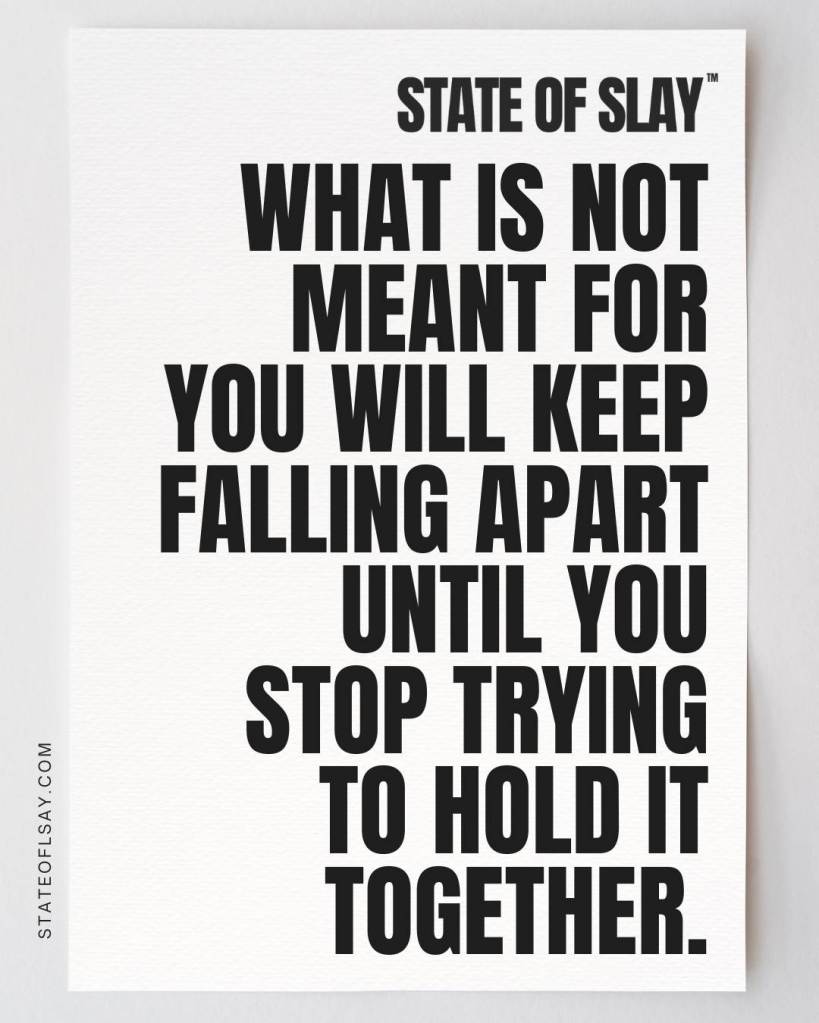
Kindness With Conditions Is Not Kindness

There was a time in my life when I believed being nice meant being good.

I went out of my way to help people. I showed up when someone needed support. I tried to be generous with my time, my attention, and my energy.

And if I am being completely honest, there were moments when I expected something in return.

Gratitude. Loyalty. Support. Recognition.

When those things did not come back the way I hoped, I felt hurt. Confused. Sometimes, even resentful.

It took time and a lot of self-reflection to understand something that shifted my perspective.

Kindness that comes with expectations is not really kindness. It is a transaction.


Prefer to listen? The Audio Blog version is available here.


The Difference Between Kindness And Approval Seeking

Doing something kind should come from a genuine place. A place where you choose to give because it feels right, not because you are trying to secure a future outcome.

But many of us grow up learning that kindness earns approval. We are praised for being helpful, agreeable, and accommodating. Over time, it can become easy to connect our value to how much we do for others.

Without realizing it, kindness can slowly turn into people pleasing.

And people pleasing often carries a hidden contract.

I will do this for you so that you will appreciate me, support me, or treat me the way I want to be treated.

When that contract is not fulfilled, disappointment follows.


I Had To Look At My Own Motives

This was not a comfortable realization.

There were moments when I had to ask myself a difficult question.

Was I being kind because it was the right thing to do, or because I wanted something in return?

Sometimes the answer surprised me.

I began noticing the subtle expectations attached to my actions. If someone did not respond the way I hoped, I would feel irritated. If my effort went unnoticed, I would feel overlooked.

That reaction revealed the truth.

My kindness was not always unconditional.

Recognizing that allowed me to shift how I approached giving.


True Kindness Does Not Keep Score

Authentic kindness is not about tallying favors.

It is about choosing generosity because it aligns with who you are, not because it guarantees a reward.

When kindness becomes transactional, it creates emotional pressure for both people involved. The person giving feels entitled to a response. The person receiving may feel obligated rather than grateful.

That dynamic can quietly damage relationships.

When kindness is genuine, there is freedom on both sides.

You give because it feels right. Not because you are expecting something back.


Boundaries Protect Real Generosity

Learning this lesson does not mean you should give endlessly without considering your own needs.

Healthy boundaries are essential.

There is a difference between genuine kindness and overextending yourself. True generosity respects both the other person and your own well-being.

When you give from a place of fullness instead of obligation, your kindness becomes sustainable.

And when you say no where necessary, your yes becomes more meaningful.


Let Go Of The Invisible Contracts

One of the most liberating things you can do is release the silent agreements you place on your kindness.

If you choose to help someone, do it because it aligns with your values. If appreciation comes back, receive it with gratitude.

If it does not, let your peace remain intact.

Your character should not depend on someone else’s response.

Kindness is a reflection of who you are, not a strategy for controlling outcomes.


Authentic Kindness Strengthens Relationships

When generosity is genuine, relationships feel lighter.

There is no hidden pressure. No silent expectation. No emotional accounting.

People feel the difference.

Authentic kindness creates trust because it is rooted in sincerity rather than strategy.

And when kindness flows naturally, it encourages others to respond with the same spirit.

Not because they owe you something, but because genuine care inspires connection.


Be Kind Because It Reflects Your Values

At the end of the day, kindness is about alignment with who you want to be.

Not about what you receive in return.

When you act from your values, you no longer measure your goodness through someone else’s reaction. Your actions become an extension of your character rather than a tool for validation.

That shift removes resentment.

And resentment is often the signal that our kindness had conditions attached to it.

When kindness is authentic, peace follows.


SLAY Reflection

S — See Your Motivation
When you do something kind, what are you hoping will happen afterward?

L — Look For Hidden Expectations
Do you ever feel disappointed if appreciation or kindness is not returned?

A — Adjust Your Perspective
How could you practice giving without attaching an outcome to the act?

Y — Your Next Step
What would change if your kindness came purely from your values rather than your expectations?


Call to Action: Join the Conversation

I’d love to hear from you.
Have you ever realized that some of your kindness carried hidden expectations? What changed when you let go of them?

Share your story in the comments. Let’s cheer each other on.

And if you know someone who might benefit from this reminder, send this to them.
Sometimes, all we need is a nudge.

See It For What It Is Not What You Want To See

One of the hardest lessons I have ever had to learn is this:

Sometimes the truth is right in front of us, but we refuse to see it.

Not because we are unintelligent. Not because we are careless. But because we want the story to be different. We want the outcome to be different. We want the person to be different.

So we interpret reality through hope instead of honesty.

I have done this more times than I can count. In relationships. In friendships. In professional situations. Even in how I viewed myself.

And every time I ignored what was actually happening, the result was the same.

Disappointment.

Because when we see things as we wish they were instead of how they are, we build expectations on an illusion.


Prefer to listen? The Audio Blog version is available here.


Hope Is Beautiful But It Cannot Replace Reality

Hope is powerful. It keeps us moving forward when things are difficult. It allows us to believe in possibility and growth.

But hope becomes dangerous when it replaces truth.

When we hope someone will change without evidence of change. When we hope a situation will improve without action. When we hope circumstances will magically align without acknowledging what is actually unfolding.

Hope should inspire action, not replace awareness.

There is strength in optimism, but there is wisdom in clarity.


I Had To Learn This Through Experience

There were times in my life when I ignored warning signs because they did not fit the story I wanted.

I overlooked behaviors that made me uncomfortable. I rationalized actions that did not align with my values. I convinced myself that if I just waited long enough, the situation would turn into what I hoped it could be.

But reality always revealed itself eventually.

And each time I avoided that truth, the consequences felt heavier.

Eventually I understood something important.

Seeing reality clearly is not pessimism. It is self protection.


Clarity Creates Better Decisions

When we look at situations honestly, we gain information.

We see patterns instead of excuses. We notice consistency instead of promises. We understand where our energy is being returned and where it is not.

That clarity allows us to make better decisions.

Sometimes it means walking away. Sometimes it means setting stronger boundaries. Sometimes it means adjusting expectations.

But almost always, it brings relief.

Because living in truth removes the constant mental effort of trying to maintain an illusion.


Emotional Honesty Is A Form Of Self Respect

It takes courage to see things clearly.

Admitting that a relationship is not healthy. Accepting that a goal may need to change. Recognizing that someone cannot give us what we hoped they would.

Those moments can be painful.

But they are also powerful.

Because emotional honesty is an act of self respect. It means you trust yourself enough to face reality, even when it challenges your expectations.

And that trust builds resilience.


Seeing Clearly Does Not Mean Losing Compassion

Recognizing reality does not require becoming cold or cynical.

You can still care about people while acknowledging their limitations. You can still appreciate memories while accepting that circumstances have changed.

Compassion and clarity can exist together.

In fact, when we stop forcing situations to be something they are not, compassion often becomes easier. We stop trying to control outcomes and start accepting people and circumstances as they truly are.

Acceptance creates peace.


Truth Creates Freedom

There is something incredibly freeing about seeing things clearly.

When you stop negotiating with reality, your energy returns. Your decisions become more grounded. Your expectations become healthier.

You stop chasing what could be and start responding to what actually is.

And from that place, growth becomes easier.

Because your foundation is truth.


SLAY Reflection

Let’s reflect, SLAYER:

S: Is there a situation in your life where you may be seeing what you hope instead of what is actually happening?

L: What signs or patterns might you be overlooking because they are uncomfortable?

A: How could greater honesty with yourself change the decisions you make moving forward?

Y: What would choosing clarity over illusion bring into your life right now?


Call to Action: Join the Conversation

I’d love to hear from you.
Have you ever had a moment where seeing a situation clearly changed everything for you? What did you learn from it?
Share your story in the comments. Let’s cheer each other on.

And if you know someone who might be struggling to face a difficult truth, send this to them.
Sometimes, all we need is a nudge.
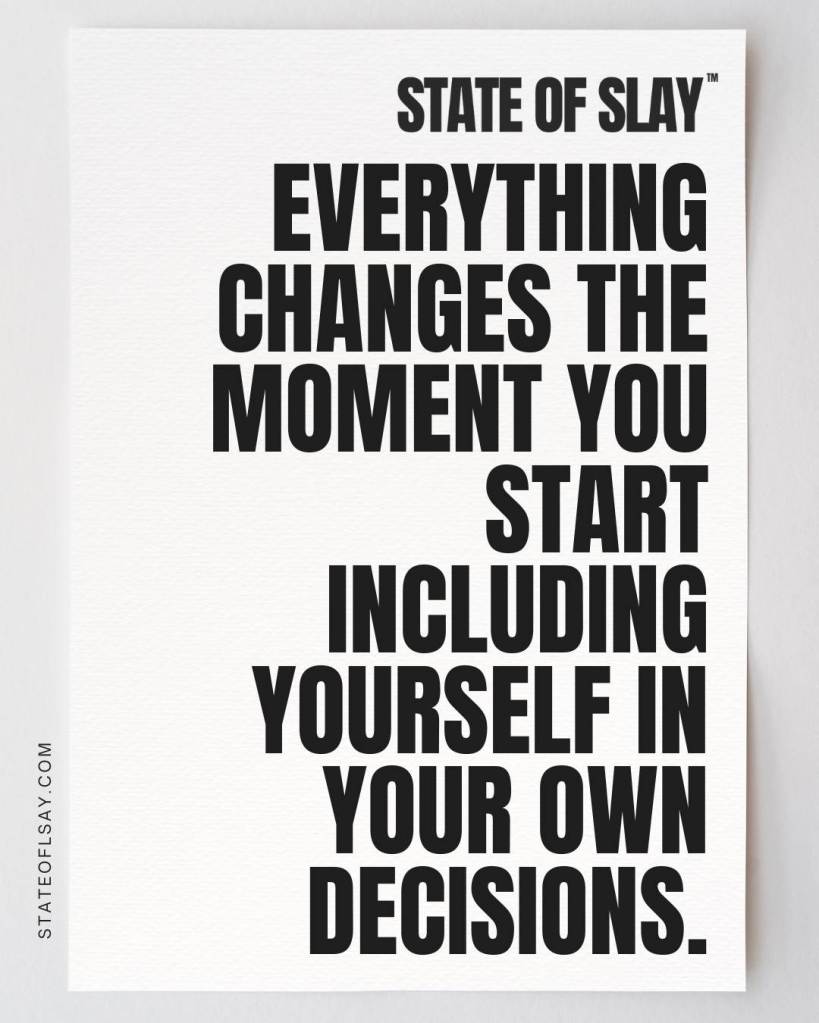
Never Expect More Than You Worked For

There was a season in my life when I expected results I had not earned.

I wanted growth without discomfort. Success without consistency. Connection without vulnerability. Peace without doing the internal work.

And when those things did not show up the way I imagined, I felt frustrated. Disappointed. Sometimes, even resentful.

But eventually I had to face a hard truth.

Expectation without effort breeds disappointment.

And that lesson changed how I approach almost everything.


Prefer to listen? The Audio Blog version is available here.


Effort Builds Alignment

We all have dreams. Goals. Desires. Vision boards full of possibility.

But wanting something is not the same as working toward it.

There is nothing wrong with ambition. In fact, ambition can be healthy and motivating. The problem begins when expectation outpaces action.

If we want deeper relationships, we have to practice communication and emotional honesty. If we want physical strength, we have to move our bodies. If we want career growth, we have to develop skills and consistency.

Alignment between effort and expectation creates peace.

Misalignment creates frustration.


I Had To Learn This Personally

There were moments when I wanted to be seen differently without changing my behavior. I wanted trust without rebuilding credibility. I wanted confidence without confronting insecurity.

It did not work.

Growth required effort. Honest reflection. Consistent action. Repetition.

The uncomfortable kind.

Once I accepted that, something shifted. Instead of feeling entitled to outcomes, I focused on earning them.

And that shift empowered me.

Because effort is something we control.


Discipline Creates Self-Respect

There is a quiet confidence that comes from knowing you showed up fully.

Not perfectly. Not flawlessly. But consistently.

Discipline is not punishment. It is commitment to your future self.

When you follow through on what you say you will do, trust builds internally. That internal trust strengthens resilience. It reduces anxiety. It increases clarity.

Self-respect grows from keeping promises to yourself.

And that foundation supports sustainable success.


Expectations Without Work Can Damage Relationships

This lesson extends beyond career and goals.

It applies deeply to relationships.

Expecting loyalty without offering it. Expecting communication without practicing it. Expecting emotional safety without creating it.

Relationships thrive on reciprocity.

When we expect more than we contribute, imbalance follows. Resentment builds. Connection weakens.

But when we invest effort intentionally, relationships strengthen naturally.

Contribution matters.


Patience Is Part Of The Process

One of the hardest parts of growth is timing.

We live in a culture that celebrates immediate results. Overnight success. Quick transformations.

But meaningful change rarely happens instantly.

Skill takes practice. Trust takes time. Confidence takes repetition. Healing takes consistency.

When we commit to the process instead of obsessing over outcomes, progress feels steadier.

And steadiness builds endurance.


Effort Is Empowering

There is something deeply empowering about knowing your results are connected to your effort.

It removes helplessness.

It reminds you that you are not waiting for luck. You are building momentum. You are shaping your future through action.

That mindset transforms disappointment into motivation.

Instead of asking, “Why is this not happening for me?” you begin asking, “What can I do differently?”

That question opens doors.


Grace Still Matters

This is important.

Working for something does not mean harsh self-criticism. It does not mean burnout. It does not mean perfectionism.

It means intention.

It means effort aligned with values.

It means understanding that growth requires participation.

Grace and accountability can coexist.

You can be patient with yourself while still showing up consistently.

That balance is powerful.


You Get What You Build

Results reflect patterns.

Daily habits. Repeated choices. Consistent action.

When we focus on building strong patterns, outcomes become more predictable. Not guaranteed. But aligned.

And when outcomes do not match effort, we adjust. We learn. We refine.

Growth becomes dynamic instead of discouraging.

That shift keeps momentum alive.


SLAY Reflection

Let’s reflect, SLAYER:

S: Where in your life are your expectations outpacing your effort?

L: What small daily action could bring your effort into alignment with your goals?

A: How does following through on commitments impact your self-trust?

Y: What would change if you focused more on building than expecting?


Call to Action: Join the Conversation

I’d love to hear from you.
What goal in your life shifted once you committed to matching your effort with your expectations?
Share your story in the comments. Let’s cheer each other on.

And if you know someone feeling discouraged about slow progress, send this to them.
Sometimes, all we need is a nudge.