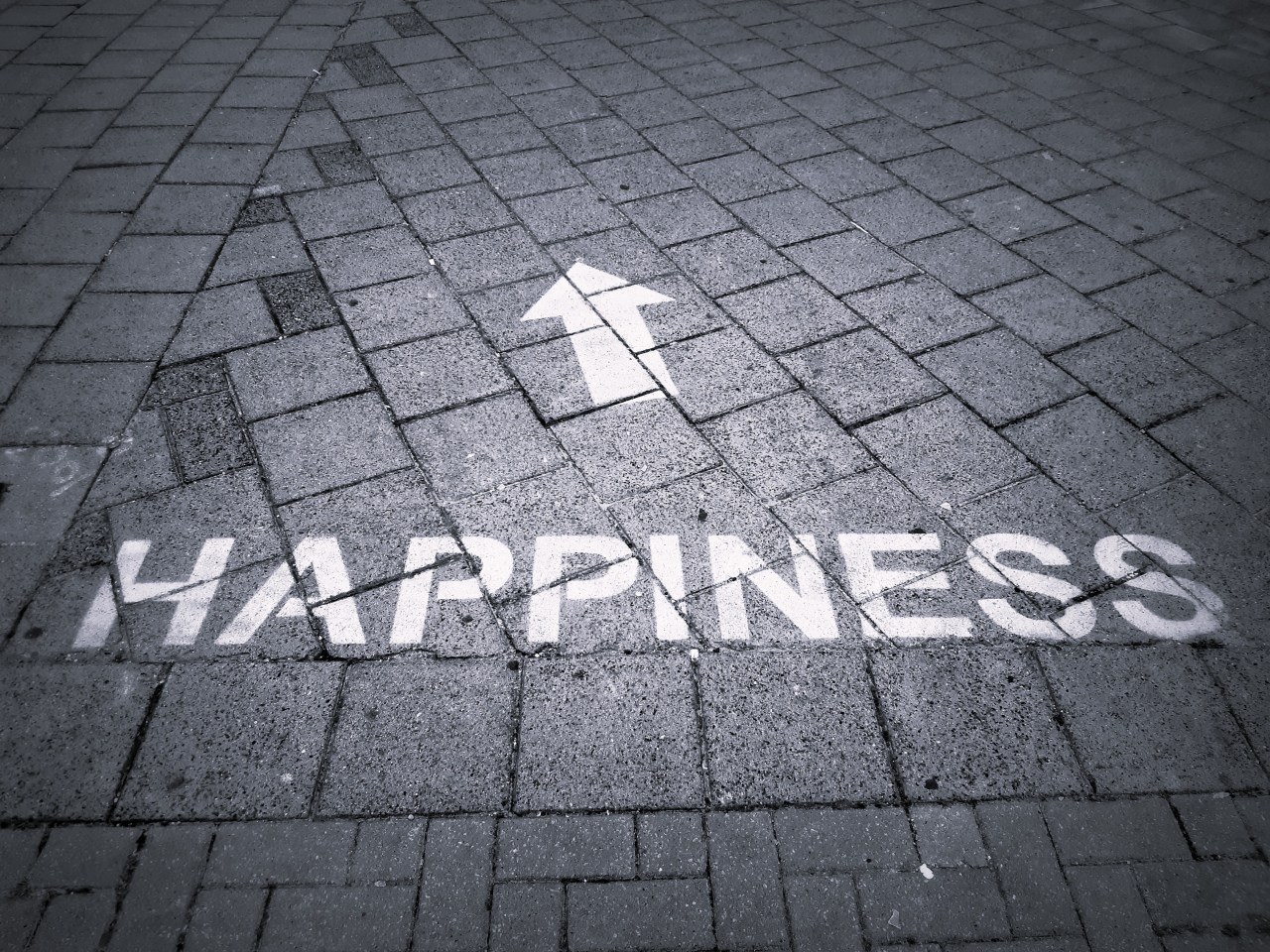
Woman looking out over the water, representing gratitude while considering a different path forward.

You Can Be Grateful and Still Want Something Different

Gratitude can be a beautiful thing.

It can remind us to notice what is good instead of constantly focusing on what is missing.

It can bring perspective.

It can help us recognize how much we have, how far we’ve come, and how many people and experiences have contributed to our lives.

But somewhere along the way, many of us learned to turn gratitude into a contract.

If we’re grateful for something, we think we’re supposed to keep wanting it.

If something has been good to us, we’re supposed to remain loyal to it.

If someone gave us an opportunity, we’re supposed to stay.

If a relationship once made us happy, questioning it can feel like a betrayal of everything it gave us.

And if our life looks good from the outside, wanting something different can feel almost embarrassingly ungrateful.

So we start arguing with our own desires.

What more could I possibly want?

Maybe that’s the wrong question.

Because gratitude tells you how you feel about what you’ve received.

It doesn’t necessarily tell you what you want next.


Prefer to listen? The Audio Blog version is available here.


GRATITUDE IS NOT A CONTRACT

Being grateful for something does not obligate you to keep choosing it forever.

You can be grateful for a job that gave you stability when you desperately needed it and eventually realize you want to do something else.

You can appreciate a friendship that carried you through a difficult period and recognize that the relationship has changed.

You can love the home where you built years of memories and still decide it’s time to move.

You can appreciate what someone has done for you without owing them permanent access to your life.

Gratitude acknowledges what something has meant to you.

It doesn’t sign away your right to change.

Sometimes we confuse appreciation with obligation because leaving feels as though we’re declaring that what came before wasn’t good enough.

But that’s not what change means.

Something can have been wonderful.

And you can still be finished with it.


DIFFERENT DOESN’T ALWAYS MEAN BETTER

We often talk about change as though we’re trying to upgrade our lives.

A better job.

A better relationship.

A better home.

A better version of ourselves.

But what if you don’t want better?

What if you simply want different?

That’s an important distinction.

You don’t have to prove that your current life is terrible before you’re allowed to imagine another one.

You don’t have to turn your job into the villain of the story before you’re allowed to leave it.

You don’t have to compile a list of someone’s faults to justify changing the relationship.

You don’t have to discover something wrong with where you are before you can become curious about somewhere else.

Sometimes change isn’t an indictment.

It’s movement.

And sometimes the pressure to prove that the next thing will be better is exactly what keeps us from exploring what might simply be more appropriate for who we are now.


A GOOD THING CAN STILL HAVE AN ENDING

This can be one of the hardest truths to accept.

We’re comfortable leaving things that are obviously bad for us.

At least then we have a reason.

But what about something that was good?

Something that worked?

Something we loved?

We tend to believe good things should continue indefinitely.

So when we begin wanting something different, we search for a problem to explain it.

Maybe nothing went wrong.

Maybe nothing needs to.

Not every ending is evidence of failure.

Some experiences belong to a particular period of our lives.

They give us something.

We give something to them.

And eventually the relationship between who we are and what they provide changes.

We don’t have to rewrite the past to make leaving the present acceptable.


WANTING MORE DOESN’T MEAN YOU HAVE LESS

There is a strange guilt that can come with wanting.

Especially when you know you’re fortunate.

You look around and see things you once hoped for.

Things other people would love to have.

Things you’ve worked hard to create.

And then another desire appears.

Immediately, we can begin policing ourselves.

Shouldn’t this be enough?

Enough is a complicated word.

Because something can be enough and still not be everything you want.

You can have enough love and still want more connection.

You can have enough success and still want a different challenge.

You can have enough security and still crave adventure.

You can have enough stability and still feel curious about change.

Wanting something else doesn’t erase what is already there.

Desire isn’t always evidence of dissatisfaction.

Sometimes it’s information.


BE CAREFUL WHEN GRATITUDE BECOMES GUILT

Gratitude says:

I appreciate this.

Guilt says:

Because I appreciate this, I’m not allowed to leave.

Those are very different things.

Guilt can make us stay long after our desire has gone quiet.

We think about the person who gave us our first chance.

The partner who stood beside us during a difficult time.

The friend who was there when nobody else was.

The family member who sacrificed for us.

And those things matter.

But gratitude becomes unhealthy when it requires you to build the rest of your life around repayment.

You can appreciate what someone gave you without handing them ownership of what comes next.

You can honor someone’s place in your story without giving them control over the remaining chapters.


SOMETIMES THE LIFE YOU WANTED STOPS FITTING

There are things we work incredibly hard to get.

And then we get them.

That can make changing our minds particularly difficult.

Because now we’re not only leaving something behind.

We’re confronting the person we once were who wanted it so badly.

You may have spent years building a career you no longer want.

You may have fought hard for a relationship that no longer feels right.

You may have sacrificed to create a lifestyle that now feels restrictive.

And part of you may think:

After everything I did to get here, how can I possibly walk away?

But your past desire doesn’t get permanent authority over your future.

You made choices based on who you were, what you knew, and what you needed at the time.

You are allowed to receive what you once wanted and eventually discover something about yourself you couldn’t have known before you had it.

That’s not ingratitude.

That’s new information.


YOU DON’T HAVE TO MAKE THE PAST WRONG

Sometimes we make change unnecessarily painful because we think we need to justify it.

So we start editing the story.

We focus on everything that wasn’t perfect.

We magnify frustrations.

We search for reasons something wasn’t actually as good as we thought.

We make people wrong so leaving them feels easier.

But what if you didn’t have to do that?

What if you could say:

That mattered to me.

That was good for me.

I’m glad I experienced it.

And I don’t want it anymore.

There is something freeing about allowing the past to remain good.

You don’t have to destroy your memories to earn permission to create new ones.


GRATITUDE LOOKS BACK. CHOICE LOOKS FORWARD.

Maybe this is the distinction we forget.

Gratitude asks:

What has this given me?

Choice asks:

What do I want from here?

One question doesn’t answer the other.

You can look backward with enormous appreciation while looking forward with completely different desires.

In fact, sometimes gratitude makes change easier because you no longer need to leave angry.

You don’t have to slam the door.

You don’t have to convince yourself that everything was terrible.

You don’t have to carry resentment into whatever comes next.

You can acknowledge what was good.

Take what you learned.

Keep what mattered.

And still go.


YOU ARE ALLOWED TO WANT SOMETHING DIFFERENT

Maybe your life is good.

Maybe there isn’t a dramatic problem to solve.

Maybe nobody did anything wrong.

Maybe you’re not unhappy.

Maybe you simply feel something changing inside you.

We often wait for unhappiness to give us permission to change.

But curiosity can be a reason too.

Growth can be a reason.

A shifting priority can be a reason.

A desire you can’t quite explain can be worth listening to.

You don’t have to immediately act on every feeling or blow up a perfectly good life because you woke up restless on a Tuesday.

But you can listen.

You can get curious.

You can ask yourself what the desire is trying to tell you without immediately shaming yourself for having it.

Because gratitude and desire can occupy the same space.

You can love what was and wonder what’s next.

You can appreciate where you are and imagine somewhere else.

You can be thankful for everything that brought you here without deciding that here is where you must remain.

Sometimes the most respectful thing you can do with a good chapter is let it be good without forcing it to become the entire story.


SLAY REFLECTION

S — SEE WHAT YOU APPRECIATE
What in your life are you genuinely grateful for right now?

L — LISTEN TO WHAT YOU WANT
Is there something different you’ve been wanting but dismissing because you think you should be satisfied?

A — ASK WHAT’S KEEPING YOU THERE
Are you choosing something because you still want it, or because leaving would make you feel guilty or ungrateful?

Y — YOUR NEXT STEP
Give yourself permission to explore what you want without requiring yourself to make an immediate decision. Sometimes acknowledging the desire is the first step.


CALL TO ACTION: JOIN THE CONVERSATION

I’d love to hear from you.

Have you ever felt guilty for wanting something different because what you already had was good?

Did you stay because you thought being grateful meant you weren’t allowed to change your mind?

Share your thoughts in the comments. Your experience may help someone else realize they don’t have to make something bad before they’re allowed to choose something different.

And if you know someone who is struggling with wanting change in a life they are genuinely grateful for, send this to them.

Sometimes, all we need is a nudge.

Woman standing apart from a group of people, representing the difference between what feels familiar and what is right for us.

Familiar Doesn’t Mean Right

There is a strange comfort in knowing what comes next.

Even when what comes next isn’t particularly good for us.

We know this person will disappoint us.

We know this job will drain us.

We know this friendship will leave us feeling like an afterthought.

We know this habit will make us feel worse tomorrow.

And yet, there can be something strangely reassuring about returning to what we already know.

Because familiarity has its own kind of gravity.

We know the rules there.

We know who we are there.

We know how to survive there.

And sometimes we mistake that recognition for a sign that something belongs in our lives.

But familiar doesn’t mean right.

Sometimes it just means we’ve been there before.


Prefer to listen? The Audio Blog version is available here.


YOUR BRAIN LIKES TO KNOW WHAT COMES NEXT

We tend to think we make decisions based entirely on what we want.

But predictability has tremendous power.

When we know how something works, we don’t have to spend as much energy figuring it out.

Even an unpleasant pattern can offer that predictability.

You know which subjects not to bring up.

You know when someone is likely to withdraw.

You know how much of yourself to reveal.

You know when to apologize, smooth things over, work harder, stay quiet, or make yourself useful.

You may not be happy.

But you know the choreography.

That can create an illusion of comfort.

Not because the situation is actually comfortable, but because you have become skilled at navigating it.

There is an important difference between feeling safe and feeling competent at surviving something.

We don’t always recognize that difference.


WE CAN MISTAKE RECOGNITION FOR CONNECTION

Have you ever met someone and immediately felt like you had known them forever?

Sometimes that’s wonderful.

Sometimes it deserves a closer look.

Because what exactly are you recognizing?

Maybe you recognize their humor.

Their energy.

Their values.

Their openness.

But sometimes what feels instantly familiar is a dynamic you’ve experienced before.

Someone emotionally unavailable can feel compelling if you’ve spent much of your life trying to earn closeness.

Someone who needs constant help can feel strangely attractive if being needed has always made you feel valuable.

Someone unpredictable can create an intensity that feels like chemistry when what you are actually recognizing is uncertainty.

The feeling is real.

Our interpretation of the feeling isn’t always accurate.

“I know this feeling” can easily become “This must be right.”

Those are two very different statements.


SOMETIMES WE KNOW EXACTLY WHO TO BE IN THE WRONG PLACE

There is another reason familiar situations can be difficult to leave.

They give us a role.

Maybe you’re the fixer.

The peacemaker.

The responsible one.

The one who never needs anything.

The one who keeps everyone laughing.

The one who absorbs everyone else’s emotions.

The one who proves their worth by being indispensable.

You may have played that role for so long that it no longer feels like something you do.

It feels like who you are.

Then something changes.

You enter a relationship where nobody needs rescuing.

You find friends who don’t require you to perform for your place in the group.

You work somewhere that doesn’t expect you to sacrifice your life to prove your commitment.

Suddenly, an unexpected question appears:

Who am I if nobody needs me to be that person anymore?

Sometimes we miss the old dynamic not because it was good for us, but because we understood ourselves inside it.


HEALTHY CAN FEEL STRANGE AT FIRST

We often imagine that when something healthier enters our lives, we’ll immediately recognize it.

Finally.

This is what I’ve been waiting for.

Sometimes.

Other times, healthy feels surprisingly uncomfortable.

Consistency can make you suspicious when you are accustomed to unpredictability.

A relationship without constant conflict can feel strangely quiet.

Someone respecting your boundaries can initially feel like they don’t care enough to fight for access to you.

A friendship without competition can make you wonder what the other person really wants.

A workplace that doesn’t expect you to answer emails at all hours can leave you feeling guilty when you close the laptop.

Rest can feel irresponsible.

Peace can feel boring.

Receiving can feel selfish.

And none of those feelings necessarily mean something is wrong.

Sometimes they mean something is new.


DISCOMFORT ISN’T ALWAYS A WARNING

We are often encouraged to trust our feelings.

And we should listen to them.

But listening to a feeling doesn’t mean automatically obeying the conclusion we attach to it.

Discomfort can tell us something is wrong.

It can also tell us something is unfamiliar.

Those require very different responses.

If you’ve spent years saying yes when you wanted to say no, setting a boundary may feel terrible.

That doesn’t mean the boundary is wrong.

If you’re accustomed to explaining yourself until everyone approves of your decisions, saying, “This is what I’ve decided,” and leaving it there may feel almost unbearable.

That doesn’t mean you owe another explanation.

If you have always measured your value through productivity, taking an afternoon off may make you restless.

That doesn’t mean you should get back to work.

Sometimes discomfort is an alarm.

Sometimes it is simply the sensation of stepping outside an old pattern.

Learning to tell the difference is part of growth.


DISTANCE CAN EDIT OUR MEMORY

There is another trick our memory can play on us.

Once we get far enough away from something, we can begin remembering it selectively.

We remember the good conversations and forget how anxious we felt waiting for the next one.

We remember the laughter and forget how often we cried.

We remember belonging and forget how much of ourselves we had to edit to belong.

We remember what the job gave us and forget what it took from us.

We remember the comfort of the habit and minimize the consequences.

Distance can soften sharp edges.

That isn’t necessarily a bad thing. We don’t need to carry every painful detail forever.

But nostalgia is not always an accurate historian.

Missing something doesn’t automatically mean you should return to it.

Sometimes you miss something because it was important.

Sometimes because there were genuinely beautiful parts of it.

And sometimes because your mind knows exactly where everything is in that old room.

That still doesn’t mean you should move back in.


THE UNKNOWN DOESN’T HAVE A TRACK RECORD YET

There’s another unfair advantage the familiar has over the new.

The familiar has evidence.

You know what happened before.

The unknown has nothing.

You don’t know whether the new relationship will work.

You don’t know whether the career change will be worth it.

You don’t know whether you’ll find your people somewhere else.

You don’t know who you’ll become when you stop doing what you’ve always done.

So we sometimes compare the certainty of something mediocre with the uncertainty of something potentially better.

Of course, certainty can win that contest.

It arrives carrying receipts.

The unknown arrives empty-handed.

But uncertainty is not evidence that something will go badly.

It is simply the absence of evidence about what comes next.

There are possibilities we cannot discover while insisting that the future prove itself before we are willing to leave the past.


YOU MAY NEED TO GIVE GOOD THINGS TIME TO BECOME FAMILIAR

We talk a lot about letting go of what no longer serves us.

We talk less about what happens afterward.

Because there can be an awkward stretch between leaving an old pattern and feeling at home in a new one.

You may question yourself.

You may miss what you left.

You may wonder why something supposedly healthier doesn’t feel natural yet.

Maybe it isn’t supposed to.

You had years to learn the old pattern.

You knew its shortcuts, warning signs, hiding places, and exits.

You knew your lines.

Something new doesn’t have any of that history yet.

You are learning it.

And perhaps one of the most overlooked parts of changing your life is giving yourself enough time for healthier experiences to stop feeling foreign.

For peace to become recognizable.

For mutual support to become normal.

For boundaries to stop feeling mean.

For rest to stop feeling lazy.

For being loved without performing for it to stop making you wonder what the catch is.

Eventually, what once felt unfamiliar can become the new familiar.


FAMILIAR DOESN’T MEAN RIGHT

When you find yourself being pulled toward an old person, pattern, behavior, or version of yourself, it may be worth asking a different question.

Not:

Why do I still want this?

But:

What about this do I recognize?

Maybe you recognize being needed.

Maybe you recognize chasing approval.

Maybe you recognize instability.

Maybe you recognize overworking.

Maybe you recognize putting yourself last.

Maybe you simply recognize the person you used to be when you were there.

Recognition can be powerful.

But it isn’t destiny.

You are allowed to stop choosing something simply because you know how to survive it.

You are allowed to become unfamiliar with an old version of your life.

And you are allowed to feel awkward, uncertain, or even uncomfortable while something better slowly becomes recognizable.

Because sometimes the thing that feels strange isn’t wrong.

It’s just new.

And sometimes the thing that feels like home isn’t where you belong anymore.


SLAY REFLECTION

S — Spot the Familiar
Where in your life are you repeatedly drawn toward a person, situation, habit, or dynamic that you already know doesn’t work for you?

L — Look Beneath the Feeling
What feels familiar about it? Is it the person or situation itself, or the role you know how to play within it?

A — Allow the Unfamiliar
Is there something healthier in your life that you may be resisting simply because it doesn’t feel natural yet?

Y — Your New Normal
Choose one healthy experience you want to give yourself enough time to become familiar with instead of retreating to what you already know.


CALL TO ACTION: JOIN THE CONVERSATION

I’d love to hear from you.

Have you ever had something healthier feel uncomfortable at first because it was new?

Share your thoughts in the comments. Your experience may help someone else recognize when they’re choosing what they know instead of what they truly want.

And if you know someone who keeps finding their way back to the same people, patterns, or situations, send this to them.

Sometimes what feels like home is simply a place we’ve been before.

Let Go of the Life You Planned for the Life That Is Waiting for You

Sometimes the hardest thing to release is not a person.

It’s the life you thought you were going to have.

The timeline.
The dream.
The version of yourself you imagined becoming by now.

And when life moves in a different direction, it can feel deeply personal.

Like somehow you failed because things did not unfold the way you planned.

But maybe life is not falling apart.

Maybe it’s trying to lead you somewhere you never would have gone willingly.


Prefer to listen? The Audio Blog version is available here.


WE SPEND SO MUCH TIME TRYING TO FORCE WHAT NO LONGER FITS

Sometimes we hold onto things because we invested so much into them.

A relationship.
A career path.
A dream.
An identity.

We convince ourselves that if we just try harder, wait longer, or sacrifice more, eventually things will fall into place.

But deep down, many of us already know when something no longer aligns.

We feel it in our exhaustion.
In our anxiety.
In the constant effort it takes to hold everything together.

Still, letting go feels terrifying because plans become attached to our identity.

If this doesn’t work out…
Who am I then?


NOT EVERY ENDING IS A FAILURE

This is something I’ve had to learn over and over again.

Some of the things I cried hardest over were actually redirections.

Doors I begged to stay open eventually revealed why they needed to close.
Situations I thought were destroying me were quietly reshaping me.
Paths I fought to stay on were leading me away from myself.

But when you are in the middle of loss or uncertainty, it rarely feels that way.

It feels unfair.
Disappointing.
Confusing.

Especially when you built your future around something you genuinely believed in.

But life has a way of removing what no longer fits, even when we are not ready to let it go ourselves.


THE LIFE WAITING FOR YOU MAY LOOK DIFFERENT FROM WHAT YOU IMAGINED

And that does not make it lesser.

Sometimes we become so attached to one vision of happiness that we miss the beauty of what is unfolding in front of us.

Because it arrived differently than expected.

Maybe your life does not look the way you thought it would by now.
Maybe your path has taken turns you never anticipated.
Maybe you are rebuilding from something you thought would last forever.

That does not mean your story is over.

Sometimes the life waiting for you is more aligned than the one you planned.

More peaceful.
More authentic.
More honest.

Not because it is perfect, but because it fits who you are becoming now, not who you were years ago.


LETTING GO IS NOT GIVING UP

There is a difference between surrender and defeat.

Giving up says:
“Nothing good will happen for me.”

Letting go says:
“I cannot keep forcing what no longer feels right.”

That takes courage.

Because there is comfort in what’s familiar, even when it hurts us.
There is safety in staying attached to what we know, even when we have outgrown it.

But growth often requires release.

And sometimes the next chapter of your life cannot begin until you stop trying to resurrect the last one.


YOU ARE ALLOWED TO BECOME SOMEONE NEW

One of the hardest parts of change is realizing that your identity may evolve, too.

You are allowed to want different things.
You are allowed to change direction.
You are allowed to outgrow old dreams.

That is not failure.
That is growth.

The person you were five years ago may not be the person you are today.

And maybe that’s a good thing.

Because some versions of ourselves are meant to carry us only so far.


STOP ASKING WHY IT FELL APART

Start asking what it is making room for.

That shift changes everything.

Because sometimes what feels like destruction is actually space being created for something more aligned.

A healthier relationship.
A new purpose.
Peace.
Freedom.
A version of yourself that no longer has to perform or pretend.

You may not understand the redirection yet.

But not understanding it right now does not mean it is wrong.


MAYBE THE LIFE WAITING FOR YOU IS BETTER THAN THE ONE YOU PLANNED

Not easier.
Not perfect.
But truer.

Sometimes we mourn the fantasy of what could have been while overlooking the reality of what actually was.

And sometimes the future we resisted becomes the very thing that frees us.

So if life feels different from what you imagined right now, that does not mean you missed your chance.

Maybe this chapter is not the end of your story.

Maybe it is finally the beginning of a more honest one.


SLAY REFLECTION

S — See the Truth

What are you holding onto simply because it was part of your original plan?

L — Let Yourself Release

What would change if you stopped forcing what no longer fits?

A — Accept the Redirection

Has a past disappointment ever turned out to be protection or growth?

Y — Yield to What’s Next

What might become possible if you trusted the unknown a little more?


CALL TO ACTION: JOIN THE CONVERSATION

I’d love to hear from you.

Have you ever had to let go of the life you planned, only to discover something unexpected waiting for you on the other side?

Share your story in the comments. Let’s cheer each other on.

And if you know someone who’s struggling to release the version of life they thought they were supposed to have, send this to them.

Sometimes, all we need is a reminder that a different path does not mean a lesser one.

Slay Say

Follow Your Own Road

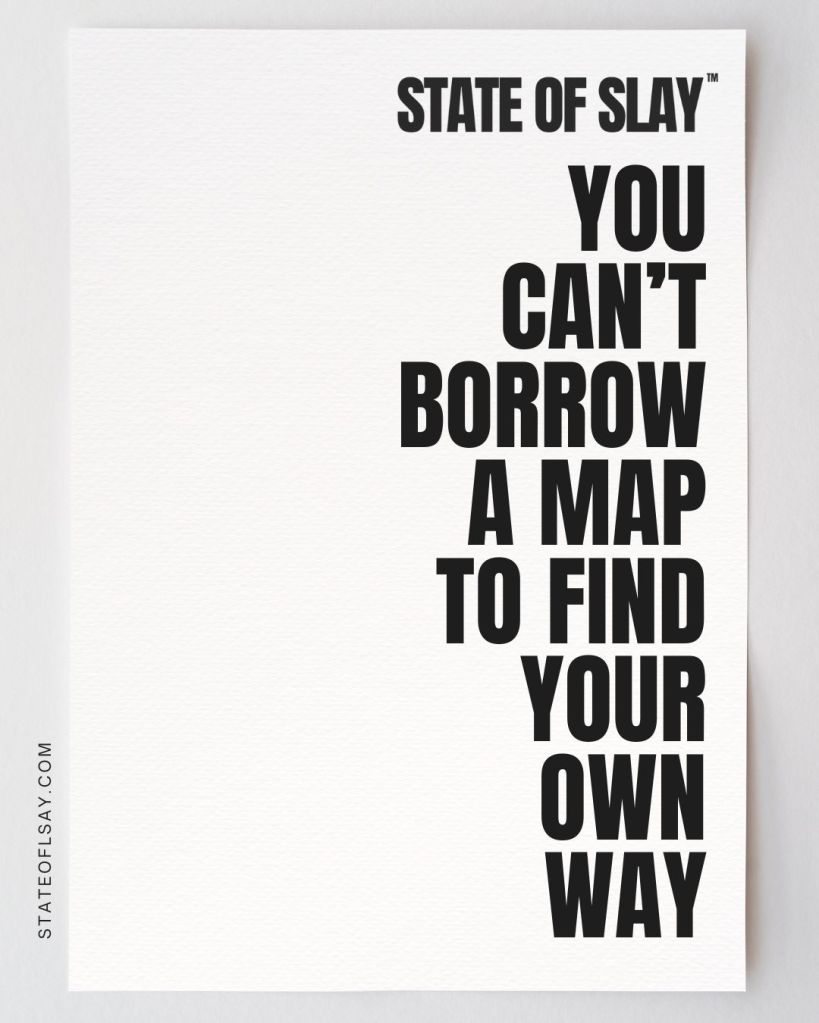
It’s tempting to look at someone else’s journey and think their path could be ours.
But the truth is, following someone else’s map won’t lead you to your destination.

Your journey is unique, filled with your own experiences, lessons, and growth.
Trust your steps, even when the road is unclear.
Embrace the detours and the unexpected turns—they’re all part of your personal map.

The path to self-discovery isn’t about following others; it’s about forging your own trail.
So, take a deep breath, trust yourself, and keep moving forward.
Your path is unfolding exactly as it should.

SLAY ON.

Take Yourself Off The Wheel

Nothing changes if nothing changes.
For years, I did the same things over and over again, expecting different results.
I thought if I kept applying the same approach—harder, louder, longer—somehow life would finally cooperate.

It didn’t.

Every time I repeated the same behavior, I got the same result.
The only thing that changed was how frustrated and exhausted I became.
And when I hit that familiar wall of fear, frustration, and anxiety, the noise in my head got louder—until it drowned out everything else.
I felt stuck. Paralyzed. Powerless.

But the truth?
I had the power all along.
It started with one bold choice: stepping off the wheel I’d been running on for years.


Change Is Uncomfortable—And That’s Okay

Change can feel scary.
Unfamiliar.
Uncomfortable.

Sometimes that discomfort makes us hesitate.
Other times, it’s self-sabotage in disguise—we tell ourselves it’s safer to stay where we are.
That we’re not capable of change.
That we don’t deserve it.
That nothing will really be different anyway.

But that’s a lie.
There is always a way out—or at least a better way forward.
We just have to be willing to take it.


Discomfort Means You’re Growing

If it feels uncomfortable, that’s probably a sign you’re doing the right thing.
It means you’re stepping into new territory.
It means you’re trying something different.
It means you’re finally breaking the cycle.

Change is rarely easy.
But staying stuck is harder.

What helped me most was shifting how I thought about change—not as something to fear, but as something that could bring growth, healing, and expansion.

We aren’t meant to stay where we are forever.
We’re meant to evolve.
To move forward.
To learn and grow.

And that means we have to be willing to do things differently, even when it feels awkward, messy, or uncertain.


The Power of a Single Step

Stepping off the wheel doesn’t require a perfect plan.
It just requires a step.

Even if the first thing you try doesn’t work, you’ll learn something.
That one step might be what sets everything else in motion.
The journey is the point—not just the outcome.

We are not victims of our circumstances.
We may not control every situation, but we can always control how we show up, how we respond, and what we’re willing to change.

Without that inner work, even if we move into new circumstances, we may find ourselves facing the same old patterns in a new setting.

Real change starts from the inside.


It’s Time to Get Off the Wheel

Change takes effort.
But that effort is an investment in you.
In your dreams.
In the life you want.
In the person you’re becoming.

Be willing.
Be curious.
Be brave enough to say yes to what’s new, even if it feels a little scary at first.

You’ve been running in circles long enough.
It’s time to stop the spin.
Jump off the wheel.
And walk forward—with purpose.


SLAY Reflection: Are You Ready to Do Things Differently?

  1. Do you find yourself resisting change?
    What feels uncomfortable or threatening about it?
  2. Are you happy with where you are in life?
    If not, what steps have you taken—or avoided—to shift it?
  3. What patterns have you repeated that no longer serve you?
    Why do you think you’ve stayed in them?
  4. What is one small change you can make today that would move you forward?
    What would it feel like to say yes to that?
  5. What truth are you avoiding because it would require change?
    And what freedom might be waiting on the other side?

Call to Action: Join the Conversation

I’d love to hear from you.
What’s one change you’ve made—or know you need to make—to get off the wheel and create real momentum in your life?
Share your story in the comments. Let’s cheer each other on.

And if you know someone who’s stuck in a cycle they’re ready to break, send this to them.
Sometimes, all we need is a nudge.

Falling Down Is Part Of The Process

When we step into a new chapter—filled with intention, purpose, and growth—we often expect things to go smoothly. We’re showing up, doing the work, making better choices… shouldn’t that mean we’re past the hard parts?

Not quite.

Falling down is part of the process. Always has been. Always will be.

I’ve learned more from my falls than I ever have from my wins. Those stumbles gave me new tools, revealed blind spots, and taught me that even when there isn’t a clear solution, I’m strong enough to get back up again.

Falling isn’t failure—it’s feedback.


Setbacks Aren’t Stop Signs

It’s easy to feel discouraged when things don’t go the way we hoped.

When you’re working so hard to be better, live authentically, and move forward, setbacks can feel personal. It’s frustrating. It’s deflating. But here’s the truth: setbacks don’t mean you’re off track—they mean you’re on it.

Every fall is an opportunity to pause, reflect, and ask:

  • What did this moment teach me?

  • What was my part in it?

  • What new tool or insight can I take forward from here?

If everything went perfectly all the time, we wouldn’t learn much. We wouldn’t build strength. And we definitely wouldn’t develop the resilience we need for long-term growth.


Every Fall Is Just Information

Let’s take the drama out of the fall.

Not every stumble is a crisis. Not every setback is a disaster. Sometimes it’s just a signpost that says: Not this way. Try another.

When we start to look at our missteps as information—not identity—we take back our power.

A fall doesn’t mean you’re broken. It means something needed your attention.

Maybe you weren’t doing what you needed to do.
Maybe you missed a red flag.
Maybe the lesson was simply about learning how to stand back up.

Whatever the reason, the fall isn’t the end. It’s just part of the path.


Falling Forward with Intention

Some of the most painful moments in my life were the result of my own choices—or lack of action. But with each one, I had a decision to make: let the fall define me, or let it refine me.

If we ignore what the fall is trying to teach us, it’s likely we’ll end up back in that same spot—only this time it’ll hurt more, because we’ll know better.

But if we take the time to reflect, gather what we need, and move forward differently, we turn what was once a painful experience into a stepping stone toward something better.


Keep Showing Up

The key isn’t avoiding every fall. That’s impossible. The key is learning how to rise, gather the lesson, and keep moving.

No matter how hard you fall, you can get back up.
No matter how lost you feel, you can find your way again.

Eventually, you’ll recognize the patterns. You’ll learn where the pitfalls are. And you’ll start to navigate the path with more confidence.

Falling doesn’t mean you’re failing. It means you’re growing.
And growth is never a straight line—it’s a beautifully messy journey.


SLAY Reflection

Let’s reflect together, SLAYER:

  • S: What’s your usual reaction when you fall—do you give up or get curious?

  • L: Can you recall a setback that led to growth or a better decision later on?

  • A: How can you start viewing setbacks as information rather than personal failure?

  • Y: What’s one fall you can reframe today as a stepping stone instead of a stopping point?


Call to Action: Join the Conversation

I’d love to hear from you.
When was the last time you fell, and what did it teach you?
Share your story in the comments. Let’s cheer each other on.

And if you know someone who feels defeated by a recent fall, send this to them.
Sometimes, all we need is a nudge.

Let Your Freak Flag Fly

For most of my life, I placed a lot of importance on what others thought of me. I wouldn’t have admitted it at the time, but I did. I navigated through life hiding who I really was. I may have felt like a freak, but I thought that was a bad thing, and I wasn’t going to let you see it.

Many of us present different versions of ourselves to the world. Sometimes, we need to wear different hats, especially in professional settings. For me, there’s a professional hat—the one I wear at work functions, on set, or in meetings. But there’s also the Let Your Freak Flag Fly gal—the woman I now allow myself to be, the true me.

Don’t get me wrong. My “freak flag” self is still there at work, but she’s a little more subdued until I know my audience. In my personal life, though, I am living as my authentic self. I’ve touched on this in earlier blogs, but today I want to dive deeper into what that really means.


Who Am I, Really?

When I started my journey over 11 years ago, I had no idea who my “authentic self” was. Truthfully, she kind of scared me. I had spent years crafting a persona, and I was afraid of what I might discover underneath. I had never asked myself, Who am I? What do I like? What do I want?

I was too afraid to ask. I didn’t think I deserved the answers. I was too busy pretending or numbing myself to even consider them. The more I hid behind a façade, the more lost I became. It felt like I was trapped in a black hole, and I had to fight my way out.


Say YES to New Experiences

I encourage you to ask yourself those same questions:
Who am I? What do I like? What do I want?

Don’t second-guess the answers. There’s an authentic you dying to get out, and it may take time to find that version of you. That’s OK. Life isn’t a game show—there’s no buzzer to tell you time’s up. You’re on your own timeline.

For me, the answers didn’t come right away. I was encouraged to say yes to new things, to explore and discover myself through experience. So I did. If someone invited me to do something I’d never done, I said yes—no matter how scary it seemed. What I discovered was that saying yes, even when it terrified me, became exciting. Each new experience helped me learn more about myself and gave me the courage to keep exploring.

If I hadn’t said yes for all those years, I wouldn’t have started this blog. The thought of opening up my innermost thoughts to all of you was terrifying 12 years ago, but here I am—and I’m better for it.


Celebrate Your Uniqueness

When I teach (another thing I just said yes to!), I always tell my students to “let their freak flags fly.” That’s what makes each of us unique. It’s what sets you apart. And more importantly, it’s what makes you authentically you.

Discovering and celebrating your authentic self is the foundation for honoring, respecting, and loving yourself. It’s worth celebrating. We’re all different—a big YAY to that. How boring would the world be if we were all the same? Celebrate the things that set you apart. Celebrate you.

Trust me—whatever “freaky” thing you think you have or are, there are a whole bunch of people who will love you for it. I already do, you freak! Now, go out there and discover what makes your freak flag fly.


SLAY OF THE DAY:

  • Does the thought of trying new things scare you? Why?

  • What was the last new thing you tried? What did you take away from it?

  • What makes you unique? Do you celebrate those things?

  • Challenge yourself to say yes to new experiences. Discover the magic of your authenticity.


Call to Action: Join the Conversation

I’d love to hear from you.
What’s one thing you’re going to say yes to this week to honor your authentic self?
Share your story in the comments. Let’s cheer each other on.

And if you know someone who’s struggling to embrace their authentic self, send this to them.
Sometimes, all we need is a nudge.