Black and white image of a person standing in a dark tunnel, representing perseverance, failure, and continuing forward after setbacks.

Slay Say

The Story Isn’t Over

Failure has a way of feeling permanent when you’re standing in the middle of it.

The opportunity didn’t happen.

The relationship ended.

The business didn’t work.

The dream you chased led somewhere you never expected.

And suddenly, one disappointing chapter starts to feel like the conclusion.

But failure isn’t an ending.

It’s an event.

A moment.

A result.

Sometimes it’s information.

Sometimes it’s redirection.

Sometimes it’s simply proof that you were willing to try something without knowing how it would turn out.

What makes failure so powerful isn’t always what happened.

It’s what we decide it means.

We tell ourselves we’re not talented enough.

Not smart enough.

Not ready.

Not meant for it.

We turn one outcome into a prediction about every outcome that could possibly follow.

And that’s when failure begins writing more of our story than it deserves.

The people who eventually get where they’re going aren’t necessarily the ones who fail less.

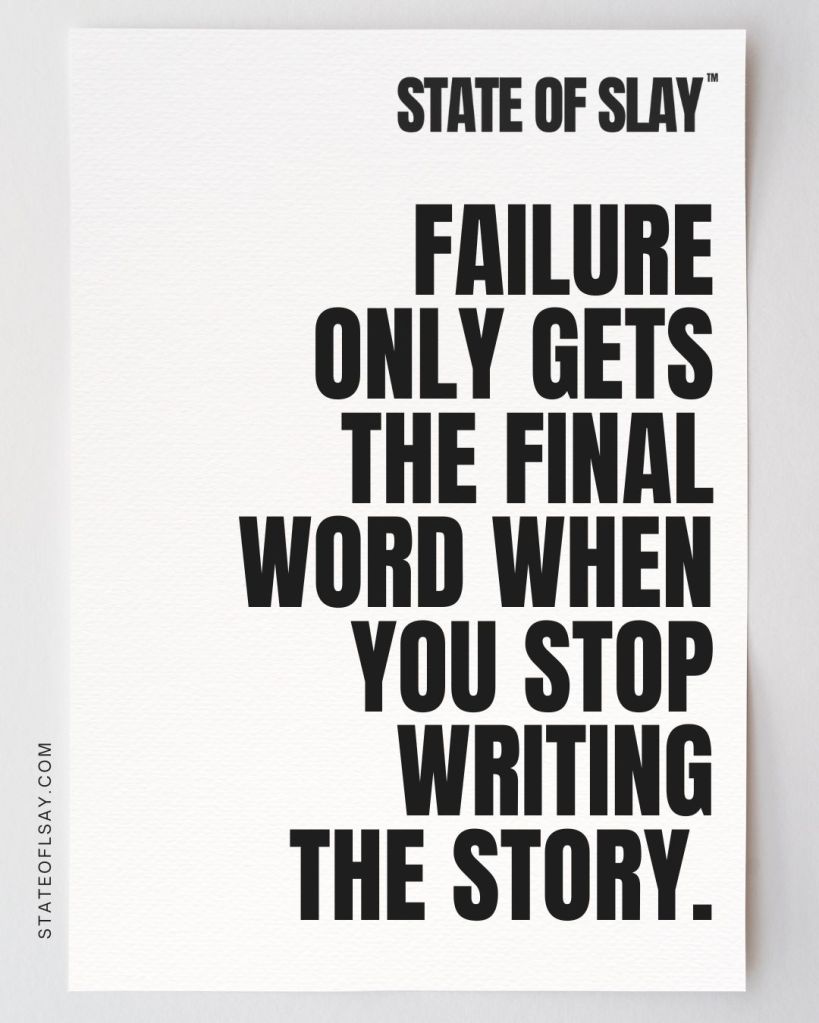
They’re often the ones who refuse to treat failure like a verdict.

They learn.

They adjust.

They begin again.

Sometimes differently.

Sometimes wiser.

Sometimes still scared.

But they keep writing.

You don’t need to pretend failure doesn’t hurt.

You don’t need to immediately find the lesson or turn disappointment into gratitude.

You can be frustrated.

You can grieve what didn’t happen.

You can take a minute to figure out what comes next.

Just don’t confuse a difficult chapter with the end of the book.

There are pages you haven’t lived yet.

Opportunities you can’t see yet.

Versions of yourself you haven’t met yet.

And none of them can exist if you let one moment decide how the entire story ends.

This is your reminder:

A setback can change the direction of your story without deciding how it ends. Keep writing.

Slay on.
Slay Say

FALLING IS PART OF RISING

We often see failure as the enemy of success, when in reality, it’s the soil that growth springs from. Every mistake, stumble, or setback isn’t wasted—it plants something valuable inside you.

Those moments that feel like defeat are really shaping your resilience, sharpening your clarity, and preparing you for what comes next.

Instead of fearing failure, remember that it’s not the end of the journey. It’s simply one of the steps on the way up.

This is your reminder that setbacks are not roadblocks—they’re building blocks.

SLAY on!

I Will Not Kick Myself When I’m Down

There was a time when I didn’t just fall down—I helped push myself further. The moment I was down, I would pile on the blame, the guilt, the shame. I thought that was what I deserved. That somehow the worse I felt, the more I could atone for my failures. But the truth is: kicking ourselves when we’re down doesn’t build us back up. It keeps us buried.

The Trap of Unrealistic Expectations

I held impossible expectations for myself. If I didn’t meet them perfectly (and let’s be honest, they were designed to be unmeetable), I used that as proof that I was a failure. That cycle of aiming too high, falling short, and self-destructing was its own form of punishment. And it kept me stuck in the belief that I wasn’t good enough.

Even when good things did happen, I didn’t trust them. I feared they’d be taken away. I feared I would mess them up. I feared someone would find out I didn’t deserve them. That mindset didn’t protect me—it prevented me from ever feeling joy, ease, or peace.

Ground Zero and the Climb Back Up

When I found recovery, I was at rock bottom. Spiritually bankrupt. Emotionally drained. I couldn’t get any lower. And still, the instinct to blame and shame myself was there. But slowly, step by step, I started doing something different. Instead of kicking myself, I started caring for myself.

I had to rewire my brain to stop looking at every misstep as proof of failure. I had to learn that failure is part of learning. And more importantly, I had to love myself through it. I started asking: What can this moment teach me? That changed everything.

Reframing Failure as Growth

Because failure isn’t failure if it teaches you something.

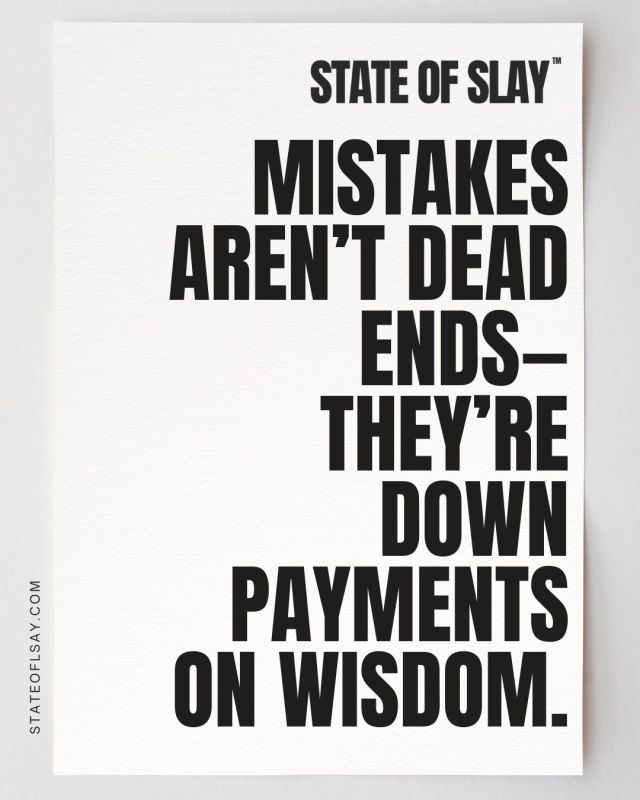
That shift in perspective allowed me to see mistakes not as dead ends, but as detours with lessons. Sometimes they pointed me toward a better path. Sometimes they showed me where I still had growing to do. And sometimes they helped me realize I was never really off-track—I was just learning in real time.

Yes, there were disappointments. Yes, I still felt frustration. But instead of spiraling into shame, I started practicing self-reflection with compassion. That’s how we grow. That’s how we keep going.

A Better Way Forward

So if you’re in a tough season, be honest with yourself: Are you making it harder by turning on yourself?

You may have goals and dreams that didn’t unfold how you imagined. That doesn’t mean you’ve failed. It means you’re human. It means you’re on the journey. And maybe—just maybe—that so-called failure is actually pointing you toward what you were meant to do all along.

Let go of the punishment. Pick up the lesson. Love yourself when it’s hardest to do so. That’s where the real power lives.


SLAY Reflection

  1. Do you tend to beat yourself up when things don’t go your way?
  2. What expectations are you holding yourself to that may be unrealistic?
  3. Can you think of a recent mistake that actually taught you something important?
  4. How does self-compassion feel different from self-criticism?
  5. What’s one way you can support yourself today, even if it feels uncomfortable?

S-L-A-Y:

  • Show yourself grace when you fall
  • Learn from the lesson
  • Acknowledge your humanity
  • You get to choose how you respond

Call to Action: Join the Conversation
I’d love to hear from you.
What helps you break the cycle of beating yourself up? How do you practice self-love on your hardest days?
Share your story in the comments. Let’s cheer each other on.

And if you know someone who’s stuck in the shame spiral, send this to them.
Sometimes, all we need is a nudge.