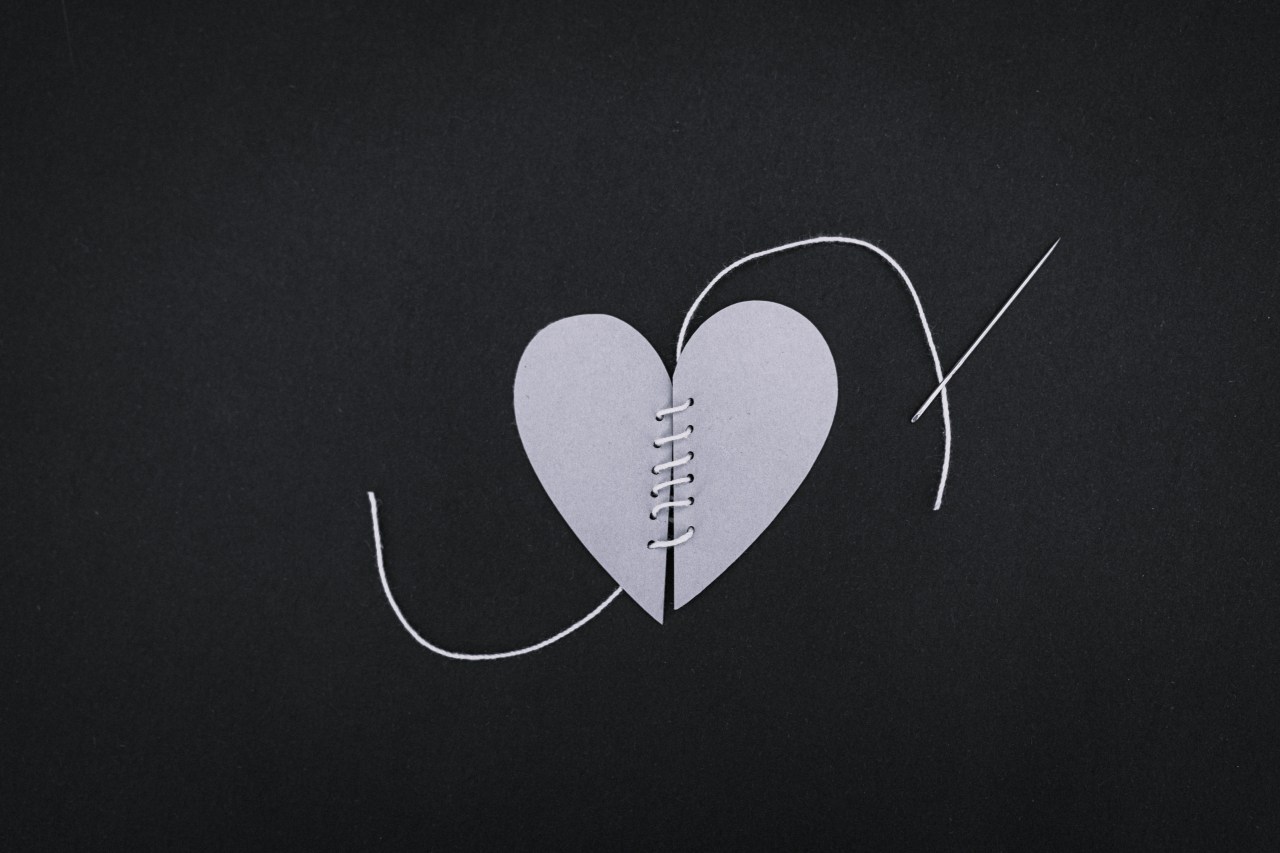
Sometimes All Someone Wants To Hear Is, I’m Sorry

There are moments when nothing can be done—when there’s no way to fix a situation or make it better. And in those moments, sometimes all someone wants to hear is, “I’m sorry.” Even if we’re not responsible for what happened, acknowledging someone’s experience can mean the world.


A Simple Yet Powerful Gesture

I think back to my life before walking this path, and how much it would have meant to hear those words. The power of a heartfelt “I’m sorry” is incredible. It connects us, makes us feel seen and valued, and reminds us that our feelings matter.

I remember sharing my story with someone I trusted, and when she gently put her hand on mine and said, “I’m sorry,” it felt like a wave of warmth washed over me. She had nothing to do with the events that led me to that moment, but her simple words were the first real validation of my pain and struggle. It helped me exhale. It helped me start to let go.


Owning Our Part

When we do have something to apologize for, those words carry even more weight. Saying “I’m sorry” for something we did—whether intentionally or not—shows strength. It honors the other person and ourselves. It’s not about weakness or surrender, but about standing in our truth and striving to be better.

As SLAYERS, we’re constantly working on ourselves. Yes, we’ll slip. Yes, we’ll make mistakes. But admitting our wrongs and saying, “I’m sorry,” can mend broken relationships and open the door to healing.


A Path to Healing

There’s magic in those words. “I’m sorry” can be the start of a new chapter, whether it’s in a relationship scarred by past pain or for someone still carrying the weight of old wounds. Sometimes, the apology won’t come from the person who caused the hurt. But when it comes from someone who cares—someone willing to listen and extend compassion—it still holds power. It’s a first step toward healing.

SLAY on.


SLAY OF THE DAY: Reflect & Rise

  • Do you struggle to say “I’m sorry”? Why?

  • What do you think it says about you if you apologize?

  • Have you ever seen “I’m sorry” as a sign of weakness? Can you shift that perspective?

  • Do you appreciate hearing someone say they’re sorry, even if they weren’t directly involved? How does it make you feel?

  • Do you offer that same compassion to others when they’re hurting? Why or why not?


Call to Action: Join the Conversation
I’d love to hear from you.
When was the last time you heard—or said—“I’m sorry”? How did it change the moment?
Share your thoughts in the comments. Let’s build each other up with honesty and compassion.

And if you know someone who’s been holding on to pain, send this to them.
Sometimes, just hearing those words is a step toward healing.

Ignoring The Facts Doesn’t Make Them Go Away

You can’t pretend the facts don’t exist.
You may ignore them, twist them, or bury them deep—but they don’t vanish.

When we avoid truth—because it’s too painful, too inconvenient, or too scary—we don’t protect ourselves. We injure ourselves.

Truth, no matter how sharp, is the foundation for growth. Without grounding in what is, we drift into fiction, stories, and confusion.


The Temptation to Deny

Feelings are persuasive. Our minds can convince us “this isn’t happening,” “that person didn’t mean it,” or “I’ll worry tomorrow.”

I used to be a master at it. I saw only what I wanted to see to preserve my story. Over time, I blurred the line between fact and fantasy until I couldn’t tell the difference.

But ignoring the truth doesn’t erase it—it delays the consequences. The costs only build: regret, confusion, broken relationships, self-betrayal.

Avoidance is a short-term refuge with long-term bankruptcy.


When Facts Feel Too Heavy to Hold

Sometimes the facts we need to face are terrifying.

  • “This relationship is toxic.”

  • “I’m not being honest with myself.”

  • “I’ve been settling.”

The pull to deny them is real. It’s easier to live in a comfortable lie than wrestle with the weight of truth.

But the irony is this: truth brings liberation. Even when it hurts, it frees you from the prison of your own illusions.


What the Facts Give You

When you embrace reality—even the parts you don’t like—you gain:

  • Clarity. You see what’s actually happening, not what you fear is happening.

  • Authority. You can act from truth, not fear.

  • Power. You no longer cede control to illusions or assumptions.

  • Growth. You move forward with integrity instead of spinning in confusion.

Facts aren’t magic. They don’t always heal instantly. But they give you the platform to heal intentionally.


How to Face the Facts

It takes courage—and consistency. But here’s how you begin:

  1. Ask yourself: What do I know to be true?
    In moments of chaos, pause. What fact can you anchor to—no matter how small?

  2. Stop arguing with evidence.
    When you catch yourself resisting what’s clear, name it: “I’m fighting the facts because I’m scared.”

  3. Document what you see.
    Journaling, voice notes, voice memos—let the truth come out in the light.

  4. Let the facts guide action.
    Knowing something is true isn’t passive. Use it to make decisions, to set boundaries, to course-correct.

  5. Practice radical acceptance.
    Acceptance doesn’t mean liking what is. It means not wasting your energy resisting it. Use your focus for forward motion.


Truth in the Toolbox

I now carry “facts” in my SLAY toolbox—tools I use daily.
They help me discern between inner drama and real problems.
They help me take responsibility where I need it, and release what isn’t mine.
They help me walk confidently in my life, not guided by fear.

Yes, sometimes facts will cut deep. But you’re meant to walk through the fire—not be burned by it.


SLAY Reflection

  1. What facts in your life are you avoiding or denying?

  2. How has ignoring them hurt you—emotionally, mentally, relationally?

  3. What’s one small truth you can own today (even if it feels scary)?

  4. How might your life shift if you stopped arguing with evidence?

  5. What action can you take now based on what is, not what you wish it were?


S – Stop ignoring what you already know
L – Let truth, not fear, be your guide
A – Act from what you see, not what you imagine
Y – Yield to integrity—let your life be shaped by real facts


Call to Action: Join the Conversation

I’d love to hear from you.
What’s one fact you’ve been avoiding—and how could facing it change your life?
Share your reflection in the comments. Let’s grow together in honesty.

And if you know someone who’s trapped by denial or stories, send this to them.
Sometimes, truth is the first arrow we need to slay illusions.

Falling Down Is Part Of The Process

When we step into a new chapter—filled with intention, purpose, and growth—we often expect things to go smoothly. We’re showing up, doing the work, making better choices… shouldn’t that mean we’re past the hard parts?

Not quite.

Falling down is part of the process. Always has been. Always will be.

I’ve learned more from my falls than I ever have from my wins. Those stumbles gave me new tools, revealed blind spots, and taught me that even when there isn’t a clear solution, I’m strong enough to get back up again.

Falling isn’t failure—it’s feedback.


Setbacks Aren’t Stop Signs

It’s easy to feel discouraged when things don’t go the way we hoped.

When you’re working so hard to be better, live authentically, and move forward, setbacks can feel personal. It’s frustrating. It’s deflating. But here’s the truth: setbacks don’t mean you’re off track—they mean you’re on it.

Every fall is an opportunity to pause, reflect, and ask:

  • What did this moment teach me?

  • What was my part in it?

  • What new tool or insight can I take forward from here?

If everything went perfectly all the time, we wouldn’t learn much. We wouldn’t build strength. And we definitely wouldn’t develop the resilience we need for long-term growth.


Every Fall Is Just Information

Let’s take the drama out of the fall.

Not every stumble is a crisis. Not every setback is a disaster. Sometimes it’s just a signpost that says: Not this way. Try another.

When we start to look at our missteps as information—not identity—we take back our power.

A fall doesn’t mean you’re broken. It means something needed your attention.

Maybe you weren’t doing what you needed to do.
Maybe you missed a red flag.
Maybe the lesson was simply about learning how to stand back up.

Whatever the reason, the fall isn’t the end. It’s just part of the path.


Falling Forward with Intention

Some of the most painful moments in my life were the result of my own choices—or lack of action. But with each one, I had a decision to make: let the fall define me, or let it refine me.

If we ignore what the fall is trying to teach us, it’s likely we’ll end up back in that same spot—only this time it’ll hurt more, because we’ll know better.

But if we take the time to reflect, gather what we need, and move forward differently, we turn what was once a painful experience into a stepping stone toward something better.


Keep Showing Up

The key isn’t avoiding every fall. That’s impossible. The key is learning how to rise, gather the lesson, and keep moving.

No matter how hard you fall, you can get back up.
No matter how lost you feel, you can find your way again.

Eventually, you’ll recognize the patterns. You’ll learn where the pitfalls are. And you’ll start to navigate the path with more confidence.

Falling doesn’t mean you’re failing. It means you’re growing.
And growth is never a straight line—it’s a beautifully messy journey.


SLAY Reflection

Let’s reflect together, SLAYER:

  • S: What’s your usual reaction when you fall—do you give up or get curious?

  • L: Can you recall a setback that led to growth or a better decision later on?

  • A: How can you start viewing setbacks as information rather than personal failure?

  • Y: What’s one fall you can reframe today as a stepping stone instead of a stopping point?


Call to Action: Join the Conversation

I’d love to hear from you.
When was the last time you fell, and what did it teach you?
Share your story in the comments. Let’s cheer each other on.

And if you know someone who feels defeated by a recent fall, send this to them.
Sometimes, all we need is a nudge.

Peaceful Warrior

I was sitting across from someone the other day who was wearing a cap that said Peaceful Warrior. I watched him, and he certainly did look like a warrior—he was a solid guy—but he also looked grounded, and, as advertised, peaceful.

It reminded me how, as we walk our paths and go to battle each day—fighting for ourselves and those we love—we often don’t do it peacefully. We may start out that way, but once we get caught in the charge of action, the adrenaline, we lose that peace. We lose our serenity. And, often, we lose ourselves to anger, rage, or fear.

The idea of being peaceful among chaos is beautiful. Like a Matrix-style calm, where the action slows around us and we remain still and focused. While we can’t physically create that, we can spiritually and mentally.

So how do we keep the peace in our daily lives, with chaos all around?


Manage Our Fear

Fear sets us into overdrive. It removes calm and peace, puts us into reaction mode, and blinds us to what’s real. To find peace, we need to manage our fears. Remember—fears are not facts. Stick to what’s true. Stay present. Focus on what you can do in each moment to move forward.


Keep Our Intentions Pure

Do things because you want to, not for what they’ll get you or how they’ll make you look. That’s the way of a peaceful warrior. Focus less on the outcome and more on the reasons behind your actions and the journey itself.


Let Go of Old Ideas

Past experiences or old beliefs can limit what we can accomplish. We are evolving every day. Let go of the past. Believe in who you are becoming. When you do, limitations fall away and new possibilities open up.


Avoid Over-Scheduling

We juggle a lot, but when we over-schedule, we lose peace and scramble for control. We risk losing sight of who we’re working to be. Set realistic goals. Focus on each task. If you can’t finish it all today, that’s okay—tomorrow is another chance.


Win or Lose, You Win

Stop framing everything as a win or loss. The fact that you’re trying is a win. If things don’t go as planned, that’s a lesson. Maybe it wasn’t supposed to go your way that day. Now it’s your turn to handle it in a way that builds your growth.


Don’t Judge Your Thoughts

Negative or surprising thoughts will pop up. They’re not your truth unless you let them be. Notice them, ask yourself why they’re there, and let them go. Often, these thoughts come when we’re in H.A.L.T.—hungry, angry, lonely, or tired. Check in with your self-care when negativity creeps in.


SLAY OF THE DAY: Reflect & Rise

  • Do you think of yourself as a peaceful warrior? If yes, why? If not, why not?

  • Are there things you can tackle peacefully and some not? List what you can, and what you cannot. Why do you struggle with the ones on your not list?

  • What can you do to change that?

  • How can you practice being a peaceful warrior, even on the tough days?

  • What will it take for you to lose peace, then find it again—and not let that loss be a loss but a lesson?


Call to Action: Join the Conversation

I’d love to hear from you.
What’s one way you can step into your power as a peaceful warrior today?
Share your story in the comments. Let’s support each other in finding peace.

And if you know someone who’s navigating chaos right now, send this to them.
Sometimes, a little encouragement is all we need to rediscover our peace.

Be The Mountain, Not The Weather

I was talking to someone the other day. They were struggling with something, and before he finished sharing, he said, “I know, I need to be the mountain and not the weather.”
It made me smile.

Yes, we should all be the mountain.


Solid vs. Shifting

The mountain is solid. It has a strong foundation. Nothing is moving a mountain—it stands tall.

The weather, on the other hand, comes and goes. It shifts and swirls. It can change completely in a day, be unreliable, unstable, surprising, and even destructive. Sure, there might be days when having the force of the weather sounds tempting—when it feels like release—but in the long run, what we need is to be the mountain.

So, how do we become more like the mountain and less like the weather?


Be Flexible

It might sound strange to say a mountain should be flexible, but building your own solid foundation means being open and adaptable.

I’ve written before about the importance of staying teachable. To remain teachable, we have to stay flexible—open to new ideas, perspectives, and information. It’s great to have convictions, but it’s also essential to listen to other viewpoints. You never know when you might learn something that shifts your understanding or reaffirms your stance.

Stay flexible. Look at situations from all angles. Make sure your perspective rests on solid ground.


Give Yourself Permission

Be confident in your decisions. Allow yourself to try new things—without waiting for approval.

Too often, we look to others for validation when we should be checking in with ourselves. If it makes you happy, inspires you, or fills you with joy, do it. It doesn’t matter if others understand or approve. This is your life.

Give yourself permission to change. To grow. To become.


Find Forgiveness

Let go of what no longer serves you. Release the grudges, the regrets, the “should-haves” that weigh you down.

Forgive others for what they did—or couldn’t do. More importantly, forgive yourself. For not knowing better. For not making the best choice in a moment. We’re all human, and none of us gets it right all the time.

Holding on to past hurts chains us to the past. Letting go frees us to move forward.


Be Mindful

With forgiveness comes mindfulness.

When we practice mindfulness, we make choices that serve us—decisions that help us grow, strengthen our self-esteem, and build true confidence.

Stay present. Stay grounded.


Find Love and Gratitude

When we move through each day with love in our hearts and gratitude for what we have, we make better decisions.

Walking in love and gratitude keeps us centered in spirit, not ego. And it’s from this space that we find true peace—a peace that can’t be shaken by life’s storms.


Engage in Life

This is the result of it all.

When we practice these principles, we become more engaged in life. We care for ourselves and nurture relationships with others. Our world expands as we open ourselves to new experiences and connections.

We become the mountain—steady, solid, unwavering—no matter what storms may come. And we know the sun will always rise again.


SLAY OF THE DAY: Reflect & Rise

Do you see yourself more as the mountain or the weather? Why?
Can you think of moments when you’ve been both? What triggered the shift?
What gets in your way of standing solid?
What can you do today to strengthen your foundation and embrace your inner mountain?
What action will you take to give yourself permission to grow, change, and forgive?


Call to Action: Join the Conversation

I’d love to hear from you.
What does being the mountain look like in your life? How do you stay grounded through storms?
Share your story in the comments. Let’s support each other’s growth.

And if you know someone who could use a little extra grounding today, send this to them.
Sometimes, just knowing we have the power to stand steady makes all the difference.

Living With Unsolved Problems

We all have them—those lingering problems we just can’t figure out. Maybe it’s a situation where someone won’t discuss or engage with us to find a solution. Maybe it’s something completely out of our control. Whatever it is, these unresolved issues can eat away at us.

For years, I let those problems take control of me. I thought I had to solve everything, to my own satisfaction. I couldn’t let things go. It literally drove me crazy, trying to force solutions where sometimes, there weren’t any. I didn’t know how to accept what was or give myself permission to move on. Back then, moving on and acceptance were not even part of my vocabulary.

But I’ve learned something.


Prefer to listen? The Audio Blog version is available here.


Acceptance Is the Key

Acceptance truly is the key to so many of our problems. Things often don’t look or feel the way we think they should—or the way we want them to—and sometimes, there’s just no way to change that.

For those of you who just recoiled at that idea, this blog is especially for you.

Nothing—absolutely nothing—is worth surrendering your peace of mind for, especially if it’s just to prove a point or make sure you’re right. That imaginary scorecard we sometimes carry around? It’s a heavy burden that robs us of our serenity.

For me, it became a matter of life and death. The things I fought so hard to control couldn’t be solved by me alone. When I finally let go and accepted that, my world expanded. I was able to look outside myself for new possibilities—and I found them.


Some Problems Just Can’t Be Solved—At Least Not Now

Sometimes, there’s no solution to be found. Maybe the situation has reached a standstill, or someone has passed, or circumstances just don’t allow for resolution in this moment.

But here’s the thing: letting something go now doesn’t mean a solution won’t present itself later.

I always say, “Never say never.” I’ve seen miracles in my own life where solutions appeared to problems I thought were impossible to solve.

Find peace with what you can’t solve today. Stay open to the possibility of resolution down the road—but don’t wait for it. Trust that if a solution is meant to appear, it will, when the time is right. Time has its own schedule, and we can’t rush it. Let it do its thing while you continue to live yours.

Protect Your Peace

There will always be things in life we can’t control or solve. If we want to live a happy life, it’s up to us to find peace and acceptance around those things. Do what you can to figure things out—but know when to walk away. Your peace of mind is worth far more than a forced solution.

Sometimes, no solution is the solution. At least for now.


SLAY OF THE DAY: Reflect & Rise

Do you have a hard time letting things go?
Do you feel like you need to solve everything?
How do those unsolved problems affect your peace of mind?
What would happen if you accepted that some things can’t be solved—right now?
How could that acceptance set you free?


Call to Action: Join the Conversation

I’d love to hear from you.
What’s one problem you’re ready to stop forcing—and let time or acceptance handle?
Share your story in the comments. Let’s cheer each other on.

And if you know someone struggling with unresolved problems, send this to them.
Sometimes, just hearing “It’s okay to let go” makes all the difference.

When Someone Tries To Shame Us, It Only Shames Them

Most of us have experienced it at some point.

Someone calls us out for not knowing something.
Mocks a decision we made.
Ridicules us for a mistake.
Speaks with just enough condescension to make us feel small.

Shame has a way of landing fast and hard — especially when we’re already feeling vulnerable. And in that moment, it can trigger an old, familiar ache: the part of us that once believed we were “less than,” “different,” or “not good enough.”

But here’s the truth we often forget when shame is directed at us:
When someone tries to shame you, it says far more about them than it ever does about you.

Shame is not strength.
It’s insecurity in disguise.


Shame Is a Projection Not a Truth

People who are grounded in themselves don’t need to humiliate others. They don’t gain confidence by tearing someone down. They don’t feel threatened by curiosity, learning, or different experiences.

When someone tries to shame you for not knowing something or for making a choice they believe was “obvious,” what they’re really doing is projecting their own discomfort.

It’s the need to feel superior.
The need to be right.
The need to appear knowledgeable or important.

And more often than not, that behavior is rooted in low self-esteem — not high confidence.

Shame is rarely about education or growth.
It’s about power.


Why Shame Hurts Even When We Know Better

Even when we intellectually understand that shame isn’t about us, it can still sting.

Why?

Because shame targets our most tender places — the parts of us shaped by past experiences, criticism, rejection, or moments when we were made to feel wrong for simply being human.

On the wrong day, at the wrong moment, someone’s words can slip past our logic and land directly in our nervous system.

That doesn’t mean you’re weak.
It means you’re human.

And it’s exactly why compassion — for yourself first — matters so much in these moments.


We All Come From Different Places And That Matters

No two people arrive at life with the same background, education, experiences, or opportunities. We learn different things at different times, through different paths.

That’s what makes conversations interesting.
That’s what creates diversity of thought.
That’s what keeps us growing.

It is impossible — and unreasonable — to expect anyone to know everything.

There is no shame in learning.
There is no shame in asking questions.
There is no shame in saying, “I don’t know.”

In fact, there is far more strength in curiosity than in pretending you already have all the answers.


When I Realized I Had Been on the Other Side

I can say this honestly: I haven’t always handled this perfectly.

Before I was living the life I live now, before I found self-love, self-worth, and self-respect, I had moments where I tried to elevate myself by putting someone else down.

And if I’m being truthful, I know exactly why.

I felt insecure.
I felt less than.
I felt like I needed to prove something.

Belittling someone else gave me a temporary sense of control — a fleeting boost that never lasted. And afterward, it always felt worse. Heavier. More disconnected.

Once I started living in alignment with who I truly am, that behavior didn’t just stop feeling good — it felt wrong.

Because when you build real confidence, you no longer need to steal it from someone else.


Compassion Without Tolerance

Understanding why someone shames doesn’t mean excusing it.

You can have compassion and boundaries.
You can recognize someone’s pain without accepting their behavior.
You can see the truth without internalizing it.

I don’t tolerate shaming behavior anymore — but I also don’t take it personally.

Because I know what it looks like when someone isn’t in a good place.
And I know it has nothing to do with me.


You Are Not Required to Know Everything

Let this be your reminder:

You are not required to know everything.
You are not required to be perfect.
You are not required to justify your learning curve.

There is power in humility.
There is power in growth.
There is power in owning where you are without apology.

When someone tries to shame you, remember this:
If it wasn’t you, it would be someone else.

That tells you everything you need to know.


You Control What You Carry Forward

You can’t control how others behave.
But you can control what you absorb.

You get to decide whether someone else’s insecurity becomes your burden — or whether you set it down and walk away lighter.

And here’s the truth that matters most:
Knowing who you are is far more powerful than knowing whatever someone thinks you should know.

You don’t need to shrink.
You don’t need to defend.
You don’t need to explain your worth.

Just be you.
That is enough.


SLAY Reflection

Let’s reflect, SLAYER:

S: Have you ever been shamed for something you didn’t know or a decision you made? How did it make you feel?
L: Looking back, can you see how that moment reflected the other person’s insecurity rather than your worth?
A: Have you ever been on the other side and shamed someone else? What was going on inside you at the time?
Y: How can you choose self-respect and compassion the next time shame shows up — whether from someone else or within yourself?


Call to Action: Join the Conversation

I’d love to hear from you.
Have you experienced someone trying to shame you — and how did you handle it?
Share your story in the comments. Let’s cheer each other on.

And if you know someone who’s carrying shame that isn’t theirs, send this to them.
Sometimes, all we need is a nudge.

We Never Know Whoes Lives We Touch

Most of the time, we go about our lives unaware of the impact we’re making. We don’t always get to know whose day we made a little brighter—or whose life we helped change entirely—just by showing up. But that doesn’t mean the impact isn’t there.

Years ago, I was attending a support group regularly—committed to being there every Tuesday night. I didn’t think I was doing anything special. I was just showing up, doing the work, and trying to get by. Then one night, a man walked up to me and thanked me.

I didn’t recognize him. I didn’t recall ever having a conversation with him. So I asked why.

He said, “When I first started coming here, I didn’t have anything consistent in my life. But you were here every Tuesday. You were the only consistent thing I had.”

I was stunned. I had no idea that my quiet consistency had become someone else’s anchor.


You Have No Idea Who You’re Inspiring

That story came back to me recently at an orientation meeting for a volunteer program—one I joined to help people in their darkest hours, much like someone once helped me in mine.

A woman sitting beside me raised her hand and shared that she had once received support from the very program we were now volunteering for. It saved her. And now she was there to give back.

That’s the ripple effect in action.

Even on our lowest days, we still have something to offer. Even in our silence, someone might be watching. Even through our quiet perseverance, we may be inspiring someone else to keep going.

It doesn’t take grand gestures. Sometimes it’s a simple smile. A kind word. A warm hug. An act of respect. A bit of compassion. These moments matter more than we know.


You Matter More Than You Think

I’ve learned to treasure those seemingly small moments—the ones where someone feels seen, held, or heard. The moments that remind us: we’re not walking through this world alone.

We’re part of something bigger. A community. A collective. A heartbeat that echoes through every connection we make.

We all have stories to tell. Even on the days when we feel like we’re barely holding it together, those stories carry weight. Especially on those days.

So keep showing up. Keep sharing your truth. Keep offering what you have—even if all you have is a smile. Because someone out there might be praying for exactly that.

You never know who’s watching.
You never know who you’re helping.
You never know whose life you’re touching—just by being you.

SLAY on.


SLAY OF THE DAY: Reflect & Rise

Are you aware of the light you bring to the world—even on your darkest days?

  • Do you notice the people around you, and how your presence might affect them?

  • Have you ever discovered that something you said or did helped someone, even when you didn’t realize it?

  • Do you recognize how your experiences, even the hard ones, can offer hope to others?

  • What small act of kindness can you give today?

  • What moment in your past made you feel seen? How can you give that to someone else?

You matter. Your story matters. Your presence matters. Even when you don’t feel like it.


Call to Action: Join the Conversation

I’d love to hear from you.
What’s one way someone unexpectedly impacted your life—or one way you’ve discovered you helped someone else?
Share your story in the comments. Let’s cheer each other on.

And if you know someone who needs a reminder of how much they matter, send this to them.
Sometimes, all we need is a little light to lead us out of the dark.

Sometimes Something Negative Gives Us Exactly What We Want

I was recently on a trip, and during the process of checking in online something got messed up, perhaps it had something to do with us trying to do it on a phone in the sun poolside, but online checking wouldn’t let us check-in properly or give us boarding passes, it said we had to go to the counter in the airport. As we were trying to squeeze in the most out of our vacation we were frustrated as we were hoping to just breeze right through to security and not have to account for time waiting in line at the counter to sort out why we weren’t able to check-in properly. We let it get the best of us for a few moments, but the next day we left earlier than we wanted to just to be safe. In the end the whole process didn’t take that long and because my boyfriend was selected for an additional security check in the Jetway prior to our flight, a seemingly negative once again, he was able to board the plane earlier and he was able to get us the exact seats we were hoping to get so we were able to sit together for a trip home. So, a negative turned into a positive. Now, in the big scheme of things seats on an airplane is quite trivial, but it reminded me of how we categorize events in our lives as positive and negative, when, we don’t know how those events will play out in our lives, or the reason they’ve come up. You see, we don’t know what the outcome of any set of events will be. We can set out to have a positive attitude about them, we can do the footwork and set things up to give us the best possible outcome, but in the end, we have no control over how things actually unfold. What we do have control over is how we act and react to what’s going on around us.

In the instance with checking in for our flight, even though we were initially frustrated, we gave ourselves plenty of time to go through the process, and we went to the airport with a positive attitude and mindset. All things we can control. In the end it worked to our advantage, but even if it hadn’t there’s a lesson in that too, one of going with the flow and trusting that life is taking you where you need to be, and that maybe those things we think or feel or so important, aren’t really that important at all, they’re just nice to have, but not necessities for our well-being. Many times we can place importance on things that aren’t really that important, we give them much more value than they deserve, or we tell ourselves things have to be a certain way, but they don’t, not always, maybe not ever, sometimes when things don’t go our way we get the chance to experience something new, or see something from a different angle, and what we learn is that perhaps the way we’ve always “needed” things to be, or wanted them to be, wasn’t the best way after all, and we never would have known that if we always got our way and things always went exactly the way we wanted them to.

It’s a matter of perspective as well. When something seemingly negative happens, it’s our choice to have an open mind about it and be open to new possibilities. It’s also falls into a place of trust or having faith that you are being guided to exactly where you are supposed to be, or need to be. I find when I look at things from that perspective I am better able to let things go of the way I think they should be. Be open to new things, new ideas, new experiences, new ways of doing things. Let go and trust the path you’re on. When things don’t go your way, use that as an opportunity to change your attitude towards it, look at it as a possibility of something new and exciting, something different that you’re getting a chance to experience, and you just might find that the things you fought so hard to have a certain way weren’t the best way after all.

SLAY OF THE DAY: Do you find that if something doesn’t go your way, or if it’s not exactly the way you want it, that you have a negative attitude around it? Do you then let that sabotage your day and effect those around you? Do you see that you have a choice in how you let seemingly negative things effect you? Do you see that being open to new things can possibly show you a better way, or make your world bigger? List 5 examples of times that something negative happened and something positive came out of it as a result. List 5 examples where you could have changed your attitude about something you labeled as negative. How could a positive attitude have changed the outcome of those examples. In the end SLAYER, we only know what’s in front of us, or where we’ve been, we don’t have the whole picture, so when we’re only willing to see and do things our way, we may be missing out on a place we’re supposed to be, a place with new opportunities, new people, and new ideas, be open the next time something negative happens, look for the good that can come from that, even if it’s just the act of being open, I guarantee your life will get bigger and brighter if you do. SLAY on.

S – self L – love A – appreciate Y – you