Good morning SLAYERS! Forgiveness does not change the past, but it brightens your future.
New blog goes up Sunday, until then…SLAY on!

Good morning SLAYERS! Forgiveness does not change the past, but it brightens your future.
New blog goes up Sunday, until then…SLAY on!

There are monsters that live in our past. Some still haunt our present. They take from us. Our joy. Our confidence. Our peace. But here’s the truth:
They only keep taking if we keep letting them.
Forgiveness doesn’t mean making excuses. It doesn’t mean forgetting. It means cutting the cord. Reclaiming your power. Choosing not to carry someone else’s damage on your back any longer.
When I started to heal, I was told I needed to get honest—rigorously honest. That included facing the monsters I had let into my life. And yes, some were people who had deeply wronged me. Others were habits, patterns, or situations I kept returning to even when they hurt.
What I realized? I had played a part in letting some of those monsters in.
Whether it was staying in toxic relationships, seeking validation in the wrong places, or betraying myself to avoid being alone—I had to own my side of the story.
That doesn’t excuse the harm. But it gave me the clarity I needed to say: enough. And the strength to walk away.
Monsters thrive in silence. In secrecy. In shame.
They feed off the energy we give them—even if it’s hate, resentment, or pain.
But we have a choice.
You can take that pain and turn it into wisdom. You can use your past to protect your future. You can decide that today, right now, you will no longer allow what broke you to define you.
Forgiveness is not a gift to them. It’s a gift to you. It’s how you say:
“You no longer get to live rent-free in my mind.”
For many of us, the past still whispers. The memories still echo. That’s okay.
The goal isn’t to erase it. The goal is to disarm it.
To say:
That is real power.
You can carry the lesson without reliving the nightmare. You can remember without re-opening the wound. You can forgive the monster and protect the warrior you’re becoming.
If your monsters still show up in your thoughts, your choices, your relationships—ask yourself why. What are they still taking? And more importantly, what are you ready to take back?
You don’t need to justify their behavior to forgive them.
You just need to stop letting them lead your life.
Forgive what you can. Accept what you must. And then: leave the rest.
There is no space in this new chapter for what tried to destroy you.
You are the author now. And your story gets to look different.
Let your purpose lead. It knows the way.
S – Stop giving power to the past
L – Look at your part with honesty, not blame
A – Accept what you can’t change, change what you can
Y – Yield to growth and move forward free
I’d love to hear from you.
What have you learned by forgiving someone who hurt you?
Share your story in the comments. Let’s cheer each other on.
And if you know someone who’s stuck in their pain, send this to them.
Sometimes, all we need is a nudge.
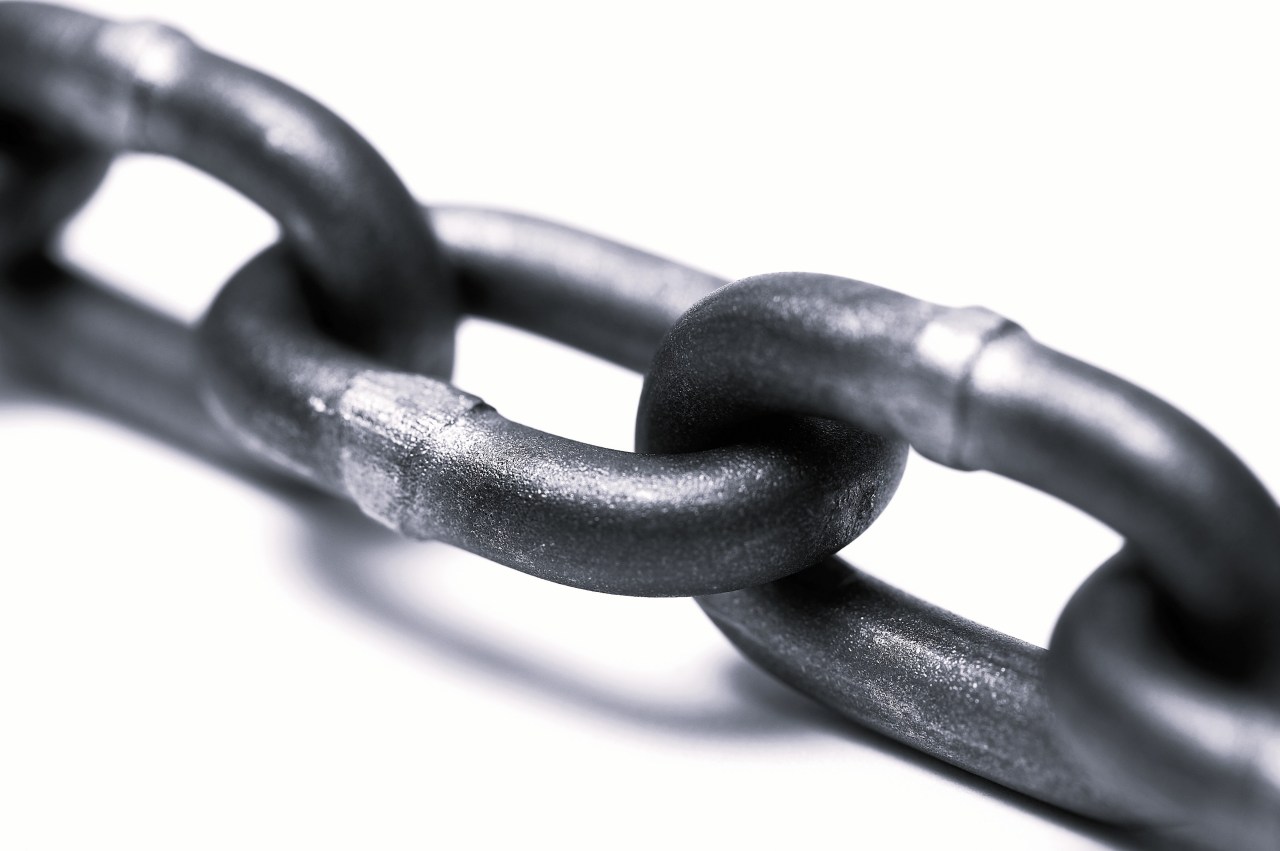
There was a time when I believed strength meant walking away.
Ending things.
Burning it all down before anyone could get too close.
And I had a lot of strength.
But I didn’t always use it for good.
Especially toward the end of certain chapters in my life, I used my strength to destroy:
Relationships. Opportunities. Myself.
Sometimes intentionally.
Other times, impulsively.
But almost always out of fear.
Fear of being exposed.
Fear of being seen as damaged.
Fear of being me.
So I built walls. I pushed people out. I burned bridges and convinced myself I didn’t have the strength to fix any of it.
But that wasn’t true.
What I didn’t have was the humility to try.
I had the strength all along. I just didn’t yet understand what real strength looked like.
Because real strength doesn’t lie in the destruction.
It lives in the repair.
It’s easy to tear something down.
It’s much harder to own your part and build something better in its place.
But that’s where we grow.
That’s where healing happens.
When I began to get better, I slowly learned how to channel that strength in a new direction.
One that looked more like forgiveness.
Like compassion.
Like showing up for myself and the people I loved.
I stopped using my strength to protect the wound and started using it to heal.
Here’s what else I learned:
That voice in your head—the one that says you’re “stronger alone” or that you’re “cutting off what doesn’t serve you”—sometimes it’s not wisdom.
Sometimes it’s fear talking.
Sometimes it’s pain pretending to be power.
There’s a difference between walking away to honor yourself and walking away to avoid yourself.
I’ve done both.
I’ve ended relationships and convinced myself I was doing the strong thing… when really, I was just afraid to look at the part I played in their breakdown.
It’s easier to point the finger.
It’s harder to say, “I chose this dynamic.”
“I allowed this behavior.”
“I contributed to the pain.”
But that’s the work.
That’s the kind of strength that transforms everything.
And here’s the beautiful part:
The more we practice using our strength to build, the more of it we gain.
Just like self-esteem comes from estimable acts, our inner strength multiplies when we use it for repair, growth, and truth.
We become stronger when we’re brave enough to face ourselves.
To say the hard thing.
To make the amends.
To walk toward the mess instead of away from it.
Because if you’re strong enough to destroy something…
You’re strong enough to repair it.
S – SHOW UP: Are you using your strength to avoid, escape, or destroy? Or to face, heal, and rebuild?
L – LEARN: What’s one moment where your strength showed up in a way that surprised you?
A – ACCEPT: Can you accept that real strength might look like softness, honesty, or vulnerability?
Y – YOU MATTER: What’s something broken that you still have the power to repair?
BONUS: What could change if you used your strength for good—starting today?
I’d love to hear from you.
Have you ever used your strength to heal something you once damaged?
Share your story in the comments. Let’s cheer each other on.
And if you know someone who’s struggling with what it means to be strong, send this to them.
Sometimes, all we need is a nudge.
Good morning SLAYER! Fill yourself up with love until you become like a magnet and that love becomes attracted to you.
New blog goes up Sunday, until then…SLAY on!
Good morning SLAYER! Don’t let the shadows of your past darken the the doorstep of your future.
New blog goes up Friday, until then…SLAY on!


Hello SLAYERS! Thank you to all the SLAYERS who joined me tonight! For those of you how didn’t join us, here’s what you missed!
SLAY on!

There is no going back.
No rewinding. No editing. No alternate ending where we made the perfect choice every time. The past is fixed. It happened. And for a long time, I let mine define me.
Before I began this healing journey, I used my past as proof that I was a victim. I told those stories in ways that supported that narrative. Sometimes I wanted sympathy. Sometimes I wanted validation. Sometimes I wanted an excuse for behavior I knew was not aligned with who I truly wanted to be.
And here is the truth I eventually had to face.
In many of those situations, I had a role. Sometimes a small one. Sometimes a big one. But denying that kept me stuck. It kept me repeating patterns. It kept me living in yesterday instead of building today.
The moment I committed to honesty, especially with myself, everything began to shift.
Taking responsibility is not about blame. It is about freedom.
When I stopped pointing outward and started looking inward, I began to see patterns. Choices I had made. People I had allowed into my life. Boundaries I had not set. Truths I had ignored.
At first, that realization was uncomfortable. I had built an identity around being wronged. Letting go of that identity felt like losing something familiar.
But what I gained was far greater.
Clarity. Growth. Self respect. And the ability to change.
Once you see your patterns, you can interrupt them.
And that is where transformation begins.
I used to carry shame, anger, and frustration everywhere I went. Those emotions colored how I saw myself and others. They influenced my reactions. They shaped my expectations.
But when I started living more honestly, those emotions began to loosen their grip.
I learned to ask different questions:
What did I learn?
What would I do differently now?
What boundaries do I need moving forward?
What forgiveness is necessary for peace?
Sometimes forgiveness was for someone else. Sometimes it was for myself. Often it was both.
And slowly, the past stopped feeling like a prison and started feeling like a teacher.
One of the biggest gifts of reflection is recognition.
When you understand your patterns, familiar situations begin to feel different. You notice warning signs earlier. You pause before reacting. You make decisions with awareness instead of autopilot.
Early on, I often did not know what the “right” response was. So I learned something important.
Pause.
Life is not a game show. There is no prize for responding fastest. Taking time to think, to ask questions, or to seek guidance is not weakness. It is wisdom.
And with practice, better decisions become more natural.
That is growth in action.
You cannot rewrite the past, but you absolutely shape what comes next.
When we act with honesty, integrity, and awareness, the weight of past mistakes lightens. They stop defining us because we are no longer repeating them.
We admit when we are wrong. We make amends when possible. We learn. We adjust. We grow.
And suddenly, the past becomes context instead of identity.
That shift is powerful.
It creates space for self respect. Confidence. Peace.
Responsibility does not mean harsh self judgment.
Some experiences truly were outside our control. Some situations were painful, unfair, or confusing. Acknowledging that is part of healing too.
The key is balance.
Accountability where we had choice. Compassion where we did not.
Both are necessary for emotional freedom.
And both allow us to move forward without dragging the past behind us.
This might be the most important part.
You are not required to remain the person you were during your hardest seasons.
Growth means evolution. Awareness means change. Healing means forward movement.
Your past informs you.
It does not imprison you.
And every day offers a chance to choose differently.
Let’s reflect, SLAYER:
S: When you think about your past, what emotions come up most strongly?
L: What patterns or choices do you now recognize that you could approach differently today?
A: Where might forgiveness, either for yourself or someone else, create more peace in your life?
Y: What is one small action you can take today that reflects who you are becoming rather than who you were?
I’d love to hear from you.
How have you learned to reinterpret your past so it supports your growth instead of holding you back?
Share your story in the comments. Let’s cheer each other on.
And if you know someone who needs permission to move forward without being defined by yesterday, send this to them.
Sometimes, all we need is a nudge.

There are moments when nothing can be done—when there’s no way to fix a situation or make it better. And in those moments, sometimes all someone wants to hear is, “I’m sorry.” Even if we’re not responsible for what happened, acknowledging someone’s experience can mean the world.
A Simple Yet Powerful Gesture
I think back to my life before walking this path, and how much it would have meant to hear those words. The power of a heartfelt “I’m sorry” is incredible. It connects us, makes us feel seen and valued, and reminds us that our feelings matter.
I remember sharing my story with someone I trusted, and when she gently put her hand on mine and said, “I’m sorry,” it felt like a wave of warmth washed over me. She had nothing to do with the events that led me to that moment, but her simple words were the first real validation of my pain and struggle. It helped me exhale. It helped me start to let go.
Owning Our Part
When we do have something to apologize for, those words carry even more weight. Saying “I’m sorry” for something we did—whether intentionally or not—shows strength. It honors the other person and ourselves. It’s not about weakness or surrender, but about standing in our truth and striving to be better.
As SLAYERS, we’re constantly working on ourselves. Yes, we’ll slip. Yes, we’ll make mistakes. But admitting our wrongs and saying, “I’m sorry,” can mend broken relationships and open the door to healing.
A Path to Healing
There’s magic in those words. “I’m sorry” can be the start of a new chapter, whether it’s in a relationship scarred by past pain or for someone still carrying the weight of old wounds. Sometimes, the apology won’t come from the person who caused the hurt. But when it comes from someone who cares—someone willing to listen and extend compassion—it still holds power. It’s a first step toward healing.
SLAY on.
SLAY OF THE DAY: Reflect & Rise
Do you struggle to say “I’m sorry”? Why?
What do you think it says about you if you apologize?
Have you ever seen “I’m sorry” as a sign of weakness? Can you shift that perspective?
Do you appreciate hearing someone say they’re sorry, even if they weren’t directly involved? How does it make you feel?
Do you offer that same compassion to others when they’re hurting? Why or why not?
Call to Action: Join the Conversation
I’d love to hear from you.
When was the last time you heard—or said—“I’m sorry”? How did it change the moment?
Share your thoughts in the comments. Let’s build each other up with honesty and compassion.
And if you know someone who’s been holding on to pain, send this to them.
Sometimes, just hearing those words is a step toward healing.

There was a time in my life when I thought holding onto anger meant strength.
That if I stayed upset long enough, if I replayed what happened often enough, somehow justice would balance itself out.
But the truth I eventually had to face was much simpler and much harder:
Resentment does not bind the other person. It binds you.
And when I finally understood that, everything about forgiveness started to shift.
Because letting someone go was never about them.
It was always about me.
About my peace.
My energy.
My ability to move forward without dragging the past behind me like a heavy suitcase I never unpacked.
And maybe you have felt that too.
Holding resentment creates a strange connection.
Even if someone is no longer physically in your life, emotionally they still occupy space.
You think about them.
You replay conversations.
You imagine what you would say if given another chance.
You rehearse arguments in your head that may never happen.
I have done all of that.
And honestly, it was exhausting.
There is a saying that resentment is like drinking poison and waiting for the other person to die.
I resisted that idea at first because it felt too dramatic.
But over time I saw how accurate it was.
My sleep suffered.
My mood shifted.
My joy dimmed.
And none of it affected the other person at all.
That realization was sobering.
Because suddenly it was clear: I was not punishing them.
I was punishing myself.
This part is important, and I wish someone had said it to me sooner.
Forgiveness does not mean:
What happened was acceptable
You have to reconnect with the person
You forget the experience
You stop having feelings about it
Forgiveness simply means you decide not to keep carrying the emotional weight anymore.
That is it.
You are not excusing behavior.
You are reclaiming your peace.
And honestly, that is one of the most self loving choices you can make.
For me, the shift happened gradually, not all at once.
I realized that staying angry kept me anchored in moments I did not want to relive.
It kept my attention focused backward instead of forward.
And I had worked too hard on healing, growth, and self awareness to keep sacrificing my peace for someone else’s actions.
So I started asking myself a different question:
Does holding onto this help me become who I want to be?
The answer was always no.
Every single time.
That is when I began to understand that setting someone free emotionally was actually setting myself free.
Forgiveness is rarely a dramatic moment.
It is often a quiet internal decision.
Sometimes it looks like:
Choosing not to revisit the story again
Deciding not to engage in conversations that reopen the wound
Redirecting your energy toward your own life
Allowing space for new experiences
And sometimes it is as simple as saying, internally:
“I release this. I deserve peace.”
You do not even have to tell the other person.
Often, forgiveness is an entirely private act.
There was no single formula, but there were a few things that consistently helped.
I had to accept that the event happened exactly as it did.
Not how I wished it had happened.
Not how I thought it should have happened.
Just reality.
Acceptance removes the constant mental argument with the past.
And that alone can bring enormous relief.
Even painful situations carry information.
Sometimes they teach us boundaries.
Sometimes they sharpen our intuition.
Sometimes they show us what we will never tolerate again.
Growth does not justify the hurt.
But it can transform it.
And transformation is powerful.
Looking at situations from another angle does not excuse behavior.
It simply broadens understanding.
People act from their own wounds, fears, and limitations.
Recognizing that helped me detach emotionally without minimizing my experience.
This was the biggest one for me.
Does holding onto anger improve your life?
Your health?
Your relationships?
Your happiness?
Usually, it does not.
Letting go often serves you far more than staying angry ever could.
Sometimes, closure never comes externally.
No apology.
No explanation.
No final conversation.
Learning to create closure internally is a life skill.
Writing a letter you never send.
Talking it through with a trusted friend.
Praying, meditating, journaling.
Whatever works for you.
Closure is not always given.
Sometimes it is chosen.
When I released resentments, I noticed something surprising:
I had more energy.
More creativity.
More patience.
More emotional bandwidth for the people who actually deserved it.
Forgiveness cleared space.
And that space allowed joy back in.
Not immediately.
But steadily.
Forgiveness does not mean repeating patterns.
In fact, it often makes boundaries clearer.
You can forgive and still:
Limit contact
Change how you engage
Choose distance
Protect your emotional well-being
Forgiveness and boundaries are not opposites.
They often work together beautifully.
If you are holding onto anger right now, I get it.
Truly.
There were times I thought I would never let certain things go.
Times I believed my anger was justified and permanent.
But I promise you this:
Peace feels better than being right.
Freedom feels better than holding a grudge.
Healing feels better than staying stuck.
You deserve that.
Not someday.
Now.
Surrender
What resentment are you currently carrying?
Listen
How does holding onto it affect your emotional well-being?
Accept
Can you accept the reality of what happened without rewriting it?
Yield
What would letting go create space for in your life?
I would love to hear from you.
Have you ever experienced freedom after letting go of resentment or forgiving someone?
Share your story in the comments. Let’s cheer each other on.
And if you know someone who might need this reminder, send this to them.
Sometimes, all we need is a nudge.
Yeah you read that right SLAYERS, those things we consider our weaknesses will become our strengths! Crazy right? Hear me out. All of the things in our lives that challenge us, when we learn to and choose to take the right action, make us stronger and better people. I know, you’re still skeptical, I used to be as well. But let’s first start with this…have you forgiven yourself yet? If you haven’t that’s still on your list of things you need to SLAY, if you have, this concept may not seem so far fetched. I know for myself all of the things I used to hate about myself are the things that made me stronger because I was able to overcome them, or realized they weren’t weaknesses at all, they just made me feel vulnerable, and one way to weed through these things was acceptance, listening non-forgivers?
Acceptance is really the answer to all our frustrations, and that doesn’t mean being a door mat and letting people walk all over us, it means, looking at things for what they are, truly are, with the facts, not our feelings, and then deciding what the next right thing to do is. There are always going to be things that we don’t want to accept, for instance I don’t really want to accept that someone I trusted betrayed me, fraudulently used my name and personal information for his own gain and now I’m paying the consequences of that, but I have to, and I have. Once we know the facts we are safe. We’ve already established that we are not in control of all things, we’re not, or we would have everything we want, and everything would look exactly how we think it should look, and well, we’d probably be on a really awesome vacation right now, but alas, we don’t control all things, but we wouldn’t be SLAYERS if we did, we wouldn’t get stronger, we wouldn’t learn how to accept when things don’t go our way, or when people don’t behave the way or how we expect them too. There are many things we just have to accept.
For me acceptance goes along with my spirituality, if I believe in something greater than myself, something that is looking out for me, it’s easier for me to accept things for what they are, because really, I only have my one perspective, I only know how my actions affect those immediately around me or myself, I have no idea what the bigger picture is or how what I do may affect others out of my immediate circle who are supposed to be affected by something I’m doing. I trust that, if I am connected and paying attention, that I am where I am supposed to be, doing what I’m supposed to be doing, it’s a leap of faith I know, but you have to agree that when we are on the right path and doing things for the right reasons, ie: not for just ourselves, that things seem to go smoother, that people seem to come into our lives who can help and support us, or who are just of like mind, it’s those times, the times our “gut instinct” tells us to do something, that we are one with our purpose, so for me, when things don’t go my way, I try remember that it wasn’t meant for me, or I’m supposed to go through something for myself and quite possibly the other people in involved.
Great example of acceptance. I was stuck on the 405 in Los Angeles, late for a meeting, my frustration and anger were at a boiling point, I was 25 minutes late, I hate being late, when I finally get to my destination I see a fire truck and ambulance parked out front. I found out that a woman had lost control of her SUV and rammed right into a car parked behind the spot where I would have parked, about 25 minutes before I got there, meaning if I had been on time she would have slammed into my car, and quite possibly me getting out of it. I try to remember that story when I get stuck in traffic and say to myself, “you are exactly where you are supposed to be.”
We don’t always know or understand why things happen to us, but finding a way to acceptance saves us a lot of heartaches and is one of the ways that I have found peace, and a way I turned a weakness of trying to control or manipulate situations into a strength. I can now find patience when things are out of my control and trust the process. This can be done for any of those attributes we think are our weaknesses, even just the awareness of them make us stronger, but asking yourself if that attribute really does make you weak, or if it just gives you the illusion of weakness because it makes you human, vulnerable, or soft, if that’s the case, it’s not a weakness at all, but what makes you a loving caring individual, something to be proud of, and the more tools you get in your SLAYER chest, the more you’ll have the courage to wear them like a badge of honor. If they are truly something that is hindering you from living as your authentic self, then the work begins to throw them away, or at least keep them in check, these are old ideas that no longer serve you, and even though they may pop up, even in SLAYDOM, they can be told to take a hike because their services are no longer needed. It’s all part of the process SLAYER, be patient, loving and kind to yourself during your journey, but in the end, if it doesn’t serve you, you don’t need it, throw it away and own your power and strength. SLAY on!
SLAY OF THE DAY: Make a list of the things you have a hard time finding acceptance about. Ask yourself why? Are the reasons selfish or because of fear? What attributes or habits stand in your way of you living as your authentic self? Make a list, ask that those attributes or habits be taken away, light the list on fire and watch the burn away.
S – self L – love A – appreciate Y – you
