There were so many times—when I was living in my darkness—that I wished I could turn back time. Every day felt heavier. My shame grew deeper, my self-hatred stronger, and my life more out of control. I remember wondering how I ended up in such a place, feeling trapped and defeated. And instead of taking action, I relied on wishful thinking, hoping things would magically return to the way they once were.
But as they say: a pickle can’t go back to being a cucumber.
You Can’t Go Back
Life moves forward, whether we do or not. Time doesn’t stop just because we’re stuck. We can’t undo the past, and we can’t relive the glory days we once knew. No amount of hoping, wishing, or romanticizing will turn back the clock.
What we can do is choose to grow from where we are now. We can become the best version of who we are today. We might not be able to go back to who we were before, but we can become someone even stronger—someone wiser, more resilient, and more alive because of what we’ve walked through.
When I stopped trying to return to the past and started showing up for the present, everything changed. I started building the life I wanted—not by undoing what was, but by creating what could be.
From Regret to Renewal
In the beginning, I had to learn how to be okay with discomfort. Letting go of the past and embracing the present wasn’t easy. I had to shift my mindset, stop reliving old memories, and set new goals for myself. I had to trust that I could heal, evolve, and become someone I hadn’t even imagined yet.
And you know what? I did.
Today, I live in forward motion. I know I can’t be who I was before, but I can be someone better. I’ve learned to love the journey—even when it’s messy. Because forward is the direction of growth. It’s where joy, healing, and new beginnings live.
We don’t need to be cucumbers again. We just need to be the best damn pickles we can be.
SLAY on.
SLAY Reflection: Embrace the Now
Do you spend time wishing for the past? Why?
What are you holding onto that’s keeping you stuck?
What parts of your past could you reframe as lessons?
What can you do today to move forward—just one step?
How might your life change if you focused on who you’re becoming, not who you used to be?
Call to Action: Join the Conversation
I’d love to hear from you. What’s one way you can let go of the past and move forward today?
Share your story in the comments. Let’s cheer each other on.
And if you know someone who keeps looking back, send this to them.
Sometimes, all we need is a reminder that the best is yet to come.
Growing up, I never left any room for mistakes. I expected myself to do everything perfectly—and when I didn’t, I beat myself up. I carried these unrealistic expectations with me through childhood, my teenage years, and well into adulthood, never giving myself permission to simply be human. The result? A constant negative narrative playing on loop in my head, convincing me I wasn’t good enough. Every mistake felt like proof of failure, which I used as an excuse to abandon self-care, spiral into self-doubt, and reinforce the lie that I could never get better.
I see now that none of that thinking was true. I made it feel true by keeping my struggles to myself and believing the cruelest voices in my mind. I nearly rode that train all the way into the station—but thankfully, I got off before the final stop.
The truth is: our mistakes are where we learn the most. They shape our character. They build the resilience we need to accomplish the things that really matter. No one is meant to get it right every time. The growth is in the slip-ups. That’s why we need to embrace what I call the “Oops Factor.”
What Perfectionism Really Cost Me
Expecting myself to be perfect—even when I knew better—set me up to fail. I’d aim impossibly high and, when I missed the mark (which was inevitable), I’d use that as ammunition to tear myself down. Even when I succeeded, I picked apart the outcome. I never gave myself permission to feel proud. That made relationships harder too. I lived in fear that people would see me for the fraud I thought I was.
Eventually, I reached a breaking point and asked for help. In that process, I learned something life-changing: mistakes are a sign that I’m trying. They mean I’m pushing myself. And even when things don’t work out the way I hoped, there’s always a lesson or a growth opportunity—often the real reason I was on that path in the first place.
Over time, I’ve learned to trust that I’m exactly where I need to be. My job is to take the next right step. I can’t control the outcome—just the intention behind the action. And when I show up with that mindset? It’s always a win. Trying is the victory. There’s always something to gain.
Make Room for the Oops
We’re all allowed to make mistakes. In fact, we should be making them. That’s how we grow.
Start leaving space for the Oops Factor in your life. When something doesn’t go as planned, look for the lesson—or simply laugh it off. Don’t let the fear of messing up keep you from taking risks or being yourself. Let go of the pressure to be perfect and redefine what success looks like. Maybe, just maybe, being exactly who you are today is enough.
Mistakes don’t define you. But how you respond to them just might.
SLAY on!
SLAY OF THE DAY: Reflect & Rise
Do you expect yourself to be perfect?
How do you usually react when you make a mistake?
Does that response help you—or harm you?
What’s one belief about mistakes that you’re ready to let go of?
What’s one thing you’ve learned from a recent oops moment that helped you grow?
Give yourself permission to stumble. Learn, laugh, and get back up stronger.
Call to Action: Join the Conversation
I’d love to hear from you. What’s one way you can show yourself more grace when you make a mistake?
Share your story in the comments. Let’s cheer each other on.
And if you know someone who’s been stuck in a shame spiral, send this to them.
Sometimes, all we need is a little reminder that it’s okay to mess up.
When someone works to change their life—truly change it—few things are more disheartening than being treated like they’re still the person they used to be. I’ve witnessed this over the years, most recently with someone I love. It’s a painful thing to watch: someone trying to climb out of the hole they once lived in, only to be reminded—through judgment, dismissal, or condescension—that some people refuse to see the progress they’ve made.
The truth is, when we judge someone by their past, we make it that much harder for them to escape it.
The Weight of Someone Else’s Words
I’ve written before about how some people in our lives might not want us to change. Not because they don’t love us—but because our growth disrupts the status quo they’ve grown comfortable with. Sometimes people don’t want us to get better because they liked the version of us who needed them. Or maybe they’re not ready to face their own discomfort, so they keep us boxed into the role they’re used to playing.
I’ve seen this happen recently to someone close to me. They’ve done the hard work to better themselves—mentally, spiritually, emotionally—but a family member still treats them like they’re stuck at their lowest point. The conversations aren’t supportive. They’re diminishing. And I’ve seen the toll it takes. That judgment acts like a chain, pulling them backward into a version of themselves they’ve outgrown.
Words matter. How people speak to us—and about us—can either reinforce our progress or unravel it.
Breaking the Cycle
When I committed to getting better, I was fortunate to have strong support. I leaned on my people hard in the beginning. And as I grew stronger, I leaned less—but that circle still stood beside me. Eventually, I began to notice who was genuinely happy for me and who wasn’t. And let me tell you: not everyone will cheer for your growth.
Some people liked me better when I was lost, because it made them feel more in control. Others preferred the version of me who didn’t challenge the status quo. But I had to remind myself that my healing wasn’t up for debate. I wasn’t going to stay stuck to keep someone else comfortable. And neither should you.
We are allowed to outgrow roles, relationships, and narratives that no longer serve us. We are allowed to heal—and to demand that the people in our lives meet us where we are now, not where we used to be.
Let Yourself Grow
You are not your past. You are not your mistakes. You are not the version of yourself that someone else insists on remembering.
You are your growth. You are your progress. You are your present—and your future.
Surround yourself with people who celebrate that. People who speak life into your healing, not those who try to hold you hostage to your history. Anyone who truly loves you will root for the best version of you. And that’s the kind of energy you deserve to have around you.
SLAY on.
SLAY OF THE DAY: Reflect & Rise
Do the people in your life support your growth?
Are there voices in your circle that try to tie you to your past?
How do those interactions make you feel?
What can you do to distance yourself from that energy?
Who are the people that celebrate your healing? How can you keep them close?
You’re not defined by where you’ve been. You’re defined by who you choose to become.
Call to Action: Join the Conversation
I’d love to hear from you. What’s one way you’ve broken free from someone else’s perception of your past?
Share your story in the comments. Let’s cheer each other on.
And if you know someone who’s ready to grow but feels weighed down by old narratives, send this to them.
Sometimes, all we need is to be seen for who we are becoming.
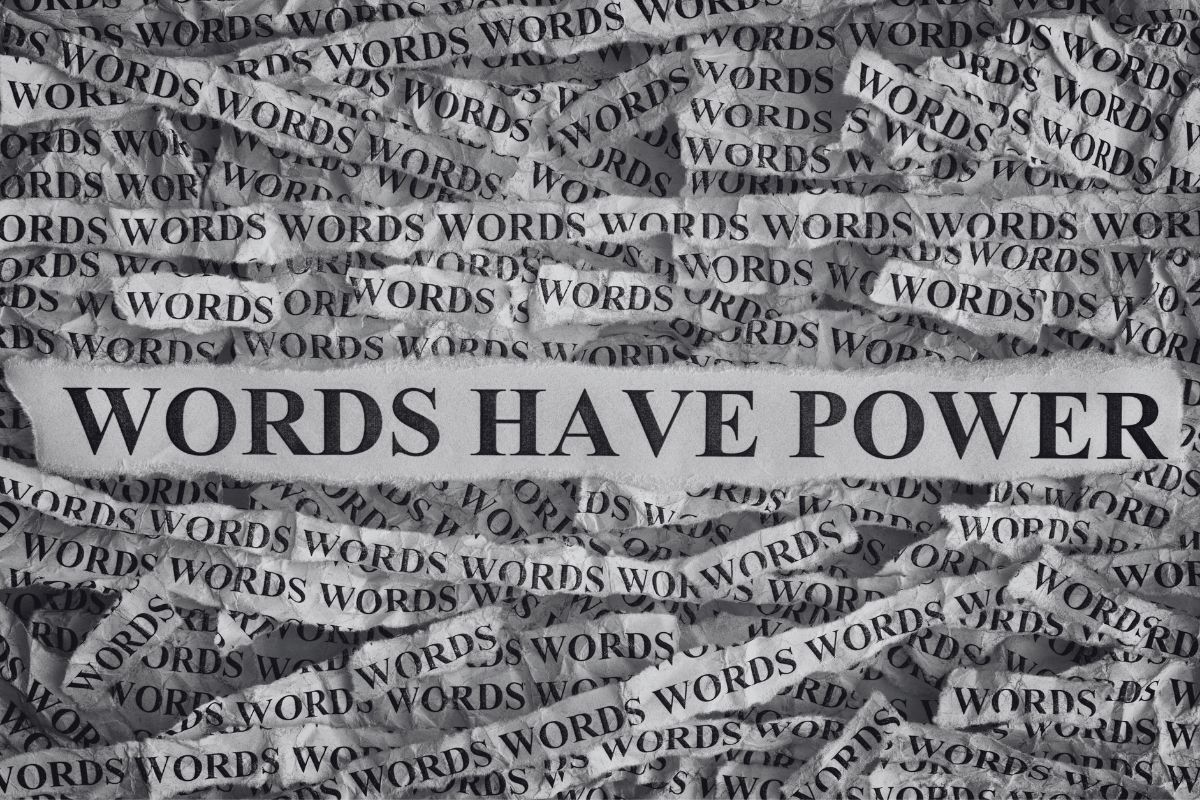
Words can build bridges. Words can burn them down.
They can make someone feel seen, valued, loved—or they can tear open wounds that never fully heal. The truth is, words are some of the most powerful tools we have. And yet, many of us throw them around carelessly, forgetting that once spoken, they can’t be taken back.
We’re living in a world that feels more divided and reactive than ever. Which is why this matters so much: the way we speak—to others and to ourselves—matters.It always has. And it always will.
Prefer to listen? The Audio Blog version is available here.
The Language of My Past
Before I began walking this path, I used words as weapons. I used them to hurt, to manipulate, to control the narrative.
Even more painfully, I used them on myself. Quietly. Cruelly. I would tell myself I wasn’t good enough, that I didn’t deserve love, that I was destined to fail. And those words? They stuck. They festered. They kept me small.
I remember being told early in my recovery that I had a barbed tongue.At the time, I almost wore it like a badge of honor—proof I could defend myself in any verbal battle. But really, I was just scared. I was always in fear. And fear made me lash out. It made me forget that love—real love—starts with what we say when no one else is listening.
The Way You Speak to Yourself Shapes Everything
If you wouldn’t say it to someone you love, why say it to yourself?
That was the question that changed everything for me. Because the truth is, we’re always listening to our own inner dialogue. And when we speak harshly to ourselves, our body, heart, and mind all take that in.
So I started small. I started with one kind sentence a day. Sometimes I didn’t believe it. Sometimes it felt fake. But I kept going.
And eventually, those gentle words turned into something bigger: compassion. Forgiveness. Even love.
Speak Like It Matters—Because It Does
When I shifted the way I spoke to myself, something else changed: the way I spoke to others. And sometimes that was easier—giving kind words to others, even when I couldn’t give them to myself. But what I found is that the more kindness I gave away, the more I saw myself as someone capableof kindness. The cycle slowly started to shift.
Today, I try to ask myself before I speak: Will these words hurt or heal?
That one question has the power to change a conversation. A relationship. A life. Let your words be the ones that bring light—not pain.
SLAY on.
SLAY OF THE DAY: Reflect & Rise
Do you pause before you speak, or do your words just pour out?
Have your words ever hurt someone you love? What happened?
How do you speak to yourself—especially when you’re struggling?
Can you remember a time when your words helped someone heal?
What would change if you made kindness your default language?
Call to Action: Join the Conversation I’d love to hear from you. What’s one small way you can use your words today to heal instead of hurt—either for yourself or someone else? Share your story in the comments. Let’s cheer each other on.
And if you know someone who’s been hard on themselves lately, send this to them. Sometimes, the right words come at the right time—and change everything.