You Can Forgive Someone Without Giving Them Access to You

Forgiveness is freedom, not a front-row pass

There’s a moment in healing that feels like a crossroads.
You’ve done the work.
You’ve cried the tears.
You’ve processed the pain.
And you finally arrive at forgiveness — not to excuse what was done, but to release what it did to you.

But then comes the question that catches so many of us off guard:

Does forgiving someone mean they get to come back?

For years, I thought the answer was yes.

I believed forgiveness meant reconciliation.
I believed healing meant returning to the way things were.
I believed I had to reopen the door simply because I had released the hurt.

But with time, experience, heartbreak, boundary-setting, and a few painfully earned lessons, I learned the truth:

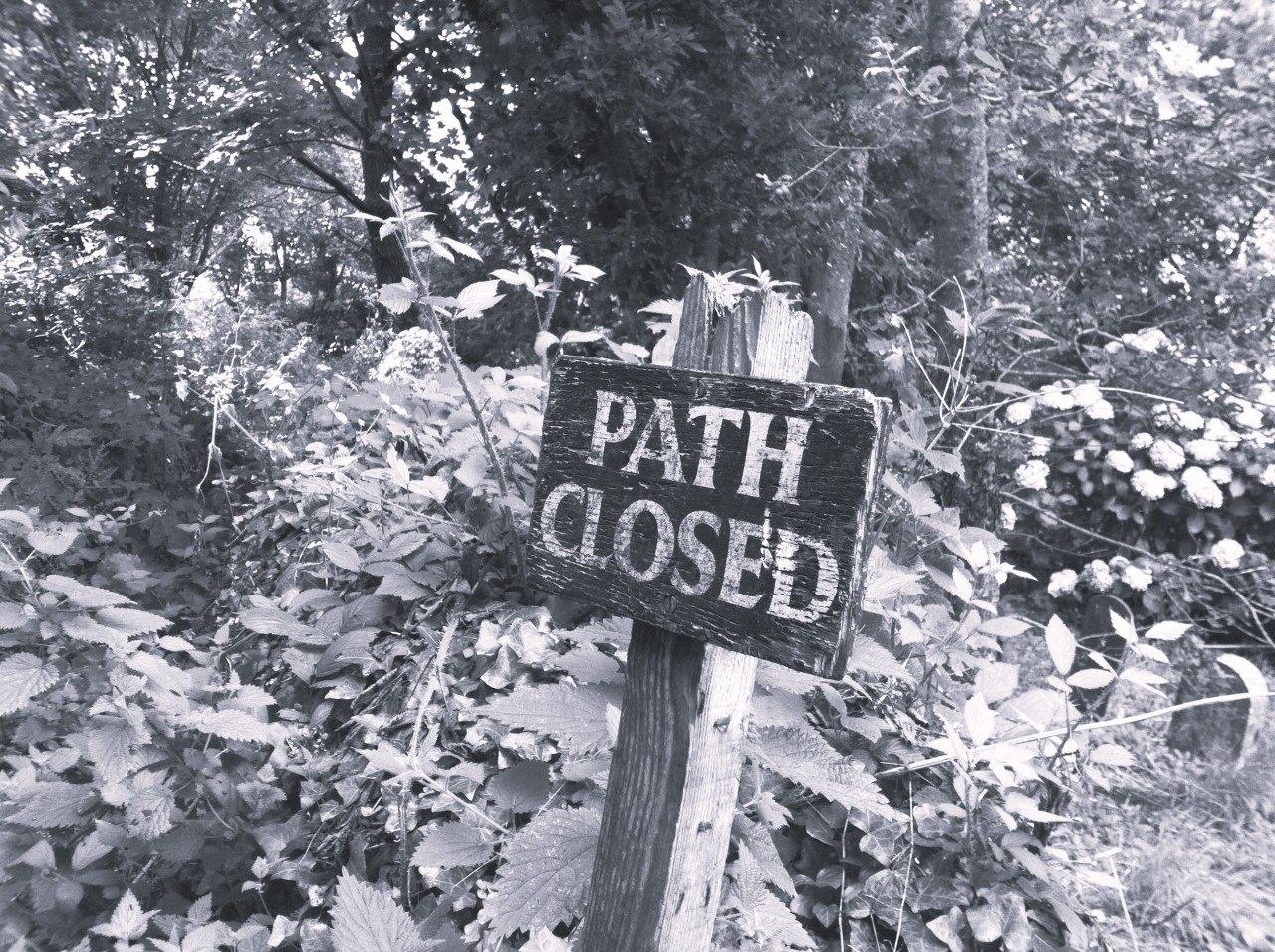
You can forgive someone and still deny them access to you.
Forgiveness is a gift you give yourself.
Access is a privilege they have to earn.

Those two things are not the same.


Forgiveness Isn’t a Free Pass

Forgiveness is often misunderstood. Many people think it means:

  • “We’re good now.”
  • “It wasn’t that bad.”
  • “Let’s forget it happened.”
  • “The relationship should go back to normal.”

But forgiveness does not rewrite history. It does not minimize harm. It does not pretend you weren’t hurt.

Forgiveness simply means:
“I’m releasing the emotional hold this has on me.”

It’s internal.
It’s personal.
It’s sacred.

Forgiveness is about you finding peace — not about making someone else comfortable.

You can forgive someone and still say:

  • “I no longer trust you.”
  • “Your behavior hasn’t changed.”
  • “My boundaries matter.”
  • “This relationship is not safe for me.”
  • “I choose to love myself enough to step away.”

And every one of those statements can exist perfectly alongside forgiveness.


Access Requires Accountability

Here’s the part most people don’t understand:

Forgiveness is unconditional.
Access is not.

Access requires:

  • Changed behavior
  • Accountability
  • Consistency
  • Respect
  • Emotional safety
  • Mutual effort

If someone wants a place in your life, their actions should reflect it.
Their words should align with their behavior.
Their presence should feel safe, not draining.
Their energy should add, not take.

You don’t deny access out of spite.
You deny access because your peace is non-negotiable.

It is not punishment.
It is protection.

People who truly care about you will understand that.
People who don’t will call it “overreacting” or “holding a grudge,” simply because they no longer benefit from your openness.


Forgiveness Without Reconciliation Is Still Forgiveness

A lot of people grew up being taught that forgiveness meant you had to:

  • rebuild relationships
  • pretend nothing happened
  • stay connected
  • be endlessly available

But that version of forgiveness keeps you trapped.
It keeps you small.
It keeps you in cycles of harm.

Forgiveness without reconciliation is still forgiveness.
You can release resentment without reopening the door.
You can wish someone well from a distance.
You can send them love and keep them out of your life.

There is power in that duality:

“I forgive you.
And you still don’t get access to me.”

Both can be true.
Both can be healthy.
Both can be healing.


Protecting Your Peace Is an Act of Self-Respect

There comes a point where you stop asking:

“Do they deserve another chance?”

And start asking:

“Does this support my peace, my growth, and my well-being?”

Sometimes the answer is yes.
Sometimes it’s no.
Sometimes it’s “not right now.”

And sometimes it’s “never again.”

Choosing distance is not bitterness.
It’s clarity.
It’s self-respect.
It’s honoring the version of you who finally learned what they deserve.

There is nothing unkind about protecting your emotional, mental, or physical safety.
There is nothing cruel about refusing to reenter the same cycle.
There is nothing wrong with outgrowing people who continue to harm you — even if you love them.

Protecting your peace is not a betrayal of love —
it’s a commitment to yourself.


Rebuilding Is a Choice, Not an Obligation

Some people will change.
Some people will grow.
Some people will show up differently.

And if that happens — and if you want to rebuild — that choice is yours.

But rebuilding should never come from guilt.
Or pressure.
Or obligation.
Or fear of what other people will think.

A relationship can only be rebuilt on:

  • truth
  • accountability
  • honesty
  • change
  • mutual respect
  • time
  • consistency

Not empty promises or short-term effort.

You decide what access looks like.
You decide what level of connection you’re open to.
You decide whether the door is closed, cracked, or locked.

You don’t owe anyone an explanation.
Your healing is not a group decision.


Forgiveness Sets You Free — Not Them

One of the most liberating things you’ll ever learn is this:

Forgiveness is not for them.
It’s for you.

It frees your mind.
It clears your heart.
It releases the emotional weight tethering you to the past.

But it does not require:

  • returning
  • reconciling
  • reconnecting
  • reopening
  • reengaging

Your healing does not depend on the relationship surviving.
Some chapters end so you can reclaim your peace.
Some endings are the closure you’ve been searching for.
Some boundaries are the doorway to your freedom.

Allowing someone access again is an entirely separate choice — one they must earn, not one automatically granted because you chose your own healing.


SLAY Reflection

S — Sit With Your Truth

What relationship in your life have you maintained out of obligation rather than genuine safety or connection?

L — Look at the Pattern

Have you confused forgiveness with permission in the past? What did that lead to?

A — Align With Your Values

What boundaries need to be honored for you to feel emotionally safe again?

Y — Yield to Growth

How can you release the hurt while still protecting your peace moving forward?


Call to Action: Join the Conversation

I’d love to hear from you.
When have you forgiven someone but still chosen distance — and how did that decision support your healing?
Share your story in the comments. Let’s cheer each other on.

And if you know someone who’s working on releasing hurt without reopening old wounds, send this to them.
Sometimes, all we need is a nudge.

Think of Your Energy Like It’s Expensive—Not Everyone Can Afford It

Recently, Taylor Swift sparked conversation when she said: “Think of your energy like it’s expensive. Not everyone can afford it.”

That hit me—and clearly, it hit a lot of people. Because the truth is, energy is expensive. Not in dollars and cents, but in time, effort, focus, and emotional bandwidth. Once it’s spent, you don’t get it back. And yet, so often, we give it away freely to people, situations, and environments that do nothing but drain us.

If your energy is expensive, why are you letting just anyone spend it?


Energy as Currency

Imagine waking up every morning with a set amount of money in your pocket. That’s your energy for the day. You get to choose how to spend it—on your work, your relationships, your passions, your health. But if you hand it out without intention, you’ll end up broke by noon.

The same is true for your emotional and mental energy.
Every “yes” you say is a withdrawal. Every boundary you set is a deposit.

So when Taylor says not everyone can afford your energy, it’s a reminder to start asking yourself: Who am I allowing to spend my most valuable currency?


Why Protecting Your Energy Feels Hard

Here’s the catch: many of us were raised to believe that giving endlessly is the right thing to do. That being available, agreeable, and accommodating makes us “good.”

But constantly giving, without discernment, isn’t goodness—it’s depletion.

I know this firsthand. For years, I poured energy into people who didn’t pour anything back. I stayed in conversations that exhausted me, relationships that drained me, and obligations that left me resentful. And I told myself it was kindness, when really, it was self-neglect.

Protecting your energy isn’t selfish. It’s self-preservation.


You Teach People How to Value Your Energy

Here’s the truth: if you treat your energy like it’s cheap, other people will too.

Think about it—if you always answer the phone, always say yes, always overextend yourself, what are you teaching others? That your energy has no limits. That it doesn’t cost you anything to give.

But when you begin to value your energy, something shifts. Boundaries get stronger. Relationships get healthier. And the people who truly value you start to rise to the top.

You don’t have to cut people off with cruelty. But you do have to get clear: What is my energy worth, and who has earned the right to receive it?


How to Protect Your Expensive Energy

If your energy is a luxury item, then not everyone belongs in your store. Here’s how you start protecting it:

  1. Audit your energy spend.
    Notice where your energy goes every day. Who leaves you feeling drained? Who leaves you feeling alive?
  2. Set boundaries without apology.
    Remember—boundaries don’t burn bridges, they protect castles. Your energy is the castle.
  3. Stop over-explaining.
    “No” is a complete sentence. You don’t need to justify why someone can’t have unlimited access to you.
  4. Invest in what fuels you.
    Spend energy on relationships, passions, and practices that multiply your energy instead of depleting it.
  5. Rest like it’s your job.
    Because it is. Rest is the recharge that makes sure you have something to spend tomorrow.

The Shift from Pleasing to Protecting

When I stopped people-pleasing, I realized something powerful: not everyone was meant to have access to me. Some people liked the version of me who was always tired, always available, always giving. But that version wasn’t sustainable.

Now, when I say no, when I walk away, or when I don’t engage in drama—I’m not being cold. I’m protecting my most expensive resource: me.

And you can do the same.


Your Energy, Your Choice

At the end of the day, you decide who gets access to you. You decide how much of your energy goes where.

Some people simply cannot afford it—not because they’re “bad,” but because they haven’t earned it, they don’t value it, or they won’t respect it.

And that’s okay.

Because your energy doesn’t need to be affordable to everyone. It just needs to be invested wisely.

So the next time you feel guilty for saying no, or walking away, or setting a boundary, remind yourself:

You’re not rejecting them—you’re protecting you.


SLAY Reflection

  1. Who in your life consistently drains your energy without giving anything back?
  2. What areas of your life feel like “good investments” of your energy?
  3. Do you undervalue your energy by overcommitting or overexplaining?
  4. How can you start treating your energy like it’s expensive today?
  5. What boundary could you set this week to protect your peace?

  • S – Spend your energy where it’s respected
  • L – Let go of guilt when you say no
  • A – Align with people who energize you, not drain you
  • Y – Yield your time and focus to what truly matters

Call to Action: Join the Conversation

I’d love to hear from you.
Where in your life have you realized your energy is too expensive to waste?
Share your story in the comments. Let’s cheer each other on.

And if you know someone who’s learning to protect their peace, send this to them.
Sometimes, all we need is a reminder that we’re worth it.

Slay Say

Let the Shadows Fall Away

Not everyone is meant to walk beside you when you begin to shine.

As you step into your truth, the people who only saw your potential in pieces may start to fade. And that’s okay.
You weren’t made to shrink, edit, or filter who you are just to be accepted.

The more you show up fully—without apology—the more you create space for relationships rooted in real connection, not performance.

Let go of the need to be understood by everyone.
The right ones will never be afraid of your light.

SLAY ON.

You Don’t Have To Be A Bully To Win

Choosing Strength Without Losing Yourself

There’s a moment many of us can point to — where we made ourselves smaller so someone else could feel bigger. Where we let a louder voice drown out our quieter truth. Where we convinced ourselves that the only way to keep peace, keep harmony, keep connection… was to let someone else take the spotlight or the power.

I’ve been there more times than I can count.

And for a long stretch of my life, I believed a dangerous lie:
That the only way to win was to push, dominate, or overpower.
That the world rewarded sharp edges, not steady hearts.
That kindness was weakness, and compassion was a liability.

Except… every time I tried to step into that version of “strength,” I felt like I was abandoning myself. Winning didn’t feel like winning if I had to step out of integrity to get there. It felt hollow. It felt false. It felt like I was playing a role someone else demanded of me.

It took years to understand what I know now:

The loudest person in the room isn’t the strongest — just the loudest.
Real power doesn’t need to humiliate anyone to stand tall.
And you never have to be a bully to win.


The Myth of “Hardness” as Power

So many of us grew up observing people who led with fear, not respect. Maybe it was in our home, our school, our workplace, or even our friendships. People who believed intimidation equaled leadership. People who measured their worth through dominance. People who confused cruelty with competence.

Maybe those were the people who seemed to get rewarded. They got attention. They got results. They got their way.

And somewhere along the line, we internalized the belief that:

  • If we wanted to succeed, we had to be more like them.

  • If we stayed soft, we’d get run over.

  • If we stayed compassionate, we’d get crushed.

But here’s the truth we weren’t taught:

Strength without empathy is insecurity.
Confidence without humility is ego.
Power without kindness is fear dressed as control.

None of that is leadership.
None of that is winning.
None of that is sustainable.

Power built on intimidation crumbles the moment someone refuses to be intimidated.


Kindness Is Not Weakness — It’s Precision

People often misunderstand compassion. They confuse it with people-pleasing. They mistake boundaries for cruelty and softness for passivity.

But kindness is not a lack of backbone.
Kindness is not the absence of truth.
Kindness is not silence in the face of harm.

Kindness is precision.
It’s the ability to see clearly when others act from fear.
It’s the ability to hold your shape instead of collapsing into theirs.
It’s the bravery to choose integrity even when someone else chooses force.

Kindness is strength with the volume turned down — and the clarity turned up.

Winning with kindness means:

  • You don’t betray yourself.

  • You don’t hurt others to lift yourself higher.

  • You don’t weaponize your voice or your power.

  • You don’t step outside your values to gain validation.

It means you succeed as yourself, not as a costume someone else taught you to wear.


Standing Strong Without Striking Back

There is a quiet moment — the moment between hurt and response — where we decide who we want to be.

When someone else raises their voice, throws their weight around, or tries to provoke a reaction, you get to choose:

Do you match their energy?
Or do you rise above it?

Do you let their behavior define the moment?
Or do you let your integrity define you?

Choosing not to bully back is not weakness.
Choosing not to belittle is not submission.
Choosing not to retaliate is not letting them win.

It’s choosing peace over chaos.
It’s choosing self-respect over reactivity.
It’s choosing your future over a moment of validation.

Strength isn’t proven through force — it’s proven through discipline.


Winning By Staying in Integrity

Here’s what no one tells you:

When you stop engaging in someone else’s game, they lose control of the scoreboard.

Winning without bullying looks like:

  • Setting a boundary and sticking to it.

  • Walking away from disrespect instead of debating it.

  • Saying “No” without explanation or apology.

  • Refusing to match someone else’s cruelty.

  • Choosing peace even when chaos tempts you.

  • Being confident enough not to dominate.

  • Leading by example, not intimidation.

When you choose integrity, you reclaim the power they hoped you’d abandon.

When you choose grounding, you interrupt the cycle.

When you choose compassion — for yourself and others — you create a new standard of strength.

And when you stop trying to outperform someone’s ego, you start outperforming your own past.


You Win Every Time You Don’t Become What Hurt You

What if winning isn’t about beating someone else?

What if winning is:

  • Becoming who you needed when you were younger

  • Responding instead of reacting

  • Growing instead of repeating patterns

  • Standing tall without stepping on anyone

  • Being the person who breaks generational cycles

  • Choosing softness in a world that worships hardness

What if the real victory is becoming someone you’re proud of?

Because every time you refuse to become what tried to break you, you win.

Every time you choose compassion over ego, you win.

Every time you stay rooted instead of rattled, you win.

Every time you lead with integrity, you win.

You don’t have to be a bully to win.
You just have to be brave enough to stay yourself.


SLAY Reflection

Take a moment and check in with yourself. Let these questions guide what comes next:

S — Sit With Your Truth

Where in your life have you believed you had to act harder, sharper, or louder just to be heard?

L — Look at the Pattern

Who taught you that compassion was weakness? And were they actually strong — or simply scared?

A — Align With Your Values

How can you choose strength with kindness in the next conflict or challenge?

Y — Yield to Growth

What becomes possible when you stop fighting battles that require you to betray yourself?


Call to Action: Join the Conversation

I’d love to hear from you.
When have you chosen integrity over intimidation, and how did it change the outcome?
Share your story in the comments. Let’s cheer each other on.

And if you know someone who’s trying to find their power without losing their kindness, send this to them.
Sometimes, all we need is a nudge.

Become Aware Of What’s Really Worth Your Energy

Not everything deserves your energy.
Not everyone deserves your light.
And before I began walking this path, I gave too much of myself to things—and people—that didn’t give anything back.

I stayed in relationships long after they served me. I committed to obligations that drained me. I was loyal… but loyal to a fault. And I confused that loyalty with self-worth, not realizing that I was spending my energy in all the wrong places.

The result? I was exhausted. Depleted. And stuck.


What You Feed Grows—So Be Careful What You Water

For years, I never asked myself what I truly enjoyed. What sparked something in me. What made me feel alive. Instead, I filled my schedule with what I thought I should do—and surrounded myself with people who didn’t challenge me to grow.

I gave my energy to places that led me deeper into the dark.
And then I wondered why I always felt empty.

When I began my journey of recovery, I had to reevaluate everything—starting with where I spent my time, attention, and heart. I was building a new life, one that was rooted in healing. That meant I had to get honest about where my energy had been going, and whether it fit the future I was trying to create.

Spoiler alert: it didn’t.


Say Yes to What Fills You

But here’s what that shift gave me:
Permission to explore.
Permission to say yes to new things.
Permission to relearn what I actually wanted from my life.

I began investing energy in what inspired me. I sought out supportive friendships, joyful experiences, and moments of growth. I said goodbye to relationships that only existed to keep me small. I stopped chasing validation and started chasing purpose.

That’s what recovery gave me: the ability to choose where I shine my light—and the awareness to know when I’m shining it in the wrong direction.


Energy Is Currency. Spend It Wisely.

I still get it wrong sometimes. I still overextend myself. I still jump in too fast, too hard, too deep. But today, I know how to check in with myself. I know what it feels like to be energized versus drained. And I know when it’s time to pull back, realign, and reinvest my energy where it belongs.

Energy is precious.
It’s your power.
Protect it.
Spend it wisely.
Let it guide you toward the light, not drag you back into the dark.

SLAY on.


SLAY OF THE DAY: Reflect & Rise

Where are you spending your energy—and is it worth the cost?

  • Do you find yourself giving too much to people, places, or things that don’t give back?

  • What makes you feel depleted? What fills you up?

  • Are there relationships or obligations you’ve outgrown?

  • Why do you think you stay? What would it look like to step back?

  • How can you redirect your energy toward what brings you joy, purpose, and peace?

You are allowed to protect your energy. You are allowed to choose yourself.


Call to Action: Join the Conversation

I’d love to hear from you.
What’s one way you’re reclaiming your energy and investing it where it matters?
Share your story in the comments. Let’s cheer each other on.

And if you know someone who’s giving too much of themselves to the wrong things, send this to them.
Sometimes, all we need is a reminder: your energy is sacred. Treat it that way.