Self-Honesty

If we want to grow—really grow—there’s one non-negotiable step we can’t skip: self-honesty.
Not filtered. Not justified. Not softened for comfort. Just the raw, unfiltered truth.

For a long time, I didn’t even realize I wasn’t being honest with myself. I had an explanation for everything—why I did what I did, why it wasn’t my fault, and why I was still the one who got hurt. I wasn’t lying, I told myself—I was surviving. I genuinely believed that. I wasn’t aware of how deep my self-deception ran.

But here’s the thing about dishonesty: even when we fool others, we can never fully fool ourselves. Deep down, we know. And that knowing creates pain—a pain that grows louder the longer we run from it.


When the Lies Catch Up

Looking back, I realize how much effort it took to keep up the act. I was always spinning, justifying, defending, and denying. I wasn’t just lying to others—I was lying to myself. And even though I appeared to have control, my life was unraveling beneath the surface.

I had a story for everything, and in most versions, I was the victim. It worked—until it didn’t. Eventually, the weight of my own dishonesty caught up with me. I felt like I was being swallowed by guilt and shame, and I had to numb myself just to function.

But that small, persistent voice—the one that wouldn’t stay quiet—kept whispering the truth: You know better. You were meant for more than this.
And as much as I tried to silence that voice, it was the only part of me still fighting for the life I deserved.


The Moment That Changed Everything

The turning point came when I couldn’t run anymore. I hit a wall—a moment where the lies I’d told myself stopped working.

I was tired. I was broken. And for the first time, I was honest.

Not just with others, but with myself.

I admitted everything. The damage I’d caused. The pain I’d tried to outrun. The truth I’d buried under ego and fear. I reached out to the people I’d hurt. I owned my choices. And I made a plan to get help.

It wasn’t easy. But it was freeing.

Because the moment I took responsibility was the moment I took my power back.


The Truth Will Set You Free (But First, It’ll Break You Open)

Self-honesty is messy. It means looking at the parts of yourself you’ve tried to ignore. It means taking off the mask and seeing who’s really underneath.

And for many of us, it means accepting that we were the ones standing in our own way. That we made choices that hurt not just others, but ourselves.

But that’s also where freedom begins.

Once I saw how much of my pain was self-inflicted, I realized something powerful: If I created this mess, I can also create something better.

That truth was hard to swallow, but it was also hopeful. Because it meant I didn’t have to wait for anyone else to change. It was up to me. I had the power to break the cycle—and build something real in its place.


Self-Honesty is Self-Love in Action

We talk a lot about self-love. But the most loving thing we can do for ourselves is tell the truth—even when it’s hard. Especially when it’s hard.

Self-honesty isn’t about beating ourselves up. It’s about calling ourselves in, not calling ourselves out. It’s saying, “I know you made choices you’re not proud of. But you don’t have to keep living that story. You can change.”

And that’s what I did. I took ownership. I made amends. I learned from my mistakes. And I committed to a new way of living—one built on truth, not performance.

Was it easy? No.
Was it worth it? Absolutely.


You Can’t Heal What You Won’t Face

If something in your life isn’t working, ask yourself this:
Am I being honest about what’s really going on?

Not just honest with others. Honest with yourself.

Because if we want to live a life that feels good, not just good enough, we have to face the hard truths. We have to stop spinning stories and start taking responsibility.

It’s uncomfortable. It’s humbling. But it’s also the beginning of real change.

The life you want? It starts with telling the truth. To yourself. For yourself.


SLAY Reflection

Let’s reflect, SLAYER:

  • S: Where in your life have you been avoiding the truth?

  • L: What patterns or habits have you justified, even when you knew they were harmful?

  • A: What’s one honest conversation you need to have—with yourself or someone else?

  • Y: What would living in full self-honesty look like for you, and what would it free you to become?


Call to Action: Join the Conversation

I’d love to hear from you.
Where has self-honesty transformed your life—or where do you feel called to be more honest today?
Share your story in the comments. Let’s cheer each other on.

And if you know someone who’s struggling to face the truth, send this to them.
Sometimes, all we need is a nudge.

When Your Past Comes Back

I recently got a phone call from someone in the same industry as me—a person I’ve known for years. They called to say some kind things that truly meant a lot. But what triggered this call was a conversation they’d had with someone I used to consider a close friend.

This former friend had abruptly ended our friendship years ago when I confronted them about behavior I found troubling—putting ambition and personal gain above authentic relationships. Fast forward to now, and they were using my name to connect with people in the industry, as if we were still close. This wasn’t the first time I’d learned they were leveraging my name, but hearing it again stirred something deep inside me.


The Stirring of Old Wounds

At first, I was stunned. Then, the anger bubbled up. How dare they use my name after cutting me off? They had no right. But as my hands trembled and my mind raced with all the things I could say, I stopped.

I took a deep breath.

Here’s the truth: calling them out, lashing back—it wouldn’t change the past or make me feel better. In fact, it would likely pull me into a spiral of frustration and negativity. Instead, I simply told the caller the truth—that this person was no longer a part of my life. I kept it factual, free of venom. I trusted the person on the other end to connect the dots.


Choosing Light Over Darkness

Not long after, I was on a video call where this same person, my former friend, appeared. They made a point to say they were there because of me. I smiled tightly and said nothing. I realized then: the truth would reveal itself in time. It always does.

What I’ve learned on this path is to stay true to myself. It’s not about winning an argument or proving someone wrong. It’s about preserving my peace, keeping my side of the street clean, and focusing on what brings me light and joy.


Letting Go of the Scorecard

Life isn’t about keeping score. People will hurt us, sometimes deeply. But carrying those grievances around only weighs us down. Every time we dwell on them, we feed the darkness instead of the light.

I’ve learned that when someone tries to pull me back into old wounds, I can choose to let go. I can choose to focus on what fills me with light. I can refuse to be dragged down a path that dims my soul.


Moving Forward with Strength

We all face moments when our past rears its head. The question is: how do we respond? Do we pick up the bitterness, or do we lay it down and walk away?

I choose to walk forward, with grace, resilience, and an unwavering commitment to my own well-being.

SLAY on.


SLAY OF THE DAY: Reflect & Rise

  • Have you ever confronted someone about an old hurt? How did that feel?

  • If you felt relief at the moment, did it last? Or did it leave you feeling hollow?

  • Do you find it hard to let things go, or do you feel pulled to dive back in?

  • How do you feel after going back—empowered or depleted?

  • Can you shift your focus to the present and release the chains of the past?

The past is a weight we don’t need to carry. Set yourself free today.


Call to Action: Join the Conversation

I’d love to hear from you.
What’s one way you’ve chosen light over darkness in your past?
Share your story in the comments. Let’s cheer each other on.

And if you know someone who’s struggling to let go of an old hurt, send this to them.
Sometimes, all we need is a gentle reminder: we have the power to move forward.

Adversity Shows Us Who We Are

In my journey, I’ve been through deep adversity before, and it has always shown me who I am. I haven’t always liked what I’ve seen, but I’ve come to understand that I have the power to change it.


Facing Ourselves

In our daily lives, we often fill our days with busyness—things that distract us from what we may not want to face about ourselves: our behaviors, our patterns, and the places we choose to live emotionally day after day. It’s easy to focus on other people, on places and things, and avoid the inner work that requires honesty. For much of my adult life, I did exactly that. I numbed, distracted, and ran from myself until I hit an emotional and spiritual bottom. Suddenly, I had no choice but to face who I truly was.

It wasn’t easy. I had spent so long running from my feelings and stuffing down the emotions I didn’t want to admit even existed. Looking at myself felt nearly impossible. But adversity leaves us with two choices: give up and sink deeper or choose to fight for our lives.


Surrender Is Strength

The adversity I faced with my mental health forced me into a corner. To survive, I had to surrender and ask for help. The word surrender used to feel like weakness to me. I thought it was something only people who weren’t strong did. But the moment I let go, the moment I admitted I couldn’t do it alone, was the strongest decision I ever made.

That act of surrender allowed me to take my power back. It was only the start—I had to continue to be honest about myself and my past. That honesty wasn’t always easy, but if I was ever going to build a life worth living, I had to stop hiding behind lies and half-truths. I had to commit to showing up for myself fully.


Looking in the Mirror

When the curtain is pulled back and all you’re left with is a mirror, there is no moment more humbling. I stood there and saw hate, sadness, and defeat staring back at me. But I was encouraged to find even one small good thing, one spark of light. It was hard at first, but even the smallest bit of goodness was a starting point. From there, I could begin to rebuild.

The journey from self-hatred to self-love wasn’t easy, but every step, every tear, and every hard truth was worth it. Today, I can look in the mirror with compassion and gratitude for how far I’ve come.


Adversity in the Present

Today, we face a new kind of adversity. It’s one that isn’t of our own making, but it affects every part of our lives. As we’re forced to slow down, to pause the busyness we’ve come to rely on, this adversity is holding up a mirror once again.

This time offers us the opportunity to see who we truly are. If we don’t like what we see, life is giving us a chance to change. Maybe that’s one of the greatest lessons from this pause: a reset, an opportunity to return to ourselves and realign with what really matters.

This is a time to shine—not only for ourselves but for those who need our light. It’s an invitation to reflect, to reset, and to emerge stronger and more grounded.

Are you liking what adversity is showing you? If not, it’s time to get to work.

SLAY on.


SLAY OF THE DAY

  • Have there been times in your life where adversity has shown you who you are?

  • Did you like what you saw?

  • What did you do to change that?

  • During this time of adversity, are you liking what you’re seeing?

  • What don’t you like? What can you do to change it?

  • Reflect and make some changes. Love yourself through them, and remember: we’re all walking through this together.


Call to Action: Join the Conversation

I’d love to hear from you.
What has adversity shown you about yourself, and how are you working to change or embrace that?
Share your story in the comments. Let’s cheer each other on.

And if you know someone who’s navigating their own adversity, send this to them.
Sometimes, all we need is a nudge.
How Does This Make Us Better?

Every challenge carries a choice. It can break us—or it can shape us.

Some of the hardest moments in my life are also the ones that changed me the most. Even the night I nearly lost my life—by all accounts, a night I shouldn’t have survived—eventually became a turning point. That experience didn’t just shake me, it redefined me. Not instantly, and not without pain, but over time, it became the spark for something more.

At first, I didn’t feel lucky to be alive. I felt guilty. I questioned whether my life was worth saving. What had I done to deserve another chance? Was I doing enough with the life I had?

But as I worked through the survivor’s guilt, something shifted. I began to see the opportunity in front of me—not just to live, but to give back. To take stock of my life. To use my pain for purpose.

And that’s what ultimately inspired me to create this blog—to take the hardest parts of my journey and turn them into a light for someone else.


The Darkness Doesn’t Last Forever

When you’re in the middle of it—whatever it is—it’s hard to imagine things getting better.

I remember thinking the darkness was permanent. That I’d never see light again. I hid. I shut down. I told myself if I admitted how bad things were, people would think I was broken.

But that wasn’t true.

The truth is, it took someone else shining their light to help me find my own. One person shared their story. One person reached out. And that small gesture gave me just enough hope to believe that maybe—just maybe—things could change.

Fighting my way out took honesty, stamina, and support. And I didn’t do it alone. I still don’t. Fourteen years later, I still lean on the people in my corner. Because healing isn’t a one-time event—it’s a daily choice.


Turn the Pain Into Purpose

As I began to untangle my past, I started to see how it could be used for good.

The darkness I had once resented became a foundation for something bigger. A way to connect with others. A way to offer hope. A way to create change.

The truth is, we don’t just “get through” hard things. We grow through them.

Every difficult season gave me a tool—resilience, compassion, boundaries, forgiveness. And with each tool, life became a little more manageable.

I’ve learned to ask for help. I’ve learned how to stay in the light. And I’ve learned that even when I don’t have the answers, I can reach out to someone who does.

None of this happened in isolation. And it wasn’t meant to. We’re not built to walk this path alone.


We’re Always in This Together

There’s a hashtag I see a lot: #WereInThisTogether. And while it’s been used to describe difficult global seasons, the truth is—it applies to all of life.

We are always in this together.
It’s easy to forget that when things are going well. But in moments of pain, we remember: we need each other.

And when we remember that, we grow stronger—not just as individuals, but as a collective.

When we rise, we lift others with us.
When we heal, we make space for others to do the same.


Choosing to Come Out Better

Right now, we all have a little more time to think. Life has slowed down, and in the pause, there’s a chance to reflect.

So here’s a question worth asking: How does this make me better?

Not how does this break me—but how can I use this to grow?
How can I take this struggle, this shift, this pause—and turn it into purpose?

That’s where real transformation happens. In the questions. In the actions. In the moments we choose light over darkness, connection over isolation, growth over fear.

We all have room to grow. We all have ways to get better. The choice is ours—every single day.

So what will you choose today?


SLAY Reflection

Take a moment, SLAYER, and reflect:

  • S: Have difficult times in your life led to personal growth? What did you learn?

  • L: Are there past challenges you now see as defining moments? What shifted?

  • A: What can you take from your current season and use to grow or help someone else?

  • Y: What’s one positive change you can commit to today that will lead you closer to your best self?


Call to Action: Join the Conversation

I’d love to hear from you.
What lessons have you taken from your darkest moments, and how did they shape who you are today?
Share your story in the comments. Let’s cheer each other on.

And if you know someone who’s still in the dark, send this to them.
Sometimes, all we need is a nudge.
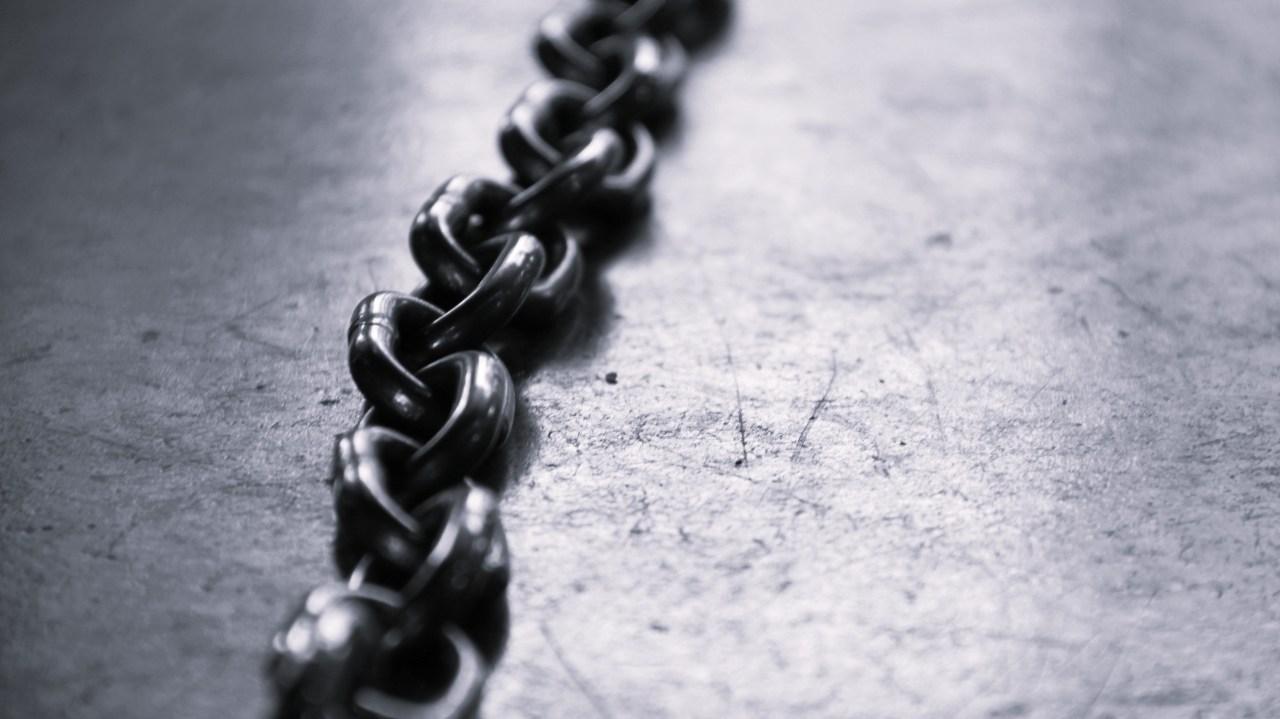
Break The Chains

There are so many chains we build in our lives—chains that bind us to the past, to old ways of thinking, to hurts that never healed, and to expectations that were never really ours. We start building them early, learning from what we see, what we’re told, and what we internalize. Over time, we add link after link until we’re dragging around the weight of it all, wondering why we feel so stuck, so tired, and so heavy.

We cling to resentment, to unspoken anger, to the life we thought we should have, the love we thought we deserved, and the promises we believed would be kept. Those chains become part of our identity, and we don’t even realize how much they’re holding us back.


The Weight I Carried

Before I stepped into recovery, I was dragging an entire lifetime of chains. They weren’t just memories—they were burdens, binding me to people and situations I should have let go of a long time ago. I thought breaking them would be impossible. They were too heavy, too tangled, too deeply woven into my story.

But breaking the chains wasn’t impossible—it was just uncomfortable. It took honesty, a willingness to examine what was truly mine to carry and what I could release. It meant confronting the stories I told myself, the grudges I nurtured, and the fear that kept me tethered.

With help, I started cutting links, one by one. Some chains fell away easily; others took time, patience, and forgiveness. And there are still chains I’m working on—because some habits are stubborn, and some attachments are harder to break.


Learning to Let Go

As I broke free from those old chains, I realized something important: they hadn’t been protecting me like I thought. They were limiting me. They were keeping me small. Letting go wasn’t just about feeling lighter; it was about opening myself up to possibilities I’d never imagined.

It’s tempting to build new chains to replace the old ones, to reach for safety and control in the unfamiliar. But I remind myself that those chains never kept me safe—they kept me trapped.

Our lives can be as free as we allow them to be. The power is ours to break the chains that bind us and step into the light of a new way of living.


SLAY OF THE DAY

Do you recognize the chains you’re carrying?
Are they old resentments, limiting beliefs, or attachments that no longer serve you?
Why do you hold onto them?
How do they harm you?
What would it feel like to let them go?
Start today—cut one link. Your freedom is waiting.


Call to Action: Join the Conversation

I’d love to hear from you.
What chains are you breaking right now? What has helped you find your freedom?
Share your story in the comments and let’s encourage each other to keep cutting those chains.
And if you know someone who’s struggling to let go, send this their way. Sometimes, all we need is a reminder that we hold the key.

You Don’t Have To Be A Bully To Win

Choosing Strength Without Losing Yourself

There’s a moment many of us can point to — where we made ourselves smaller so someone else could feel bigger. Where we let a louder voice drown out our quieter truth. Where we convinced ourselves that the only way to keep peace, keep harmony, keep connection… was to let someone else take the spotlight or the power.

I’ve been there more times than I can count.

And for a long stretch of my life, I believed a dangerous lie:
That the only way to win was to push, dominate, or overpower.
That the world rewarded sharp edges, not steady hearts.
That kindness was weakness, and compassion was a liability.

Except… every time I tried to step into that version of “strength,” I felt like I was abandoning myself. Winning didn’t feel like winning if I had to step out of integrity to get there. It felt hollow. It felt false. It felt like I was playing a role someone else demanded of me.

It took years to understand what I know now:

The loudest person in the room isn’t the strongest — just the loudest.
Real power doesn’t need to humiliate anyone to stand tall.
And you never have to be a bully to win.


The Myth of “Hardness” as Power

So many of us grew up observing people who led with fear, not respect. Maybe it was in our home, our school, our workplace, or even our friendships. People who believed intimidation equaled leadership. People who measured their worth through dominance. People who confused cruelty with competence.

Maybe those were the people who seemed to get rewarded. They got attention. They got results. They got their way.

And somewhere along the line, we internalized the belief that:

  • If we wanted to succeed, we had to be more like them.

  • If we stayed soft, we’d get run over.

  • If we stayed compassionate, we’d get crushed.

But here’s the truth we weren’t taught:

Strength without empathy is insecurity.
Confidence without humility is ego.
Power without kindness is fear dressed as control.

None of that is leadership.
None of that is winning.
None of that is sustainable.

Power built on intimidation crumbles the moment someone refuses to be intimidated.


Kindness Is Not Weakness — It’s Precision

People often misunderstand compassion. They confuse it with people-pleasing. They mistake boundaries for cruelty and softness for passivity.

But kindness is not a lack of backbone.
Kindness is not the absence of truth.
Kindness is not silence in the face of harm.

Kindness is precision.
It’s the ability to see clearly when others act from fear.
It’s the ability to hold your shape instead of collapsing into theirs.
It’s the bravery to choose integrity even when someone else chooses force.

Kindness is strength with the volume turned down — and the clarity turned up.

Winning with kindness means:

  • You don’t betray yourself.

  • You don’t hurt others to lift yourself higher.

  • You don’t weaponize your voice or your power.

  • You don’t step outside your values to gain validation.

It means you succeed as yourself, not as a costume someone else taught you to wear.


Standing Strong Without Striking Back

There is a quiet moment — the moment between hurt and response — where we decide who we want to be.

When someone else raises their voice, throws their weight around, or tries to provoke a reaction, you get to choose:

Do you match their energy?
Or do you rise above it?

Do you let their behavior define the moment?
Or do you let your integrity define you?

Choosing not to bully back is not weakness.
Choosing not to belittle is not submission.
Choosing not to retaliate is not letting them win.

It’s choosing peace over chaos.
It’s choosing self-respect over reactivity.
It’s choosing your future over a moment of validation.

Strength isn’t proven through force — it’s proven through discipline.


Winning By Staying in Integrity

Here’s what no one tells you:

When you stop engaging in someone else’s game, they lose control of the scoreboard.

Winning without bullying looks like:

  • Setting a boundary and sticking to it.

  • Walking away from disrespect instead of debating it.

  • Saying “No” without explanation or apology.

  • Refusing to match someone else’s cruelty.

  • Choosing peace even when chaos tempts you.

  • Being confident enough not to dominate.

  • Leading by example, not intimidation.

When you choose integrity, you reclaim the power they hoped you’d abandon.

When you choose grounding, you interrupt the cycle.

When you choose compassion — for yourself and others — you create a new standard of strength.

And when you stop trying to outperform someone’s ego, you start outperforming your own past.


You Win Every Time You Don’t Become What Hurt You

What if winning isn’t about beating someone else?

What if winning is:

  • Becoming who you needed when you were younger

  • Responding instead of reacting

  • Growing instead of repeating patterns

  • Standing tall without stepping on anyone

  • Being the person who breaks generational cycles

  • Choosing softness in a world that worships hardness

What if the real victory is becoming someone you’re proud of?

Because every time you refuse to become what tried to break you, you win.

Every time you choose compassion over ego, you win.

Every time you stay rooted instead of rattled, you win.

Every time you lead with integrity, you win.

You don’t have to be a bully to win.
You just have to be brave enough to stay yourself.


SLAY Reflection

Take a moment and check in with yourself. Let these questions guide what comes next:

S — Sit With Your Truth

Where in your life have you believed you had to act harder, sharper, or louder just to be heard?

L — Look at the Pattern

Who taught you that compassion was weakness? And were they actually strong — or simply scared?

A — Align With Your Values

How can you choose strength with kindness in the next conflict or challenge?

Y — Yield to Growth

What becomes possible when you stop fighting battles that require you to betray yourself?


Call to Action: Join the Conversation

I’d love to hear from you.
When have you chosen integrity over intimidation, and how did it change the outcome?
Share your story in the comments. Let’s cheer each other on.

And if you know someone who’s trying to find their power without losing their kindness, send this to them.
Sometimes, all we need is a nudge.

Slay Say

Good morning SLAYER! When you own your own story you can write a brave new ending.

New blog goes up Friday, until then… SLAY on!

state-of-slay Write It

Expressing Emotion Is A Strength Not A Character Flaw

Let’s get one thing straight: your emotions aren’t flaws—they’re signals. And when you express them, especially the hard ones, you’re not being dramatic—you’re being brave.

I used to think otherwise. I believed showing emotion made me weak, messy, or a burden. So I swallowed my sadness. I masked my fear. I let anger lead because it felt powerful—until it didn’t.

What I didn’t realize then is what I know now:

Pretending you’re fine when you’re not doesn’t make you strong—it keeps you stuck.


Prefer to listen? The Audio Blog version is available here.


I Wasn’t Okay, and That’s Okay

Before I found this path, I believed the lie that being emotional meant I was broken. I wore “I’m fine” like armor. But underneath? I was drowning.

I thought if I kept it all inside, I’d stay in control. But all I did was isolate myself.

When I finally whispered, “I’m not okay,” I expected the world to crumble.

It didn’t.

Instead, it got quieter. Lighter. Kinder.


Speaking Truth Set Me Free

I started sharing more—first in small, scared ways. A tear I didn’t hide. A truth I told out loud. And I discovered something wild:

My emotions didn’t make me weak. They made me real.

And in being real, I connected.

People didn’t run. They leaned in.

They said, “Me too.”


Expression Became My Strength

Every time I gave my emotions a voice, I took my power back.

  • I wasn’t hiding.
  • I wasn’t shrinking.
  • I was healing.

I stopped believing the lie that vulnerability is a liability. I started believing this instead:

Telling the truth—even when your voice shakes—is the most powerful thing you can do.


Boundaries Matter. So Does Honesty.

Let me be clear: You don’t have to spill your soul to everyone. Not all feelings need a stage—but they do deserve space.

Even saying a simple, “I’m not okay right now” can be the start of something powerful.

Because emotional honesty doesn’t just free you—it invites others to show up too.

And that’s how we build the connection we crave.


SLAY Reflection

Ask yourself:

  • Are you hiding your feelings to appear “strong”?
  • What one emotion are you holding in right now?
  • What do you fear will happen if you express it?
  • What do you hope might happen if you do?
  • Who is one safe person you could open up to this week?

Your voice deserves to be heard—especially by you.


S – L – A – Y

S: Stop pretending you’re fine when you’re not.
L: Listen to your emotions without judgment.
A: Allow yourself to feel and share.
Y: Yield to the healing power of emotional honesty.


Call to Action: Join the Conversation
I’d love to hear from you.
What emotion have you been holding in—and what might change if you gave it a voice?
Share your story in the comments. Let’s cheer each other on.

And if you know someone who’s been holding it all in, send this to them.
Sometimes, all we need is a nudge.
Be A Conduit Of Good For Others

Before I began this journey, I often did good deeds—but if I’m honest, many were tied to expectations. I sought recognition, appreciation, or something in return. My actions, though seemingly kind, were often self-serving.

When I stepped into recovery, I was met with unconditional support. People offered help without expecting anything back. It baffled me. I waited for the catch, but it never came. Instead, they simply said, “Pay it forward.”

At first, I didn’t grasp the depth of that phrase. But as I started to help others without expecting anything, I felt a shift. Supporting someone else lifted me, too. It reminded me that even in my lowest moments, I had something to offer.


The Power of Selfless Acts

Helping others became a cornerstone of my recovery. Not grand gestures, but simple acts: a smile, a kind word, a listening ear. These moments connected me to others and grounded me in my own healing.

I learned that when I offer support without strings attached, it not only aids someone else but also reinforces my own growth. It’s a two-way street of healing and connection.


Letting Go of Expectations

True kindness doesn’t come with a scoreboard. When I stopped expecting reactions or rewards, my actions became more genuine. If someone didn’t respond as I’d hoped, I learned to let it go, sending them silent well-wishes instead.

This shift freed me from disappointment and allowed me to act from a place of authenticity and compassion.


Small Gestures, Big Impact

Being a conduit of good doesn’t require monumental efforts. It’s in the everyday moments: holding the door, offering a compliment, or simply being present. These small acts can have profound effects on someone’s day—and on our own hearts.

SLAY OF THE DAY: Reflect & Rise

  • Do you look for ways to be a conduit of good in your daily life?

  • Have you experienced someone paying it forward for you? How did that make you feel?

  • What can you offer to someone today?

  • How does giving without expectation shift your perspective?

  • How can you cultivate compassion for others—and yourself?


Call to Action: Join the Conversation
I’d love to hear from you.
What’s one way you’ll be a conduit of good today?
Share your story in the comments. Let’s cheer each other on.

And if you know someone who might need a little hope, send this to them.
Sometimes, we just need a reminder that we matter.


Would you like me to create a WordPress excerpt and tags to go with this?

Thank You For Being Exactly Who You Are

It might sound strange at first, but I genuinely mean it—thank you. Thank you for being exactly who you are. Whether you’re someone who supports me, challenges me, or doesn’t quite understand me at all, your presence has helped shape who I am today.

Yes, even the critics.
Maybe especially the critics.

Some of the biggest lessons in my life came from people who didn’t support me. They challenged my confidence, pushed my buttons, and forced me to look inward. They held up a mirror and asked me to examine who I was and how I wanted to respond.

Sometimes they revealed parts of myself I didn’t want to see.
Sometimes they uncovered strength I didn’t know I had.

Everyone we encounter—good, bad, or somewhere in between—is part of our journey. Each person teaches us something. Each interaction reveals a piece of the bigger picture. And when we choose to see those experiences as information instead of judgment, we gain wisdom. That’s when the real shift begins.


Let the Good In

Let’s talk about the people who do love us, support us, and root for us when we can’t even root for ourselves. Sometimes they see us more clearly than we see ourselves. Sometimes they love us before we’ve learned to love ourselves. And sometimes, that’s hard to accept.

We’re conditioned to doubt praise, to question compliments, to scan every kind word for hidden motives. We brush it off. We minimize it. We say, “Oh, that’s not really me.”
But what if it is?
What if the version of you they see is actually more accurate than the one you’ve been hiding behind?

What if it’s time to stop arguing with the good and start believing it?

One of the most powerful things I’ve learned on my journey is that receiving love and kindness is just as important as giving it. When someone offers a compliment or sees the best in you, you don’t need to overthink it. You don’t need to explain why they’re wrong. Just pause… and say thank you. Let it in. Even if it’s just a crack in the armor at first, it’s a start.


Discernment Over Defense

And then there’s the flip side—the criticism. The judgment. The negativity. That, too, is part of the process.

We get to decide how much power those moments hold. When someone comes at you sideways, you can pause and ask: Is there truth here? Is this about me… or about them?
Sometimes it’s a reflection of their pain, not yours.
Sometimes it’s a reminder to check your own side of the street.
And sometimes it’s just noise—and you’re allowed to walk away from it without taking it in.

You don’t need to accept every opinion that comes your way. You’re allowed to be discerning.
You’re allowed to say, “That’s not mine to carry.”


It’s All Information

Gratitude isn’t just for the easy moments—it’s for all of it.
The love.
The challenge.
The growth.
The reflection.

When we stop labeling interactions as good or bad and start seeing them as opportunities for understanding, we step into our power. We reclaim our perspective. We make peace with the truth that people are exactly who they are—and they’re helping us become who we’re meant to be.

So, thank you.
Whether you’ve cheered me on or doubted me, whether you’ve stood by my side or walked away, thank you.
You’ve helped me show up as my fullest, most honest self—and that’s a gift I don’t take lightly.

Keep showing up. Keep being you. Because who you are matters.
And the world is better for it.

SLAY on.


SLAY Reflection

  • Are you able to accept compliments, or do you tend to deflect them?

  • What if you let someone else’s belief in you be the bridge to believing in yourself?

  • Do you see criticism as personal attack—or an opportunity for self-reflection?

  • Can you identify someone in your life who challenged you—and helped you grow?

  • What happens when you stop filtering your worth through someone else’s lens?


S-L-A-Y

See every interaction as a lesson
Let compliments land without argument
Accept what’s true and release what’s not
You are worthy just as you are


Call to Action: Join the Conversation

I’d love to hear from you.
What happens when you stop deflecting kindness and start letting the love in?
Share your story in the comments. Let’s cheer each other on.

And if you know someone who struggles to believe the good about themselves, send this to them.
Sometimes, all we need is a nudge.