Waiting until our decision makes sense to everyone else.
Waiting until we’re certain no one will question the path we’re about to take.
It sounds responsible.
Sometimes it even feels wise.
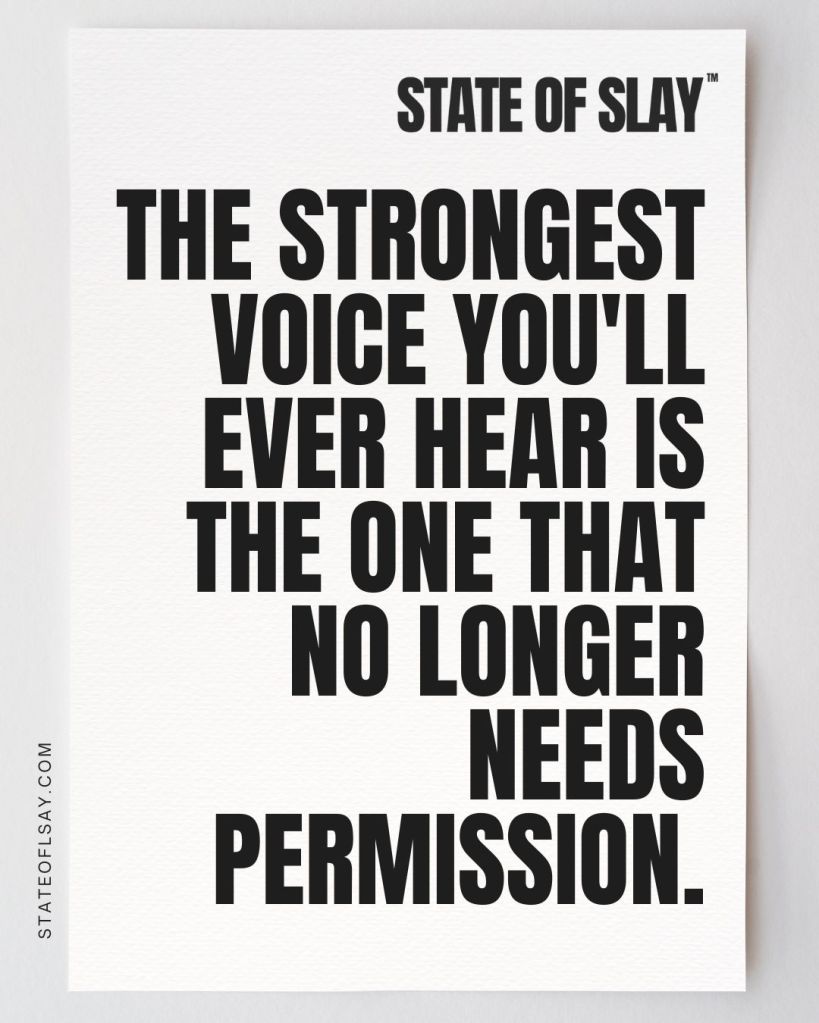
But if you spend your life waiting for permission, you’ll eventually find yourself living according to someone else’s comfort instead of your own convictions.
There will always be opinions.
People who don’t understand why you’re changing.
Why you’re leaving.
Why you’re beginning again.
Why you’re choosing a different life than the one they expected for you.
You don’t owe every decision an explanation.
You don’t need unanimous approval to know what’s right for your life.
The people who make the greatest impact aren’t the ones who are never questioned.
They’re the ones who stop letting other people’s expectations become the deciding vote.
This is your reminder that peace begins the moment your decisions no longer require someone else’s approval.
One of the most freeing realizations you can have is this:
Anything you lose by not being honest about who you are was never truly meant for you to keep.
Not the relationship. Not the friendship. Not the approval. Not the version of belonging that only existed as long as you stayed small, quiet, agreeable, or performative.
Because real connection survives truth.
What falls apart when you become authentic was often built on performance in the first place.
Prefer to listen? The Audio Blog version is available here.
A LOT OF PEOPLE ARE LOVED FOR WHO THEY PRETEND TO BE
That’s the painful part.
Many people spend years carefully shaping themselves into whoever they think will be most accepted.
More agreeable. Less emotional. Less outspoken. Less honest. Less themselves.
They learn to say what keeps the peace. Hide what feels inconvenient. Shrink the parts of themselves that might make other people uncomfortable.
And over time, they become exhausted trying to maintain an identity that was never fully real to begin with.
Because pretending may gain acceptance.
But it often costs self-respect.
PEOPLE-PLEASING CAN CREATE VERY LONELY RELATIONSHIPS
On the surface, it may look like connection.
You are liked. Included. Wanted. Needed.
But deep down, there is often anxiety underneath it.
Because when people only know the edited version of you, part of you quietly wonders:
“If I stop performing, will they still stay?”
That fear keeps many people trapped in relationships where authenticity feels dangerous.
So they overextend. Over-give. Over-explain. Overcompensate.
Not because they are weak, but because somewhere along the way, they learned that love had conditions attached to it.
AUTHENTICITY WILL ALWAYS DISAPPOINT PEOPLE WHO BENEFITED FROM YOUR PERFORMANCE
That truth can be uncomfortable.
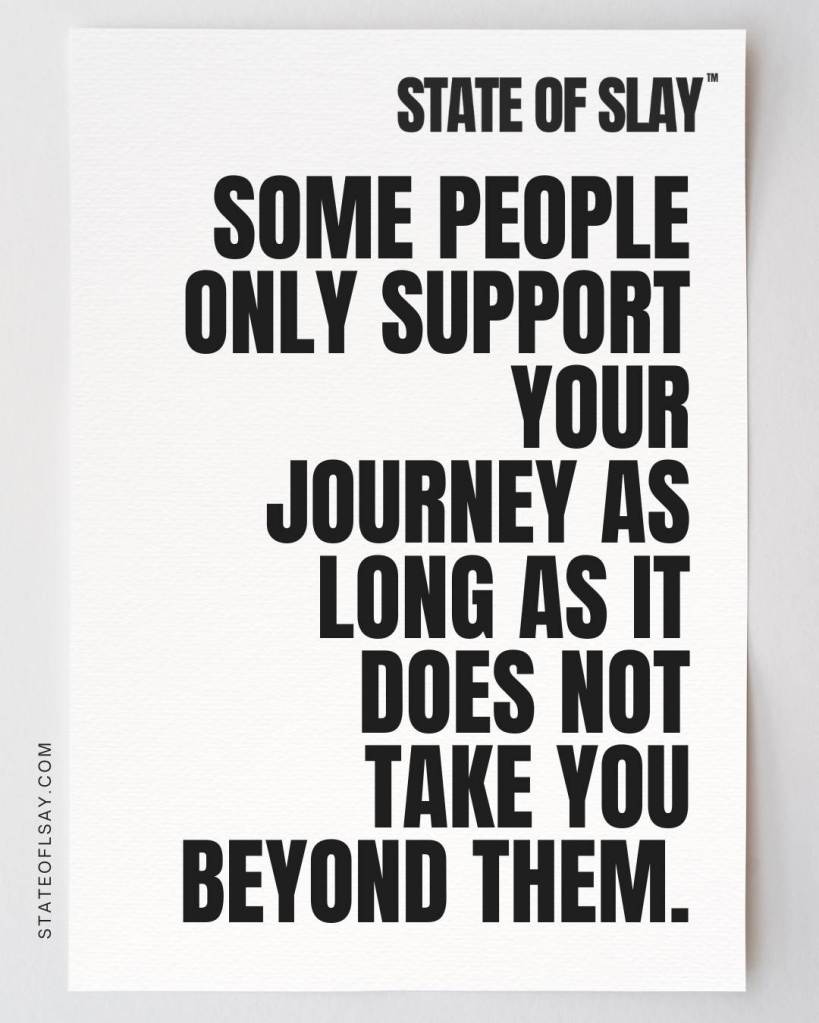
Sometimes the people who react most negatively to your growth were benefiting from the version of you that abandoned yourself to keep them comfortable.
The version that never said no. Never had boundaries. Never challenged unhealthy dynamics. Never expressed needs honestly.
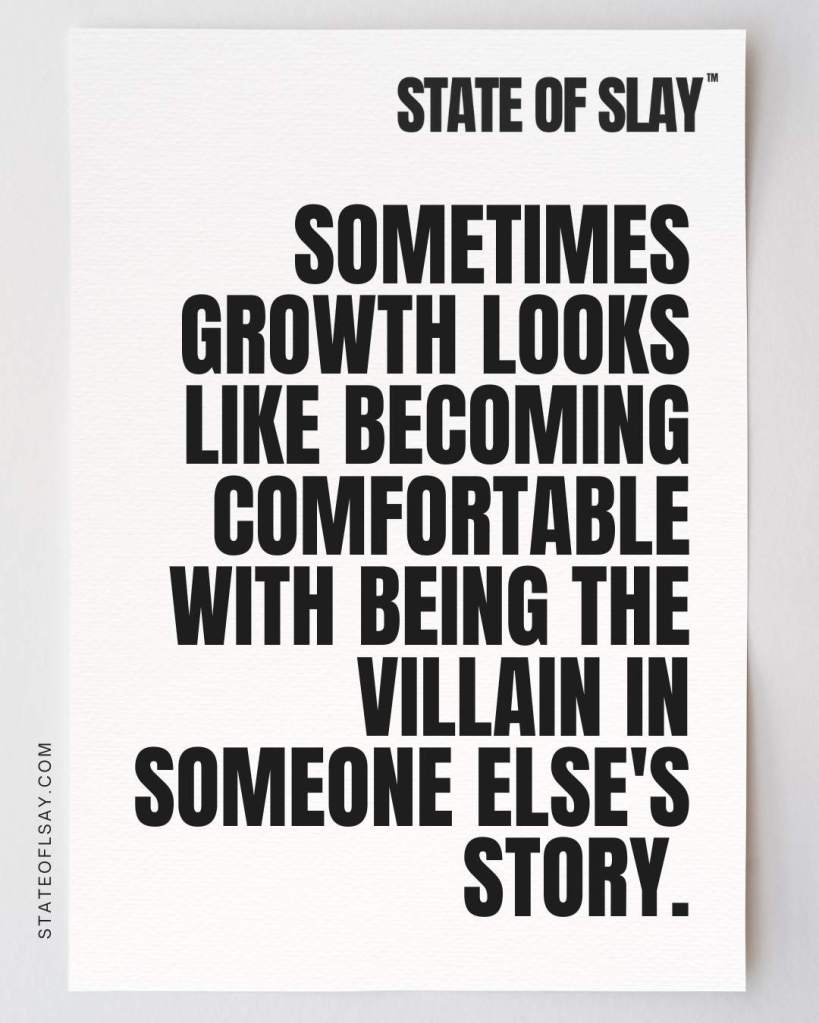
And when you begin showing up more authentically, some people will call it selfishness simply because they no longer have the same access to your self-sacrifice.
But becoming real is not betrayal.
It is self-respect.
THE RIGHT PEOPLE DO NOT REQUIRE YOU TO HIDE YOURSELF
Healthy relationships do not demand constant performance.
You should not have to earn connection by suppressing your personality, opinions, emotions, needs, or growth.
Real connection allows honesty.
It allows evolution. Boundaries. Imperfection. Humanity.
The right people may not agree with you all the time. But they will not require you to become emotionally smaller in order to remain lovable.
That is the difference.
LOSING FAKE CONNECTIONS CAN FEEL LIKE REAL GRIEF
Even when the relationship was unhealthy.
Even when the friendship was conditional.
Even when the approval came at the expense of your well-being.
Because letting go of false connections still hurts.
Humans are wired for belonging.
So when people pull away after you become more authentic, it can trigger deep fears of rejection, abandonment, or loneliness.
But losing relationships built on performance is not the same as losing relationships built on truth.
One was sustainable.
The other was survival.
YOU CANNOT BUILD REAL SELF-WORTH WHILE CONSTANTLY ABANDONING YOURSELF
This is where many people become emotionally exhausted.
Trying to keep everyone happy. Trying to stay accepted. Trying to avoid rejection at all costs.
But every time you silence yourself to maintain approval, you send yourself a quiet message:
“My real feelings are less important than keeping other people comfortable.”
That slowly erodes self-trust.
Because deep down, your nervous system knows when you are betraying yourself.
And eventually, the emotional cost becomes too heavy to carry.
BEING REAL FILTERS OUT WHAT WAS NEVER ALIGNED
That is not punishment.
That is clarity.
Authenticity has a way of revealing which relationships are rooted in genuine connection and which ones were built around convenience, control, image, or emotional dependency.
And while that process can feel lonely at first, it is also freeing.
Because you stop wasting energy trying to maintain relationships that only survive when you are pretending.
You stop auditioning for acceptance.
You stop shape-shifting to fit rooms that were never built for your real self.
SOME PEOPLE WILL MISUNDERSTAND YOU NO MATTER WHAT
That is part of life.
You can communicate carefully, love deeply, show up consistently, and still be misunderstood by people who only see you through the lens of their own expectations, projections, or limitations.
You cannot control that.
What you can control is whether you abandon yourself trying to manage everyone else’s perception of you.
And that is where freedom begins.
Not when everyone approves of you. But when you no longer need them to.
REAL PEACE COMES FROM BEING FULLY YOURSELF
Not the polished version. Not the socially acceptable version. Not the least disruptive version.
The real version.
The one that has opinions. Needs. Boundaries. Depth. Growth. Honesty.
Because at the end of the day, fake acceptance is still fake.
And there is nothing lonelier than being loved for someone you are pretending to be.
The right people will not disappear when you become more authentic.
If anything, authenticity is what allows the right relationships to finally find you.
Because anything you lose by not being real was never truly rooted in the real you to begin with.
SLAY REFLECTION
S — See the Pattern
Where in your life have you been performing instead of showing up authentically?
L — Let Go of the Fear
What are you afraid people might think if you fully expressed who you are?
A — Accept Your Truth
What parts of yourself deserve to be seen instead of hidden?
Y — Yield to Authenticity
How might your life change if you stopped chasing approval and started choosing honesty?
CALL TO ACTION: JOIN THE CONVERSATION
I’d love to hear from you.
Have you ever lost a relationship, friendship, or sense of belonging after finally being honest about who you are?
Share your thoughts in the comments. Let’s grow through it together.
And if you know someone who’s learning to stop performing for acceptance and start embracing their authentic self, send this to them.
Sometimes losing what was never real is the first step toward finding what is.
Sometimes people are not reacting to what you actually said.
They are reacting to what it reminded them of.
A past betrayal. A rejection. A wound they never fully healed. A fear they carry into every conversation.
And when someone is deeply triggered, they often stop hearing what is truly being said.
Instead, they hear accusation where there was concern. Judgment where there was honesty. Abandonment where there was a boundary.
Because unhealed pain has a way of rewriting conversations in real time.
Prefer to listen? The Audio Blog version is available here.
WE ALL FILTER LIFE THROUGH OUR EXPERIENCES
None of us walk through life untouched.
Our experiences shape us.
The way we communicate. The way we trust. The way we interpret tone, conflict, silence, criticism, affection, and disappointment.
That is part of being human.
But when emotional wounds go unaddressed, they can quietly begin controlling how we interpret the people around us.
Especially in difficult conversations.
A simple comment can suddenly feel loaded. A delayed text can feel like rejection. Constructive feedback can feel like an attack.
Not because those things are objectively harmful, but because they activated something unresolved underneath the surface.
TRIGGERS ARE OFTEN OLD PAIN WEARING NEW CLOTHES
This is what makes triggers so powerful.
They rarely stay in the present moment.
They pull past experiences into current situations.
Someone who felt constantly criticized growing up may hear correction as humiliation. Someone who experienced betrayal may struggle to trust reassurance. Someone abandoned emotionally may interpret distance as rejection, even when none was intended.
The nervous system reacts before logic has time to catch up.
And suddenly the conversation is no longer just about what is happening now.
It becomes connected to everything the person has not healed from before.
NOT EVERY REACTION IS ABOUT YOU
This is an important reminder.
Sometimes people project unresolved pain onto others without realizing they are doing it.
That does not make their feelings fake. But it does mean their interpretation may not be entirely accurate.
And if you are someone who tends to over-explain, over-apologize, or carry responsibility for everyone else’s emotions, this can become exhausting very quickly.
Because you will keep trying to solve conversations that were never fully about you to begin with.
You cannot heal wounds for someone else.
Especially wounds they are unwilling to acknowledge themselves.
UNHEALED PEOPLE OFTEN HEAR DEFENSE INSTEAD OF LOVE
One of the saddest things about unresolved pain is how it can distort connection.
People who have been hurt deeply sometimes struggle to receive love safely.
They expect hidden motives. Rejection. Manipulation. Abandonment.
So even healthy communication can feel threatening to them.
Boundaries may feel like punishment. Honesty may feel cruel. Accountability may feel like rejection.
Not because those things are inherently harmful, but because pain teaches people to stay emotionally guarded.
And when someone lives in survival mode long enough, they stop listening openly.
They start listening defensively.
HEALING CHANGES THE WAY YOU HEAR PEOPLE
One of the clearest signs of healing is not perfection.
It is increased self-awareness.
Healed people still get triggered sometimes. They still feel emotional pain. They still misunderstand things occasionally.
But healing creates pause.
It allows someone to ask:
“Am I reacting to what is happening right now… or to something this reminds me of?”
That question alone can transform relationships.
Because it creates space between the trigger and the reaction.
And in that space, communication becomes clearer.
More honest. More grounded. Less driven by fear.
IT IS NOT YOUR JOB TO SHRINK YOURSELF TO AVOID SOMEONE ELSE’S TRIGGERS
This matters deeply.
Compassion is important. Sensitivity matters. Kindness matters.
But constantly abandoning your own truth to manage another person’s emotional reactions is not healthy communication.
It is emotional survival.
There is a difference between being intentionally hurtful and simply saying something another person does not yet have the tools to process safely.
And if someone consistently twists your intentions, weaponizes vulnerability, or reacts to every boundary as an attack, you may find yourself walking on eggshells trying to avoid setting off another emotional landmine.
That is not connection.
That is fear-based communication.
Healthy relationships allow room for honesty without constant punishment.
SOMETIMES PEOPLE CANNOT MEET YOU WHERE YOU ARE
Not because you are asking for too much.
But because they are still fighting battles within themselves they have not faced honestly.
Unhealed people often struggle with accountability because accountability activates shame.
So instead of reflecting, they deflect. Instead of listening, they react. Instead of understanding, they defend.
And while empathy matters, it is also important to recognize when someone’s unresolved pain is creating unhealthy dynamics in your life.
Because love cannot thrive where every conversation becomes emotional warfare.
HEALING REQUIRES HONESTY WITH YOURSELF
Real healing is uncomfortable sometimes.
It requires people to examine not only how they were hurt, but how those wounds may now affect others.
That takes courage.
It is easier to blame. To project. To assume bad intentions. To stay defensive.
But growth begins when someone becomes willing to pause and ask:
Why did this affect me so strongly? What wound did this touch? Am I responding to the present moment, or to my past?
That level of self-awareness changes relationships.
Because healing does not just improve how you speak.
It improves how you listen.
THE GOAL IS NOT TO NEVER BE TRIGGERED
The goal is to become aware enough not to hand your triggers the microphone in every conversation.
Because we all carry wounds.
But healing teaches us that our wounds are not meant to control every interaction, relationship, or disagreement we experience.
You deserve relationships where communication feels safe. Clear. Grounded. Mutual.
And that begins with learning to separate present reality from past pain.
Because when people heal, they stop listening only through fear.
They finally begin listening through understanding.
SLAY REFLECTION
S — See the Pattern
Have you ever reacted strongly to something that was actually connected to an older wound?
L — Look Beneath the Trigger
What emotions tend to surface most quickly for you during conflict or difficult conversations?
A — Accept the Responsibility
Where might unresolved pain be shaping the way you interpret others?
Y — Yield to Growth
What would change in your relationships if you paused before reacting defensively?
CALL TO ACTION: JOIN THE CONVERSATION
I’d love to hear from you.
Have you ever realized that a strong emotional reaction was connected to something deeper than the moment itself?
Share your thoughts in the comments. Let’s grow through it together.
And if you know someone who’s learning how to heal old wounds and communicate more openly, send this to them.
Sometimes healing begins the moment we stop reacting automatically and start listening honestly.