When We’re In Fear, We’re Not Present

Fear has a way of creeping in quietly—and taking over quickly. It pulls us out of the present moment and plants us firmly in the past or the future, playing out worst-case scenarios or old wounds on repeat. But the truth is, when we’re in fear, we’re not really here.


What Fear Steals From Us

I had a conversation recently with a friend who found herself back in a familiar situation—and right back in fear. The feelings were intense: paralyzing anxiety, overwhelming self-doubt, and a fear of losing what she wanted or not getting what she needed. We talked about what fear does—how it derails relationships, distorts truth, and keeps us stuck in unhealthy patterns.

And most of all, how it removes us from the now.

I know this pattern well. Before walking this path, fear ran the show. Most of my decisions—if not all—were made out of fear. Fear of failure. Fear of success. Fear of being seen. Fear of being invisible. I either braced for impact or ran from it.

But fear can’t survive in the present. That’s something I’ve learned in recovery. When I’m rooted in what’s real—what’s right in front of me—fear starts to lose its grip. I may still feel nervous or uncertain, but I’m no longer frozen. I can take action. I can stay grounded. I can breathe.


What Staying Present Makes Possible

When I stay in the moment, I stay in the facts. I don’t get lost in what-ifs. I focus on the next right step.

That’s not to say I don’t feel fear anymore—I do. But I don’t let it drive the car. I know now that fear often tells lies. It tries to convince me that I don’t have options. That I’m still that scared version of myself who had no choice but to repeat the same mistakes. But I’m not. I’ve walked through fire and come out stronger. And each time I’ve stepped into fear, I’ve stepped through it.

Sometimes fear pops up when I try something new. Sometimes it whispers when I begin to grow. But when I remember how many times I’ve faced fear and survived—when I recall the freedom that follows courage—it helps me stay centered.

You don’t have to let fear run your life. You can acknowledge it, feel it, and still take the next step. That’s what growth is.


Don’t Let Fear Take the Wheel

We all experience fear. Some of it is healthy—like instinctive caution that keeps us safe. But the fear that stops us from showing up fully? That keeps us from chasing dreams or forming meaningful relationships? That’s the fear worth challenging.

Stay grounded. Stay curious. Stay present.

Because the only place you can make real change—the only place you can grow—is right here, right now.

SLAY on.


SLAY Reflection: Face the Fear, Stay in the Now

  • What fear has been holding you back lately?
  • Is it rooted in your past—or something that hasn’t even happened yet?
  • How does fear show up in your body, thoughts, or relationships?
  • What can you do today—right now—to ground yourself in the present?
  • When have you faced fear and come out stronger? What did you learn?

Call to Action: Join the Conversation

I’d love to hear from you.
How has fear shown up in your life—and how do you bring yourself back to the present?
Share your story in the comments. Let’s cheer each other on.

And if you know someone who’s stuck in a fear loop, send this to them.
Sometimes, all we need is a reminder that we’re not alone—and we’re braver than we think.

Rest and Digest: The Power of the Pause

There was a time in my life when I reacted to everything.

Fast. Defensive. Ready to pounce.

I lived in constant fight or flight mode—responding not from thought, but from fear. It felt like life was a game show, and I had to buzz in before the question was even finished. But spoiler alert: there was no prize behind door number two. Just more stress, more chaos, and more regret.

I wasn’t resting.
I wasn’t digesting.
I was just surviving.


Living on the Edge (and Not in a Good Way)

Before I started walking this path of healing, I had no self-care. No grounding. No pause. I was always “on.” And that always-on state pushed me into situations where I wasn’t proud of how I showed up. I wanted to be right. I wanted to win. And I never stopped to ask myself if being right was worth the cost of peace—or relationships.

I’ve written before about the power of the pause, and I’ll say it again here:
That pause saved me.
It taught me to breathe.
To reflect.
To choose differently.


Response Over Reaction

In recovery, I had to retrain my brain. I made a commitment to myself:

  • Don’t act right away.

  • Don’t respond just to fill the silence.

  • Don’t feel pressured to have the answer right now.

I started saying things like,

“Let me think about that.”
“I need to check in with myself.”
“Can I get back to you?”

Those phrases were a revelation.
Because life is not a game show—there’s no buzzer, no penalty for taking your time.
In fact, slowing down is often how we win.


Self-Care Creates Space

Making rest and nourishment a priority changed everything for me.

When I’m rested, fed, and grounded, I don’t jump into the fire—I assess the flames. I choose how I want to show up. I give myself the chance to respond instead of react.

And when I pause, I listen better. I learn more. I catch myself before I repeat an old pattern.

Reacting is living in the past.
Responding is choosing from the present.


When the World Feels Like Too Much

We’re living in challenging times. The news is overwhelming. Emotions are high. People are hurting.
But when everything feels loud and urgent, that’s exactly when we need to rest and digest.

We may not be able to control what’s happening around us—but we can absolutely control how we move through it. We can hit pause. We can take care of ourselves. And we can choose to respond from a place of calm, compassion, and clarity.

That’s how we move forward. Together.

SLAY on.


SLAY OF THE DAY: Reflect & Rise

Do you find yourself reacting before fully thinking things through?

  • Why do you think you do that?

  • How has it affected your relationships or peace of mind?

  • Have you ever regretted jumping in too quickly? Did you make amends—or avoid it?

  • How do you feel when you think back on those moments?

  • What would pausing look like for you?

  • How can you begin to practice rest and reflection before action?

Take a breath, SLAYER.
Let your calm lead the way.


Call to Action: Join the Conversation

I’d love to hear from you.
What helps you pause when life feels overwhelming?
Share your story in the comments. Let’s cheer each other on.

And if you know someone who tends to react fast and regret later, send this to them.
Sometimes, we all need a gentle reminder that the pause is where the peace lives.

See With Your Eyes, Hear With Your Ears

I used to live with blinders on.
Not the kind you wear—but the kind you believe.

I only saw what I wanted to see. I filtered everything through my pain, my fear, and the false narratives I told myself over and over again. If I thought I was a bad person, I looked for proof. If I believed I was unlovable, I focused on every moment that could validate that. If I thought life was unfair, I zeroed in on all the ways I’d been wronged.

I wasn’t seeing the truth—I was seeing my trauma.
And I was listening through it too.


A Filtered Life Isn’t a Full Life

When we don’t see with our eyes and hear with our ears—when we see and hear through the noise of our past or our pain—we miss what’s right in front of us. We convince ourselves of stories that may not be true. We act on distorted feelings. And slowly, we begin to disconnect from reality, from the people around us, and from ourselves.

That’s where I was before I began this path.

My perspective was warped. My sense of truth was tangled in denial and self-destruction. But I couldn’t live that way anymore. And when I started my recovery journey, the very first thing I had to do was get honest—with myself, and with the world around me.


The Moment I Took the Blinders Off

Truth didn’t come all at once—it came in pieces.
Each time I stripped away a lie I had believed, the world became clearer. Each time I sat in the discomfort of a moment instead of running from it, I reclaimed a little more power. I learned how to be present, how to focus on what was right in front of me, and how to listen with compassion.

That’s when I stopped reacting and started responding.

Because here’s what I know now:
We can’t live fully if we’re not looking and listening fully.


The Danger of Disengaging

It’s easy to get lost in our distractions—our phones, our playlists, our screens. But when we do that, we cut ourselves off from the life happening around us.
We ignore truth.
We disconnect from others.
We retreat into the stories we already believe.

But life isn’t meant to be background noise.
It’s meant to be lived, seen, heard, and felt.
And the only way we can do that is by taking off the blinders.


Choose to Show Up

When we truly see and hear what’s happening around us, something shifts. We become part of the world again. We stop reacting through old patterns and start participating in real connection. We begin to move with clarity and intention.

Let go of the need to be right.
Let go of the comfort of the old narrative.
And open yourself to what is actually real, here, now.

Because your truth lives in the present.
All you have to do is look. And listen.

SLAY on.


SLAY OF THE DAY: Reflect & Rise

Are you seeing and hearing the truth—or just what you’ve trained yourself to expect?

  • Do you move through life fully engaged, or are you walking with emotional blinders on?

  • What truths might you be avoiding? What stories do you replay that might not be real?

  • How does this affect your relationships? Your inner peace?

  • When’s the last time you truly paused, took in your surroundings, and responded instead of reacting?

Challenge yourself to listen differently.
Look deeper.
And live fully.


Call to Action: Join the Conversation

I’d love to hear from you.
What’s something you’ve learned to see clearly—once you stopped seeing it through the lens of your past?
Share your story in the comments. Let’s cheer each other on.

And if you know someone who might be stuck in an old story, send this to them.
Sometimes, truth is what sets us free—but only when we choose to see it.

Don’t Forget To Check Your Odometer

Some of us move through life so fast we never catch up to ourselves—while others move forward without realizing just how far they’ve come. It’s always easier for someone else to notice the distance we’ve traveled before we do. We’re often too close to our own lives to see the growth clearly.

That’s where checking your odometer comes in.

We may not have a physical readout to track our personal mileage, but we do have markers—our habits, our choices, our relationships, and our emotional shifts. When we take the time to pause and reflect, we might just see that we’re not in the same place we were three months ago, a year ago, or even last week.

And if we are in the same place? That’s not shame. That’s information. A gentle cue that it might be time for new action.

How Far Have You Really Come?

Before I stepped on this path, I didn’t want to check the odometer. I didn’t want to be reminded that I wasn’t making progress—or worse, that I was moving in the wrong direction. I judged myself harshly and measured my worth based on where I thought I should be, instead of where I actually was.

I was living with blinders on—trapped in a cycle of self-criticism, isolation, and disconnection. It wasn’t until I asked for help that I started placing positive mile markers in my life. Each step forward, no matter how small, became something to build on. And even when I couldn’t see my own growth, the people around me could.

Their reflection helped me see the transformation happening inside of me—and over time, I started to believe it for myself.

Celebrate the Journey

You’ve come a long way. Even if you don’t feel like it, you have. Maybe you’ve let go of a toxic relationship. Maybe you’re managing your mental health better than you used to. Maybe you’re just waking up and trying—and that alone is progress worth celebrating.

Self-checks matter. They give us a chance to acknowledge our growth, recognize where we still want to go, and celebrate the resilience that brought us this far. And yes, even setbacks can be part of that progress—sometimes, they’re just a moment to pause and breathe before your next big leap.

You don’t need anyone’s permission to be proud of how far you’ve come. Own it.

You’re a survivor. A warrior. A kickass SLAYER.
Don’t forget that.
Don’t forget you.

SLAY on.


SLAY OF THE DAY: Reflect & Recalibrate

  • Do you notice the changes in yourself—or only when someone else points them out?

  • When others celebrate your growth, do you accept it? Or do you deflect?

  • How do you support and recognize growth in others? How would it feel to give yourself the same grace?

  • What’s one area where you’ve worked hard to grow? Write down the milestones that got you here.

  • Where are you today that felt impossible a year ago?

You’ve traveled further than you think. Don’t miss the view just because you forgot to check the odometer.


Call to Action: Join the Conversation
I’d love to hear from you.
What’s one win—big or small—you’ve had on your journey that you sometimes forget to celebrate?
Share your story in the comments. Let’s cheer each other on.

And if you know someone who doesn’t see how far they’ve come, send this to them.
Sometimes, all we need is a reminder.

Start With Gratitude, End With Thank You

The Shift from Despair to Gratitude

There was a time when I woke up dreading the day ahead—angry that I had even woken up. I wasn’t looking for a new start. I wasn’t searching for light. I was living in a cycle of silent suffering, hoping that sleep would take me away from it all. But hoping isn’t a plan. Hoping isn’t healing.

It wasn’t until desperation pushed me to the edge that I found the courage to ask for help. That moment—the moment of deciding to share my truth—was my first act of gratitude, even if I didn’t see it that way at the time. It was gratitude for my own life, for a future I wasn’t sure I deserved but was willing to fight for.


Bookending the Day

When I reflect on how I stay positive—especially during challenging or uncertain times—I always come back to this: I begin and end my day with gratitude. It’s not complicated. Sometimes it’s a list. Sometimes it’s a pause and a silent thought. But it anchors me.

Throughout the day, life happens. Stress, frustration, and setbacks can pull me off course. But when I revisit my gratitude list—or take a small positive action—I’m reminded of what matters. At the end of the day, I say thank you. For everything. For the lessons, for the moments of peace, for the people, for the growth.


Living with Gratitude

Starting and ending the day with gratitude doesn’t guarantee a perfect day, but it sets the tone. It creates space for positivity. It invites me to see beyond the challenges.

When I wake up with dread, I pause and ask myself what I’m grateful for. Even on the toughest days, there’s something—a sliver of light, a moment of connection, a breath. And when I plan something to look forward to after a difficult task, it keeps me anchored in possibility.

Living a life of gratitude means being intentional. It means creating moments of thankfulness and allowing them to guide us. It’s not about ignoring hardship—it’s about finding resilience through gratitude.


SLAY OF THE DAY: Reflect & Rise

  • Do you tend to start your day in a positive or negative mood?

  • What triggers a negative start for you?

  • How can you turn it around?

  • Have you tried gratitude practices before? If so, what worked? What didn’t?

  • Do you allow a negative morning to affect your entire day?

  • How can you incorporate gratitude into your routine to shift your mindset?

  • Do you consciously end your day with thankfulness? Why or why not?


Call to Action: Join the Conversation

I’d love to hear from you.
What’s one thing you’re grateful for today?
Share it in the comments. Let’s uplift each other with gratitude.

And if you know someone struggling to find positivity, send this to them.
Sometimes, a simple “thank you” can be the spark they need.

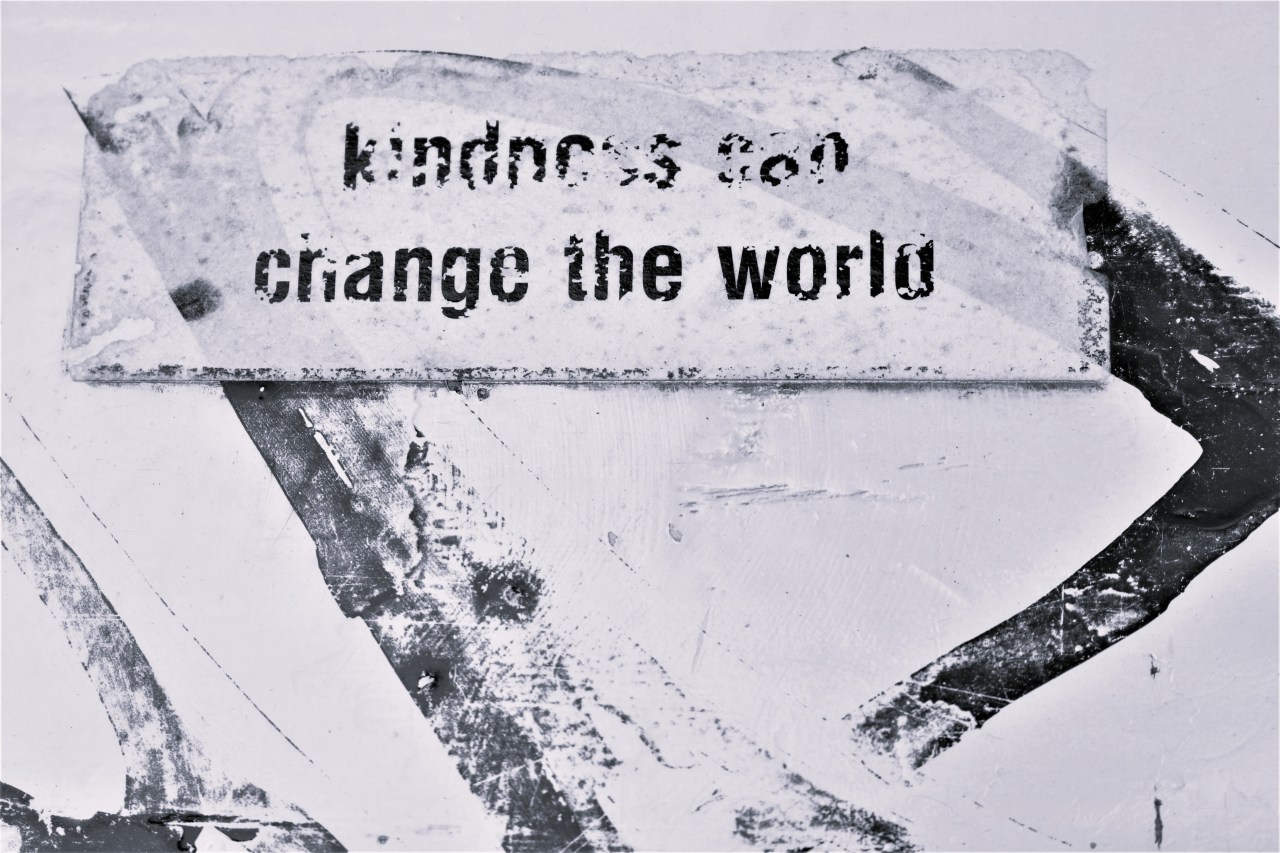
Kindness Is Contagious

Kindness. It’s something we should all be happy to spread around, and it only takes a second. These days, when we’re out in the world, the energy around us is often filled with nervousness, frustration, fear, or just the urge to get back home safely. Amidst all that, we should always remember to be kind.


The Power of a Simple Gesture

We’re all in the same boat. Some are still trying to get essentials and supplies, navigating through aisles, following store arrows, finding empty shelves, or limits on how much they can buy. And if you’re like me, you can feel that energy and begin to take it on as your own. But that’s where kindness comes in—because the antidote to all of that is kindness.

When I focus on being kind, it calms me. It keeps me steady, considerate, and compassionate toward others who are navigating those same aisles, looking for the same things. When a moment presents itself—whether it’s a smile, a thank you, or a small act of service—I see the result in the eyes of the person in front of me. It changes their energy. We all have the power to be kind. And especially now, we should be wielding it like a superpower.


A Shift from Self to Service

When I was living in the dark, I still had that power, but most of the time I chose not to use it. I was focused on what life could give me, what I could take, and how life had let me down. That mindset kept me sick, miserable, and isolated. Sure, there were moments of kindness, but for the most part, I was too wrapped up in myself.

When I began my recovery journey, I was told that a big part of my healing would come from being of service to others. I didn’t believe I had anything to give at first. But I was reminded that I could always be kind. Just focusing on kindness shifted my thinking and lifted my mood as I stepped out each day. Even when I didn’t feel up to it, I was told those were the days I needed to lean into kindness even more.

And they were right.

Even on my darkest days, when I mustered up kindness for someone else, it changed me. It brought light into a dark moment. Kindness is contagious not just for those receiving it—but for us too.


Little Acts, Big Impact

Today, I make a point of looking for those moments of kindness. Even a simple “hello” or “how are you” can shift the energy. Just yesterday at the pharmacy, I asked the man behind the counter how he was. He looked at me, paused, smiled, and said, “I’m fine, and thank you for asking.” His energy lifted. We shared a brief, pleasant exchange, and both of us felt the power of kindness.


Spreading Light in Uncertain Times

It’s easy to rush through life, hyper-focused on the tasks at hand. But let’s not forget the others out there who may be under stress, fear, or anxiety. Let’s take an extra moment to check in, to say thank you to the front-line workers, the grocery clerks, the baristas, the people taking our temperatures. Let them know they are seen and appreciated.

We’re all in this together. Why not spread something good while we’re out there? Let your kindness be a light in an uncertain time.

SLAY on.


SLAY OF THE DAY: Reflect & Rise

  • When you’re out in the world, do you make a point of being kind?

  • If not, why not?

  • How do you feel when someone says or does something kind for you?

  • How do you feel when you offer kindness to someone else?

  • Have you made an extra effort to be kind lately? If not, why?

  • Has someone been extra kind to you? How did that feel?

That feeling is a gift we can offer to anyone we see—and it’s a gift we’ll get back when we do.


Call to Action: Join the Conversation

I’d love to hear from you.
What’s one simple act of kindness you can offer today—big or small?
Share your story in the comments. Let’s lift each other up.

And if you know someone who could use a little kindness, send this to them.
Sometimes, all it takes is a reminder that kindness is powerful.

Smize, It Might Just Change Your Life

For most of my adult life, I believed that strength meant hiding my feelings. But during these times, when our faces are hidden behind masks, I’ve realized just how much we rely on simple gestures to connect. I used to share smiles freely, but now, I’ve had to get creative.

It reminded me of Tyra Banks and her famous “smize”—smiling with your eyes. I chuckled, thinking how those skills could come in handy today. While it might seem silly, that little spark of connection through our eyes can make a big difference, especially when we feel disconnected from one another.


Small Gestures, Big Impact
I’ve always believed in the power of simple acts—saying thank you, sharing a smile, letting someone know they’re seen. But with masks and distancing, it takes extra effort. And that effort makes it even more meaningful.

Now, I find myself waving, giving a thumbs-up, or sharing a kind word. These small acts might seem insignificant, but they create a ripple effect of compassion. When we step out of our own discomfort to connect with others, it not only lifts their spirits but ours too.


From Isolation to Connection
When I was living in the dark, I wanted to hide from the world. I didn’t want anyone to see my pain. I avoided interaction, kept my head down, and hurried through my days. But on my path to healing, I was encouraged to do the opposite—to look up, to smile, to reach out.

At first, it felt forced and uncomfortable. My anxiety spiked. I thought I had nothing to offer. But I was told to “act as if” I believed I did. And slowly, as I made the effort to smile, to thank someone, to ask how their day was, something shifted. People responded with warmth and gratitude. I began to feel connected, and my anxiety eased.


A Simple Connection Matters
The truth is, we don’t always know what others are going through. A smile, a kind word, or even a “smize” might be the only positive interaction someone has that day. It might be the thing that lifts their spirits or reminds them they’re not alone.

Especially now, when the world feels uncertain and heavy, these small acts of kindness carry weight. They remind us that we’re in this together. Even a simple acknowledgment—a wave, a nod, a smile through the eyes—can be a beacon of light in someone’s day.


SLAY OF THE DAY: Reflect & Rise

  • Do you go out of your way to let people know they matter while you’re out?

  • How do you do that?

  • What can you do to do more?

  • How have people done that with you? Have you appreciated it?

  • How did that make you feel?

  • What can you do today to let someone know they matter?

  • How is that different than how you would usually do it?

We all have the power to make someone’s day brighter. And by doing so, we make our own days a little brighter too. Smize on, SLAYER.


Call to Action: Join the Conversation
I’d love to hear from you.
What’s one small act of kindness you’ll try today to brighten someone’s day?
Share your story in the comments. Let’s inspire each other with simple ways to stay connected.

And if you know someone who needs a little light today, send this to them.
Sometimes, a simple gesture reminds us we’re not alone.

You Can’t Open A Flower With A Sledgehammer

I mean, technically you can—but it won’t be pretty.

That’s true for life too. We can force things, try to speed them up, or push them into place. But more often than not, we end up destroying what could have been something beautiful by trying to control everything.

I spent so much of my life doing just that. Forcing. Pushing. Demanding. Always expecting a different result. That’s the very definition of insanity, right? It wasn’t until I learned to let go, to stop trying to force life to move on my schedule, that I started to see things bloom naturally.


Letting Go of Control

Learning to let things unfold in their own time was not easy. Just thinking about letting go of control used to make my anxiety spike. But here’s the truth: I was never really in control. I only thought I was. And realizing that—finally—was liberating.

I had always been a bit of a bull in a china shop, diving into situations without a plan and then trying to figure it all out on the fly. If I thought of life as a delicate flower, it reminded me to be gentle, to pause, and to let it open on its own.

It’s not about doing nothing—it’s about doing the footwork and then stepping back. My old fear-based thinking had me believing that I needed to control everything to keep the fear at bay. But in reality, trying to control made the fear grow stronger. Letting go, breathing, and trusting the process helped ease the anxiety and made space for the right things to happen.


The Sledgehammer Mentality

We all have wants, desires, and goals. But coming at them swinging a sledgehammer won’t get us any closer. It usually pushes them further away.

It’s easy to forget that everyone else has their own wants and needs too. And maybe, just maybe, what we think we want isn’t what’s actually best for us. Sometimes, when we loosen our grip a little, life brings us something even better than what we were trying to force into place.

So the next time you feel yourself reaching for the metaphorical sledgehammer, take a breath. Step back. Let life unfold. You might just be surprised at what blossoms.

SLAY on.


SLAY OF THE DAY

Do you tend to force things to happen or do you let things unfold as they will?
Do you come at life like a bull or do you take the time to investigate and thoughtfully move through life?
If not, what can you do to slow down and look at things instead of just charging for the finish line?
Give an example when you used a sledgehammer in a situation and it backfired.
Give an example when you backed off a little and things went smoothly.
What was different about the time you backed off over the time you used a sledgehammer?
Why do you sometimes take out a sledgehammer instead of letting things unfold in their own time?
Forcing our way usually doesn’t give us the results we want, and even if we do get them, often we stomp on someone else to make it happen.
So why not put the sledgehammer down, do what you can, and stay out of the way of the results? You may be pleasantly surprised at what happens next.


Call to Action: Join the Conversation

I’d love to hear your thoughts.
When was the last time you tried to force something and it backfired? When did you let go, and it worked out beautifully?
Share your stories in the comments. Let’s support each other in learning to put down the sledgehammer.
And if you know someone who needs this reminder, share it with them.
We grow by learning—and letting go—together.

Go With The Flow

I’m the kind of person who usually has everything organized: calendars filled with appointments and reminders, lists of tasks, and a clear schedule for the days ahead. I like to be prepared and avoid surprises. But in these unpredictable times, when plans keep shifting moment by moment, I’m learning a crucial lesson—to go with the flow.

Just yesterday, I found myself overwhelmed as I tried to stick to my day’s schedule. With appointments canceled and plans reshuffled, I was racing down the street, rambling on the phone, heart racing, temperature rising—until I caught myself. I realized I wasn’t going to force things into being normal. The only way forward was to let go of what I thought should happen, and reassess what could happen with the tools and resources I had right then.

Not everything would get done neatly or on time—and that’s okay. The most important thing isn’t my checklist or calendar. It’s my mental health, my availability to support my family and friends, and my ability to be of service.


Letting Go of Control

Before walking this path, I was constantly forcing my will on everything and everyone. I had a clear vision of how things should go, and I fought hard to make them happen. That created tension, anxiety, and frustration—not just for me, but for the people around me.

When I finally surrendered to a healthier way of living, I learned to release my grip on control. It doesn’t mean we shouldn’t plan or set goals—but we need to let go of rigid expectations and outcomes. Accepting things as they are brought me a sense of peace I’d never experienced before.

The truth is, we don’t control most things in life. The only things we can truly control are our actions and reactions. The more I learned to let go, the more peace I found.


Finding a New Rhythm

In these times of constant change, it’s important to embrace the reality of the moment. Think of yourself as a surfer riding the waves—adjusting, adapting, and finding balance as the waves come.

This is a perfect time to slow down, take care of ourselves and our loved ones, and refocus on what truly matters. Instead of stressing over to-do lists or canceled plans, let’s prioritize our physical and mental well-being.

When things shift unexpectedly, take a deep breath. Slow down. Go with the flow. We’re all figuring out a new rhythm, and instead of forcing the old one, why not embrace a healthier, more flexible beat?

SLAY on.


SLAY OF THE DAY

Do you find yourself stressing out when your plans change or cancel?
How does that stress make you feel?
Does it help or harm you?
What can you do to release stress when it creeps in?
How can you practice letting go of expectations when things don’t turn out the way you planned?
Can you find a new rhythm, one that supports your mental and physical health instead of fueling stress?


Call to Action: Join the Conversation

I’d love to hear from you.
What’s one way you’ve embraced a “go with the flow” mindset recently? How did it help?
Share your thoughts in the comments below. Let’s lift each other up as we learn to navigate life’s unpredictability.
And if you know someone who needs this reminder, share this blog with them.
We’re all in this together.

You Can Start Your Day Over At Any Time

Even when we wake up with the best intentions—determined not to let the world, our own mood, or the actions of others throw us off course—things can still derail. Maybe a negative thought creeps in, or an unexpected challenge throws us for a loop, and just like that, our good day starts spiraling. It’s easy to let it snowball into frustration or defeat.

But here’s the thing: we always have the power to reset.
No matter how far off track things feel, we can hit pause, regroup, and start fresh.

I like to joke that when technology stops working, my go-to solution is to “plug it out.” Unplugging and reconnecting works wonders for electronics—and it works for us too. When in doubt, take a deep breath, step back, and give yourself a fresh start.


From All or Nothing to Progress Over Perfection

When I was living in the dark, I was trapped by an all-or-nothing mindset. I’d start my day determined to be positive, but as soon as something went wrong—or as soon as negative thoughts piled up—I’d throw in the towel. One setback, and I’d tell myself the whole day was ruined.

What I didn’t realize was that I was giving away my power. My day didn’t have to be derailed just because I’d made a mistake or things weren’t perfect. When I began to embrace this path of growth and self-love, I learned to see each setback as an opportunity to learn.

Instead of beating myself up, I’d ask: What can I do differently next time?
I practiced gratitude, wrote down positive affirmations, and even carried a list of things I was thankful for in my pocket to remind me that I could always choose to see things differently. And when all else failed, I’d reach out to help someone else—because getting out of my own head and being of service always helped me reset.


A Reset is Always Within Reach

It’s easy to let a bad moment hijack our whole day. But we don’t have to let it.
We have the power to stop, breathe, and start over at any moment.

You are not a victim of your thoughts or circumstances.
You are not bound by your old patterns.
You can choose—again and again—to turn things around.

Remember, every day is a new chance, and every moment is an opportunity to begin again.

SLAY on.


SLAY OF THE DAY

Do you give yourself a restart when your day takes you off course?
Or do you let it pull you down?
How long do you stay stuck? Why?
What stories do you tell yourself about deserving to stay down?
Have you found ways to restart your day? What are they?
When you hit the restart button, what message are you sending yourself?
It’s okay to mess up or feel frustrated—but what matters is what you choose to do next.


Call to Action: Join the Conversation

I’d love to hear from you.
When was the last time you gave yourself permission to restart your day? How did it feel?
Share your experience in the comments below. Let’s lift each other up with stories of resilience and reset.
And if you know someone who could use this reminder, send this blog their way.
We rise by lifting each other.