Good morning SLAYER! When we are at our lowest point we are open to the greatest change.
New blog goes up Sunday, until then… SLAY on!


Good morning SLAYER! When we are at our lowest point we are open to the greatest change.
New blog goes up Sunday, until then… SLAY on!
For most of us, there’s been a time when we’ve hit bottom.
And for many of us, there have been many.
But just because you find yourself at a bottom doesn’t mean you have to stay there.
In fact, sometimes hitting bottom can be the very thing that propels you upward—it can be a turning point, a wake-up call, a catalyst for change.
What matters most is that you recognize it as a bottom.
And then decide you’re not going to live there.
Looking back, I had many bottoms before I hit the one that finally brought me to my knees.
There were so many moments I should have asked for help…
So many warning signs I ignored…
So many nights I let myself spiral deeper into darkness.
But the truth is: we’re ready when we’re ready.
And if we’re lucky, we get that one moment—the one where something shifts, where the fear becomes too loud to ignore, and we finally ask for help.
For me, that moment came from fear.
Fear of where my mental illness had taken me.
Fear of where it might take me next.
I don’t know why that particular night was different.
There were many terrifying nights before it.
But that night, I got scared enough to pick up the phone.
And in doing so, I opened the door to my own recovery.
There’s a saying I love:
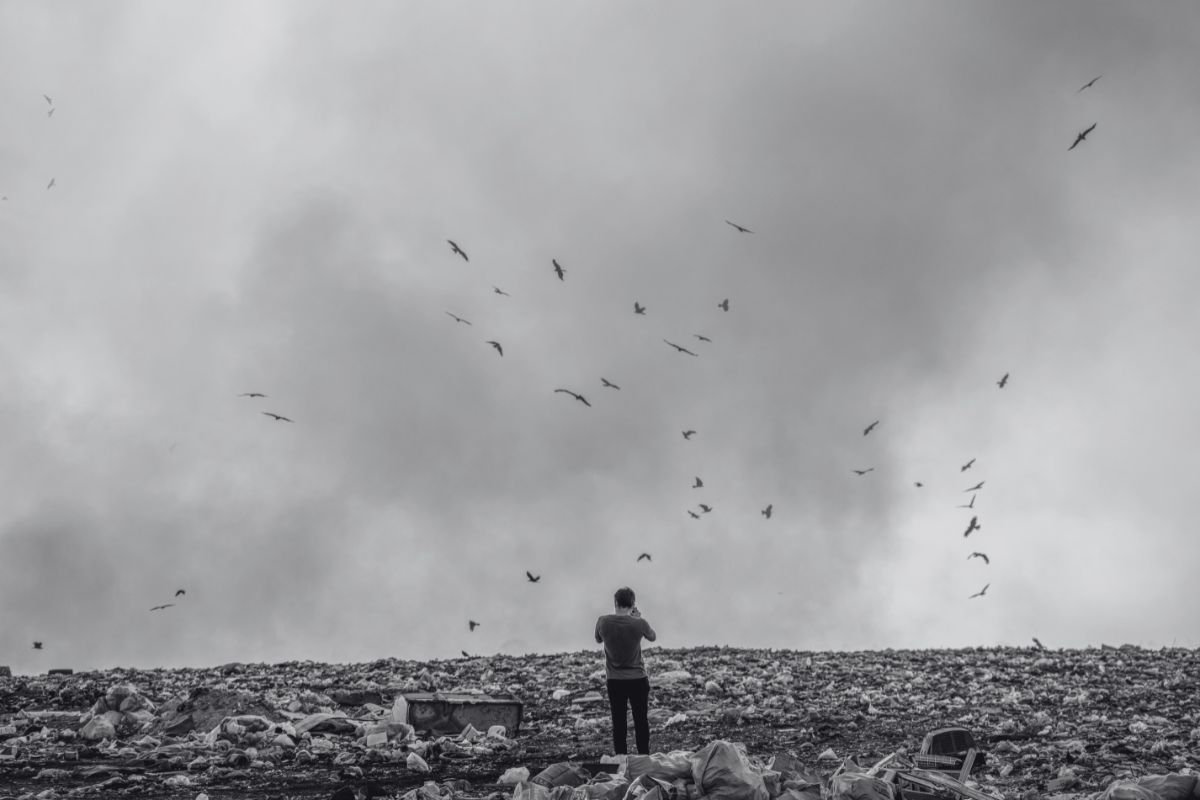
“You don’t have to ride the truck all the way to the dump.”
You can get off at any time.
Even in the darkest place, even at your lowest, you have a choice.
You always have the option to get off the path that’s dragging you down.
But you have to believe that it’s possible.
And you have to take action.
When I was deep in my illness, I felt powerless.
Like I was strapped to a runaway train.
But that wasn’t true.
I always had a ticket off that train.
And the moment I picked up the phone and asked for help, I used it.
That one action—speaking my truth—shifted everything.
I didn’t have all the answers yet.
I still had work to do.
But the secret I had been carrying was out.
The weight I had been holding got lighter.
And for the first time, I realized I was in control of my recovery.
It’s so important to notice your bottoms.
To recognize when you’ve fallen harder than usual.
To acknowledge when you’re staying down longer than you want to.
Because that moment of awareness?
That’s the moment you can begin to rise.
We all fall.
We all struggle.
But no one has to stay in the pit.
Freedom starts with acceptance.
The willingness to see where you are—and the courage to choose something better.
A bottom doesn’t have to be the end of your story.
It can be the beginning of your comeback.
A bottom might just be the biggest blessing in disguise.
It might be the one thing that finally gets your attention.
The one thing that cracks you open.
The one thing that forces you to stop, reflect, and change direction.
You don’t have to stay down.
You don’t have to prove anything to anyone by suffering longer.
Your story is still being written.
And a bottom can be the moment you choose a new chapter.
Use it to rise. Use it to SLAY.
Has a past bottom ever helped you grow or pivot in a new direction?
How can you use that lesson now?
Have you ever hit a bottom in your life?
What were the signs? What did it feel like?
Have you hit multiple bottoms?
What made the most recent one different?
Are you currently in a bottom?
If so, what are you doing about it—or avoiding?
What’s holding you back from asking for help or making a change?
What could shift if you took just one small step?
I’d love to hear from you.
What helped you recognize a bottom in your life—and what did you do to rise from it?
Share your story in the comments. Let’s cheer each other on.
And if you know someone who’s struggling to climb out of a hard place, send this to them.
Sometimes, all we need is a nudge.

Good morning SLAYER! Trust the plan not the pain.
New blog goes up Friday, until then… SLAY on!

Good morning SLAYER! Grow through what you go through.
SLAY on!

It may sound impossible at times, but in those moments when we feel our weakest, we must dig deep and find our strength.
There have been countless times in my life where I’ve had to rely on an inner strength I didn’t even realize I had. Somehow, just enough rose to the surface to help me push through.
We are all stronger than we think.
And when I take a moment to reflect on everything I’ve overcome, I’m reminded of the strength and courage that carried me.
It helps me in the present.
It prepares me for the future.
Because true strength often reveals itself when everything feels like it’s falling apart.
Prefer to listen? The Audio Blog version is available here.
Looking back on my lowest points, I can admit—I didn’t always use my strength.
There were times I believed I was weak.
Times I gave in to the idea that I was broken or not worth saving.
I had flickers of power, brief moments of energy and clarity, but they’d fade. And that negative voice in my head? It would rush in, louder than ever.
That inner strength—the warrior in me—it was there.
But some days, that sword felt too heavy to lift.
There was one day in particular when I came dangerously close to surrendering.
I was at my lowest. But even then, there was a whisper of strength left inside me.
It wasn’t loud.
It wasn’t flashy.
But it was just strong enough to reach out, to ask for help, to cry for help.
And that moment changed everything.
That quiet strength was enough to rally.
Enough to begin my fight back.
For me, strength isn’t about pushing through everything without feeling.
It’s about showing up—even when it’s hard.
My strength lives in the inner warrior that walks beside me.
It’s the part of me that shields the most vulnerable parts inside.
My strength is spiritual.
It’s rooted in a connection to something greater than myself—a belief that I’m held, even when I’m hurting.
It’s also built from experience:
I also surround myself with people who reflect that strength back to me.
People who remind me who I am when I forget.
And I do the same for them.
Sometimes we need to borrow someone else’s light until we remember our own.
I’ve learned that strength isn’t something you “find” once and then never lose.
It’s a practice. A choice. A mindset.
I know now that:
And there’s always a small spark inside me—a flame that never goes out, no matter how dark it gets.
That’s what carries me.
That’s what keeps me standing.
And that’s what I want to help you find too.
We all have strength.
Even if it feels buried. Even if it’s been challenged.
Even if it’s quiet.
If this past year has shown us anything, it’s that we’re still here.
We’ve survived more than we thought we could.
We’ve made it through dark seasons, tough days, and hard truths.
And we’re still standing.
That is strength.
Now is the time to pick up your sword.
To fight for someone who matters—you.
Me. Us.
Dig deep.
Find your strength.
And use it to keep moving forward.
I’d love to hear from you.
What’s one moment when you found strength you didn’t know you had?
Share your story in the comments. Let’s cheer each other on.
And if you know someone who’s struggling to feel strong right now, send this to them.
Sometimes, all we need is a nudge.

Good morning SLAYER! Making mistakes is better than faking perfections.
New blog goes up Tuesday, until then… SLAY on!


We all make mistakes.
It’s how we grow. It’s how we learn.
Sometimes we learn to do things differently, and sometimes we simply learn that mistakes are just part of the process—an oops, not an identity.
But there’s a dangerous turning point many of us reach:
When we start to believe that we are the mistake.
That’s when mistakes stop being lessons and start becoming labels.
And when we internalize our failures, we block our own growth.
Prefer to listen? The Audio Blog version is available here.
When I was living in the dark, I believed I was a mistake.
Every time I messed up—even just a little—I used it as proof that I was broken, unworthy, or incapable.
I set impossibly high standards for myself, and when I didn’t meet them, I punished myself emotionally.
Perfection wasn’t just the goal—it was the requirement.
And every time I fell short, I used it as another reason to feel like I had failed at life.
Everything changed when I got help.
I was told something I had never even considered:
It’s okay to make mistakes. In fact, it’s encouraged.
Mistakes meant I was trying.
Mistakes meant I was doing something new.
Mistakes meant I was taking action—even if the outcome didn’t go as planned.
That shift in thinking opened the door to something I hadn’t felt in a long time: freedom.
I stopped needing to be perfect and started focusing on being present.
I learned to ask, What can this mistake teach me? instead of, What does this say about me?
Another thing I began to notice?
I made more mistakes when I wasn’t taking care of myself.
If I was tired, overwhelmed, underfed, or overworked—my errors increased.
And instead of blaming myself, I started seeing those slip-ups as signals.
Mistakes became more than just missteps—they became a check-in.
An opportunity to notice where I might be neglecting my own needs.
Here’s the other thing:
Some of my biggest mistakes?
They’ve led me to some of the most beautiful parts of my life.
If I hadn’t taken the wrong turn, I wouldn’t have found the right path.
If I hadn’t said yes when I probably should have said no, I wouldn’t have learned what a real yes feels like.
We don’t always know in the moment, but sometimes what we call a mistake is actually just a redirection.
A plot twist with a purpose.
The only mistake you can make is not taking action because you’re afraid of failing.
Playing it safe. Holding back. Staying small. That’s where real regret grows.
Life isn’t about getting it right all the time.
It’s about trying.
Learning.
Adjusting.
And trying again.
Mistakes are just part of the road.
They’re not roadblocks. They’re guides.
And they are never who you are.
I’d love to hear from you.
What’s one mistake you’ve learned from—and how did it help you grow?
Share your story in the comments. Let’s cheer each other on.
And if you know someone who’s being too hard on themselves, send this to them.
Sometimes, all we need is a nudge.

Good morning SLAYER! Overcoming one fear, gives you the courage to overcome the next.
New blog goes up Sunday, until then… SLAY on!

Most of us have fears.
It’s part of being human.
But when we give too much focus and energy to fear, we risk becoming exactly what we fear most.
Fear can be sneaky like that. It creeps in, takes root, and grows stronger the more we feed it. Eventually, it can start to shape how we think, how we act, and even how we show up in the world—often without us even realizing it.
Fear can become a self-fulfilling prophecy.
What we focus on, we feed.
And what we feed, grows.
I’ve written before about attracting the kind of energy we want in our lives.
When we live in fear—or negativity—that’s often what ends up circling back to us.
It’s not magic. It’s not instant karma.
It’s energy.
It’s focus.
It’s the silent agreement we make with our fears every time we let them lead.
When I was living in my illness, I was consumed by fear.
It was everywhere—under the surface of every thought, every decision.
And the more I ignored it, the more power it had.
I didn’t want to face it, so I tried to numb it, outrun it, distract myself from it.
But fear doesn’t disappear just because we look away.
It waits. It grows. And eventually, I started to become what I feared most.
I was aware of what was happening.
And still, I didn’t stop it.
I fed my fears with avoidance, with negative thinking, with silence.
And my fear evolved into a kind of paralysis—I couldn’t see a way out, and I wasn’t asking for one.
But then a different kind of fear showed up—the kind that keeps us safe.
The kind that whispers, “You can’t keep going like this.”
The kind that leads to action.
I was terrified of being judged, of being labeled “crazy,” of being too far gone to help.
But I was also terrified of where my life was headed if I didn’t get help.
And that good fear? It won.
I reached out.
I asked for help.
And for the first time, I found a door out.
I’ve learned that I don’t have to live in fear.
I still feel it, yes—because again, I’m human.
But I don’t live there anymore.
I’ve learned to acknowledge it when it shows up and then move through it.
Today, I focus on:
I’ve built a spiritual connection that guides me and keeps me grounded.
I stay open to signs and nudges from the universe.
And I trust that fear is not something I have to surrender to.
It’s something I can listen to—but not let lead.
Fear can be a compass.
Sometimes it points to the exact place where we need to do the most work.
Ask yourself:
This is a challenging time.
But it’s also the perfect time to focus on the good you want to create—for yourself, for your family, for your life.
You don’t have to become what you fear.
You can choose something different.
You can choose to SLAY.
I’d love to hear from you.
What’s one fear you’re ready to stop feeding, and what action can you take today to move through it?
Share your story in the comments. Let’s cheer each other on.
And if you know someone who’s stuck in fear or letting it lead their life, send this to them.
Sometimes, all we need is a nudge.
Good morning SLAYER! Keep an open mind and a compassionate heart.
New blog goes up Friday, until then… SLAY on!

