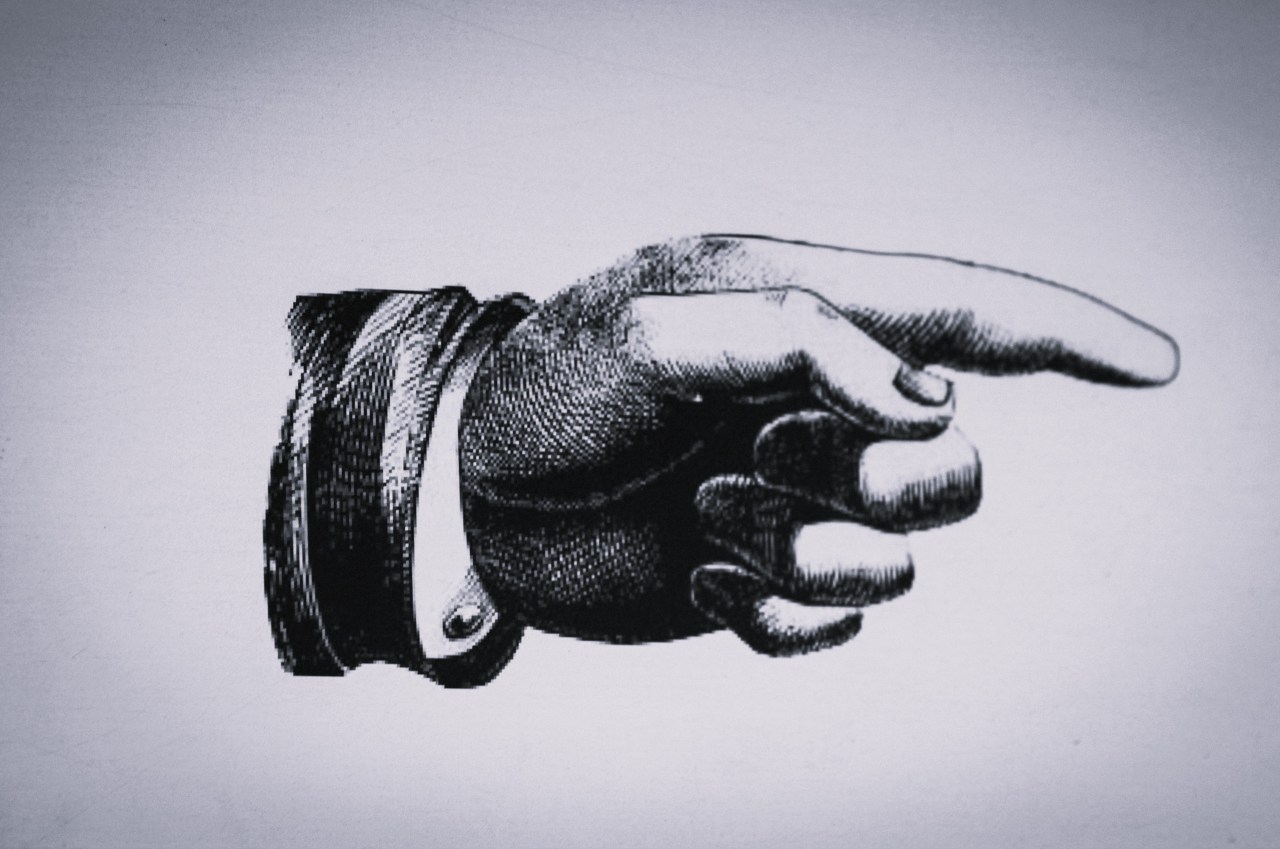
When Nothing Goes Right, Go Left

We’ve all been there.
Those seasons when it feels like nothing is working.
Every door feels closed, every step feels heavy, and no matter how hard we try, it all seems to fall apart.

We hit wall after wall.
We get frustrated.
We start to wonder if it’s even worth the fight.

But maybe—just maybe—those walls are redirections.
Maybe those detours are trying to protect us, shift us, or move us toward something better.
Sometimes, when nothing is going right, it’s not about giving up… it’s about going left.


When I Refused to Pivot

Before I began walking the path I’m on now, I was stubborn.
I didn’t believe I deserved good things, so when something didn’t go as planned, it only reinforced the belief that I was a failure.
A part of me almost wanted things to go wrong—because that matched the internal narrative I had created.

I worked hard, but the second I met resistance, I would retreat.
I’d give up.
And then I’d use that failure as proof that life was against me.

I didn’t see roadblocks as opportunities to pivot.
I saw them as confirmation that I was doomed to fail.
I was stuck in a cycle of all-or-nothing thinking, ruled by ego, fear, and a refusal to try things a new way.


Recovery Taught Me to Turn

Recovery didn’t just teach me how to live—it taught me how to redirect.

I’ve learned that just because a path is blocked doesn’t mean the dream is wrong.
Sometimes we’re meant to pursue it another way.
Sometimes we’re meant to walk away.
And sometimes, we’re simply being taught patience and trust.

What changed for me was the realization that I don’t know everything.
There is a whole world of wisdom, experience, and guidance that exists beyond what I’ve lived or read.
And when I stopped trying to force life to bend to my will—and instead became open to its direction—everything started to shift.

Those dead ends?
They were saving me.
Those “no’s”?
They were leading me to something even better.


Redirection Isn’t Rejection

When we cling to one way, one plan, or one outcome, we miss out on the magic of life’s detours.
The universe might have something better in store—something we never could have imagined.
But to receive it, we have to be willing to loosen our grip.
To trust.
To be humbled.
And to follow the signs when they point in a new direction.

Today, when I hit a wall, I don’t panic.
I pause.
I regroup.
And I look for a new opening.

The goal might still be the same—but the route can change.


Don’t Stop—Just Shift

If you’re feeling discouraged, if you’re facing what feels like a dead end, don’t give up.
Go left.

Try a new approach.
Ask for help.
Take a risk.
Open your mind to the possibility that there’s another way—maybe even a better way.

You’re not being punished.
You’re being redirected.
And that redirection just might lead you to everything you’ve been working for… and more.


SLAY Reflection: How Do You Respond to Redirection?

  1. Do you tend to feel defeated when things don’t go your way?
    What’s your default reaction when you hit a wall?

  2. Can you think of a time when a dead end led you to something even better?
    What did that teach you?

  3. Are there goals you’ve abandoned that might just need a new approach?
    What could you try differently?

  4. How often does your ego get in the way of your progress?
    Where could you surrender a little more?

  5. What would it look like to trust life’s redirections instead of resisting them?
    Where is life possibly nudging you now?


Call to Action: Join the Conversation

I’d love to hear from you.
What’s one detour in your life that ended up being a blessing in disguise?
Share your story in the comments. Let’s cheer each other on.

And if you know someone who’s feeling stuck or defeated, send this to them.
Sometimes, all we need is a nudge.

Slay Say

Good morning SLAYER! If you won by doing something wrong, was it really a win?

New blog goes up Friday, until then… SLAY on!
Lose and Win

Slay Say

Good morning SLAYER! Image is what people see and hear, integrity is who we really are.

SLAY on!
What Is Right

What You Do When No One Is Watching

We all have moments where we wear different masks. There’s the version of us the world sees—and then there’s the version that shows up when no one else is around. Ideally, these two should be one and the same. We should move through life with consistency, acting with honor and integrity whether eyes are on us or not. But let’s be honest: that’s not always what happens.

For many years, I was someone who acted differently when I thought I could get away with it. I wore my victimhood like armor, and when life didn’t go my way, I convinced myself it owed me something in return.

I remember being at the grocery store once when the cashier forgot to ring up an item in my cart. I noticed—but I said nothing. Instead, I walked out with it and told myself it was a win. A moment of justice. But deep down, I knew better. I was raised to know right from wrong. And I knew I’d crossed a line.

That item may have been free, but the guilt wasn’t. I carried it around, letting it reinforce the story that I was a bad person. And the more I let myself slide in little ways when no one was watching, the harder it became to hold onto any sense of self-worth.

We think we’re slick. We think we’re getting away with something. But we’re not. Because even if no one else sees it, we do.


A Shift in Integrity

When I committed to recovery and started learning to love myself, I had to reckon with the person I was when no one was watching. I had to confront the choices I’d made in secret and the ways I’d let myself down. And I had to stop.

I made a promise to myself: I would always act as if someone was watching.

Because someone was. Me.

And that meant doing the right thing—even when it was hard, even when it was inconvenient, and even when no one would ever know. Especially then.

Today, doing the right thing fills me with peace. It lifts me up. It affirms the person I’m becoming. I no longer carry the weight of guilt for the sake of a cheap win. Instead, I carry the quiet confidence that comes from living in alignment with my values.

I was once told: if you do something kind and the person finds out, it doesn’t count. Because the good deed isn’t about credit. It’s about character.


The Power of Quiet Character

In a world that rewards appearances, doing the right thing quietly, consistently, and without applause is an act of rebellion. It’s also an act of self-love.

Every time you choose honesty over deception, compassion over ego, and integrity over the easy way out—you build a life rooted in trust.

The next time you find yourself in a moment of choice, ask: What would I do if someone I deeply respect were watching me right now?

Then act from that place.

Because the truth is, the person who matters most is watching. And they live inside of you.

SLAY on.


SLAY Reflection: Who Are You When It’s Just You?

  • Do you behave the same way when no one is watching? If not, why?
  • What’s the cost of getting away with something? How does it sit with you later?
  • What values matter most to you? Are you living in alignment with them?
  • What’s one recent moment where you could’ve acted differently—and chose integrity instead?
  • How do you feel when you do the right thing, even if no one notices? What does that say about the person you’re becoming?

Call to Action: Join the Conversation

I’d love to hear from you.
What does integrity look like in your everyday life—especially when no one else is watching?
Share your story in the comments. Let’s cheer each other on.

And if you know someone who’s trying to realign with their values, send this to them.
Sometimes, all we need is a quiet reminder of who we really are.

Slay Say

Good morning SLAYERS! Most people don’t listen with the intent to understand, they listen with the intent to reply.

New blog goes up Tuesday, until then… SLAY on!
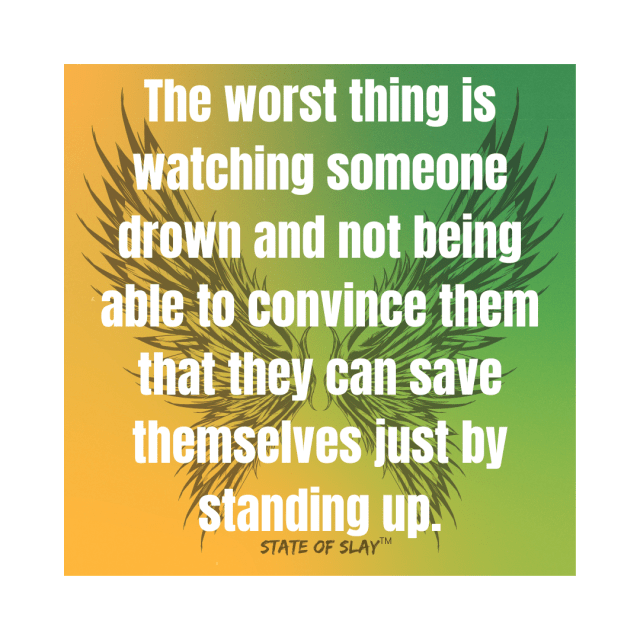
Just By Standing Up

You Can’t Help Someone Who Doesn’t Want To Help Themselves

We’ve all been there—someone we care about comes to us, overwhelmed by their circumstances. We listen. We offer suggestions. But what they really want is a quick fix, and often, one that lets them off the hook from actually doing the work. Sometimes people just need a break, and it’s kind to help where we can. But more often, the most loving thing we can do is encourage them to help themselves.


My Turning Point

Before I began my recovery journey, I constantly looked to others to rescue me from my own messes. I played the victim, and life felt so unmanageable that it was easier to expect someone else to clean it up.

The truth? My thinking was broken. My perception was skewed. I had no healthy tools or coping mechanisms. So when I finally reached out for real help, I was asked one question that changed everything:

“What are you willing to do?”

And for the first time, I said: Anything.

That was the moment things shifted. I had to fall far enough down into despair before I became willing to fight for my life. And fight I did.

Recovery taught me that this new way of living would only work if I worked it. No one could do it for me. I had to believe I was worth the effort—and that belief became the spark that lit my path forward.

With each milestone I earned, my self-esteem and self-worth grew. I began to think about the younger version of myself—the one I’d neglected, the one I’d hurt. I made a commitment to her that I would never abandon her again. That’s who I fight for now. That’s who I protect.


Why Doing the Work Matters

You can’t do the work for someone else. And if you try, you’re actually robbing them of something vital: the opportunity to grow.

Growth comes from struggle. Strength is built through effort. Confidence is earned through consistency. When we do someone else’s heavy lifting, we deny them the chance to build the muscle they’ll need to stand on their own.

Of course, we can offer support. We can stand beside someone and remind them they’re not alone. But we must let them take the lead. Not only is it healthier for them—it’s healthier for us, too.

Practicing this kind of boundary is a form of self-respect. It’s a reminder that we’re not responsible for fixing everyone’s life. That people-pleasing, over-functioning, and rescuing don’t lead to healing—they often lead to resentment.

You can love someone deeply and still let them do their own work. In fact, that might be the greatest form of love there is.

SLAY on.


SLAY Reflection: Where Are You Over-Functioning?

  • Do you often take responsibility for someone else’s problems? Why?
  • How has doing your own inner work changed your sense of self-worth?
  • What lessons would you have missed if someone else had done the work for you?
  • Can you think of someone in your life who needs to do their own work? What boundary could you set to support them without enabling them?
  • How can standing beside someone—rather than carrying them—be an act of love?

Call to Action: Join the Conversation

I’d love to hear from you.
What’s one way you’ve learned to step back and let someone else do their own work—and how did that shift your relationship with them or yourself?
Share your story in the comments. Let’s cheer each other on.

And if you know someone who’s always trying to rescue others, send this to them.
Sometimes, all we need is a reminder that loving someone doesn’t mean fixing them.

Slay Say

Good morning SLAYERS! You might feel worthless to one person, and priceless to another. Know your worth.

New blog goes up Sunday, until then… SLAY on!

Love Yourself So Much

When You See Your Worth You Find It Harder To Stay Around Those Who Don’t

We are what we allow.

And when we allow people to treat us as if we’re not worthy—when we accept behavior that belittles us or dims our light—we start to believe we deserve it.

But our worth isn’t something other people get to define. It doesn’t come from approval, status, or success. It comes from within. From who we are, what we value, and how we show up in the world. True worth is self-sourced. And once we see it clearly, it becomes much harder to stay around people who don’t.


Before I Knew My Worth

When I was living in the dark, I didn’t believe I had any worth.

I made choices that reflected that belief. I tolerated disrespect. I spoke to myself with cruelty. I stayed in environments that diminished me. I confused success with self-worth and chased external validation to feel like I mattered. And when I didn’t get it, the old narrative played on a loop: You’re not good enough.

I lived like someone who had no value—because I didn’t believe I did.

It wasn’t until I stepped onto the path of recovery that I started to challenge that story. At first, I couldn’t even look in the mirror. I couldn’t say, “I love you” to myself. The words got stuck in my throat.

But slowly, with support from others who had been there, I started to find glimmers of self-worth. I made a list of what I liked about myself. On days when that felt impossible, I wrote down the opposite of the harsh thoughts I was thinking—and used that as my starting point.


Building from Within

I did the work. I stayed the course. And slowly, something shifted.

Acts of kindness, both given and received, started to restore me. I gave back where I could. I surrounded myself with people who saw me clearly. I honored the little girl inside me who had never felt safe, and promised her I wouldn’t abandon her again.

With each step, my self-worth grew.

And as it did, my tolerance shrank.

I no longer accepted treatment that chipped away at my light. I no longer stayed in rooms where I felt unseen. I started seeking out people who inspired me, who respected themselves, and who respected me too. Because once you see your own worth, you can’t unsee it—and you won’t settle for less.


Worth Doesn’t Wait for Permission

You don’t have to earn your worth. You don’t have to prove it. You just have to see it—and then live like it matters.

Surround yourself with people who reflect that truth back to you. And when you feel yourself dimming to fit into a space that doesn’t honor you, step back and ask: Is this what I deserve? Or am I shrinking to make someone else comfortable?

You have value just as you are. The right people will recognize it. But most importantly: you will.

SLAY on.


SLAY Reflection: Where Are You Honoring Your Worth?

  • Do you believe you have worth? If not, where did that belief come from?
  • Are you surrounding yourself with people who reflect your worth—or diminish it?
  • What’s one thing you love about yourself? Say it out loud. Write it down.
  • Have you ever tolerated behavior that made you feel small? Why?
  • What’s one way you can stand in your worth today?

Call to Action: Join the Conversation

I’d love to hear from you.
What’s one way you’ve reclaimed your worth—and how did it change what (or who) you allowed in your life?
Share your story in the comments. Let’s cheer each other on.

And if you know someone who’s forgotten how worthy they are, send this to them.
Sometimes, all we need is a reminder to rise.

Slay Say

Good morning SLAYER! Create your own opportunities.

New blog goes up Friday, until then… SLAY on!
Direction

Slay Say

Good morning SLAYER! Don’t trip over what’s behind you.

SLAY on!

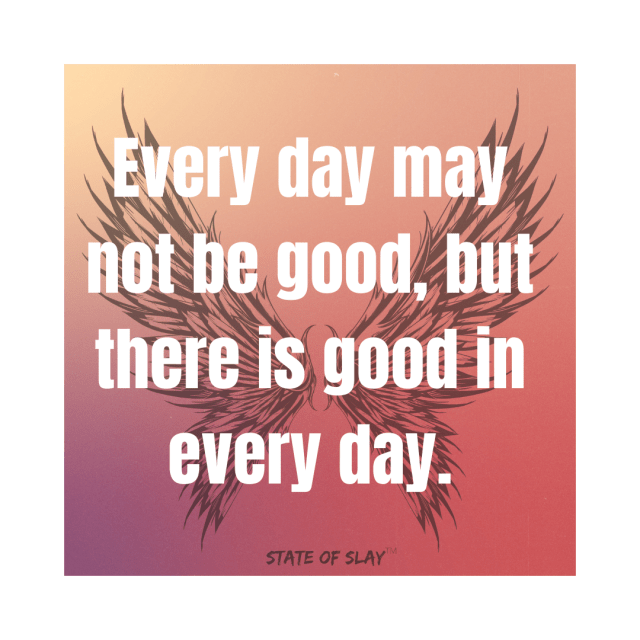
Good In Every Day