Love on a Leash

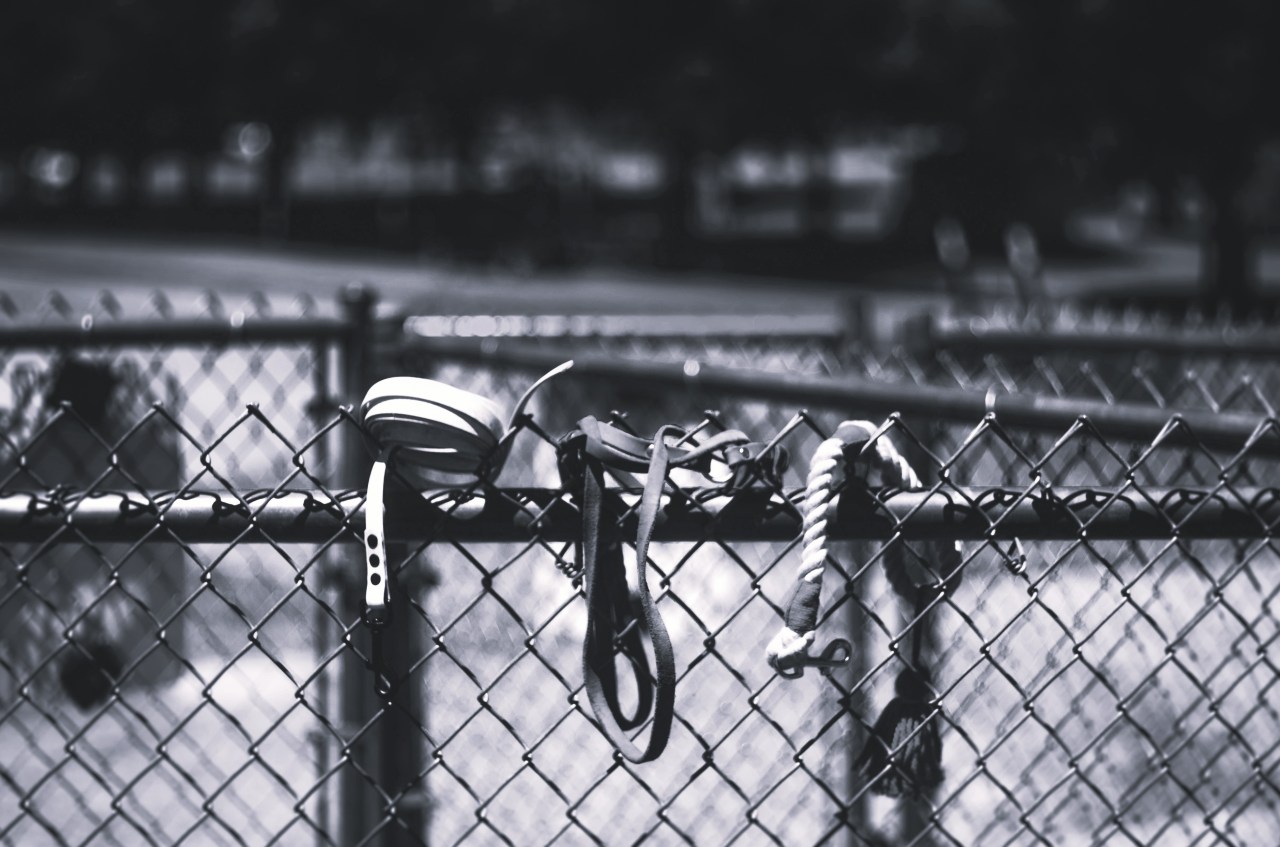
There’s a kind of love that doesn’t feel like love at all. It looks the part—smiles, sweet words, even grand gestures—but underneath, it’s tethered to expectations, rules, and unspoken conditions. It’s love, but only if. That’s love on a leash.

Love on a leash says: “I’ll love you if you behave a certain way.” Or worse, “I’ll love you when you’re less of this and more of that.” Sometimes, the leash comes from others. But just as often? We hold the leash ourselves.

We believe we must be a specific version of ourselves to be lovable. We shrink. We twist. We contort our identities to avoid rejection, or worse—abandonment. We believe we’re only worthy of love if we’re easy to handle, always agreeable, or constantly achieving.

And over time? That leash tightens. We stop reaching. We stop expressing. We stop showing up as who we really are.


I Know That Leash All Too Well

I’ve felt it—the pull of wanting to be loved so badly that I’d trade my truth for someone else’s comfort. The tension of walking on eggshells just to keep the peace. The guilt that rises when I try to set a boundary, even a healthy one, because I fear I’ll lose the connection if I do.

But here’s what I’ve learned:

Any love that demands you abandon yourself isn’t love. It’s control.

Love shouldn’t feel like a leash. It should feel like a safe place to land.


Real Love Doesn’t Require a Performance

Authentic love sees the real you. It invites all your parts—your fire and your softness, your growth and your mess. It doesn’t flinch at your vulnerability. It honors it.

And the same goes for how we love ourselves.

When we hold ourselves to impossible standards, we put our own hearts on a leash. We tell ourselves we’ll be worthy when we’re thinner, calmer, more successful, more perfect.

But we’re worthy now. We’ve always been.

You don’t have to earn love by becoming someone else. You get to be loved for who you are.


Releasing the Leash

Letting go of love with conditions means facing our fears. It means risking disapproval. It means standing in our truth, even if someone walks away.

But it also means freedom.

It means deeper connection, greater peace, and the kind of joy that only comes from being fully known and still fully accepted.

It starts with you. How you love yourself. How you speak to yourself. What you tolerate—from others and from your own inner voice.

And maybe most importantly? It starts with the unlearning of what love was never supposed to be.

You don’t have to stay tethered. The leash can come off.

And when it does?

You’ll remember: real love doesn’t confine—it expands.


SLAY Reflection

Ask yourself:

  • Have you ever felt like love came with conditions?
  • Who’s holding the leash—someone else, or you?
  • What stories about love and worth are you still carrying?
  • How can you begin showing yourself more unconditional acceptance?
  • What kind of love do you want to give—and receive—from this point forward?

S – L – A – Y

S: Spot the conditions—where do you feel limited in love? L: Let go of outdated beliefs about what makes you lovable.
A: Affirm your worth without needing to prove it.
Y: Yield to relationships that offer real connection—not just compliance.


Call to Action: Join the Conversation
I’d love to hear from you.
Have you ever experienced love on a leash—and what helped you take it off?
Share your story in the comments. Let’s cheer each other on.

And if you know someone who’s struggling to feel seen for who they truly are, send this to them.
Sometimes, all we need is a nudge.

Go Where Your Voice is Needed

There comes a time in life when you realize—not every space is meant for you. Not every conversation needs your input. And not every audience is ready—or even willing—to hear what you have to say.

For years, I believed I had to be everywhere, say everything, and make sure I was heard. Even if it meant squeezing into spaces that didn’t feel right. I thought that was how you made an impact. Be louder. Be present. Be seen.

But experience has taught me something far more powerful:

True empowerment comes from going where your voice is needed, not where it’s merely tolerated.

It’s a shift from trying to fit in to standing tall where you belong.


The Myth of Being Everywhere

We’re bombarded with messages telling us to “show up everywhere.” Post more. Be visible. Stay relevant. Hustle harder.

But visibility does not equal value.

When you stretch yourself thin trying to be in all the rooms, you lose something essential—clarity. The more you chase attention, the more disconnected you become from your true message.

Impact isn’t about volume. It’s about resonance.

The power of your voice isn’t in how many people hear it, but in who hears it and how deeply it connects.

Quality over quantity. Alignment over attention.

Your voice deserves to be heard in spaces where it is valued—where it can make a real difference.


How to Know Where Your Voice is Needed

Not every invitation is an opportunity.

Some spaces want what you represent, not who you are. You might be included to check a box, but your actual voice? It’s sidelined.

That’s not your room.

Ask yourself:

  • Does this space genuinely value my voice?
  • Is my presence here aligned with my purpose?
  • Am I heard and respected, not just seen?

If the answers are no, it’s not your place to pour your energy into.

You deserve spaces where your contribution matters.


Stepping Out of Your Comfort Zone

It’s human nature to stick with the familiar. But sometimes, the places we’ve outgrown are holding us back.

Finding where your voice is needed often means stepping outside your comfort zone.

Try new communities. Enter unfamiliar conversations. Build fresh connections.

You might be surprised how much common ground you discover when you truly see and hear others. Different backgrounds, same dreams. Different paths, shared values.

That’s where genuine community begins—with curiosity, openness, and the courage to explore beyond what feels safe.


Building Meaningful Connections

As we grow, so do our relationships. Not everyone who started with you is meant to go the distance. And that’s okay.

Invest in connections that:

  • Encourage your growth
  • Challenge you in meaningful ways
  • Support and celebrate your voice

The right connections won’t just tolerate your voice. They’ll make space for it. They’ll value it. They’ll help you carry it further.


The Power of Walking Away

One of the hardest lessons I’ve learned is knowing when to walk away.

Leaving a space that doesn’t align with you isn’t failure. It’s wisdom.

When you walk away from what no longer serves you, you create space for what does. For the right people. For meaningful conversations. For opportunities that honor your voice.

Walking away is a declaration of self-worth. You’re not here to prove yourself in rooms that don’t value you. The right spaces will invite you in, not because they have to, but because they want to hear what you have to say.


The Ripple Effect of Showing Up Authentically

When you focus your energy where it’s truly needed, you create a ripple effect.

You may not always see the immediate impact, but:

  • A story you share helps someone feel less alone.
  • A truth you speak encourages someone else to find their voice.
  • A perspective you offer opens minds and hearts.

Impact isn’t always loud.

It’s the quiet strength of showing up authentically, in the right spaces, at the right time. That’s where real change begins.


State of Slay™: The Return

Even as I stepped away to focus on other parts of my life, the State of Slay™ blogs never truly went silent. More people have been reaching out, telling me they’ve been revisiting old posts, finding guidance, connection, and reminders that they’re not alone.

And as you may have noticed, I’ve quietly been writing and uploading new posts over the last few weeks—preparing for this very moment.

So today, on the 8th anniversary of the launch of State of Slay™, I want to say it loud and clear: I’m back.

This next chapter will bring new energy, fresh stories, and the same commitment to real, vulnerable dialogue that started it all. If you’ve been wondering when the blogs would return, this is your answer.

I’m here. My voice is here. State of Slay™ is here.


Final Thoughts: Go Where Your Voice is Needed

You don’t need to force yourself into spaces that don’t align with you.

Instead:

  • Seek out rooms that resonate with your values.
  • Build relationships that amplify your voice.
  • Step out of your comfort zone to discover new communities.
  • Know when to walk away from what no longer fits.
  • Speak your truth where it will be heard and valued.

When you go where your voice is needed, you don’t just create change—you create connection, fulfillment, and purpose.

That’s where the real magic happens.


SLAY OF THE DAY

  • Are you investing energy in spaces that no longer align with your purpose?
  • What communities or conversations feel aligned with your voice?
  • When was the last time you stepped out of your comfort zone to explore something new?
  • Who in your life helps amplify your voice?
  • What’s one intentional step you can take today to bring your voice where it’s needed?

Call to Action: Join the Conversation

I’d love to hear from you.
Where is your voice needed right now?
Share your thoughts in the comments. Let’s support each other in finding those spaces.

And if you know someone who needs this reminder—send it their way.
We rise when we lift each other up.

Slay Say

Stop Seeking Healing from the Hurt

True healing doesn’t come from the people who caused the pain.

It comes when you stop looking for closure, validation, or understanding from those who never had the capacity to give it.

Let this be a reminder to reclaim your power—and choose peace on your own terms.

Release The Need To Judge Yourself Negatively

Why are we always so hard on ourselves?

We hold ourselves to impossible standards, judge our every move, and then wonder why we feel stuck, small, and not good enough.
We speak to ourselves in ways we’d never speak to someone else—calling ourselves idiots, failures, brain-dead, or worse.

And we may not even realize we’re doing it.
That inner dialogue becomes so automatic, so embedded in our thinking, that the jabs feel normal.
But they’re not.
And worse—they’re harmful.

Those words don’t just disappear.
They settle into our energy, into our nervous system, into the way we show up in the world.
And over time, they become the very thing that holds us back from becoming who we are meant to be.


The Judgments That Keep Us Stuck

Before I began my journey in recovery, I judged myself constantly.

Nothing I did was ever “good enough.”
Even when I succeeded, I’d discredit it—call it luck, minimize the achievement, or immediately nitpick what wasn’t perfect.

My expectations were so high, they were built to break me.
And they did. Over and over.

The voice in my head wasn’t just critical—it was cruel.
It kept me sick. It convinced me I’d never be enough. It told me to give up before I even tried.
And I believed it.
I lived inside that mental prison for years.

I’d get these little bursts of self-confidence, moments where I felt like maybe I could do something great.
But the voice always returned—louder, meaner, and more persuasive.
It was a cycle that drained me and kept me from healing.


The Turning Point: Choosing to Get Better

When I finally made the decision to seek help, one of the first things I had to face was my own thinking.

I had to get honest about the way I spoke to myself.
And what I discovered?
I had become my own worst bully.

If anyone else had said the things I said to myself, I never would have stood for it.
So why was I allowing it to happen in my own mind?

That realization changed everything.

I began to:

  • Forgive myself for the judgment
  • Unlearn the habit of self-abuse
  • Practice self-compassion, even when it felt unfamiliar
  • Focus on progress, not perfection

And slowly, something started to shift.
The voice got quieter.
The harsh words faded.
And I started to celebrate myself—for real.


Make Room for Grace

No one gets it right all the time.
We all make mistakes.
We all fall short sometimes.

But that doesn’t mean we’re failures.
It means we’re human.

Mistakes are how we grow.
They help us refine our goals, improve our preparation, and get clearer on what we really want.

And when you set realistic goals—ones that allow for learning, flexibility, and growth—you give yourself a chance to succeed.
Even the smallest win becomes a reason to celebrate.


You Are a Work in Progress (And That’s a Good Thing)

You are not the voice in your head that tells you you’re not enough.
You are not your mistakes.
You are not your worst day.

You are a work in progress—a beautiful, evolving human being.
And your job is not to be perfect.
Your job is to keep going.

So speak to yourself with kindness.
Encourage yourself like you would a best friend.
Celebrate every step, every shift, every bit of progress.

You’re doing better than you think.


SLAY Reflection: How Do You Speak to You?

  1. Do you judge yourself harshly?
    How does that show up in your thoughts or self-talk?
  2. What do you tell yourself when you make a mistake or fall short?
    Would you say the same to someone you love?
  3. How has your inner critic held you back?
    Where would you be if that voice got quieter?
  4. What daily habit could help you be kinder to yourself?
    Affirmations, journaling, gratitude?
  5. What can you do today to encourage and celebrate yourself?
    Start now—pick one thing you’re proud of and name it out loud.


Call to Action: Join the Conversation

I’d love to hear from you.
What’s one negative thing you’ve told yourself that you’re ready to replace with kindness?
Share your story in the comments. Let’s cheer each other on.

And if you know someone who’s struggling with self-judgment, send this to them.
Sometimes, all we need is a nudge.

You Have To Be At Your Strongest When You Are At Your Weakest

It may sound impossible at times, but in those moments when we feel our weakest, we must dig deep and find our strength.

There have been countless times in my life where I’ve had to rely on an inner strength I didn’t even realize I had. Somehow, just enough rose to the surface to help me push through.

We are all stronger than we think.
And when I take a moment to reflect on everything I’ve overcome, I’m reminded of the strength and courage that carried me.
It helps me in the present.
It prepares me for the future.
Because true strength often reveals itself when everything feels like it’s falling apart.


The Sword May Feel Heavy—But It’s Still There

Looking back on my lowest points, I can admit—I didn’t always use my strength.

There were times I believed I was weak.
Times I gave in to the idea that I was broken or not worth saving.
I had flickers of power, brief moments of energy and clarity, but they’d fade. And that negative voice in my head? It would rush in, louder than ever.

That inner strength—the warrior in me—it was there.
But some days, that sword felt too heavy to lift.

There was one day in particular when I came dangerously close to surrendering.
I was at my lowest. But even then, there was a whisper of strength left inside me.
It wasn’t loud.
It wasn’t flashy.
But it was just strong enough to reach out, to ask for help, to cry for help.
And that moment changed everything.

That quiet strength was enough to rally.
Enough to begin my fight back.


What Strength Really Looks Like

For me, strength isn’t about pushing through everything without feeling.
It’s about showing up—even when it’s hard.

My strength lives in the inner warrior that walks beside me.
It’s the part of me that shields the most vulnerable parts inside.

My strength is spiritual.
It’s rooted in a connection to something greater than myself—a belief that I’m held, even when I’m hurting.

It’s also built from experience:

  • Everything I’ve survived
  • Every fight I’ve fought
  • Every story I’ve shared and heard from others walking similar paths

I also surround myself with people who reflect that strength back to me.
People who remind me who I am when I forget.
And I do the same for them.

Sometimes we need to borrow someone else’s light until we remember our own.


Strength Is a Practice

I’ve learned that strength isn’t something you “find” once and then never lose.
It’s a practice. A choice. A mindset.

I know now that:

  • When I feel weak, I need to seek strength—not hide from it
  • I can’t afford to tell myself I’m powerless, even when I feel that way
  • My strength grows the more I use it, trust it, and share it

And there’s always a small spark inside me—a flame that never goes out, no matter how dark it gets.

That’s what carries me.
That’s what keeps me standing.
And that’s what I want to help you find too.


You Are Stronger Than You Think

We all have strength.
Even if it feels buried. Even if it’s been challenged.
Even if it’s quiet.

If this past year has shown us anything, it’s that we’re still here.
We’ve survived more than we thought we could.
We’ve made it through dark seasons, tough days, and hard truths.
And we’re still standing.

That is strength.

Now is the time to pick up your sword.
To fight for someone who matters—you.
Me. Us.

Dig deep.
Find your strength.
And use it to keep moving forward.


SLAY Reflection: Where Does Your Strength Live?

  1. Can you find your strength even when you feel weak?
    What helps you tap into it?
  2. Have you ever doubted your ability to push through?
    What got you through anyway?
  3. What are some moments in your life when your strength surprised you?
    How did they change you?
  4. Do you remember your past victories when facing something hard?
    How can those reminders serve you now?
  5. Who in your life needs a reminder of their strength?
    Can you share yours with them today?


Call to Action: Join the Conversation

I’d love to hear from you.
What’s one moment when you found strength you didn’t know you had?
Share your story in the comments. Let’s cheer each other on.

And if you know someone who’s struggling to feel strong right now, send this to them.
Sometimes, all we need is a nudge.

Just Because You Make Mistakes Doesn’t Mean You Are A Mistake

We all make mistakes.
It’s how we grow. It’s how we learn.
Sometimes we learn to do things differently, and sometimes we simply learn that mistakes are just part of the process—an oops, not an identity.

But there’s a dangerous turning point many of us reach:
When we start to believe that we are the mistake.

That’s when mistakes stop being lessons and start becoming labels.
And when we internalize our failures, we block our own growth.


The Trap of Perfectionism

When I was living in the dark, I believed I was a mistake.
Every time I messed up—even just a little—I used it as proof that I was broken, unworthy, or incapable.

I set impossibly high standards for myself, and when I didn’t meet them, I punished myself emotionally.

  • I beat myself up.
  • I questioned my worth.
  • I kept mental score of every misstep.

Perfection wasn’t just the goal—it was the requirement.
And every time I fell short, I used it as another reason to feel like I had failed at life.


The Permission to Mess Up

Everything changed when I got help.
I was told something I had never even considered:
It’s okay to make mistakes. In fact, it’s encouraged.

Mistakes meant I was trying.
Mistakes meant I was doing something new.
Mistakes meant I was taking action—even if the outcome didn’t go as planned.

That shift in thinking opened the door to something I hadn’t felt in a long time: freedom.

I stopped needing to be perfect and started focusing on being present.
I learned to ask, What can this mistake teach me? instead of, What does this say about me?


Listening to the Signs

Another thing I began to notice?
I made more mistakes when I wasn’t taking care of myself.

If I was tired, overwhelmed, underfed, or overworked—my errors increased.
And instead of blaming myself, I started seeing those slip-ups as signals.

  • Maybe I needed rest.
  • Maybe I needed better boundaries.
  • Maybe I needed to slow down.

Mistakes became more than just missteps—they became a check-in.
An opportunity to notice where I might be neglecting my own needs.


Mistakes That Lead to Magic

Here’s the other thing:
Some of my biggest mistakes?
They’ve led me to some of the most beautiful parts of my life.

If I hadn’t taken the wrong turn, I wouldn’t have found the right path.
If I hadn’t said yes when I probably should have said no, I wouldn’t have learned what a real yes feels like.

We don’t always know in the moment, but sometimes what we call a mistake is actually just a redirection.
A plot twist with a purpose.


The Only Real Mistake?

The only mistake you can make is not taking action because you’re afraid of failing.
Playing it safe. Holding back. Staying small. That’s where real regret grows.

Life isn’t about getting it right all the time.
It’s about trying.
Learning.
Adjusting.
And trying again.

Mistakes are just part of the road.
They’re not roadblocks. They’re guides.

And they are never who you are.


SLAY Reflection: What Are You Learning?

  1. Do you tend to beat yourself up when you make a mistake?
    What does your inner voice sound like in those moments?
  2. Have any of your past mistakes led to something unexpectedly positive?
    What did you learn?
  3. What can you do to be more forgiving of yourself when you mess up?
    What would you say to a friend in your position?
  4. Are you holding back from taking action out of fear of making a mistake?
    What might shift if you gave yourself permission to just try?
  5. How can you begin turning your mistakes into tools for learning instead of weapons for self-punishment?
    What would change if you saw them as stepping stones instead of stop signs?


Call to Action: Join the Conversation

I’d love to hear from you.
What’s one mistake you’ve learned from—and how did it help you grow?
Share your story in the comments. Let’s cheer each other on.

And if you know someone who’s being too hard on themselves, send this to them.
Sometimes, all we need is a nudge.

Examine What You Tolerate

I used to tolerate a lot.
From other people.
From myself.

I let things slide to avoid conflict.
I ignored red flags because I didn’t want to make waves—or because I was too emotionally and mentally exhausted to face the truth.
And so I allowed bad behavior to take up space in my life, even when it was actively hurting me.

But life isn’t meant to be tolerated.
It’s meant to be lived.
To be enjoyed.
To challenge us, to teach us, and to help us grow.

When we start making excuses for the people, places, and patterns in our lives just so we can “get through” them, we’re not being brave—we’re betraying ourselves.


Tolerating the Things That Keep Us Down

When I was living in the dark, I let most things go—unless I was looking for a fight.
And on the days I was angry at myself, I was often searching for someone else to blame.

I played the victim like it was my role in life.
I pointed fingers outward instead of inward.
And I tolerated behaviors in myself I knew deep down were harmful.

That was the first place I had to start when I began my recovery:
What was I tolerating in myself that was keeping me sick?


Justifying What Needs to Go

I had made excuse after excuse for the choices I was making.
One bad decision would snowball into another, and I would justify every one of them.

I ignored warning signs.
I surrounded myself with people and situations that reinforced my belief that I wasn’t worthy of more.
And I used those experiences as proof that I was a victim of life, rather than someone who had the power to change.

Even when good people showed up in my life, I didn’t know how to let them in.
I had grown more comfortable with pain than with peace.
And that realization was sobering.


From Tolerating to Choosing

As I got honest with myself, I began to see just how much of my pain I had been allowing.
And once I saw it, I couldn’t unsee it.

So I took a stand.

First with myself—by refusing to continue the behaviors that hurt me.
Then outward—by looking at every person, place, and pattern through the lens of self-love.

If it wasn’t helping me grow…
If it wasn’t rooted in respect, support, or truth…
It had to go.

Letting go wasn’t always easy.
But every goodbye made more space for peace.


The Practice of Daily Self-Respect

Even now, as life moves fast and new challenges arise, I have to keep checking in.
When I start tolerating things that don’t serve me, I feel it.
The darkness creeps back in.
The negative voices get louder.
And I know—it’s time to realign.

Self-love isn’t a one-time decision.
It’s a daily practice.
And part of that practice is examining what you’re tolerating—and having the courage to release what no longer honors you.


SLAY Reflection: What Are You Still Tolerating?

  1. What have you been tolerating in your life that feels heavy, harmful, or out of alignment?
    Why are you still holding onto it?
  2. How have your own actions contributed to the pain or frustration you feel?
    What patterns need to be disrupted?
  3. Are there people or relationships in your life that take more than they give?
    What would it feel like to set boundaries—or let them go?
  4. What excuses have you made for staying in situations that don’t serve you?
    Where did those excuses come from?
  5. What would change if you stopped tolerating what hurts you—and started choosing what heals you?
    What’s the first step?

Call to Action: Join the Conversation

I’d love to hear from you.
What’s one thing you’ve tolerated for too long—and how are you ready to honor yourself by letting it go?
Share your story in the comments. Let’s cheer each other on.

And if you know someone who’s carrying things they no longer have to, send this to them.
Sometimes, all we need is a nudge.

You Can’t Help Someone Who Doesn’t Want To Help Themselves

We’ve all been there—someone we care about comes to us, overwhelmed by their circumstances. We listen. We offer suggestions. But what they really want is a quick fix, and often, one that lets them off the hook from actually doing the work. Sometimes people just need a break, and it’s kind to help where we can. But more often, the most loving thing we can do is encourage them to help themselves.


My Turning Point

Before I began my recovery journey, I constantly looked to others to rescue me from my own messes. I played the victim, and life felt so unmanageable that it was easier to expect someone else to clean it up.

The truth? My thinking was broken. My perception was skewed. I had no healthy tools or coping mechanisms. So when I finally reached out for real help, I was asked one question that changed everything:

“What are you willing to do?”

And for the first time, I said: Anything.

That was the moment things shifted. I had to fall far enough down into despair before I became willing to fight for my life. And fight I did.

Recovery taught me that this new way of living would only work if I worked it. No one could do it for me. I had to believe I was worth the effort—and that belief became the spark that lit my path forward.

With each milestone I earned, my self-esteem and self-worth grew. I began to think about the younger version of myself—the one I’d neglected, the one I’d hurt. I made a commitment to her that I would never abandon her again. That’s who I fight for now. That’s who I protect.


Why Doing the Work Matters

You can’t do the work for someone else. And if you try, you’re actually robbing them of something vital: the opportunity to grow.

Growth comes from struggle. Strength is built through effort. Confidence is earned through consistency. When we do someone else’s heavy lifting, we deny them the chance to build the muscle they’ll need to stand on their own.

Of course, we can offer support. We can stand beside someone and remind them they’re not alone. But we must let them take the lead. Not only is it healthier for them—it’s healthier for us, too.

Practicing this kind of boundary is a form of self-respect. It’s a reminder that we’re not responsible for fixing everyone’s life. That people-pleasing, over-functioning, and rescuing don’t lead to healing—they often lead to resentment.

You can love someone deeply and still let them do their own work. In fact, that might be the greatest form of love there is.

SLAY on.


SLAY Reflection: Where Are You Over-Functioning?

  • Do you often take responsibility for someone else’s problems? Why?
  • How has doing your own inner work changed your sense of self-worth?
  • What lessons would you have missed if someone else had done the work for you?
  • Can you think of someone in your life who needs to do their own work? What boundary could you set to support them without enabling them?
  • How can standing beside someone—rather than carrying them—be an act of love?

Call to Action: Join the Conversation

I’d love to hear from you.
What’s one way you’ve learned to step back and let someone else do their own work—and how did that shift your relationship with them or yourself?
Share your story in the comments. Let’s cheer each other on.

And if you know someone who’s always trying to rescue others, send this to them.
Sometimes, all we need is a reminder that loving someone doesn’t mean fixing them.

When You See Your Worth You Find It Harder To Stay Around Those Who Don’t

We are what we allow.

And when we allow people to treat us as if we’re not worthy—when we accept behavior that belittles us or dims our light—we start to believe we deserve it.

But our worth isn’t something other people get to define. It doesn’t come from approval, status, or success. It comes from within. From who we are, what we value, and how we show up in the world. True worth is self-sourced. And once we see it clearly, it becomes much harder to stay around people who don’t.


Before I Knew My Worth

When I was living in the dark, I didn’t believe I had any worth.

I made choices that reflected that belief. I tolerated disrespect. I spoke to myself with cruelty. I stayed in environments that diminished me. I confused success with self-worth and chased external validation to feel like I mattered. And when I didn’t get it, the old narrative played on a loop: You’re not good enough.

I lived like someone who had no value—because I didn’t believe I did.

It wasn’t until I stepped onto the path of recovery that I started to challenge that story. At first, I couldn’t even look in the mirror. I couldn’t say, “I love you” to myself. The words got stuck in my throat.

But slowly, with support from others who had been there, I started to find glimmers of self-worth. I made a list of what I liked about myself. On days when that felt impossible, I wrote down the opposite of the harsh thoughts I was thinking—and used that as my starting point.


Building from Within

I did the work. I stayed the course. And slowly, something shifted.

Acts of kindness, both given and received, started to restore me. I gave back where I could. I surrounded myself with people who saw me clearly. I honored the little girl inside me who had never felt safe, and promised her I wouldn’t abandon her again.

With each step, my self-worth grew.

And as it did, my tolerance shrank.

I no longer accepted treatment that chipped away at my light. I no longer stayed in rooms where I felt unseen. I started seeking out people who inspired me, who respected themselves, and who respected me too. Because once you see your own worth, you can’t unsee it—and you won’t settle for less.


Worth Doesn’t Wait for Permission

You don’t have to earn your worth. You don’t have to prove it. You just have to see it—and then live like it matters.

Surround yourself with people who reflect that truth back to you. And when you feel yourself dimming to fit into a space that doesn’t honor you, step back and ask: Is this what I deserve? Or am I shrinking to make someone else comfortable?

You have value just as you are. The right people will recognize it. But most importantly: you will.

SLAY on.


SLAY Reflection: Where Are You Honoring Your Worth?

  • Do you believe you have worth? If not, where did that belief come from?
  • Are you surrounding yourself with people who reflect your worth—or diminish it?
  • What’s one thing you love about yourself? Say it out loud. Write it down.
  • Have you ever tolerated behavior that made you feel small? Why?
  • What’s one way you can stand in your worth today?

Call to Action: Join the Conversation

I’d love to hear from you.
What’s one way you’ve reclaimed your worth—and how did it change what (or who) you allowed in your life?
Share your story in the comments. Let’s cheer each other on.

And if you know someone who’s forgotten how worthy they are, send this to them.
Sometimes, all we need is a reminder to rise.

The Stories From Our Past

Before I began my recovery journey, I lived by stories that weren’t mine. I believed I was different. Less-than. Unworthy of good things. And I made decisions from that place—choosing people and situations that reinforced the story I was already telling myself.

Even the small things stuck. A dismissive comment. A look. A joke that hit too close to home. I internalized those moments and built my identity around them. And as I kept repeating those stories to myself, I gave them power. I let them define me.

When I finally sought help for my mental health, one of the first exercises I was given was to write down all the things I believed about myself. Most were negative. Then came the harder part: asking if those things were actually true.

It turned out, most of them weren’t. They were stories I had inherited. And I had the power to release them.


Telling a New Story

Doing the work—challenging those false beliefs—wasn’t easy. But with time, support, and a lot of self-reflection, I began to rewrite the script.

I started telling myself the truth.

That I’m capable. That I’m worthy. That I’m more than enough.

The stories from my past didn’t disappear. But they no longer control me. Today, I use them as tools. When those old narratives resurface, I pause. I ask myself: Is this true? Is this helping me grow? Is this a story I want to keep?

And if the answer is no, I let it go.

Instead, I choose to tell stories of healing. Of courage. Of growth. I choose relationships that reflect the truth of who I am, not the lies I once believed.

You get to choose your story, too.

SLAY on.


SLAY Reflection: What Story Are You Living?

  • Are you holding onto any stories from childhood that no longer serve you?
  • Who or what shaped those beliefs—and are they actually true?
  • What have those stories cost you in your adult life?
  • What’s one belief you could rewrite today?
  • What story would you rather live—and what’s one small step you can take toward it?

Call to Action: Join the Conversation

I’d love to hear from you.
What’s one story from your past you’re ready to rewrite?
Share your story in the comments. Let’s cheer each other on.

And if you know someone who’s still living by an old story that isn’t serving them, send this to them.
Sometimes, all we need is a reminder that we’re the ones holding the pen.