Slay Say

When Your Silence Speaks Louder Than Your Words

There are moments when staying quiet feels like the safer choice—avoiding conflict, sidestepping tension, or convincing yourself it’s “not your place.” But when you stay silent in the face of harm, injustice, or mistreatment, your silence doesn’t just go unnoticed. It’s often interpreted as acceptance.

Speaking up isn’t about confrontation—it’s about alignment. It’s about choosing integrity over comfort. Even when your voice shakes, it’s better to risk being misunderstood than to live with the weight of agreeing to something that goes against your values.

The truth is, your voice has power. And the moment you choose to use it—no matter how small or imperfect—you step out of passive agreement and into active self-respect.

This is your reminder to: speak up when something isn’t right, even if your voice is the only one in the room.

SLAY on!

Boundaries Don’t Burn Bridges, They Protect Castles

We often think of boundaries as walls—cold, hard, unmovable. Something that keeps people out. Something that severs ties. But boundaries aren’t built to burn bridges; they’re created to protect the castles we live in: our peace, our worth, our mental and emotional well-being.

Setting boundaries doesn’t make you selfish or difficult. It makes you safe. It makes you sovereign over your own life.


Castles Require Protection

Think about what a castle is: it’s a sanctuary. A stronghold. A place where something valuable lives. And yet, without a gate, without guards, without a moat, it’s just a target.

You are the castle.

Your energy, your time, your kindness, your heart—these are the treasures inside. Boundaries are how you decide who gets access, and under what conditions. They are not about shutting everyone out. They are about making sure that those who enter are willing to honor the space, not pillage it.

If someone sees your boundary as a betrayal, they were never meant to be in your castle to begin with.


Burning Bridges vs. Building Balance

There’s a big difference between cutting someone off out of spite and setting a boundary to preserve your well-being. But not everyone will see it that way—especially those who benefited from you not having boundaries before.

Let that be a red flag.

When someone is upset that you’re taking care of yourself, it says more about them than it does about you. Your healing will threaten the dynamics that were built on your silence, your sacrifice, and your people-pleasing. And when those dynamics shift, don’t be surprised if some bridges fall down on their own.

Let them.

Not every bridge is meant to last forever. Some were only built to teach you how not to be walked on.


Boundaries Are Not Barriers to Love

It can feel scary to draw the line—especially with people we care about. We worry they’ll see us differently. That we’ll lose them. That they’ll think we don’t love them anymore. But the truth is, love that can’t coexist with boundaries isn’t really love.

It’s control. It’s codependency. It’s convenience.

Love honors the sacred. And what could be more sacred than your well-being?

Setting a boundary is not an act of war. It’s an act of self-respect. It’s saying, “I care enough about myself to choose what I allow into my life.”

Those who love you well will walk through your gates, not try to climb your walls.


You Don’t Owe Anyone Access to Your Peace

Let that sink in.

You don’t owe explanations. You don’t owe justifications. You don’t owe your energy to people who constantly drain it. You don’t owe a single brick from your castle to anyone who hasn’t proven they know how to build.

It’s not easy to maintain boundaries, especially when guilt or fear creeps in. But remember this:

Every time you choose your peace over your people-pleasing, you reinforce the walls that keep your life safe and sacred.

Protect your castle. The right people will come with open hands, not demands.


SLAY Reflection

  1. Where in your life have you struggled to set boundaries?
  2. What have you been afraid might happen if you did?
  3. How does it feel when someone respects your boundaries without question?
  4. What does your “castle” need more protection from right now?
  5. How can you reinforce your emotional boundaries with love and clarity?

S – Stand strong in your worth
L – Let go of guilt around protecting your peace
A – Ask for what you need without apology
Y – Yield only to love that respects your lines


Call to Action: Join the Conversation

I’d love to hear from you.
What boundaries have helped protect your peace?
Share your story in the comments. Let’s cheer each other on.

And if you know someone who’s afraid to set boundaries, send this to them.
Sometimes, all we need is a nudge.


Slay Say

Stillness As Strength

It’s easy to get caught up in the rush, the chaos, and the need to be doing something.
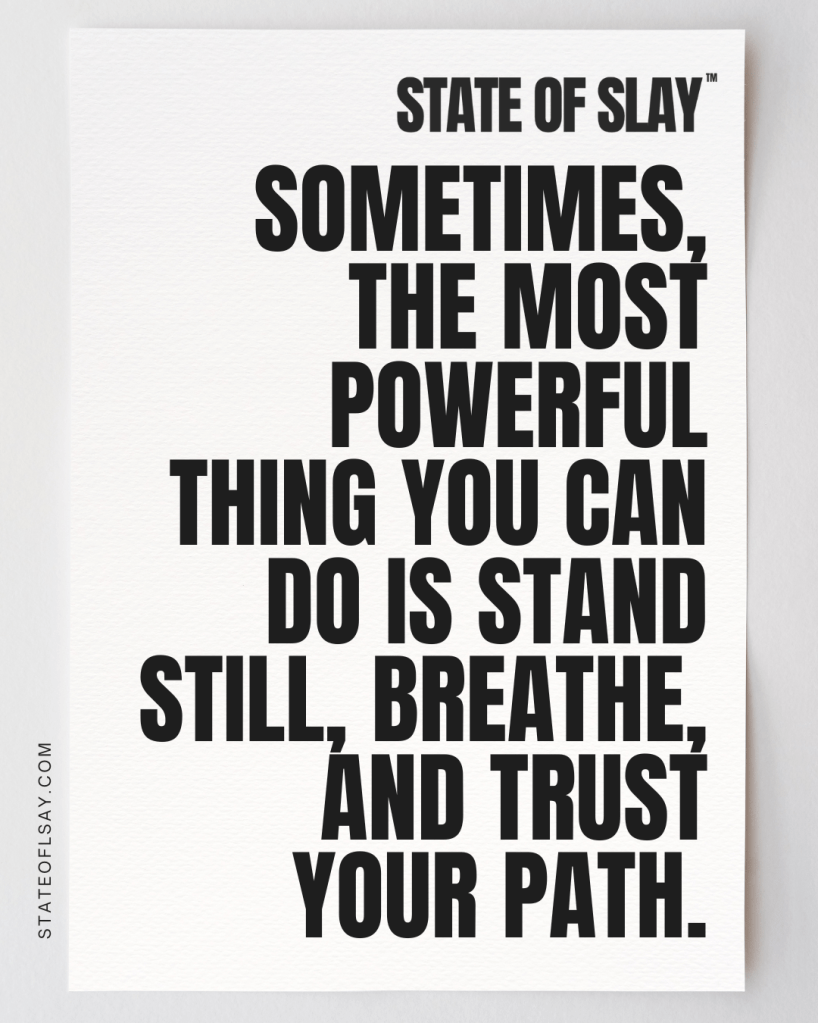
But sometimes, the most powerful thing you can do is to stand still, take a deep breath, and trust the path that’s unfolding for you.

Stillness isn’t inaction—it’s a conscious choice to ground yourself, gather your strength, and move forward with clarity.

This is your reminder to choose stillness, trust your journey, and embrace your inner power.

SLAY on.

The Oops Factor

Growing up, I never left any room for mistakes. I expected myself to do everything perfectly—and when I didn’t, I beat myself up. I carried these unrealistic expectations with me through childhood, my teenage years, and well into adulthood, never giving myself permission to simply be human. The result? A constant negative narrative playing on loop in my head, convincing me I wasn’t good enough. Every mistake felt like proof of failure, which I used as an excuse to abandon self-care, spiral into self-doubt, and reinforce the lie that I could never get better.

I see now that none of that thinking was true. I made it feel true by keeping my struggles to myself and believing the cruelest voices in my mind. I nearly rode that train all the way into the station—but thankfully, I got off before the final stop.

The truth is: our mistakes are where we learn the most. They shape our character. They build the resilience we need to accomplish the things that really matter. No one is meant to get it right every time. The growth is in the slip-ups. That’s why we need to embrace what I call the “Oops Factor.”


What Perfectionism Really Cost Me

Expecting myself to be perfect—even when I knew better—set me up to fail. I’d aim impossibly high and, when I missed the mark (which was inevitable), I’d use that as ammunition to tear myself down. Even when I succeeded, I picked apart the outcome. I never gave myself permission to feel proud. That made relationships harder too. I lived in fear that people would see me for the fraud I thought I was.

Eventually, I reached a breaking point and asked for help. In that process, I learned something life-changing: mistakes are a sign that I’m trying. They mean I’m pushing myself. And even when things don’t work out the way I hoped, there’s always a lesson or a growth opportunity—often the real reason I was on that path in the first place.

Over time, I’ve learned to trust that I’m exactly where I need to be. My job is to take the next right step. I can’t control the outcome—just the intention behind the action. And when I show up with that mindset? It’s always a win. Trying is the victory. There’s always something to gain.


Make Room for the Oops

We’re all allowed to make mistakes. In fact, we should be making them. That’s how we grow.

Start leaving space for the Oops Factor in your life. When something doesn’t go as planned, look for the lesson—or simply laugh it off. Don’t let the fear of messing up keep you from taking risks or being yourself. Let go of the pressure to be perfect and redefine what success looks like. Maybe, just maybe, being exactly who you are today is enough.

Mistakes don’t define you. But how you respond to them just might.

SLAY on!


SLAY OF THE DAY: Reflect & Rise

  • Do you expect yourself to be perfect?
  • How do you usually react when you make a mistake?
  • Does that response help you—or harm you?
  • What’s one belief about mistakes that you’re ready to let go of?
  • What’s one thing you’ve learned from a recent oops moment that helped you grow?

Give yourself permission to stumble. Learn, laugh, and get back up stronger.


Call to Action: Join the Conversation
I’d love to hear from you.
What’s one way you can show yourself more grace when you make a mistake?
Share your story in the comments. Let’s cheer each other on.

And if you know someone who’s been stuck in a shame spiral, send this to them.
Sometimes, all we need is a little reminder that it’s okay to mess up.

When You Judge Someone By Their Past It Can Make That Past Impossible To Escape

I’ve been thinking about this one for a while.

When someone works to change their life—truly change it—few things are more disheartening than being treated like they’re still the person they used to be. I’ve witnessed this over the years, most recently with someone I love. It’s a painful thing to watch: someone trying to climb out of the hole they once lived in, only to be reminded—through judgment, dismissal, or condescension—that some people refuse to see the progress they’ve made.

The truth is, when we judge someone by their past, we make it that much harder for them to escape it.


The Weight of Someone Else’s Words

I’ve written before about how some people in our lives might not want us to change. Not because they don’t love us—but because our growth disrupts the status quo they’ve grown comfortable with. Sometimes people don’t want us to get better because they liked the version of us who needed them. Or maybe they’re not ready to face their own discomfort, so they keep us boxed into the role they’re used to playing.

I’ve seen this happen recently to someone close to me. They’ve done the hard work to better themselves—mentally, spiritually, emotionally—but a family member still treats them like they’re stuck at their lowest point. The conversations aren’t supportive. They’re diminishing. And I’ve seen the toll it takes. That judgment acts like a chain, pulling them backward into a version of themselves they’ve outgrown.

Words matter. How people speak to us—and about us—can either reinforce our progress or unravel it.


Breaking the Cycle

When I committed to getting better, I was fortunate to have strong support. I leaned on my people hard in the beginning. And as I grew stronger, I leaned less—but that circle still stood beside me. Eventually, I began to notice who was genuinely happy for me and who wasn’t. And let me tell you: not everyone will cheer for your growth.

Some people liked me better when I was lost, because it made them feel more in control. Others preferred the version of me who didn’t challenge the status quo. But I had to remind myself that my healing wasn’t up for debate. I wasn’t going to stay stuck to keep someone else comfortable. And neither should you.

We are allowed to outgrow roles, relationships, and narratives that no longer serve us. We are allowed to heal—and to demand that the people in our lives meet us where we are now, not where we used to be.


Let Yourself Grow

You are not your past. You are not your mistakes. You are not the version of yourself that someone else insists on remembering.

You are your growth. You are your progress. You are your present—and your future.

Surround yourself with people who celebrate that. People who speak life into your healing, not those who try to hold you hostage to your history. Anyone who truly loves you will root for the best version of you. And that’s the kind of energy you deserve to have around you.

SLAY on.


SLAY OF THE DAY: Reflect & Rise

  • Do the people in your life support your growth?
  • Are there voices in your circle that try to tie you to your past?
  • How do those interactions make you feel?
  • What can you do to distance yourself from that energy?
  • Who are the people that celebrate your healing? How can you keep them close?

You’re not defined by where you’ve been. You’re defined by who you choose to become.


Call to Action: Join the Conversation
I’d love to hear from you.
What’s one way you’ve broken free from someone else’s perception of your past?
Share your story in the comments. Let’s cheer each other on.

And if you know someone who’s ready to grow but feels weighed down by old narratives, send this to them.
Sometimes, all we need is to be seen for who we are becoming.

Which Way Are You Going?

I used to know I was heading the wrong way. My decisions were bad, my ego blocked me from seeking help, and my negative thoughts told me I didn’t deserve any better. I was speeding up a one-way street in the wrong direction, fully aware I’d crash eventually—but I kept going. The rush of challenging life, not really caring what happened, kept me hooked. I burned bridges, damaged relationships, and shredded my sense of self. And then one day, inevitably, I crashed. The signs were always there, growing bolder as I barreled toward destruction. I’m grateful I found the courage to stop before the crash became permanent.


The Path Forward

Stepping onto this new path meant a lot of change. I had to prioritize my mental and physical health and focus my energy on moving in the right direction. Along the way, I noticed the signs—those subtle and not-so-subtle signals telling me I was on track. I paid attention, and when I started to veer off course, I made the necessary changes. Sometimes, I didn’t make them right away, but ignoring them didn’t feel good anymore. That old thrill was gone. It left behind the reality that I was sabotaging my progress, so I learned to get back on track.

We always have a choice. We can either do what’s right for us or make excuses. Every day, I had to make a conscious decision to take the next right action. And when I didn’t, I learned to forgive myself and keep moving. Failing is part of the journey, and it’s often where we learn the most. Starting a new path is scary, but as we tune into the signs and share our truth, we step closer to the freedom of leaving the past behind.

Here’s the thing: we don’t have to ride that old road to the end. The exit is there whenever we’re ready.


Time to Reroute

Now, as many of us are experiencing a slower pace, it’s the perfect moment to reflect. What signs have you missed or chosen to ignore? Are you on the right road, headed in the right direction? This time of pause is the perfect opportunity to take a different route—one that might align better with where your heart wants to go. Ask for guidance, look for the signs, and head toward the light.

SLAY on.


SLAY OF THE DAY: Reflect & Rise

  • Do you feel like you’re headed down the right road? If not, why do you stay?

  • What direction would you like to see yourself headed?

  • How can you get there?

  • What do you need to do today to make that change?

  • What has stopped you in the past? How can you overcome that?

  • Write an example of something you’ve overcome. How can you use that experience to fuel the changes you need today?

Remember, we all have the power to change. It may not be easy at first, but it’s possible. Trust that the path meant for you will present itself if you keep looking for the signs.


Call to Action: Join the Conversation

I’d love to hear from you.
What’s one sign you’re noticing that tells you it’s time for a change?
Share your story in the comments. Let’s encourage and inspire one another.

And if you know someone who’s struggling to find their way, send this to them.
Sometimes, a little nudge in the right direction is all it takes.

Let’s Not Forget Who We Are

It’s easy to fall into the whirlwind of fear, panic, and media overload. It’s easy to retreat inward, to think only of ourselves and our immediate circle. But now more than ever, it’s crucial to pause and remember the truth of who we are.

We are resilient.
We are survivors.
We are, if we allow ourselves to be, heroes.

In my lifetime, I’ve seen us rise in the face of adversity. During times of uncertainty—whether caused by health crises, security threats, or social unrest—there have always been those who stood tall, offering kindness, generosity, and a steady hand.

Lately, I’ve noticed the shift. At the grocery store, I’ve felt the undercurrent of fear, witnessed the frantic hoarding, the wary glances as people clutch their carts. That isn’t our best. Fear shrinks us. But we can choose differently.


Stepping Out of Fear and Into Service

As someone who once lived in constant fear and anxiety, I understand what it feels like to be paralyzed by “what ifs.” I used to hide behind drawn blinds, isolating myself from the world. But not anymore. Today, I show up. For myself. For others.

Fear doesn’t have to define us. When we act with compassion, even small gestures—like offering a smile or a supportive word—can shift the energy around us. Our actions ripple outward. We impact more lives than we realize.


Holding Onto Our Humanity

I know so many of you SLAYERS have fought through personal challenges, faced down fear, and kept moving forward. This moment is no different. We can walk through it with grace and compassion. We can check on our neighbors, offer help, and think beyond ourselves.

Even as we adapt to new ways of showing care—like elbow bumps instead of hugs, virtual support instead of in-person—our core humanity remains. This moment will pass, as all things do. When it does, how will you feel about who you were during this time?


SLAY OF THE DAY

Do you find yourself consumed by fear with the current world events?
Is that fear real in your daily life today—or is it false evidence appearing real?
How can you stay grounded and out of fear?
How can you be of service today—to yourself and those around you?
What can you do today to find a sense of normalcy?
What can you do today that you’ll appreciate or thank yourself for later?
This is your chance to rise above the fear and show the best of who you are.


Call to Action: Join the Conversation

I’d love to hear your thoughts.
How are you staying grounded in these uncertain times? What small act of kindness or service are you committing to today?
Share in the comments below. Let’s lift each other up and remind one another of our strength and humanity.
And if you know someone who could use this message, share it with them.
We rise by lifting each other.

We’re Not Responsible For Our Thoughts But We Are Responsible For What We Give Light

When I first started walking this path, I used to beat myself up for the negative or old thoughts that crept into my mind. I thought I was failing somehow by still thinking them. But what I’ve come to learn—and remind myself of every day—is this: we’re not responsible for the thoughts that arise. We’re responsible for what we nurture, for what we choose to give light.

Negative thoughts will come and go. They always do. But judging ourselves for them only feeds the darkness.


A Journey of “Yes” and the Cloud Analogy

Early in this journey, I made a promise to myself: say “yes” to new ways of thinking. The old ways—the clinging, the control—weren’t working. I even signed up for a meditation class, hoping for relief from the noise in my head.

I’ll never forget that first class. As we settled into silence, a garbage truck began backing up outside. Beep, beep, beep. Instantly, frustration bubbled up in me. How dare this truck interrupt my serenity!

But the instructor’s voice broke through: “Acknowledge the sound. Let it go. Like a cloud moving across the sky.”

That image stuck with me. Over time, I learned to acknowledge the intrusive thoughts, ask if they served me, and then—let them drift away.


Thoughts Are Just Thoughts—Until We Give Them Power

We can’t control what we think. But we can control what we dwell on, what we give voice and weight to. Negative thinking doesn’t make us bad or broken—it makes us human.

What matters is what we do next. Will we cling to those thoughts and let them spiral us down? Or will we choose to counter them with something positive? Something we’re grateful for?

When I catch myself spiraling, I remember the cloud analogy. I visualize those thoughts floating away. I remind myself that I have the power to choose what I give light to.


SLAY OF THE DAY

Do you catch yourself judging your negative thoughts?
What’s the result?
How can you shift that judgment into curiosity or self-compassion?
What triggers those thoughts—and what might they be trying to tell you?
Can you counter them with gratitude or a positive affirmation?
Remember, it’s not about silencing every negative thought. It’s about not giving them the spotlight. Choose what serves you, and let the rest drift by.


Call to Action: Join the Conversation

I’d love to hear your thoughts.
How do you handle negative thinking? What helps you shift from judgment to self-compassion?
Share your story in the comments below. Let’s lift each other up with real, honest conversations about our inner worlds.
And if you know someone who needs this message today—send it their way. We’re in this together.

Looking Through Different Eyes

Before walking this path, I thought I knew everything—or at least better than most. I saw the world through judgmental eyes, convinced that everyone else was doing it wrong. It was easier to judge than to look inward, easier to point fingers than to take responsibility. My ego told me I was smarter, better, but deep down, I was just trying to cover the emptiness I felt inside—the fear that I wasn’t enough.

That judgment kept me blind. It limited what I was willing to see and locked me into a narrow, self-protective perspective.


Choosing Teachability Over Ego

I’ve shared before that it’s vital for me to stay teachable. It took a long time—and a lot of pain—for me to admit that I don’t know everything, that my stubbornness and ego hurt me more than anyone else ever could. Staying open-minded isn’t just a nice idea; it’s essential for my growth and healing.

When I close myself off, I shut down new ideas, new perspectives, and the chance to improve. This path of recovery and growth doesn’t end with a graduation or certificate. It’s a lifelong journey of becoming, of learning, and of serving.

Being of service means setting aside ego. It means being open to seeing things as they are, not just as I want them to be. When I was stuck in my old patterns, I didn’t care about helping others unless it benefited me. But recovery taught me that my growth and healing are deeply tied to my ability to support and lift others up.


Seeing Beyond Our Own Perspective

We all come from different places, with different life experiences. It’s natural to have a perspective shaped by our journey, but if we only see the world through our own lens, we miss the full picture.

When we stay stuck in our assumptions—what we think we know—we stunt our growth. But when we leave space for discovery, for the possibility that we might not know everything, we create room for connection, understanding, and freedom.

That space in between? It’s where transformation happens.


SLAY OF THE DAY

Do you usually assume you know the truth without investigating?
How has that approach worked—or not worked—for you?
Think of a time when you discovered the reality wasn’t what you thought. What did you learn?
Are you open to continuing to learn from others, even when it’s uncomfortable?
How do you feel when others make false assumptions about you? Remember, it feels the same when we do it to others.
Leave space to grow. Leave space to see.


Call to Action: Join the Conversation

I’d love to hear from you.
How do you keep yourself open to learning and growth? What helps you shift from judgment to curiosity?
Share your thoughts in the comments and let’s lift each other up.
And if you know someone who could use this message, share it with them. Together, we can break free from assumptions and open our eyes to new possibilities.

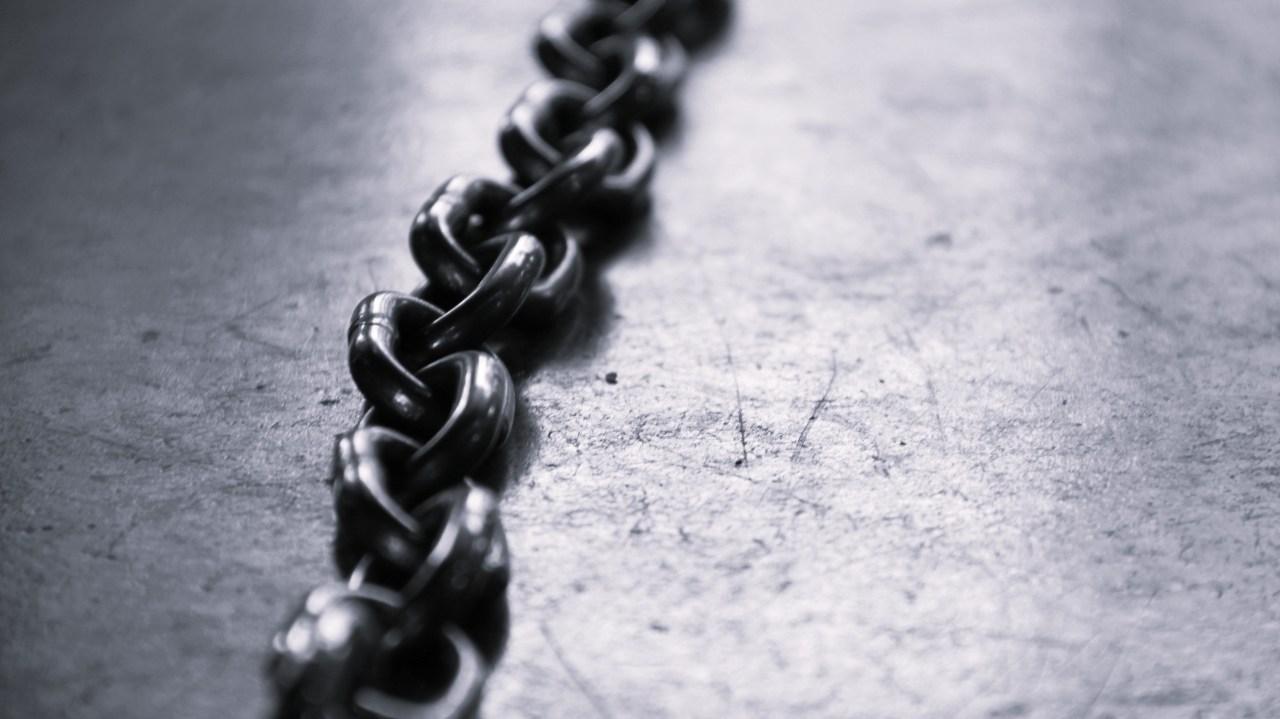
Break The Chains

There are so many chains we build in our lives—chains that bind us to the past, to old ways of thinking, to hurts that never healed, and to expectations that were never really ours. We start building them early, learning from what we see, what we’re told, and what we internalize. Over time, we add link after link until we’re dragging around the weight of it all, wondering why we feel so stuck, so tired, and so heavy.

We cling to resentment, to unspoken anger, to the life we thought we should have, the love we thought we deserved, and the promises we believed would be kept. Those chains become part of our identity, and we don’t even realize how much they’re holding us back.


The Weight I Carried

Before I stepped into recovery, I was dragging an entire lifetime of chains. They weren’t just memories—they were burdens, binding me to people and situations I should have let go of a long time ago. I thought breaking them would be impossible. They were too heavy, too tangled, too deeply woven into my story.

But breaking the chains wasn’t impossible—it was just uncomfortable. It took honesty, a willingness to examine what was truly mine to carry and what I could release. It meant confronting the stories I told myself, the grudges I nurtured, and the fear that kept me tethered.

With help, I started cutting links, one by one. Some chains fell away easily; others took time, patience, and forgiveness. And there are still chains I’m working on—because some habits are stubborn, and some attachments are harder to break.


Learning to Let Go

As I broke free from those old chains, I realized something important: they hadn’t been protecting me like I thought. They were limiting me. They were keeping me small. Letting go wasn’t just about feeling lighter; it was about opening myself up to possibilities I’d never imagined.

It’s tempting to build new chains to replace the old ones, to reach for safety and control in the unfamiliar. But I remind myself that those chains never kept me safe—they kept me trapped.

Our lives can be as free as we allow them to be. The power is ours to break the chains that bind us and step into the light of a new way of living.


SLAY OF THE DAY

Do you recognize the chains you’re carrying?
Are they old resentments, limiting beliefs, or attachments that no longer serve you?
Why do you hold onto them?
How do they harm you?
What would it feel like to let them go?
Start today—cut one link. Your freedom is waiting.


Call to Action: Join the Conversation

I’d love to hear from you.
What chains are you breaking right now? What has helped you find your freedom?
Share your story in the comments and let’s encourage each other to keep cutting those chains.
And if you know someone who’s struggling to let go, send this their way. Sometimes, all we need is a reminder that we hold the key.