You Don’t Outgrow People, You Outgrow the Version of You Who Chose Them

There comes a moment in life when you look around and realize some of the people who once felt like home no longer fit. Conversations feel different. Energy feels heavier. The connection feels strained or forced.

It’s easy to assume that means you’ve outgrown them—but often, what’s really happened is that you’ve outgrown the version of yourself who chose them.

The friends, partners, or even family members you once aligned with matched a specific stage of your evolution. They reflected your wounds, your needs, your patterns, and the beliefs you held about yourself at that time. But as you heal, grow, and redefine who you are, those old reflections no longer fit the new version of you.

That’s not betrayal. That’s growth.


Prefer to listen? The Audio Blog version is available here.


The Mirror of Who You Were

Every person you’ve ever connected with was, in some way, a reflection of your state of being.

When I look back on the people I surrounded myself with during some of my darkest times, they mirrored exactly where I was: lost, seeking validation, people-pleasing, or trying to fill a void with distraction instead of truth.

Those relationships weren’t wrong—they were teachers. They held up a mirror to who I was, helping me see the parts of myself that needed to evolve.

And when I did evolve—when I started setting boundaries, speaking my truth, and prioritizing peace over chaos—it’s no wonder some of those relationships fell away. They weren’t meant to walk with the healed version of me.

You can love someone deeply and still outgrow the person you were when you met them.


Growth Doesn’t Require Guilt

Outgrowing people is one of the most painful—and most freeing—parts of becoming who you’re meant to be.

We tell ourselves that letting go means we’ve failed, abandoned, or betrayed the bond. But the truth is, we can honor what someone brought into our lives without needing to keep them there forever.

Growth asks you to release guilt and step into gratitude. To thank the version of yourself that needed them—and then thank the version of yourself that’s strong enough to move forward.

You don’t owe anyone a lifetime seat in your story just because they showed up in an earlier chapter.


Honoring the Evolution

Here’s the beautiful thing: when you stop clinging to relationships that no longer fit, you make space for connections that align with who you’ve become.

When you choose authenticity over obligation, you’ll attract people who see the real you—the one who’s done the work, who’s healing, who’s learning, who’s free.

Not everyone is meant to grow beside you. Some were meant to help you begin the journey. And that’s okay. You can love them, wish them well, and still continue on your path.

Growth doesn’t erase love. It just transforms it.


SLAY Reflection

  1. Who in your life represents an old version of you?
  2. How have your needs and values changed since you first connected?
  3. What emotions come up when you think about letting go of relationships that no longer align?
  4. How can you honor what they taught you while still moving forward?
  5. What kind of energy or people do you want to attract into your life now?

  • S – See who you’ve become with honesty and love
  • L – Let go of relationships that reflect your past pain
  • A – Align yourself with those who match your growth
  • Y – Yield to your evolution and trust the timing of connection

Call to Action: Join the Conversation

I’d love to hear from you.
Who have you outgrown—and what did that teach you about yourself?
Share your story in the comments. Let’s cheer each other on.

And if you know someone who’s struggling to release what no longer fits, send this to them.
Sometimes, all we need is permission to grow.

Slay Say

Unearth Your Thriving Self

There’s a version of you that doesn’t live in reaction, exhaustion, or fear.
It’s the version that breathes easier, moves with intention, and believes they deserve peace.

But to meet that version, you have to release the one that’s just getting by. The one that clings to old patterns, familiar chaos, and constant survival mode.

Thriving isn’t something you earn—it’s who you uncover when you stop settling for struggle as your normal.

This is your reminder that your next level of peace, purpose, and power is already within you—waiting to rise.

Slay On!

Your Brain Isn’t Broken, It’s Searching for Safety

There’s a moment in healing when you realize that what you’ve been calling “broken” was really protective.
Those looping thoughts, the anxious spirals, the what-ifs that replay like a broken record — they’re not your brain failing you. They’re your brain trying to keep you safe.

It’s called pattern completion, and it’s one of the ways your mind tries to make sense of the world.
When your brain experiences something painful, confusing, or traumatic, it looks for patterns — familiar situations, similar people, recognizable emotions — and tries to predict what comes next. It’s a survival mechanism, not a flaw.

But survival mode isn’t meant to be a permanent address.


Your Brain Is Trying to Protect You, Not Punish You

When you’re caught in a mental loop — replaying a conversation, worrying about what might happen, or assuming the worst — it’s your brain saying, “I’ve been here before. I know what this felt like last time, so I’ll prepare for it again.”

That’s pattern completion.
It’s your nervous system scanning for danger based on old data.

But here’s the truth: you’re not living that old story anymore.

The brain doesn’t know the difference between memory and reality until you show it.
Every time you ground yourself in the present, take a deep breath, or remind yourself “I’m safe now,” you’re re-educating your mind. You’re teaching it that not every silence means rejection, not every argument means abandonment, not every change means chaos.

You’re not broken — you’re healing an overworked safety system.


Familiar Isn’t Always Safe

One of the hardest truths to accept is that your brain equates familiar with safe, even when familiar hurt you.

That’s why we sometimes repeat relationships that feel eerily similar to the ones that wounded us.
Why we overwork ourselves the way we saw others do.
Why we shrink in moments that ask us to rise.

Your brain is chasing comfort, not happiness.
It’s doing what it knows.
But healing begins when you start showing it something new — when you remind it that safety can look like calm, silence, boundaries, and peace.

At first, that newness will feel uncomfortable. Your brain may resist. It’s not because you’re doing something wrong — it’s because you’re doing something different. And different can feel like danger when you’ve lived in survival mode for too long.


Teach Your Brain a New Way to Be Safe

Rewiring those patterns takes intention, but it’s possible.

Here’s how to start:

  • Notice the loop. When your thoughts start spiraling, pause. Label it. “This is my brain trying to complete an old pattern.”
  • Ground yourself in the present. Look around. Name five things you see, four you can touch, three you can hear. Tell yourself, “This is now, not then.”
  • Reassure your nervous system. Speak gently to yourself. “I’m safe. I don’t need to fight, flee, or freeze right now.”
  • Replace fear with truth. Ask, “What is real in this moment?” That question alone can shift everything.

Over time, your brain learns.
It starts to trust that you’re no longer in danger — that you’re the safe place now.

And that’s when healing becomes your new pattern.


You’re the Safety You’ve Been Searching For

The next time your mind replays an old fear, remember this:
You’re not back there. You’re right here.
You’ve survived everything that tried to break you — and now, you get to teach your brain what safety truly feels like.

Because your brain isn’t broken. It’s learning a new language — one called peace.


SLAY Reflection

  1. What thought patterns or worries tend to repeat for you?
  2. When you feel triggered, can you pause and remind yourself, “I’m safe now”?
  3. How can you show your brain a new version of safety today?
  4. What familiar behaviors are you ready to release, even if they once made you feel “safe”?
  5. How can you speak to yourself with compassion when old fears resurface?

S – Stop labeling your survival instincts as flaws
L – Learn to identify when your mind is replaying old fears
A – Align your thoughts with the truth of the present moment
Y – Yield to peace; you’re safe now


Call to Action: Join the Conversation

I’d love to hear from you.
What’s one pattern your brain keeps replaying — and how are you learning to rewrite it?
Share your story in the comments. Let’s cheer each other on.

And if you know someone who’s been hard on themselves for how they think or feel, send this to them.
Sometimes, all we need is a reminder: we’re not broken — we’re healing.

Slay Say

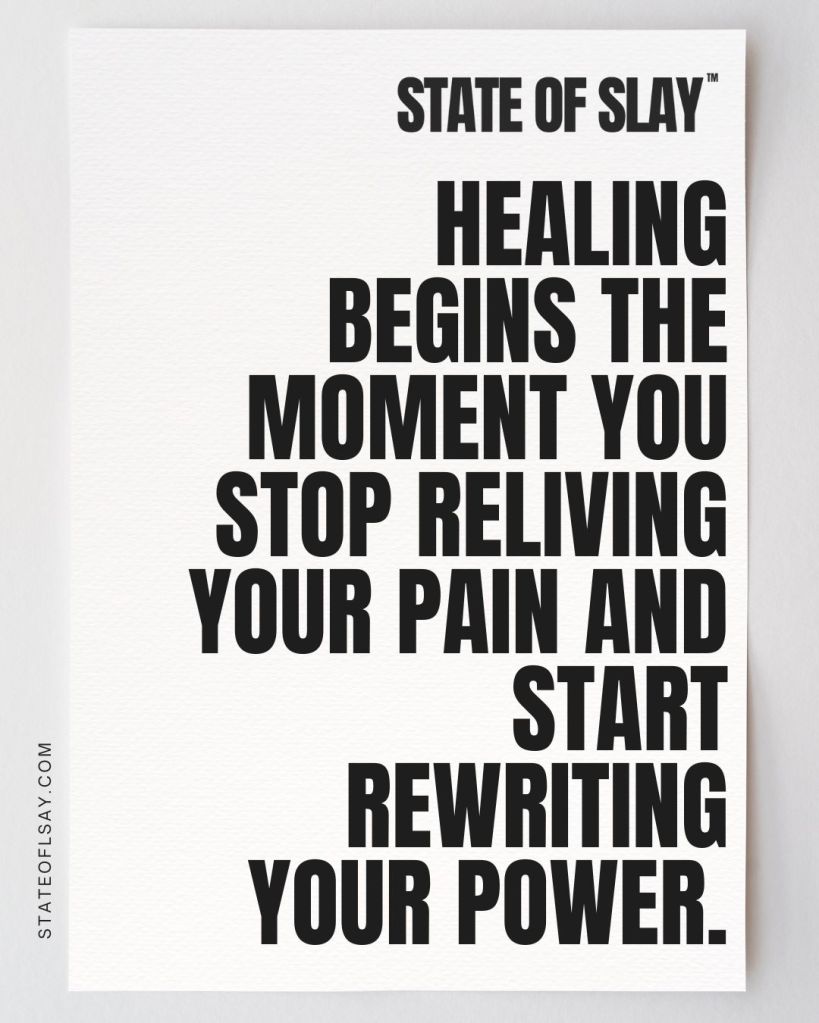
Rewrite Your Power

Healing isn’t about pretending the pain never happened. It’s about refusing to let it be the only story you tell.

When we stop replaying the moments that broke us and start focusing on the strength that carried us through, we shift from surviving to rising.

Each time you choose peace over the past, you rewrite your power.

This is your reminder that your story isn’t over—it’s evolving.
Let the next chapter be the one where you heal out loud.

Slay on!

Pressure Is a Privilege

There’s a saying I’ve always loved: pressure is a privilege.

At first, it can sound like something only the ultra-successful would say—like a line meant for athletes, CEOs, or overachievers. But the truth is, pressure exists wherever there’s potential.

Pressure means someone believes in you.
Pressure means you’ve earned responsibility.
Pressure means you’ve shown you can handle something worth doing.

It’s not punishment—it’s purpose in disguise.


The Weight of Expectation

When life starts demanding more of us, our instinct is often to push back. We say things like:

  • “Why is this so hard?”
  • “Why does everyone expect me to have it all together?”
  • “Can’t I just have one easy day?”

But those expectations—those moments that make us sweat and doubt and question—are actually markers of growth.

If no one expected anything of you, it would mean no one believed in your ability to rise. Pressure is often the shadow side of opportunity.

We tend to see only the strain, but pressure exists because something inside you is ready to expand.

The next chapter of your life is pressing on the walls of your comfort zone, asking to be born.


From Fear to Fuel

Pressure can crush you if you let it. But it can also create diamonds.

It all depends on how you see it.

When you frame pressure as a burden, it feels heavy, suffocating, endless. But when you frame it as privilege—as proof that something meaningful is unfolding—you stop resisting and start responding.

Think of it this way:

  • Pressure is proof that you’re trusted.
  • Pressure is proof that you’re capable.
  • Pressure is proof that you’re in the game.

When the moment feels too big, remember: you wouldn’t be under this much pressure if you weren’t meant to handle it.

You’ve already proven something powerful just by being here.


Perfection vs. Purpose

Many of us crumble under pressure not because we’re incapable—but because we confuse pressure with perfection.

We think pressure means we can’t fail. That we must perform flawlessly. That we’re being watched and judged.

But pressure isn’t about being perfect—it’s about being present.

The people who thrive under pressure aren’t superhuman. They’ve just learned how to focus on progress over perfection.

When you stop chasing flawless and start chasing faithful, something shifts. You stop trying to prove and start showing up.

That’s where true resilience is built—not in trying to please everyone, but in doing your best with what’s in front of you, even when it’s hard.


Pressure Builds Strength

The first time you lift a weight, it feels impossible. Your muscles shake. Your body resists. But over time, that same pressure builds strength.

Emotional pressure works the same way.

Every time you stand in discomfort—face the meeting, have the hard conversation, take the next step when you’re terrified—you grow.

Each moment of pressure becomes a training ground for your next level.

So instead of asking “Why is this happening to me?”, start asking “What is this building in me?”

Because if you let it, pressure will make you powerful.


Reframing the Privilege

Think about this: if no one ever challenged you, you’d never know how capable you are.

Pressure doesn’t show up when you’re weak—it arrives when you’re strong enough to handle it.

That’s why it’s a privilege.

Pressure says, “You’ve proven you can do hard things.”
It says, “You’ve earned the right to grow.”
It says, “You matter enough for this to matter.”

And when you start to see pressure that way, something beautiful happens—you stop fearing it. You start welcoming it. You realize that pressure isn’t trying to destroy you; it’s trying to develop you.

That’s the difference between breaking down and breaking through.


How to Handle Pressure with Grace

Here are a few ways to turn pressure into power:

  1. Pause Before You React
    When pressure hits, don’t spiral. Breathe. Re-center. Respond from clarity, not panic.
  2. Shift Your Perspective
    Ask: “What is this moment trying to teach me?” Instead of resisting, get curious.
  3. Release Perfection
    You don’t need to ace every test. You just need to show up—consistently, courageously, honestly.
  4. Find Gratitude in Growth
    Pressure means you’re trusted with something meaningful. That’s worth being grateful for.
  5. Remember: You’ve Done Hard Things Before
    You’ve survived every pressure moment that came before this one. This, too, will become proof of your strength.

When Pressure Feels Like Too Much

There will be days when you’ll want to quit—when pressure doesn’t feel like privilege at all.

On those days, it’s okay to step back. Rest. Breathe. Ask for help. Privilege doesn’t mean perfection; it means participation. You’re allowed to pause without giving up.

Just don’t confuse taking a break with backing down. Even resting is part of rising.

You’re building endurance, not just achievement. You’re learning to carry the weight without losing yourself underneath it.


SLAY Reflection

  1. How do you usually react when you feel pressure?
  2. What opportunities in your life right now are disguised as pressure?
  3. What story do you tell yourself when expectations rise?
  4. How might seeing pressure as privilege change how you show up?
  5. What’s one way you can turn current pressure into personal power?

S – Stop seeing pressure as punishment
L – Let it teach you instead of crush you
A – Align your energy with purpose, not perfection
Y – Yield to growth—pressure is proof you’re evolving


Call to Action: Join the Conversation

I’d love to hear from you.
How has pressure shaped you into who you are today?
Share your story in the comments. Let’s cheer each other on.

And if you know someone feeling overwhelmed by the weight of expectations, send this to them.
Sometimes, all we need is a reminder that the pressure we feel is the privilege of becoming more.

Slay Say

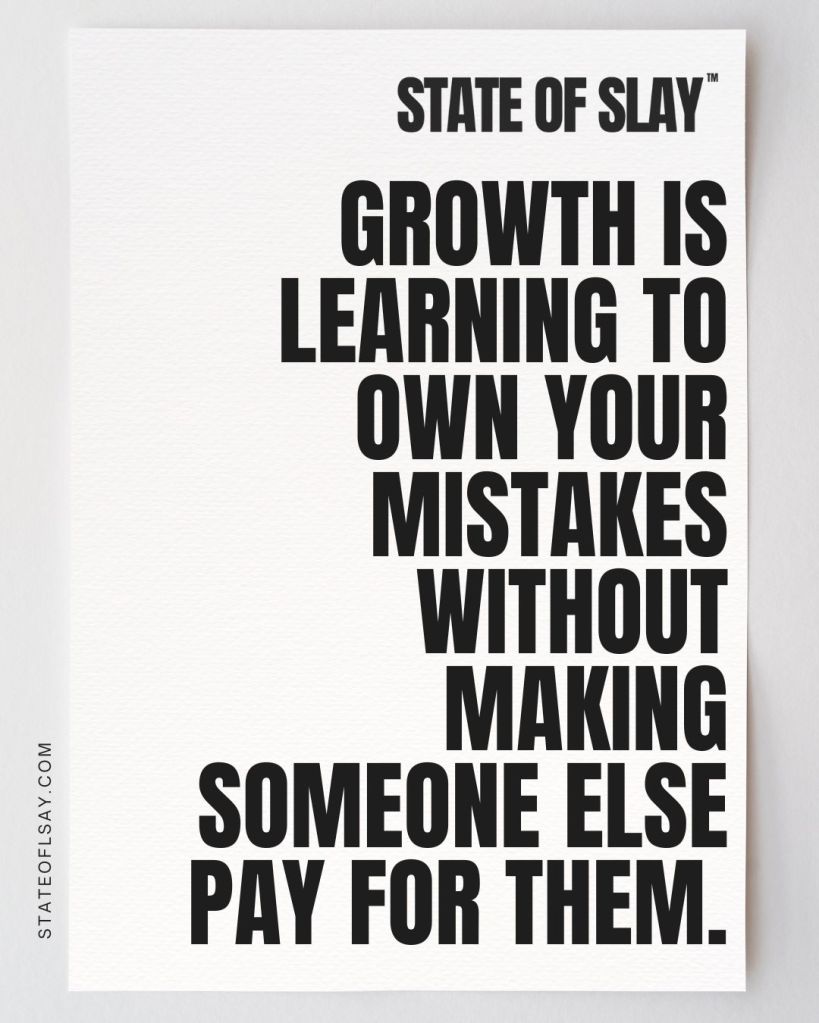
Own Your Part Without Passing the Pain

True growth isn’t about being perfect—it’s about being accountable. It’s recognizing when you’ve hurt someone and taking ownership of it without turning the spotlight or the blame back on them.

Maturity is the ability to sit with discomfort long enough to say, “I was wrong,” without needing to defend, deflect, or explain it away.

This is your reminder that healing doesn’t come from shifting the blame—it comes from standing in your truth with grace.

Slay On!

Slay Say

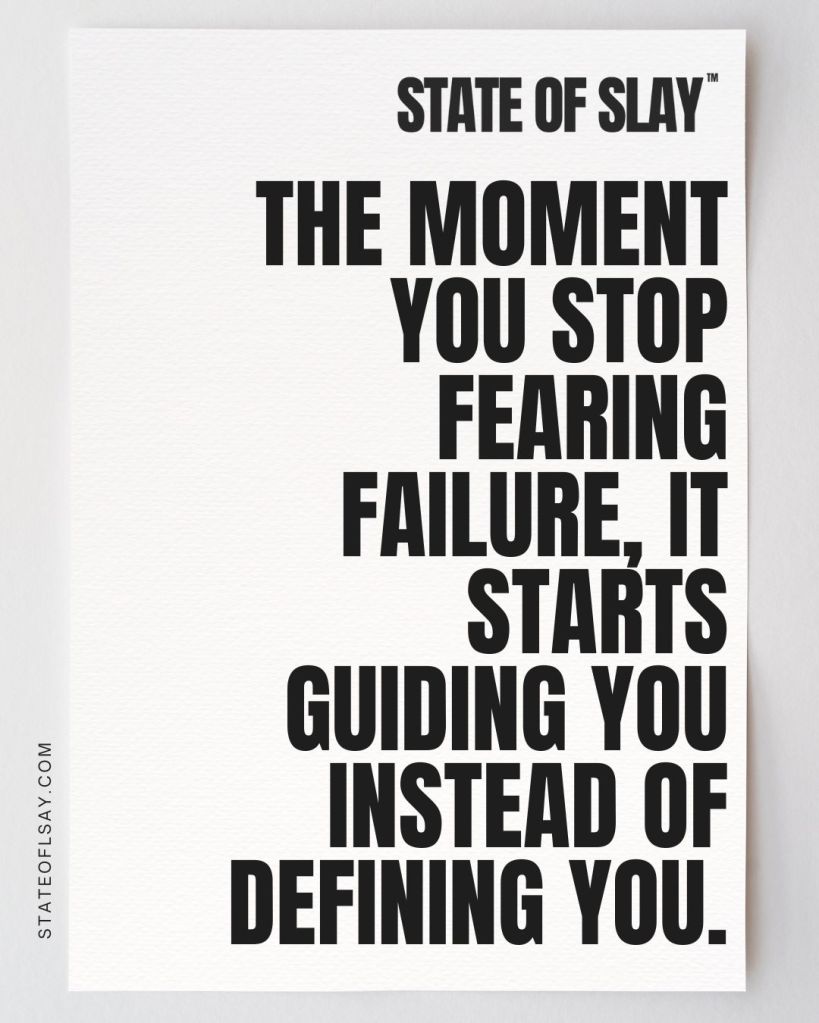
Let Failure Guide You, Not Define You

Failure is inevitable—but how we interpret it determines what it becomes. When we see failure as proof that we’re not enough, it defeats us. But when we see it as guidance, it strengthens us.

Every misstep offers direction. Every setback points toward growth. The path may not look how you imagined, but it’s still leading you somewhere valuable.

This is your reminder that the detour is not the end of the road. It’s the map showing you another way forward.

SLAY on!

Slay Say

Speak Even If Not Everyone Listens

Not everyone will understand your truth. Some may dismiss it, ignore it, or even resist it. But that doesn’t mean your voice has no value.

Your words will find their way to the ones who are ready to hear them, the ones who need the reminder, the encouragement, or the strength your voice carries.

This is your reminder that silence serves no one. Keep speaking. Keep sharing. Your voice will reach the hearts it was meant for.

Slay on!

Slay Say

Stand Steady in the Storm

Life will always bring uncertainty. Plans shift, paths twist, and storms roll in when you least expect them. The measure of your strength isn’t found in avoiding the storm, but in standing steady within it.

Resilience is not about waiting for calm skies—it’s about learning that you can endure, adapt, and rise even when the winds are against you.

This is your reminder that the challenges you face don’t define you. How you meet them does.

Slay on!

An Arrow Can Only Be Shot by Pulling It Backwards

There’s a powerful lesson tucked inside one of life’s simplest metaphors: an arrow can only be launched by first being pulled backwards.

At first, that pull feels like resistance. Pressure. Setback. You’re yanked away from where you want to go, pulled into discomfort, frustration, and sometimes even pain. But the truth is this: without that tension, without that backward stretch, there is no forward release.

Life’s pullbacks are not punishments—they are preparation.

The key is to not get stuck staring at the ground when life pulls you back. Instead, steady yourself, take aim, and get ready. Because what feels like a setback now may be the very momentum that propels you toward something greater.


The Backward Pull Feels Personal

When life pulls us back, it rarely feels neutral. It feels personal.

The relationship ends. The job falls through. The opportunity disappears. Suddenly, it feels like life is conspiring against us, stripping away what we wanted most. And in the middle of that loss, it can feel impossible to see any kind of trajectory forward.

But here’s the truth: the arrow doesn’t know it’s being pulled back to soar further—it only feels the tension. And we’re the same way.

The backward pull of life is often the exact energy we need to realign, refocus, and prepare for a different kind of future.


Take Aim: Purpose in the Pause

An arrow doesn’t just fly aimlessly—it’s aimed. The backward pull isn’t random; it’s part of the process.

When life feels like it’s dragging you back, the invitation is to pause and take aim.

Ask yourself:

  • What am I being redirected toward?
  • What lessons am I meant to carry from this moment?
  • What strength am I building through this resistance?

Taking aim doesn’t mean you’ll have all the answers right away. It means you choose not to waste the pullback. You align yourself with purpose, even if the target feels blurry.


The Release: Trusting the Launch

When the arrow is finally released, it doesn’t hesitate. It doesn’t fight the momentum. It doesn’t question the trajectory. It simply flies.

That’s the moment you’ve been stretched for.

The release is the job that finally matches your calling, the relationship that respects your worth, the moment you realize your strength has carried you further than you thought possible. It’s not about erasing the pullback; it’s about realizing that every inch of that resistance fueled the flight.


The Power of Perspective

Pullbacks and setbacks will always come. But here’s the difference between staying stuck and soaring forward: perspective.

If you see the pullback as failure, you’ll stay grounded. If you see it as preparation, you’ll find the courage to aim higher.

Every backward tug is an opportunity to grow resilience, clarity, and faith. It’s proof that you’re still in motion—that life is stretching you for something greater.


Your Bow, Your Aim, Your Flight

Remember, you are both the archer and the arrow.

You get to choose:

  • Do you fight the pull and call it defeat?
  • Or do you trust the stretch, take aim, and let yourself fly?

The setbacks won’t define you. The release will.

So the next time life pulls you back, don’t panic. Don’t lose heart. Steady your grip. Breathe. Take aim. And get ready—because you are about to soar.


SLAY Reflection

  1. Where in your life right now do you feel like you’re being pulled backwards?
  2. How can you reframe that pullback as preparation instead of punishment?
  3. What’s one target you want to take aim at, even if it feels blurry today?
  4. How can you use resistance as fuel for your momentum?
  5. What would trusting the release look like for you?

S – See setbacks as setups, not endings
L – Let the pullback strengthen your aim
A – Align with purpose, not panic
Y – Yield to the release and trust your flight


Call to Action: Join the Conversation

I’d love to hear from you.
What pullback in your life ended up being the momentum you needed to soar?
Share your story in the comments. Let’s cheer each other on.

And if you know someone who feels stuck in a setback, send this to them.
Sometimes, all we need is a reminder that the stretch is preparing us for the flight.