Growth doesn’t always announce itself with a breakthrough.
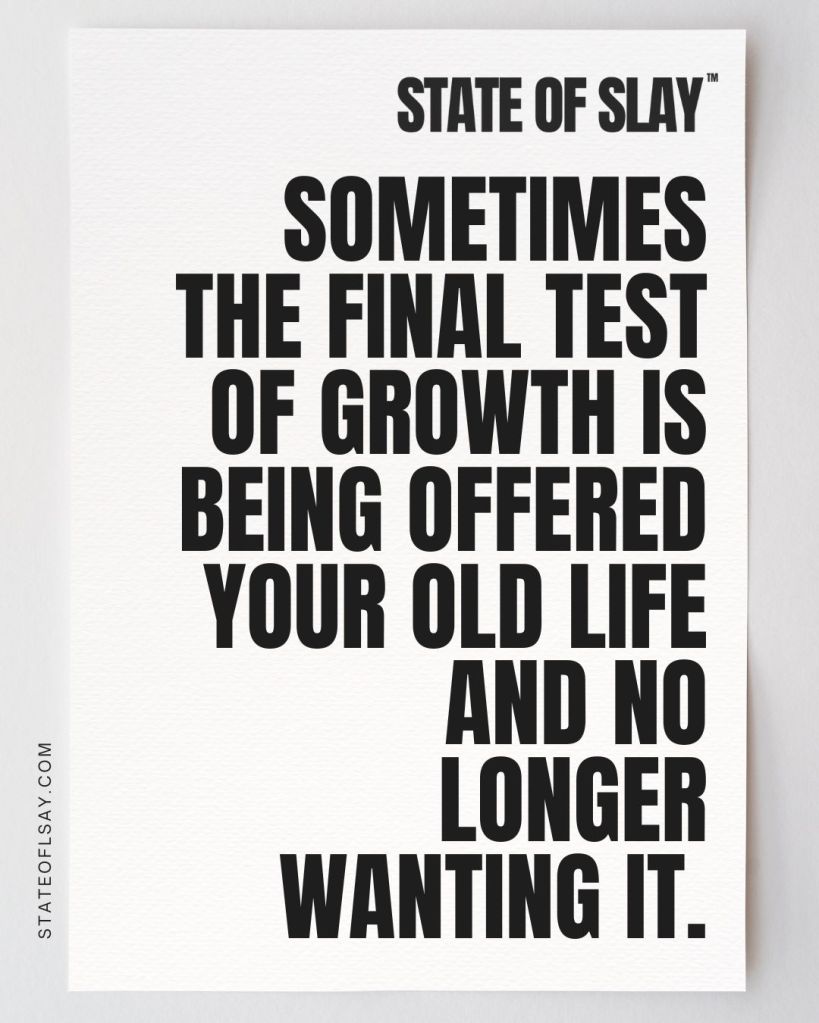
Sometimes it looks like being offered something you once desperately wanted…
and realizing you don’t want it anymore.
The relationship you once would have gone back to.
The friendship you kept trying to repair.
The opportunity you thought would finally validate you.
The habit that used to make everything feel easier.
The version of yourself that felt comfortable because you already knew how to be them.
There was a time when saying no to those things felt impossible.
Not necessarily because they were good for you, but because they were familiar.
And familiarity can be powerful.
It can make us forget how hard we worked to leave something behind.
It can soften the edges of memories.
It can convince us that going back would be easier than continuing forward.
But growth changes what feels like home.
The things you once chased can stop exciting you.
The behavior you once tolerated can become unacceptable.
The situations you once begged to return can come back around, only for you to realize you’ve become someone who no longer fits inside them.
That realization can be bittersweet.
Because outgrowing something doesn’t mean it never mattered.
It doesn’t mean you regret the person you were.
It simply means you’ve changed.
And one of the clearest signs of that change is when something that once had the power to pull you backward no longer has anything to offer the person you are today.
You don’t have to prove you’ve grown by fighting your past.
Sometimes you prove it simply by no longer being tempted to return to it.
This is your reminder:
Growth isn’t only measured by how far you’ve moved forward. Sometimes it’s recognizing that what once felt impossible to leave behind no longer feels difficult to walk away from.
When we’re hurting, we don’t always know how to heal.
We just know we want the pain to stop.
So we reach for things.
Relationships.
Food.
Alcohol.
Shopping.
Work.
Attention.
Isolation.
Distraction.
Anything that gives us a few minutes of relief from what feels unbearable.
Sometimes those choices help us get through the day.
Sometimes they become destructive.
And years later, when we’re healthier and have more perspective, we can look back at the person we were and feel ashamed of the ways we coped.
Why did I do that?
Why did I stay?
Why did I need that?
Why couldn’t I just deal with what I was feeling?
But you’re looking at an earlier version of yourself with knowledge that version didn’t have yet.
You are not a bad person for the ways you tried to kill your sadness.
You were a hurting person trying desperately to make the pain stop.
Prefer to listen? The Audio Blog version is available here.
SOMETIMES COPING IS JUST SURVIVAL IN DISGUISE
We don’t always recognize coping mechanisms while we’re using them.
At the time, they may simply feel like relief.
Something that makes the loneliness quieter.
Something that distracts us from the grief.
Something that makes us feel wanted.
Something that gives us somewhere to put all the feelings we don’t understand.
So we reach for it again.
And again.
That doesn’t mean every coping mechanism is healthy.
Some can hurt us.
Some can hurt other people.
Some can create consequences we’ll eventually have to face.
But understanding why you reached for something isn’t the same as excusing what happened.
Understanding helps you recognize what you were really trying to survive.
RELIEF AND HEALING ARE NOT THE SAME THING
When we’re hurting, we often search for relief before we understand healing.
Relief asks:
How can I stop feeling this right now?
Healing asks:
What is this pain trying to tell me?
Those questions can lead us in very different directions.
Relief can temporarily numb what hurts.
Healing asks us to understand it.
Feel it.
Process it.
And eventually move through it.
There is no shame in having reached for relief when you didn’t yet know how to heal.
But eventually, relief can no longer do the work that healing requires.
SADNESS CAN MAKE TEMPORARY THINGS FEEL LIKE ANSWERS
When something hurts deeply enough, almost anything that makes it hurt less can begin to look like a solution.
Attention can feel like love.
Distraction can feel like peace.
Numbing can feel like healing.
Being needed can feel like being valued.
A relationship can feel like rescue.
Isolation can feel like protection.
For a while, those things may even work.
That’s what makes unhealthy coping mechanisms so complicated.
They often help before they hurt.
Sometimes we don’t recognize the difference until much later.
That’s part of growing.
YOU DIDN’T HAVE THE TOOLS YOU HAVE NOW
It’s easy to look backward and imagine you should have known better.
But healing gives us tools we didn’t always possess.
Boundaries.
Self-awareness.
Perspective.
Emotional regulation.
The ability to recognize patterns.
The courage to ask for help.
You cannot expect a past version of yourself to use tools you hadn’t learned how to use yet.
You can wish you’d made different choices.
You can take responsibility for them.
You can repair what needs repairing.
But you don’t have to hate yourself for not knowing then what you know now.
SHAME WON’T HEAL WHAT SADNESS CREATED
Shame has a way of convincing us that our worst choices reveal our truest selves.
They don’t.
A decision is something you made.
A mistake is something you made.
A coping mechanism is something you used.
None of those things have to become who you are.
If you’ve grown enough to look back and recognize that something wasn’t healthy, that awareness matters.
It means you can see what you couldn’t see before.
Don’t use your growth as another reason to punish yourself.
Let it become evidence that you’ve changed.
UNDERSTANDING YOURSELF IS NOT MAKING EXCUSES
Sometimes we’re afraid to show compassion toward our past selves because we think it lets us off the hook.
It doesn’t.
You can understand why you behaved a certain way and still acknowledge the consequences.
You can say:
I was hurting.
And…
I hurt someone.
I didn’t know how to cope.
And…
I wish I had handled it differently.
I understand why I made that choice.
And…
I would make a different choice today.
Two truths can exist at the same time.
Accountability helps us grow.
Compassion allows us to grow without destroying ourselves along the way.
SOMETIMES WE TRY TO FILL WHAT ACTUALLY NEEDS TO BE FELT
There are some empty spaces we cannot fill.
We have to feel them.
Grief needs to be grieved.
Loneliness needs to be understood.
Loss needs to be acknowledged.
Pain needs somewhere safe to exist.
We can spend years pouring things into an emotional hole, hoping something will finally make us feel whole.
But healing often begins when we stop asking what we can put into the space and start asking why the space is there.
Sometimes the emptiness isn’t asking to be filled.
It’s asking to be heard.
YOU DON’T HAVE TO KEEP PUNISHING THE PERSON YOU USED TO BE
There is a strange cruelty in healing that we don’t talk about enough.
We become healthier…
And then use that health to judge the person we were when we weren’t.
We look backward with clarity and expect our former selves to have possessed it too.
But they didn’t.
They were living the experience you now have the privilege of understanding in hindsight.
That doesn’t mean everything they did was right.
It means they deserve context.
You can hold your past self accountable without putting them on trial for the rest of your life.
FORGIVE THE PERSON WHO WAS TRYING TO MAKE THE PAIN STOP
Think about who you were during one of your hardest seasons.
Not from where you stand today.
From where you stood then.
What did you know?
What hadn’t you learned yet?
What were you afraid of?
What were you desperately trying not to feel?
That person doesn’t need another judge.
They’ve probably had enough of those.
They need understanding.
They need forgiveness.
They need you to recognize that somehow, imperfectly, they kept going long enough for you to become who you are today.
YOU CAN LEARN A NEW WAY TO CARE FOR YOURSELF
Maybe you once tried to kill your sadness with relationships.
Work.
Food.
Alcohol.
Shopping.
Attention.
Isolation.
Or anything else that offered temporary escape.
You don’t have to be ashamed that something once helped you survive.
But you also don’t have to keep using a survival strategy after you’ve learned a healthier way to live.
Awareness gives you a choice.
And every healthier choice becomes another way of telling yourself:
I know how to care for you differently now.
You are not a bad person for the ways you tried to kill your sadness.
You were hurting.
You were learning.
You were trying to get through something with whatever tools you had at the time.
Now you know more.
Now you can choose differently.
And perhaps one of the greatest signs of healing is being able to look back at the person you once were without shame and say:
I understand why you did what you did.
But we don’t have to survive that way anymore.
SLAY REFLECTION
S — See Yourself With Compassion What past behavior have you been judging without considering what you were going through at the time?
L — Look Beneath the Behavior What sadness, pain, loneliness, or fear were you actually trying to escape?
A — Accept What You’ve Learned What do you understand about yourself today that you couldn’t understand during that difficult season?
Y — Your Next Step What healthier way can you care for yourself the next time you feel the urge to escape what you’re feeling?
CALL TO ACTION: JOIN THE CONVERSATION
I’d love to hear from you.
What have you learned to give yourself today that you once searched for somewhere else?
Share your story in the comments. Your experience may help someone else understand that they don’t have to be ashamed of the person they were while they were trying to survive.
And if you know someone who is struggling to forgive a past version of themselves, send this to them.
Others are meant to teach us when it’s time to let go.
Yet so many of us spend years pouring our time, energy, love, and hope into things that stopped growing long ago.
A relationship that has become one-sided.
A dream that no longer fits who you’ve become.
A friendship built entirely on history.
A job that drains more life from you than it gives.
A version of yourself that no longer exists.
We keep watering them because we remember what they once were.
We hold onto the hope that if we just try a little harder, they’ll come back to life.
But not everything that dies is meant to be revived.
Sometimes, growth begins the moment we stop watering dead plants.
Prefer to listen? The Audio Blog version is available here.
NOT EVERYTHING IS MEANT TO LAST FOREVER
One of life’s hardest truths is that not everything is supposed to stay with us.
Some people are seasons.
Some dreams are stepping stones.
Some chapters exist only to prepare us for the next one.
That doesn’t make them failures.
It makes them part of the journey.
The problem is that we often mistake endings for mistakes.
We think that if something didn’t last forever, it wasn’t worth having.
In reality, some of the most meaningful experiences in life are temporary.
Their purpose was never permanence.
It was growth.
HOPE CAN KEEP US STUCK
Hope is a beautiful thing.
It helps us persevere through difficult times.
It gives us the courage to believe tomorrow can be better.
But hope has a shadow side.
Sometimes we place our hope in things that have already ended.
We hope someone will become the person they’ve repeatedly shown us they aren’t.
We hope a relationship will return to what it once was.
We hope a door that has closed will somehow reopen.
Hope becomes harmful when it keeps us investing in something that no longer has the capacity to grow.
There comes a point when hope must give way to acceptance.
YOU CAN’T GROW A GARDEN IF ALL YOUR WATER IS GOING TO THE WEEDS
Every day, you wake up with a limited amount of time, attention, and emotional energy.
Where you spend it matters.
If all of your energy goes toward fixing what no longer serves you, there is very little left for what could.
New relationships.
New opportunities.
New dreams.
New habits.
Growth requires resources.
And every drop you pour into something lifeless is a drop that can’t nourish something alive.
LETTING GO IS NOT THE SAME AS GIVING UP
Many people stay because they fear that leaving means they didn’t try hard enough.
But there is a difference between perseverance and denial.
Perseverance means continuing when there is still life.
Denial means refusing to acknowledge when there isn’t.
Walking away doesn’t always mean you’ve given up.
Sometimes it means you’ve finally accepted reality.
Acceptance isn’t weakness.
It’s wisdom.
SOME THINGS LOOK ALIVE BECAUSE WE KEEP PROPPING THEM UP
There are relationships that survive only because one person keeps reaching out.
Jobs that continue only because we silence our values.
Dreams we keep talking about even though our hearts quietly left them years ago.
From the outside, they appear healthy.
But beneath the surface, there is no growth.
No joy.
No movement.
Just maintenance.
Eventually, you have to ask yourself a difficult question.
Am I nurturing something that is alive?
Or am I simply preventing it from falling over?
MAKE ROOM FOR WHAT WANTS TO GROW
Nature has a remarkable rhythm.
When old branches die, they are pruned.
Not because the tree has failed.
Because removing what is dead allows new growth to flourish.
Our lives work much the same way.
Every time we release something that no longer belongs, we create space.
Space for healthier relationships.
Space for creativity.
Space for peace.
Space for opportunities we couldn’t see while we were clinging to what was already over.
Sometimes the greatest act of self-care is making room for something new.
YOUR PAST DESERVES GRATITUDE, NOT RESIDENCY
It’s okay to appreciate what something once meant to you.
You don’t have to resent the relationship.
Or regret the dream.
Or erase the memories.
You can be grateful for what they gave you while recognizing they are no longer where you belong.
Gratitude allows us to honor the past.
Attachment asks us to live there.
Those are not the same thing.
GROWTH REQUIRES COURAGE
Letting go is rarely comfortable.
There is uncertainty.
Fear.
Grief.
Questions about what comes next.
But staying somewhere that no longer nourishes your soul has its own cost.
It quietly steals your future one day at a time.
Growth has always required courage.
The courage to trust that what comes next may be healthier than what you’re holding onto.
Even if you can’t see it yet.
WATER WHAT IS ALIVE
Imagine if you redirected all the energy you’ve been spending trying to revive what has already ended.
Imagine pouring that same love into your health.
Your family.
Your purpose.
Your creativity.
Your peace.
Your faith.
The parts of your life that respond with growth.
Those are the places worthy of your attention.
Those are the seeds that become forests.
CHOOSE YOUR GARDEN WISELY
You cannot make every plant bloom.
You cannot save every relationship.
You cannot resurrect every dream.
And you were never meant to.
Your job isn’t to keep everything alive forever.
Your job is to recognize what still has life.
So stop watering dead plants.
Not because they never mattered.
But because something beautiful is waiting for the chance to grow.
And it deserves the water you’ve been pouring somewhere else.
SLAY REFLECTION
S — See What Has Stopped Growing What relationship, habit, dream, or belief have you continued investing in even though it no longer brings life to you?
L — Look at Where Your Energy Goes What could flourish if you redirected that time and emotional energy toward something healthy and life-giving?
A — Accept the Season What ending have you been resisting simply because it once meant so much?
Y — Your Next Step Choose one thing this week to stop watering and one thing to intentionally nurture instead.
CALL TO ACTION: JOIN THE CONVERSATION
I’d love to hear from you.
What is one “dead plant” you’ve had the courage to stop watering, and what began to grow once you did?
Share your story in the comments. Your experience may encourage someone else to let go of what no longer serves them.
And if you know someone who needs this reminder, send this to them.
Waiting until our decision makes sense to everyone else.
Waiting until we’re certain no one will question the path we’re about to take.
It sounds responsible.
Sometimes it even feels wise.
But if you spend your life waiting for permission, you’ll eventually find yourself living according to someone else’s comfort instead of your own convictions.
There will always be opinions.
People who don’t understand why you’re changing.
Why you’re leaving.
Why you’re beginning again.
Why you’re choosing a different life than the one they expected for you.
You don’t owe every decision an explanation.
You don’t need unanimous approval to know what’s right for your life.
The people who make the greatest impact aren’t the ones who are never questioned.
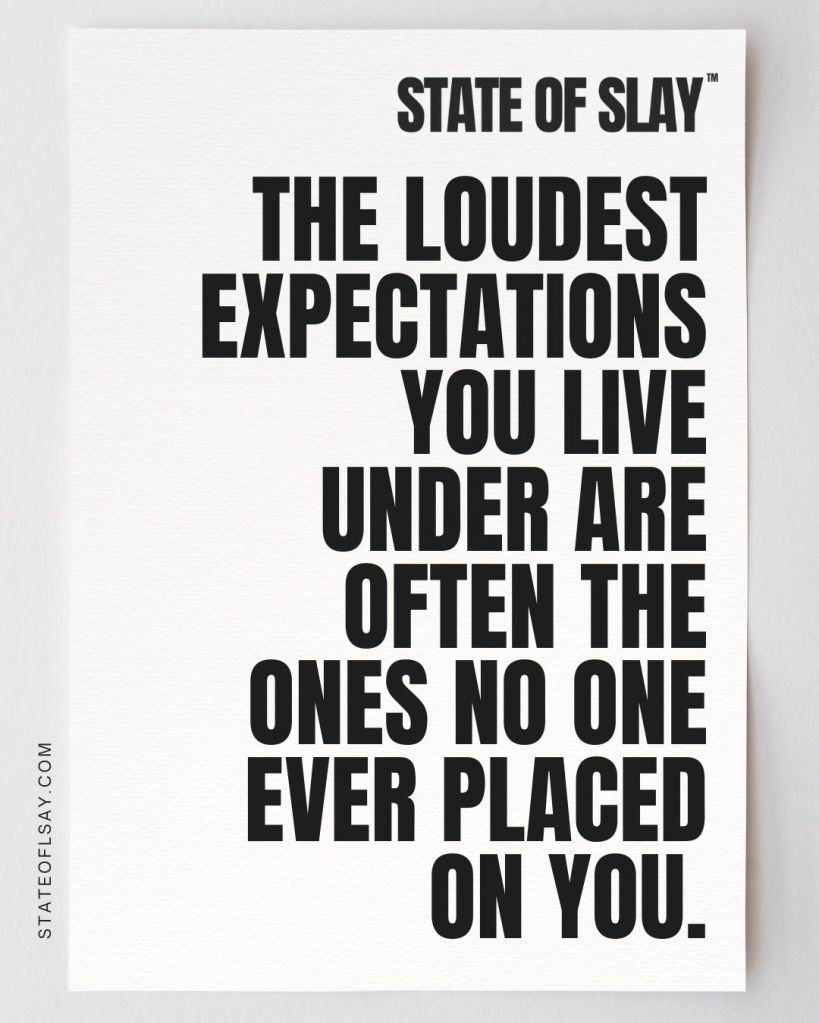
They’re the ones who stop letting other people’s expectations become the deciding vote.
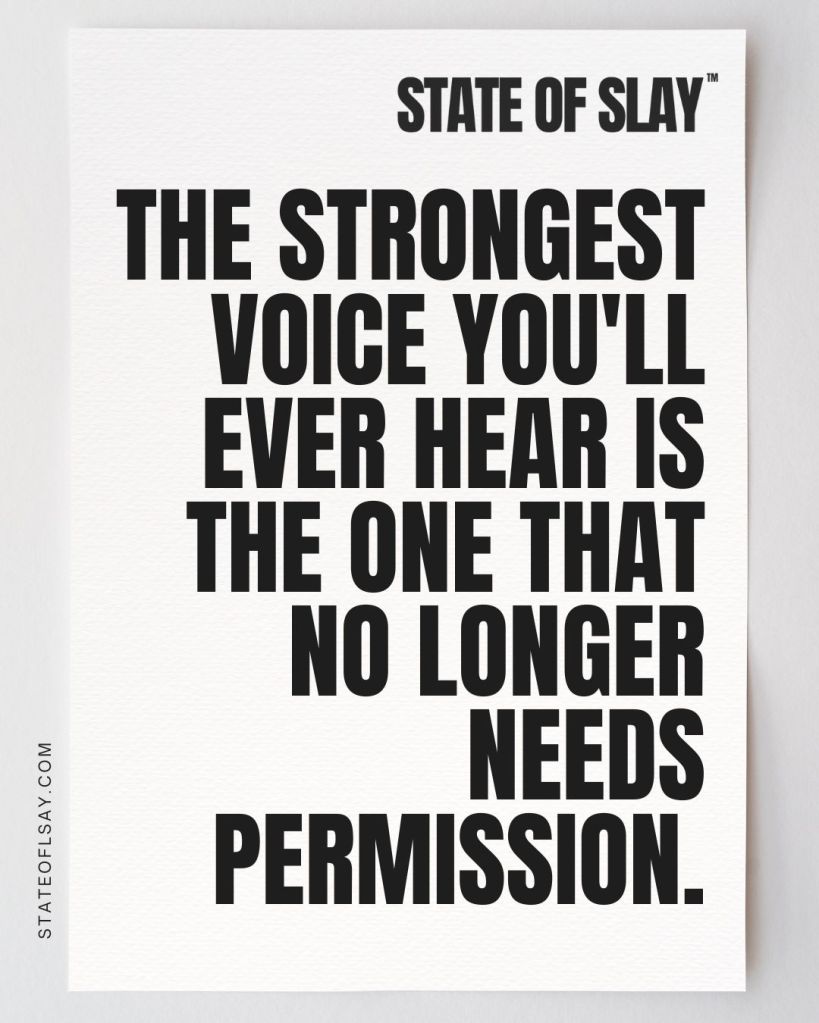
This is your reminder that peace begins the moment your decisions no longer require someone else’s approval.
One of the most freeing realizations you can have is this:
Anything you lose by not being honest about who you are was never truly meant for you to keep.
Not the relationship. Not the friendship. Not the approval. Not the version of belonging that only existed as long as you stayed small, quiet, agreeable, or performative.
Because real connection survives truth.
What falls apart when you become authentic was often built on performance in the first place.
Prefer to listen? The Audio Blog version is available here.
A LOT OF PEOPLE ARE LOVED FOR WHO THEY PRETEND TO BE
That’s the painful part.
Many people spend years carefully shaping themselves into whoever they think will be most accepted.
More agreeable. Less emotional. Less outspoken. Less honest. Less themselves.
They learn to say what keeps the peace. Hide what feels inconvenient. Shrink the parts of themselves that might make other people uncomfortable.
And over time, they become exhausted trying to maintain an identity that was never fully real to begin with.
Because pretending may gain acceptance.
But it often costs self-respect.
PEOPLE-PLEASING CAN CREATE VERY LONELY RELATIONSHIPS
On the surface, it may look like connection.
You are liked. Included. Wanted. Needed.
But deep down, there is often anxiety underneath it.
Because when people only know the edited version of you, part of you quietly wonders:
“If I stop performing, will they still stay?”
That fear keeps many people trapped in relationships where authenticity feels dangerous.
So they overextend. Over-give. Over-explain. Overcompensate.
Not because they are weak, but because somewhere along the way, they learned that love had conditions attached to it.
AUTHENTICITY WILL ALWAYS DISAPPOINT PEOPLE WHO BENEFITED FROM YOUR PERFORMANCE
That truth can be uncomfortable.
Sometimes the people who react most negatively to your growth were benefiting from the version of you that abandoned yourself to keep them comfortable.
The version that never said no. Never had boundaries. Never challenged unhealthy dynamics. Never expressed needs honestly.
And when you begin showing up more authentically, some people will call it selfishness simply because they no longer have the same access to your self-sacrifice.
But becoming real is not betrayal.
It is self-respect.
THE RIGHT PEOPLE DO NOT REQUIRE YOU TO HIDE YOURSELF
Healthy relationships do not demand constant performance.
You should not have to earn connection by suppressing your personality, opinions, emotions, needs, or growth.
Real connection allows honesty.
It allows evolution. Boundaries. Imperfection. Humanity.
The right people may not agree with you all the time. But they will not require you to become emotionally smaller in order to remain lovable.
That is the difference.
LOSING FAKE CONNECTIONS CAN FEEL LIKE REAL GRIEF
Even when the relationship was unhealthy.
Even when the friendship was conditional.
Even when the approval came at the expense of your well-being.
Because letting go of false connections still hurts.
Humans are wired for belonging.
So when people pull away after you become more authentic, it can trigger deep fears of rejection, abandonment, or loneliness.
But losing relationships built on performance is not the same as losing relationships built on truth.
One was sustainable.
The other was survival.
YOU CANNOT BUILD REAL SELF-WORTH WHILE CONSTANTLY ABANDONING YOURSELF
This is where many people become emotionally exhausted.
Trying to keep everyone happy. Trying to stay accepted. Trying to avoid rejection at all costs.
But every time you silence yourself to maintain approval, you send yourself a quiet message:
“My real feelings are less important than keeping other people comfortable.”
That slowly erodes self-trust.
Because deep down, your nervous system knows when you are betraying yourself.
And eventually, the emotional cost becomes too heavy to carry.
BEING REAL FILTERS OUT WHAT WAS NEVER ALIGNED
That is not punishment.
That is clarity.
Authenticity has a way of revealing which relationships are rooted in genuine connection and which ones were built around convenience, control, image, or emotional dependency.
And while that process can feel lonely at first, it is also freeing.
Because you stop wasting energy trying to maintain relationships that only survive when you are pretending.
You stop auditioning for acceptance.
You stop shape-shifting to fit rooms that were never built for your real self.
SOME PEOPLE WILL MISUNDERSTAND YOU NO MATTER WHAT
That is part of life.
You can communicate carefully, love deeply, show up consistently, and still be misunderstood by people who only see you through the lens of their own expectations, projections, or limitations.
You cannot control that.
What you can control is whether you abandon yourself trying to manage everyone else’s perception of you.
And that is where freedom begins.
Not when everyone approves of you. But when you no longer need them to.
REAL PEACE COMES FROM BEING FULLY YOURSELF
Not the polished version. Not the socially acceptable version. Not the least disruptive version.
The real version.
The one that has opinions. Needs. Boundaries. Depth. Growth. Honesty.
Because at the end of the day, fake acceptance is still fake.
And there is nothing lonelier than being loved for someone you are pretending to be.
The right people will not disappear when you become more authentic.
If anything, authenticity is what allows the right relationships to finally find you.
Because anything you lose by not being real was never truly rooted in the real you to begin with.
SLAY REFLECTION
S — See the Pattern
Where in your life have you been performing instead of showing up authentically?
L — Let Go of the Fear
What are you afraid people might think if you fully expressed who you are?
A — Accept Your Truth
What parts of yourself deserve to be seen instead of hidden?
Y — Yield to Authenticity
How might your life change if you stopped chasing approval and started choosing honesty?
CALL TO ACTION: JOIN THE CONVERSATION
I’d love to hear from you.
Have you ever lost a relationship, friendship, or sense of belonging after finally being honest about who you are?
Share your thoughts in the comments. Let’s grow through it together.
And if you know someone who’s learning to stop performing for acceptance and start embracing their authentic self, send this to them.
Sometimes losing what was never real is the first step toward finding what is.