
Be Your Own Fairy Godmother

Some of us grew up believing someone would swoop in and fix everything. A magical godmother. A rescuer. A sign from the universe that now is the time, that this is the moment our lives change for the better.

But here’s the truth no one tells you as a kid:

The magic wand is already in your hands.

Waiting for someone else to save you keeps you stuck. Hoping for permission to live fully delays your joy. You don’t need a fairy godmother. You just need to believe in your own power to create change, healing, and magic.

You don’t need a transformation. You need a reminder of who you already are.


I Spent Years Waiting for a Rescue

I thought love would save me. Or success. Or finally being “enough.”

I believed that if I kept trying, kept achieving, kept pleasing, eventually someone would say, “You’ve made it. You’re worthy now.”

But that moment never came—because I was looking outside of myself for something only I could give.

It wasn’t until I hit rock bottom that I realized no one was coming to save me. I had to be the one to pull myself out. I had to be the one to say, “Enough. I choose me now.”

It wasn’t a grand, glittery moment. It was quiet. Personal. But it changed everything.

When you stop waiting to be chosen, and choose yourself instead, that’s when the real magic begins.

And that decision? It didn’t come from perfection. It came from truth. From realizing that I deserved better—not someday, but right now.


Create Your Own Magic

We’ve been taught that magic looks like glass slippers and pumpkin carriages. But real magic? It’s setting boundaries. It’s speaking your truth. It’s taking the brave next step—even when your voice shakes.

It’s no longer waiting for someone to tell you that you’re ready. You already are.

It’s recognizing that you are worthy of love, rest, joy, peace, and purpose—without having to earn it.

Magic is found in the everyday moments when you show up for yourself. When you advocate for your well-being. When you care for your spirit. When you speak kindly to your reflection.

Magic is deciding not to abandon yourself again.

It’s building a life that honors your truth, your pace, your values. Not the ones someone else handed you.

You don’t need a crown. You don’t need a costume. You don’t need anyone’s permission.

You’ve had the power all along.

Let this be your reminder: You are the magic. You are the moment. You are the one you’ve been waiting for.


SLAY Reflection

Ask yourself:

  • Where in your life are you waiting for someone to rescue or choose you?
  • What would it look like to choose yourself instead?
  • What’s one area where you can take your power back today?
  • What belief about worth or magic are you ready to release?
  • How can you show up for yourself like someone who truly has your back?

S – L – A – Y

S: See where you’ve been waiting for permission.
L: Listen to what your inner voice truly wants.
A: Act from a place of self-trust, not self-doubt.
Y: Yield to your own magic—it’s been waiting for you.


Call to Action: Join the Conversation
I’d love to hear from you.
Have you ever realized you were the one you’ve been waiting for?
Share your story in the comments. Let’s cheer each other on.

And if you know someone who’s stuck waiting to be saved, send this to them.
Sometimes, all we need is a nudge.
Let Them

This one hits close to home.
Because for a long time, I didn’t know how to let people be who they are.
I was always trying to manage, to steer, to shape the outcome I wanted.
Even when it was wrapped in good intentions, it was still control.

The truth is, trying to change someone—whether it’s their behavior, their choices, or how they show up—only leaves you drained, resentful, and disappointed.
Why? Because it’s not your job.
It never was.

The moment I truly understood that…
The moment I stopped trying to micromanage other people’s lives, reactions, or growth…
Was the moment I started finding peace.


The Mindset Shift That Changed Everything

Let them.

Let them say what they want.
Let them make their choices.
Let them believe what they believe.
Let them walk away—or come back—or stay exactly the same.

Because it’s not your responsibility to make someone become who you want them to be.
And it’s not your failure when they don’t.

The need to control others is often rooted in fear.
Fear of abandonment.
Fear of chaos.
Fear that if someone doesn’t change, you won’t be okay.

But guess what?
You will be okay.
Because your peace, your healing, your worth—none of it depends on someone else getting it right.


Expectations Are Heavy

Most of us don’t realize how much energy we spend trying to get someone to meet our expectations.
We want them to act differently, to love better, to show up the way we imagined they would.

And when they don’t?
We get frustrated.
We get hurt.
We spiral.

But here’s the uncomfortable truth:
They never agreed to those expectations.

They’re being who they are.
And we’re the ones trying to rewrite their character in our story.

What if instead of trying to change them—we just let them?


Letting Go Is a Boundary

“Let them” isn’t passive.
It’s powerful.

It’s not about giving up.
It’s about letting go of what was never yours to hold in the first place.

Let them be who they are—so you can stay rooted in who you are.

It’s a boundary.
A decision to protect your energy by not chasing down someone else’s growth.

When you stop investing in the outcome you wish for and start accepting the truth of what is, you reclaim your power.

You also make space for people who can meet you where you are.
Who choose to show up.
Who don’t need to be changed, convinced, or coerced.


Peace Lives in Acceptance

Let them believe the lie.
Let them ghost you.
Let them not understand your heart.
Let them leave the group chat.
Let them love someone else.
Let them misunderstand you.
Let them think they’re right.
Let them talk behind your back.

And while they do?

Let yourself grow.
Let yourself feel.
Let yourself heal.
Let yourself move on.
Let yourself love without attachment.
Let yourself stay soft and strong at the same time.

You are not here to force alignment.
You are here to be aligned—with yourself.


SLAY Reflection: Where Are You Holding On Too Tightly?

  1. Who in your life are you trying to manage, fix, or control?
    What are you hoping to change—and why?
  2. How has that effort affected your peace, energy, or self-worth?
    What are you losing in the process?
  3. What would it look like to “let them” be exactly who they are?
    What fear comes up when you consider that?
  4. How can you create a boundary that protects your energy without trying to change theirs?
    What could you gain by stepping back?
  5. What’s one relationship or situation where “letting them” would bring you more emotional freedom?
    How can you start that shift today?

Call to Action: Join the Conversation

I’d love to hear from you.
What’s one way you’ve learned to let someone be who they are—and how did that shift your peace?
Share your story in the comments. Let’s cheer each other on.

And if you know someone who’s holding on too tightly, send this to them.
Sometimes, all we need is a nudge.

Slay Say

Stop Seeking Healing from the Hurt

True healing doesn’t come from the people who caused the pain.

It comes when you stop looking for closure, validation, or understanding from those who never had the capacity to give it.

Let this be a reminder to reclaim your power—and choose peace on your own terms.

Just Because You Hit A Bottom Doesn’t Mean You Have To Stay There

For most of us, there’s been a time when we’ve hit bottom.
And for many of us, there have been many.

But just because you find yourself at a bottom doesn’t mean you have to stay there.
In fact, sometimes hitting bottom can be the very thing that propels you upward—it can be a turning point, a wake-up call, a catalyst for change.

What matters most is that you recognize it as a bottom.
And then decide you’re not going to live there.


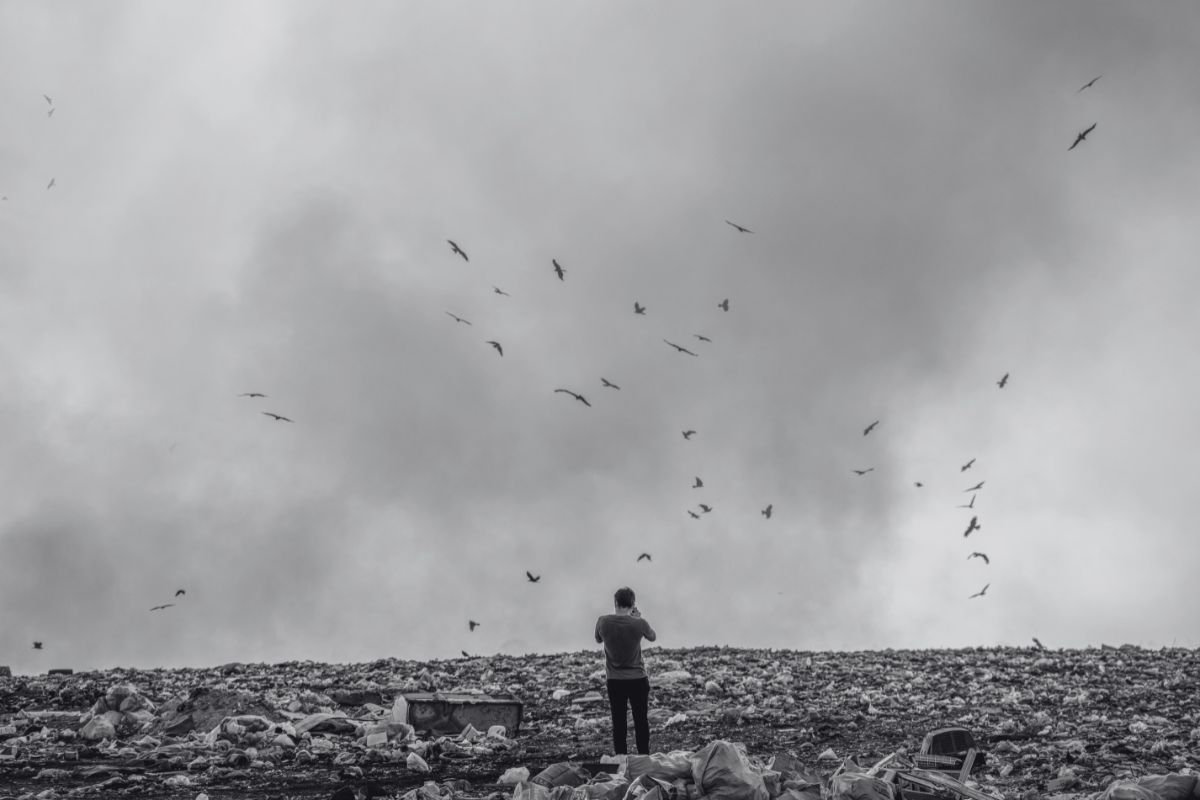
You Don’t Have to Ride It All the Way to the Dump

Looking back, I had many bottoms before I hit the one that finally brought me to my knees.

There were so many moments I should have asked for help…
So many warning signs I ignored…
So many nights I let myself spiral deeper into darkness.

But the truth is: we’re ready when we’re ready.

And if we’re lucky, we get that one moment—the one where something shifts, where the fear becomes too loud to ignore, and we finally ask for help.

For me, that moment came from fear.
Fear of where my mental illness had taken me.
Fear of where it might take me next.

I don’t know why that particular night was different.
There were many terrifying nights before it.
But that night, I got scared enough to pick up the phone.

And in doing so, I opened the door to my own recovery.


The Power of Saying “Enough”

There’s a saying I love:
“You don’t have to ride the truck all the way to the dump.”

You can get off at any time.

Even in the darkest place, even at your lowest, you have a choice.
You always have the option to get off the path that’s dragging you down.
But you have to believe that it’s possible.
And you have to take action.

When I was deep in my illness, I felt powerless.
Like I was strapped to a runaway train.
But that wasn’t true.

I always had a ticket off that train.
And the moment I picked up the phone and asked for help, I used it.

That one action—speaking my truth—shifted everything.

I didn’t have all the answers yet.
I still had work to do.
But the secret I had been carrying was out.
The weight I had been holding got lighter.
And for the first time, I realized I was in control of my recovery.


Recognizing the Bottom for What It Is

It’s so important to notice your bottoms.
To recognize when you’ve fallen harder than usual.
To acknowledge when you’re staying down longer than you want to.

Because that moment of awareness?
That’s the moment you can begin to rise.

We all fall.
We all struggle.
But no one has to stay in the pit.

Freedom starts with acceptance.
The willingness to see where you are—and the courage to choose something better.

A bottom doesn’t have to be the end of your story.
It can be the beginning of your comeback.


From Rock Bottom to Rise

A bottom might just be the biggest blessing in disguise.

It might be the one thing that finally gets your attention.
The one thing that cracks you open.
The one thing that forces you to stop, reflect, and change direction.

You don’t have to stay down.
You don’t have to prove anything to anyone by suffering longer.

Your story is still being written.
And a bottom can be the moment you choose a new chapter.

Use it to rise. Use it to SLAY.


SLAY Reflection: What Is Your Bottom Telling You?

Has a past bottom ever helped you grow or pivot in a new direction?
How can you use that lesson now?

Have you ever hit a bottom in your life?
What were the signs? What did it feel like?

Have you hit multiple bottoms?
What made the most recent one different?

Are you currently in a bottom?
If so, what are you doing about it—or avoiding?

What’s holding you back from asking for help or making a change?
What could shift if you took just one small step?


Call to Action: Join the Conversation

I’d love to hear from you.
What helped you recognize a bottom in your life—and what did you do to rise from it?
Share your story in the comments. Let’s cheer each other on.

And if you know someone who’s struggling to climb out of a hard place, send this to them.
Sometimes, all we need is a nudge.
You Have To Be At Your Strongest When You Are At Your Weakest

It may sound impossible at times, but in those moments when we feel our weakest, we must dig deep and find our strength.

There have been countless times in my life where I’ve had to rely on an inner strength I didn’t even realize I had. Somehow, just enough rose to the surface to help me push through.

We are all stronger than we think.
And when I take a moment to reflect on everything I’ve overcome, I’m reminded of the strength and courage that carried me.
It helps me in the present.
It prepares me for the future.
Because true strength often reveals itself when everything feels like it’s falling apart.


The Sword May Feel Heavy—But It’s Still There

Looking back on my lowest points, I can admit—I didn’t always use my strength.

There were times I believed I was weak.
Times I gave in to the idea that I was broken or not worth saving.
I had flickers of power, brief moments of energy and clarity, but they’d fade. And that negative voice in my head? It would rush in, louder than ever.

That inner strength—the warrior in me—it was there.
But some days, that sword felt too heavy to lift.

There was one day in particular when I came dangerously close to surrendering.
I was at my lowest. But even then, there was a whisper of strength left inside me.
It wasn’t loud.
It wasn’t flashy.
But it was just strong enough to reach out, to ask for help, to cry for help.
And that moment changed everything.

That quiet strength was enough to rally.
Enough to begin my fight back.


What Strength Really Looks Like

For me, strength isn’t about pushing through everything without feeling.
It’s about showing up—even when it’s hard.

My strength lives in the inner warrior that walks beside me.
It’s the part of me that shields the most vulnerable parts inside.

My strength is spiritual.
It’s rooted in a connection to something greater than myself—a belief that I’m held, even when I’m hurting.

It’s also built from experience:

  • Everything I’ve survived
  • Every fight I’ve fought
  • Every story I’ve shared and heard from others walking similar paths

I also surround myself with people who reflect that strength back to me.
People who remind me who I am when I forget.
And I do the same for them.

Sometimes we need to borrow someone else’s light until we remember our own.


Strength Is a Practice

I’ve learned that strength isn’t something you “find” once and then never lose.
It’s a practice. A choice. A mindset.

I know now that:

  • When I feel weak, I need to seek strength—not hide from it
  • I can’t afford to tell myself I’m powerless, even when I feel that way
  • My strength grows the more I use it, trust it, and share it

And there’s always a small spark inside me—a flame that never goes out, no matter how dark it gets.

That’s what carries me.
That’s what keeps me standing.
And that’s what I want to help you find too.


You Are Stronger Than You Think

We all have strength.
Even if it feels buried. Even if it’s been challenged.
Even if it’s quiet.

If this past year has shown us anything, it’s that we’re still here.
We’ve survived more than we thought we could.
We’ve made it through dark seasons, tough days, and hard truths.
And we’re still standing.

That is strength.

Now is the time to pick up your sword.
To fight for someone who matters—you.
Me. Us.

Dig deep.
Find your strength.
And use it to keep moving forward.


SLAY Reflection: Where Does Your Strength Live?

  1. Can you find your strength even when you feel weak?
    What helps you tap into it?
  2. Have you ever doubted your ability to push through?
    What got you through anyway?
  3. What are some moments in your life when your strength surprised you?
    How did they change you?
  4. Do you remember your past victories when facing something hard?
    How can those reminders serve you now?
  5. Who in your life needs a reminder of their strength?
    Can you share yours with them today?


Call to Action: Join the Conversation

I’d love to hear from you.
What’s one moment when you found strength you didn’t know you had?
Share your story in the comments. Let’s cheer each other on.

And if you know someone who’s struggling to feel strong right now, send this to them.
Sometimes, all we need is a nudge.

You Become The Fears You Dwell On

Most of us have fears.
It’s part of being human.
But when we give too much focus and energy to fear, we risk becoming exactly what we fear most.

Fear can be sneaky like that. It creeps in, takes root, and grows stronger the more we feed it. Eventually, it can start to shape how we think, how we act, and even how we show up in the world—often without us even realizing it.

Fear can become a self-fulfilling prophecy.
What we focus on, we feed.
And what we feed, grows.


Fear Is an Invitation

I’ve written before about attracting the kind of energy we want in our lives.
When we live in fear—or negativity—that’s often what ends up circling back to us.

It’s not magic. It’s not instant karma.
It’s energy.
It’s focus.
It’s the silent agreement we make with our fears every time we let them lead.

When I was living in my illness, I was consumed by fear.
It was everywhere—under the surface of every thought, every decision.
And the more I ignored it, the more power it had.
I didn’t want to face it, so I tried to numb it, outrun it, distract myself from it.

But fear doesn’t disappear just because we look away.
It waits. It grows. And eventually, I started to become what I feared most.


When Fear Becomes Identity

I was aware of what was happening.
And still, I didn’t stop it.

I fed my fears with avoidance, with negative thinking, with silence.
And my fear evolved into a kind of paralysis—I couldn’t see a way out, and I wasn’t asking for one.

But then a different kind of fear showed up—the kind that keeps us safe.
The kind that whispers, “You can’t keep going like this.”
The kind that leads to action.

I was terrified of being judged, of being labeled “crazy,” of being too far gone to help.
But I was also terrified of where my life was headed if I didn’t get help.

And that good fear? It won.
I reached out.
I asked for help.
And for the first time, I found a door out.


Reclaiming Power Over Fear

I’ve learned that I don’t have to live in fear.
I still feel it, yes—because again, I’m human.
But I don’t live there anymore.

I’ve learned to acknowledge it when it shows up and then move through it.

Today, I focus on:

  • What I want to see in my life
  • What I hope for
  • What positive energy I can put into the world

I’ve built a spiritual connection that guides me and keeps me grounded.
I stay open to signs and nudges from the universe.
And I trust that fear is not something I have to surrender to.
It’s something I can listen to—but not let lead.


Use Fear as a Signal—Not a Sentence

Fear can be a compass.
Sometimes it points to the exact place where we need to do the most work.

Ask yourself:

  • What am I really afraid of?
  • What small action could I take to begin facing that fear?
  • What would it feel like to stop giving that fear so much power?

This is a challenging time.
But it’s also the perfect time to focus on the good you want to create—for yourself, for your family, for your life.

You don’t have to become what you fear.
You can choose something different.

You can choose to SLAY.


SLAY Reflection: How Are You Using Your Fear?

  1. Do you tend to live in fear or let fear guide your decisions?
    What are you most afraid of right now?
  2. Do you notice yourself becoming what you fear?
    What behaviors or beliefs might be feeding that?
  3. What action could you take today to work through your fear—just one small step?
    What would shift if you took it?
  4. How does fear affect your energy and mindset?
    What happens when you redirect your focus?
  5. How can you bring more positive action into your life today?
    Where can you reclaim your power?

Call to Action: Join the Conversation

I’d love to hear from you.
What’s one fear you’re ready to stop feeding, and what action can you take today to move through it?
Share your story in the comments. Let’s cheer each other on.

And if you know someone who’s stuck in fear or letting it lead their life, send this to them.
Sometimes, all we need is a nudge.

You Attract What You Are, Not What You Want

How many times have you asked yourself,
Why do I keep attracting the same kinds of people?
Why do the same patterns keep showing up in my life?
Why does it feel like I’m stuck in a loop?

It’s easy to think we’re just unlucky—or cursed with bad timing or bad energy.
But the truth is often more revealing: we attract what we put out.

And sometimes, what we think we’re putting out…
isn’t what we’re actually radiating at all.


What You Are Speaks Louder Than What You Want

We might see ourselves as kind, supportive, open-hearted people.
We might aspire to positivity, confidence, love, and light.
But if our actions and mindset don’t align with that energy…
we’ll keep attracting something very different.

What shows up in your life isn’t a reflection of your intentions.
It’s a reflection of your state of being.

That’s the hard truth. And also the empowering one.


My Experience: Living in the Dark

When I was deep in my illness, I often wondered why negativity seemed to follow me.
I’d joke that I must’ve done something awful in a past life.

But it wasn’t the universe punishing me—it was me.
It was my thoughts.
My energy.
My expectations.
And my refusal to face how much negativity I was quietly living in.

I tried to be a good person.
I wanted good things.
But my inner dialogue was toxic.
Even when something good would happen, I’d sabotage it with fear, doubt, or shame.

I didn’t feel like a negative person.
But I was living like one.
And the results matched that energy.


You Can’t Fool the Energy Around You

When I began my recovery, I started to see the pattern clearly.

If I expected the worst—I got it.
If I looked for the bad—I found it.
If I pretended to be positive—but was silently drowning in self-judgment—it didn’t matter.
Because energy doesn’t lie.

It wasn’t enough to want better.
I had to become better.

When I did the work—honest, vulnerable, sometimes painful work—things began to shift.

More light came into my life.
More supportive people.
More peace.

Did negativity disappear? Of course not.
But I stopped being drawn to it—and it stopped being drawn to me.


Live It to Attract It

We don’t attract what we hope for.
We attract who we are.

So if the patterns in your life aren’t what you want, don’t just ask, “Why does this keep happening?”
Ask:
“What energy am I really putting into the world?”
“Am I living the way I want to be loved, supported, and respected?”

Because life doesn’t respond to who you say you are.
It responds to how you live.

When you align your heart, mind, and actions with who you want to become—
That’s when the shift happens.
That’s when the energy changes.
And that’s when the right people and opportunities begin to show up.


SLAY Reflection: What Are You Attracting?

  1. Are you attracting people or situations that leave you feeling drained or dissatisfied?
    What patterns do you notice?
  2. What don’t you like about what’s showing up—and could it reflect something within you?
    How might your mindset or habits be contributing?
  3. Are you being honest with yourself about the energy you’re giving off?
    What might need to shift?
  4. What would it look like to live as the version of you you want to attract?
    What’s one step toward that today?
  5. How would your life change if you aligned your energy with your true values?
    What would start showing up?

Call to Action: Join the Conversation

I’d love to hear from you.
What’s one shift you’ve made that changed what you were attracting into your life—and how did it impact you?
Share your story in the comments. Let’s cheer each other on.

And if you know someone who keeps wondering why the same patterns keep repeating, send this to them.
Sometimes, all we need is a nudge.

A Permanent Solution To A Temporary Problem

When I was living in the dark, I believed every problem was forever.
Each issue felt massive, heavy, and permanent.
I didn’t think in steps—I thought in panic.
And when I finally acted, it was usually out of desperation instead of intention.

I didn’t face things as they came.
I waited.
I hoped things would magically resolve themselves.
And when they didn’t, I reacted impulsively.
The result?
I made permanent decisions for temporary problems.

Back then, I only had two tools in my emotional toolkit: fight or flight.
And neither got me where I wanted to go.


Living in Avoidance Creates Bigger Problems

I often felt overwhelmed just by life itself.
So when a real issue came up, it was too much.
I ignored it.
I pushed it aside.
And when it inevitably resurfaced—louder, heavier, messier—I made whatever decision would make it go away the fastest.

But the quickest choice isn’t always the right one.
And those choices came at a cost.

Doors closed.
Friendships ended.
I isolated myself even more.

It wasn’t because I was heartless or careless.
It was because I was exhausted, reactive, and afraid.
And I didn’t trust that I could handle hard things in a healthy way.


What Recovery Taught Me About Decisions

When I began my journey in recovery, one of the first things I heard was:
“Live life on life’s terms.”

That didn’t sound like fun.
But neither was the anxiety of constantly avoiding things, or the shame of regret from acting out of fear.

So I tried something new.

I started addressing things as they came up.
I got honest about what was happening.
I asked for help when I needed it.
And I made the best decision I could with the information I had.

Then—I let it go.

Even typing that?
It still feels like a deep exhale.


The Power of Responding, Not Reacting

Here’s what I learned:
When you meet problems in the moment, you keep them in their right size.

You don’t allow them to grow into something overwhelming.
You don’t back yourself into a corner.
You don’t hit the panic button and take drastic action that you’ll later wish you hadn’t.

You give yourself the chance to choose a solution, not a reaction.

Because the truth is, a lot of the things we avoid aren’t actually that big.
They only feel big because we’ve been sitting in fear, feeding them with delay.

But when you face a problem early and with intention, you take back your power.
You act instead of react.
And you protect your peace in the process.


You Deserve Better Than Regret

These days, it’s easy to feel like everything is too much.
But avoidance won’t make it easier.
And quick-fix decisions rarely leave us proud of how we showed up.

You don’t need to solve everything perfectly.
You just need to do the next right thing.
Address what needs your attention, make the best decision you can, and then—let it go.

Honor yourself enough to stop running from the things that need your care.
You are capable.
And you deserve peace, not permanent regret from a temporary storm.


SLAY Reflection: Are You Choosing Peace or Panic?

  1. Do you tend to ignore problems until they become bigger than they need to be?
    How has that affected your life?
  2. What emotions drive your decision-making—clarity or anxiety?
    What patterns do you notice?
  3. Have you ever made a permanent choice in a moment of panic?
    What did you learn from that experience?
  4. What would it feel like to address issues with intention instead of urgency?
    How could that shift your daily peace?
  5. What’s one problem you’ve been avoiding that you can face today—with care, calm, and clarity?
    What’s the next small step?

Call to Action: Join the Conversation

I’d love to hear from you.
What’s one moment where you learned the value of pausing instead of panicking—and how did it shape your choices going forward?
Share your story in the comments. Let’s cheer each other on.

And if you know someone who’s caught in reactive patterns, send this to them.
Sometimes, all we need is a nudge.

Today I Will Not Stress Over Things I Cannot Control

Easier said than done, right?
Especially now.
It feels like everything—from the world at large to our daily lives—is spiraling beyond our control.

And it’s true: most of life really is outside of our hands.
No matter how hard we try to will something into existence or change an outcome, some things just are.
But here’s the truth I’ve come to live by:
I may not be able to control what happens around me—but I can control how I respond to it.
And that’s where the power is.


The Illusion of Control

When I was living in the dark, I was consumed by control.
Trying to manage everything and everyone.
Manipulating, bargaining, obsessing—believing that if I could just control the situation, I could finally feel safe.

But no matter how hard I tried, life had other plans.
It didn’t care how hard I worked to bend it to my will.
And I exhausted myself trying.

The more I tried to control, the more unmanageable everything became.
It didn’t just wear me out—it wore me down.
My mental health suffered.
My self-worth took a hit.
And I lost myself in the process.


Letting Go Was the Turning Point

When I finally made the decision to change my life, I was told something that made me flinch:
You have to accept that you can’t control everything.”

That one sentence lit up every fear I had.
I didn’t want to hear it.
But I needed to.

Because as terrifying as letting go felt, holding on was doing more damage.

So I started small.
I worked on myself.
I practiced gratitude.
I focused on the good.
And I gave back where I could.

Slowly, the need to control started to loosen its grip.
And I began to feel something I hadn’t felt in a long time: peace.


The Freedom in Acceptance

Letting go doesn’t mean giving up.
It means accepting reality as it is—and choosing to move forward anyway.
It means doing what you can, where you are, with what you have.

It means focusing on your choices, your behavior, your energy—not the chaos around you.

And when you feel that old need for control creeping in?
Put the focus back on yourself.
Or do something kind for someone else.
It’s a powerful reset.

Because the truth is, trying to control what’s out of your hands only ends up controlling you.


What I Can Do Today

There are still plenty of things I can’t control—and many of them deeply disturb me.
But I’ve learned that obsessing over what I can’t change doesn’t help.

What does help?
Doing what I can.

I show up for myself.
I show up for others.
I make better choices.
And I leave the rest.

Because acceptance isn’t giving up—it’s breaking free.


SLAY Reflection: Where Are You Holding On Too Tight?

  1. Do you stress over things that are out of your control?
    What are they—and how do they affect your peace?

  2. How has your need for control shaped your relationships, habits, or mental health?
    What patterns do you see?

  3. What’s one area of your life where you could let go a little more today?
    How would that feel?

  4. What are you really afraid of when you try to control everything?
    Is it fear of failure? Rejection? Uncertainty?

  5. What would shift if you focused on your response, rather than the outcome?
    Where can you put your energy to use in a healthier way?


Call to Action: Join the Conversation

I’d love to hear from you.
What’s one thing you’re ready to stop stressing over because you’ve realized it’s out of your control?
Share your story in the comments. Let’s cheer each other on.

And if you know someone who’s stuck in the loop of control and frustration, send this to them.
Sometimes, all we need is a nudge.

Not Everything That Weighs You Down Is Yours To Carry

This week has been heavy.
Not just in the day-to-day busyness, but emotionally, mentally, spiritually.

And as I took a step back, I asked myself a question I’ve learned to come back to again and again:
Is all of this mine to carry?

The answer?
No.
But that hasn’t stopped me from dragging it around—tight-chested, overwhelmed, and bone-tired.

Like many of us, I juggle a lot every day.
And most of the time, I believe I can handle it all.
Until I can’t.
Until I hit a wall.
And when I do, I don’t always meet myself with grace.
Sometimes, I meet myself with frustration and shame.

Even when I know better, I still find myself slipping into old habits—trying to carry it all.
No one is asking me to.
Help is there if I reach for it.
But there I go, dragging the weight of the world across some invisible finish line I made up in my head.

It’s time to pause.
To take a breath—or a few—and ask myself what I’ve picked up along the way that never belonged to me in the first place.


We Learn to Carry What We Don’t Need

Before recovery, I carried everything.
It never occurred to me that I could set anything down.

The emotional weight.
The resentment.
The guilt.
The responsibility for people and problems that were never mine to begin with.

I just kept going—until I couldn’t.

Eventually, I hit a wall.
Hard.
And that wall was the wake-up call I needed.
I couldn’t live that way anymore.
It was slowly destroying me.

So I asked for help.
Not just with what I was carrying—but with how I lived.


Learning to Let Go of What’s Not Yours

Through recovery, I discovered something profound:
A lot of what I was carrying wasn’t mine.

Some of it was inherited—passed down through family, expectations, trauma.
Some of it I volunteered to carry—because I wanted to feel helpful, needed, or in control.

And some of it… I carried on purpose to sabotage myself.
To stay small.
To stay exhausted.
To prove that I couldn’t do more, be more, live more.

That’s the hard truth.
Sometimes, we don’t just carry what’s not ours—we choose it.

But once I got honest with myself, I realized I had a choice.
To let go.
To say no.
To only carry what actually belonged to me.

And that changed everything.


What’s Yours—and What’s Not

There will always be people who would gladly let you carry their weight.
There will be moments when you try to carry someone else’s pain, fear, or responsibility—uninvited.

But that doesn’t mean you have to.

Being helpful doesn’t mean taking on someone else’s journey.
Being strong doesn’t mean carrying more than you should.
Being loving doesn’t mean sacrificing yourself.

We are responsible for ourselves.
For our peace.
For honoring what we need.

That starts with putting down what was never yours to carry in the first place.


SLAY Reflection: What Are You Carrying?

  1. Do you tend to carry more weight than you need to—physically, emotionally, or mentally?
    What does that weight feel like?

  2. What are you carrying that doesn’t actually belong to you?
    Who gave it to you—and why did you accept it?

  3. Are there responsibilities, emotions, or expectations you’ve taken on to feel valuable or in control?
    How are they serving you? How are they hurting you?

  4. What would it feel like to put that weight down—even just a little?
    What would change?

  5. What can you do today to lighten your load and honor your limits?
    Where can you say no, ask for help, or simply rest?


Call to Action: Join the Conversation

I’d love to hear from you.
What’s one burden you’ve been carrying that isn’t actually yours—and how are you learning to let it go?
Share your story in the comments. Let’s cheer each other on.

And if you know someone who’s overwhelmed by weight they were never meant to carry, send this to them.
Sometimes, all we need is a nudge.