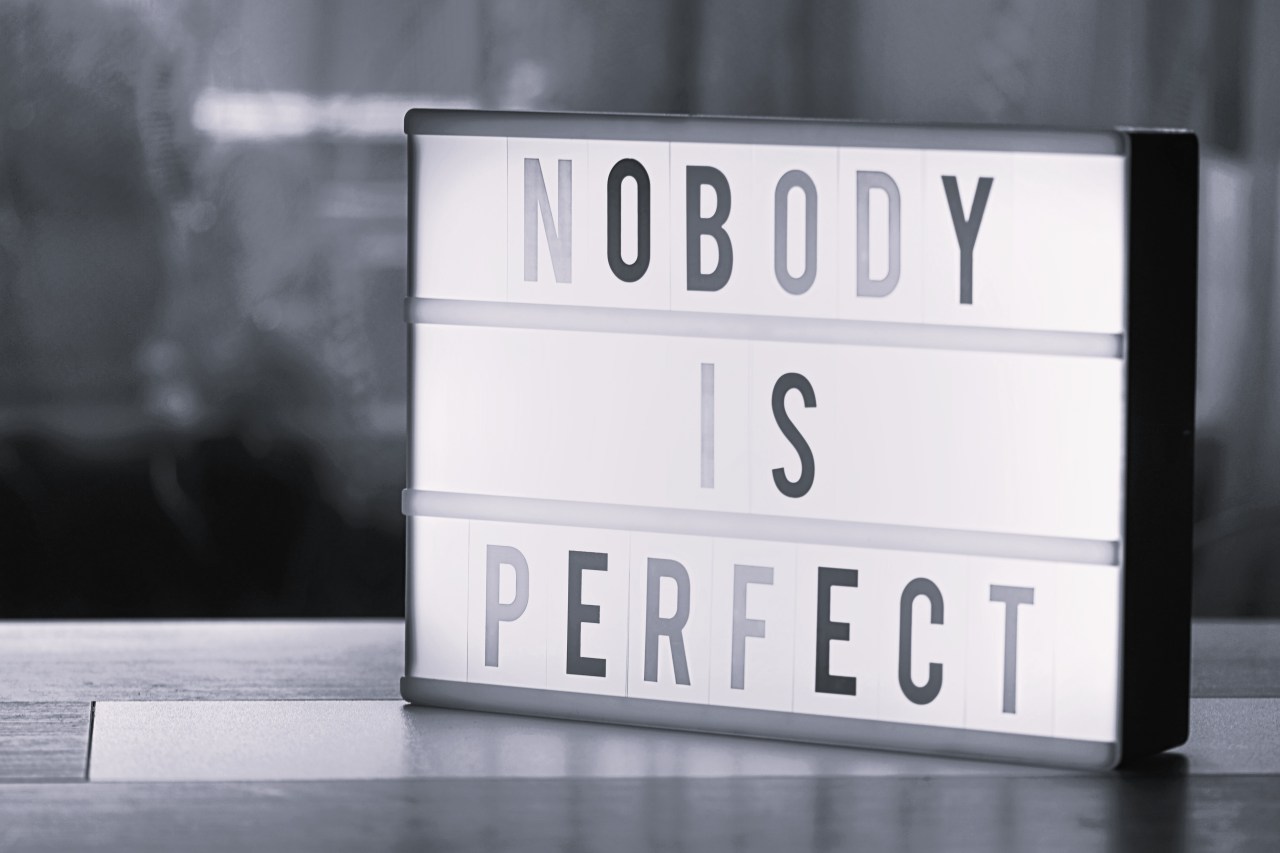
How to Accept Your Humanness and Stop Chasing Perfection

There’s a quiet kind of relief that comes when we finally stop trying to be perfect.

When we stop chasing the illusion that we must always have it together — always strong, always calm, always fine — and start allowing ourselves to be what we already are: human.

It sounds simple, doesn’t it? But for many of us, accepting our humanness feels like the hardest thing in the world.

We live in a culture that celebrates “doing” over “being.” We post our highlight reels but hide our heartbreaks. We praise resilience, but rarely talk about the cracks where that strength is tested.

But the truth is this: you don’t need to be flawless to be worthy of love. You just need to be real.


The Myth of Constant Strength

For years, I believed my worth was measured by how much I could carry without breaking. If I could just hold it together — through the pain, through the loss, through the pressure — then I was strong.

But that wasn’t strength. That was survival.

And survival mode doesn’t allow much room for self-compassion.

It teaches us to suppress what’s uncomfortable, to power through instead of pause, to mistake endurance for courage. But there comes a point when you can’t keep holding your breath through life.

You have to exhale.
You have to fall apart a little.
You have to allow yourself to feel.

Because it’s in those moments — the messy, unguarded, imperfect ones — that healing actually begins.


Being Human Means Being Messy

We will fail. We will get it wrong. We will say the wrong thing, love the wrong person, trust too quickly, or not enough.

We’ll lash out when we’re scared. We’ll close off when we’re hurt. We’ll regret the silence when we should’ve spoken up.

That’s part of being human.

But what makes us grow is not perfection — it’s awareness. It’s choosing to look at our reflection, not to criticize it, but to understand it.

The work of accepting our humanness begins when we stop asking, “What’s wrong with me?” and start asking, “What is this trying to show me?”

Every mistake, every heartbreak, every uncomfortable moment holds a lesson — not to shame us, but to shape us.

When we stop punishing ourselves for being human, we start to heal.


Perfection Is the Enemy of Peace

We chase perfection because we believe it will make us feel safe.

If we do everything right, no one will leave.
If we’re always kind, no one will get angry.
If we’re always strong, no one will see our pain.

But perfection isn’t safety — it’s self-abandonment.

Every time we deny our real feelings, we teach ourselves that we’re only lovable when we’re flawless. And that belief keeps us trapped.

You don’t need to earn your right to rest. You don’t need to earn your right to feel. You don’t need to earn your right to be you.

Your humanity is not something to hide — it’s something to honor.


Learning to Meet Yourself with Grace

When you can look at your reflection — tired, imperfect, flawed — and still say, “I love you,” that’s where peace begins.

Grace is not about letting yourself off the hook. It’s about letting yourself be on the hook for your growth without punishing yourself for being human.

It’s telling yourself:
Yes, I could’ve done better — and I will.
Yes, I hurt someone — and I’ll make it right.
Yes, I fell — but I can get back up.

Healing doesn’t require perfection. It requires honesty.

The more honest you are with yourself, the softer life becomes. The more grace you extend inward, the easier it becomes to extend it outward.

That’s how compassion spreads — from the inside out.


The Power of Humility

Humility isn’t about shrinking yourself — it’s about remembering you’re part of something bigger.

When you can say, “I was wrong,” or “I didn’t know,” or “I’m still learning,” you open the door to growth.

When you can ask for help instead of pretending you have it all figured out, you make connection possible.

And when you can forgive yourself — truly forgive — you make peace possible.

That’s the gift of being human. We stumble, we learn, we grow, and then we help someone else do the same.

That’s not weakness. That’s evolution.


How to Practice Accepting Your Humanness

1. Acknowledge your imperfection.
Say it out loud: “I’m human.” You’ll feel a wave of release. You don’t have to be everything for everyone.

2. Let yourself feel it all.
Anger. Grief. Joy. Fear. Don’t label your emotions as good or bad — they’re messages, not mistakes.

3. Replace judgment with curiosity.
Instead of “Why did I do that?” try “What was I feeling when I did that?” Compassion invites understanding.

4. Set down the need to perform.
You don’t have to earn love by being perfect. Show up as you are — not as who you think you need to be.

5. Celebrate your humanity.
You cry because you care. You ache because you’ve loved. You get back up because you still believe. That’s beautiful.


SLAY Reflection

  1. What part of your humanness do you struggle to accept?
  2. How does perfectionism show up in your daily life?
  3. What’s one mistake from your past that taught you something valuable?
  4. How can you speak to yourself with more compassion this week?
  5. What would it feel like to love yourself as you are, right now?

  • S – Surrender the need to be perfect
  • L – Let yourself feel without judgment
  • A – Accept your flaws as part of your wholeness
  • Y – Yield to grace and choose love over shame

Call to Action: Join the Conversation

I’d love to hear from you.
What’s one way you’re learning to accept your humanness?
Share your story in the comments. Let’s cheer each other on.

And if you know someone who’s being too hard on themselves, send this to them.
Sometimes, all we need is a reminder that being human is enough.

Slay Say

Not Everyone Can Hold Your Whole Self

Some people will gravitate toward you
because they see your joy, your spark, your shine.

They love what your presence gives them—
but they are not prepared for your truth,
your strength,
or the boundaries that protect your energy.

Your light is beautiful.
Your fire is powerful.
And both deserve people who can withstand the heat
without asking you to dim.

This is your reminder to stop shrinking
just to make someone else comfortable in your glow.

Slay on!

Nothing You Say or Do Is Too Bad to Tell Somebody

For most of my life, I believed there were things about me that were too dark, too shameful, too unforgivable to share. I told myself, no one could handle the truth about me.

So, I kept secrets. I smiled when I was breaking. I said, “I’m fine,” when I wasn’t. I built walls out of silence—strong, tall, and unshakeable.

But what I didn’t know back then was that silence doesn’t protect you. It poisons you.

The belief that “there’s nothing I say or do that is too bad to tell somebody” didn’t come to me easily. It came after years of hiding, years of shame, and years of trying to heal alone.


Shame Thrives in Silence

Shame wants to keep you quiet. It whispers that if anyone knew the truth, they’d leave. That you’d be judged. Rejected. Unlovable.

But here’s what I’ve learned: when you say the thing you’ve been afraid to say, you take away shame’s power.

I’ve watched people share their deepest secrets—addiction, abuse, betrayal, trauma—and instead of being met with disgust, they were met with compassion.

That’s the thing about truth—it connects us.

No matter how different our experiences are, the feelings underneath are universal. Fear. Regret. Guilt. Loneliness. And when we share those feelings, we remind each other we’re human.


The Lie of “Too Much”

Somewhere along the way, many of us learned that vulnerability equals weakness. That we should keep it together, hold it in, and never show the messy parts.

We learned to say, “It’s no big deal,” when it was.
We learned to minimize our pain so others wouldn’t feel uncomfortable.
We learned to smile instead of speak.

But here’s the truth: you are not “too much.” You are not too broken, too complicated, or too far gone.

The things you’re afraid to say out loud are often the things that will set you free.

When you find someone safe—a therapist, a friend, a sponsor, a mentor—and tell them what you’ve been holding, it stops controlling you.

You break the cycle of secrecy.
You interrupt the story shame keeps replaying.
You step into healing.


The Power of Being Heard

When I finally opened up about the things I thought were “too bad to tell anybody,” I was terrified. My voice shook. My stomach twisted. I almost didn’t go through with it.

But I did.

And when I did, something incredible happened—I didn’t fall apart. I was held.

That moment taught me something I’ll never forget:

The human heart is built to hold not only our own pain, but the pain of others too.

We are meant to carry one another.

Healing happens in connection. It happens when someone looks at you and says, “Me too.”

That simple acknowledgment is enough to make the walls you’ve built start to crumble.


You Are Not Your Mistakes

You are not the things you’ve done. You are not the worst decision you’ve made. You are not the shame someone else handed you.

We all make mistakes. We all have moments we wish we could rewrite. But those moments don’t define you—they refine you.

When you find the courage to speak your truth, you stop living in fear of being found out. You realize that nothing you’ve done disqualifies you from love, belonging, or forgiveness.

And the more honest you become, the freer you get.

Honesty is the antidote to shame.


How to Begin Speaking Your Truth

If you’ve spent your life believing there are things too bad to share, here’s where to start:

  1. Find a safe person. This could be a trusted friend, a sponsor, or a counselor. Safety is key.
  2. Start small. You don’t have to unload everything at once. Begin with what feels manageable.
  3. Be honest with yourself first. Write it down, say it out loud to the mirror, or pray about it. Naming your truth gives it form.
  4. Expect discomfort. Vulnerability is brave, and bravery rarely feels comfortable.
  5. Stay open to compassion. People can surprise you. Let them.

The point isn’t to confess for pity—it’s to connect for healing.


Freedom Lives in the Light

Every time you tell the truth about your story, you let the light in.

You start to see that your worst moments were also your teachers. That the parts of you you’ve tried to bury have shaped your strength, empathy, and resilience.

And once you realize that, you can’t go back.

You can’t go back to pretending you’re fine.
You can’t go back to silencing yourself.
You can’t go back to believing you’re unworthy of love.

Because once you’ve been met with compassion where you expected judgment, you know the truth:

There is nothing you can say or do that is too bad to tell somebody.

Not because it wasn’t bad—but because you’re still worthy. Always have been. Always will be.


SLAY Reflection

  1. What’s one truth you’ve been afraid to speak?
  2. Who in your life feels safe enough to share it with?
  3. How has silence kept you stuck?
  4. What might freedom look like if you let someone in?
  5. How can you show that same compassion to someone else today?

S – Speak your truth, even if your voice shakes
L – Let go of the shame that keeps you small
A – Allow yourself to be seen and supported
Y – Yield to healing—connection over isolation


Call to Action: Join the Conversation

I’d love to hear from you.
What truth did you finally speak—and how did it change you?
Share your story in the comments. Let’s cheer each other on.

And if you know someone who’s carrying something they think is “too bad to tell anybody,” send this to them.
Sometimes, all it takes is one brave share to set someone free.

Pursue Yourself and the Path Will Appear

If you’ve ever felt lost, stuck, or unsure of what direction to take in life—you’re not alone. There are moments when the map feels blank, when every option looks uncertain, and when “figuring it out” feels impossible.

But here’s the truth: you don’t have to know your destination to start moving forward.

When you pursue yourself—your healing, your peace, your growth—the path meant for you begins to reveal itself.


You Are the Compass

So many of us chase what we think will make us happy: success, validation, love, security. We look for purpose in jobs, people, or achievements, hoping something external will give us direction.

But purpose doesn’t exist out there. It begins within.

When you take the time to know yourself—to really listen, explore, and nurture who you are—you start to see what lights you up, what drains you, and what truly feels aligned.

That awareness is your internal compass. The more you pursue yourself, the clearer your direction becomes.

You can’t follow the wrong path if you’re following your truth.


Stop Searching, Start Becoming

When you stop frantically searching for the next step and start becoming the person you’re meant to be, your life naturally begins to align.

Every lesson, loss, and detour starts to make sense. The puzzle pieces of your story start fitting together—not because you forced them, but because you became ready for them.

You don’t need to chase opportunities when you become the kind of person who attracts them.

You don’t need to beg for love when you embody the kind of love that draws it in.

And you don’t need to have every answer when you’re living as the most authentic version of yourself.


The Power of Stillness

Sometimes the reason we can’t find our path is because we’re too busy running. We fill our calendars, our minds, and our hearts with noise—hoping to outrun uncertainty.

But clarity comes in stillness.

When you pause long enough to hear your own thoughts, you’ll discover that your intuition has been whispering the answers all along.

What if the purpose you’ve been searching for has been waiting for you to slow down and listen?


Be Patient with Becoming

Growth doesn’t follow a timeline. It doesn’t unfold on demand. It happens quietly, in the background, while you’re learning, falling, healing, and trying again.

When you invest in knowing yourself—through journaling, therapy, reflection, or prayer—you begin to uncover the layers of who you are beneath the expectations and fears.

And one day, you’ll look back and realize: you’ve been walking your path all along.

You didn’t find it.
You became it.


SLAY Reflection

  1. Where in your life do you feel lost or unsure right now?
  2. How often do you pause to ask yourself what you really want—not what’s expected of you?
  3. What parts of yourself have you been neglecting while searching for purpose?
  4. What does pursuing yourself look like in this season of your life?
  5. How might the right path reveal itself if you stop forcing and start trusting?

S – Slow down enough to hear your inner voice
L – Let go of the need to know every step ahead
A – Align with what feels true to you right now
Y – Yield to your own evolution and trust the journey


Call to Action: Join the Conversation

I’d love to hear from you.
What shifted when you stopped chasing and started pursuing yourself?
Share your story in the comments. Let’s cheer each other on.

And if you know someone who feels lost or uncertain about their direction, send this to them.
Sometimes, all we need is permission to slow down and listen.

You Don’t Outgrow People, You Outgrow the Version of You Who Chose Them

There comes a moment in life when you look around and realize some of the people who once felt like home no longer fit. Conversations feel different. Energy feels heavier. The connection feels strained or forced.

It’s easy to assume that means you’ve outgrown them—but often, what’s really happened is that you’ve outgrown the version of yourself who chose them.

The friends, partners, or even family members you once aligned with matched a specific stage of your evolution. They reflected your wounds, your needs, your patterns, and the beliefs you held about yourself at that time. But as you heal, grow, and redefine who you are, those old reflections no longer fit the new version of you.

That’s not betrayal. That’s growth.


The Mirror of Who You Were

Every person you’ve ever connected with was, in some way, a reflection of your state of being.

When I look back on the people I surrounded myself with during some of my darkest times, they mirrored exactly where I was: lost, seeking validation, people-pleasing, or trying to fill a void with distraction instead of truth.

Those relationships weren’t wrong—they were teachers. They held up a mirror to who I was, helping me see the parts of myself that needed to evolve.

And when I did evolve—when I started setting boundaries, speaking my truth, and prioritizing peace over chaos—it’s no wonder some of those relationships fell away. They weren’t meant to walk with the healed version of me.

You can love someone deeply and still outgrow the person you were when you met them.


Growth Doesn’t Require Guilt

Outgrowing people is one of the most painful—and most freeing—parts of becoming who you’re meant to be.

We tell ourselves that letting go means we’ve failed, abandoned, or betrayed the bond. But the truth is, we can honor what someone brought into our lives without needing to keep them there forever.

Growth asks you to release guilt and step into gratitude. To thank the version of yourself that needed them—and then thank the version of yourself that’s strong enough to move forward.

You don’t owe anyone a lifetime seat in your story just because they showed up in an earlier chapter.


Honoring the Evolution

Here’s the beautiful thing: when you stop clinging to relationships that no longer fit, you make space for connections that align with who you’ve become.

When you choose authenticity over obligation, you’ll attract people who see the real you—the one who’s done the work, who’s healing, who’s learning, who’s free.

Not everyone is meant to grow beside you. Some were meant to help you begin the journey. And that’s okay. You can love them, wish them well, and still continue on your path.

Growth doesn’t erase love. It just transforms it.


SLAY Reflection

  1. Who in your life represents an old version of you?
  2. How have your needs and values changed since you first connected?
  3. What emotions come up when you think about letting go of relationships that no longer align?
  4. How can you honor what they taught you while still moving forward?
  5. What kind of energy or people do you want to attract into your life now?

  • S – See who you’ve become with honesty and love
  • L – Let go of relationships that reflect your past pain
  • A – Align yourself with those who match your growth
  • Y – Yield to your evolution and trust the timing of connection

Call to Action: Join the Conversation

I’d love to hear from you.
Who have you outgrown—and what did that teach you about yourself?
Share your story in the comments. Let’s cheer each other on.

And if you know someone who’s struggling to release what no longer fits, send this to them.
Sometimes, all we need is permission to grow.

Slay Say

Speak Even If Not Everyone Listens

Not everyone will understand your truth. Some may dismiss it, ignore it, or even resist it. But that doesn’t mean your voice has no value.

Your words will find their way to the ones who are ready to hear them, the ones who need the reminder, the encouragement, or the strength your voice carries.

This is your reminder that silence serves no one. Keep speaking. Keep sharing. Your voice will reach the hearts it was meant for.

Slay on!

Slay Say

THE REFLECTION ISN’T YOURS

Unkindness is not a reflection of your worth, but of someone else’s struggle. People often project what they haven’t healed, and their cruelty is more about their unrest than your value.

When you remember this truth, you free yourself from carrying pain that was never yours to hold.

This is your reminder: you don’t need to absorb the darkness someone else hasn’t learned to face.

SLAY on!

Slay Say

THE POWER OF CONTRAST

Not every influence shapes us through admiration. Some shape us through opposition. It’s in watching behavior we don’t want to repeat, words we won’t use, or choices we refuse to make that we find clarity in who we are.

This is the quiet gift of contrast—it sharpens our vision and strengthens our commitment to live differently.

This is your reminder: even painful examples can become powerful teachers.

SLAY on!

Slay Say

THE WHISPER OF DESTINY

Some moments feel different. A place you can’t explain feels like home, a person feels familiar even though you’ve just met, or an opportunity seems to call your name. That pull isn’t random—it’s alignment.

These are the moments where your soul recognizes something your mind hasn’t caught up to yet. You don’t have to chase them or force them—they’re already written into your story, waiting for you to step into them.

Trust the pull. Trust the timing.

This is your reminder: not every connection needs logic—some need only recognition.

SLAY on!

Is There a Better Version of You?

There’s a quiet question that can either empower us or paralyze us: Is there a better version of me out there?

Sometimes, that question pushes us toward growth. Other times, it whispers like doubt, telling us we’ll never measure up. The truth is, the “better version” of you isn’t some unreachable ideal. It’s not a stranger waiting at the finish line. It’s you—already here—waiting to be uncovered, nurtured, and expressed.


The Trap of Perfection

For years, I lived in the shadow of “not enough.” No matter what I accomplished, there was always that voice in my head saying: You should be further along. You should be doing more. You should be better.

Maybe you know that voice too. It’s the one that thrives on comparison, that scrolls through social media and whispers that everyone else has it figured out. It’s the one that insists your worth depends on productivity, appearance, approval, or someone else’s validation.

But here’s the thing: chasing perfection keeps us running in circles. We’ll never outrun the feeling of not enoughness if we keep feeding it.

The better version of you isn’t about being flawless—it’s about being free. Free from the lies that keep you small. Free from the fear of being misunderstood. Free from the chains of perfectionism that whisper you can’t begin until you’ve “arrived.”


Better Doesn’t Mean Different

One of the biggest misconceptions is that becoming a “better you” means transforming into someone else entirely. That’s not true.

The better version of you doesn’t erase the current you—it includes you. It’s your lessons, your scars, your wins, and your setbacks, refined into wisdom. It’s not a makeover. It’s an unfolding.

Think of it this way: a diamond isn’t created by swapping out the rock for something else. It’s created by pressure, time, and patience. The diamond was always there.

The better version of you isn’t an invention. It’s a revelation.


Stop Asking If You’re Enough—Start Asking If You’re Aligned

When I was stuck in cycles of self-sabotage, I constantly asked: Am I enough? That question never brought peace. It only invited judgment.

But when I shifted the question to: Am I aligned? everything changed.

Alignment asks:

  • Am I living according to my values?
  • Am I showing up with integrity?
  • Am I honoring my energy instead of over-giving it away?

When we’re aligned, we stop obsessing over “better” and start focusing on truer. Because when you live in truth, growth is inevitable.


Growth Is Messy, Not Linear

I used to think self-improvement meant climbing a straight staircase, each step higher than the last. But growth? It’s more like a spiral. You circle back to old lessons, but each time you’re stronger, wiser, and better equipped.

Sometimes, the “better version” of you looks like setting boundaries. Sometimes it looks like falling apart and finally asking for help. Sometimes it looks like saying “no” without explanation.

Better doesn’t always look shiny. Sometimes it looks like survival. And that’s okay.


How to Step Into the Better Version of You

If you’re ready to shift from chasing perfection to uncovering your truth, here are some practices that helped me:

  1. Get Honest About Your Patterns
    Where do you keep tripping up? Are you people-pleasing? Overworking? Seeking approval? Honesty is the doorway to change.
  2. Redefine Success
    Instead of measuring success by how others see you, measure it by peace of mind, self-respect, and alignment with your values.
  3. Let Go of Comparisons
    Your journey is not supposed to look like anyone else’s. A flower doesn’t envy another flower—it blooms where it’s planted.
  4. Celebrate Small Wins
    Don’t wait until you’ve “arrived” to feel proud. Every step forward—no matter how small—is evidence of growth.
  5. Forgive the Old You
    The person you were made choices with the tools they had at the time. Forgive them. They carried you here.

The Better Version of You Already Exists

Here’s the truth: there is a better version of you. But it’s not waiting in some distant future. It’s already inside you, asking to be let out.

It’s the version that knows her worth without needing validation. The version that sets boundaries without guilt. The version that chooses peace over chaos, truth over performance, and alignment over approval.

The better version of you isn’t about becoming someone else—it’s about finally becoming yourself.

So the next time you catch yourself wondering if there’s a better you, remind yourself: Yes. And she’s already here.


SLAY Reflection

  1. What does the “better version” of you look like—not in appearance, but in energy, choices, and peace of mind?
  2. Where in your life are you still trying to chase perfection instead of alignment?
  3. What old patterns keep pulling you back—and what lessons are they asking you to learn?
  4. How can you forgive the past versions of yourself for what they didn’t know?
  5. What’s one small step you can take today to align with the truest version of you?

S – Stop comparing your growth to others
L – Let go of perfectionism and people-pleasing
A – Align your choices with your truth
Y – Yield to the better version of you already inside


Call to Action: Join the Conversation

I’d love to hear from you.
When did you realize there was a better version of you waiting inside—and what changed when you began to live it?
Share your story in the comments. Let’s cheer each other on.

And if you know someone who’s still chasing perfection, send this to them.
Sometimes, all we need is a reminder that better isn’t somewhere out there—it’s already inside.