There are moments when the answer comes quietly and clearly.
A feeling. A knowing. A sense that something is not right or not aligned, even if you cannot fully explain why.
But then something else begins to take over.
Doubt creeps in. Logic starts trying to reshape what you felt. You begin to question yourself, soften the truth, or search for reasons to stay where you are.
What was once clear becomes complicated.
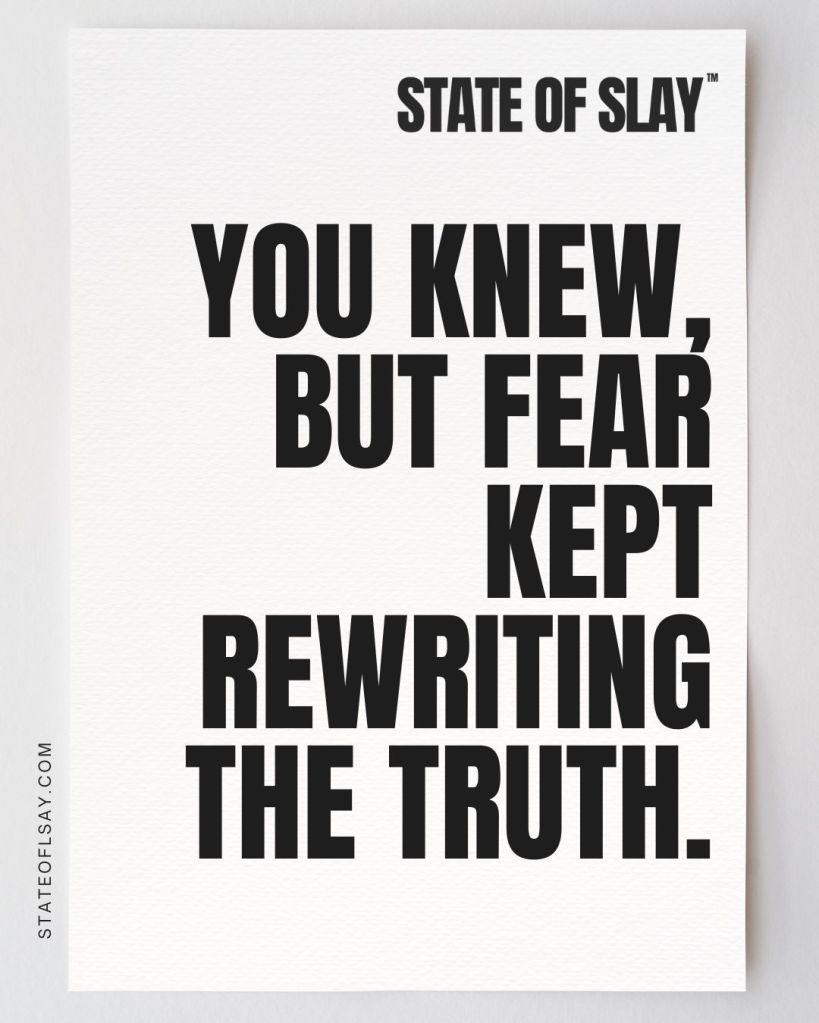
Fear has a way of doing that. It does not always shout. Sometimes it simply rewrites the truth in a way that feels easier to accept, safer to hold, or more comfortable to stay within.
Growth often begins with recognizing that the first feeling was not confusion. It was clarity.
This is your reminder to trust what you knew before fear had the chance to change the narrative.
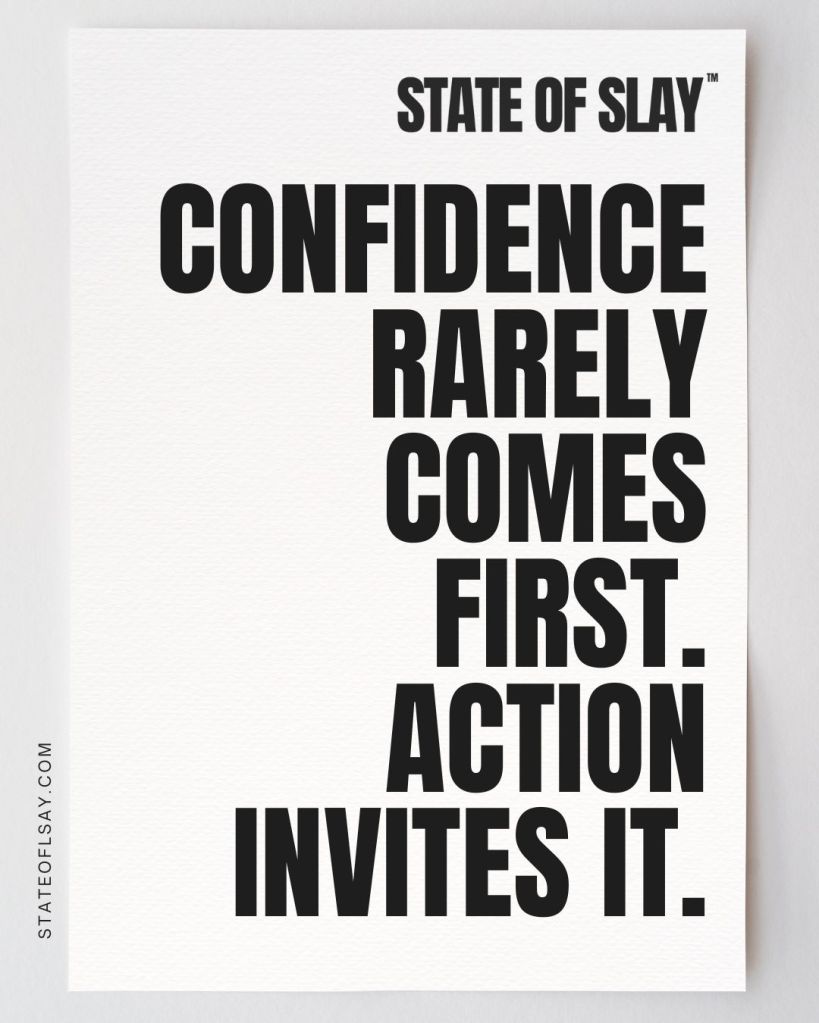
We often wait for confidence before taking action, believing readiness should come first. But growth rarely works that way. Momentum builds through experience, not hesitation.
The first step may feel uncertain. The early attempts may feel imperfect. That is not failure — it is part of becoming capable. Confidence tends to grow quietly alongside effort, not ahead of it.
This is your reminder to begin even when certainty is not fully there.
There’s a quiet voice inside you that notices patterns before your mind explains them. It senses misalignment early. It flags what feels off long before consequences appear.
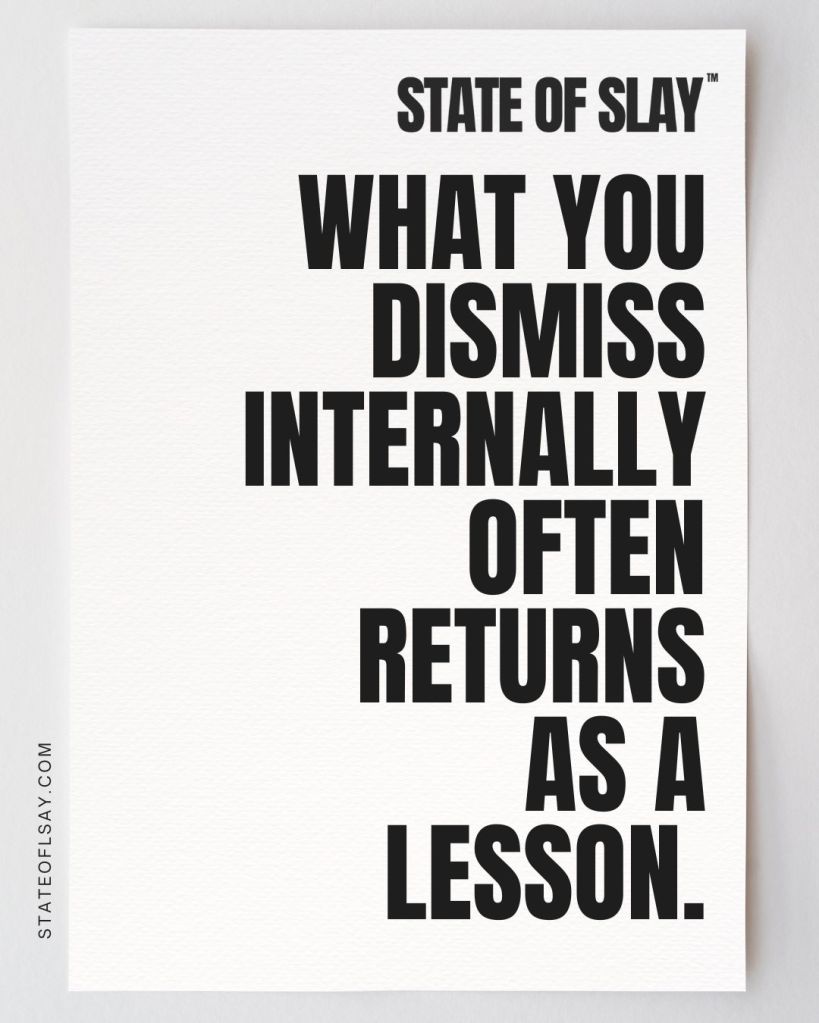
When that voice is ignored, life has a way of circling back—not to punish, but to teach. What you overlook doesn’t disappear. It waits. And it often returns louder, heavier, and harder to avoid.
Trust isn’t built by always getting it right. It’s built by listening sooner. By honoring what you already know instead of negotiating against it.
This is your reminder: Pay attention the first time something feels wrong. Your inner wisdom is trying to save you a lesson you don’t need to repeat.
More goals. More habits. More productivity. More people. More commitments.
So when we feel stuck, our instinct is to pile on — another plan, another promise, another version of ourselves we think we need to become.
But real growth doesn’t usually happen that way.
You grow faster by subtraction rather than addition.
By removing what drains you instead of constantly trying to become more.
Prefer to listen? The Audio Blog version is available here.
Why We Think More Is the Answer
From a young age, we’re conditioned to believe that expansion comes from accumulation.
If something isn’t working, we add effort. If we’re unhappy, we add distractions. If we’re insecure, we add validation.
But more doesn’t automatically mean better.
More can mean overwhelmed. More can mean misaligned. More can mean further away from yourself.
Growth that relies only on addition often ignores the real issue — that something no longer belongs.
Subtraction Creates Space for Clarity
When you remove what isn’t aligned, something powerful happens.
Your energy returns. Your focus sharpens. Your nervous system calms.
Subtraction creates space — and space is where clarity lives.
You can’t hear your own voice when your life is too loud. You can’t feel aligned when everything is pulling at you.
Sometimes the most productive thing you can do is let go.
What Subtraction Often Looks Like
Growth by subtraction doesn’t always look dramatic.
It can look like:
Stepping back from relationships that drain you
Letting go of habits that numb instead of heal
Releasing roles you’ve outgrown
Saying no without overexplaining
Stopping the pursuit of approval
These choices may feel uncomfortable at first — especially if you’re used to earning your worth through doing or giving.
But discomfort doesn’t mean wrong. It often means necessary.
Why Letting Go Feels So Hard
Subtraction challenges identity.
When you remove something, you’re forced to ask: Who am I without this?
That fear keeps many people stuck. They’d rather carry what’s heavy than face the uncertainty of what’s next.
But holding on doesn’t preserve who you are — it prevents who you’re becoming.
Growth requires trust. Trust that what’s meant for you will meet you where you are, not where you were.
Subtraction Is an Act of Self Trust
Every time you let go of something that no longer fits, you’re telling yourself:
I trust my instincts. I trust my boundaries. I trust that I don’t need to earn rest, peace, or alignment.
Subtraction isn’t quitting. It’s refining.
It’s choosing quality over quantity. Alignment over obligation. Depth over noise.
Growth Isn’t Always About Becoming It’s About Releasing
We romanticize transformation as becoming something new.
But often, growth is about returning to what was already there — buried under expectations, pressure, and self betrayal.
When you subtract what doesn’t belong, you don’t lose yourself.
You reveal yourself.
Less Makes Room for What Matters
When you stop carrying what isn’t yours, you have room for what is.
More presence. More peace. More creativity. More connection.
Not because you chased them — but because you made space for them.
That’s how growth accelerates.
You Don’t Have to Add to Be Enough
If you’re feeling behind, overwhelmed, or disconnected, ask yourself this:
What am I holding onto that I don’t need anymore?
Growth doesn’t always ask you to do more.
Sometimes it asks you to release.
And that release might be the thing that finally lets you move forward.
SLAY Reflection
Let’s reflect, SLAYER:
S: What in your life feels heavy, draining, or misaligned right now? L: What have you been afraid to let go of — and why? A: What could shift if you removed one thing instead of adding another? Y: How might your growth accelerate if you trusted subtraction as part of the process?
Call to Action: Join the Conversation
I’d love to hear from you. What’s something you let go of that helped you grow faster or feel more aligned? Share your story in the comments. Let’s cheer each other on.
And if you know someone overwhelmed by “doing more,” send this to them. Sometimes, all we need is a nudge.
It doesn’t always arrive as a big, obvious choice. It often shows up quietly — in the moments we go against ourselves just to keep the peace, to avoid conflict, or to feel chosen.
It’s the yes we give when our body is screaming no. The truth we swallow because it feels inconvenient. The boundary we erase because we’re afraid to be left.
And every time we do it, a small part of us learns that our needs are optional.
What Self Betrayal Really Is
Self betrayal is not about making mistakes.
It’s about abandoning your inner truth to make someone else comfortable.
It happens when you prioritize being liked over being honest. When you ignore your intuition. When you stay in situations that don’t respect who you are.
Over time, self betrayal doesn’t just create discomfort — it creates disconnection. You stop trusting yourself. You stop hearing your own voice. You start needing permission to feel what you feel.
And that’s where resentment and exhaustion are born.
Why We Learn to Betray Ourselves
Most of us didn’t wake up one day and decide to abandon ourselves.
We learned it.
We learned that love was conditional. That approval came with a price. That being easy was safer than being real.
So we adapted.
We became agreeable. We minimized our needs. We learned how to read the room instead of reading our own heart.
Those patterns might have protected us once — but they don’t serve the people we’re becoming.
The Cost of Self Betrayal
The cost isn’t just emotional.
It shows up as anxiety. Burnout. Chronic people pleasing. A feeling that something is always off.
When you keep betraying yourself, your body knows — even when your mind tries to justify it.
That inner tension is the part of you that refuses to disappear.
Rebuilding Trust With Yourself
Healing from self betrayal begins with listening.
Not to everyone else — to you.
To your discomfort. To your boundaries. To the small quiet voice that says, “This doesn’t feel right.”
Every time you honor that voice, you rebuild trust.
You don’t have to get it perfect. You just have to stop ignoring yourself.
Boundaries Are Not Rejection They Are Self Respect
Saying no doesn’t mean you’re selfish. Speaking up doesn’t mean you’re difficult. Choosing yourself doesn’t mean you don’t care.
It means you do.
Boundaries are how you protect the relationship you have with yourself — and that relationship shapes every other one you have.
You Are Allowed to Change Your Mind
One of the most powerful ways to stop self betrayal is giving yourself permission to shift.
To grow. To outgrow. To choose differently.
You don’t owe anyone the old version of you.
You owe yourself the truth.
Integrity Begins on the Inside
Integrity isn’t just about what you do in public.
It’s about how you treat yourself when no one else is watching.
Are you listening to your needs? Are you honoring your limits? Are you telling yourself the truth?
That’s where self respect lives.
SLAY Reflection
Let’s reflect, SLAYER:
S: Where in your life have you been saying yes when you meant no? L: What fears have kept you from being honest with yourself? A: What boundary would bring you back into alignment? Y: How would your life change if you stopped abandoning yourself?
Call to Action: Join the Conversation
I’d love to hear from you. Where have you noticed self betrayal in your own life and what helped you start choosing yourself again? Share your story in the comments. Let’s cheer each other on.
And if you know someone who keeps putting themselves last, send this to them. Sometimes, all we need is a nudge.
Life will always offer noise— opinions, distractions, expectations, the pull of things that look urgent but hold no real weight.
It’s easy to get swept up in it, to mistake the loudest voice for the truest one, or to drift toward what feels immediate instead of what feels aligned.
But when you know what anchors you— your values, your boundaries, your peace— the noise loses its power. You stop reacting to everything around you and start responding from the steadiness within you.
This is your reminder: Your grounding is your strength. Return to what roots you and let the rest fall away.
There’s a particular kind of pain that comes when someone you believed in—someone you trusted—decides you’re no longer worth the effort. It might be a partner, a friend, a family member, or even an employer.
Sometimes they drift away quietly. Sometimes they slam the door. And sometimes, they make sure you hear exactly why you didn’t make the cut.
It’s human to internalize those moments. To question what’s wrong with you. To wonder if they saw something you didn’t. But here’s the truth—their decision to give up on you is about them, not you.
Prefer to listen? The Audio Blog version is available here.
Their Choice Is Not Your Worth
When someone gives up on you, it’s easy to translate that into, “I’m not enough.” But what they’re really saying is, “I’m not willing, able, or ready to invest in this anymore.”
That’s not the same thing as saying you have no value.
We often assume that other people’s actions are direct reflections of who we are. But in reality, they’re reflections of their capacity, their priorities, their fears, and their choices. Someone’s inability or unwillingness to see your worth does not erase your worth.
When we take someone else’s abandonment as proof that we should abandon ourselves, we hand over our power. And once that happens, their absence gets to dictate the rest of our story.
You don’t owe them that power.
Self-Trust Is Your Lifeline
When the dust settles, what you’re left with is you. And that’s where the real work begins.
Self-trust isn’t built in grand declarations—it’s built in small, consistent acts of showing up for yourself. It’s saying, “I still choose me, even when they didn’t.”
Here’s the thing: if you keep believing in yourself, you always have another chapter to write.
Yes, it hurts when someone walks away. But you’re still standing. You still have dreams, talents, and the ability to create a life you love. You still have the capacity to love yourself fiercely, even if others failed to.
The most powerful way to respond when someone gives up on you is to prove—to yourself—that you never will.
Let Their Exit Teach You, Not Break You
People leaving can be clarifying. Painful? Absolutely. But clarifying.
When someone exits your life, you get the chance to ask:
Was I shrinking myself to keep them close?
Did I rely on their validation more than my own?
Was I ignoring red flags because I didn’t want to lose them?
The end of a relationship, friendship, or opportunity can feel like a collapse—but it can also be a clearing. A chance to rebuild in a way that’s more aligned with who you are now.
Sometimes someone’s departure forces you to look at your own patterns, boundaries, and needs in a way you never would have otherwise.
If you use the pain as data, it can actually serve you.
Your Story Isn’t Over Because They Left
It’s tempting to see someone’s departure as the end of something essential—as if the part of you that existed with them can’t survive without them. But your life is bigger than their role in it.
Think of the people you haven’t even met yet. The experiences you haven’t had. The opportunities that wouldn’t have been possible if you stayed where you were.
The world is full of people who will believe in you. People who will stand beside you, support you, and challenge you to grow—not shrink.
But the most important believer you’ll ever have is the one staring back at you in the mirror.
Refuse to Abandon Yourself
Here’s the bottom line:
Someone else’s choice to walk away does not define you.
You are allowed to grieve, but you are not required to quit on yourself.
You can acknowledge the hurt without adopting it as your identity.
The real loss would be if you decided their decision was the final say in your worth.
Keep showing up. Keep writing your story. Keep choosing you—over and over again.
Because the day you give up on yourself is the day you stop being open to the possibilities that are still ahead.
And trust me… there are so many.
SLAY Reflection
Who in your life has walked away, and how did it impact your self-belief?
In what ways have you relied on others for validation?
How can you build more self-trust right now?
What lesson did you learn from someone leaving your life?
What’s one action you can take this week to invest in yourself?
S – Stand in your worth, even when others don’t L – Let go of those who cannot meet you where you are A – Affirm your value daily, without waiting for outside approval Y – Yield to growth, even when it comes through loss
Call to Action: Join the Conversation
I’d love to hear from you. When someone gave up on you, what did you do to keep believing in yourself? Share your story in the comments. Let’s cheer each other on.
And if you know someone who’s questioning their worth because someone walked away, send this to them. Sometimes, all we need is a nudge.
There’s a heartbreaking truth many of us come to learn too late:
When a child is shamed for having feelings, they don’t stop feeling. They stop trusting.
They stop trusting their emotions. They stop trusting their voice. And eventually, they stop trusting themselves.
We often teach kids—intentionally or not—that certain feelings are too much, too messy, too inconvenient. That anger is bad. That sadness is weakness. That fear is overreacting. We hush them. We roll our eyes. We tell them to “get over it” or “calm down.” But what we’re really saying is: Your feelings don’t belong here.
And that message doesn’t just sting in the moment. It stays.
The Seeds of Self-Doubt
When we shame a child’s feelings, we’re not teaching emotional regulation—we’re teaching emotional suppression.
Instead of learning how to navigate their emotions, they learn to ignore them, question them, or feel guilt and embarrassment for even having them in the first place.
They start asking:
“Why am I so sensitive?”
“What’s wrong with me?”
“Why can’t I just be normal?”
These questions don’t come from nowhere. They come from a world that told them, early on, that their natural responses were somehow wrong.
Unlearning the Silence
As adults, many of us carry this conditioning into our relationships, our workplaces, and our inner dialogue. We still quiet our feelings. We second-guess our instincts. We feel shame for emotions that are perfectly human.
But here’s the thing: Our feelings don’t go away just because we learned to hide them.
They find other ways to come out—through anxiety, depression, emotional outbursts, or chronic people-pleasing. The body keeps the score. The heart remembers.
Healing begins when we give ourselves permission to feel again. To validate what was once invalidated. To trust that our emotions have something to teach us, not something to be ashamed of.
Reparenting Starts With Awareness
Maybe you were that child. Maybe you’re still carrying the weight of being told to “toughen up” or “stop crying.”
Or maybe you’ve caught yourself repeating those phrases to someone else—not out of cruelty, but because it’s what you were taught.
Here’s the good news: You can stop the cycle.
You can start by:
Saying “I hear you” instead of “you’re overreacting.”
Asking “What are you feeling?” instead of “What’s wrong with you?”
Letting your own emotions be seen, so others feel safe showing theirs.
You don’t need to have all the answers. You just need to be a safe place.
SLAY Reflection
Ask yourself:
Was I shamed for showing emotion as a child?
How did that shape the way I express or suppress feelings today?
Do I trust my emotional responses—or do I second-guess them?
How can I begin validating my emotions, rather than hiding or judging them?
What would it feel like to create space for someone else to share, without judgment?
S – L – A – Y
S:See where your emotional patterns began. L:Listen to your inner voice with compassion. A:Allow your feelings to surface without shame. Y:Yield to the wisdom your emotions are offering.
Call to Action: Join the Conversation I’d love to hear from you. Were you taught to suppress your emotions as a child—and how has that shaped your journey? Share your story in the comments. Let’s cheer each other on.
And if you know someone who’s learning to feel again, send this to them. Sometimes, all we need is a nudge.