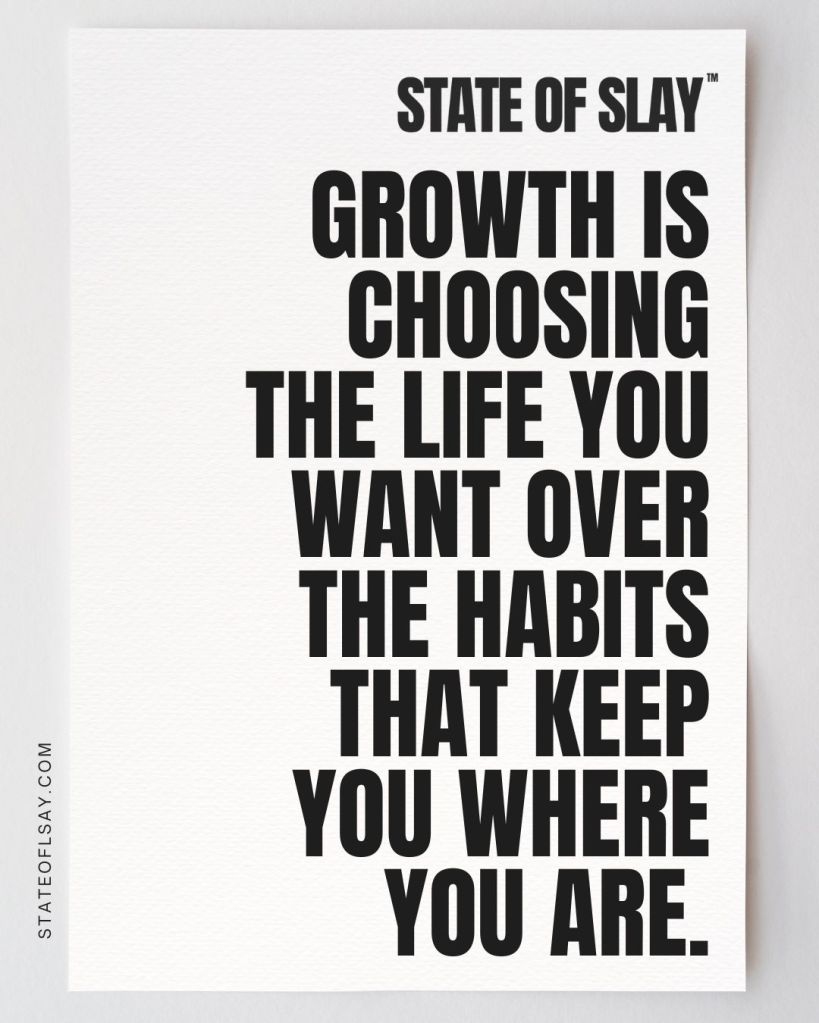
Growth does not come from wishing for a different life. It comes from choosing it, again and again, in the small moments no one sees.
Every decision you make is either reinforcing where you are or moving you toward where you want to be. The habits you keep, the boundaries you set, and the choices you make daily are quietly shaping your future.
This is your reminder to stop negotiating with the patterns that keep you stuck and start choosing the version of your life you are ready to step into.
There was a time when I thought clarity would fix everything.
If someone misunderstood me, I explained more. If they questioned my motives, I justified them. If tension arose, I tried harder to communicate. I believed that if I just found the right words, the right tone, the right explanation, everything would resolve.
Sometimes it did.
But sometimes, no matter how clearly I spoke, the misunderstanding remained. And eventually I realized something uncomfortable but incredibly freeing.
Not everyone wants understanding.
Some people are committed to their version of you.
And explaining yourself endlessly does not change that.
Prefer to listen? The Audio Blog version is available here.
The Difference Between Confusion And Resistance
Healthy relationships allow space for clarification. Misunderstandings happen. Conversations help. Growth follows.
But there is a difference between someone seeking understanding and someone resisting it.
When someone genuinely wants clarity, they listen. They ask questions. They reflect. There is movement toward resolution.
When someone is dedicated to misunderstanding you, explanations become circular. Nothing shifts. Intentions get distorted. And you leave conversations feeling drained rather than connected.
Recognizing that difference protects your energy.
I Learned This The Hard Way
For years, I overexplained myself.
I thought it was a responsibility. I thought it showed maturity. I thought it prevented conflict.
Sometimes it was simply fear. Fear of rejection. Fear of being judged. Fear of being seen inaccurately.
So I tried to control perception through explanation.
But control is an illusion.
Eventually, I saw that constant explaining was not creating understanding. It was creating exhaustion.
And that realization changed how I approached communication.
You Are Allowed To Be Understood By The Right People
Not everyone is your audience.
That statement once felt harsh to me. Now it feels empowering.
The people meant to be in your life generally seek understanding, not ammunition. They listen with curiosity, not suspicion. They care about connection more than being right.
Those relationships feel different. Lighter. More stable.
And once you experience that, you realize how unnecessary constant self-justification really is.
Boundaries Protect Emotional Health
Boundaries are not walls. They are clarity.
Choosing not to overexplain is often a boundary. It does not mean you lack accountability. It means you recognize when further explanation will not lead to growth.
Boundaries say:
I will communicate clearly once. I will answer sincere questions. But I will not chase validation or exhaust myself trying to change fixed perceptions.
That boundary protects peace.
And peace supports mental wellness.
Silence Can Be A Form Of Strength
Silence used to scare me.
I worried it meant giving up. Losing ground. Appearing weak.
Now I understand silence differently.
Sometimes silence reflects confidence. Sometimes it reflects acceptance. Sometimes it reflects wisdom.
Not every misunderstanding requires correction. Not every opinion requires rebuttal. Not every assumption deserves energy.
Choosing when to speak is powerful.
Choosing when not to speak can be even more powerful.
Authentic Living Reduces The Need To Explain
The more aligned I became with my values, the less I felt the urge to justify myself.
When your actions match your beliefs, internal clarity replaces external validation. You still care about relationships. You still value communication. But you are less dependent on universal approval.
And that shift is freeing.
You begin living from authenticity rather than perception management.
That is where real confidence grows.
Let People Have Their Perspective
This was another difficult lesson.
You can present facts, intentions, and context. But you cannot control interpretation. Everyone filters information through their own experiences, fears, and expectations.
And that is human.
Allowing others their perspective does not mean you agree with it. It simply means you release the need to control it.
That release creates emotional space.
And emotional space creates peace.
SLAY Reflection
Let’s reflect, SLAYER:
S: Do you find yourself over-explaining to avoid misunderstanding or conflict?
L: How does that habit affect your energy and emotional well-being?
A: Where might a gentle boundary reduce the need for constant explanation?
Y: How would your life feel if you trusted that the right people will seek understanding naturally?
Call to Action: Join the Conversation
I’d love to hear from you. Have you experienced a moment where you stopped over-explaining and chose peace instead? What changed for you? Share your story in the comments. Let’s cheer each other on.
And if you know someone who needs permission to stop exhausting themselves explaining their intentions, send this to them. Sometimes, all we need is a nudge.
There comes a point in life when you realize that protecting your peace isn’t selfish — it’s necessary.
For a long time, many of us are taught to prioritize relationships at all costs. To be accommodating. To be understanding. To be available. To keep the peace, even if it costs us our own.
But here’s the hard truth no one says out loud enough: Not everyone deserves access to you.
And choosing peace over people doesn’t make you cold, unkind, or difficult. It makes you honest.
Peace isn’t something you stumble into by accident. It’s something you choose — often after learning the hard way what happens when you don’t.
Prefer to listen? The Audio Blog version is available here.
When Choosing People Costs You Yourself
There was a time when I believed that loyalty meant endurance. That loving someone meant tolerating discomfort. That being a good person meant explaining myself, overextending, and shrinking to keep others comfortable.
So I stayed. I justified. I made excuses. I carried emotional weight that wasn’t mine to hold.
And slowly, without realizing it, I lost my sense of peace.
I felt constantly on edge. I replayed conversations in my head. I walked on eggshells. I questioned myself more than I trusted myself. I told myself it was normal — that relationships were supposed to be hard.
But there’s a difference between growth-discomfort and peace-eroding chaos.
And when a connection consistently costs you your clarity, your safety, or your sense of self — it’s no longer love. It’s a liability.
Peace Is Not the Absence of Conflict It’s the Presence of Alignment
Peace isn’t about avoiding hard conversations or disagreements. It’s about alignment — with yourself, your values, and the way you want to live.
You can be in a room full of people and feel completely at peace. And you can be deeply connected to someone and feel constantly unsettled.
That’s your body talking.
Peace feels like:
Calm instead of tension
Clarity instead of confusion
Safety instead of anxiety
Being yourself instead of performing
When someone disrupts that consistently, it’s not because you’re “too sensitive.” It’s because something isn’t aligned.
And alignment matters more than approval.
Choosing Peace Will Offend People Who Benefit From Your Silence
Let’s be honest — the moment you choose peace, some people will feel threatened.
Not because you changed for the worse. But because you stopped abandoning yourself for their comfort.
People who benefited from your lack of boundaries will call you distant. People who relied on your overgiving will call you selfish. People who were comfortable with your silence will struggle when you find your voice.
That doesn’t mean you’re wrong.
It means the dynamic is changing — and not everyone will be willing or able to meet you where you are now.
Peace has a way of exposing relationships that were built on obligation instead of mutual respect.
You Are Allowed to Walk Away Without Explaining Everything
One of the most liberating truths you can accept is this: You don’t owe everyone an explanation for choosing yourself.
Closure is not something other people give you — it’s something you choose. You don’t need permission to step back. You don’t need validation to detach. You don’t need agreement to move on.
Sometimes the explanation would only reopen wounds. Sometimes the conversation would only invite manipulation. Sometimes silence is the boundary.
Choosing peace means trusting yourself enough to walk away without rewriting the story to make it palatable for others.
You are not responsible for how people process your boundaries.
Peace Requires Boundaries Not Guilt
Peace doesn’t come from cutting everyone off. It comes from discerning who deserves closeness and who requires distance.
Boundaries are not walls — they are doors with locks.
They say:
This is how I expect to be treated
This is what I will no longer tolerate
This is what I need to feel safe and whole
Guilt often shows up when you first set boundaries, especially if you were conditioned to prioritize others’ needs over your own. But guilt is not a sign you’re doing something wrong — it’s a sign you’re doing something new.
And new doesn’t mean wrong.
Every time you honor your boundaries, you reinforce your self-respect. Every time you choose peace, you teach yourself that your well-being matters.
Not Everyone Is Meant to Come With You
This is one of the hardest parts of choosing peace: accepting that some people are seasonal.
They were meant for who you were — not who you’re becoming.
And holding onto them out of nostalgia, guilt, or fear will only keep you tethered to a version of yourself you’ve outgrown.
You can love people from a distance. You can appreciate what was without forcing what no longer works. You can wish someone well without inviting them back into your life.
Peace doesn’t require resentment. It requires honesty.
And sometimes honesty means admitting that access to you is no longer healthy.
Peace Is a Daily Practice
Choosing peace isn’t a one-time decision — it’s a daily practice.
It’s asking yourself:
Does this situation drain me or ground me? Does this relationship expand me or exhaust me? Does this choice align with the life I’m trying to build?
Peace shows up in the small choices — who you respond to, what you tolerate, where you invest your energy.
The more you choose peace, the quieter your life becomes. The quieter your life becomes, the clearer your truth gets. And clarity changes everything.
You Are Not Losing People You Are Choosing Yourself
If choosing peace costs you people, let it.
You are not here to be consumed, drained, or diminished for the sake of connection. You are here to live fully, honestly, and safely in your own life.
Peace isn’t loneliness. Peace is freedom.
And the people who are meant to walk beside you will never require you to betray yourself to keep them.
Choose peace — again and again.
SLAY Reflection
Let’s reflect, SLAYER:
S: Where in your life have you been choosing people over your own peace? L: What relationships leave you feeling drained rather than grounded? A: What boundary do you need to set to protect your emotional well-being? Y: How would your life feel if peace became your priority instead of approval?
Call to Action: Join the Conversation
I’d love to hear from you. What has choosing peace over people looked like in your life — or where do you feel called to make that shift now? Share your story in the comments. Let’s cheer each other on.
And if you know someone who’s struggling to choose themselves, send this to them. Sometimes, all we need is a nudge.
There’s a tender truth many of us carry quietly: as children, we weren’t always given the protection, love, or safety we deserved. Whether it was neglect, criticism, chaos, or simply the absence of someone to stand up for us, those early experiences leave marks.
But here’s the gift that healing gives us: we can grow into the very person we needed back then.
We can become the protector, the nurturer, the advocate—the voice we longed for when we were small.
And when we do that, we not only honor the child we once were—we free the adult we are today.
The Wounds We Carry From Childhood
As children, we’re like sponges. We absorb the words, actions, and silences of the adults around us.
If you were constantly criticized, you may still struggle with perfectionism. If you were ignored, you may still feel unworthy of attention. If you were shamed for your feelings, you may still doubt your right to have them.
These patterns don’t just disappear when we grow up. They echo in our relationships, our choices, and the way we see ourselves. And yet—those echoes don’t define us.
What defines us is how we choose to respond now.
Becoming the Protector You Needed
So, what does it mean to grow into the person who would have protected you as a child?
It means listening to yourself without judgment. It means setting boundaries where none existed before. It means saying the words you once longed to hear.
For me, that looked like finally telling myself: “You’re safe now. You matter. You don’t have to earn love—you already deserve it.”
I began practicing what I never heard enough of as a child, and in doing so, I gave my inner child something powerful: safety.
Reparenting Yourself
One of the most healing practices I’ve learned is reparenting—becoming the parent I always needed.
That means:
Showing compassion when I make a mistake instead of berating myself.
Nurturing myself with rest, food, and care when I feel depleted.
Speaking up in situations where I once would have shrunk or stayed silent.
Celebrating wins—no matter how small—because joy deserves to be noticed.
When you reparent yourself, you begin to break the cycle. You no longer hand the baton of pain to the next generation—you hand them a blueprint of healing.
Protecting Your Present Self
It’s not just about healing the child within—it’s about protecting the adult you are now.
That means not letting people treat you the way others once did. That means saying no without apology. That means refusing to bend yourself to fit into spaces that don’t value you.
Because here’s the truth: every time you protect yourself today, you’re also protecting the child inside you.
You’re proving to them that they matter. That they are safe. That someone finally has their back.
The Power of Forgiveness—For Yourself
Growing into the protector also means letting go of the guilt and shame you may still carry.
You were just a child. You did not deserve the pain you went through.
But now, as an adult, you may need to forgive yourself for the coping mechanisms you developed—whether that was numbing, hiding, or lashing out. Those were survival tools. They were never proof that you were broken—they were proof that you wanted to live.
Forgiving yourself is part of becoming the guardian you needed. Because a good protector doesn’t punish a child for trying to survive—they honor their courage.
A Love Letter to Your Younger Self
Take a moment. Picture yourself as a child.
See the face. The innocence. The hurt. The hope.
Now say to them: “I’m here now. I won’t leave you. I will keep you safe.”
When you grow into the person who would have protected you, you’re giving that child the promise they always deserved. And you’re giving your adult self the strength to move forward with love, resilience, and freedom.
SLAY Reflection
What did you most need as a child that you didn’t always receive?
In what ways do you still criticize yourself the way others once criticized you?
What boundaries could you set today that would have protected your younger self?
How can you practice reparenting in your daily life?
If you could say one thing to your younger self right now, what would it be?
S – Speak kindly to yourself, especially in moments of failure L – Let your inner child feel seen, safe, and loved A – Align your actions with the protector you needed Y – Yield to healing, even when it feels uncomfortable
Call to Action: Join the Conversation
I’d love to hear from you. What have you done to become the protector your younger self needed? Share your story in the comments. Let’s cheer each other on.
And if you know someone who’s working to heal their inner child, send this to them. Sometimes, all we need is a reminder that it’s never too late to give ourselves the love and protection we always deserved.
Whether it was exercise, my to-do list, or unrealistic expectations, I was constantly competing with myself to do more, to be more. Sure, it’s healthy to set goals, but not at the cost of your well-being. I thought pushing myself to the limit proved my worth. But it wasn’t sustainable—and it wasn’t healthy.
When You Don’t Like Yourself, You Push Too Hard
The truth was, I didn’t like myself.
I set impossible expectations and used them as a weapon against myself. I’d force myself to work out, even when sick. I’d overschedule until I was drowning. And when I couldn’t meet those unrealistic goals, I’d berate myself for failing. I never let myself rest or breathe—I was always on the go, always one step from a breakdown.
I realize now that this was my way of proving something to myself and to the world. I wanted people to see me as a superwoman who could do it all. I hoped to impress or intimidate them enough to avoid questions. But deep down, I was trapped in a toxic cycle.
Learning to Love Myself—and Find Balance
When I learned to love myself, I also learned to adjust my expectations.
I started practicing self-care, giving myself breaks, and embracing my human limitations. I realized that not completing everything on my to-do list didn’t make me a failure—it made me human. Today, I still feel frustrated when I don’t get everything done, but I’ve learned to let it go. I can always tackle it tomorrow.
Now, I focus on balance. I still juggle a lot, but I make space for flexibility. I prioritize moments with myself or someone I care about. I no longer need a completed list to feel worthy. My worth comes from listening to what I need each day, not what my ego demands.
Honor Yourself and Your Limits
Listen to yourself. Push where you want to grow, but not at the expense of your peace. Set goals and do your best—but know your best will change from day to day. The key is to put you at the top of your to-do list.
SLAY on.
SLAY OF THE DAY: Reflect & Rise
Do you set unrealistic expectations for yourself? List three.
What makes them unrealistic? Why do you set them?
What can you do to make them more realistic?
What can you do to continue setting realistic goals in your life?
How do you react when you don’t meet a goal?
Do you feel the need to one-up others? Why?
Does your ego push you past your limits to exhaustion? What can you do to stop?
Self-love and self-care should always come first. The goals you reach will be sweeter because you’ll achieve them when you’re ready—not when your ego says so.
Call to Action: Join the Conversation
I’d love to hear from you. What’s one small step you can take today to prioritize self-care and set realistic goals? Share your story in the comments. Let’s support each other.
And if you know someone pushing themselves too hard, send this to them. Sometimes, the best reminder is a simple “You’re enough.”
We all want someone in our lives to just understand us—to show up when we need them, to read our silent pleas, to fill the gaps we feel inside. But here’s a hard truth: nobody is designed to be your everything.
When we expect someone to always be there, always know, always respond—without communication, without boundaries—we set both them and ourselves up for heartbreak.
We must learn the beauty and the burden of loving with grace and owning our own needs.
Prefer to listen? The Audio Blog version is available here.
Expectations vs. Reality
It’s natural to hope others will meet us where we are. We desire connection, validation, support. But expectations—especially unspoken ones—are traps.
When we expect another to always stay ready, even when they’re fighting their own war, we feel let down. When we expect consistent availability, we forget that everyone has their own life, struggles, and limitations.
And when reality falls short of those silent demands, we start to believe they don’t love us enough—when in truth, they might just be human like us.
Learning to Right-Size Our Expectations
The seeds of resentment often come from expecting others to be what we need without telling them. We assume they know. We assume they’ll show up.
But healthy relationships ask for clarity not mind-reading.
Let them know how you feel.
Ask for what you need.
Accept the answer, even if it doesn’t match what you hoped for.
This is how we protect ourselves from disappointment—not by becoming colder—but by learning truth, honest communication, and respect for boundaries.
When They Can’t Be Who You Want
Here’s what I discovered over time:
“Can’t” isn’t always about unwillingness—sometimes it’s about capacity.
Being unavailable doesn’t always mean they don’t care.
When someone can’t be who you want, sometimes they are doing the best they can within their own limits.
I used to take it personally when people couldn’t show up as I needed them to. I thought it meant something was wrong with me—or wrong with them. But I learned to see it differently: I learned to love them where they are, to protect my peace, and to find others with compatible strengths.
You, Not Others, Are Responsible for You
Expecting someone else to complete your emotional puzzle is heavy for both parties.
Your emotional survival is your job. You cannot force someone to be who they’re not. And when you try, you weaken your own foundation.
You deserve people who can be consistent. But until then, you can be your own constant. You can love others without relying on them. You can communicate your needs, accept imperfect love, and continue building your own inner strength.
Staying Open While Protecting Your Peace
How do you navigate this balance without becoming closed off or bitter?
Stay open to love, even when disappointed.
Keep your standards, but don’t demand perfection.
Allow yourself to walk away when love becomes harmful.
Find multiple sources of support, not just one person.
Own your emotional state: don’t outsource it to others.
People Can’t Always Be Who You Want—but You Can Still Love Well
You don’t have to settle for being used, ignored, or repeatedly disappointed. You can adjust your expectations without shutting down your heart. You can ask for what you need, and learn to accept what people can give.
You don’t have to stop loving. You just have to love smarter.
SLAY Reflection
What silent expectations are you placing on someone in your life?
How often do you feel disappointed because someone couldn’t read your mind?
What is a healthy boundary you can express to protect yourself and the relationship?
Who in your life can you rely on without needing them to be everything to you?
How can you practice self-reliance (emotionally) while still staying open?
S – Stop expecting people to read your heart L – Let them care within their capacity A – Ask for what you need—don’t demand it Y – Yield your peace first before expecting someone else to
Call to Action: Join the Conversation
I’d love to hear from you. Have you ever been hurt by expecting too much from someone—and what did that teach you?
Share your story in the comments. Let’s value honesty over perfection.
And if you know someone who struggles with unmet expectations or carrying disappointment, send this to them.
Sometimes, love begins with understanding limitation.
We’ve all done it. Gone along with something we didn’t believe in. Put our needs aside to fix someone else’s mess. Jumped into a problem that wasn’t ours to solve.
And let’s be honest—sometimes, we did it because it made us feel needed. Valued. Important.
But here’s the truth: you are not responsible for cleaning up someone else’s willful choices.
When someone makes a bad decision—especially if it’s part of a pattern—and ends up in crisis, it is notyour job to bail them out. And rushing to do so over and over? That’s not kindness. That’s co-signing their bullsh*t.
The Emotional Vampire Tactic
I’ve written before about Emotional Vampires—those who feed off our time, energy, and attention. And one of the tactics they use is convincing you to validate their chaos.
They want you to:
Validate their story
Co-sign their drama
Confirm their narrative that they’re always the victim
You are not required to be a supporting character in someone else’s self-destructive script.
Yes, we all need help sometimes. And yes, it’s okay to ask for it. But there’s a massive difference between someone reaching out for support and someone handing you a flaming mess they created—and expecting you to carry it while they sit back and light another match.
Been There, Done That
Before I walked this path, I was veryfamiliar with this dynamic—because I was the one doing it.
I would avoid reality, avoid responsibility, and let things spiral until they became unmanageable. Then I’d panic, cry, and call for help. And when someone came running? I felt a high. A quick, fleeting sense of love and validation.
But it never lasted. Because deep down, I knew I had created the crisis. And I wasn’t learning anything from it—except how to get better at playing the victim.
That cycle drained me. And it wore out the people around me. I’m grateful I don’t live that way anymore. And when I see it in others now, I recognize it for what it is: a trap. For them—and for me.
Help Should Be a Two-Way Street
Being supportive doesn’t mean sacrificing yourself.
You can help someone—as long as they’re helping themselves. If they’re taking action, being honest, and working toward change, that’s one thing.
But if they keep coming back with the same drama, expecting you to fix it while they do nothing? That’s not support. That’s codependency.
And here’s the hard truth: Helping someone who isn’t helping themselves doesn’t help anyone.
If they’re repeating the same mistakes… If they’re ignoring their own well-being… If they’re draining your energy without ever filling their own cup… You don’t have to step in.
Sometimes the most loving thing you can do is step back.
Stand Tall, Not in the Mess
Next time someone comes calling, ask yourself:
Are they asking for help—or a savior?
Is this a one-time situation—or a repeated pattern?
Are you working withthem—or doing all the heavy lifting yourself?
If the facts don’t add up… If your energy is being drained… If your needs are constantly pushed aside for theirs…
That’s your answer.
You were not put on this earth to fix people who have no intention of changing. You’re here to build and protect a life that’s worth living—and that includes knowing when to say no.
So the next time someone tries to pull you into their storm, remember: You can love someone and still choose yourself. You can care deeply and still walk away from the chaos.
SLAY Reflection: Are You Co-Signing the Chaos?
Do you have people in your life who always seem to be in crisis? How often do they turn to you to fix it?
Are you helping—or doing all the work for them? What toll does that take on you?
Have you been in this dynamic more than once with the same person? Why do you think it keeps happening?
What would it look like to support someone without sacrificing yourself? Can you draw that boundary?
What’s one step you can take today to protect your energy and stop co-signing someone else’s drama? What would choosing yourself look like in this situation?
Call to Action: Join the Conversation
I’d love to hear from you. What’s one situation where you realized helping someone was actually hurting you—and how did you take your power back? Share your story in the comments. Let’s cheer each other on.
And if you know someone who’s stuck playing the fixer, send this to them. Sometimes, all we need is a nudge.