Pain Can Be A Good Thing

Crazy concept right? How can pain be good? In my case it turned out to be. It took being in the excruciating pain I was in for me finally to surrender and ask for help. Now, I wish I had surrendered long before I did, I realize now how much self-inflicted pain I caused myself, but, it took that amount of pain, for that amount of time, for me to finally say enough. And for that, I am grateful. Pain is a big indicator that something is wrong, either with us, or the circumstances we are in. It’s a red flag that something is wrong. I do not believe we are meant to live in pain, but many times it’s what finally gets us to a place where we’re open to change, and in those cases, pain is good.

It seems like we go through much of our lives trying to avoid pain, so much so that some of us disengage from life to avoid it, and there are others out there who seem to run to it head on, leaving a path of destruction behind them, including, sometimes, themselves. The trick is to use pain to our advantage, as an indicator that something is wrong, and to allow it encourage us to make changes, or to reflect on our own decisions and actions that have gotten us to a place of pain. When we are in pain it’s time to put on that detective hat again and find out the facts. What is really going on? What is causing our pain? Why are we feeling pain? What can we do to stop the pain? Remember, we are in control of how we feel, and if something is wrong, it’s time to investigate why and then take action to make it better. Finding yourself in pain can also help you recognize what you want in life, and what your needs are. Pain can shine a light on needs that might not be met, so, there is another area to look at, what are your needs and are they being met? If they’re not, how do you change that? It’s also time to look at whether the pain you’re feeling is real or if it’s fear-based. We can suffer so much pain at our own hands and it can be all just worrying and fear we’ve created in our heads. Again, what are the facts? Have you created unnecessary pain in your life because of worrying about things you have no control over? And finally pain can bring us closer to others, or help us build a community around us. I know it did for me. Because I reached out and connected with others who were also in pain, or had been where I was, I started to build a new circle of friends who not only understood my pain, but had some suggestions of how to stop it, from that I learned how to be a better friend and how to get out of the painful cycle I was in.

Like most things, it’s all a matter of perspective, and pain is no different. Use the pain you may be feeling to your advantage, use it to get yourself to a better place, one in which you can thrive and continue to expand your world. When we are open to change, and open to looking, truthfully, at our own actions, we are in a position to stop the cycle that may have led us down a painful road. Take charge of your pain and take the time to learn about yourself so that you can make better choices down the road, and maybe, stop being so fearful of the pain that pops up in your life in the future, looking at it as an opportunity to examine the pain in your life and to take action to leave it behind.

SLAY OF THE DAY: Do you hide or run away from pain or painful situations in your life? Do you see by looking at the pain and dealing with hit head on it can be used to make positive changes in your life? How can you change your attitude toward pain to look at it as more of a tool rather than something to hide from? Or, do you invite pain into your life willingly? Do you purposely cause yourself pain? Why? Does this seem like healthy behavior? What can you do to change that behavior? SLAYER, challenge yourself to think of pain differently, use it to your advantage and see how much of a happier and healthier life you have. We all will experience pain, it’s how we react to it that makes us SLAYERS. Pick up your sword be brave and face it, be strong to change it, and be humble enough to ask for help when you need it. SLAY on!

S – self L – love A – appreciate Y – you

Slay Say

Good morning SLAYER! Your story is important. Your voice matters. Your dreams count. You were born to make an impact. Follow your passion, and discover your purpose.

New blog goes up Friday, until then…SLAY on!

State Of Slay Why


Slay Say

Good morning SLAYER! You have the patience, the strength, and the passion to achieve your ambitions, your goals and your dreams. All you need to do now is try.

New blog goes up Tuesday, until then…SLAY on!

State Of Slay Try

Slay Say

Good morning SLAYERS!  Conflict will happen, it’s how we choose to respond to it that matters.  Practicing healthy conflict allows us to get into a solution, and offers us an opportunity to learn about those around us, and ourselves.

New blog goes up Sunday, until then…SLAY on!

State Of Slay Conflict

Slay Say

Good morning SLAYER!  It’s great to have goals, and look into what you need to do to achieve them, but it’s the action that takes you to the finish line.

New blog goes up Friday, until then…SLAY on!

State Of Slay Knowledge

Slay Say

Good morning SLAYER! Don’t give someone else power over your thoughts and actions, let go of resentments, not to let them off the hook, but to set yourself free!

New blog goes up Tuesday, until then…SLAY on!

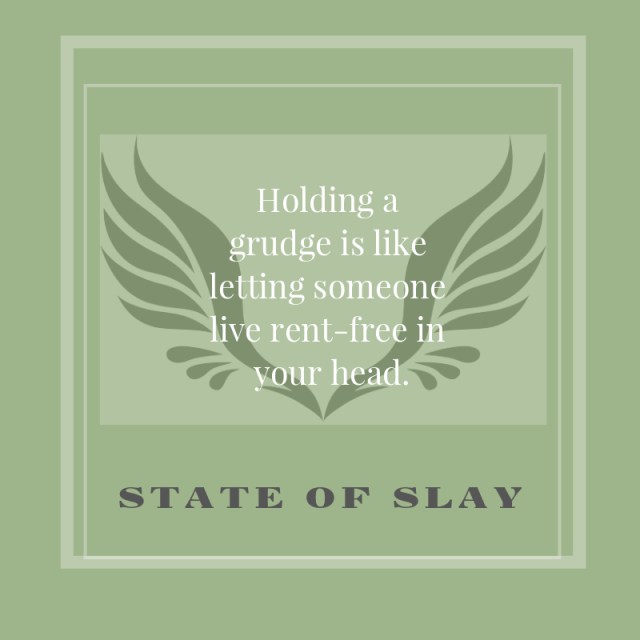
State Of Slay Grudge

Slay Say

Good morning SLAYER! Our only competition is ourselves, and our only job is to be better than we were the last time, or, the best we can be in that moment. Let go of expectations that get in your way of enjoying yourself and your life, and allow yourself to let the people in who love and care about you.

New blog goes up Sunday, until then…SLAY on!

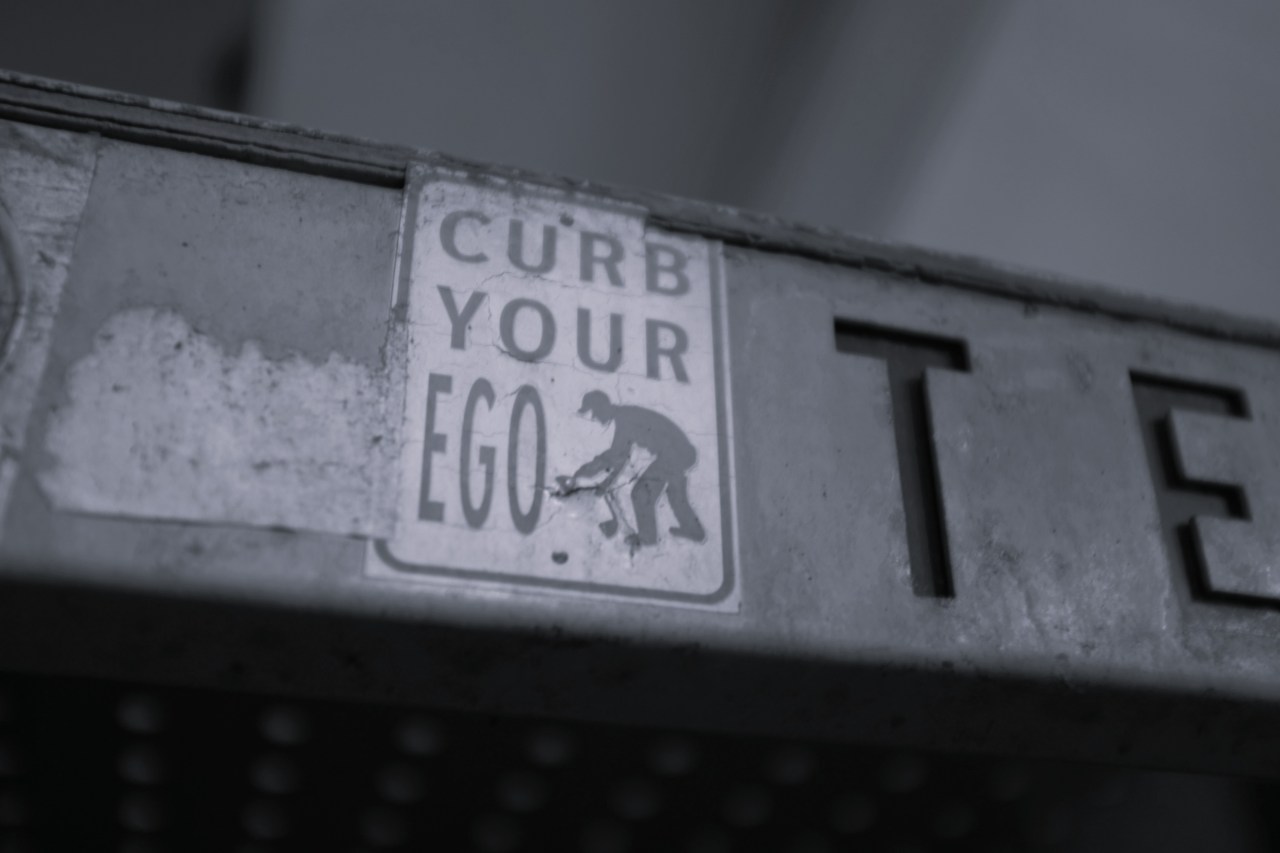
State Of Slay Ego

The Detachment Of Ego

I was reminded the other day how sneaky the ego can be. It shows up when we least expect it, whispering tales of inadequacy, pushing us to do more, be more, prove ourselves—sometimes even at the cost of our well-being.

For so long, I let my ego lead the way. Even in my darkest moments, when I felt broken and unworthy, my ego clung to its illusion of control. It told me I was too good to admit defeat, too strong to ask for help, too proud to let anyone see me vulnerable. I may have felt like a failure, but I was going to be the most impressive failure you’d ever met.

Even today, when I’m in a better place, my ego tries to step in. It tells me I should be doing more, having more, being more. It convinces me to push harder, to disregard my needs, to ignore the quiet voice inside me that speaks of self-care and balance.

Ego latches on to everything—an achievement, a relationship, a dream, an idea. It clings and demands recognition. But when we practice detachment, we loosen its grip.


Prefer to listen? The Audio Blog version is available here.


Letting Go of the Ego’s Hold

Detachment isn’t easy. From an early age, we’re taught to chase results: the prize at the end of the race, the grade at the top of the paper, the validation that makes us feel worthy. But what if we measured success not by accolades, but by the intention behind our actions?

Every day brings its own challenges. We wake up with different energy, different emotions, and different capacities. Instead of holding ourselves to impossible standards, what if we simply did our best each day and called that enough?

The ego might shudder at the thought. But here’s the truth: Detachment is where we find freedom.


How to Practice Detachment

  • Notice Your Thoughts: Pay attention to the chatter in your mind. When do feelings of inadequacy or comparison creep in? How do they affect your body and mood?
  • Separate Ego from Facts: The ego loves drama. It makes disappointments feel like disasters. Step back and look at the facts. Are you really failing, or just feeling a setback?
  • Release Expectations: Stay present. Let go of rigid expectations about how things should unfold. Embrace uncertainty as part of the journey.
  • Check In with Yourself: Pause, breathe, and listen to what’s truly happening inside. Meditation, walks, journaling, or quiet reflection can help.
  • Allow Mistakes: Perfection is an illusion. Mistakes are opportunities for growth. When you stumble, see it as a step forward, not a setback.

Freedom to Just Be

When we detach from the ego’s grip, we give ourselves permission to live authentically. We stop measuring our worth by external markers and start appreciating our effort, our resilience, and our humanity.

SLAY on.


SLAY OF THE DAY: Reflect & Rise

  • Do you place unrealistic expectations on yourself to always win or be the best? Why?
  • How do these expectations serve you—or harm you?
  • What can you do today to practice detachment and self-compassion?
  • Are you influenced by others’ expectations? How can you shift your focus inward?
  • When you fall short, how do you treat yourself? How can you show yourself more grace?

Call to Action: Join the Conversation

I’d love to hear from you.
What helps you step back from your ego’s grip and embrace detachment?
Share your thoughts in the comments. Let’s lift each other up.

And if you know someone struggling with self-worth and expectations, send this to them.
Sometimes, all it takes is a reminder: you are enough.

Slay Say

Good morning SLAYER! We are in charge of our anger, if we are feeling angry it’s our job to figure out why before we act out on it and possibly do or say something we can’t take back. Pause before you act.

New blog goes up Friday, until then…SLAY on!

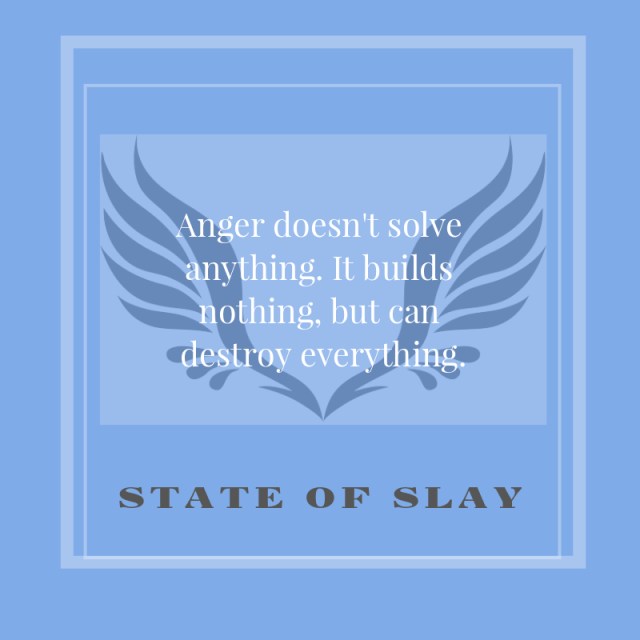
State Of Slay Anger Destroy

What Is Your Anger Telling You?

We’ve all felt it—that boiling surge of frustration, the kind that hits you like a tidal wave and demands to be noticed. But here’s a question we don’t ask often enough: What is your anger really trying to tell you?

It’s easy to blame the person or situation in front of us, but most of the time, the fury isn’t actually about the moment at hand. It’s about something deeper. A past hurt. A lingering wound. A time you weren’t heard, respected, protected. So before you explode, pause. Ask yourself: Where is this really coming from?


The Root Beneath the Rage

For many of us, anger is an old friend. It comes from childhood trauma, from being dismissed, silenced, bullied, or made to feel small. When those memories go unprocessed, they fester. And when something in the present taps on that old bruise?

We react.

And we react big.

I used to live in that space. I didn’t always know why I was so angry, but it was always simmering, ready to spill. I lashed out. I snapped. And more often than not, I had to circle back with an apology to someone who got hit with the shrapnel of my unresolved pain.

But here’s the thing: that anger was valuable. It wasn’t just chaos—it was a clue. A road map pointing me to the places inside that still needed healing.


So What Do You Do With It?

If you’re like me, you may need some help unpacking your anger. And that’s okay. Anger is loud. It covers things up. But underneath it?

There’s usually sadness. Hurt. Shame. Fear.

When you get curious instead of combative, you give yourself the power to shift from reactive to responsive.

Here are five practices that help me navigate my anger today:

  1. Pause. Don’t fire back. Stop and ask, What’s really going on here? Is this familiar? Is this even about now? You don’t get bonus points for quick comebacks. Take the time you need.
  2. Breathe. Deep breaths help regulate your nervous system and quiet the noise in your brain. One breath. Then another. You are safe.
  3. Seek solutions. If you can calm down enough, shift your focus to finding a way forward. It’s okay to say, “I’m upset, but I want to figure this out.” That’s powerful.
  4. Use “I” statements. Avoid blame. Lead with your experience. “I feel overwhelmed when…” lands better than “You never…”
  5. Release the grudge. Let go of the need to be right. If you’ve expressed yourself and nothing changes, honor your truth and move on. Not everything deserves a permanent place in your energy.

You Deserve Peace

Here’s what I know now: we are not built to live in a state of constant rage. That’s not power, that’s pain. And it will eat you from the inside if you don’t find a healthier way to understand it.

Be the detective. Find your triggers. Get curious about your reactions. Let your anger lead you to the parts of yourself that still need attention—then offer those parts compassion.

When you do the work, when you learn to listen, anger becomes less of a wrecking ball and more of a compass.

And that, my friend, is how you slay.


SLAY Reflection

  1. What tends to trigger your anger most often?
  2. Can you trace that trigger back to something deeper?
  3. How do you typically react when angry? Do you like how that feels afterward?
  4. What are some healthier ways you could express or explore your anger?
  5. What might your anger be trying to teach you about what still needs healing?

S-L-A-Y:

  • Stop and pause when anger hits
  • Look for the root beneath the reaction
  • Acknowledge your feelings without shame
  • You have the power to choose peace over chaos

Call to Action: Join the Conversation
I’d love to hear from you.
What is your anger really trying to tell you?
Share your story in the comments. Let’s cheer each other on.

And if you know someone who’s struggling with anger, send this to them.
Sometimes, all we need is a reminder.