Carrying A Message Of Hope

It wasn’t a dramatic moment. There were no grand speeches or earth-shattering revelations. Just a quiet, honest story from someone who had been through it, too. A simple retelling of a journey—his lowest lows and the moment he decided to ask for help.

That story gave me the courage to reach out. It was the first spark of hope that told me maybe I didn’t have to stay where I was. Maybe change was possible. Maybe I could begin again.

That is the power of carrying a message of hope. And it’s why I do what I do now.


We All Need a Spark

Hope doesn’t always come with fanfare. Often, it shows up in the form of a shared experience. In someone else’s voice. In a message that says, “You are not alone. I’ve been there, too.”

Especially in challenging times—when life feels uncertain or heavy—those stories matter more than ever. We may feel isolated, ashamed, or like our pain is too much of a burden to place on anyone else. But when someone dares to tell their truth, they give permission for others to speak theirs.

And sometimes, that’s all it takes to change a life.

We weren’t meant to do this alone. I know I couldn’t have walked this path without the people who were willing to share their light when mine had gone dim. Whether it was a friend, a professional, or someone who simply saw me and cared enough to reach out—each one helped carry me forward. Now I do the same.


Your Story Has Power

We often think our story isn’t worth sharing. That it’s too messy, too painful, or not inspirational enough. But that’s not true.

Your story—exactly as it is—might be the one someone else needs to hear. It might be the bridge that helps them cross from fear to courage, from shame to honesty, from isolation to connection. You don’t have to have it all figured out. You just have to be real.

Kindness counts. Connection heals. And hope spreads when we pass it on.


Simple Acts, Big Impact

During difficult seasons, I’ve learned to slow down, keep things simple, and focus on the people, practices, and projects that bring me joy. That is what fuels me.

Hope isn’t loud. Sometimes it’s a quiet hello. A knowing glance. A kind message. A reminder that someone cares.

Today, offer your story. Offer your presence. Offer your hope. You never know who needs it—including you.

SLAY on.


SLAY Reflection: Share the Light

  • Have you ever received hope from someone else’s story? What impact did it have on you?
  • Do you find it easy or difficult to share your truth with others? Why?
  • Is there someone in your life who could benefit from your experience?
  • What stops you from reaching out—and what could help you move through that fear?
  • How can you carry a message of hope in your own way, today?

Call to Action: Join the Conversation

I’d love to hear from you.
Who carried a message of hope to you—and how are you carrying it forward?
Share your story in the comments. Let’s cheer each other on.

And if you know someone who could use a little light, send this to them.
Sometimes, hope is hiding in someone else’s words.

At A Rare Loss For Words

It’s not often I’m at a loss for words. Ask anyone who knows me well, and they’ll tell you—I’ve always got something to say. But lately? Lately, I’ve felt more shaken. Disheartened. I’ve struggled to find the right words in the face of what feels like an unraveling of the world around me.

If you’ve been reading the blog or following State of Slay™ for a while, you know I try to focus on growth, light, and resilience. I look for the lesson. The shift. The silver lining. And I’ve been trying to do that even as it feels like the people and places around me are falling apart.

Yesterday, it hit hard. I sat in my car, parked outside a store, completely unable to get out. I was paralyzed by the weight of it all—the lies, the selfishness, the lack of empathy. I’ve been feeling it for a while now: the anxiety of living in a place that doesn’t feel safe, the exhaustion of building something meaningful in uncertain times, the strain of trying to uplift others when I’m struggling to hold myself up.

A friend recently said they missed my positive energy. I mentioned I’d been a little low, and they replied that they’d noticed—but didn’t ask why. Didn’t check in. I get it. We all have a lot going on. But if we lose that connection—if we stop checking in on each other—what do we have left?

I know how I’ve made it this far: community. Support. A deep belief that light exists, even when it’s dim. My flame may be flickering, but it’s not out. And I know where to look to ignite it again.


When Darkness Feeds Itself

Before recovery, I thrived in the dark. I fed off negativity. I surrounded myself with people who mirrored my pain—people who used me, hurt me, and validated my belief that I wasn’t worthy of love or light. I clung to the victim narrative because it was easier than owning my part.

That mindset? It’s poison. It makes you believe that happiness is something someone else gives you. But real happiness—the kind that lasts—comes from living with integrity. From taking responsibility for our actions, our energy, and our healing.

Recovery taught me that the road to peace is paved with truth. That my actions, not my intentions, define who I am. That I get to choose how I show up in the world. And that means something, especially in times like these.


Be the Person You’re Proud Of

We’re all going through something. Some days are heavier than others. But now more than ever, we need to lift each other up—not tear each other down. We need to ask the extra question, send the check-in text, give the benefit of the doubt.

We need to be someone we can be proud of.

A few months ago, I asked: When all of this is over, will you be proud of who you were?

If you hesitate to answer, it’s time to get honest.

Choose compassion. Choose kindness. Choose truth. Choose to be the light—even if your flame is just a spark right now.

SLAY on.


SLAY Reflection: Are You Someone You’d Be Proud Of?

  • Have you been living in integrity—with yourself and others?
  • Where have you fallen short? What can you do to make it right?
  • Are you showing up for others—or just for yourself?
  • What has your energy been like lately? How are you affecting the spaces you enter?
  • What’s one action you can take today to reconnect—with others and with yourself?

Call to Action: Join the Conversation

I’d love to hear from you.
What’s one thing you’ve done recently that made you proud—or one thing you want to do to course-correct?
Share your story in the comments. Let’s cheer each other on.

And if you know someone who’s feeling disconnected or dim, send this to them.
Sometimes, all we need is a little light to find our way back.

Living In Limbo

Before I began walking this path, I knew limbo well.

When I was living in my illness, I felt stuck. Paralyzed. Like life was moving forward around me while I stayed frozen in place. I wanted to believe I had no control, but the truth was—I was holding the key to my own cell.

I wasn’t taking action. I wasn’t doing the work. And when nothing changes, nothing changes.

Eventually, I reached a breaking point—and instead of breaking down, I reached out. I asked for help. I found support. I took one step, then another. Slowly, my life started to inch forward. Hope returned. Light returned. And I started to feel alive again.


Navigating the Now

I think of that time a lot lately.

Because while the world may feel paused again, I know I don’t have to be. I focus on what I can do each day to move things forward—mentally, emotionally, creatively, and spiritually. I pour energy into meaningful connections, creative projects, and quiet rituals that keep me grounded. I say yes to what feels good and nourishing, even if it’s just a cozy moment in pajamas with a good book.

Limbo doesn’t have to mean lifeless. We get to choose how we respond—and where we put our energy.

Yes, some days feel heavier than others. And yes, I still feel the ache of what’s been lost or put on hold. But I’ve learned that in this stillness, we also have an opportunity. To pause. To reflect. To renew. And to rise.


Limbo Isn’t the End

This chapter may feel uncertain, but it isn’t forever.

We can move forward—internally, emotionally, spiritually—even when the outside world feels stalled. Our gifts, our growth, our goals—they’re still here. They’re still possible.

And when the world begins to move again, we’ll be ready. Because we didn’t just wait—we used the pause to prepare.

SLAY on.


SLAY Reflection: What’s Your Relationship with Limbo?

  • Do you feel like your life is in limbo right now? How does that affect your daily mindset?
  • What small actions can help shift you out of a holding pattern?
  • Have you found new ways to connect, create, or rest during this time?
  • What unexpected lessons or strengths have emerged in this space between?
  • How can you show up for yourself today—even from a place of pause?

Call to Action: Join the Conversation

I’d love to hear from you.
How are you moving forward—even in the waiting?
Share your story in the comments. Let’s cheer each other on.

And if you know someone who’s feeling stuck in the pause, send this to them.
Sometimes, all we need is a reminder that we’re not standing still alone.

Be A Light, Not A Fixer

It’s in our nature to want to help—especially when someone we care about is struggling. We offer advice. We brainstorm solutions. We try to fix what’s broken. But more often than not, people don’t want to be fixed. They want to be seen. Heard. Accepted. And the greatest gift we can offer them isn’t a fix—it’s our light.


When Advice Isn’t What’s Needed

Before walking this path, I never wanted advice.

When someone tried to tell me how to live or what to do, I’d shut down. My ears would ring with resistance. I wasn’t ready to hear it—even when it came from love.

What did make a difference? Watching someone who had been where I was… live differently. Heal differently. Shine differently. Their life, not their advice, became the spark that lit something in me. It was their example—not their instruction—that showed me another way was possible.


We’re Not Here to Fix

Seeing someone in pain can awaken our need to act. We want to step in. To fix. To redirect. But when that urge becomes overwhelming or obsessive, it’s worth asking: What’s really going on inside me?

Being a fixer can sometimes be about control—about our discomfort with someone else’s struggle. But healing doesn’t work that way. It can’t be forced. It can only be chosen.

We’re most powerful when we walk the walk. When we focus on our own healing, our own growth, our own joy—and let that speak for itself.


Let Your Light Speak

Years ago, someone from my past reached out unexpectedly. We hadn’t always gotten along, and they’d never asked me for advice before. But something had shifted. They saw how I’d changed. How I was living. And they wanted to know how.

That conversation never would’ve happened if I’d tried to force a message down their throat. But because I simply lived my truth—and shared my light—they were able to find their own courage to ask for more.

Being a light isn’t about being perfect. It’s about being real. Radiating kindness. Living with integrity. And creating space where others can feel safe enough to begin their own healing.

So the next time you feel the pull to fix someone, pause. Instead, ask yourself how you can shine a little brighter today—and trust that your light is doing more than you think.

SLAY on.


SLAY Reflection: Are You a Fixer or a Light?

  • Do you often feel the urge to fix others? Where does that come from?
  • What usually happens when you try to solve someone else’s problems?
  • Have you been inspired by someone simply by the way they live? What stood out?
  • Are you open to letting others find their path in their own time?
  • How can you focus more on being an example rather than a solution?

Call to Action: Join the Conversation

I’d love to hear from you.
How have you learned to shine instead of fix?
Share your story in the comments. Let’s cheer each other on.

And if you know someone who’s feeling the weight of wanting to fix it all, send this to them.
Sometimes, all we need is a shift—from fixing to shining.

The Oops Factor

Growing up, I never left any room for mistakes. I expected myself to do everything perfectly—and when I didn’t, I beat myself up. I carried these unrealistic expectations with me through childhood, my teenage years, and well into adulthood, never giving myself permission to simply be human. The result? A constant negative narrative playing on loop in my head, convincing me I wasn’t good enough. Every mistake felt like proof of failure, which I used as an excuse to abandon self-care, spiral into self-doubt, and reinforce the lie that I could never get better.

I see now that none of that thinking was true. I made it feel true by keeping my struggles to myself and believing the cruelest voices in my mind. I nearly rode that train all the way into the station—but thankfully, I got off before the final stop.

The truth is: our mistakes are where we learn the most. They shape our character. They build the resilience we need to accomplish the things that really matter. No one is meant to get it right every time. The growth is in the slip-ups. That’s why we need to embrace what I call the “Oops Factor.”


What Perfectionism Really Cost Me

Expecting myself to be perfect—even when I knew better—set me up to fail. I’d aim impossibly high and, when I missed the mark (which was inevitable), I’d use that as ammunition to tear myself down. Even when I succeeded, I picked apart the outcome. I never gave myself permission to feel proud. That made relationships harder too. I lived in fear that people would see me for the fraud I thought I was.

Eventually, I reached a breaking point and asked for help. In that process, I learned something life-changing: mistakes are a sign that I’m trying. They mean I’m pushing myself. And even when things don’t work out the way I hoped, there’s always a lesson or a growth opportunity—often the real reason I was on that path in the first place.

Over time, I’ve learned to trust that I’m exactly where I need to be. My job is to take the next right step. I can’t control the outcome—just the intention behind the action. And when I show up with that mindset? It’s always a win. Trying is the victory. There’s always something to gain.


Make Room for the Oops

We’re all allowed to make mistakes. In fact, we should be making them. That’s how we grow.

Start leaving space for the Oops Factor in your life. When something doesn’t go as planned, look for the lesson—or simply laugh it off. Don’t let the fear of messing up keep you from taking risks or being yourself. Let go of the pressure to be perfect and redefine what success looks like. Maybe, just maybe, being exactly who you are today is enough.

Mistakes don’t define you. But how you respond to them just might.

SLAY on!


SLAY OF THE DAY: Reflect & Rise

  • Do you expect yourself to be perfect?
  • How do you usually react when you make a mistake?
  • Does that response help you—or harm you?
  • What’s one belief about mistakes that you’re ready to let go of?
  • What’s one thing you’ve learned from a recent oops moment that helped you grow?

Give yourself permission to stumble. Learn, laugh, and get back up stronger.


Call to Action: Join the Conversation
I’d love to hear from you.
What’s one way you can show yourself more grace when you make a mistake?
Share your story in the comments. Let’s cheer each other on.

And if you know someone who’s been stuck in a shame spiral, send this to them.
Sometimes, all we need is a little reminder that it’s okay to mess up.

When You Judge Someone By Their Past It Can Make That Past Impossible To Escape

I’ve been thinking about this one for a while.

When someone works to change their life—truly change it—few things are more disheartening than being treated like they’re still the person they used to be. I’ve witnessed this over the years, most recently with someone I love. It’s a painful thing to watch: someone trying to climb out of the hole they once lived in, only to be reminded—through judgment, dismissal, or condescension—that some people refuse to see the progress they’ve made.

The truth is, when we judge someone by their past, we make it that much harder for them to escape it.


The Weight of Someone Else’s Words

I’ve written before about how some people in our lives might not want us to change. Not because they don’t love us—but because our growth disrupts the status quo they’ve grown comfortable with. Sometimes people don’t want us to get better because they liked the version of us who needed them. Or maybe they’re not ready to face their own discomfort, so they keep us boxed into the role they’re used to playing.

I’ve seen this happen recently to someone close to me. They’ve done the hard work to better themselves—mentally, spiritually, emotionally—but a family member still treats them like they’re stuck at their lowest point. The conversations aren’t supportive. They’re diminishing. And I’ve seen the toll it takes. That judgment acts like a chain, pulling them backward into a version of themselves they’ve outgrown.

Words matter. How people speak to us—and about us—can either reinforce our progress or unravel it.


Breaking the Cycle

When I committed to getting better, I was fortunate to have strong support. I leaned on my people hard in the beginning. And as I grew stronger, I leaned less—but that circle still stood beside me. Eventually, I began to notice who was genuinely happy for me and who wasn’t. And let me tell you: not everyone will cheer for your growth.

Some people liked me better when I was lost, because it made them feel more in control. Others preferred the version of me who didn’t challenge the status quo. But I had to remind myself that my healing wasn’t up for debate. I wasn’t going to stay stuck to keep someone else comfortable. And neither should you.

We are allowed to outgrow roles, relationships, and narratives that no longer serve us. We are allowed to heal—and to demand that the people in our lives meet us where we are now, not where we used to be.


Let Yourself Grow

You are not your past. You are not your mistakes. You are not the version of yourself that someone else insists on remembering.

You are your growth. You are your progress. You are your present—and your future.

Surround yourself with people who celebrate that. People who speak life into your healing, not those who try to hold you hostage to your history. Anyone who truly loves you will root for the best version of you. And that’s the kind of energy you deserve to have around you.

SLAY on.


SLAY OF THE DAY: Reflect & Rise

  • Do the people in your life support your growth?
  • Are there voices in your circle that try to tie you to your past?
  • How do those interactions make you feel?
  • What can you do to distance yourself from that energy?
  • Who are the people that celebrate your healing? How can you keep them close?

You’re not defined by where you’ve been. You’re defined by who you choose to become.


Call to Action: Join the Conversation
I’d love to hear from you.
What’s one way you’ve broken free from someone else’s perception of your past?
Share your story in the comments. Let’s cheer each other on.

And if you know someone who’s ready to grow but feels weighed down by old narratives, send this to them.
Sometimes, all we need is to be seen for who we are becoming.

We Accept The Love We Think We Deserve

For most of my life, I believed I was unlovable.

Not just hard to love—unworthy of it.

I didn’t like myself, let alone love myself, so when someone claimed to love me, I didn’t trust it. If someone’s love felt genuine, it made me uncomfortable. I feared they’d eventually discover the “ugly truth,” so I kept one foot out the door—just in case. Even after I began to learn how to love myself, I still accepted love that was far below what I knew I deserved.

Because deep down, I didn’t believe I could ever have the kind of love I truly wanted.

That belief kept me stuck in relationships that weren’t healthy. They weren’t safe. And they weren’t loving. But it was only through experiencing pure loveone grounded in mutual respect, connection, and emotional honesty—that I finally learned what I truly deserved.

And more importantly, I believed I could have it.


Love Begins Within

It’s hard to receive real love when you don’t feel it for yourself.

Sure, there are times we begin to heal through the way someone else sees us. But more often than not, if we don’t believe we’re worthy, we’ll sabotage anything good that comes our way.

To let love in, love has to live inside us first.

If fear, shame, or self-hatred are taking up residence, there’s no room for love to grow. Love doesn’t thrive where it’s unwelcome. But when we begin to care for ourselves, nurture our hearts, and see our worth, love becomes a natural extension of that inner work.

It becomes the lens we filter everything through.

If what we say, do, or allow in our lives doesn’t align with love—it has to go.


What We Accept Reflects What We Believe

When we truly love ourselves, we become more compassionate toward others. Our energy shifts from scarcity to abundance. From needing love to sharing it.

And the more love we put out, the more love finds us.

That kind of love? It’s not desperate or dependent. It’s full. It’s expansive. It shows up with open hands, not clenched fists. And when it arrives, we can receive it—not because we’re perfect, but because we’ve finally stopped questioning whether we deserve it.

You do.


You Are Love

There are many paths to love.

Sometimes we have to hit rock bottom to find our way back to it. Other times, we’re inspired by love we witness in others. But the more we cultivate and share love, the more it grows—and the more it sustains us when life gets hard.

Because love is more powerful than fear, shame, or anything trying to hold us back.

You are love at your core. That has always been true—even if you forgot for a while.

Feed that love. Honor it. Share it with someone who needs it today.

SLAY on.


SLAY OF THE DAY: Reflect & Rise

  • Do you love yourself? Why or why not?

  • If you do, what do you love most about yourself?

  • If not, what beliefs stand in your way?

  • What’s one small, loving thing you can do for yourself today?

  • What kind of love are you accepting right now—and is it aligned with what you deserve?

Start by naming one reason you’re lovable. Hold it in your heart. Add to it every day until you believe it.


Call to Action: Join the Conversation
I’d love to hear from you.
What helped you finally believe you were worthy of real love?
Share your story in the comments. Let’s cheer each other on.

And if you know someone who’s settling for less than they deserve, send this to them.
Sometimes, all we need is a reminder of who we truly are.

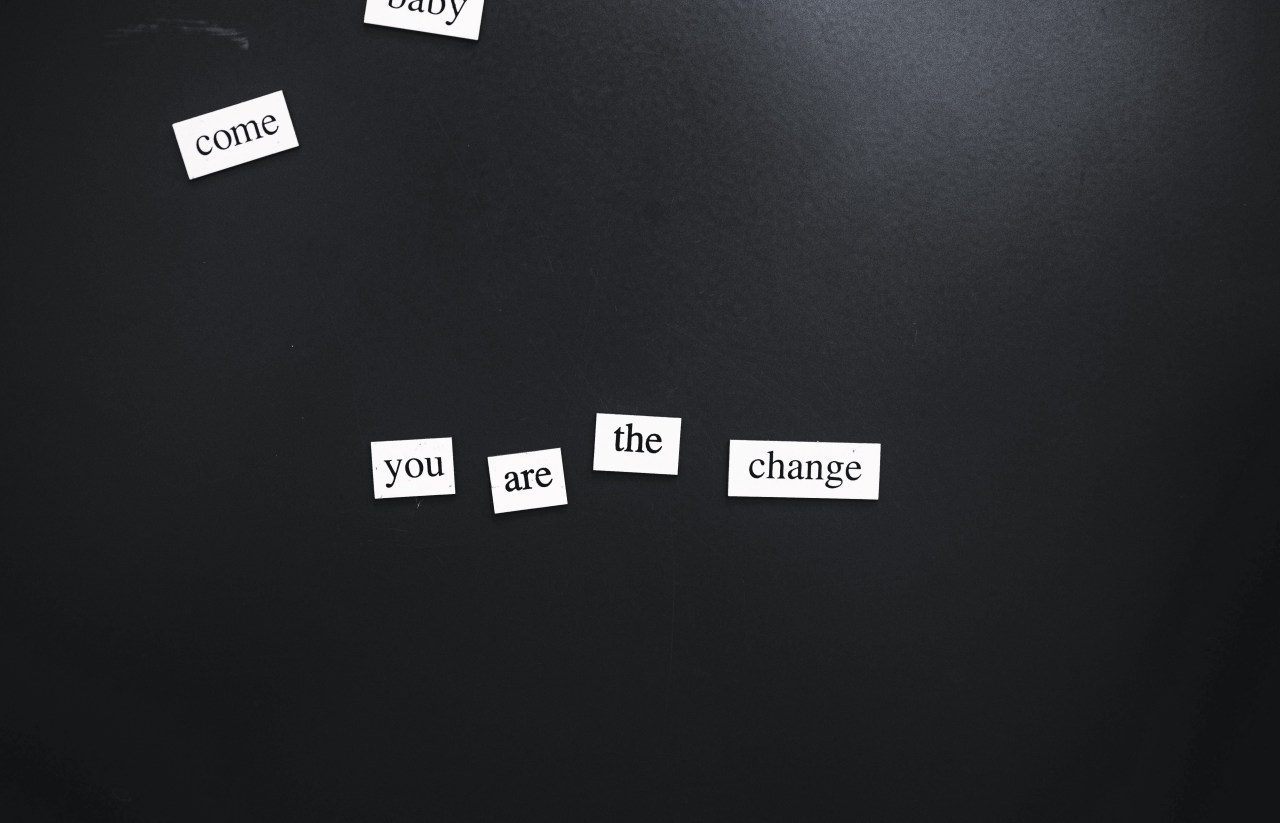
Everyone Wants to Change the World—But Are You Willing to Change Yourself?

There’s a lot of talk about change right now—and that’s a good thing.

Awareness is the first step. Conversation is the second. But here’s the truth I’ve learned:
Real change begins with you.

It starts with how you show up in your life.
How you treat yourself.
How you treat others.
What you contribute to your relationships, your community, your world.

And the most powerful change I’ve ever experienced didn’t come from trying to fix someone else—it came from the moment I stopped pointing fingers and started looking in the mirror.


It’s Not Them. It’s You.

Before I began this path of healing, my default was blame.
If something wasn’t working, it was your fault.
If I didn’t get what I wanted, it was because you messed up.

I lived in a constant state of resentment, convinced the world needed to change—never realizing I had the power to change my world by changing myself.

The truth? That mindset kept me stuck.

When we expect others to adjust for our comfort, we end up in a loop of frustration and disappointment. Change can’t be something we demand from others—it’s something we must embody.

That doesn’t mean other people don’t have room to grow. But it’s not our job to mold them.
It’s our job to decide who we are—and who we want to be in relationship with.


The Mirror Never Lies

Sometimes what bothers us most in someone else is something we haven’t fully healed in ourselves.
It’s like life holds up a mirror—and instead of facing what we see, we blame the reflection.

That’s the moment where growth begins.
That’s the invitation:
To stop reacting and start reflecting.

Even when there’s no direct mirror involved, change must come from the inside out.

If a dynamic no longer feels aligned, maybe you’ve outgrown it. That’s okay. Growth often means stepping out of what’s familiar and choosing what’s righteven if it’s uncomfortable.


Let the Ripple Begin With You

The most impactful changes I’ve made in my life didn’t happen because someone else demanded them.
They happened when I decided I wanted something better for myself.

And you know what?
When I changed, everything around me changed, too.

Relationships improved.
Boundaries became clearer.
Opportunities showed up that had never been possible before—because I wasn’t ready for them until then.

Change starts within.
And from there, it ripples out to everything—and everyone—around you.


SLAY OF THE DAY: What Needs to Change—In You?

  • Do you tend to look outside yourself when things feel off?

  • Have you waited for others to change while staying the same?

  • What’s one thing you’ve wanted to shift in your life—and what would it look like to begin that change within yourself?
  • When have you seen personal growth ripple outward into other areas of your life?

  • Who have you outgrown—and what might that say about the evolution you’re stepping into?

  • What’s one action you can take today to embody the change you want to see?


Call to Action: Join the Conversation

I’d love to hear from you.
What’s one way you’ve seen personal change impact the world around you?
Share your story in the comments. Let’s cheer each other on.

And if you know someone who’s been talking about change but unsure where to start, send this to them.
Sometimes, the most powerful shift happens the moment we turn inward.

We Are Not Meant To Be Perfect

I was scrolling through my social feed recently when a post from a friend stopped me in my tracks. She was being hard on herself—and calling herself out for it. That kind of self-awareness is powerful. But it also reminded me just how common it is for us to beat ourselves up for not being perfect.

For most of my life, I felt like I was less than. I believed everyone else had it easier, did it better, or simply was better than me. I didn’t just chase perfection—I punished myself for not catching it. And I know now, that wasn’t living. That was surviving under pressure I created for myself.

But here’s the truth I’ve learned along the way:

We are not meant to be perfect.


The Lie of “Perfection”

Perfection is a moving target. It’s shaped by the media, our upbringing, our culture—and our own inner critic. What’s “perfect” to one person might feel totally wrong to someone else. And yet, we often use it as a ruler to measure our worth.

I used to think if I could just do everything rightlook right, act right, succeed right—then I’d finally feel good about myself. But chasing perfection only left me feeling more broken. I saw my mistakes as failures instead of lessons. I saw my body as wrong because it didn’t match an airbrushed image I was never meant to emulate.

The beauty and fashion industries thrive on this illusion. As someone who has worked in that world, I can tell you firsthand: most of what you see has been digitally altered. The people in the photos don’t even look like that in real life. So why are we holding ourselves to impossible standards?


Your Imperfection Is Your Power

True growth happens in the mess. We learn through failure. We build strength through struggle. We connect through our flaws—not despite them, but because of them. And when we stop trying to be perfect, we start learning how to be authentic. That’s when the real magic begins.

What if you let go of the map you were handed and created your own version of “perfect”?
What if your quirks, your softness, your scars—what if those were the most beautiful parts of you?

They are.

When you love the things you can’t change—and commit to working on the things you can—you stop being at war with yourself. You start building a life you actually want to live.

Celebrate Who You Are

We’re all meant to be different. To stand out. To evolve.
So what if instead of chasing the illusion of perfection, you embraced the truth of who you are right now? What if you stopped waiting to feel worthy—and decided you already are?

That’s not weakness. That’s power. And it’s yours to claim.

SLAY on.


SLAY OF THE DAY: Reflect & Rise

Are you chasing an idea of perfection that’s keeping you from loving who you are today?

  • What does “perfect” mean to you—and where did that definition come from?

  • Do you speak kindly to yourself when you fall short, or do you criticize?

  • What parts of yourself do you struggle to accept? Can you reframe them with love?

  • What makes you uniquely you?

  • How can you start celebrating your journey instead of comparing it?


Call to Action: Join the Conversation

I’d love to hear from you.
What’s one way you can let go of perfection and embrace who you are right now?
Share your story in the comments. Let’s cheer each other on.

And if you know someone who’s been beating themselves up for not being perfect, send this to them.
Sometimes, the reminder we need most is that we’re enough—just as we are.

The Perceived Danger Of Loneliness

There’s a reason loneliness can feel like danger.

Centuries ago, being alone was a legitimate threat. If you were separated from your tribe, you were more vulnerable to predators and physical harm. That primal instinct still lives in us today—so when loneliness creeps in, it doesn’t always just feel sad. It can feel scary. Like we’re under attack. Like we’re in danger.

But the truth is, in most cases today, that danger is no longer external—it’s internal. And that’s why it can be so hard to recognize and even harder to break free from.


Loneliness Isn’t Just Isolation—It’s Fear

When I was living in the dark, I felt completely alone. And I did feel like I was in danger. The danger of being found out. The danger of being consumed by depression. The danger of not making it out alive. My thoughts became a battlefield, and my body was constantly in survival mode—tight, tense, panicked.

Some of that fear was justified. I was making choices that weren’t safe. But much of it was perceived—fed by my mindset and fueled by the lies I told myself about who I was and what I deserved.

And the lonelier I felt, the more danger I imagined. I convinced myself I was better off alone. That no one would understand. That I didn’t belong.
But that wasn’t true. That was just the fear talking.


The Way Out Is Connection

The moment things began to change was the moment I heard someone else’s story. Someone who had been where I was. Someone who understood the darkness. That tiny moment of connection cracked something open in me—and I found the courage to ask for help.

That help came in the form of community. Of people who weren’t perfect, but who were honest. Who shared their truths. Who didn’t try to fix me, but simply walked with me.

And that’s when the perceived danger began to dissolve. Because I wasn’t doing it alone anymore. I wasn’t in survival mode—I was in connection mode.
And connection, not isolation, is where healing begins.


You’re Not Alone (Even When It Feels Like You Are)

We are never as alone as we think we are. Even in our darkest moments. There is always someone out there who will understand—because they’ve been there too.

And when we share our truth, it connects us. It takes away the power of fear.
When we speak our loneliness out loud, we remind ourselves that we are human—and we give someone else permission to do the same.

You don’t have to suffer in silence. You don’t have to go it alone.
There is always a hand to reach for—and a voice waiting to say, “Me too.”

SLAY on.


SLAY OF THE DAY: Reflect & Rise

Do you associate loneliness with danger? And what does that danger feel like?

  • What thoughts or fears come up when you’re feeling lonely?

  • Do you tend to isolate or reach out?

  • Who can you confide in—right now, today?

  • Are you filling your loneliness with distractions or connection?

  • What’s one step you can take to reach out and remind yourself you are not alone?

Connection is the antidote to fear. And vulnerability is the path to healing.


Call to Action: Join the Conversation

I’d love to hear from you.
What has helped you move through loneliness into connection?
Share your story in the comments. Let’s cheer each other on.

And if you know someone who’s struggling in silence, send this to them.
Sometimes, the bravest thing we can do is remind someone they’re not alone.