
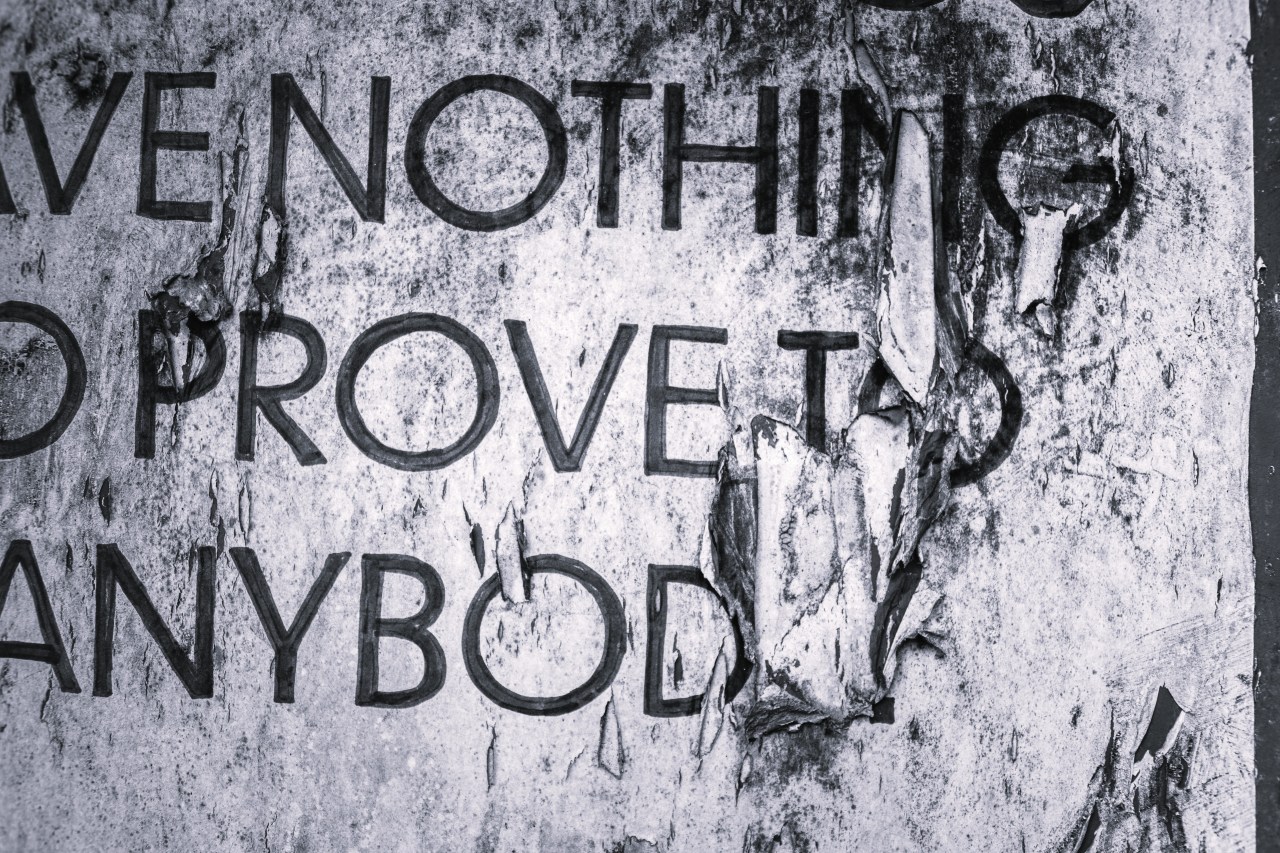
There was a time when I believed my worth had to be proven.
Through achievement. Through approval. Through being everything everyone needed me to be.
I thought if I worked harder, showed up more, gave more, did more, I would finally feel secure in who I was. That I would earn the validation I was searching for.
But no matter how much I did, it never felt like enough.
Because the problem was not my effort.
The problem was that I had forgotten something fundamental.
My value was never meant to be earned.
Prefer to listen? The Audio Blog version is available here.
Proving Yourself Is an Exhausting Cycle
When we believe our worth is something to be proven, we enter a loop that never truly ends.
We look for external confirmation that we are good enough. We measure ourselves by other people’s responses. We adjust our behavior to maintain approval.
And when that approval fades or shifts, we start over again.
It is exhausting.
Because external validation is unpredictable. It changes based on circumstances, opinions, and perspectives that are outside of our control.
If our sense of value depends on something unstable, we will always feel unstable too.
I Had to Face This in My Own Life
There were moments when I could clearly see how much I was performing for worth.
I said yes when I wanted to say no. I stretched myself thin trying to meet expectations that were not even mine. I shaped myself to fit environments where I did not truly belong.
And beneath all of that effort was a quiet belief.
If I just do enough, I will finally feel like I matter.
But that feeling never came from doing more.
It came from remembering who I was without needing to prove it.
Your Value Is Not Conditional
Your worth does not increase because someone recognizes it.
And it does not decrease because someone overlooks it.
Value is inherent.
It exists regardless of performance, productivity, or perception.
That can be difficult to accept in a world that often rewards output and comparison. But the truth remains.
You are not more valuable on your best day than you are on your hardest one.
When we understand that, the need to constantly prove ourselves begins to soften.
Overproving Often Hides Fear
Trying to prove your worth is often rooted in fear.
Fear of rejection. Fear of not being enough. Fear of being misunderstood or overlooked.
Those fears can drive us to overextend, overexplain, and overdeliver.
But when we operate from fear, our actions are not aligned with our true selves.
They are attempts to control how we are perceived.
And control over perception is never guaranteed.
What is guaranteed is how we treat ourselves.
Self-Worth Changes How You Show Up
When you begin to reconnect with your value, your behavior shifts.
You stop chasing approval and start choosing alignment. You stop overgiving and start giving intentionally. You stop shrinking and start standing in your truth.
This does not mean you stop caring about others.
It means you stop abandoning yourself to be accepted.
And that shift creates stronger, healthier relationships.
Because people connect more deeply with authenticity than performance.
Boundaries Reinforce Value
One of the clearest expressions of self-worth is boundaries.
When you know your value, you protect your time, your energy, and your emotional space.
You recognize when something is not aligned. You allow yourself to step back when needed. You understand that saying no is not rejection, it is clarity.
Boundaries are not about pushing people away.
They are about staying connected to yourself.
And when you stay connected to yourself, your value becomes steady rather than situational.
You Do Not Have to Perform to Belong
This is a powerful shift.
You do not need to earn your place by constantly proving your worth. You do not need to exhaust yourself to be accepted. You do not need to become someone else to be valued.
The right environments, the right people, and the right opportunities will not require you to perform for belonging.
They will recognize your value as it is.
And until you believe that, you may continue seeking validation in places that cannot give it to you.
Remember Who You Are
At some point, we all forget.
We forget our strength. Our resilience. Our inherent worth.
Life, experiences, and challenges can cloud that truth.
But it is still there.
Remembering your value is not about becoming someone new.
It is about reconnecting with who you have always been beneath the noise of expectation and comparison.
And once you remember, everything begins to shift.
You stop trying to prove your worth.
Because you finally know you already have it.
SLAY Reflection
S — See the Pattern
Where in your life do you feel the need to prove your worth?
L — Look Beneath It
What fear might be driving that need for validation?
A — Affirm Your Value
What is one truth about your worth that exists regardless of external approval?
Y — Your Next Step
What would change if you showed up today believing you were already enough?
Call to Action: Join the Conversation
I’d love to hear from you.
Have you ever realized you were trying to prove your worth, and what helped you shift out of that pattern?
Share your story in the comments. Let’s cheer each other on.
And if you know someone who needs this reminder, send this to them.
Sometimes, all we need is a nudge.