Good morning SLAYER! The universe is inside of us all, it’s up to us to find it’s rhythm and dance.
New blog goes up Friday, until then…SLAY on!


Good morning SLAYER! The universe is inside of us all, it’s up to us to find it’s rhythm and dance.
New blog goes up Friday, until then…SLAY on!

Good morning SLAYER! You should not rip yourself into pieces to keep someone else whole.
New blog goes up Tuesday, until then…SLAY on!
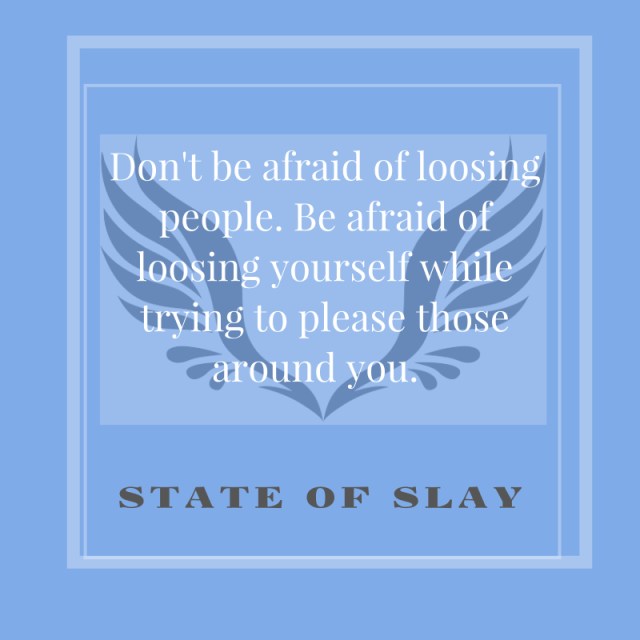

Good morning SLAYER! What we give out is what comes back to us, you’re greatness is not what you have, it’s what you give.
New blog goes up Sunday, until then…SLAY on!


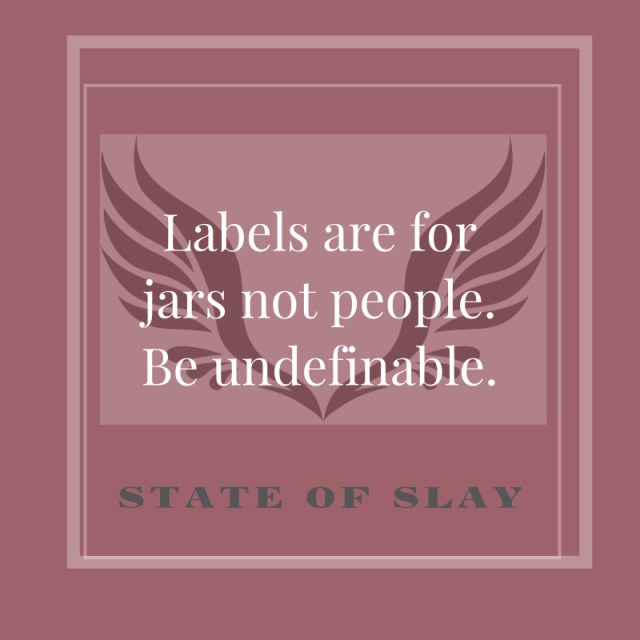
Good morning SLAYER! We are too complicated to be labeled, as are those around us. Why limit yourself to be just one thing, aspire to be all of the things you want to be, and aspire to be undefinable.
New blog goes up Friday, until then…SLAY on!
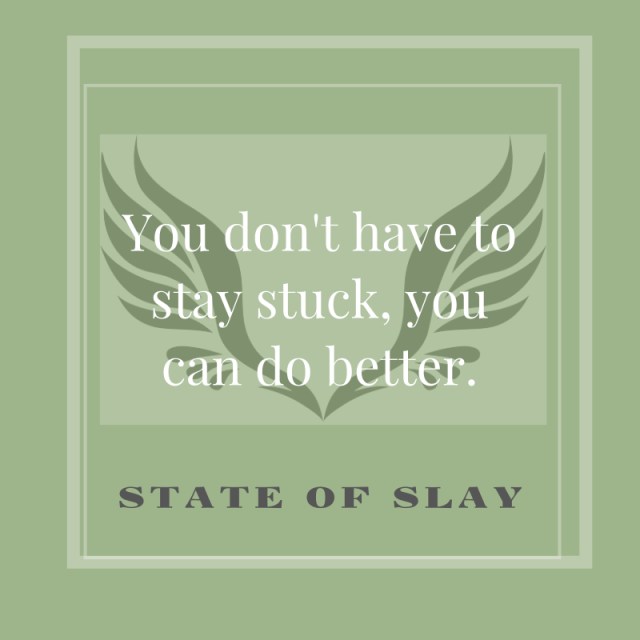
Good morning SLAYER! You decide the direction you want to go, don’t like where you are, make a change, turn things around, you have the power to do that. When we tell the universe we’re ready, opportunities appear we didn’t see before.
New blog goes up Tuesday, SLAY on!

Good morning SLAYERS! Conflict will happen, it’s how we choose to respond to it that matters. Practicing healthy conflict allows us to get into a solution, and offers us an opportunity to learn about those around us, and ourselves.
New blog goes up Sunday, until then…SLAY on!


You read that right. Healthy conflict. Typically we think of conflict as a negative thing, one stemming from anger, or a differing of opinion, but it’s all in how you look at it, conflict can be something positive, if you choose to look at that way.
Conflict is an opportunity to question our perspective, thoughts, or beliefs. It can open our eyes to an alternate view, or a new angle we haven’t been exposed to before, if, we walk through life with an open mind. I’ve talked about this before, I used to walk through life letting my ego run the show, I always thought I was right, even when I didn’t have the answers, I thought I knew better than you did, and I would argue my point until exhaustion, the thought of having healthy conflict never entered my mind, it was me against you, period. But now I see things differently, and no, that doesn’t mean I cave to what the other person’s point of view is, but I allow them to talk, and I allow myself to listen. Some of us too, avoid conflict at all costs, running from it, either bowing to the other person’s opinion to concede or just avoiding them all together, but here are some benefits to healthy conflict, see if you can change your mind and pick up some pointers on how to enter into conflict in a way that is more beneficial to you, and the people in your life.
1) Widens Our Perspective. Conflict can be extremely beneficial, it can widen our perspective and also challenge our own ideas and thoughts we may have carried with us from childhood, believing that there is only the one tried and true way, conflict may show us that there might be a better way, or that there might be another way at all. It also is a way that can produce solutions, if both parties are open to it, it may show different points of view and from there a resolution can be worked on, or an agreement to disagree, but the act of being open, of listening, and of at least trying to work out a solution strengthens relationships or forms new ones, as each of you learn more about the other.
2) Opportunity To Express Needs. Healthy conflict gives us the opportunity to vocalize our needs, and as I’ve talked about before, opens the door for us to ask for what we want. If our needs aren’t being met, here’s our chance to let them be known, allowing for the opportunity to then have a discussion about them. Speaking up for what we want, or believe in, allows for us to conquer our fear of getting our needs met, and sharpens our communication skills.
3) We Learn To Bend. I’ve also talked about this one before, if we don’t bend, we break. Conflict teaches us how to be flexible in relationships and in the workplace. We can’t always get our way, and, we shouldn’t, conflict helps us practice our flexibility and instills a sense of fairness into the relationships we have.
4) Helps Us To Listen. Engaging in healthy conflict teaches us how to listen. To engage in healthy conflict we need to listen to the other party, it’s not all about us, so we have the opportunity to listen to the wants and needs of others, in an active way, taking in what the other person is saying without interrupting and waiting for them to finish before we start our new thought. Again, an incredible skill to deepen any relationship.
5) Recognizing Patterns. If we engage in healthy conflict, and we are truly listening, we are better able to pick out patterns, not only in our own behavior, but in the behavior of those we engage with, which allows us to better understand ourselves and those around us. It also gives us signs of what to expect when we continue to interact with these people, and how we may react to them.
6) Brings Us Into Solution. Working these principles into healthy conflict allows us to find solutions in our daily life, and brings our thinking into solution based thinking, instead of adding to or creating problems. Change can be difficult, but if we’re willing and open to it, it can bring great resolution, and maybe even reinvention and evolution.
7) Fine Tunes Communication. Conflict allows us to fine tune our communication skills. Giving us an opportunity to state of intentions and expectations clearly and concisely without getting angry, speaking from ego, or bulldozing over the other person. Communication is truly the key to a healthy and happy life, and healthy conflict is a great way to practice it.
8) Boundary Setting. Another topic I’ve talked about before. When we engage with others we may need to set boundaries, this type of healthy conflict allows us the chance to set boundaries if we feel we need to for us to continue on in a healthy way for ourselves. Setting boundaries also lets the other people in our life in on who we are and what we’re looking for, as it does for them, we learn more about each other, and have more respect for each other when we are able to set healthy boundaries.
9) Emotional Control. Healthy conflict also is a way to practice controlling our emotions, of not letting our emotions control us. It is a great way to practice self-control and letting emotions from our past experiences or bottled up anger get thrown into a conversations it doesn’t belong, it’s about taking a breath, listening, staying in the moment, and being open to new ideas, and not letting ourselves get carried away and out of control. If we can stay in control it leads to a faster resolution, and if the other person is getting a better understanding of who we are and what our intentions are. Also, if we are able to remain calm it sends the message that we are open to resolve the issue, making people more willing to work with us and feeling like we are working together as more of a team, instead of one against the other.
10) Allows Us To Shine As Individuals. Engaging in healthy conflict sets us apart, it shows people who we really are, what we stand for, what we’re looking for, and how we’re willing to resolve an issue. It allows us to shine, and to be an example to those who may still be struggling to resolve issues in a healthy way. It allows us adjust, and allows others to adjust, as a solution is found, and it leads to far less frustration, anger, and separation with the people in our lives.
In the end it’s up to us to practice these principles, and to be open to new ideas and change, and I promise you if you do, you’ll walk away a stronger and more knowledgeable person and one with far less frustration in your lives. SLAY on.
SLAY OF THE DAY: Are you open to healthy conflict in your life? Is the conflict that you’ve experienced so far been healthy? Why hasn’t it been? What part have you taken in the unhealthy conflict? What can you do to engage in healthier conflict? Looking back at some instances that weren’t healthy, write down what they were and, using the principles above, write out some scenarios that could have made those instances healthier for you, and as a result, how the resolution could have been healthier. It’s about practicing these principles in your life SLAYER, and it takes time, but each time you practice them you’ll get better, and when you do, you see and feel the difference between unhealthy conflict and the kind that opens the door to a possible new perspective, and a solution.
S – self L – love A – appreciate Y – you

Good morning SLAYER! We see life through our own perspective, and sometimes the delusional goggles we have on can cause more harm than good. Challenge yourself to see the truth in your life, only then can you work towards having the life you dream of.
New blog goes up Tuesday, until then…SLAY on!


We all want someone in our lives to just understand us—to show up when we need them, to read our silent pleas, to fill the gaps we feel inside. But here’s a hard truth: nobody is designed to be your everything.
When we expect someone to always be there, always know, always respond—without communication, without boundaries—we set both them and ourselves up for heartbreak.
We must learn the beauty and the burden of loving with grace and owning our own needs.
Prefer to listen? The Audio Blog version is available here.
It’s natural to hope others will meet us where we are. We desire connection, validation, support. But expectations—especially unspoken ones—are traps.
When we expect another to always stay ready, even when they’re fighting their own war, we feel let down. When we expect consistent availability, we forget that everyone has their own life, struggles, and limitations.
And when reality falls short of those silent demands, we start to believe they don’t love us enough—when in truth, they might just be human like us.
The seeds of resentment often come from expecting others to be what we need without telling them. We assume they know. We assume they’ll show up.
But healthy relationships ask for clarity not mind-reading.
This is how we protect ourselves from disappointment—not by becoming colder—but by learning truth, honest communication, and respect for boundaries.
Here’s what I discovered over time:
I used to take it personally when people couldn’t show up as I needed them to. I thought it meant something was wrong with me—or wrong with them. But I learned to see it differently: I learned to love them where they are, to protect my peace, and to find others with compatible strengths.
Expecting someone else to complete your emotional puzzle is heavy for both parties.
Your emotional survival is your job. You cannot force someone to be who they’re not. And when you try, you weaken your own foundation.
You deserve people who can be consistent. But until then, you can be your own constant. You can love others without relying on them. You can communicate your needs, accept imperfect love, and continue building your own inner strength.
How do you navigate this balance without becoming closed off or bitter?
You don’t have to settle for being used, ignored, or repeatedly disappointed. You can adjust your expectations without shutting down your heart. You can ask for what you need, and learn to accept what people can give.
You don’t have to stop loving. You just have to love smarter.
S – Stop expecting people to read your heart
L – Let them care within their capacity
A – Ask for what you need—don’t demand it
Y – Yield your peace first before expecting someone else to
I’d love to hear from you.
Have you ever been hurt by expecting too much from someone—and what did that teach you?
Share your story in the comments. Let’s value honesty over perfection.
And if you know someone who struggles with unmet expectations or carrying disappointment, send this to them.
Sometimes, love begins with understanding limitation.

We’ve all done it—told those “little white lies” to make things easier. Maybe to get out of a bind, avoid a confrontation, or dodge a situation we never felt comfortable with in the first place. We tell ourselves it’s harmless because we don’t want to hurt anyone’s feelings. But if we’re honest? Most of the time, we’re just trying to avoid the discomfort of setting a boundary and speaking our truth.
Boundaries aren’t about being difficult.
They’re about being clear—about our needs, our limits, and how we expect to be treated. They build self-respect and create space for healthier relationships. The truth is, once we get comfortable setting them, life tends to feel less chaotic and more aligned. Boundaries reduce stress because they make our expectations known—no guessing, no games.
But learning how to set boundaries—especially when we’ve spent most of our lives people-pleasing—takes intention, patience, and practice. Here’s how you start:
Prefer to listen? The Audio Blog version is available here.
You can’t set a boundary if you’re unsure of how you feel. Check in with yourself. What makes you uncomfortable? What feels unsafe or triggering? Clarity is power.
Resentment, anxiety, dread—these are often signs that a boundary needs to be set. What emotion is coming up, and why? Naming the feeling helps you respond with intention instead of reaction.
Once you know your truth, communicate it plainly. No over-explaining. No apologies. A boundary isn’t a debate—it’s a statement of self-respect.
Setting boundaries doesn’t make you selfish—it makes you self-aware. You are not “too much.” You are worthy of peace and respect.
Your needs evolve, and so will your boundaries. Stay aware. Reflect regularly on how situations or people make you feel, and adjust accordingly.
Do you default to caretaking? Do you shut down? Are you conflict avoidant? Recognizing these patterns gives you the power to shift them.
Boundaries are a form of self-care. You can’t pour from an empty cup. Taking care of you is not a luxury—it’s a necessity.
Surround yourself with those who support your growth. Healthy people respect healthy boundaries. And don’t be afraid to reach out for help—it benefits both the giver and receiver.
Thinking about setting a boundary is not the same as setting it. You have to follow through. Speak up. Be consistent. And don’t shrink when you feel resistance.
You don’t have to tackle the toughest boundary first. Practice with low-stakes situations. Build your voice. Build your confidence. Then level up.
Here’s the truth:
Keeping secrets or telling lies to avoid discomfort isn’t kindness—it’s avoidance. And the more you avoid, the more disconnected you become from your truth.
Boundaries are not about controlling others—they’re about honoring yourself.
The more you practice, the more you’ll feel grounded, clear, and connected. That’s the foundation of a life that SLAYS.
Do you struggle to set boundaries? Why?
Have you ever used a “white lie” instead of speaking your truth? What did it cost you?
Do you believe you’re worthy of setting the terms for how you’re treated?
What patterns from your past still influence how you show up today?
What would it look like to protect your peace, unapologetically?
S – Stop hiding behind excuses or silence.
L – Listen to your gut—it’s telling you what you need.
A – Assert your truth with compassion and clarity.
Y – Yield only to what honors your worth.
Call to Action: Join the Conversation
I’d love to hear from you.
Do you struggle with setting boundaries—and if so, why?
Share your story in the comments. Let’s cheer each other on.
And if you know someone who’s learning to speak up for themselves, send this to them.
Sometimes, all we need is a nudge.
