
Your Mind Replays What Your Heart Cannot Delete

We’ve all been there—tossing and turning, unable to fall asleep, replaying a conversation or event from the past. Wishing we had responded differently. Wondering why it still hurts. Telling ourselves to let it go—but we can’t.

Our mind replays what our heart hasn’t yet released.

It’s like our brain is trying to rewrite the story to heal us, but instead, the loop only deepens the ache. Until we learn to extract the lesson, offer ourselves grace, and let go of what we can’t change, we keep ourselves stuck in the pain of yesterday.


Before the Release: The Cycle of Replay

Before walking this path, I never let anything go.

I was a walking vessel of resentment. Conversations looped in my head for days, weeks—sometimes years. I’d even replay them out loud, alone in my room, beating myself up for not saying the “right” thing or for freezing in the moment.

The weight of those replays followed me into new relationships and opportunities like a ball and chain. Every fresh connection felt like a repeat of the old one. I filtered every interaction through the pain and fear I hadn’t dealt with. Eventually, I started to isolate—bitterly and often.

And yes, my heart hurt. A lot. But what I didn’t realize was that I was choosing to stay in that hurt every time I pressed play again.


Rewriting the Loop

It wasn’t until I began prioritizing my peace—my healing—that I realized how much control I had.

Letting go didn’t mean letting someone else off the hook. It meant letting me off the hook. No longer dragging around conversations that had already ended or wounds that no longer served me.

I began to ask: What can I take from this? What’s mine to own? And what do I need to release?

Sometimes, yes, the harm done wasn’t my fault. But the replay? That was on me.

By valuing my peace over my pain, I slowly turned the volume down on the noise—and finally found some quiet.


You Can Mute the Past

We may not be able to delete every painful moment from our hearts—but we can learn to mute the noise. To press stop on the loop. To extract the wisdom and throw out the rest.

Because the longer we replay what hurt us, the longer we stay hurt.

Let it teach you. Then let it go.

SLAY on.


SLAY Reflection: Are You Replaying or Releasing?

  • Do you find yourself mentally revisiting the same events or conversations? Why?
  • How does that impact your mood, energy, and relationships?
  • What would change if you gave yourself permission to let it go?
  • What can you learn from that moment instead of reliving it?
  • How might your life shift if you muted the loop—and chose peace instead?

Call to Action: Join the Conversation

I’d love to hear from you.
What’s one loop you’re ready to stop replaying—and what’s one way you’ll start letting it go?
Share your story in the comments. Let’s cheer each other on.

And if you know someone who’s stuck in replay mode, send this to them.
Sometimes, all we need is a new way to rewrite the story.

Perseverance

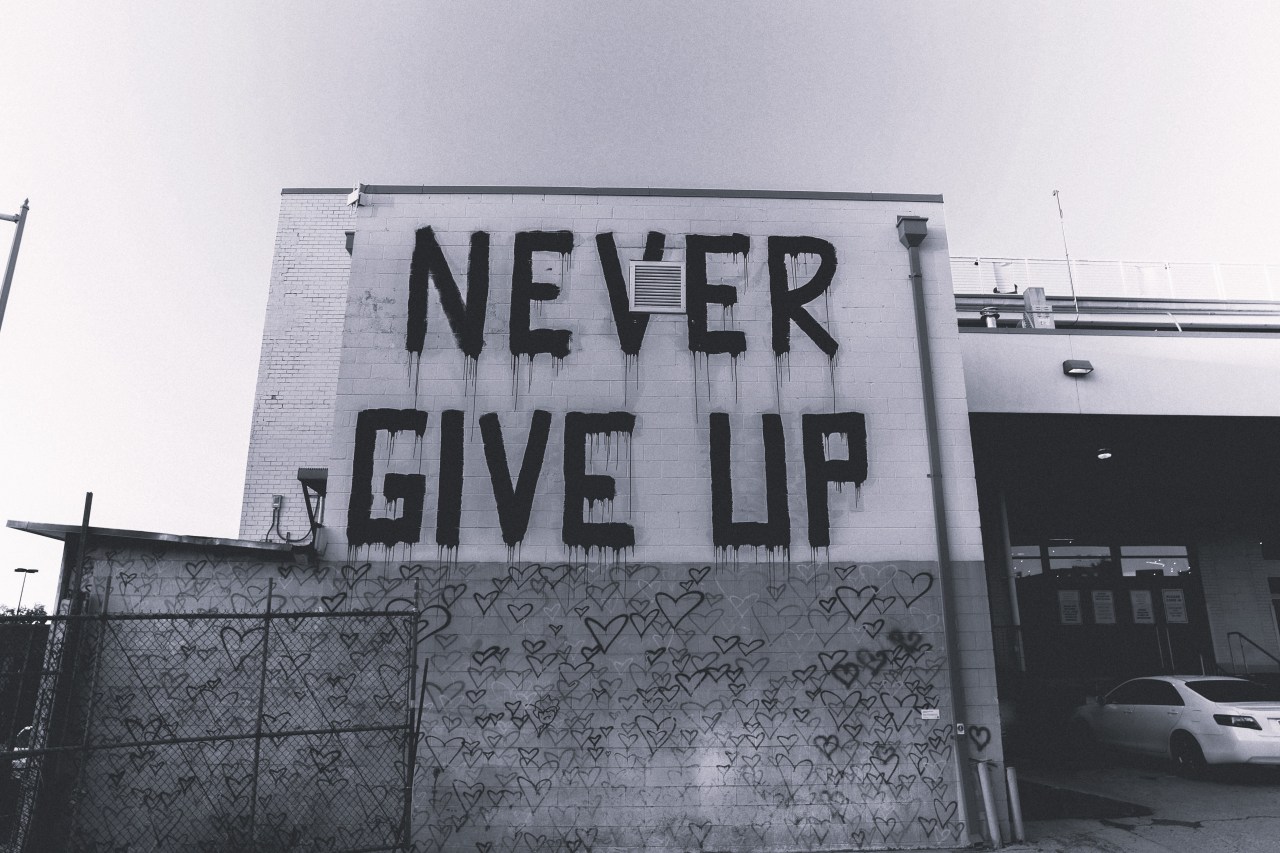
I used to think perseverance was only for certain things—like career goals or material achievements. But when it came to my mental health, I was quick to throw in the towel. The moment a setback occurred, my inner critic would scream, “Why bother? You’ll fail anyway.” And too often, I listened.

But I learned something: true perseverance—the kind that transforms you—isn’t about pushing through only when it’s easy or convenient. It’s about showing up for yourself, even when the path is rocky, the finish line invisible, and the negative voices loud.

There were times I clung to perseverance for external wins but abandoned it for the internal work—the work that mattered most. I believed the lie that I didn’t deserve good things. But when I finally committed to my recovery, I discovered that same perseverance, channeled into my healing, could produce powerful results.


The Power of Persistence

When you ask most successful people their secret, they’ll likely tell you: perseverance. They didn’t give up. It seems like common sense, but how often do we stop just shy of the finish line? Or give up before the miracle happens?

There’s no published timeline for how long we have to keep going without seeing results. That’s where many falter. But if you can’t stop thinking about it—if giving up feels like losing a part of yourself—then keep going. That’s your sign.

Sometimes, perseverance isn’t about bull-headedness. It’s about flexibility, too. If a particular path isn’t working, the lesson might be to pivot. But often, it’s about staying the course—especially when it comes to your own well-being.


Lessons Learned

Before recovery, I used perseverance to chase things that didn’t nourish me. Now, I channel it into what matters: my mental, emotional, and spiritual health. It’s not easy. There are still days when the voices of doubt and fear creep in. But I’ve learned to keep going, to fight for the life I want, and to trust that even the smallest steps count.

The finish line may be hidden, but it’s there. The only way to see it is to keep moving forward. Don’t let the setbacks define you. Let your perseverance become your strength.


SLAY OF THE DAY: Reflect & Rise

  • Would you say you have perseverance?

  • Write out some examples of when you’ve shown perseverance. What was the result?

  • Do you consistently have perseverance, or only in certain areas?

  • What stops you from persevering?

  • When have you failed to persevere? Why?

  • What can you do to cultivate perseverance in those areas?

  • What challenges do you face in maintaining perseverance?

  • How can you channel it into things that nurture your growth and healing?


Call to Action: Join the Conversation

I’d love to hear from you.
What’s one thing in your life you’re determined to keep going for, no matter what?
Share your story in the comments. Let’s lift each other up.

And if you know someone who’s struggling to stay the course, send this to them.
Sometimes, all we need is a reminder that perseverance is worth it.

H.O.W. – Honesty, Open-Mindedness, Willingness

Before walking this path, I constantly asked myself how.

How did I let things get this bad? How had I lost control of my life? How could I stop the pain?

What I didn’t realize was that the answer was in the question itself: H.O.W.—Honesty, Open-mindedness, and Willingness.

It was right in front of me the whole time. I just wasn’t ready to see it.


The Missing Ingredient

Back then, I wasn’t practicing any of those things. I was stubborn. I wasn’t being honest about my part in my suffering. And I wasn’t willing to change.

I had to fall a lot further before I finally landed on my knees and asked for help. That pain—the kind I had a hand in creating—was the very thing that pushed me to take action. Once I committed to getting better, I was told I had to live by H.O.W.

To get rigorously honest. To stay open to new ways of doing things. To be willing to do the work.

It didn’t all come at once. Sometimes willingness was all I had—and that was enough to begin. Because willingness almost always leads to action, and action leads to change.


A Lifelong Practice

Today, I still check in with myself using H.O.W. I ask:

  • Am I being honest about where I am?
  • Am I open to the next right step?
  • Am I willing to take action even when it’s uncomfortable?

Because here’s the truth: we don’t graduate from this work. We stay in it. We grow from it. And we live better because of it.


You Already Have the Answer

No matter where you are on your journey, ask yourself: Are you living with H.O.W.?

Are you stuck somewhere because it feels comfortable—or because you think it’s where you deserve to be?

When you get honest about your answers, stay open to new perspectives, and become willing to act, you can change your entire life.

H.O.W. isn’t just a tool. It’s the roadmap.

You hold the key. SLAY on.


SLAY Reflection: What’s Your H.O.W. Check-In?

  • Do you keep asking how you got to where you are—and how to break the cycle?
  • Are you being truly honest about your patterns and choices?
  • How open are you to doing things differently—even if it’s unfamiliar?
  • What small action can you take today with willingness at the center?
  • What would your life look like if you really leaned into H.O.W.?

Call to Action: Join the Conversation

I’d love to hear from you.
What’s one way you can practice honesty, open-mindedness, or willingness this week?
Share your story in the comments. Let’s cheer each other on.

And if you know someone who’s ready for change but doesn’t know where to start, send this to them.
Sometimes, all we need is a roadmap—and a nudge.

Be The Attitude You Want To Be Around

We’ve all felt it—that lift you get from someone’s positive energy. The kind of vibe that makes a room feel warmer, lighter, better. We seek it out, gravitate toward it, and sometimes, we depend on it. But here’s a truth that changed everything for me:

Instead of waiting to be around the energy you want, be it.

Don’t get me wrong—we need good people in our lives. Community, support, and encouragement are vital. But real change happens when you stop outsourcing your attitude—and start showing up as the person you wish you could find.


I Wasn’t Always That Person

When I was deep in my darkness, I avoided positive people. They annoyed me. I didn’t trust their joy. I assumed it was fake. And, if I’m being honest, I didn’t want them to see the way I was living.

But beneath all that judgment was jealousy.

I admired them. I just didn’t believe I could ever be like them.

Recovery taught me otherwise.

It showed me that joy can be genuine. That light isn’t fake—it’s earned. And I could earn it, too.

So I made a promise to myself: I would become the person I wanted to be around.

Not overnight. But one day at a time.


Give What You Wish to Get

In the beginning, I didn’t feel like I had much to offer. I was still shaky, still figuring it out. But someone reminded me:

Even if you’re just a few steps in, you’ve got something to share.

Because someone else is just starting out. And to them, you might look like a mile ahead.

So I showed up. I told the truth. I dropped the act and chose transparency. And little by little, I built trust in myself by being accountable, being honest, and shifting from asking, “What can I get?” to “What can I give?”

And I found that even on my worst days, if I could help someone else, it helped me too.

Sometimes, two bad days colliding can spark one good one.


Attitude Is Energy

Gratitude was a big part of this shift. When I started focusing on what I had instead of what I lacked, everything changed.

Even the hard things didn’t feel impossible anymore—because I wasn’t tackling them alone. I learned to ask for help. That was huge for me.

Asking for help didn’t make me weak. It made me real.

And in asking, I often gave someone else the gift of showing up. We got closer. We built something.

Because we all need help sometimes.


Become the Energy You Admire

Think about the attitudes you’re drawn to. What do you admire in others? What kind of energy lifts you up?

Now ask yourself:

What if that’s already inside of me?

What if the very thing you’re craving is something you’re meant to cultivate and share?

Start there. Be that. You might just find your truest self waiting on the other side.


SLAY Reflection

Ask yourself:

  • What attitude or energy am I most drawn to?
  • Do I embody that energy—or just chase it in others?
  • What’s stopping me from becoming that kind of person?
  • How can I use gratitude and service to shift my own energy?
  • What’s one small step I can take today to be the vibe I want to be around?

S – L – A – Y

S: See the energy you admire in others.
L: Listen to how your own attitude shows up.
A: Act in alignment with the energy you want to attract.
Y: Yield to your inner strength—it’s always been there.


Call to Action: Join the Conversation
I’d love to hear from you.
What’s the attitude you want to be around—and how are you choosing to embody it in your own life?
Share your story in the comments. Let’s cheer each other on.

And if you know someone who’s working on becoming their best self, send this to them.
Sometimes, all we need is a nudge.

Results vs. Rewards

Before I started this journey, I was very rewards-oriented. If I did something nice for someone, I expected something in return—or at the very least, an acknowledgment of my good deed. And if I didn’t get that, I’d hold onto one heck of a resentment. I wouldn’t say anything about it until I could throw a zinger at them later—a quick-witted one-liner meant to sting.

I was good at those, too. I even prided myself on them.

I thought if I did the right thing, the universe owed me something good in return. But it rarely worked that way. Because when you go into a situation with an expectation, you’re not going in with a pure heart—or the right frame of mind.


Doing It for the Right Reasons

I’ve talked about this before: we should never enter into anything unless we want to do it—and don’t expect anything in return.

Oh, that’s right. That’s the only reason to do anything. Because you want to. Period.

It’s the only way to keep your intentions pure. It’s the only way not to be let down when your expectations aren’t met.

When I’m having a challenging day—or I’m just plain grumpy—it happens. I’ll do something nice for someone without them knowing. It could be paying for someone’s coffee or putting money in a meter that’s about to expire. It might be something bigger. But the point is, I do it without expecting a reward.

But here’s the twist: we do get something in return. A result. And a result is far more important than a reward.


Esteemable Acts Build Self-Esteem

Sure, it’s nice to get a reward. I think we can all agree. But if that’s your sole purpose for doing something, you’re going to be disappointed—often.

It’s the result of doing something that truly matters. When we do esteemable acts, we build self-esteem. We begin to like who we are, respect who we are, and learn to trust who we are.

I had to learn this when I made the choice to get better. I had to make a conscious decision to practice it each day.

It felt strange at first—to do something nice without the other person knowing. I was told that if they found out, it didn’t count and I’d have to find something else. So, I turned it into a little game. Like a positive secret.

I used the same cleverness I once used to manipulate people to figure out how to do something kind without them finding out it was me. It actually became fun. And the more I looked for those moments, the more I found them.

The result? My mind stayed positive because I was looking for positive things to do. And that kept me living in the light. No reward could do that for me. A reward might shine a light on me temporarily, but it wouldn’t keep the light on in my life day after day.


Choosing the Path of Growth

We live in a world that’s very reward-oriented. It’s easy to fall into the expectation of getting something for doing something.

But we SLAYERS are better than that.

We’re about growth, learning, and striving to do better. What we want are results.

Results that help us build a strong foundation. Results that keep us on the right path, doing the right things, and remembering why we’re doing them.

Esteemable acts build self-esteem. They help us shed the feeling of being “less-than” or deficient. They quiet those negative voices because we’re not just doing what’s best for us—we’re also considering those around us.

SLAY on.


SLAY OF THE DAY: Reflect & Rise

Do you do things and expect a reward? What happens if you don’t get one, or aren’t acknowledged for your good deed?

Do you feel negatively toward that person? What if you didn’t expect a reward? What if you just did good things to do them—without expecting anything in return?

I challenge you, SLAYER, to do three good things for three different people this week without them knowing. If they find out, it doesn’t count, and you’ll need to find something else.

Write down how you feel after doing them. Then write down how you feel compared to before you did them.

Keep going, SLAYER. When we look for the good, we find the good.


Call to Action: Join the Conversation

I’d love to hear from you.
What’s one small act of kindness you’re committing to this week—just because?
Share your thoughts and stories in the comments. Let’s inspire each other to keep growing.

And if you know someone who could use this message, share it with them.
Sometimes, the best rewards come from giving freely.

Living With Unsolved Problems

We all have them—those lingering problems we just can’t figure out. Maybe it’s a situation where someone won’t discuss or engage with us to find a solution. Maybe it’s something completely out of our control. Whatever it is, these unresolved issues can eat away at us.

For years, I let those problems take control of me. I thought I had to solve everything, to my own satisfaction. I couldn’t let things go. It literally drove me crazy, trying to force solutions where sometimes, there weren’t any. I didn’t know how to accept what was or give myself permission to move on. Back then, moving on and acceptance were not even part of my vocabulary.

But I’ve learned something.


Acceptance Is the Key

Acceptance truly is the key to so many of our problems. Things often don’t look or feel the way we think they should—or the way we want them to—and sometimes, there’s just no way to change that.

For those of you who just recoiled at that idea, this blog is especially for you.

Nothing—absolutely nothing—is worth surrendering your peace of mind for, especially if it’s just to prove a point or make sure you’re right. That imaginary scorecard we sometimes carry around? It’s a heavy burden that robs us of our serenity.

For me, it became a matter of life and death. The things I fought so hard to control couldn’t be solved by me alone. When I finally let go and accepted that, my world expanded. I was able to look outside myself for new possibilities—and I found them.


Some Problems Just Can’t Be Solved—At Least Not Now

Sometimes, there’s no solution to be found. Maybe the situation has reached a standstill, or someone has passed, or circumstances just don’t allow for resolution in this moment.

But here’s the thing: letting something go now doesn’t mean a solution won’t present itself later.

I always say, “Never say never.” I’ve seen miracles in my own life where solutions appeared to problems I thought were impossible to solve.

Find peace with what you can’t solve today. Stay open to the possibility of resolution down the road—but don’t wait for it. Trust that if a solution is meant to appear, it will, when the time is right. Time has its own schedule, and we can’t rush it. Let it do its thing while you continue to live yours.

Protect Your Peace

There will always be things in life we can’t control or solve. If we want to live a happy life, it’s up to us to find peace and acceptance around those things. Do what you can to figure things out—but know when to walk away. Your peace of mind is worth far more than a forced solution.

Sometimes, no solution is the solution. At least for now.

SLAY on.


SLAY OF THE DAY: Reflect & Rise

Do you have a hard time letting things go?
Do you feel like you need to solve everything?
How do those unsolved problems affect your peace of mind?
What would happen if you accepted that some things can’t be solved—right now?
How could that acceptance set you free?


Call to Action: Join the Conversation

I’d love to hear from you.
What’s one problem you’re ready to stop forcing—and let time or acceptance handle?
Share your story in the comments. Let’s cheer each other on.

And if you know someone struggling with unresolved problems, send this to them.
Sometimes, just hearing “It’s okay to let go” makes all the difference.

Willingness: The Key To Change

Before there’s change, before there’s healing, before there’s transformation—there’s willingness.

Not certainty. Not a roadmap. Not a plan. Just the smallest shift that says: maybe there’s another way. That shift is the spark that lights the path forward.


The Power of Being Open

Willingness isn’t a commitment—it’s a crack in the door. A whisper of possibility. A softening where there once was resistance.

Change is hard. Growth can be uncomfortable. And yet, when we allow ourselves to be open—to just consider a new perspective—we invite in something powerful. We make space for clarity, connection, healing.

When I first stepped onto the path of recovery, I wasn’t ready to overhaul my life. I didn’t have all the answers. But I was willing. And that willingness brought people into my life I never expected. It helped me find tools I didn’t know I needed. And slowly, my world expanded. It got bigger, brighter, and full of light.

It wasn’t easy. In fact, it almost didn’t happen. I had reached a point so low, I could barely imagine a way forward. But in that moment, the tiniest willingness cracked through the darkness—and everything changed from there.


What Willingness Actually Looks Like

We often think willingness means taking big leaps. But really, it’s more like:

  • Saying, “Maybe I don’t have all the answers.”
  • Being open to new tools, even if they feel unfamiliar.
  • Letting someone help you—really help you.
  • Admitting something isn’t working the way you hoped.

Willingness makes life bigger. It breaks us out of the echo chambers in our heads and says, “What if there’s more?”


The Shift That Changes Everything

Willingness is not about setting an entire plan in motion. It’s about being open to the idea that something might be possible.

That maybe you don’t have to keep living under the weight of what’s not working. That maybe your life could feel lighter. That maybe there’s help—and healing—available to you.

When you’re willing, you become a magnet for the right people, places, and opportunities. You notice support instead of deflecting it. You welcome answers instead of defending limitations. You shift from surviving to slowly, gently, learning to thrive.


I Still Choose Willingness Every Day

Even now, years into this journey, willingness remains one of my most powerful tools. Every time I fall, every time I face something unfamiliar, I remind myself: I just have to be willing. Not perfect. Not fearless. Just willing.

Because willingness invites the Universe to show up. It creates space for grace. And that space? It’s often where the biggest breakthroughs begin.

So wherever you are today, ask yourself: Am I willing?

You don’t have to say yes to everything. You don’t have to commit to a massive shift. But if you can find even a flicker of willingness, that might just be enough to change everything.


SLAY Reflection

  1. What does willingness mean to you?
  2. Are there areas of your life where you’ve been closed off to change?
  3. What’s one thing you might be willing to consider today?
  4. How might your life shift if you simply stayed open?
  5. What scares you about being willing—and what excites you about it?

S-L-A-Y:

  • Start small—openness begins with a thought
  • Let go of the need to have all the answers
  • Allow yourself to explore, not commit
  • You are allowed to grow at your own pace

Call to Action: Join the Conversation
I’d love to hear from you.
What’s one area of your life you’re willing to shift?
Share your story in the comments. Let’s cheer each other on.

And if you know someone who’s struggling to take the first step, send this to them.
Sometimes, all we need is a nudge.