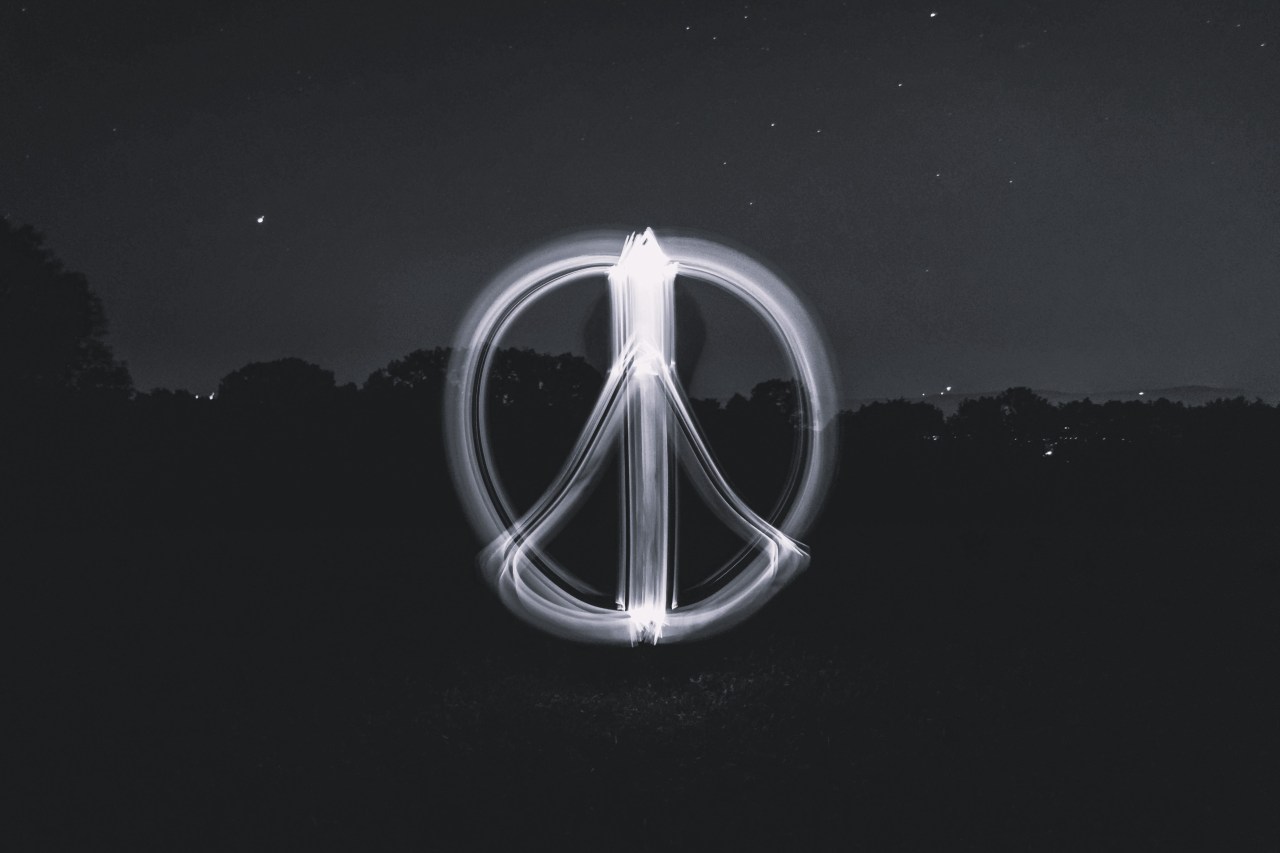
You Can Choose Peace

I didn’t know I could choose peace.

When I was living in the dark, peace wasn’t even a concept I believed in. My mind was in constant chaos—racing with thoughts, shame, regret, and fear. I felt like a prisoner in my own head. The noise never stopped. And because I believed I was broken, I thought I deserved the torment.

I wore the label of “victim” like it was a fact, not realizing that the most painful parts of my story were being written by the choices I was making every day. But here’s the truth I wish I’d known sooner:
Peace isn’t something that just shows up one day. Peace is something we choose.


Peace Starts with a Choice

When I finally admitted I needed help, it was like the door cracked open just enough to let in a sliver of light. That sliver? It was peace. Just a little. Just enough. But it was mine. And it showed me what was possible.

I began to see others who had found peace after chaos. People who had lived in the dark and come out the other side. People who had chosen peace—and in doing so, had chosen themselves. That became my inspiration. And from that moment on, I made a commitment to do the work to find my own.


Rebuilding a Life Around Peace

It wasn’t instant. Peace takes practice. It took a lot of honesty. A lot of humility. I had to stop pretending I was fine and get real about how I felt and what I needed. I had to clear out the chaos—the people, patterns, and beliefs that kept me in turmoil—and make room for something better.

I said yes to new things. I kept my heart open. I focused on love, support, and self-care. And as I leaned more into peace, I started to want it. Crave it. Protect it. That’s the thing about peace—once you taste it, you start building your life around it.

Today, I find peace in many ways—through nature, through connection, through honesty, through stillness. I don’t wait for peace to find me anymore. I go and get it. Every single day.


You Are Worth the Work

Peace is possible. But peace requires effort. It asks us to let go of the lies, face the truth, and show up for ourselves—even when it’s uncomfortable. That’s how we earn it. That’s how we grow into it. And that’s how we become it.

Peace is not perfection. Peace is knowing you’re doing your best. Peace is forgiving yourself.
Peace is choosing love over shame—and presence over panic.

You may not feel it right now. But I promise you, it’s within reach.
You have more power than you think. And you are allowed to use that power to choose peace today.

SLAY on.


SLAY OF THE DAY: Reflect & Rise

Do you believe you’re allowed to have peace—or are you still punishing yourself?

  • Where do you currently find peace, even in small ways?

  • What’s blocking you from feeling peace more often?

  • Are you still surrounding yourself with things (or people) that fuel your chaos?

  • What is one thing you can remove from your life today that is stealing your peace?

  • And what’s one thing you can add to cultivate more of it?

You are not your past.
You are your progress.
And you are worthy of peace.


Call to Action: Join the Conversation

I’d love to hear from you.
What’s one way you’ve created peace in your life—even when it felt impossible?
Share your story in the comments. Let’s cheer each other on.

And if you know someone who feels stuck in the chaos, send this to them.
Sometimes, we all need a reminder that peace is possible—and that we’re allowed to choose it.

How We Live Today Is What Will Determine Tomorrow

It’s a conversation I keep returning to—both personally and globally.

As the world continues to recalibrate, we’ve been given a rare invitation: to pause, reflect, and ask ourselves what do I want my life to look like on the other side of this? Many of us are eager to return to “normal,” but it’s worth asking—was normal really working?

When so many distractions fell away, we were left with the truth of our lives. The patterns we’d been avoiding. The cracks in our foundations. The parts we loved—and the parts we were merely surviving. Like any breakdown, there’s always a breakthrough waiting on the other side… if we’re willing to do the work.

Building a Better Tomorrow Starts Now

When I first stepped into recovery, I had to rebuild my life from the ground up. It was terrifying. The old ways—my habits, my thinking, the comforts I clung to—felt safer than the unknown. But I knew they were keeping me sick. I couldn’t build anything new while holding onto what was breaking me.

So I started small. I laid one brick at a time. I let go of what no longer served me, even when it was uncomfortable. I reminded myself that I wouldn’t get everything right—and that was okay. Each day was a step toward something stronger. Even my mistakes became blueprints for something better.

I began to understand that how I live today is what determines my tomorrow. And that realization changed everything.

This Is a Chance to Reimagine

This pause we’ve been given? It’s a gift. A chance to slow down and evaluate what truly matters. It’s not just about personal change—it’s about collective change. As we rebuild our lives, we have a powerful opportunity to decide who we want to be, how we want to live, and what kind of world we want to create.

The moments that have stood out to me most during this time aren’t the news updates or daily routines—they’re the simple acts of kindness, the community support, the honest conversations, and the reminders that we’re not alone.

We’ve seen what matters. Let’s not forget it.

Today Shapes Everything

What we choose today—how we love, how we show up, how we take care of ourselves and others—sets the tone for tomorrow. We get to decide what we keep, what we release, and what we build next.

Lay your foundation with care. Fill the cracks with truth. Strengthen your spirit with willingness and action. That’s how we grow something solid. Something beautiful. Something that lasts.

SLAY on.


SLAY OF THE DAY: Reflect & Rebuild

  • Have you used this time to evaluate your life with honesty?

  • What habits, people, or patterns do you want to leave behind?

  • What priorities have shifted for you—and why?

  • What healthy changes have felt good? What distractions are you ready to release?

  • What can you start doing today to lay a stronger foundation for the life you want tomorrow?

This moment is a powerful opportunity to build something new.
Lay it down with intention.


Call to Action: Join the Conversation
I’d love to hear from you.
What’s one change you’ve made—or are ready to make—to build a better tomorrow?
Share your story in the comments. Let’s cheer each other on.

And if you know someone who’s navigating change right now, send this their way.
Sometimes, we just need to know we’re not doing it alone.

Dress Up To Feel Up

For most of us right now, we spend most—if not all—of our time at home. With work shifts, working from home, or simply staying in, our biggest decision on wardrobe might be which pair of stretchy or sweatpants to throw on. And while that feels good for a while, it can also start to weigh us down emotionally, whether we realize it or not.

It’s amazing how dressing up—or even just getting dressed—can shift our mindset and spark a little lightness in our day.


The Power of Expression

For anyone who knows me, you know I love my fashion. I love to dress up, to express myself through what I’m wearing, and to share whatever side of my personality feels right that day. I’ve always lived by the motto that it’s better to be overdressed than underdressed.

But during these days, weeks, and dare I say months, where events, gatherings, and date nights out have disappeared, my closet isn’t seeing much use. Sure, I walk in there, take a look around, and think about what I might wear if I had somewhere to go. In the early days, I still dressed up for grocery runs or errands. But as time went on, I found myself dressing down to blend in—for safety and comfort.

That doesn’t mean, though, that I can’t throw on a cute outfit while I’m at home.


A Boost of Confidence

We take pride in looking good. Looking good often leads to feeling good. And at a time when we might feel uncertain, fearful, or just plain bored by the sameness of days at home, dressing up can give us a much-needed boost.

I’ve spoken with friends who still dress for work, even though their “office” is now their living room. They say it puts them in a professional mindset, helps them get more done, and lifts their self-esteem when they catch a glimpse of themselves looking put-together in the mirror.

For those who think that might be a bit much, or whose jobs don’t typically require dressing up, why not pick a night—maybe a Friday or Saturday—and dress up anyway? People are hosting virtual parties, dressing up for dinners or drinks with friends, or celebrating birthdays and milestones.

But why wait for an occasion? Why not celebrate yourself, just as you are?


You Deserve It

Pick out something that makes you feel good. It could be your favorite pair of jeans, a statement piece from your closet, or even a touch of sparkle. It may just be the mood boost you need during a time when your social calendar is empty.

Make the effort: do your hair, plan an outfit, put on something special—just for yourself. Because you’re worth it. You deserve to look your best.

I know I have a few sparkly things in my closet calling my name—long overdue for a spin around the house.


Create Your Own Occasion

Even if there’s no event on the calendar, create one. Make the occasion you. See how it lifts your mood, and maybe even inspires others to do the same.

Maybe tonight is the night. A Fancy Friday party. A night to remind yourself of who you are and what you love. Put on a special outfit that reminds you of a moment you felt radiant and strong.

Plan a date night at home—even if it’s a date with yourself. Show yourself appreciation, love, and respect. Let your best, beautiful self shine.

SLAY on.


SLAY OF THE DAY: Reflect & Rise

  • Have you been getting up and dressing for the day, or slipping into the most comfortable clothes from the day before?

  • How does it make you feel when you dress up?

  • How does it make you feel when you don’t?

  • Do you typically enjoy dressing up?

  • Have you been dressing to work from home? If yes, how does it make you feel? If not, why not?

  • How do you think dressing up at home might affect your mood?

  • Find a day or night to dress your best, and see if it lifts your spirits during these days at home.


Call to Action: Join the Conversation

I’d love to hear from you.
When was the last time you dressed up for yourself, and how did it make you feel?
Share your story in the comments. Let’s cheer each other on.

And if you know someone who’s been feeling stuck in a routine, send this to them.
Sometimes, all we need is a little sparkle to remind us who we are.

Silence Isn’t Empty—It’s Full of Answers

There was a time when silence terrified me.

Back when I was living in the dark, silence didn’t feel still or serene—it felt suffocating. The moment things got quiet, my head got loud. I filled every corner of my life with noise: music in my ears, background TV, endless scrolling, constant distractions. Yoga? I had long quit that. Sitting alone for an hour with my thoughts? No thank you. I was afraid of what I’d hear.

But here’s what I’ve learned on the other side of that fear:
Silence isn’t empty. It’s full of answers.


What We Avoid Is Often What We Need

When I made the choice to get better, I had to learn how to sit with myself.
With my thoughts.
With the truth.
With the shame.
And ultimately—with the peace that waited beneath it all.

It didn’t happen overnight. At first, I had to work hard to ignore the lies my mind still wanted to tell me. But little by little, the static in my head started to quiet. And what I found in that silence wasn’t danger—it was guidance. Clarity.
Peace.

I realized that the silence I’d run from wasn’t trying to hurt me—it was trying to help me. I just had to be well enough to hear what it was saying.


Cleaning House to Find the Calm

In order to make peace with silence, I had to do some serious housecleaning. I worked to replace negative self-talk with words that were loving, kind, and true. I took ownership of my actions, stopped blaming everyone else, and started healing the parts of me that kept replaying old stories.

It wasn’t easy. My old patterns wanted me to believe I was always the victim, that life just happened to me. But I learned that I had choices. And even when I couldn’t control what was happening, I could still choose how I responded.

Taking responsibility gave me back my power—and that is when silence started to feel safe.

Today, silence is where I reset. It’s where I check in with myself. It’s where I listen to what I really need.
It’s no longer something I fear—it’s something I crave.


Let Silence Speak

Silence isn’t the enemy.
It’s the sacred space where our soul gets a chance to speak.

So the next time you find yourself wanting to reach for the noise—pause. Ask yourself what you’re afraid to hear. Because what scares us in the quiet is often the very thing trying to guide us forward.

Let silence be a space of peace, of presence, and of power.
SLAY on.


SLAY OF THE DAY: Reflect & Rise

Are you afraid of silence? Or have you found comfort in it?

  • What comes up for you when things get quiet?

  • Are you filling your time with noise or distractions to avoid something?

  • What’s one thing you’ve learned when you’ve allowed yourself to sit in stillness?

  • How can you use silence today to guide a decision, check in with yourself, or realign with what matters?

  • What would it take for you to see silence as a friend, not a threat?

The answers are already inside you. You just have to get quiet enough to hear them.


Call to Action: Join the Conversation

I’d love to hear from you.
What’s something silence has revealed to you that you wouldn’t have discovered otherwise?
Share your story in the comments. Let’s cheer each other on.

And if you know someone who avoids stillness because they’re afraid of what they’ll hear, send this to them.
Sometimes, what we fear is where the healing begins.

When Others Inject Their Fear Into Your Life

It takes courage to chase your dreams. To put yourself out there. To share your truth with the world, especially when that truth has been born from your soul. It’s vulnerable work. So naturally, we hope the people who love us will show up to support us.

But sometimes, they don’t.

And instead of encouragement, we get fear. Not our own—theirs. Projected through criticism, sarcasm, or silence. It can come from the people we least expect, and it can sting the most when it does. Their fear may show up as jealousy, pessimism, or even ultimatums. And suddenly, your moment of growth becomes a moment of conflict. One you never asked for.


Their Fear Is Not Yours to Carry

It’s important to remember: you are not responsible for making others comfortable with your growth.

You are not responsible for shrinking so someone else can feel tall.

We all carry our own insecurities, and when someone projects theirs onto you, it often has more to do with their inner struggle than with anything you’re doing wrong. You are not doing anything wrong by growing, dreaming big, or stepping into your light. In fact, you’re doing something incredibly right.

People who truly love you will want to see you win. Even if they don’t fully understand your path, they’ll respect that it’s yours. And they’ll support you because they care about your joy. If they can’t do that, then it may be time to lovingly step back and re-evaluate who gets to be in your inner circle.


The Subtle Ways Fear Shows Up

Not all fear looks like yelling or outright criticism. Sometimes it comes quietly:

  • The sarcastic comment

  • The deflating look

  • The unreturned text on a day that mattered to you

These passive reactions are just as powerful. And just as hurtful. Because they take up emotional space that you could be using to build, to dream, to thrive. When you’re busy decoding someone else’s discomfort, you lose time and energy that could be spent fulfilling your purpose.

And here’s the truth: people who inject fear or discouragement into your life when you are rising are not trying to protect you. They are trying to keep themselves from feeling left behind.

Let Yourself Rise Anyway

Your job is not to manage someone else’s emotions. Your job is to rise. To shine. To step into your purpose even when it makes others uncomfortable. You can do this with compassion, but you must also do it with conviction.

We rise by lifting others. But if someone refuses to rise with you, that’s not your fault. Let your light shine anyway. You never know who might see your light and be inspired to find their own.

SLAY on.


SLAY OF THE DAY: Reflect & Rise

  • Do you feel guilty when you succeed and others don’t?

  • Have you experienced people trying to discourage you from pursuing your goals?

  • Why do you think their fear shows up when you shine?

  • Have you ever dimmed your light to make someone else feel better?

  • What can you do to protect your peace and keep moving forward?

You don’t need to carry someone else’s fear. Let them work through it. Your job is to keep going.


Call to Action: Join the Conversation
I’d love to hear from you.
What’s one way you’ve protected your light from someone else’s fear?
Share your story in the comments. Let’s cheer each other on.

And if you know someone who’s struggling to rise because others are trying to hold them back, send this to them.
Sometimes, all we need is to be reminded we’re allowed to shine.

It’s Not The Pain That Helps Us Grow, It’s Our Response To It

Before I stepped onto this path, I walked through a lot of pain.

Not gracefully.
Not reflectively.
More like a storm spinning out of control—reactive, destructive, and exhausting.

I told myself, and was often told by others, that the pain was making me stronger. That suffering was proof of growth. That endurance alone was somehow building character.

But looking back, I can see the truth much more clearly now:

The pain wasn’t strengthening me.
My response to it was weakening me.

And in many cases, I was the source of my own pain.

That realization wasn’t comfortable—but it was freeing. Because it showed me that growth was never about how much pain I endured. It was about what I did after the pain showed up.


Pain Is Inevitable Suffering Is Optional

Pain is part of being human.

We get hurt.
We get disappointed.
We get blindsided—sometimes by others, sometimes by life itself.

But pain alone doesn’t create growth.

Pain without awareness creates repetition.
Pain without reflection creates cycles.
Pain without honesty keeps us stuck.

What determines growth isn’t the pain itself—it’s whether we react from old wounds or respond with clarity.

And there is always a choice.


Reaction Keeps Us Stuck Response Moves Us Forward

There’s a difference between reacting and responding.

Reaction is impulsive.
It’s emotional.
It’s driven by fear, old stories, and survival patterns.

Response is intentional.
It’s grounded.
It’s guided by truth instead of triggers.

When I reacted to pain, I made choices that caused more pain—burning bridges, sabotaging myself, repeating patterns I swore I wanted to escape.

When pain wasn’t self-inflicted, that was where growth became possible—if I was willing to respond instead of explode.


The Myth That Pain Builds Strength

One of the most damaging stories we tell ourselves is that pain itself makes us stronger.

That belief often keeps us tolerating what we shouldn’t.
It keeps us in harmful relationships.
It keeps us justifying self-destructive behavior.

Pain doesn’t build strength.

Choices build strength.

The strength comes from what you learn.
From what you release.
From what you decide not to repeat.

The old narrative—that suffering proves worth or resilience—often keeps us returning to the same sources of harm, believing it’s “part of the process.”

It isn’t.


Getting the Facts Is How We Grow Safely

One of the core truths I return to again and again is this:
When we have the facts, we are safe.

Not the feelings.
Not the assumptions.
Not the stories shaped by past wounds.

The facts.

Looking at pain honestly—without embellishment, blame, or denial—allows us to understand its source. And once we understand the source, we gain power.

Power to choose differently.
Power to set boundaries.
Power to walk away instead of reenacting.

Pain becomes useful only when it’s investigated.


We Always Have More Control Than We Think

Here’s the part that changes everything:

We don’t control whether pain shows up—but we do control how much we let it stay.

We can:

  • Let it fester

  • Turn it into resentment

  • Use it for sympathy

  • Or learn from it and release it

Sometimes simply letting pain go is growth.

Not every wound needs a deep dive. Some lessons are learned by choosing not to engage again.

And when you’re living from self-love and honesty, destructive reactions stop feeling good. Self-sabotage loses its appeal.

Because why tear down something you’re finally learning to build?


Pain Is a Teacher Not a Home

Pain is meant to inform you—not define you.

It shows you where boundaries are needed.
It highlights what isn’t aligned.
It reveals patterns asking to be broken.

But pain is not meant to be lived in.

When you respond with curiosity instead of chaos, pain becomes data. And data leads to discernment. And discernment leads to peace.

That’s growth.


Turning Pain Into a Gift

You may have never paused to ask yourself how you typically respond to pain.

So the next time it shows up, try this:

Strip away the story.
Remove the emotional overlay.
Look at the facts.

What actually happened?
What role did you play?
What part was within your control?
What can you learn?

When you do this, pain stops being something that happens to you—and becomes something that works for you.

The greatest gift pain can offer is information.

And information, used wisely, changes everything.


SLAY Reflection

Let’s reflect, SLAYER:

S: What do you believe is the main source of pain in your life right now?
L: How much of that pain are you creating, allowing, or repeatedly engaging with?
A: When pain shows up, do you tend to react or respond—and how is that serving you?
Y: What could change if you chose to learn from pain instead of letting it control you?


Call to Action: Join the Conversation

I’d love to hear from you.
How has your response to pain shaped your growth—or where do you feel called to respond differently now?
Share your story in the comments. Let’s cheer each other on.

And if you know someone who’s stuck believing pain itself is the path, send this to them.
Sometimes, all we need is a nudge.

The Person Who Doesn’t Value You Is Blocking You From The One Who Will

Why do we stay?
Why do we stay when we’re not appreciated, understood, supported, or loved?
Why do we hold on when someone doesn’t see our value—or worse, tries to diminish it?

There are reasons.
And then there are excuses.

But the truth is this: when we stay in places where we’re not seen, there’s no room for someone who will see us.


When You Don’t See Your Own Value

Before I stepped onto this path, I never considered whether someone valued me—or if I truly valued them. I brought people into my life based on what I needed in the moment. I thought I cared, and maybe I did. But I didn’t value them as whole, spiritual beings—because I didn’t value myself.

I didn’t think I was worthy.
Not of love.
Not of kindness.
Not of real connection.

So I stayed where I wasn’t valued because, deep down, I didn’t believe I deserved to be.


Healing Changes Everything

That changed when I made the decision to get well.
Through recovery, I worked on self-love, self-worth, and self-respect. And with every honest step I took, I began to see my own value—and I started seeking people who could see it, too.

It’s easy to find yourself in a relationship or friendship where your light slowly dims. Where you stop being seen. Where you’re asked to make yourself smaller to make someone else feel big.

But the real question is:
Have you stopped showing your true self? Have you dulled your light to fit in?


Letting Go to Let the Right Ones In

We don’t have to make ourselves smaller to be loved.

If something feels off… if your needs aren’t heard… if blame is being placed on you again and again—it’s time to pause and take a real, honest look.

When someone sees your worth, you’ll know.
There will be respect, support, and a genuine desire to help you grow.

You can’t be open to receive that love if you’re holding on to someone who doesn’t value you.
Let go. Create space. Open your heart.

You might just make room for the greatest love of your life.

SLAY on.


SLAY OF THE DAY: Reflect & Rise

  • Do you feel valued in your relationships?

  • If not, why are you still staying?

  • What value do you see in yourself today? What value are you ignoring?

  • Describe yourself in 5 words. What do they reveal about your truth?

  • Who in your life truly sees and supports you—and who doesn’t?

You hold the key to who you allow into your life.
Only open the door for those who see your light—and help it shine even brighter.


Call to Action: Join the Conversation
I’d love to hear from you.
What’s one way you’ve reclaimed your worth and made room for better in your life?
Share your story in the comments. Let’s cheer each other on.

And if you know someone who’s holding on to a relationship that’s dimming their light, send this to them.
Sometimes, all we need is a reminder: we’re worth more.

Setting Them Free Frees You

There was a time in my life when I thought holding onto anger meant strength.
That if I stayed upset long enough, if I replayed what happened often enough, somehow justice would balance itself out.

But the truth I eventually had to face was much simpler and much harder:

Resentment does not bind the other person. It binds you.

And when I finally understood that, everything about forgiveness started to shift.

Because letting someone go was never about them.
It was always about me.

About my peace.
My energy.
My ability to move forward without dragging the past behind me like a heavy suitcase I never unpacked.

And maybe you have felt that too.


When Anger Becomes an Attachment

Holding resentment creates a strange connection.
Even if someone is no longer physically in your life, emotionally they still occupy space.

You think about them.
You replay conversations.
You imagine what you would say if given another chance.
You rehearse arguments in your head that may never happen.

I have done all of that.

And honestly, it was exhausting.

There is a saying that resentment is like drinking poison and waiting for the other person to die.
I resisted that idea at first because it felt too dramatic.

But over time I saw how accurate it was.

My sleep suffered.
My mood shifted.
My joy dimmed.
And none of it affected the other person at all.

That realization was sobering.

Because suddenly it was clear: I was not punishing them.
I was punishing myself.


Forgiveness Is Not About Letting Them Off the Hook

This part is important, and I wish someone had said it to me sooner.

Forgiveness does not mean:

  • What happened was acceptable

  • You have to reconnect with the person

  • You forget the experience

  • You stop having feelings about it

Forgiveness simply means you decide not to keep carrying the emotional weight anymore.

That is it.

You are not excusing behavior.
You are reclaiming your peace.

And honestly, that is one of the most self loving choices you can make.


My Turning Point

For me, the shift happened gradually, not all at once.

I realized that staying angry kept me anchored in moments I did not want to relive.
It kept my attention focused backward instead of forward.

And I had worked too hard on healing, growth, and self awareness to keep sacrificing my peace for someone else’s actions.

So I started asking myself a different question:

Does holding onto this help me become who I want to be?

The answer was always no.

Every single time.

That is when I began to understand that setting someone free emotionally was actually setting myself free.


What Letting Go Actually Looks Like

Forgiveness is rarely a dramatic moment.
It is often a quiet internal decision.

Sometimes it looks like:

Choosing not to revisit the story again
Deciding not to engage in conversations that reopen the wound
Redirecting your energy toward your own life
Allowing space for new experiences

And sometimes it is as simple as saying, internally:

“I release this. I deserve peace.”

You do not even have to tell the other person.

Often, forgiveness is an entirely private act.


Steps That Helped Me Move Forward

There was no single formula, but there were a few things that consistently helped.

Acceptance

I had to accept that the event happened exactly as it did.
Not how I wished it had happened.
Not how I thought it should have happened.

Just reality.

Acceptance removes the constant mental argument with the past.

And that alone can bring enormous relief.

Finding Growth

Even painful situations carry information.

Sometimes they teach us boundaries.
Sometimes they sharpen our intuition.
Sometimes they show us what we will never tolerate again.

Growth does not justify the hurt.
But it can transform it.

And transformation is powerful.

Perspective

Looking at situations from another angle does not excuse behavior.
It simply broadens understanding.

People act from their own wounds, fears, and limitations.

Recognizing that helped me detach emotionally without minimizing my experience.

Checking What Serves You

This was the biggest one for me.

Does holding onto anger improve your life?
Your health?
Your relationships?
Your happiness?

Usually, it does not.

Letting go often serves you far more than staying angry ever could.

Creating Closure Yourself

Sometimes, closure never comes externally.

No apology.
No explanation.
No final conversation.

Learning to create closure internally is a life skill.

Writing a letter you never send.
Talking it through with a trusted friend.
Praying, meditating, journaling.

Whatever works for you.

Closure is not always given.
Sometimes it is chosen.


Freedom Is the Real Goal

When I released resentments, I noticed something surprising:

I had more energy.
More creativity.
More patience.
More emotional bandwidth for the people who actually deserved it.

Forgiveness cleared space.

And that space allowed joy back in.

Not immediately.
But steadily.


Protecting Peace Going Forward

Forgiveness does not mean repeating patterns.

In fact, it often makes boundaries clearer.

You can forgive and still:

Limit contact
Change how you engage
Choose distance
Protect your emotional well-being

Forgiveness and boundaries are not opposites.
They often work together beautifully.


A Note From My Heart to Yours

If you are holding onto anger right now, I get it.

Truly.

There were times I thought I would never let certain things go.
Times I believed my anger was justified and permanent.

But I promise you this:

Peace feels better than being right.
Freedom feels better than holding a grudge.
Healing feels better than staying stuck.

You deserve that.

Not someday.
Now.


SLAY Reflection

Surrender
What resentment are you currently carrying?

Listen
How does holding onto it affect your emotional well-being?

Accept
Can you accept the reality of what happened without rewriting it?

Yield
What would letting go create space for in your life?


Call to Action: Join the Conversation

I would love to hear from you.
Have you ever experienced freedom after letting go of resentment or forgiving someone?

Share your story in the comments. Let’s cheer each other on.

And if you know someone who might need this reminder, send this to them.
Sometimes, all we need is a nudge.

Don’t Co- Sign Someone Else’s Bullsh*t

We’ve all done it.
Gone along with something we didn’t believe in.
Put our needs aside to fix someone else’s mess.
Jumped into a problem that wasn’t ours to solve.

And let’s be honest—sometimes, we did it because it made us feel needed.
Valued.
Important.

But here’s the truth: you are not responsible for cleaning up someone else’s willful choices.

When someone makes a bad decision—especially if it’s part of a pattern—and ends up in crisis, it is not your job to bail them out.
And rushing to do so over and over?
That’s not kindness.
That’s co-signing their bullsh*t.


The Emotional Vampire Tactic

I’ve written before about Emotional Vampiresthose who feed off our time, energy, and attention.
And one of the tactics they use is convincing you to validate their chaos.

They want you to:

  • Validate their story

  • Co-sign their drama

  • Confirm their narrative that they’re always the victim

You are not required to be a supporting character in someone else’s self-destructive script.

Yes, we all need help sometimes.
And yes, it’s okay to ask for it.
But there’s a massive difference between someone reaching out for support and someone handing you a flaming mess they created—and expecting you to carry it while they sit back and light another match.


Been There, Done That

Before I walked this path, I was very familiar with this dynamic—because I was the one doing it.

I would avoid reality, avoid responsibility, and let things spiral until they became unmanageable. Then I’d panic, cry, and call for help.
And when someone came running? I felt a high.
A quick, fleeting sense of love and validation.

But it never lasted.
Because deep down, I knew I had created the crisis.
And I wasn’t learning anything from it—except how to get better at playing the victim.

That cycle drained me. And it wore out the people around me.
I’m grateful I don’t live that way anymore.
And when I see it in others now, I recognize it for what it is:
a trap.
For them—and for me.


Help Should Be a Two-Way Street

Being supportive doesn’t mean sacrificing yourself.

You can help someone—as long as they’re helping themselves.
If they’re taking action, being honest, and working toward change, that’s one thing.

But if they keep coming back with the same drama, expecting you to fix it while they do nothing?
That’s not support.
That’s codependency.

And here’s the hard truth:
Helping someone who isn’t helping themselves doesn’t help anyone.

If they’re repeating the same mistakes…
If they’re ignoring their own well-being…
If they’re draining your energy without ever filling their own cup…
You don’t have to step in.

Sometimes the most loving thing you can do is step back.


Stand Tall, Not in the Mess

Next time someone comes calling, ask yourself:

  • Are they asking for help—or a savior?

  • Is this a one-time situation—or a repeated pattern?

  • Are you working with them—or doing all the heavy lifting yourself?

If the facts don’t add up…
If your energy is being drained…
If your needs are constantly pushed aside for theirs…

That’s your answer.

You were not put on this earth to fix people who have no intention of changing.
You’re here to build and protect a life that’s worth living—and that includes knowing when to say no.

So the next time someone tries to pull you into their storm, remember:
You can love someone and still choose yourself.
You can care deeply and still walk away from the chaos.


SLAY Reflection: Are You Co-Signing the Chaos?

  1. Do you have people in your life who always seem to be in crisis?
    How often do they turn to you to fix it?

  2. Are you helping—or doing all the work for them?
    What toll does that take on you?

  3. Have you been in this dynamic more than once with the same person?
    Why do you think it keeps happening?

  4. What would it look like to support someone without sacrificing yourself?
    Can you draw that boundary?

  5. What’s one step you can take today to protect your energy and stop co-signing someone else’s drama?
    What would choosing yourself look like in this situation?


Call to Action: Join the Conversation

I’d love to hear from you.
What’s one situation where you realized helping someone was actually hurting you—and how did you take your power back?
Share your story in the comments. Let’s cheer each other on.

And if you know someone who’s stuck playing the fixer, send this to them.
Sometimes, all we need is a nudge.

Don’t Play Victim To The Circumstances You Created

Let’s get real for a moment.

We don’t always make the best choices. Sometimes we act on impulse. Sometimes we ignore red flags. And sometimes, even with every sign pointing us in a better direction, we choose to go the other way—and then cry foul when things fall apart.

But here’s the truth: if we knowingly put ourselves in a bad situation, we don’t get to play the victim when the outcome isn’t what we hoped for.

That might sound harsh, but it’s a lesson many of us—myself included—have had to learn the hard way.


Prefer to listen? The Audio Blog version is available here.


Owning Our Choices

Back when I was living in the dark, I made a lot of questionable choices. And truthfully, I often knew they weren’t the right ones. But I made them anyway. Why? Because deep down I believed I didn’t deserve good things. I believed I was broken. So I acted in ways that reinforced that belief—sabotaging myself, then turning around and asking why the world was so unfair.

What I was really doing was manipulating the narrative to fit the story I had already decided about myself:
I’m a bad person. Bad things happen to me. I deserve it.

It was a cycle of self-sabotage. And every time it backfired—as I knew it would—I’d call out for sympathy. And when that didn’t come fast enough or in the way I wanted? I felt even more victimized.

Sound familiar?


A New Way Forward

Everything changed when I started believing I was worthy of love—and that I deserved good things. When I embraced self-worth, my decision-making shifted. I started making choices that supported the life I wanted, not the one I feared I was stuck in.

Were those decisions always easy? No. But they were rooted in truth. In integrity. In strength.

When we know better and choose better, we don’t need to cry out for sympathy—we stand in our power. We hold ourselves accountable. And we become the kind of person we’re proud of.


You Are Not a Victim of Yourself

This isn’t about perfection. We all mess up. We all learn. Life will always throw curveballs—some we never saw coming. But there’s a difference between an honest misstep and a willful march toward chaos.

If you’ve been given the tools, the truth, the gut feeling—and you still go against it—own the outcome.

That’s not failure. That’s growth.

So when you find yourself at a crossroads, pause. Ask:

  • Am I acting from fear, or from love?
  • Is this the path I truly believe will serve me, or am I just clinging to comfort?

Make decisions from your strength—not your sabotage.

Stand tall. Stand proud. And take responsibility for the life you’re building—one choice at a time.


SLAY OF THE DAY: Reflect & Rise

Do you make decisions that you know aren’t in your best interest?

  • What drives those choices?
  • Do you expect others to rescue you when things go wrong?
  • How do you feel when people don’t show up the way you want them to?
  • What would it look like to choose differently next time?
  • Write a list of 5 reasons you deserve good things in your life. Keep it close.
    Let those reasons guide you toward better choices—choices that bring you peace, not pain.

Call to Action: Join the Conversation

I’d love to hear from you.
What’s one shift you’ve made that helped you stop sabotaging your peace and start standing in your power?
Share your story in the comments. Let’s cheer each other on.

And if you know someone who keeps repeating the same patterns, send this to them.
Sometimes, all we need is a reminder that we’re worth the work.