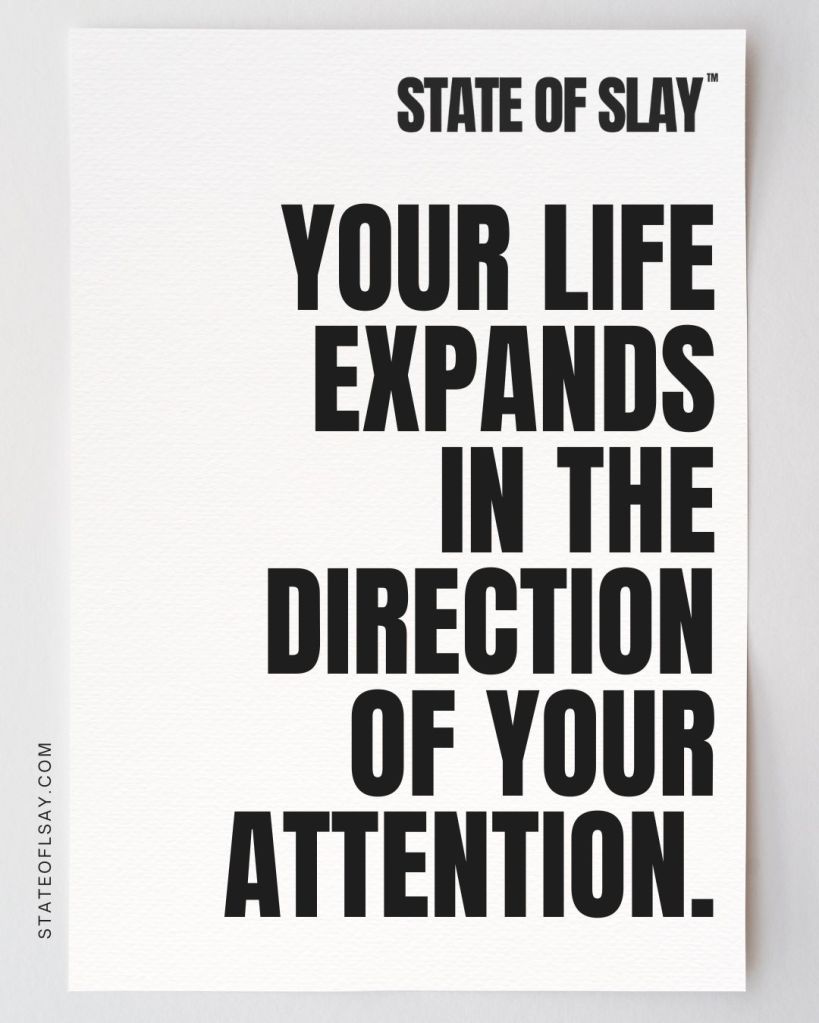
It is easy to underestimate how much your focus shapes your experience.
What you think about, revisit, worry over, or invest your attention in throughout the day may seem small in the moment, but over time, it begins to define how your life feels.
Energy is not neutral. It builds. It reinforces. It expands whatever you consistently give it to.
If your focus is on what is missing, it can create a sense of lack. If your focus is on what is wrong, it can make everything feel heavier. If your focus is on growth, possibility, and what matters, it can begin to shift your entire perspective.
This is not about ignoring reality. It is about recognizing that where you place your attention has the power to shape it.
Small shifts in focus can lead to meaningful changes in how you think, feel, and move through your life.
This is your reminder to be intentional with where your attention goes, because it is quietly shaping everything.
For a long time, I thought something was wrong with me.
I felt too much. Noticed too much. Reacted to things others seemed to brush off. And somewhere along the way, I started to believe the narrative that I was the problem.
That I was too sensitive. Too emotional. Too affected.
So I tried to quiet it.
To toughen up. To ignore what I felt. To convince myself that if I just cared less, I would hurt less.
But what I have come to understand is this.
Nothing was wrong with me.
I was finally paying attention.
Prefer to listen? The Audio Blog version is available here.
Sensitivity Is Not the Problem
We live in a world that often rewards detachment.
Being unbothered. Unaffected. Unmoved.
And anything outside of that can be labeled as too much.
Too sensitive. Too emotional. Too reactive.
But what if the issue is not that you feel too much?
What if the issue is that you are finally noticing what others have learned to ignore?
I Had to Unlearn What I Was Told
There were moments where something felt off.
A conversation that did not sit right. A dynamic that felt unbalanced. An energy I could not quite explain but could not ignore.
And instead of trusting that feeling, I questioned myself.
Am I overreacting? Am I reading too much into this? Is this really a big deal?
Over time, that questioning turned into self doubt.
Not because my instincts were wrong.
But because I had learned not to trust them.
Awareness Can Feel Like Overwhelm
When you begin to notice more, you also begin to feel more.
And that can be intense.
You pick up on tone. On shifts in energy. On what is said and what is not said.
You see patterns. You feel misalignment. You recognize when something does not match.
And if you have spent years suppressing that awareness, it can feel overwhelming when it comes back online.
But that does not make it wrong.
It makes it new.
You Are Not Too Sensitive You Are Waking Up
There is a difference between being overwhelmed by everything and being attuned to what matters.
And learning that difference is part of growth.
Because when you are paying attention, you start to see clearly.
You see what aligns. What does not. What feels honest. What feels performative. What feels safe. What does not.
That clarity can change everything.
Your Feelings Are Information
Not every feeling needs to be acted on.
But every feeling is worth noticing.
Your emotional responses are not random.
They are signals.
Signals about your boundaries. Your values. Your experiences. Your needs.
When you dismiss those signals, you disconnect from yourself.
When you listen, you begin to understand yourself.
The Goal Is Not to Shut It Down
For a long time, I thought the goal was to feel less.
To be less affected. Less reactive. Less aware.
But the real goal is not to shut it down.
It is to learn how to navigate it.
To understand what your sensitivity is showing you without letting it overwhelm you.
To use your awareness as guidance instead of seeing it as a flaw.
Boundaries Become Clearer
When you start paying attention, your tolerance for certain things changes.
What you once accepted may no longer feel right.
What you once ignored may now feel impossible to overlook.
And that is not you becoming difficult.
That is you becoming clear.
Clear about what works for you and what does not.
Clear about what you need and what you are no longer willing to accept.
Not Everyone Will Understand
When you shift in this way, not everyone will understand it.
Some people may still see you as too sensitive.
But their perspective does not define your reality.
Because what looks like sensitivity from the outside often feels like clarity from the inside.
And that clarity is something you do not want to lose.
Trust What You Feel
You do not have to justify every feeling.
You do not have to explain why something does not sit right.
You can simply acknowledge it.
Pay attention to it.
And decide what you want to do with that information.
Because the more you trust yourself, the more grounded you become.
This Is Not Weakness This Is Awareness
Feeling deeply is not a flaw.
Noticing patterns is not a flaw.
Being aware of what others miss is not a flaw.
It is a strength.
A strength that, when understood and supported, allows you to move through life with more intention, more clarity, and more alignment.
You are not too sensitive.
You are finally paying attention.
SLAY Reflection
S — See the Pattern Where in your life have you been told you are too sensitive?
L — Look Within What might you actually be noticing or responding to in those moments?
A — Acknowledge the Signal What is your sensitivity trying to tell you about your needs or boundaries?
Y — Your Next Step How can you begin trusting what you feel instead of dismissing it?
Call to Action: Join the Conversation
I’d love to hear from you. Have you ever realized that what you thought was sensitivity was actually awareness?
Share your story in the comments. Let’s cheer each other on.
And if you know someone who might need this reminder, send this to them. Sometimes, all we need is a nudge.
It Is OK to Be Fearless and Terrified at the Same Time is something I had to learn by living it.
Because for a long time, I believed courage meant not being afraid.
That if I felt fear, it meant I was not ready. Not strong enough. Not capable enough.
So I waited.
I waited to feel confident. I waited to feel certain. I waited for the fear to disappear before I made a move.
But what I learned is this.
Fear does not disappear before you act.
It comes with you.
Prefer to listen? The Audio Blog version is available here.
Fear and Courage Can Exist Together
We tend to think of fearlessness as the absence of fear.
But real fearlessness looks different.
It looks like showing up even when your heart is racing. Speaking even when your voice feels unsteady. Taking the step even when you are unsure of the outcome.
Fear and courage are not opposites.
They often exist in the same moment.
And when you understand that, something shifts.
You stop waiting for fear to leave.
And you start moving anyway.
I Had to Rethink What Strength Meant
There were moments in my life when I felt completely terrified.
Terrified to take risks. To speak up. To make changes that I knew I needed to make.
And in those moments, I questioned myself.
Why am I so afraid? Why does this feel so hard? What if I fail?
But looking back, those were often the moments that mattered most.
The moments where something inside me was pushing me forward, even as fear tried to hold me back.
That tension was not weakness.
It was growth.
Fear is information, Not a Stop Sign
Fear is not always something to avoid.
Sometimes it is simply information.
It tells you that you are stepping into something new. Something uncertain. Something that matters.
And while not all fear should be ignored, not all fear should be obeyed either.
Learning to tell the difference is powerful.
Because if you let fear make every decision, you will stay exactly where you are.
And growth rarely lives there.
You Do Not Have to Feel Ready
This was one of the biggest shifts for me.
I thought I needed to feel ready before I acted.
But readiness is not a feeling.
It is a decision.
You decide to show up. You decide to try. You decide to take the step, even when you are unsure.
And through that action, confidence begins to build.
Not before.
During.
Courage Builds Through Action
Every time you move forward while feeling afraid, you reinforce something important.
You can handle it.
You can move through discomfort. You can take risks. You can face uncertainty.
And each time you do, your trust in yourself grows.
Not because the fear disappears.
But because you prove to yourself that fear does not control you.
Growth Lives in That Tension
There is a space where fear and possibility meet.
A space where you feel both excited and uncertain. Hopeful and hesitant. Strong and vulnerable.
That space can feel uncomfortable.
But it is also where growth happens.
Because you are stretching beyond what is familiar.
You are stepping into something new.
And that requires both courage and vulnerability.
You Are Allowed to Feel Both
You do not have to choose between being fearless and being afraid.
You can be both.
You can feel terrified and still move forward. You can feel uncertain and still take action. You can feel doubt and still believe in yourself enough to try.
Those emotions do not cancel each other out.
They coexist.
And when you allow that, you remove the pressure to be perfect.
You simply show up as you are.
Keep Going Anyway
If you are waiting for the moment when fear disappears, you may be waiting longer than you think.
But if you are willing to move forward with it, everything changes.
Because the goal is not to eliminate fear.
It is to move through it.
To take the step. To say the thing. To try the thing. To trust yourself enough to see what happens next.
And that is where real courage lives.
SLAY Reflection
S — See the Fear What is something in your life that feels both exciting and terrifying right now?
L — Look at the Meaning What might that fear be telling you about what matters to you?
A — Accept the Feeling Can you allow yourself to feel afraid without letting it stop you?
Y — Your Next Step What is one action you can take even while feeling uncertain?
Call to Action: Join the Conversation
I’d love to hear from you. Have you ever done something that scared you and felt stronger because you did it anyway?
Share your story in the comments. Let’s cheer each other on.
And if you know someone who might need this reminder, send this to them. Sometimes, all we need is a nudge.
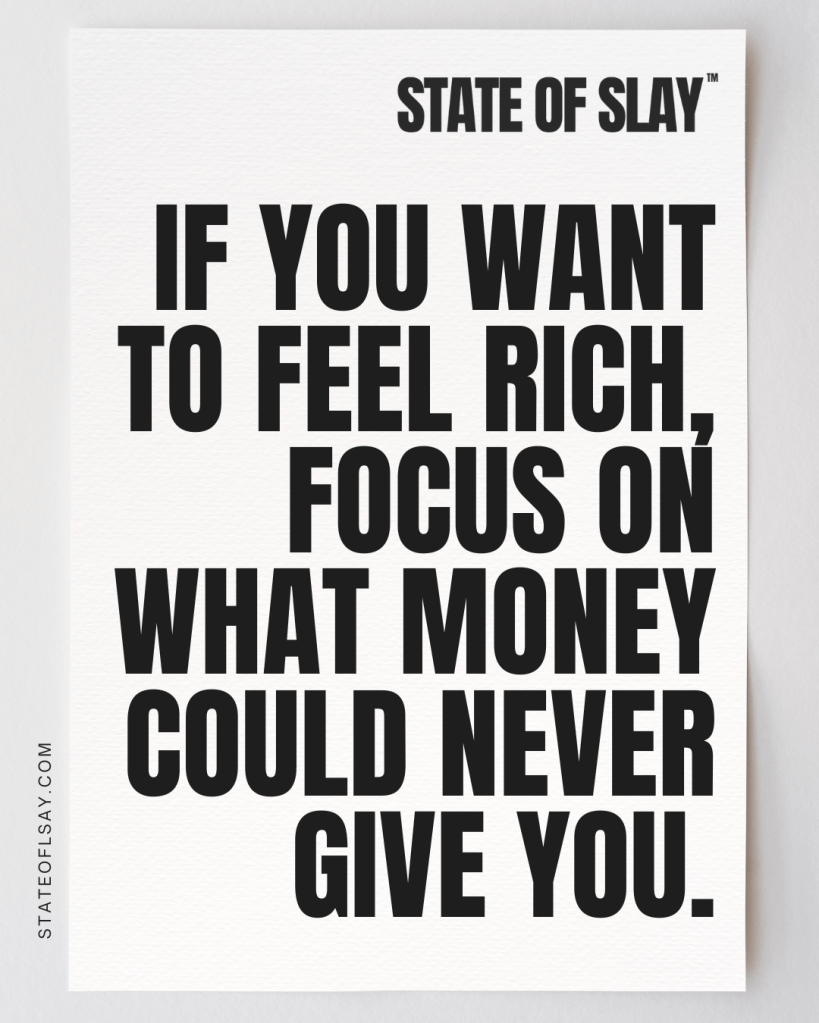
What you have. What you earn. What you can show for your time and effort.
Those things are tangible. They are easy to compare, easy to track, and often used as markers of success.
But they are not the full picture.
The moments that stay with you, the relationships that ground you, the peace you feel within yourself, and the experiences that shape who you are cannot be measured in the same way.
They do not show up in numbers, but they hold weight in ways that matter far more.
It is easy to overlook them because they are not always visible, but they are often the very things that make life feel full.
There are moments when it feels easier to prioritize someone else.
To seek approval, maintain connection, or hold onto a relationship, even when it begins to cost you something internally.
It can be subtle at first. You adjust your thoughts, your reactions, or your needs just enough to keep things steady. Over time, those small adjustments can start to pull you further away from yourself.
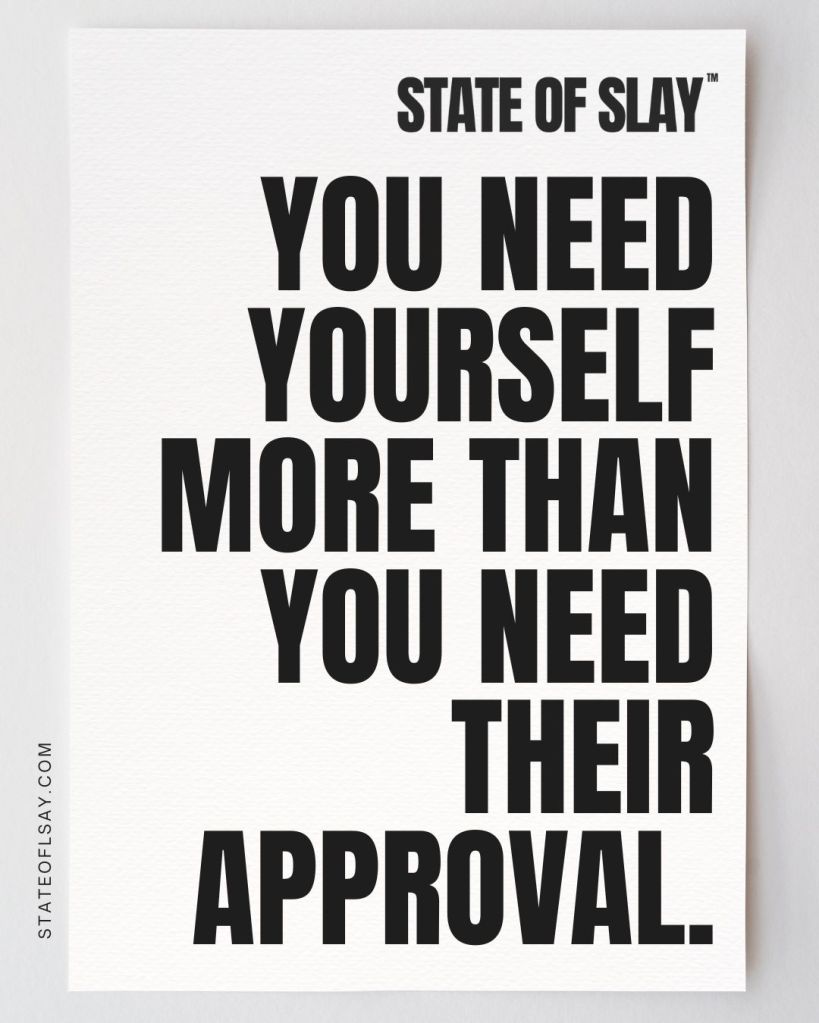
But the truth is, you are not meant to come second in your own life.
Your clarity, your well-being, and your sense of direction depend on your ability to stay connected to who you are, not who someone else needs you to be.
Choosing yourself is not selfish. It is necessary.
It is how you maintain your sense of stability, your growth, and your ability to show up fully in every area of your life.
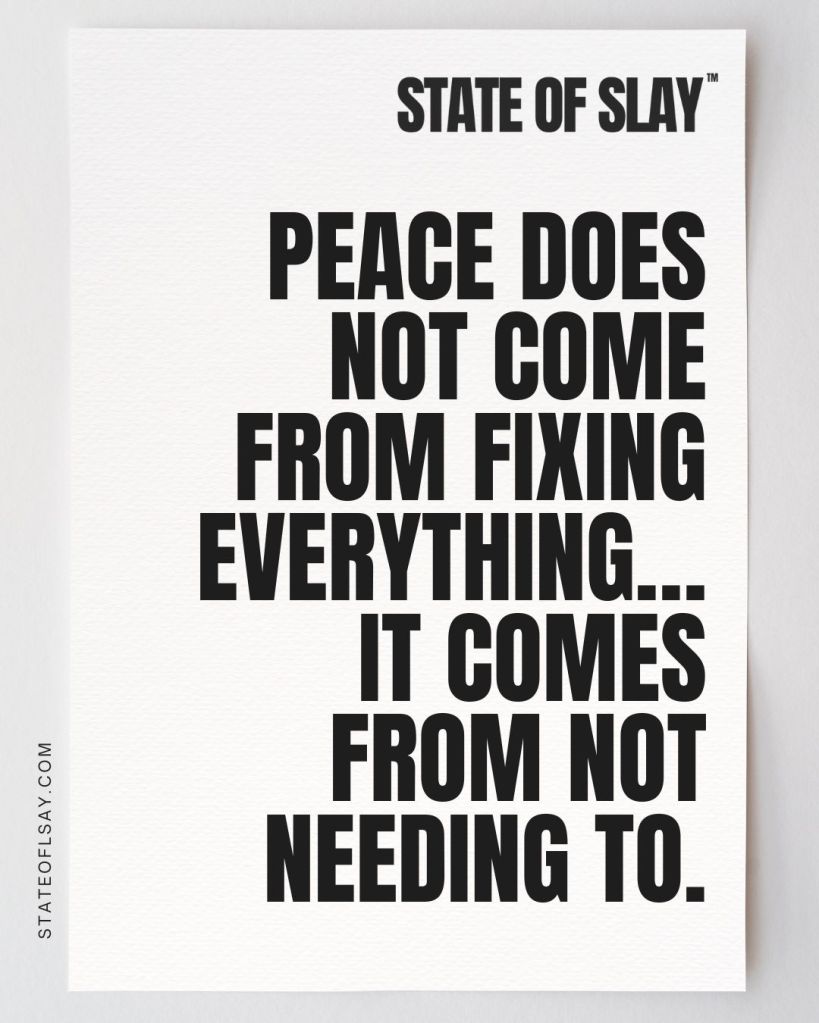
This is your reminder that the relationship you have with yourself will always set the tone for every other relationship you experience.
It can feel heavy, confusing, and at times completely unnecessary. In the middle of it, it is easy to wish it away, to want to move past it as quickly as possible, or to question why it is happening at all.
But struggle has a way of shaping you, even when you do not see it right away.
It builds awareness. It sharpens perspective. It reveals strength, boundaries, and truths that may have otherwise remained hidden.
The experience itself may not be something you would choose, but what you take from it can become something meaningful.
Growth does not come from avoiding difficult moments. It comes from allowing them to teach you something you can carry forward.
This is your reminder that even the hardest chapters can leave you with something valuable.
Build Your Life on Purpose, Not People or Possessions is a lesson I had to learn the hard way.
There was a time when I tied my happiness to things outside of me.
To people. To outcomes. To moments I believed would finally make everything feel complete.
If this relationship works, I will be happy. If I achieve this, I will feel fulfilled. If I get this thing, I will feel secure.
And sometimes, for a moment, I did.
But it never lasted.
Because anything that lives outside of you can shift, change, or disappear. And when your happiness is tied to something that is not stable, your sense of peace becomes unstable too.
Prefer to listen? The Audio Blog version is available here.
External Attachments Create Internal Instability
It is natural to care about people. To value experiences. To enjoy the things we work hard for.
But when we attach our identity and happiness to them, we give away our center.
People change. Circumstances shift. Possessions lose their meaning. Achievements fade into the next goal.
And when those things are what we rely on to feel whole, we are constantly adjusting, constantly chasing, constantly trying to hold onto something that was never meant to define us.
That is not peace.
That is pressure.
I Had to Redefine What Fulfillment Meant
There were moments in my life when I truly believed that happiness would arrive once everything lined up.
Once the relationship was right. Once the career felt secure. Once, life looked the way I imagined it should.
But what I learned is that fulfillment is not something you arrive at.
It is something you build.
And what you build it on matters.
When I began to shift my focus away from external validation and toward internal direction, everything started to feel different.
Not easier.
But steadier.
Goals Give You Direction Without Taking Your Power
Goals are different from attachments.
A goal is something you move toward. It gives you purpose, direction, and momentum.
But it does not define your worth.
It does not control your identity.
And most importantly, it stays with you even when everything else changes.
When you tie your life to goals, you are grounding yourself in growth rather than circumstance.
You are choosing progress over dependency.
And that is where real empowerment begins.
People Should Be Part of Your Life, Not the Center of It
This does not mean you stop valuing relationships.
It means you stop building your identity around them.
Healthy relationships enhance your life.
They support you. They grow with you. They add to your experience.
But they are not meant to carry the weight of your happiness.
When someone becomes the center of your world, you risk losing yourself in the process.
And when that relationship shifts, as all things do, it can feel like everything is falling apart.
Keeping yourself at the center changes that.
Possessions Do Not Create Lasting Fulfillment
We are often told that success looks like what we have.
The house. The car. The lifestyle.
And while there is nothing wrong with enjoying those things, they are not designed to create lasting happiness.
Possessions can enhance your experience.
But they cannot replace purpose.
And without purpose, even the most beautiful things can feel empty over time.
Purpose Creates Stability
When your life is tied to goals that reflect who you are becoming, your sense of self becomes more grounded.
You are no longer waiting for something or someone to complete you.
You are actively participating in your own growth.
That creates stability.
Because even when circumstances change, your direction remains.
You still know who you are.
You still know where you are going.
You Carry Your Fulfillment With You
One of the most freeing realizations is this.
You do not have to wait for the right person, the right moment, or the right situation to feel fulfilled.
You can create that within yourself.
Through your goals. Through your growth. Through the choices you make every day.
When your life is tied to something internal, something you are actively building, fulfillment becomes something you carry with you.
Not something you chase.
Build a Life That Cannot Be Taken From You
People will come and go.
Circumstances will change.
Things will be gained and lost.
That is part of life.
But when your sense of purpose is rooted in your goals, your growth, and your direction, you create something that cannot be taken from you.
A life that is not dependent on external conditions.
A life that is built from the inside out.
And that is where true happiness lives.
SLAY Reflection
S — See the Attachment Where in your life are you tying your happiness to a person, outcome, or possession?
L — Look at the Impact How does that attachment affect your sense of stability and peace?
A — Align With Purpose What goal could you focus on that reflects your growth and values?
Y — Your Next Step What is one small step you can take today toward building a life rooted in purpose?
Call to Action: Join the Conversation
I’d love to hear from you. Have you ever shifted your focus from external validation to internal goals, and what changed for you? Share your story in the comments. Let’s cheer each other on.
And if you know someone who might need this reminder, send this to them. Sometimes, all we need is a nudge.