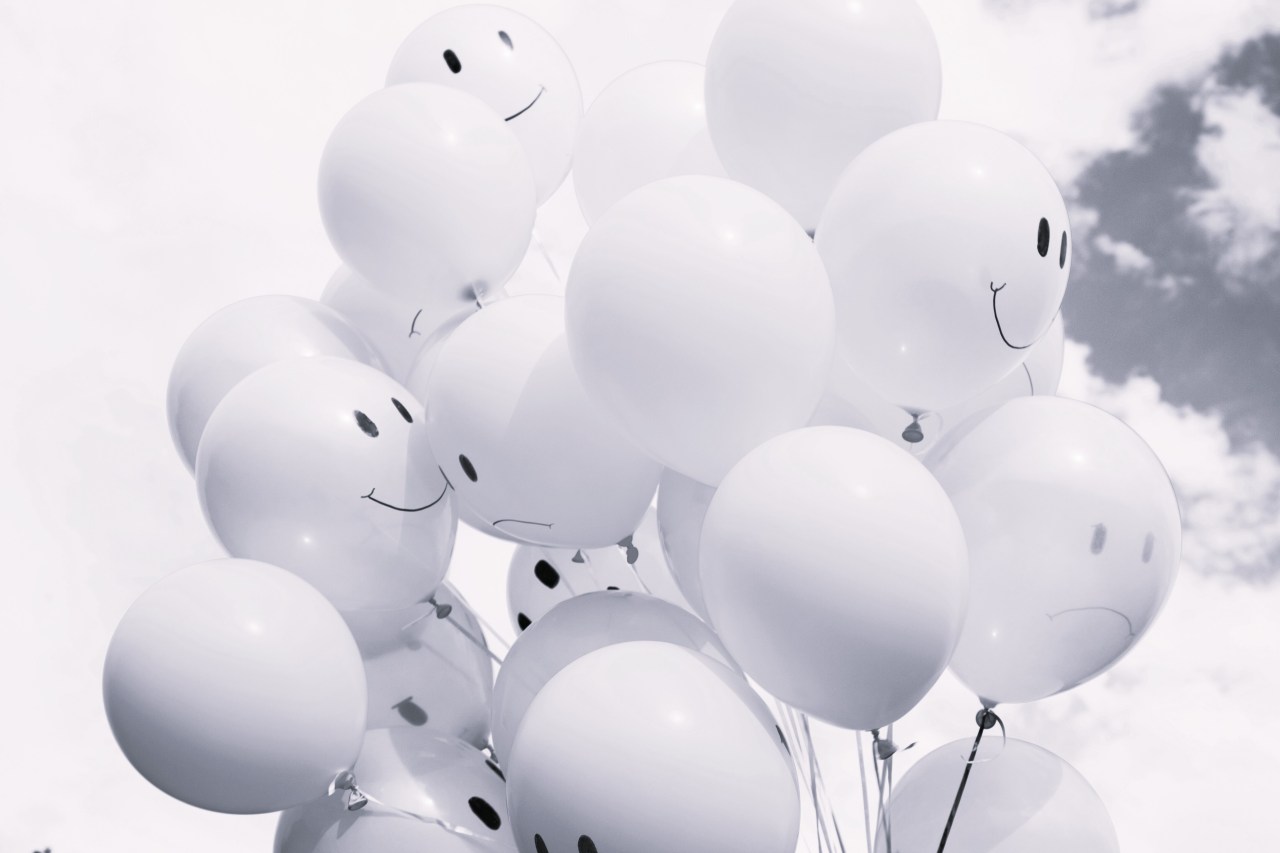
Sometimes All Someone Wants To Hear Is, I’m Sorry

There are moments when nothing can be done—when there’s no way to fix a situation or make it better. And in those moments, sometimes all someone wants to hear is, “I’m sorry.” Even if we’re not responsible for what happened, acknowledging someone’s experience can mean the world.


A Simple Yet Powerful Gesture

I think back to my life before walking this path, and how much it would have meant to hear those words. The power of a heartfelt “I’m sorry” is incredible. It connects us, makes us feel seen and valued, and reminds us that our feelings matter.

I remember sharing my story with someone I trusted, and when she gently put her hand on mine and said, “I’m sorry,” it felt like a wave of warmth washed over me. She had nothing to do with the events that led me to that moment, but her simple words were the first real validation of my pain and struggle. It helped me exhale. It helped me start to let go.


Owning Our Part

When we do have something to apologize for, those words carry even more weight. Saying “I’m sorry” for something we did—whether intentionally or not—shows strength. It honors the other person and ourselves. It’s not about weakness or surrender, but about standing in our truth and striving to be better.

As SLAYERS, we’re constantly working on ourselves. Yes, we’ll slip. Yes, we’ll make mistakes. But admitting our wrongs and saying, “I’m sorry,” can mend broken relationships and open the door to healing.


A Path to Healing

There’s magic in those words. “I’m sorry” can be the start of a new chapter, whether it’s in a relationship scarred by past pain or for someone still carrying the weight of old wounds. Sometimes, the apology won’t come from the person who caused the hurt. But when it comes from someone who cares—someone willing to listen and extend compassion—it still holds power. It’s a first step toward healing.

SLAY on.


SLAY OF THE DAY: Reflect & Rise

  • Do you struggle to say “I’m sorry”? Why?

  • What do you think it says about you if you apologize?

  • Have you ever seen “I’m sorry” as a sign of weakness? Can you shift that perspective?

  • Do you appreciate hearing someone say they’re sorry, even if they weren’t directly involved? How does it make you feel?

  • Do you offer that same compassion to others when they’re hurting? Why or why not?


Call to Action: Join the Conversation
I’d love to hear from you.
When was the last time you heard—or said—“I’m sorry”? How did it change the moment?
Share your thoughts in the comments. Let’s build each other up with honesty and compassion.

And if you know someone who’s been holding on to pain, send this to them.
Sometimes, just hearing those words is a step toward healing.

You Don’t Have To Be Perfect, You Just Have To Be

I used to believe I had to be perfect to show up.

Perfect timing. Perfect skills. Perfect hair, even. And if things didn’t line up just right—if I didn’t line up just right—I’d sit it out. I’d pass on the opportunity. I’d talk myself out of the dream. Looking back, I can’t count the chances I missed because I let perfectionism run the show.

But perfection is a lie we tell ourselves when we’re scared.

It gives us a reason to wait, to hide, to stay small. We convince ourselves we’re not ready, not worthy, not enough—so we don’t begin. But here’s the truth: Perfection is not required. Showing up is.


Prefer to listen? The Audio Blog version is available here.


It’s Never Going to Look Perfect—Do It Anyway

No one has it all figured out. No plan is bulletproof. No path is paved just right. Life is messy, and we’re messy too.

The trick is to move forward anyway.

Start with what you’ve got. Doubt? Bring it. Fear? Take it with you. Confusion? Totally normal. You don’t need to wait for the moment to be perfect—you just need to be brave enough to begin.

It reminds me of being a kid on the playground, standing in front of a merry-go-round already spinning. I’d spot my opening, take a breath, and jump. Was it scary? Sure. But it was also thrilling. I didn’t need a guarantee—I just needed to go for it.

So why do we stop doing that?

Because we’ve fallen. We’ve been judged. We’ve been told to wait until we’re “ready.” But the only way to be ready is to start anyway.


Flaws and All, You’re Already Enough

Let me say this loud for the people in the back:

You are already worthy of showing up.

You don’t have to be “fixed” or “perfect” or polished to begin. The real magic happens when you show up as you are. That’s what makes you relatable. That’s what makes you real.

You are perfect in your imperfection. Unique. Valuable. Needed.

And when you let go of chasing perfect, something incredible happens—you start living. You stop waiting. You begin to believe in what’s possible for you.

So whatever it is you’ve been putting off—start it. Show up. Say yes. Jump in. Your life isn’t waiting for perfect. It’s waiting for you.


SLAY Reflection

  1. What’s one thing you’ve avoided because you were waiting for the “perfect” moment?
  2. How has perfectionism kept you from living fully?
  3. What would it feel like to show up just as you are?
  4. What’s one small step you can take this week toward something you’ve been putting off?
  5. Can you write down 5 things that make you uniquely you—and remind yourself why they matter?

S-L-A-Y:

  • Start without needing it to be perfect.
  • Listen to your inner voice—not your inner critic.
  • Accept yourself as you are, flaws and all.
  • You are the magic you’ve been waiting for.

Call to Action: Join the Conversation
I’d love to hear from you.
What have you been putting off because it wasn’t perfect?
Share your story in the comments. Let’s cheer each other on.

And if you know someone who’s stuck waiting for the “right time,” send this to them.
Sometimes, all we need is a nudge.

If You Don’t Bend, You’ll Break

I used to think being stubborn made me strong.
I wore my “wood-head” nickname like a badge of honor, proud that no one could get me to change my mind once it was made up. I believed my rigidity protected me.
But what it really did was keep me stuck.
I was unyielding, closed off, and resistant to change. And eventually, I broke.
I hit the floor, empty and out of options. My stubbornness wasn’t strength—it was a wall between me and growth, between me and peace.


Turning Stubbornness into Strength

When I finally made the choice to walk a better path, I realized I could channel that same stubbornness into something good.
I learned to use it to push through the tough days, to hold myself accountable, and to keep moving forward even when old behaviors tried to pull me back.
Instead of fighting against myself, I started fighting for myself.


The Power of Flexibility

Life is always changing, tossing curveballs our way. If we cling to what’s familiar, we stay stuck. But when we’re willing to bend, to try a new direction, we create space for something better.
Flexibility doesn’t mean giving up your values—it means recognizing when it’s worth letting go, shifting perspective, or simply approaching something with a fresh mind.
It’s about learning to move with grace and openness, discovering that the “new way” might just be the better way.


Breaking Free from the Safe Zone

Being stubborn felt safe. It gave me a sense of control. But it also kept me from experiencing new opportunities, relationships, and growth.
Have you ever pretended to “try” something new, just to prove it wouldn’t work? I did that too. But I’ve learned that true trying means approaching with a positive, open heart, willing to embrace whatever outcome arises.


SLAY OF THE DAY: Reflect & Rise

  • Are you stuck in your ways of how things should be done? Why do you think you are?

  • What do you think will happen if things aren’t done your way?

  • Is this something that threatens your well-being, or just your comfort zone?

  • Can you think of a time when you tried something new, and the result was a positive surprise? How did that feel?

  • This week, I challenge you to bend—try something new, or approach something familiar in a different way.

  • Write them down. See how many new things you can add to your list, and then reflect on the results.


Call to Action: Join the Conversation

I’d love to hear from you.
What’s one thing you’ll try differently this week?
Share your story in the comments. Let’s inspire each other to be flexible and open to new possibilities.

And if you know someone stuck in their old ways, send this to them.
Sometimes, a nudge is all it takes to start bending in the right direction.

SLAY on.

Contrary Action

When I first began this path, I had to rewire the way I thought—completely.

My mind defaulted to negativity. It convinced me people were against me. It whispered that I’d never make it, that I didn’t belong, that failure was inevitable. And because I believed it, I acted on it. That belief nearly cost me everything.

So when I committed to healing—to getting better, to learning how to love myself and live differently—I had to learn something new: contrary action.


Prefer to listen? The Audio Blog version is available here.


What Is Contrary Action?

Quite simply, contrary action means doing the opposite of what you would normally do—especially if what you’ve always done hasn’t brought you peace, joy, or healing.

It’s breaking patterns.
It’s pausing before reacting.
It’s asking: What’s the loving, honest response here?

That pause is the magic.

At State of Slay™, I’ve said it before and I’ll say it again—life is not a game show.
There is no prize for the fastest answer.
And most of the time, our fastest answer is coming from an old wound or old wiring.


A Different Way to Respond

In the beginning, I had to practice contrary action nearly every time I opened my mouth—or even thought about opening my mouth.
It didn’t come naturally. In fact, it felt strange.
Awkward. Uncomfortable. Like backing down.

But here’s what I learned:

  • I wasn’t backing down—I was growing up.
  • I wasn’t avoiding conflict—I was choosing peace.
  • I wasn’t shrinking—I was showing up for myself in a new, more aligned way.

Old me might’ve lied to get what I wanted, manipulated to stay in control, or started a fight just to feel something.
New me? Learned to take a breath. To tell the truth. To walk away if needed.
That shift changed everything.


Building a New Foundation

Practicing contrary action gave me something I hadn’t had in a long time: self-esteem.

Every time I did the right thing—even when it felt weird or hard—it built a new brick in the foundation I now stand on.
And once I started building that self-esteem, I didn’t want to do things that tore it down.

Was it always easy? No.
Did I mess up sometimes? Absolutely.
But the more I practiced contrary action, the more I started to trust myself—and life began to open up in ways I couldn’t have imagined.


10 Ways to Practice Contrary Action

Here are a few simple ways you can try it today:

  1. Give someone a compliment when you’re feeling jealous or insecure.
  2. Own your part instead of seeking revenge.
  3. Take a walk instead of reaching for something to numb the feeling.
  4. Breathe deeply instead of lashing out.
  5. Visualize the life you want instead of reliving your worst decisions.
  6. Remember a win when fear tells you to quit.
  7. Take time for yourself instead of saying there’s never enough time.
  8. Say no with love instead of saying yes out of guilt.
  9. Go to bed instead of scrolling endlessly.
  10. Speak about dreams instead of gossip.

Each time you choose contrary action, you’re choosing yourself.
You’re choosing growth.
You’re choosing a future that looks nothing like your past.


SLAY Reflection: Where Can You Shift?

  1. Do you tend to react quickly without thinking?
    What’s usually the result?
  2. Have old patterns led you into places you didn’t want to go?
    How did it feel?
  3. What could’ve gone differently if you had paused—or chosen contrary action?
  4. Where in your life could you try the opposite of what you’d normally do?
    How might that change things?
  5. Who can you talk to when you’re unsure how to respond?
    Could their insight offer a healthier way forward?

Call to Action: Join the Conversation

I’d love to hear from you.
What’s one way you can practice contrary action this week—especially when your first instinct is to go back to old patterns?
Share your story in the comments. Let’s cheer each other on.

And if you know someone who’s stuck in the same old loops, send this to them.
Sometimes, all we need is a new way to move forward.

Sometimes You Just Need A Good Cry

We’re often taught to hold it together, to keep a straight face, to brush it off. For years, I believed that crying meant I was weak—that I wasn’t strong enough, brave enough, or resilient enough. So I did what many of us do: I stuffed it down. I distracted myself. I numbed out. I pretended I was fine.

Until I couldn’t anymore.

Eventually, the pain started leaking through the cracks. It came out in moments I couldn’t control—late at night, alone on the floor, sobbing into the silence. I was breaking down in private because I didn’t feel safe enough to break open in front of anyone else.


Permission to Feel

In my June SLAY TALK LIVE livestream, I shared how someone once gave me a gift I didn’t know I needed: permission to feel sad.

It was such a simple moment. I was fighting back tears in front of a friend, terrified they’d think less of me. I had built this perfectly polished image, and I wasn’t about to let a few tears ruin it.

But then, they looked at me and said gently, “It’s okay to cry.” And just like that, the dam broke.

What followed wasn’t pretty. It was messy. Emotional. Overwhelming. Years of grief, heartbreak, disappointment, and pain all rose to the surface. But instead of pushing it back down, I let it out—in front of someone else. I stopped hiding.

And the most surprising thing? It didn’t push them away. It brought us closer.


Crying Isn’t Weakness—It’s Release

No, I wasn’t crying on cue or sobbing through every meeting. But when I felt the tears come, I didn’t edit myself. I let them roll. And each time, I reminded myself: this is healthy, this is human.

It turns out, crying didn’t make me less lovable. It made me real. And it connected me to others who had felt the same pain—or were still working through it.

Unexpressed pain doesn’t just disappear. It stores itself in your body, in your mind, and in your relationships.

When we don’t let ourselves feel, we carry that weight in unhealthy ways. It shows up as anxiety, illness, irritability, or disconnection. There is no strength in pretending it’s not there. But there is deep, quiet power in releasing it.

Of course, timing matters. There are appropriate spaces to let it all out—and when the tears come unexpectedly, you can still honor them. I’ve excused myself from meetings, slipped into a restroom, cried it out, washed my face, and come back lighter. There’s nothing wrong with needing a moment.


Let Your Truth Show

The people who deserve a place in your life won’t shame you for being emotional. They’ll hold space. They’ll nod in understanding. They might even cry with you.

You don’t have to go through life with your emotions locked behind a wall. Vulnerability invites connection. And connection brings healing.

There’s always a reason we feel what we feel. Sometimes it’s grief. Sometimes it’s anger. Sometimes, it’s the echo of something unhealed. If we ignore it, we stay stuck. But if we honor it, we grow.

Tears can be a sign. That a person or situation isn’t right for you. Or that something buried deep inside is asking to be seen. Sometimes, it’s just that you’re finally safe enough to feel.

So let yourself feel. Get sloppy. Get snotty. Get real. Sometimes, a good cry is the most powerful thing you can do.

Let the healing begin.


SLAY Reflection

  1. Do you let people see your emotions? Why or why not?
  2. What’s your relationship with crying—do you see it as strength or weakness?
  3. When was the last time you gave yourself permission to cry?
  4. Is there something you’ve been holding in that needs to be released?
  5. Who in your life can hold space for your tears without judgment?

S – Sit with what’s rising instead of stuffing it down
L – Let the tears come, even if they feel uncomfortable
A – Accept that feeling doesn’t make you fragile—it makes you whole
Y – Yield to healing by letting yourself release what hurts


Call to Action: Join the Conversation

I’d love to hear from you.
What emotions have you been holding in that might be ready to be released?
Share your story in the comments. Let’s cheer each other on.

And if you know someone who’s afraid to cry, send this to them.
Sometimes, all we need is a nudge.

You Are Not Responsible For Other People’s Happiness

News flash, SLAYER – you’re not responsible for other people’s happiness! I spent so much of my life trying to make or keep everyone else happy. It wasn’t until I started this journey that someone told me my real responsibility was to make sure I was happy. At first, it felt selfish.

It was pointed out that my efforts to make others happy were sometimes rooted in wanting something in return – even just acknowledgment. I wasn’t doing it purely from the goodness of my heart. Instead, I was trying to fill my own void or prove I was a “good” person.


The People-Pleaser Pattern

As a kid, I constantly tried to make my parents happy. I wore that effort like a badge of honor. Even into adulthood, that need to please followed me. I thought if I could make someone happy, that would mean I had worth. But what it really meant was putting others’ feelings ahead of my own, neglecting my needs, and losing my voice.

I’d martyr myself when my efforts weren’t appreciated. I’d lash out or resent the person for not seeing what I was doing for them. But the truth is, I was trying to do someone else’s job—their happiness—and ignoring the work I needed to do for my own.


Happiness Is an Inside Job

Here’s the reality: we’re all responsible for our own happiness. No one else can do it for us. Sure, it’s lovely when someone does something that makes us feel good. But relying on others to provide our happiness is like expecting someone to go to work for you while you still cash the paycheck.

Happiness comes from within. It’s about being authentic, living our truth, and knowing what lights us up. It’s about asking for what we need without fear and showing compassion for others while still prioritizing our own joy.


Shifting the Narrative

Doing nice things for others can bring happiness—it feels good to spread love. But it should nourish, not replace your happiness. Sometimes, seeing what makes others happy can reveal what makes us happy. But one should never replace the other.

Start identifying what makes you happy. Explore, try new things, say yes. Your happiness shouldn’t hinge on someone else’s feelings. When you make yourself a priority, that joy spills over to those around you—authentically and without strings.


Happiness Is Contagious (But Starts With You)

Our path is about finding what makes our hearts shine. It’s okay to do things we don’t want to do sometimes, but not at the expense of our own happiness. When we cheat ourselves, we also cheat others of finding their happiness.

Fill your life with what brings you joy. And by making your happiness a priority, you might just inspire others to do the same. See how that works?


SLAY OF THE DAY: Reflection Questions

  • Do you put others’ happiness before your own?

  • Why do you think you do that?

  • Do you believe you deserve to be happy? (You do!)

  • What truly makes you happy?

  • How can you challenge yourself to prioritize your happiness today?

Happiness is your job, SLAYER. Make it a priority. SLAY on.


Call to Action: Join the Conversation

I’d love to hear from you.
What’s one way you’ll prioritize your happiness today?
Share your thoughts in the comments. Let’s cheer each other on.

And if you know someone who’s struggling to put themselves first, send this to them.
Sometimes, all we need is a nudge.